Best beaches in Slovenia: coastal and lake swimming compared honestly
Izola: private Adriatic boat tour to Strunjan and Piran
Does Slovenia have good beaches?
Slovenia has excellent swimming but modest beach infrastructure by Mediterranean standards. The Adriatic coast offers warm saltwater, a proper sandy beach at Portorož, and beautiful cove swimming near Piran and Strunjan. The lakes — Bled, Bohinj, Krn — offer cold, emerald-clear freshwater swimming in dramatic mountain settings. Different pleasures, both worth seeking out.
Where to swim in Slovenia: an honest comparison
| Best sandy beach | Portorož main beach |
| Best scenery | Strunjan lagoon or Lake Bohinj |
| Warmest water | Adriatic coast, 23–25°C (Jul–Aug) |
| Coldest but prettiest | Soča river, 14–16°C year-round |
| Essential gear | Water shoes for nearly every coastal spot |
Slovenia is not a beach holiday destination in the conventional sense. With just 46.6 kilometres of Adriatic coastline and a mountain interior where lake water rarely exceeds 24°C, it does not compete with Croatia or the Greek islands for sheer beach quantity or guaranteed warmth.
What it offers is something different: a small selection of genuinely beautiful swimming spots, each with its own character, set against some of the most dramatic backdrops in Central Europe. The Adriatic beaches near Piran offer clear Venetian-Adriatic ambiance. The glacial lakes offer the kind of turquoise-blue water that requires no filter to photograph. Understanding what each type delivers — and when — is the key to planning well.
The Adriatic coast beaches
Portorož main beach — the best for sandy-beach infrastructure
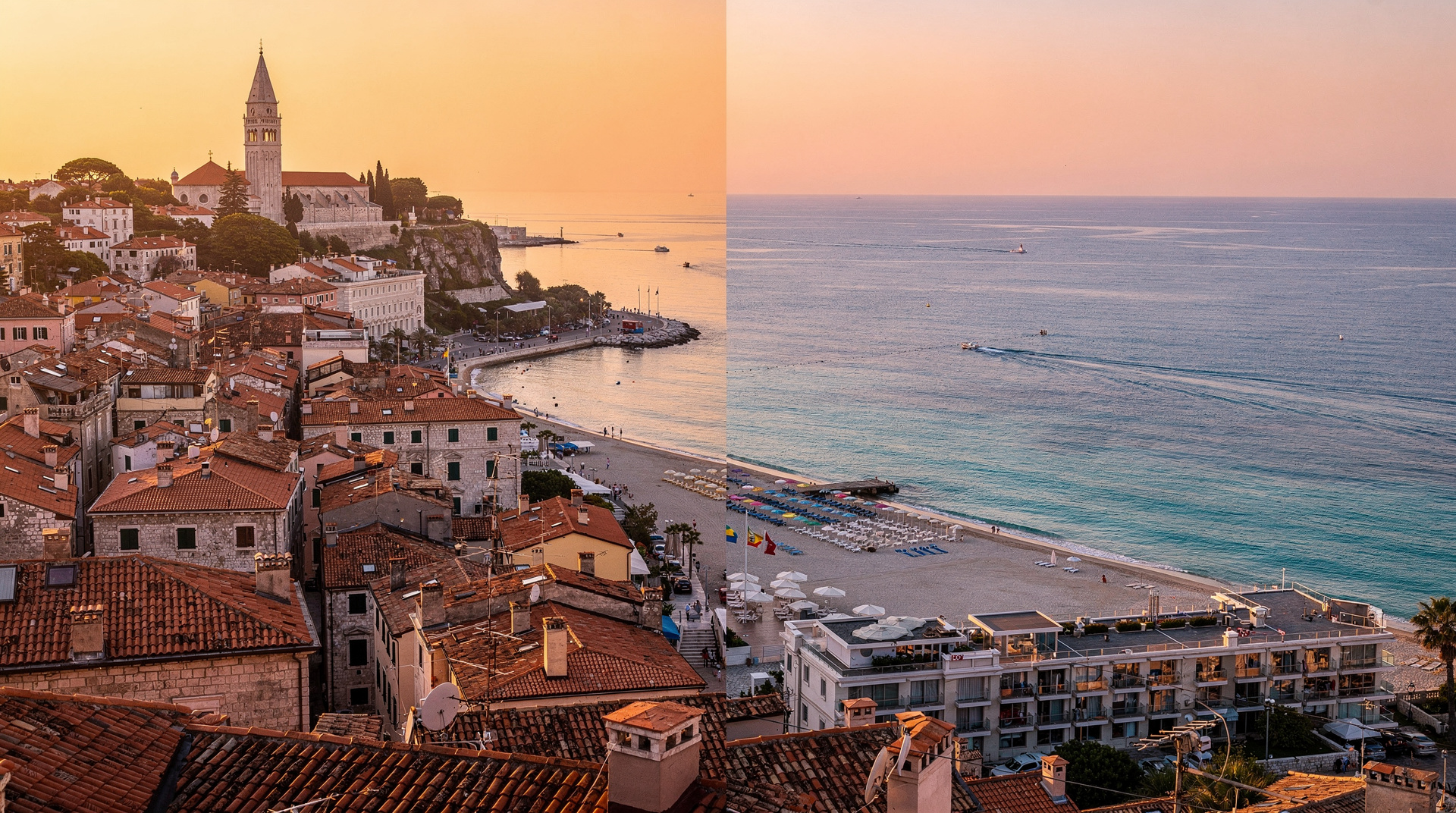
The Portorož beach is the most developed beach in Slovenia. A 500-metre sandy-gravel arc, managed in season with sun lounger hire (EUR 8–15 per set), beach bars, showers, changing facilities and calm, shallow water. By Adriatic standards it is a medium-sized resort beach; by Slovenian standards it is in a different category from everything else.
The sea here is typically 22–24°C in July–August. The beach faces west, so morning light is good for swimming and the afternoon sun is on the water until around 19:00 in midsummer. Busy on summer weekends; manageable on weekdays and in June or September.
Verdict: The right choice if you want a beach day with all the infrastructure.
Fiesa cove — the prettiest setting near Piran
A small cove about 20 minutes on foot east of Piran’s old town. Rocky and pebble shore, quieter than Portorož, with a small restaurant and basic facilities. The setting is lovely — the cove is backed by low cliffs and pine trees, and the water is clear.
No sun lounger hire; bring your own towel and shoes for the rocky shore. Best for a morning swim before the Piran day-trippers arrive.
Verdict: Beautiful, limited facilities. Best combined with a Piran visit.
Strunjan nature reserve lagoon — the best for natural beauty
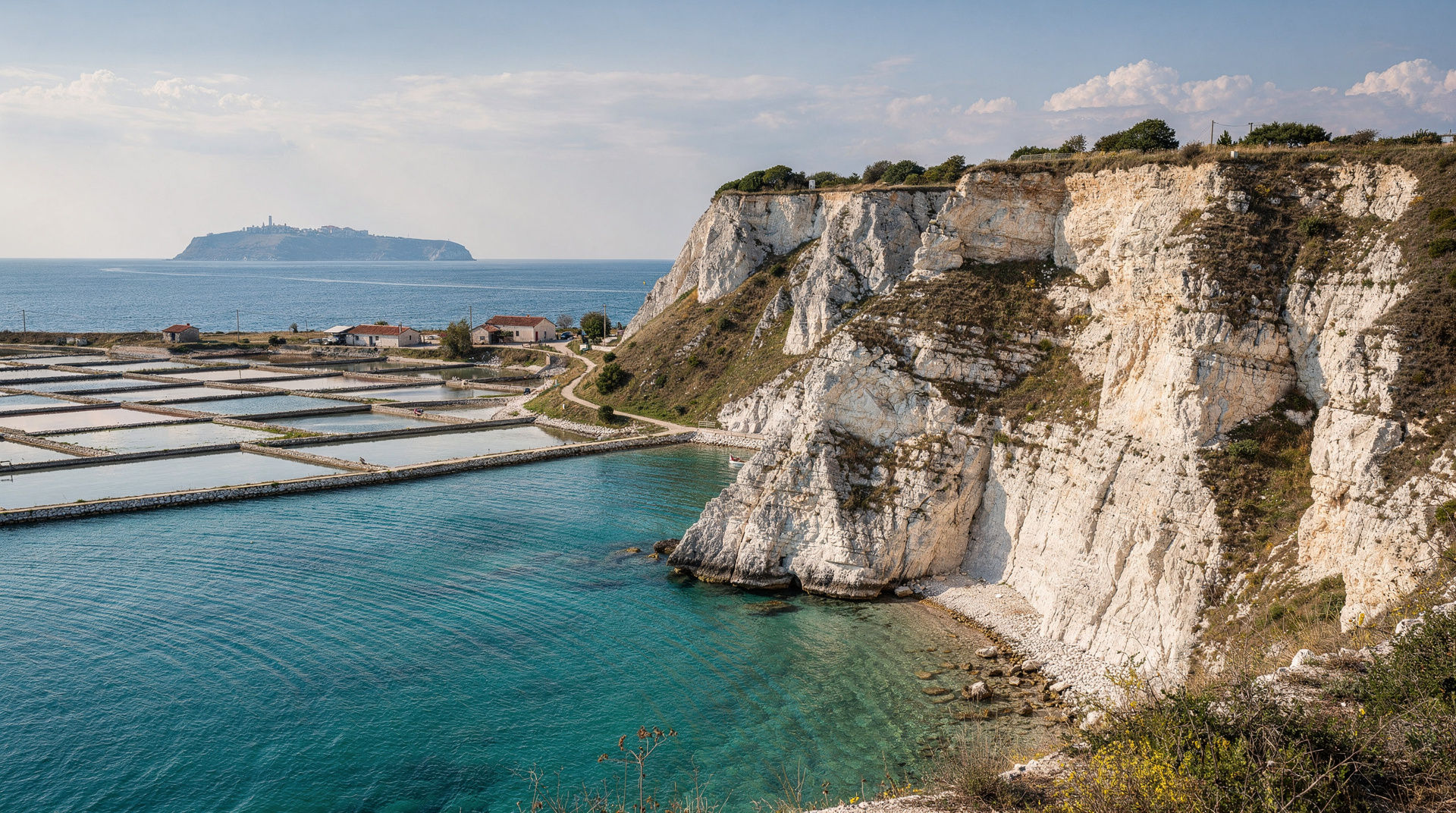
The Strunjan lagoon, protected within the Strunjan Landscape Park north of Piran, is the coast’s most ecologically interesting swimming spot. The lagoon has clear, sheltered water, a shingle beach and the unusual distinction of being surrounded by the only coastal cliffs on the Slovenian coast — the “Strunjan cliff” is a 70-metre dramatic drop that is also a geological curiosity (flysch rock layers formed 50 million years ago).
A clothed beach and a nudist section are both accessible. The lagoon is shallower and calmer than the open sea. No sun lounger infrastructure — bring your own.
Verdict: Best scenery on the coast, low infrastructure. 15 minutes by bike from Piran.
Izola’s Simon’s Bay (Simonov zaliv)
A gravel beach about 1 km west of Izola’s old town. More organised than Fiesa or Strunjan: sun lounger hire available, beach bars, a reasonable stretch of beach. Less crowded than Portorož and more local in atmosphere.
Verdict: A good compromise between infrastructure and local character.
A boat excursion from Izola to Piran via Strunjan gives you access to the best swimming spots between the two towns, reaching coves that are difficult to get to by land.
Lake swimming: the mountain experience
Lake Bohinj — the most impressive freshwater swimming in Slovenia
Lake Bohinj is the largest natural lake in Slovenia and, in the honest view of most people who have been to both, significantly more beautiful than Lake Bled. It is surrounded by the Triglav National Park mountains, the water is a deep blue-green, and it is far less crowded.
The water temperature reaches around 20–22°C in July and August — perfectly swimmable and refreshing rather than cold. The main public beach at Ribčev Laz has a small grassy shore and a wooden jetty. The more adventurous can swim from the banks along the lake’s northern shore, away from the main tourist areas.
A cold-water note: at the inlet end of the lake near the Savica waterfall, where the cold mountain streams feed in, the water is noticeably colder even in summer. Swim at the Ribčev Laz end for the warmest water.
Season: June–September. The lake is at its best in late June and throughout September, when the crowds are down and the water is still warm from summer.
Verdict: Outstanding. The landscape makes this one of the most beautiful swimming experiences in Central Europe.
Lake Bled — iconic but cold
Lake Bled is Slovenia’s most famous lake and reaches around 22–24°C in a good July, which is swimmable. The free swimming area on the south shore (near the rowing club) is pleasant. The view while swimming — island church, medieval castle on the cliff, Julian Alps behind — is genuinely extraordinary.
The honesty point: Lake Bled is not primarily a beach destination. The shore is small, the water is frequently busy with pletna boats, and the crowds at the main tourist areas can be intense in high summer. For relaxed swimming, Lake Bohinj is better. For the view, Bled has no competition.
Verdict: Worth a swim for the view alone; use the south shore public beach area.
Lake Krn — the alpine wilderness option
For those willing to hike (approximately 2–3 hours from the trailhead at the Krn village), Lake Krn in the Julian Alps offers cold (around 12–18°C) but extraordinary swimming in an isolated mountain setting. The lake is at 1,394 metres above sea level, surrounded by bare limestone peaks. Not for casual visits but unforgettable if you make the effort.
Verdict: Spectacular; not for those seeking warm water or easy access.
River swimming
The Soča river
The Soča — flowing emerald-clear through the Soča Valley from Trenta to the Adriatic — is one of the most visually stunning rivers in the Alps. The colour, caused by dissolved limestone and the extreme clarity of the glacial water, is genuinely extraordinary.
The catch: the water is cold. Even in August, the Soča rarely exceeds 14–16°C. It is possible to swim — many visitors do at the pools below Bovec and at the famous swimming spots near Kobarid — but it is not comfortable for more than 10–15 minutes.
Verdict: Go for the colour and the experience, not for a long swim.
Seasonal guide
Best time for coast swimming: Mid-June to mid-October. Peak warmth July–August. Best overall: June and September (warm enough, far fewer crowds).
Best time for lake swimming: July–August for maximum water temperature. Late June and September are good compromises between temperature and crowds.
Avoid: May for sea swimming (too cold, typically 16–18°C). November to April for the Adriatic coast (most facilities closed). Winter for lakes (too cold for all but open-water enthusiasts).
Seasonal guide to swimming in Slovenia
April–May: The Adriatic coast sea temperature rises from around 14°C in April to 18°C by late May — cold for casual swimming but manageable for the committed. Lake swimming is still 8–14°C and genuinely cold. This is walking season, not swimming season, for most visitors.
June: The coast reaches 20–22°C — properly swimmable from mid-June. Lake Bled and Bohinj warm up toward the end of June. The best month for the coast if you want swimming without high-season crowds.
July–August: Peak swimming season. Coast at 23–25°C. Lake Bled at 22–24°C. Lake Bohinj at 18–22°C. Warmest and busiest. The Soča is swimmable at 14–16°C with courage.
September: Still excellent. Coast at 22–24°C through most of September. Lakes cool faster — Bohinj drops to 16°C by late September. The coast is at its best for swimming-plus-relaxed-atmosphere.
October: Coast falling (18–20°C), getting borderline for casual swimming. Lakes too cold. The season effectively ends.
Comparison table: Slovenia’s main swimming spots
| Location | Type | Best months | Water temp (peak) | Infrastructure |
|---|---|---|---|---|
| Portorož beach | Sandy-gravel, Adriatic | Jun–Sep | 24–25°C | Excellent (sunbeds, bars) |
| Fiesa cove | Rocky, Adriatic | Jun–Sep | 23–25°C | Minimal |
| Strunjan lagoon | Shingle, Adriatic | Jun–Sep | 23–24°C | Low |
| Simon’s Bay (Izola) | Gravel, Adriatic | Jun–Sep | 23–25°C | Moderate |
| Lake Bohinj | Freshwater, alpine | Jul–Sep | 20–22°C | Basic (jetties, lawn) |
| Lake Bled | Freshwater, alpine | Jul–Aug | 22–24°C | Basic |
| Lake Krn | Freshwater, high alpine | Jul–Aug | 14–18°C | None |
| Soča river | Freshwater, glacial | Jul–Aug | 14–16°C | None |
What to expect at each type of beach
Adriatic coast swimming: The sea is shallow, calm and warm. Visibility is good for snorkelling. No significant waves or currents — ideal for children. The main practical challenge is the rocky shoreline at most locations other than Portorož; water shoes are strongly recommended.
Lake swimming: The lakes are crystal clear — Bohinj in particular has some of the best freshwater visibility in Central Europe. Water temperature is lower than the sea and takes longer to warm up in spring. No saltwater buoyancy; swimming requires more effort. The mountain lake settings are dramatically beautiful.
River swimming (Soča): The emerald colour is extraordinary. The water is cold even in summer. Swimming is brief but exhilarating. The current in the main channel can be strong; stick to the pools and bays rather than swimming across the main flow.
Practical notes
What to bring to coast beaches: The rocky and pebble shores require water shoes for comfortable entry at most locations other than Portorož. Sun protection is important — the Adriatic sun is strong from May to September.
Sun lounger costs: Portorož EUR 8–15 per set per day. Izola Simon’s Bay similar range. Free access alternatives exist at all coastal beaches; the sun loungers are an optional add-on.
Water quality: Slovenian coastal waters consistently meet EU bathing water quality standards. Official testing results are available on the ARSO website (the Slovenian environmental agency).
Stand-up paddleboard rental on the coast is an excellent way to access the smaller coves and rock formations that you cannot easily reach from the beach.
Snorkelling in Slovenia
The Adriatic off the Slovenian coast has clearer water than many parts of the northern Adriatic. The rocky seafloor around Piran, Strunjan and the Strunjan cliffs supports a variety of fish species, sea urchins, octopus and occasionally seahorses. For snorkellers, the areas around the Strunjan peninsula and the sea caves near the Punta promontory in Piran are the most rewarding.
What to expect: Visibility of 5–10 m on clear days; reduced after rain or wind. Depth around the rocky shores runs from 1–8 m — well within comfortable snorkelling range. Water temperature peaks at 24–25°C in August; snorkelling is comfortable from late June to early October.
Equipment: A basic mask, snorkel and fins are sufficient. The rocky entry points require water shoes. Equipment can be hired in Portorož and Piran from water sports operators (EUR 8–15 per set per day).
Best spots: The rocks immediately east of Piran’s Punta lighthouse (accessible on foot from the old town), the Strunjan cliff base (accessible by boat), and the bay at Fiesa.
For the Soča river, the emerald water makes for extraordinary snorkelling conditions if you can handle 14–16°C water temperatures. The pools and calmer sections near Bovec and the Napoleon Bridge are popular snorkelling spots. A wetsuit makes this considerably more comfortable.
What to know about EU bathing water quality flags
On Slovenian coast beaches and lake swimming areas, bathing water quality is monitored throughout the season by the National Institute of Public Health (NIJZ). Results are posted online and often at the beach itself via coloured flag systems.
In practice, Slovenian coastal water quality is consistently excellent — most sites have “excellent” (blue flag) ratings in the EU classification. Temporary exceedances can occur after heavy rain (when drainage flows into the sea) but these are usually resolved within 24–48 hours.
Lake Bled and Lake Bohinj also have monitored bathing areas with good ratings. The Soča river is not officially monitored as a bathing site but is used for swimming and the quality is excellent (glacial water, minimal agricultural runoff in the upper valley).
Planning a swimming holiday: recommended itinerary
A 5-day swim-focused Slovenia itinerary:
Day 1–2: Coast. Base in Piran or Portorož. Morning swims at Fiesa or the Portorož beach, afternoon boat excursion to Strunjan. Evening in Piran old town.
Day 3: Strunjan lagoon in the morning (by bike from Piran, 15 minutes), saltpans in the afternoon.
Day 4: Drive north to Lake Bohinj (1h30). Afternoon swim at Ribčev Laz, overnight at the lake.
Day 5: Lake Bled (30 minutes from Bohinj). Morning swim at the south shore, rowing boat to the island, afternoon hike to Ojstrica viewpoint.
This itinerary combines the Adriatic warmth of the coast with the dramatic freshwater settings of the Julian Alps lakes, and covers essentially all of Slovenia’s best swimming in a compact circuit.
Jellyfish and other sea life
The Adriatic off the Slovenian coast has a varied marine ecosystem. In addition to fish, visitors swimming in the sea may encounter:
Jellyfish (meduze): The barrel jellyfish (Rhizostoma pulmo) and the moon jellyfish (Aurelia aurita) appear in the Gulf of Piran occasionally, usually in late summer (August–September). Neither species is significantly dangerous — the barrel jellyfish has very weak stinging capacity; the moon jellyfish almost none. Large numbers can make swimming unpleasant due to the physical mass of the animals in the water. The appearance is unpredictable — some summers bring large numbers, others very few.
Sea urchins: Common on rocky coastal areas below the surface. Wear water shoes when entering the water from rocky shores to avoid contact. If you step on a sea urchin, remove the spines carefully and treat with vinegar and an antiseptic. Minor incidents are common; medical attention is rarely required unless spines break off deeply.
Octopus: Occasionally visible near rocky areas at the surface. Not dangerous; actually interesting to observe swimming near the surface in the mornings.
Posidonia seagrass meadows: The sandy seabed off some parts of the coast is covered with Posidonia oceanica meadows — a protected marine habitat and a sign of good water quality. Visible through the water surface in calm, clear conditions.
Water shoes: the single most important accessory
If there is one piece of equipment that distinguishes a comfortable Slovenian coast experience from an uncomfortable one, it is water shoes. The hard-to-explain reality: nearly every beach and swimming spot on the Slovenian coast (except Portorož main beach) involves rocky entry that is painful in bare feet and potentially dangerous on slippery algae-covered rocks.
Water shoes — lightweight rubber-soled neoprene boots — make all of this completely manageable. You enter the water comfortably, move between swimming areas without pain, and access the smaller rocky coves that sandal-wearers avoid.
Widely available in Slovenia: sports shops in any coastal town sell them from EUR 8–20. Worth buying on arrival if you have not brought them.
For the full context of the Slovenian coast, see Slovenian coast guide. For Portorož specifically, see Portorož guide.
Frequently asked questions about Best beaches in Slovenia
What is the best beach in Slovenia?
For a classic sandy beach with sun loungers and beach bars, the Portorož main beach is the clear winner — the longest and most managed beach on the Slovenian coast. For scenery, the small coves near Piran (Fiesa) and the Strunjan nature reserve lagoon are more beautiful but less equipped. For dramatic freshwater swimming, Lake Bohinj is the most impressive.Is the sea warm enough for swimming in Slovenia?
The Adriatic off the Slovenian coast reaches around 18–20°C by late June and peaks at 24–25°C in August. September is still excellent (20–22°C). The coastal swimming season is effectively mid-June to mid-October. The lakes are colder: Lake Bled reaches around 22–24°C in a warm July; Lake Bohinj tends to be a few degrees colder.Are there free beaches in Slovenia?
Yes. The coastal swimming areas at Piran (the riva platforms), Fiesa cove, Strunjan lagoon and Izola's Simon's Bay all have free access areas. The managed beach at Portorož charges for sun loungers but walking to the water is free. All lake beaches — Bled, Bohinj, Krn — are publicly accessible.Can I swim in the rivers in Slovenia?
The Soča river is famous for its extraordinary turquoise colour, but the water is glacier-cold even in August (around 12–16°C) — swimming is possible but brief. The Krka river in eastern Slovenia is warmer and popular for casual swimming. Lake Krn in the Julian Alps offers cold but beautiful swimming in a remote alpine setting.
Top experiences
Bookable activities with verified prices and instant confirmation on GetYourGuide.