Piran travel guide: the complete guide to Slovenia's most beautiful coastal town
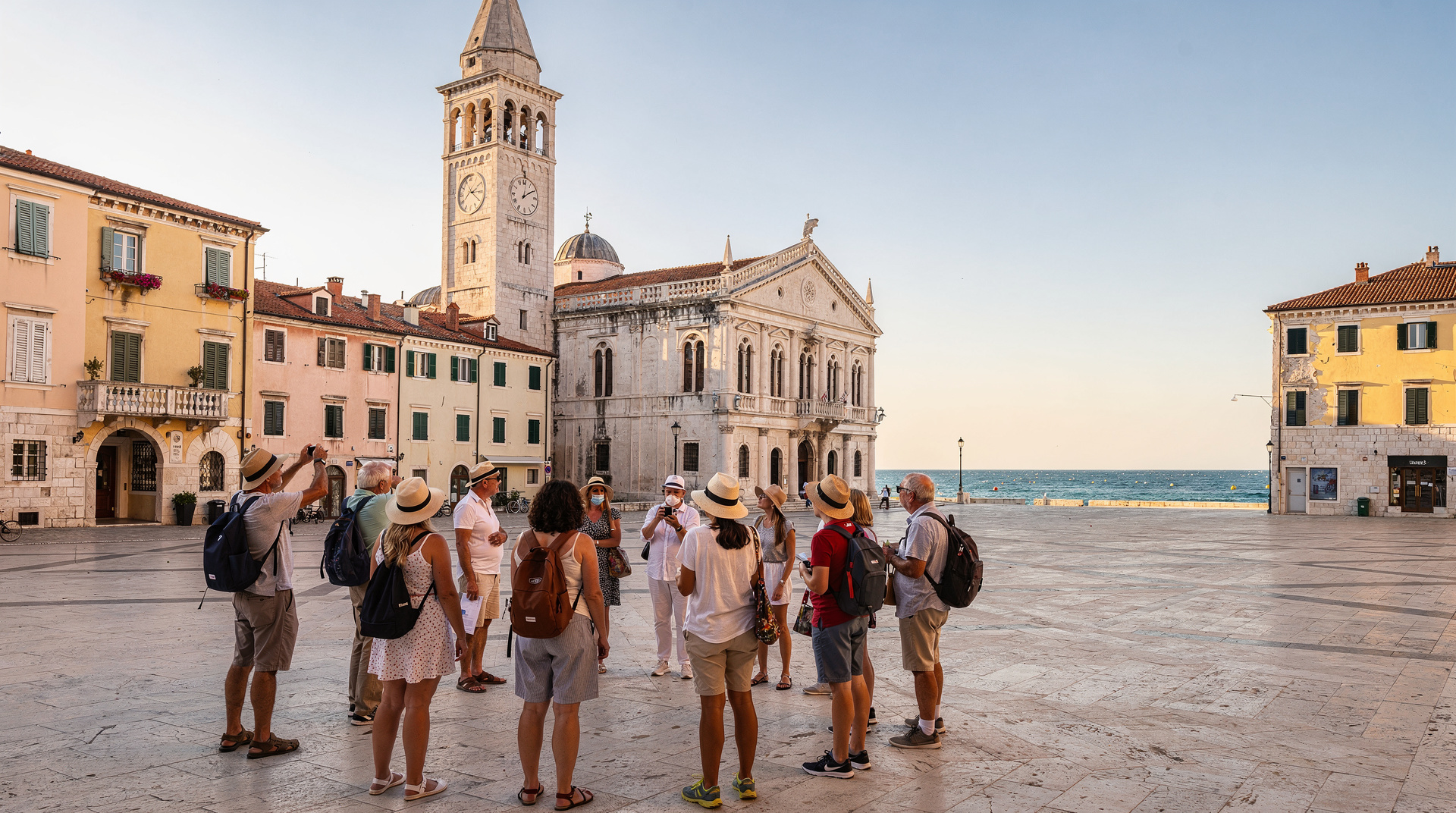
Piran: private walking tour with a local
Is Piran worth visiting?
Yes — Piran is the most architecturally intact medieval town on the Slovenian coast and one of the most beautiful on the entire Adriatic. The Venetian old town, the hilltop fortifications and the views across the Gulf of Piran are genuinely impressive. Visit outside July–August or arrive early to avoid the worst crowds.
Piran: Slovenia’s Venetian gem on the Adriatic
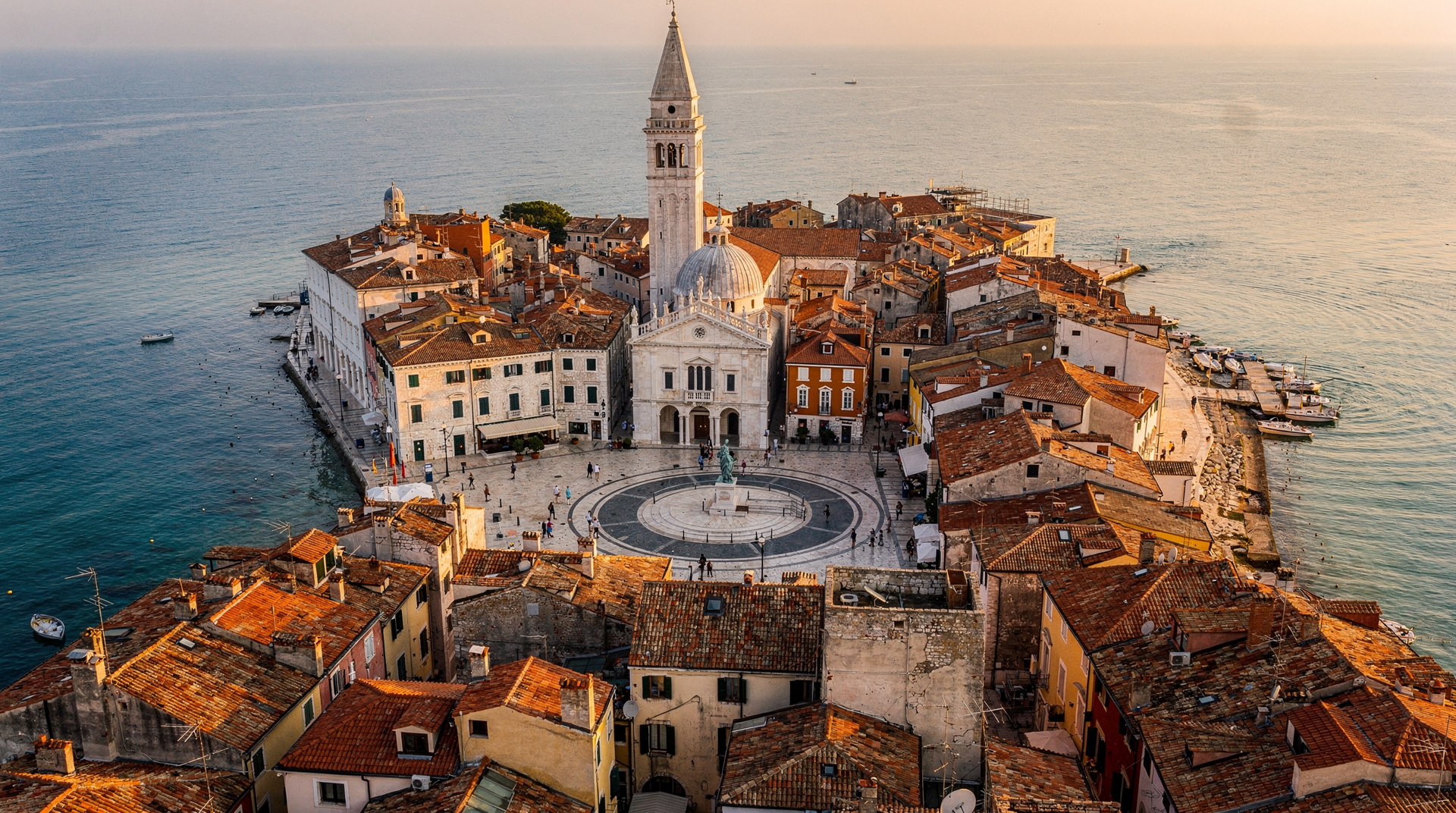
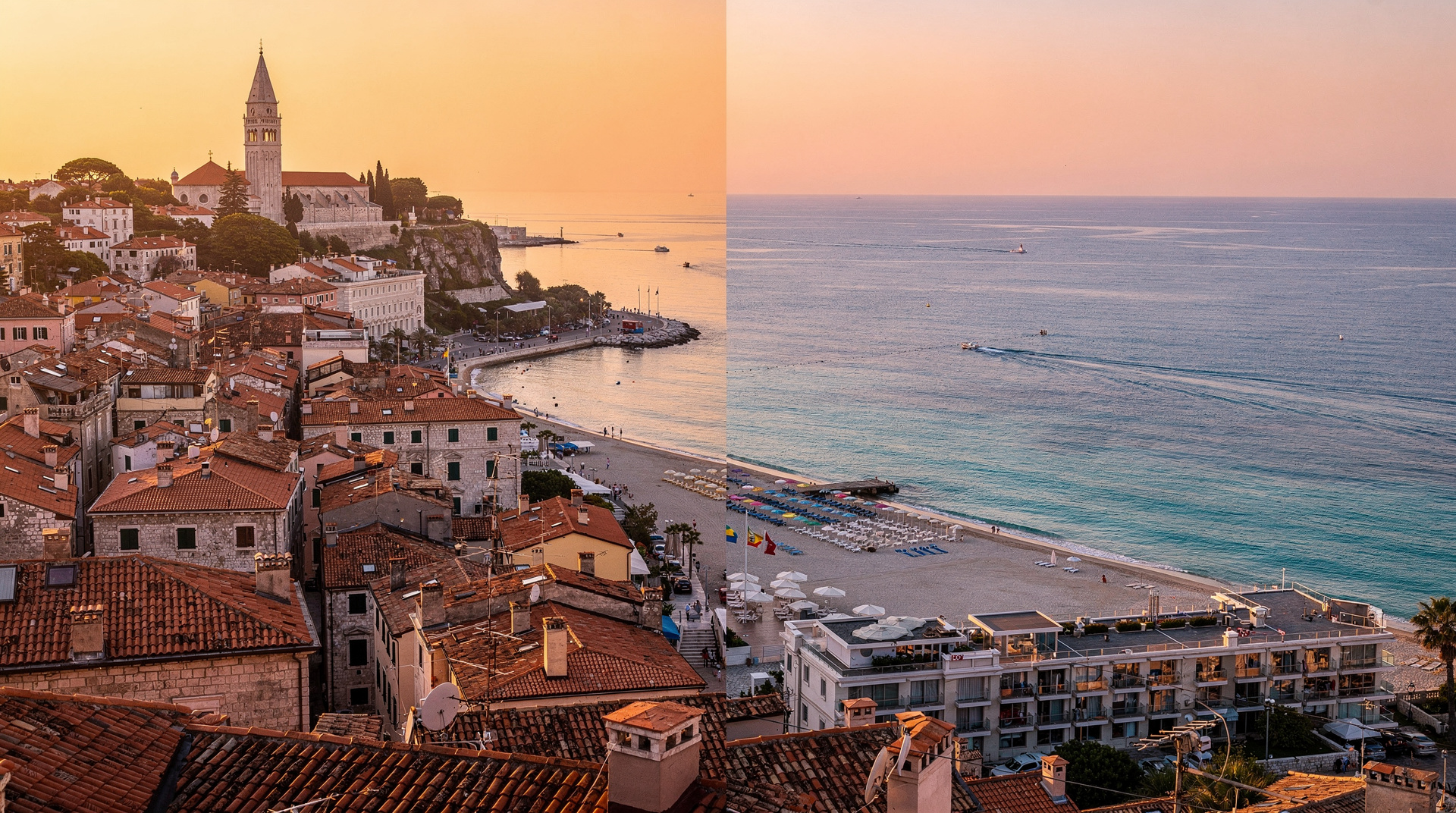
Piran is the kind of town that makes you feel you have discovered something most travellers have missed — even though, in high summer, several thousand people have the same thought on the same afternoon. The medieval old town occupies a narrow peninsula jutting into the Gulf of Piran, its Venetian Gothic architecture so well preserved that the town has served as a film location standing in for Venice itself.
Slovenia has only 46.6 kilometres of coastline, and Piran sits at the heart of it. The town is compact, walkable and almost entirely pedestrianised within the old walls. Give it a full day and you will cover everything; give it two and you will understand why people come back.
| Where | Piran peninsula, Slovenian Istria |
| Cost | Around EUR 60–90/day incl. accommodation, food and a swim |
| Time needed | 1 full day minimum, 2 nights ideal |
| Getting there | Bus from Ljubljana (~2h30, EUR 12–15) or car via A1 (~1h30) |
| Best time | May–June or September–October |
Orientation: how the town is laid out
Piran is shaped like a narrow wedge. The base of the wedge opens toward Portorož to the south-east; the pointed tip reaches into the sea at the lighthouse promontory. The main civic space is Tartini Square (Tartinijev trg), a beautiful oval piazza named after the Baroque violinist and composer Giuseppe Tartini, who was born here in 1692. The square is lined with pastel-coloured Venetian buildings and opens directly onto the marina.
From Tartini Square, the town’s historic streets fan out across the peninsula. The main church — St George’s Cathedral (Župnijska cerkev sv. Jurija) — sits on the ridge above, with its detached bell tower offering the best views in town. The old town walls run along the northern and western edges of the peninsula, part of the 15th-century fortifications that once protected the town from Ottoman raids.
The seafront walkway (the riva) runs along the southern edge from the marina toward Punta, the lighthouse at the tip. This is where locals gather in the evenings and where the swimming areas are located.
Getting to Piran
From Ljubljana by bus: Arriva buses run several times daily from Ljubljana’s main bus station to Piran. Journey time is approximately 2h30, fares around EUR 12–15 each way. This is the most practical option for travellers without a car and avoids the parking problem entirely.
From Ljubljana by car: take the A1 motorway south toward Koper, then follow signs to Piran. The drive is approximately 130 km and takes around 1h30 in normal traffic. You must have the Slovenian e-vignette for motorway driving (included in most rental cars — confirm before you go).
From Koper: 25 minutes by car, or around 35 minutes on the frequent local bus. Koper has a railway station, making this combination practical for those arriving by train.
From Portorož: 15 minutes on foot along the seafront path, or 5 minutes by local bus. If you are based in Portorož, walking to Piran is strongly recommended over driving.
From Trieste (Italy): around 1h30 by car, or reachable by bus via Koper.
Parking: Piran restricts private vehicle access to the old town. The main options are:
- Fornače car park: 800 metres from the town centre, EUR 1.20–1.50/hr with a daily maximum. Seasonal shuttle bus runs to Tartini Square.
- Portorož and walk: park in Portorož and walk the 15-minute seafront path.
- Book accommodation with parking included if you want a car at the door.
What to see and do in Piran
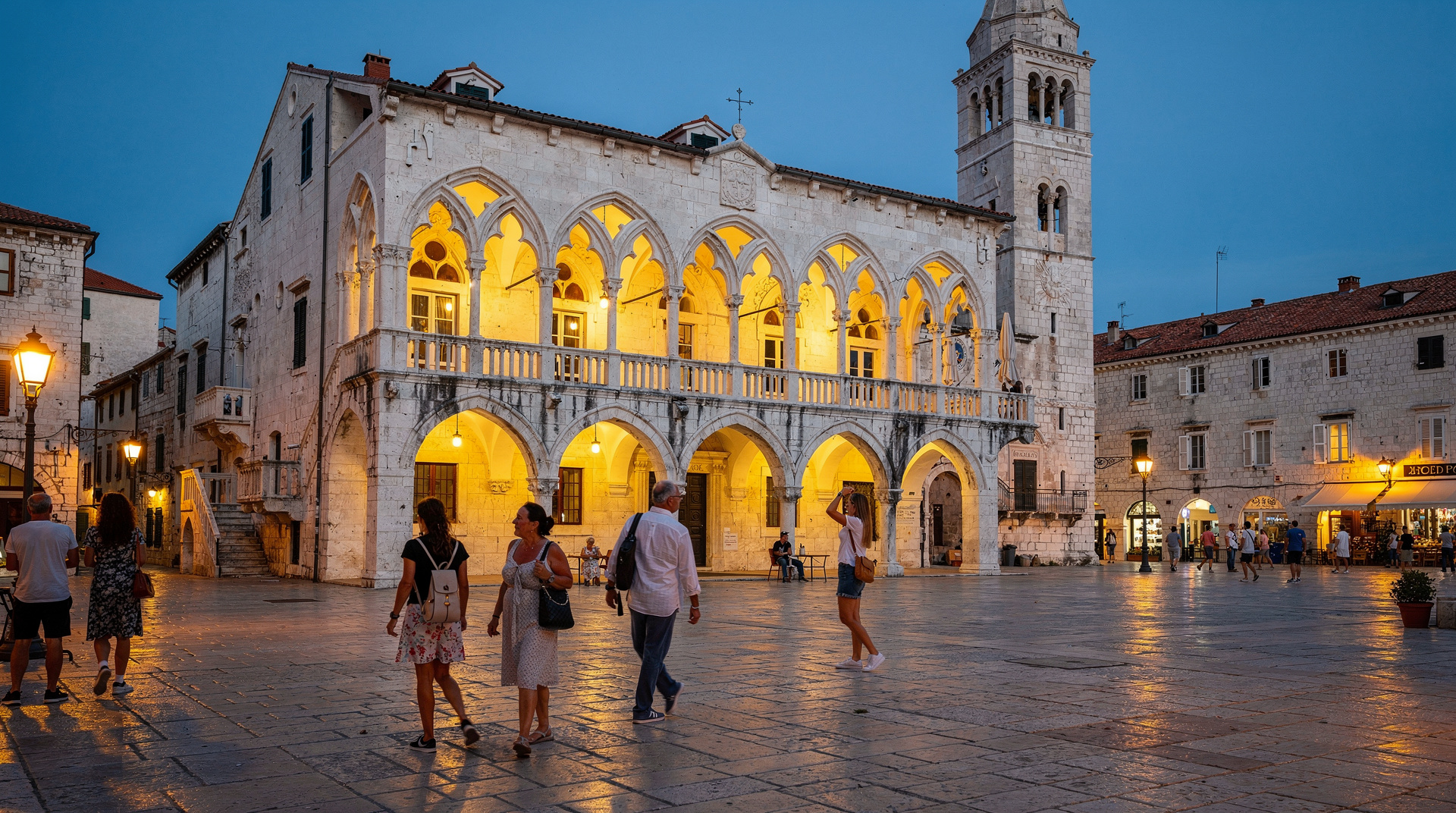
Tartini Square and the waterfront: Begin here. The square itself — one of the finest in the Adriatic — was created in 1894 by filling in the inner harbour. The bronze statue of Tartini at the centre is a 19th-century commission. The Venetian House (Beneška hiša) on the north side of the square is the oldest building on it, dating to around 1400, with its characteristic Gothic windows. The ground-floor bars and café terraces are pleasant for a coffee before the town wakes up.
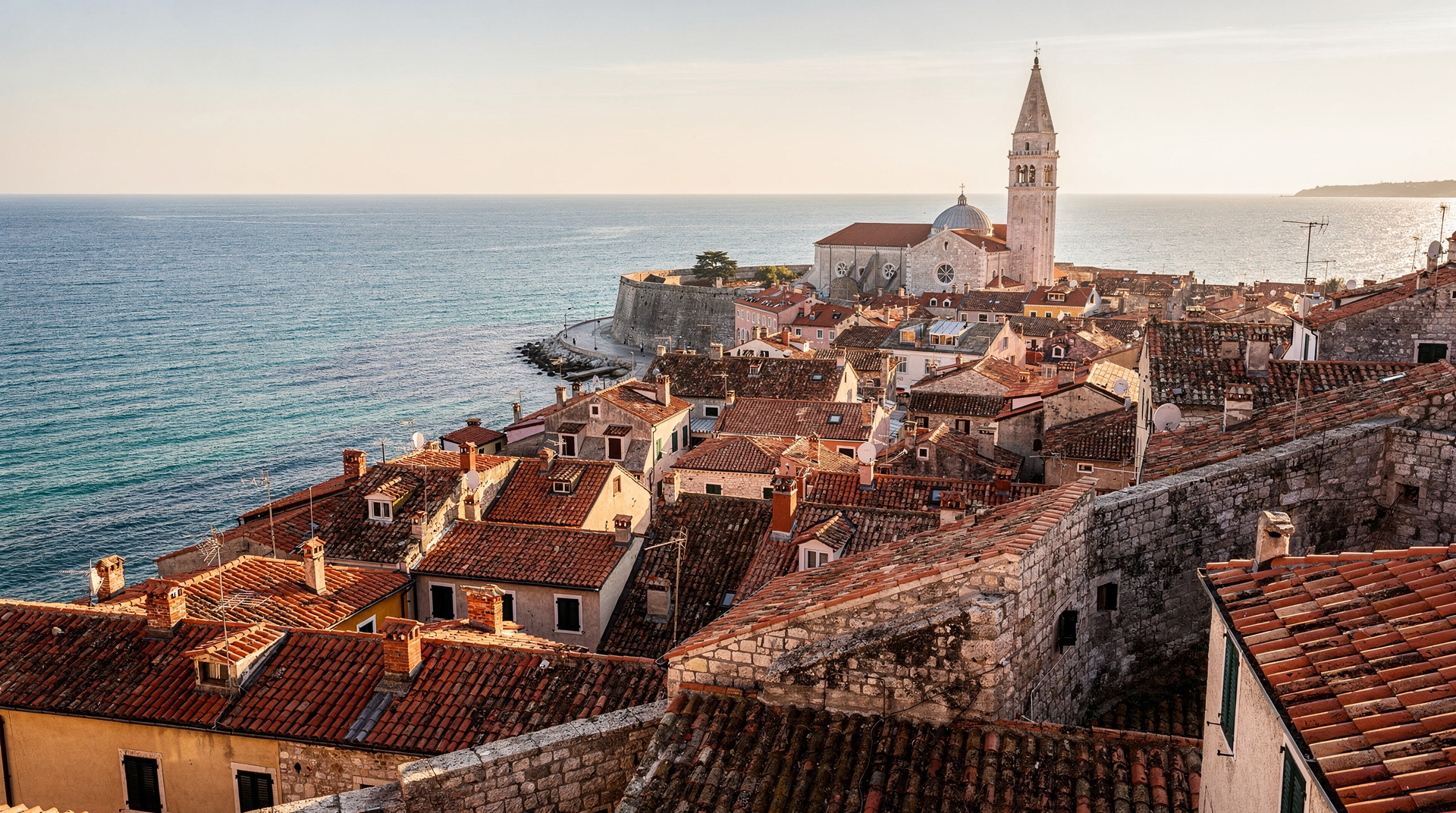
St George’s Cathedral and the bell tower: The cathedral at the top of the hill dates from the 17th century and contains several notable paintings. But the real reason to climb here is the detached bell tower (campanile), which is almost a direct copy of the one in St Mark’s Square in Venice. Climb it for EUR 2–3 and you get a panoramic view over the rooftops, the sea, the Gulf of Piran and, on a clear day, the Venetian lagoon.
The old town walls: A section of the 15th-century town walls survives along the northern ridge of the peninsula. Walk the path along the top for views down to the boats in the marina and out toward Izola and Koper. The walls are free to walk and take about 25 minutes.
The Tartini Museum (Tartinijeva hiša): A small but well-curated museum in the house where Tartini was born, with instruments, manuscripts and historical context. Entry is approximately EUR 3. Worth an hour if you have an interest in Baroque music or local history.
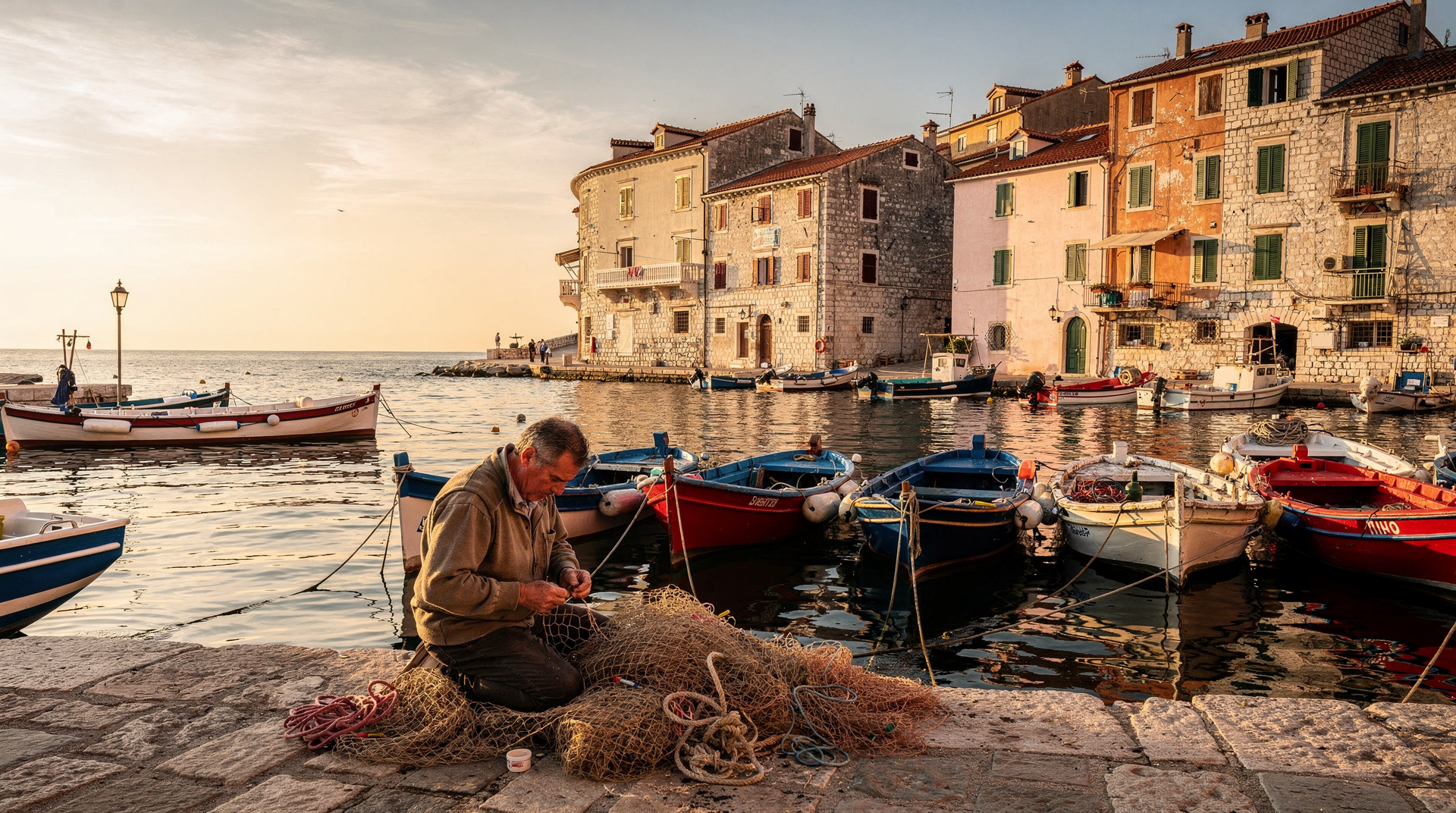
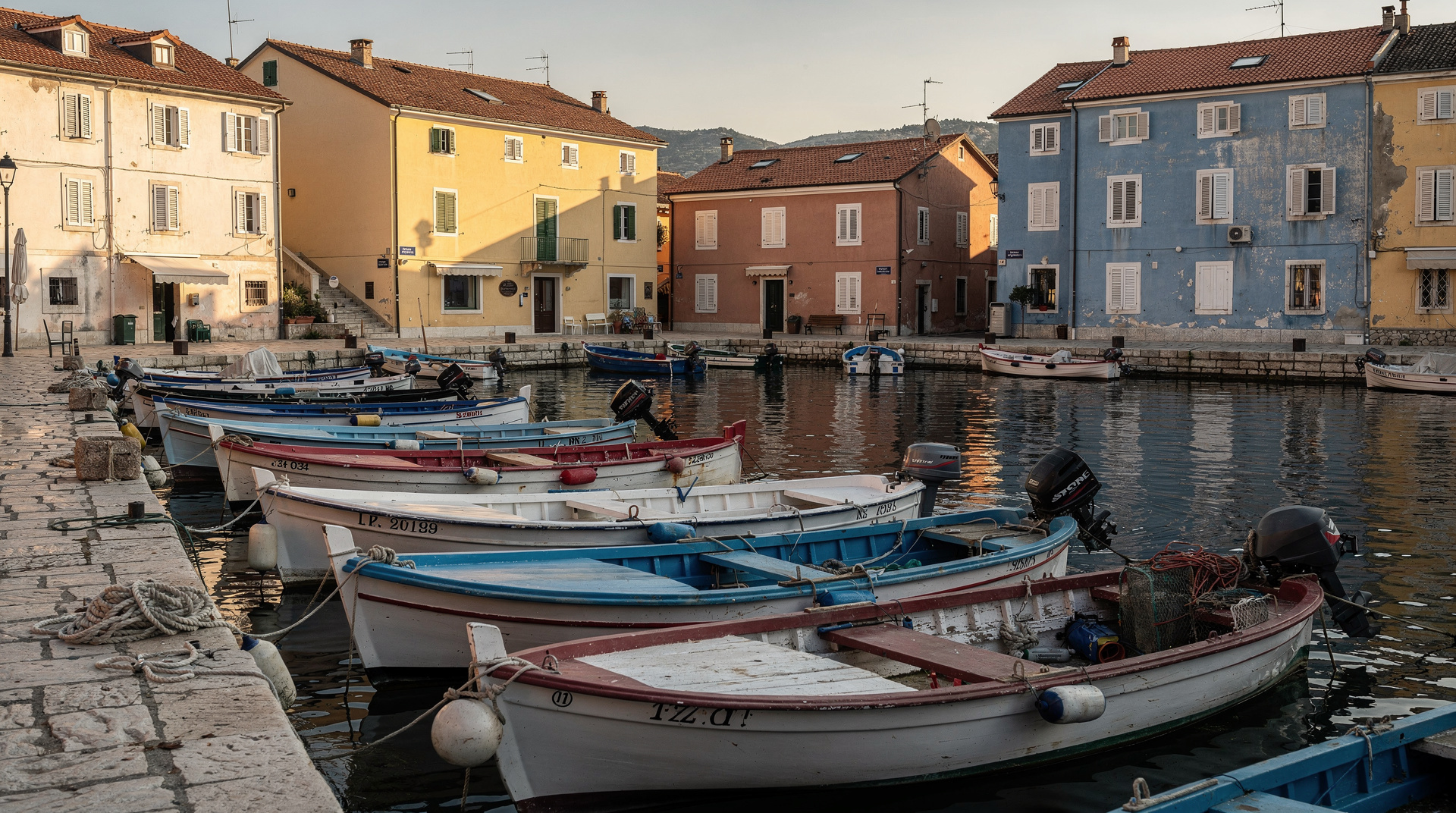
The harbour and morning fish market: The small daily fish market near the harbour runs from around 07:00 and is where locals shop. On a good morning you will see the daily catch — sea bass, bream, octopus, squid — sold directly from the boats. Arrive early.
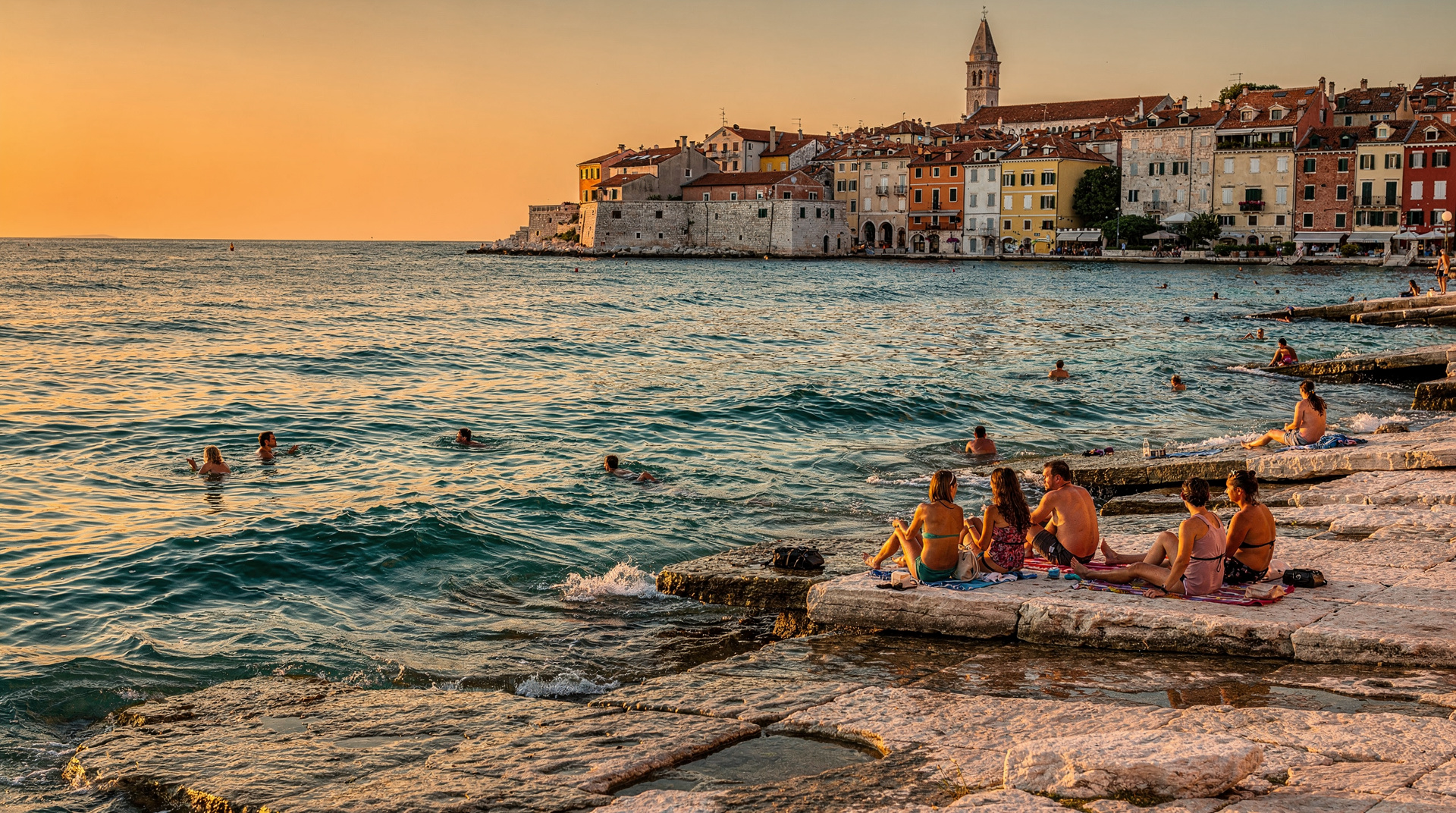
Swimming at Piran: The town has a few swimming areas along the riva and at the Punta promontory. These are primarily rocky and concrete platforms — not sandy beaches. The water is clean and the setting is pretty, but if a sand beach is your priority, head to Portorož or Strunjan.
A private walking tour of Piran’s old town with a local guide covers the history in depth and gets you into the Tartini Museum and cathedral with context that makes a real difference.
Day trips and excursions from Piran
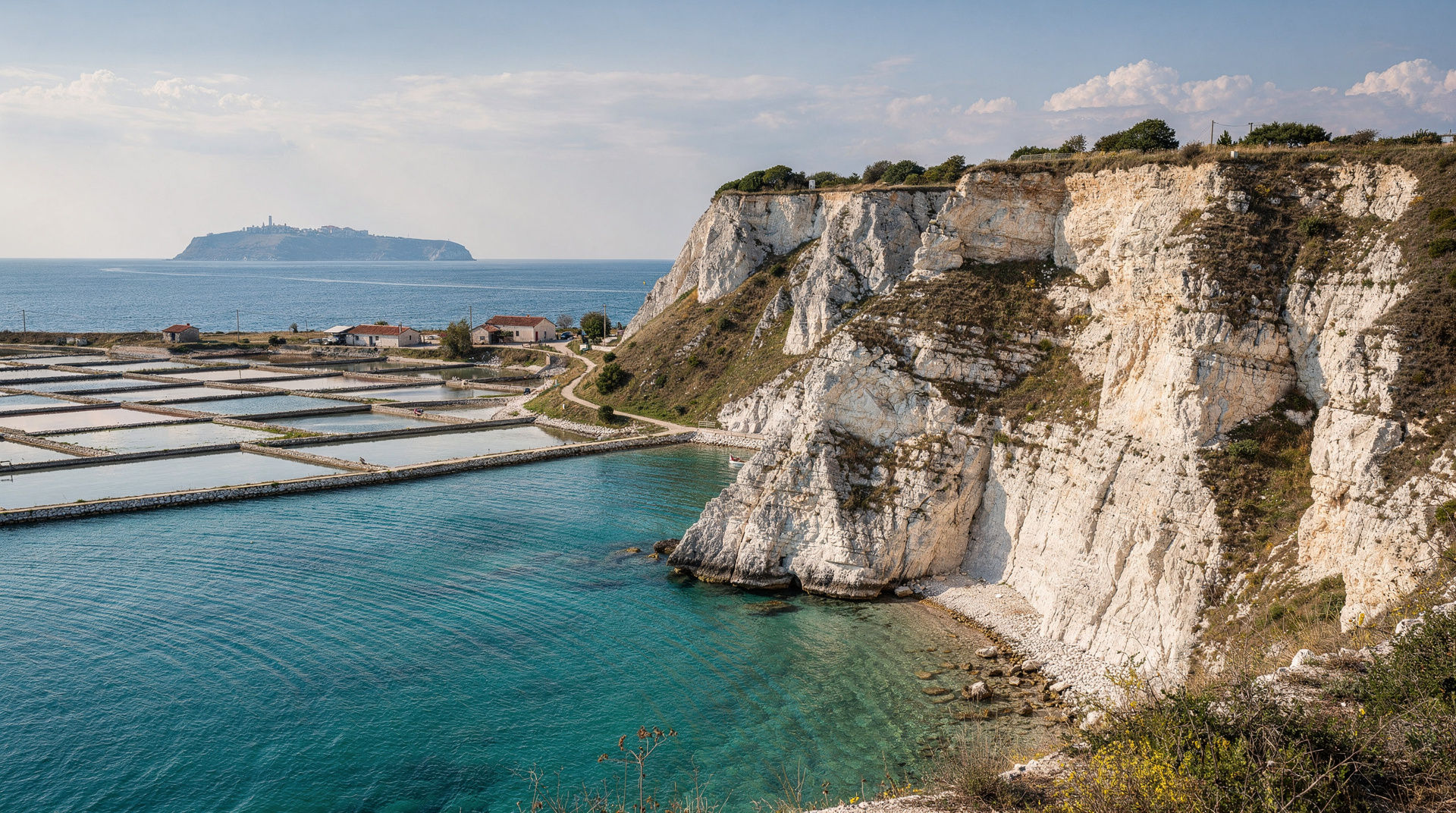
Sečovlje saltpans: One of the most surprising landscapes on the Slovenian coast. The saltpans south of Piran have been harvested since the 13th century and are now a nature reserve (Krajinski park Sečovlje Solinarne). The brine attracts flamingos and hundreds of migratory bird species; the salt harvest still happens by hand using traditional methods each summer. You can visit on foot or by bike (the path from Piran is around 4 km). Entry to the salt museum costs approximately EUR 5.
Strunjan nature reserve: Ten minutes north of Piran by bike or 20 minutes on foot from the edge of town. The Strunjan lagoon is a protected coastal landscape with cliff walks, a shingle beach and clear water. Less visited than Piran itself and worth the short journey.
Portorož: Slovenia’s main resort town is 15 minutes away on foot or by bus. It lacks Piran’s character but has the best beach on the Slovenian coast (a proper sandy-gravel bay with beach bars), thalassotherapy centres and a large casino. See Portorož guide for details.
Izola: A lively fishing town 15 minutes up the coast by bus, with a good seafood restaurant scene and a less touristy feel than Piran. See Izola guide.
Parenzana e-bike trail: The old Parenzana railway line, which once connected Trieste to Poreč in Croatia, has been converted into a cycling and walking path. The section from Koper to Piran passes through Izola and offers beautiful coastal and hinterland views. The full stretch from Koper to Piran is about 30 km — very manageable on an e-bike.
An e-bike tour along the Parenzana trail is one of the best ways to see the coast if you are visiting for more than a day.
Food and drink in Piran
Seafood is the local speciality: Piran’s position on the Adriatic means the fish here is as fresh as it gets in Slovenia. The local catch — sea bass (brancin), sea bream (orada), octopus, squid and sardines — is typically grilled simply and served with boiled potatoes and Swiss chard (blitva). This preparation, called “na žaru” (grilled), is the correct way to eat fish on the coast.
Recommendations (confirmed trading as of 2025):
- Pri Mari: Local institution near the harbour, excellent seafood, expect to pay EUR 20–35 per person for a main course with a glass of wine.
- Fritolin pri Cantini: Excellent fried fish and seafood in a casual setting, very popular with locals. Prices are more moderate (EUR 12–20 per head).
- Kavarna Tartini: For coffee and pastries on Tartini Square — the setting is the thing here.
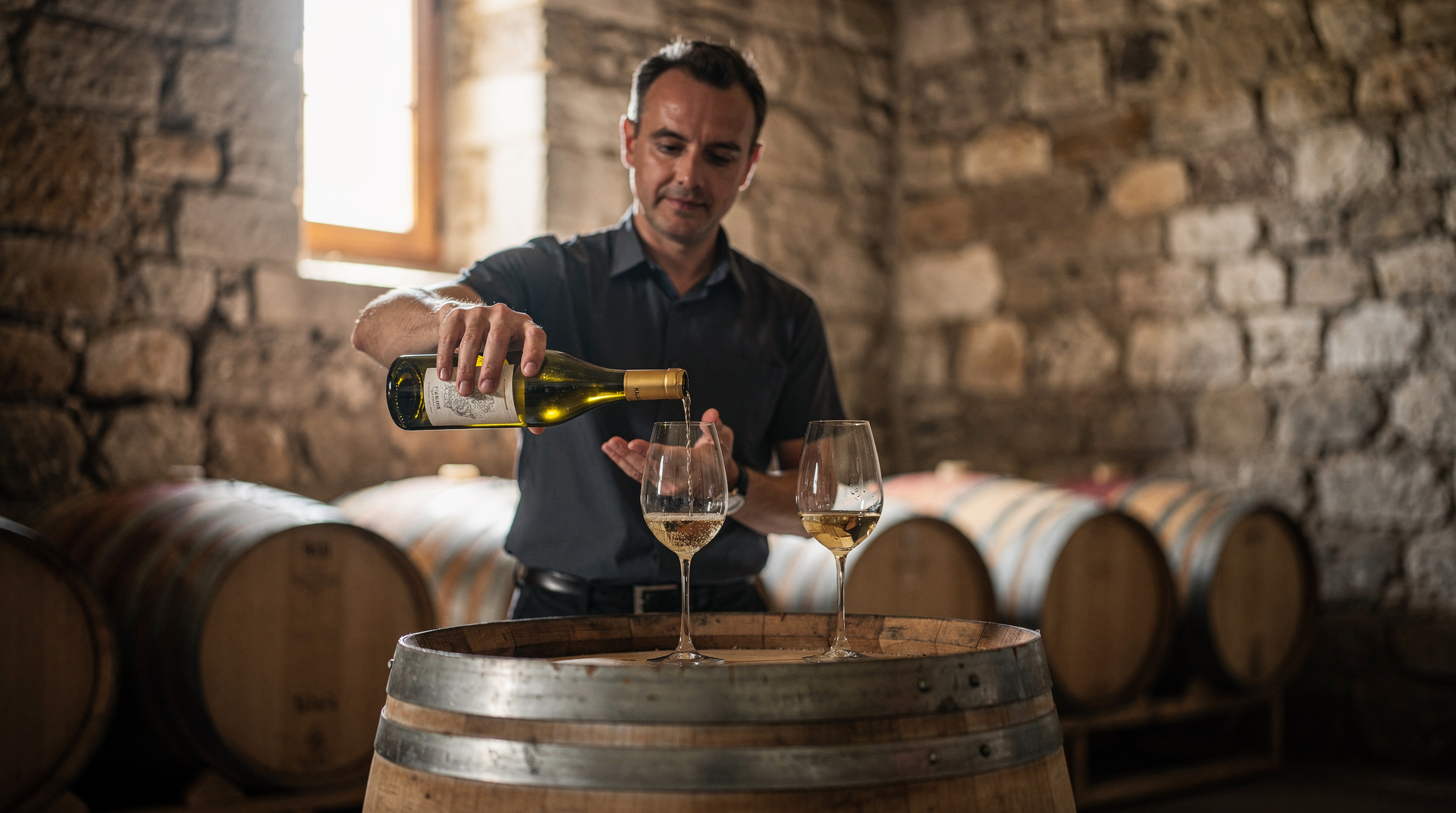
Local wine: The coast’s local variety is Malvazija (Malvasia), a dry white that pairs well with seafood. You will find it on the wine list everywhere. From the hinterland, Refošk — a robust red — is the other local option.
Olive oil: The Istrian olive groves produce some of Europe’s finest extra-virgin olive oil. See olive oil guide for producers and tasting notes.
Boat tours along the coast
The sea between Piran, Izola and Portorož is excellent for boat excursions, particularly in June and September when the water is warm and clear. Several operators run:
- Half-day boat tours to sea caves and coastal cliffs
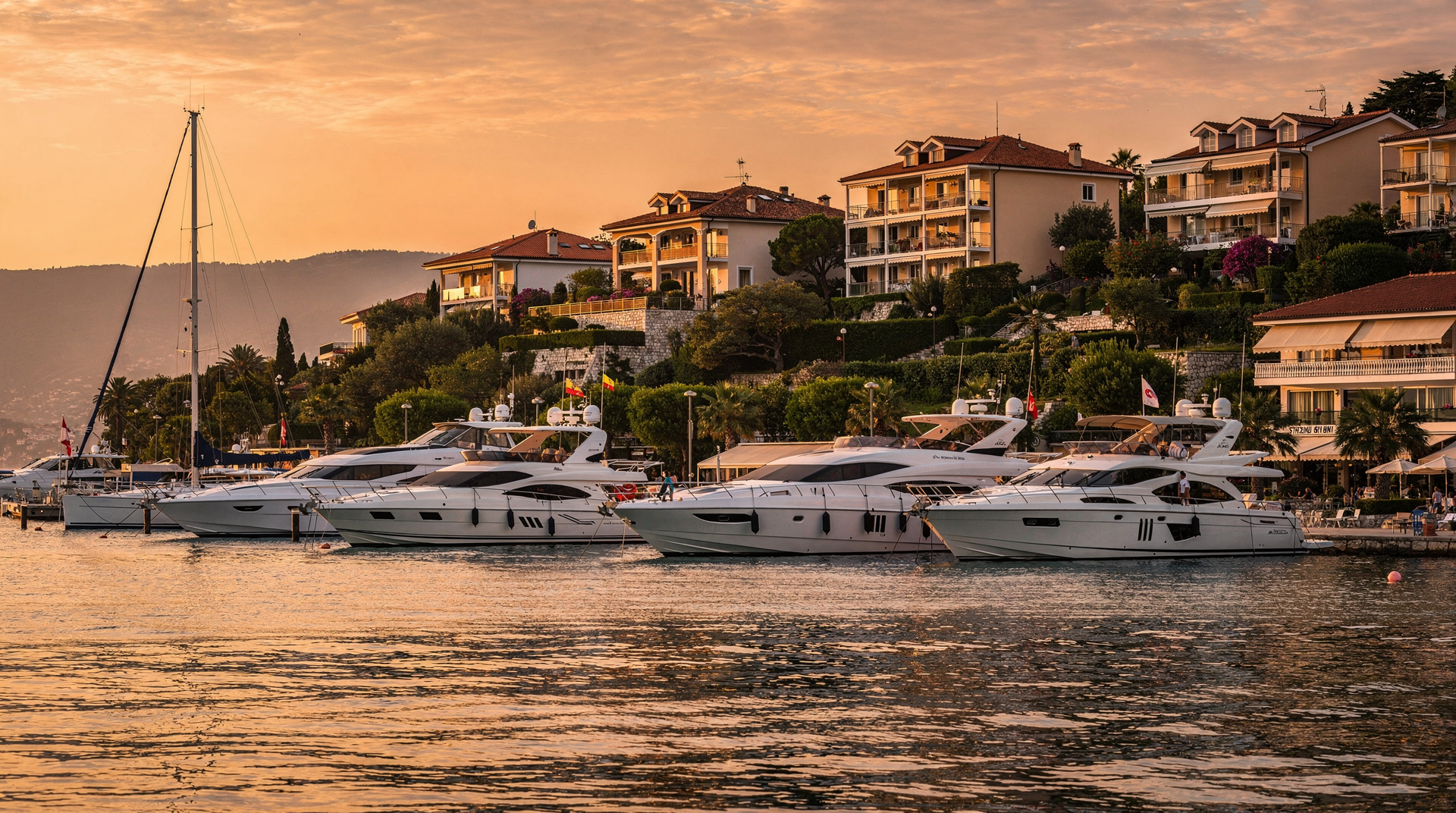
- Sunset cruises from the marina
- Snorkelling trips in the waters around Punta A boat excursion between Izola, Piran and Strunjan is a lovely way to see the coast from the water and reach swimming spots that are difficult to reach on foot.
Piran with a car: the wider Slovenian Istria circuit
If you have a car, the Slovenian Istria hinterland is worth exploring. The hill villages of Hrastovlje (with its famous Dance of Death fresco), Lipica (white Lipizzan horses) and the karst plateaux are within 30–45 minutes. A full day’s circuit might combine:
- Piran old town in the morning
- Saltpans in the early afternoon
- Hrastovlje or Lipica in the late afternoon
- Dinner back in Piran or Koper
Where to stay in Piran
Accommodation inside Piran’s old town is limited — the peninsula is small. Options range from boutique hotels to apartment rentals.
Hotels in Piran:
- Hotel Piran: The most prominent hotel right on the waterfront, good location, higher prices. Mid-range to luxury.
- Vile Park: In Portorož but adjacent to Piran, with better facilities. A practical option if you need a full resort.
- Apartments: Numerous private rooms and apartments are available through the usual booking platforms at more moderate prices (EUR 60–120/night depending on season).
If you prefer a resort base with better beach access and more dining options, staying in Portorož and walking to Piran (15 minutes) is a practical alternative. See Portorož guide.
Honest assessment: what Piran does and does not do well
Piran does exceptionally well at being beautiful. The old town architecture, the hill-top views, the seafront evenings and the local seafood are all genuinely excellent. It also does reasonably well at being manageable — the car-free centre means the old town has a different feel from many tourist destinations.
What Piran does not do well: it can feel crowded to the point of uncomfortable on August afternoons, when the narrow streets are packed with day-trippers and the few good restaurants have queues. The beaches within the old town are minimal. And the town essentially shuts down in October–November, with many restaurants and businesses closing until spring.
The sweet spot for Piran is a May or September visit, staying two nights, with a half-day boat excursion and a cycling afternoon to the saltpans built in. That version of a Piran trip is close to perfect.
For a deeper look at the whole Slovenian coast, see the Slovenian coast complete guide.
A wine and food walking tour of Piran combines the old town sights with local tastings — a good way to find the best producers and eateries in one afternoon.
Piran’s architecture: a closer look
Walking Piran’s old town with some architectural awareness makes the experience considerably richer. Several elements are worth knowing:
The Venetian Gothic style: The characteristic arched windows with trefoil or ogee tracery (pointed Islamic-influenced arch within a framing arch) appear throughout the old town on buildings from the 14th to 16th centuries. The Venetian House (Beneška hiša) on Tartini Square is the best example, but similar windows appear on dozens of buildings throughout the lanes.
The defensive walls: Piran’s 15th-century walls were built in response to Ottoman raiding along the Adriatic coast. The main wall circuit runs from the hilltop down to the sea on both sides of the peninsula. The section along the northern ridge is well-preserved; the gates (porta) that once controlled entry into the town are partially visible, particularly the Porta Dolfin facing inland.
The roofscape: From the bell tower, look down at the rooftop detail — the orange terracotta tiles, the laundry (still used by some residents), the forest of chimneys and the occasional urban garden or terrace. This is the domestic reality of Venetian-era urban planning, largely unchanged.
The Tartini statue: The bronze statue in the square’s centre was commissioned in 1896, made by Antonio dal Zotto and shipped from Venice. The choice to honour Tartini reflects the mixed Italian-Slovenian heritage of the coast — Tartini himself was of Slavic and Italian origin, typical of the Istrian littoral.
Piran with children
Piran works well with children if you manage expectations and energy levels:
What children enjoy: The bell tower climb (small adventure), the harbour (boats), the swimming areas near Punta lighthouse (the rocks have lots of small crabs and sea life to investigate), and the alleys of the old town (which feel genuinely labyrinthine to a child).
Practical notes: The narrow stone streets are NOT pushchair-friendly — the cobbles and steps make wheeled mobility very difficult. Baby carriers or confident toddler walkers are the appropriate approach. Bring water and snacks — the old town shops can close for lunch (14:00–16:00) and in the heat of the afternoon.
Restaurant options with children: The seafood restaurants are not the most child-friendly by default. Pizza is available at several spots in the town and is the practical fallback. Most restaurants have high chairs on request.
Piran versus Rovinj (Croatia): the honest comparison
Many visitors to the Slovenian coast ask how Piran compares to Rovinj in Croatia — both are Venetian-era peninsula towns on the Adriatic with similar heritage.
Architectural quality: Very close. Rovinj has more intact historic streets and a larger old town. Piran has a more dramatic peninsula position and arguably the better single view (from the bell tower across the Gulf).
Crowds: Rovinj is significantly more crowded in high season — it is one of Croatia’s most popular destinations and sees enormous visitor numbers in July–August. Piran gets busy but at a lower intensity.
Food quality: Comparable. Rovinj’s restaurants are slightly more varied and the Croatian wine (Malvazija Istarska) and Istrian truffle products are excellent. Piran’s seafood and local Malvazija are equally good.
Price: Slovenia is slightly more expensive than Croatia for accommodation and meals.
The verdict: Rovinj is the better destination if you want more architectural grandeur and a longer coastline to explore. Piran is the better choice if you are already in Slovenia and want a day or two on the coast without crossing an international border. Both are worth visiting; they are different enough to complement rather than duplicate each other.
Practical information summary
Opening hours: Most churches in Piran are open 09:00–12:00 and 15:00–18:00. The bell tower (campanile) is open most of the day in season. The Tartini Museum has specific opening hours — check current times.
Best views in Piran:
- Bell tower (EUR 2–3, morning or late afternoon)
- Old town walls (free)
- Ojstrica viewpoint above the seawall
Money: ATMs are available in Tartini Square and near the main car park. Most restaurants accept cards; smaller shops may prefer cash.
Emergency numbers: 112 (general emergency, Slovenia). The nearest hospital is in Izola (15 minutes).
Best photography spots in Piran
Piran rewards photographers more than almost anywhere else on the Slovenian coast, and a handful of spots consistently produce the best results. The bell tower at St George’s Cathedral gives the classic elevated view over the terracotta rooftops toward the Gulf of Piran — best in the hour after sunrise or before sunset, when the light rakes across the roof tiles. Tartini Square at dusk, once the day-trip buses have gone and the café lights come on, captures the town’s genuine atmosphere rather than its crowds.
The town walls offer a wide panoramic composition of the whole peninsula with the sea on both sides — arrive by 08:00 for an empty frame. For a classic postcard shot of the peninsula itself, the viewpoint from the Punta lighthouse breakwater looking back toward the old town works well in morning light. See the best photography spots in Slovenia for how Piran compares with the country’s other standout locations.
Piran versus the rest of the Slovenian coast: a quick comparison
If Piran’s crowds or limited accommodation put you off, it helps to see how it stacks up against its immediate neighbours before deciding where to spend your nights.
| Piran | Portorož | Izola | |
|---|---|---|---|
| Character | Medieval, Venetian, car-free | Purpose-built resort | Working fishing town |
| Beach | Small rock/concrete platforms | Best sandy beach on the coast | Modest, mostly rocky |
| Hotels | Limited, books out fast | Largest selection, all budgets | Fewer, better value |
| Food | Good but touristy near the square | Hotel restaurants, some good seafood | Best value seafood on the coast |
| Best for | Atmosphere, photography, evenings | Beach holidays, spas, families | Local feel, budget seafood |
See the Portorož guide and Izola guide for the full picture on each, and the Piran vs Portorož comparison if you’re choosing where to actually sleep.
A realistic two-night itinerary
For visitors who take the “give it two days” advice seriously, here is how those two nights typically play out:
Night 1, arrival afternoon: Check in, walk the old town walls before dinner, watch the sunset from St George’s terrace, dinner at a restaurant a street back from Tartini Square.
Day 2 morning: Climb the bell tower before the heat and crowds build (before 09:00), visit the Tartini Museum, browse the morning fish market near the harbour.
Day 2 afternoon: Cycle or e-bike the Parenzana trail toward Izola, or walk to the Sečovlje saltpans. Swim at Fiesa or the walls’ swimming platforms on the way back.
Day 2 evening: Dinner at Fritolin pri Cantini or Pri Mari, a last walk along the riva after the day-trip buses have left.
Day 3 morning (if staying a third night): A boat excursion to the sea caves, or a slower morning with coffee on Tartini Square before it fills up. For a longer regional loop, Trieste is 30 minutes away and makes a natural half-day extension.
Frequently asked questions about Piran travel guide
How do I get to Piran from Ljubljana?
Direct Arriva buses run from Ljubljana to Piran in around 2h30, costing approximately EUR 12–15. The service runs several times a day. By car it is 130 km on the A1 motorway — roughly 1h30. Piran has no through-road for non-residents; park at the Fornače car park (EUR 1.50/hr) and walk or take the shuttle bus into the old town.Where do I park in Piran?
The main public car park is Fornače, about 800 metres from the town centre (EUR 1.20–1.50 per hour, daily cap applies in summer). A free shuttle bus runs between Fornače and the Tartini Square area in peak season. Do not attempt to drive into the old town centre — the streets are pedestrian-only and access is restricted.What is the best time to visit Piran?
May–June and September–October offer the best combination of warm weather, swimmable sea and manageable crowds. July and August are peak season: the town gets very busy, accommodation prices double, and the narrow streets can feel claustrophobic at midday. Early mornings and evenings are beautiful year-round.Is Piran a good base for the Slovenian coast?
Yes — it is the most atmospheric base on the coast, though accommodation is limited. From Piran you can reach Portorož in 15 minutes on foot or by bus, Izola in 15 minutes by bus, and Koper in 30 minutes. The Parenzana cycling route, the saltpans of Sečovlje and the beaches of the Strunjan nature reserve are all within easy reach.What are the best beaches near Piran?
Piran itself has small concrete and rocky swimming areas near the town walls. The best sandy-gravel beaches are at Portorož (500-metre sandy beach, 15 min away) and Strunjan (naturist and clothed sections in a protected lagoon, 10 min by bike). Fiesa, a small cove 20 minutes' walk from the old town, is quieter and popular with locals.What is there to do in Piran for two days?
Day one: walk the old town walls, visit St George's Cathedral and the bell tower, explore Tartini Square and the waterfront. Swim at Punta beach or walk to Fiesa. Day two: cycle or e-bike the Parenzana trail toward Izola, visit the Sečovlje saltpans, or take a boat excursion along the coast. Add a seafood lunch and a sunset from the town walls.Are the day trips from Portorož to Piran worth it?
Piran is only 15 minutes from Portorož on foot or by local bus, so it is less a day trip and more an afternoon walk. If you are staying in Portorož, walking to Piran for dinner and staying for the evening is one of the best things to do on the coast. The route along the seafront path takes about 25 minutes and passes several swimming spots.
Top experiences
Bookable activities with verified prices and instant confirmation on GetYourGuide.