Koper guide: Slovenia's port city and the best kept secret on the coast
From Koper: Piran and panoramic Slovenian coast tour
Is Koper worth visiting?
Yes — and it is consistently underrated. Koper has a genuinely beautiful medieval old town comparable in quality to Piran but with almost none of the tourist crowds. The food scene is better value, the logistics are easier (railway station, good parking), and the architecture is fascinating. Half a day to a full day is ideal.
Koper: the transport hub that deserves more than a transfer
Koper has a reputation problem. Ask most travellers about the Slovenian coast and they will mention Piran; Koper appears mainly as a place you pass through on the bus. This is a shame. The medieval old town — set on a former island now connected to the mainland — contains some of the finest Venetian Gothic and Renaissance architecture in the country, almost entirely uncrowded, and the local food scene is the most honest-value on the coast.
| Where | Slovenian coast, the only town with a railway station |
| Cost | seafood meal around EUR 15–25/person |
| Getting there | train ~2h or bus ~1h45 from Ljubljana |
| Time needed | half-day to a full day; rewards an overnight stay |
| Best for | uncrowded old town, food value, transport connections |
It helps to understand Koper’s structure. The city has two distinct halves: the old town (the former island), which is compact, historic and worth lingering in, and the modern port city that surrounds it, which is neither — Koper is one of the busiest cargo ports in the Adriatic and the industrial infrastructure shows. Navigate past the port and the modern town and you reach the medieval core, which is quietly wonderful.
Koper’s geography and history
Koper was a Roman settlement and later a Byzantine stronghold, then Venetian for three centuries before passing to Austria-Hungary. The Venetian period left the most visible mark on the architecture — the same Gothic arches, stone-carved lions and patterned facades that you see in Piran and along the Istrian coast. The town was originally a proper island; land reclamation in the 18th and 20th centuries connected it to the mainland.
Today Koper is the administrative centre of the Slovenian coast region (Obalno-kraška statistična regija) and the economic driver of the coast, largely through the commercial port. The population is around 26,000 — significantly larger than Piran or Izola — which means the town has the bakeries, markets and local restaurants of a genuinely functioning city rather than a tourism-dependent resort.
Getting to and around Koper
By train: Direct trains from Ljubljana to Koper run several times daily, approximately 2 hours. This is the only railway station on the Slovenian coast, making Koper the logical entry point for travellers using public transport. From Koper station it is about 15 minutes’ walk or a short bus ride to the old town.
By bus: Arriva buses from Ljubljana every 1–2 hours, around 1h45, EUR 8–10. Faster and more frequent than the train in most windows.
By car: A1 motorway from Ljubljana, exit toward Koper. Around 1h15–1h30 depending on traffic. Koper has several parking garages near the old town, significantly easier than Piran.
From Italy: Trieste is 30 km away (about 30–40 minutes by car). International buses also connect Koper to Trieste.
Local connections: From Koper, local buses run to Izola (15–20 min), Portorož (35–40 min) and Piran (45–50 min) every 20–30 minutes in season.
On foot and by bike: The old town is compact and walkable. The Parenzana cycling trail starts in Koper for the coastal section toward Piran.
The old town: what to see
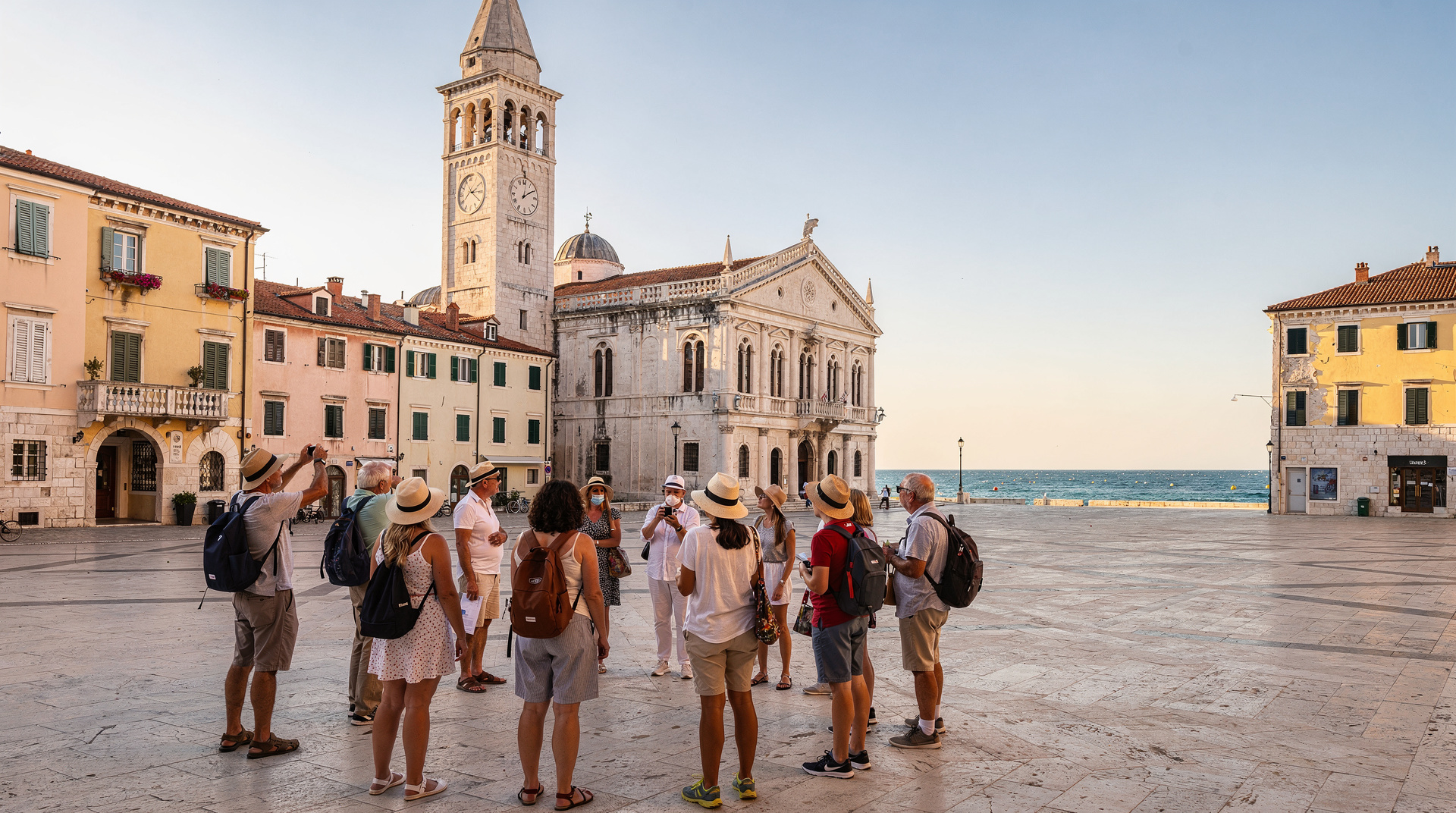
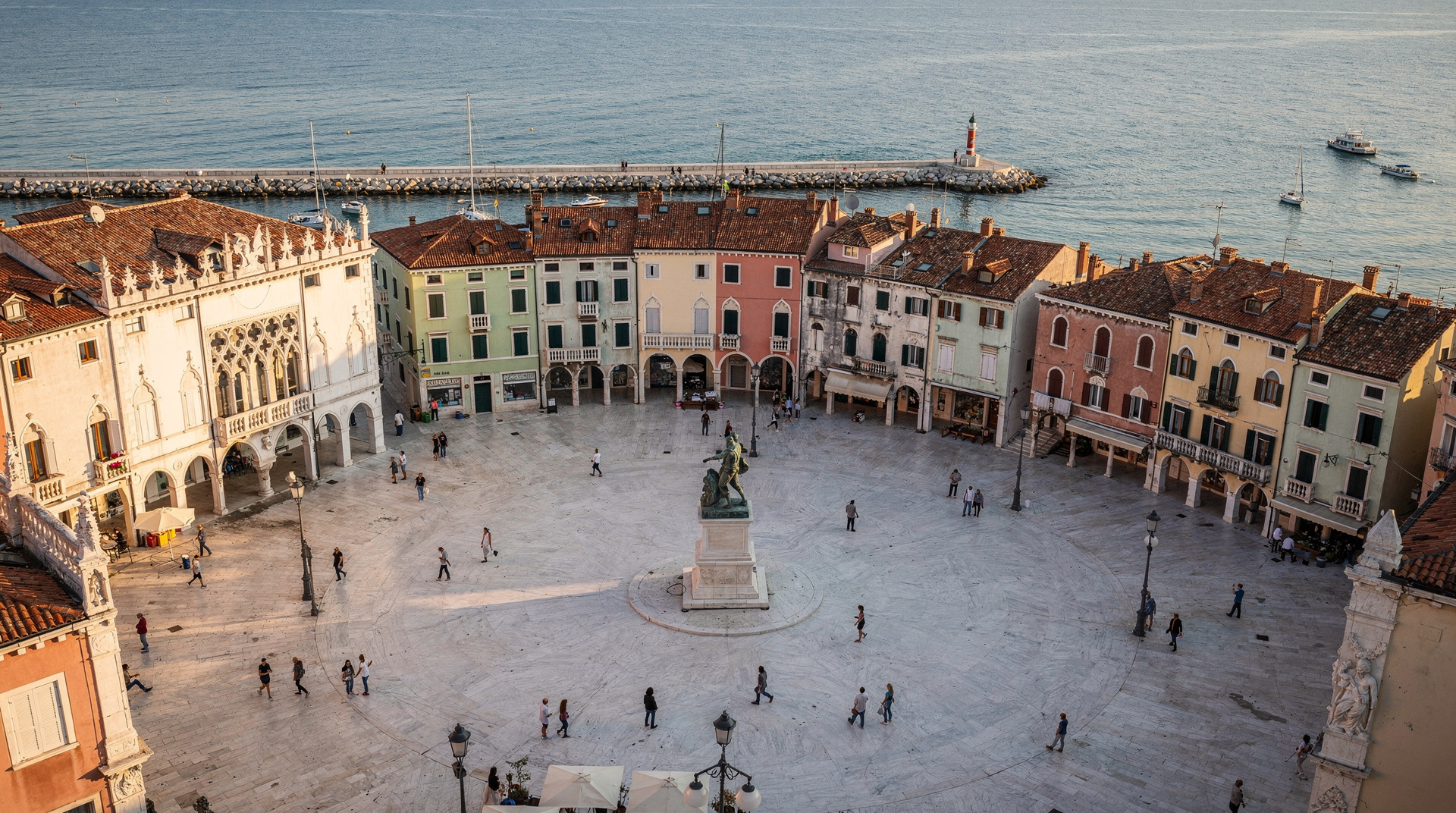
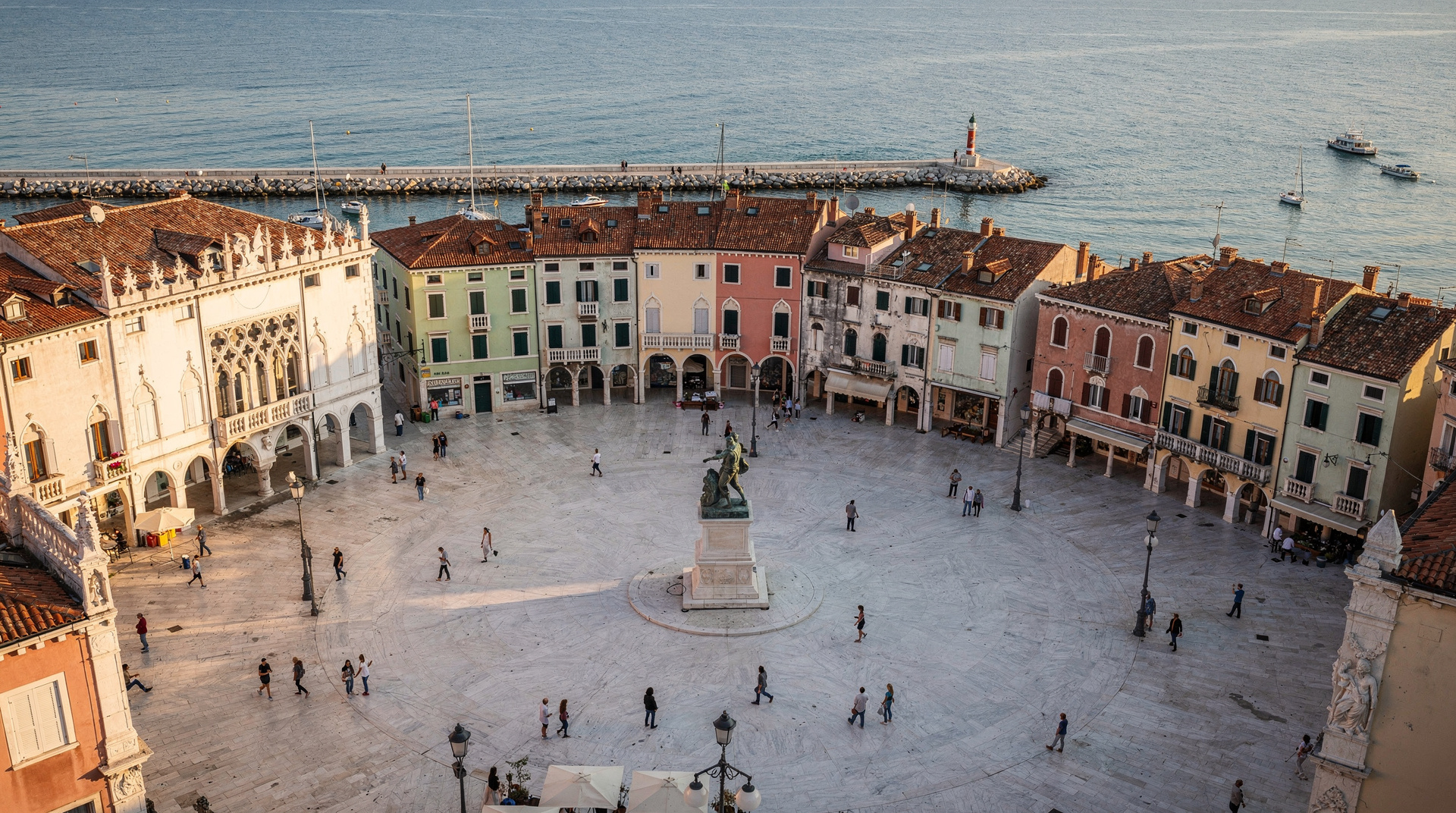
Tito Square (Titov trg): The central piazza and the hub of Koper’s civic life. Dominated by three major buildings:
- The Praetorian Palace (Pretorska palača): A Venetian Gothic and Renaissance palazzo from the 15th–16th centuries, now used for the town hall and cultural events. The façade is one of the finest in Slovenia.
- The Cathedral of the Assumption (Stolnica Marijinega vnebovzetja): A Romanesque-Gothic cathedral with a detached bell tower you can climb for EUR 2–3. The interior contains the remains of St Nazarius, the city’s patron.
- The Muda Gate (Mestna vrata Muda): The main gate of the old town, built in the early 16th century, with a distinctive Renaissance arch and the city’s coat of arms.
The old town lanes: East and north of Tito Square, a dense network of medieval lanes contains the most interesting architecture in Koper — far less photographed than Piran’s waterfront, and entirely accessible on foot. Look for the Fontik (the old grain warehouse), the Armoury and the various Gothic-windowed palaces that line the main streets.
Da Ponte Fountain: In the centre of a small square near the Praetorian Palace, a 17th-century fountain that still functions as a civic landmark.
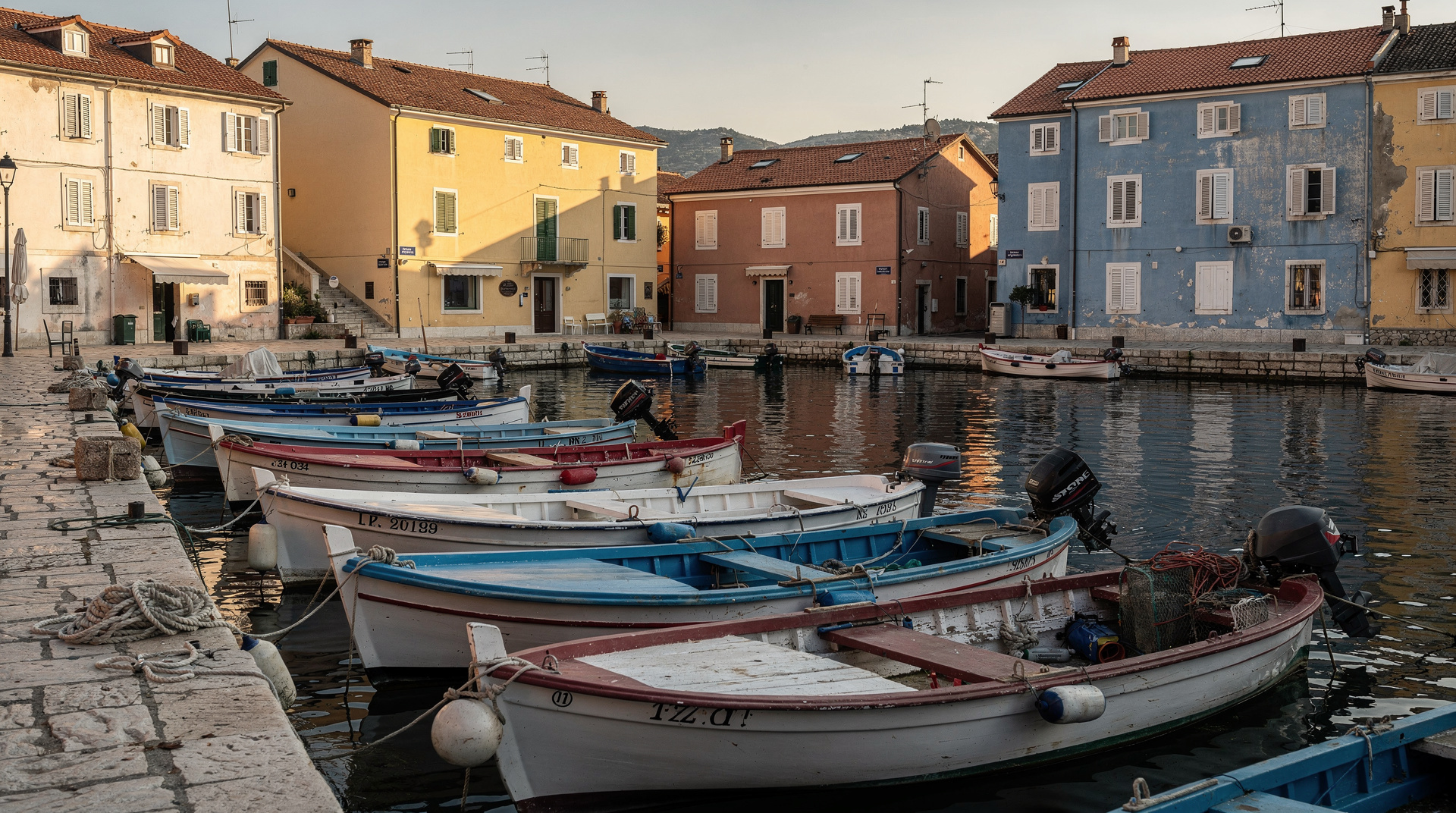
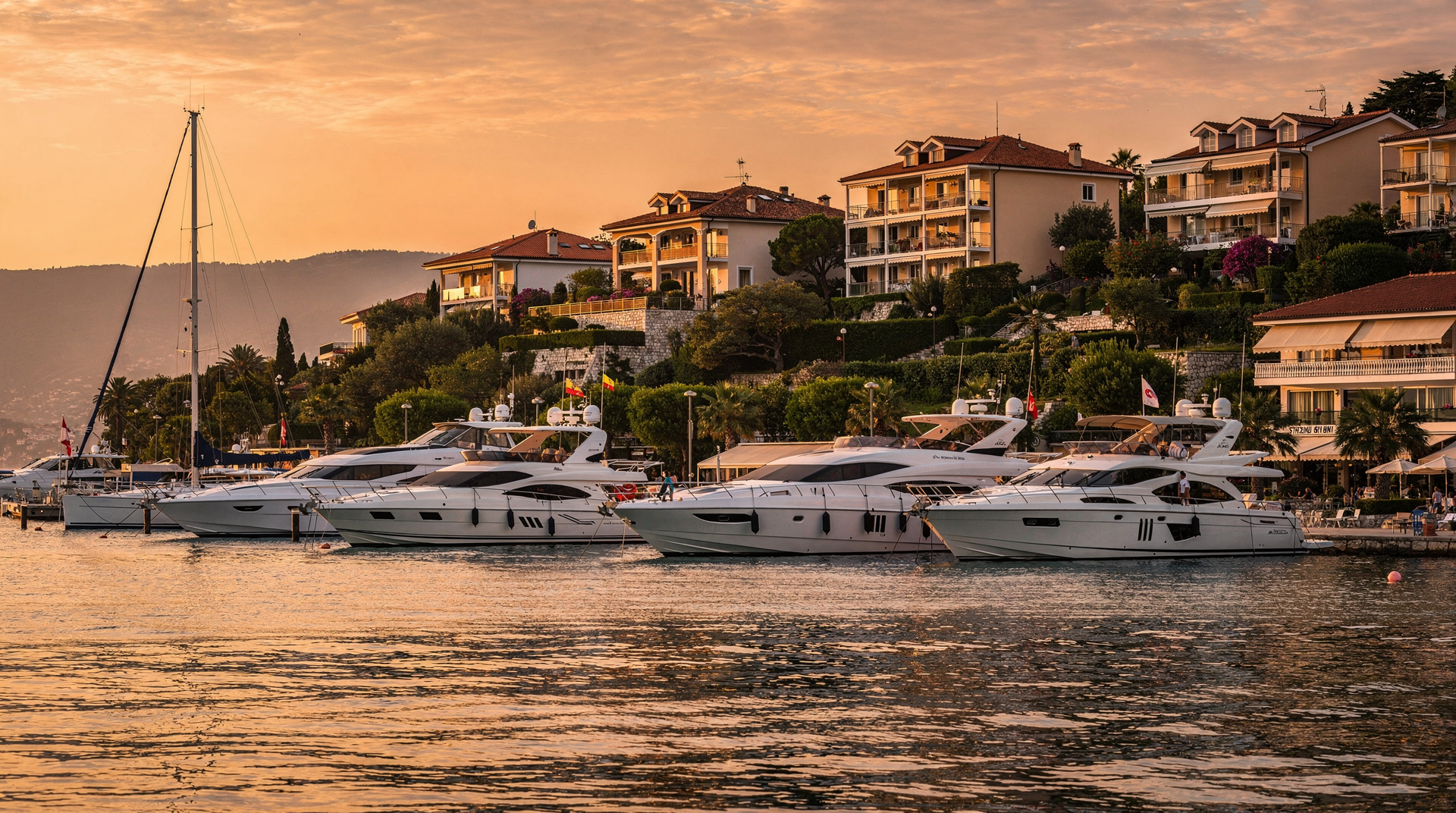
The waterfront (Koper marina): A pleasant if unremarkable seafront promenade with views across to the Gulf of Trieste. The commercial port is visible to the south — not scenic, but honest about what Koper actually does.
The morning fish market: Near the harbour, runs from around 07:00–11:00. Smaller than Ljubljana’s central market but offering the daily coastal catch at prices that reflect local demand rather than tourist positioning.
A panoramic coastal tour from Koper to Piran covers the highlights of both towns with transport and a local guide — a practical option for a first visit without a car.
Food and drink in Koper
Koper’s food scene punches significantly above its tourist profile. With a large local population and proximity to both Italian and Istrian culinary traditions, the town has the kind of everyday restaurants that are genuinely cooking for locals.
Key specialties:
-
Grilled fish (na žaru): The same sea bass, sea bream and squid that you find in Piran, at lower prices. Koper’s fish restaurants are oriented toward local diners rather than tourists.
-
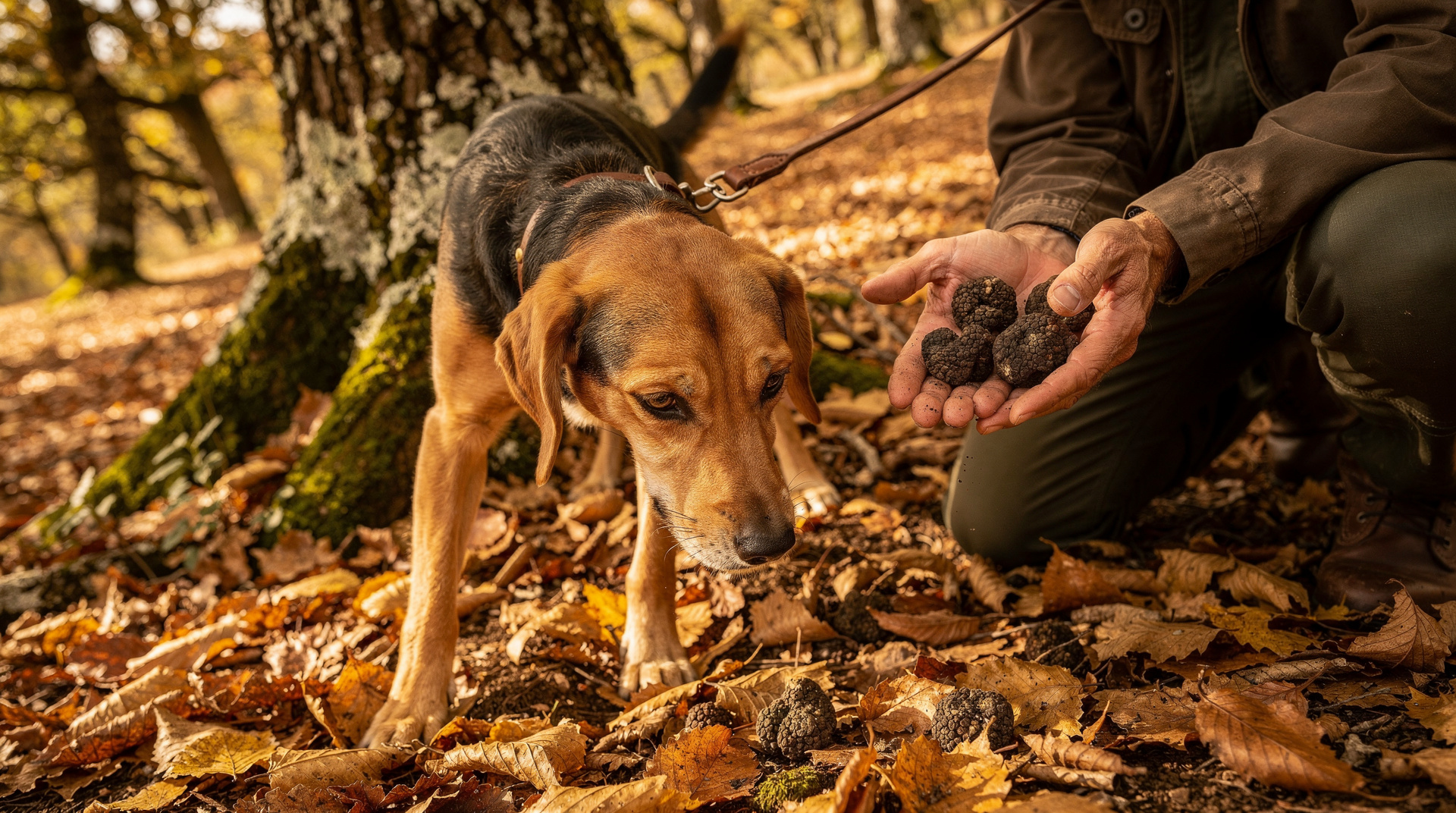
Pasta and truffles: The proximity to the Istrian truffle-hunting territory (see truffle hunting guide) means truffle pasta and truffle risotto appear on menus here in autumn (September–November peak season).
-
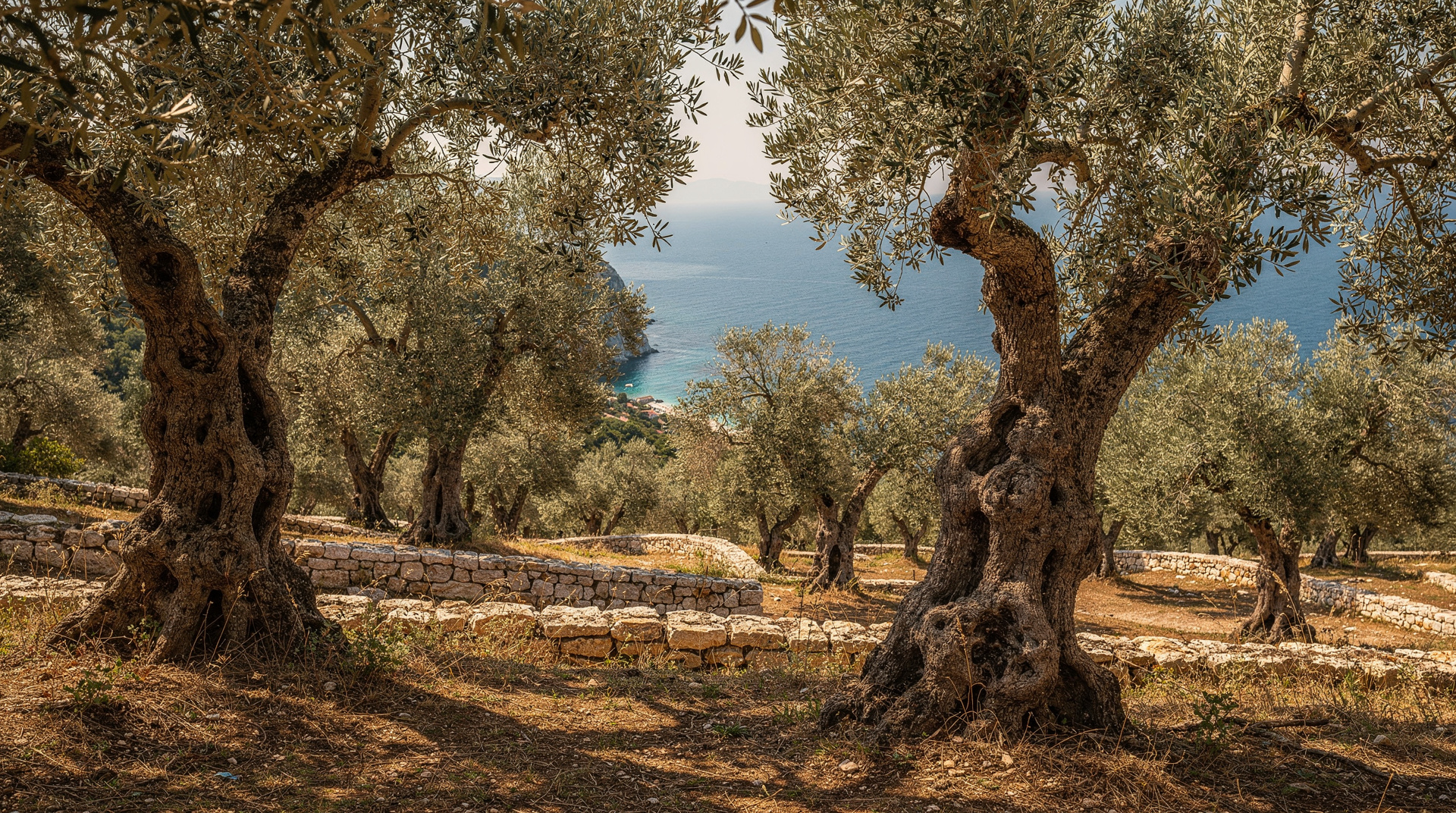
Istrian olive oil: The hills above Koper are planted with olive groves. The local Belica variety produces a distinctive peppery oil. See olive oil guide for estates offering tastings.
-
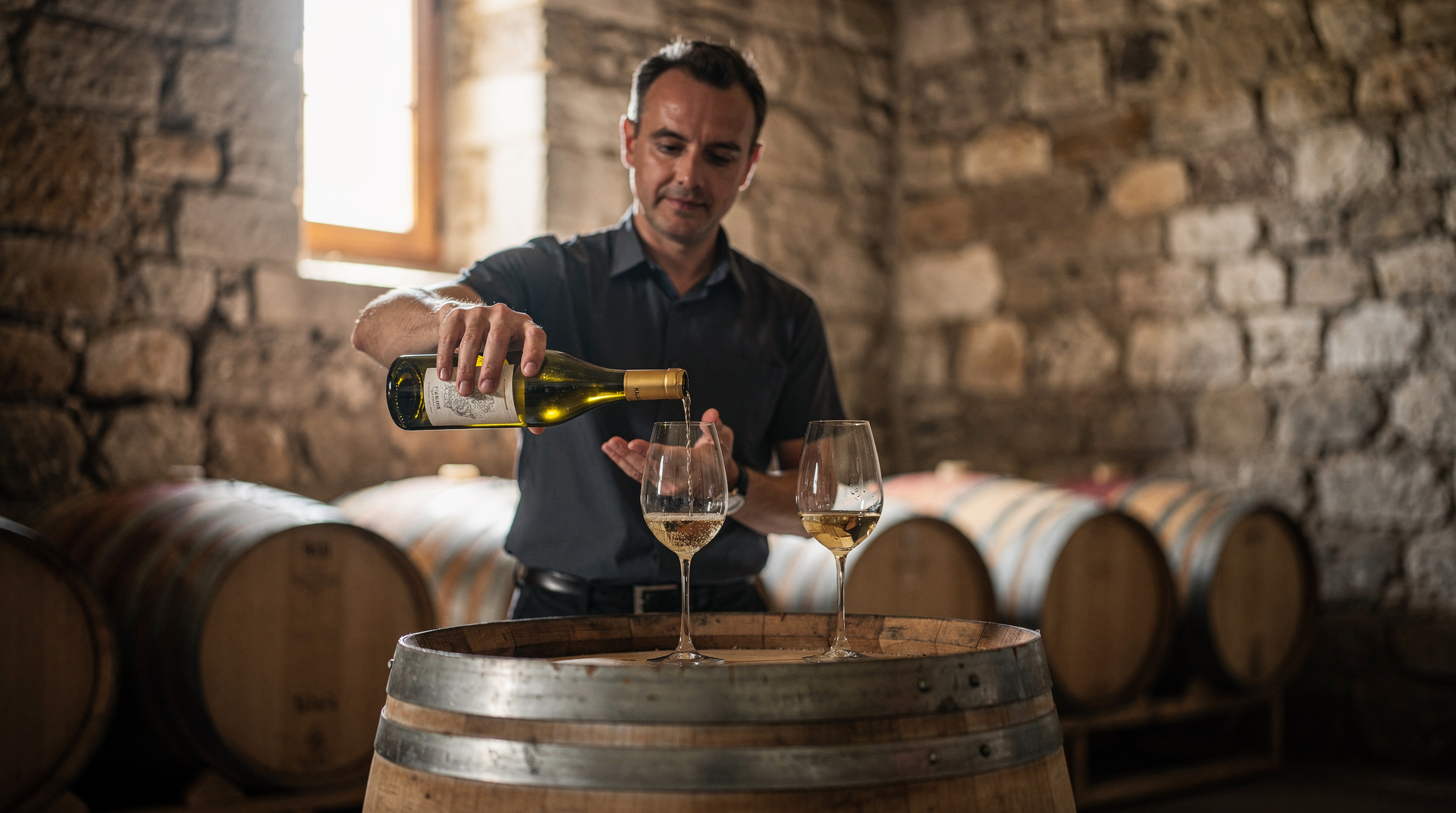
Malvazija: The local dry white wine, found everywhere and very well matched to seafood.
Recommended restaurants (confirmed 2025):
- Istrska Klet Slavček: A local institution specialising in Istrian cuisine — homemade pasta, truffles, local wine. Excellent value (EUR 15–25 per head).
- Restavracija Loggia: In the old town near the Praetorian Palace, good for a sit-down lunch with regional dishes.
- Caffe Bar Praetorian: For coffee on the square — the architecture is the attraction here.
A food and wine bus tour of the Koper Riviera hinterland visits olive oil producers, wine estates and traditional taverns in the hills above the coast — the best single way to experience the food culture of Slovenian Istria.
Day trips from Koper
Izola: 7 km north, accessible by local bus (15–20 min) or by bike. The fishing town has a lively harbour scene and some of the best-value seafood on the coast. See Izola guide.
Piran: 22 km south, around 45–50 minutes by local bus. The old town is the coast’s star attraction and easily combined with a Koper base. See Piran travel guide.
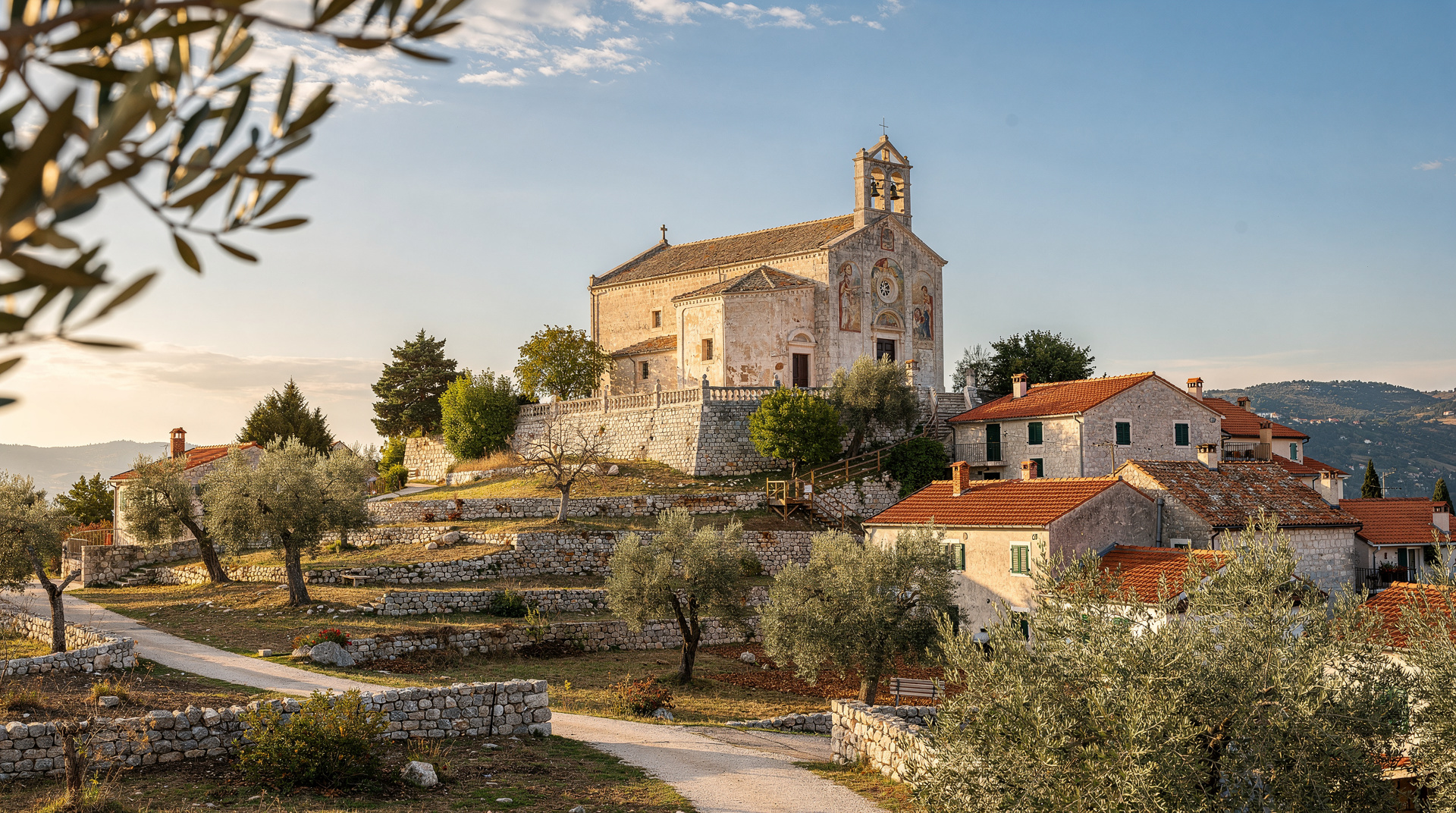
Hrastovlje: A small hill village 10 km east of Koper, known for the medieval Church of the Holy Trinity and its remarkable 15th-century fresco cycle depicting the Dance of Death. One of the most significant medieval artworks in Slovenia, almost entirely missed by international visitors. Entry approximately EUR 3.
Lipica: The original home of the Lipizzan horse and the world’s oldest stud farm. 20 minutes by car from Koper. Guided tours run daily (see current prices on the official Lipica website, lipica.org). See Slovenian Istria guide.
Trieste (Italy): 30 km away, a proper city day trip with one of Europe’s finest piazzas (Piazza Unità), Austro-Hungarian architecture and excellent coffee culture. Accessible by car in 30–40 minutes.
Where to stay in Koper
Accommodation in Koper is less celebrated than in Piran but has real practical advantages — more options, easier parking and lower prices.
Hotel Koper (4-star): The main upscale option, located near the old town. Comfortable and well-positioned, with conference and event facilities.
Hotel Best Western Koper: A solid mid-range option, functional and well-located for the old town and transport connections.
Apartments in the old town: Koper has a good selection of apartment rentals in the historic centre — often better value than hotels and giving the experience of staying in a working Venetian-era building. EUR 60–100 per night for a double.
The Koper base advantage: Koper is the only town on the coast with a railway station. If you are travelling by train or relying on public transport, staying in Koper and day-tripping to Piran and Izola by local bus is logistically the most efficient coast strategy.
A walking route through Koper’s old town
A self-guided walking loop through Koper’s old town covers the main sights in under 2 hours:
- Start at the railway station or the main bus station (both near the port area)
- Walk through the Muda Gate (the old town’s main entrance arch, early 16th century)
- Continue along Kidričeva ulica to Tito Square (Titov trg)
- Examine the Praetorian Palace façade and enter the Cathedral of the Assumption (free entry; the bell tower costs EUR 2–3 to climb)
- Walk east from the square through the old town lanes — Čevljarska ulica and Župančičeva ulica are the most interesting streets for Venetian-era architecture
- Find the Brutti Palace and Belgramoni-Tacco Palace — two of the finest domestic buildings in the old town
- Return through the lanes to the harbour waterfront (Kopališko nabrežje)
- Walk along the waterfront back toward the Muda Gate
This loop is comfortable in 90 minutes; add 30 minutes for the bell tower climb and a coffee in Tito Square.
Koper’s cultural calendar
Several events make Koper worth visiting at specific times:
Slamicom film festival: Koper hosts an annual short film festival in summer (dates vary). A modest but genuine cultural event.
Koper Carnival: A traditional pre-Lent carnival with processions and costumes — smaller than the famous Ptuj carnival but with local character.
Central market days: The main market near the Muda Gate is most active on weekday mornings. Thursday and Saturday have the largest presence of local producers.
The olive oil harvest (October–November): If you are in the region in October, many of the olive estates above Koper are pressing. Some welcome visitors during the harvest — ask at the tourist information office.
Koper for cyclists
The Parenzana cycling trail starts at Koper for the coastal section heading south toward Izola and Piran. The route is well-marked and follows the old railway bed.
For shorter local rides, the seafront path toward Izola (7 km, flat, no significant traffic) is an easy morning ride. The hillside roads toward Hrastovlje and the olive country above Koper offer more challenging terrain with beautiful views back toward the sea.
Bike rental is available in the Koper marina area (EUR 10–20 for a standard bike, EUR 25–35 for an e-bike per day).
Honest assessment: Koper’s strengths and weaknesses
Koper’s strength is its authenticity. The old town is beautiful and genuinely uncluttered — you can visit Tito Square on a summer morning and share it with a handful of other tourists, a contrast with Piran at midday. The food is better value. The transport connections are better than anywhere else on the coast.
The weakness is the framing: much of Koper’s identity is industrial (the port) and administrative (the regional capital), and the modern city that surrounds the old town is not particularly attractive. You need to know where to look — and this guide tells you.
For most coast itineraries, Koper works best as a morning stop combined with an afternoon in Izola or Piran, using the excellent local bus connections. But it also rewards a night’s stay if you want to eat well and see the old town without the day-tripper rhythm.
Koper’s food market: the best in the region
The Koper central market (centralna tržnica) is worth visiting on a weekday morning. It operates primarily from 07:00 to approximately 13:00, with the freshest produce available in the first hour.
The market combines a permanent covered hall (fish, meat, dairy) with outdoor stalls that expand on Thursdays and Saturdays. What you will find:
The fish counter: Sea bass, sea bream, sardines, octopus, squid — the daily catch from local fishing boats. The fishmongers here know the provenance of their fish (mostly day-caught from the Gulf of Trieste) and will tell you what to cook it with.
Local vegetables: Istrian producers bring seasonal vegetables — artichokes in spring, tomatoes in summer, wild asparagus in early spring (rikelj, a local delicacy), mushrooms in autumn.
Istrian products: Olive oil (buy Belica variety from local estates), dried herbs, honey, balsamic and wine vinegar from the hinterland.
Cheeses and dairy: Slovenian and Italian cheeses side by side — Tolminc (aged Slovenian mountain cheese), local fresh sheep’s cheese, and Italian imports from just over the border.
The market is less spectacular than Ljubljana’s central market but far more integrated with everyday local life. It is the place where residents of Koper actually shop.
Koper and the Italian border
Koper’s location near the Italian border adds a practical dimension that most visitors do not consider: Italy is 30–40 minutes away by car, and the Italian coastal towns of Trieste and Muggia are genuinely different experiences from the Slovenian coast.
Trieste: One of Europe’s most intriguing cities — an Austro-Hungarian grand city that ended up in Italy after World War One and retains a unique, slightly melancholy Habsburg character. The central Piazza Unità d’Italia is one of the most impressive urban spaces in Europe, opening directly onto the Adriatic. The coffee culture (Trieste claims to have the highest per-capita coffee consumption in Italy, and the coffee itself is excellent) and the literary heritage (Joyce, Svevo, Rilke all lived here) make it worth at least a half-day from Koper.
Muggia: A small Italian fishing town immediately across the bay from Koper. The old town has a different character from the Slovenian coast — a little rougher, more Italian-inflected. Worth a visit if you are crossing the border anyway.
Shopping: Some visitors combine a Koper coast visit with a shopping trip to Trieste’s Corso Italia or the commercial areas near the port. The price differential for clothes and Italian food products can be significant.
A practical border note: Slovenia and Italy are both Schengen; no passport or document checks at the border in normal circumstances. The border crossing on the coast road is visible but not enforced for EU visitors.
See the Slovenian coast guide for the full picture of how to combine Koper with the rest of the coastline.
Koper with children
Koper is an underrated family stop on the coast. The old town is entirely flat and walkable, the port and its cranes and cargo ships genuinely fascinate younger children, and the seafront promenade has room to run without traffic. The cathedral bell tower climb is a manageable adventure for children old enough to manage stairs, and the morning fish market gives a hands-on look at where the day’s lunch comes from.
Unlike Piran, which gets genuinely congested with narrow lanes in peak season, Koper’s wider old-town streets are easier to navigate with a pushchair. Combine a Koper morning with an afternoon at Simon’s Bay in Izola for swimming, and you have a full, low-stress family day that avoids the worst of the coast’s crowds.
Frequently asked questions about Koper guide
How do I get to Koper from Ljubljana?
By train: direct services from Ljubljana take approximately 2 hours, from EUR 7. By bus: Arriva services run every 1–2 hours, around 1h45, from EUR 8–10. By car: the A1 motorway, around 1h15–1h30. Koper is the only town on the Slovenian coast with a railway station, making it the natural transport gateway to the coast.What is the best thing to see in Koper?
Tito Square (Titov trg) is the heart of the old town — a beautiful medieval piazza with the Praetorian Palace, the Cathedral of the Assumption and the Muda Gate. The old town lanes east of the square contain some of the finest medieval architecture in Slovenia that most tourists never see. The view from the cathedral bell tower is excellent.Is Koper a day trip or an overnight stop?
Most visitors treat it as a half-day stop on the way to Piran, which is perfectly valid. But Koper rewards an overnight stay: the old town in the evening, without the day-tripper crowds, is a different and much more atmospheric experience. The local restaurant scene is oriented toward locals rather than tourists and is notably good for the price.What can I eat and drink in Koper?
Koper's food culture blends Slovenian, Italian and Istrian influences. Grilled fish, pasta, truffle dishes and locally produced olive oil all feature. The morning fish market near the harbour is worth visiting early. Malvazija wine and local olive oils from the surrounding Istrian hills are both excellent. Prices are noticeably lower than in Piran.How far is Koper from Piran and other coastal towns?
Koper to Izola: around 7 km, 15–20 minutes by bus or bike. Koper to Portorož: around 20 km, 35–40 minutes by bus. Koper to Piran: around 22 km, 40–50 minutes by bus. By bike or e-bike, the Parenzana trail from Koper to Piran takes 2–3 hours with stops.Is Koper worth visiting if I only have one day on the coast?
If you have a full day and want the best single Slovenian coast experience, Piran's old town is the stronger choice. But if you're also travelling by public transport, Koper's railway station makes it a logical base, and pairing a Koper morning with an Izola lunch and a Piran afternoon via local bus covers the coast well in one day.
Top experiences
Bookable activities with verified prices and instant confirmation on GetYourGuide.