Slovenian Istria guide: the hinterland behind the coast that most visitors miss
Slovenian coast: Koper, Izola, Piran half-day e-bike tour
What is Slovenian Istria?
Slovenian Istria is the hinterland region behind the Adriatic coast — the hills, villages, olive groves and karst landscapes that stretch inland from Koper, Izola and Piran. It includes the Karst plateau, historic hill villages, some of Europe's finest olive oil estates, excellent wine and one of the most significant medieval frescos in the region. Largely missed by visitors who stay only on the coast.
Slovenian Istria: the landscape behind the coast
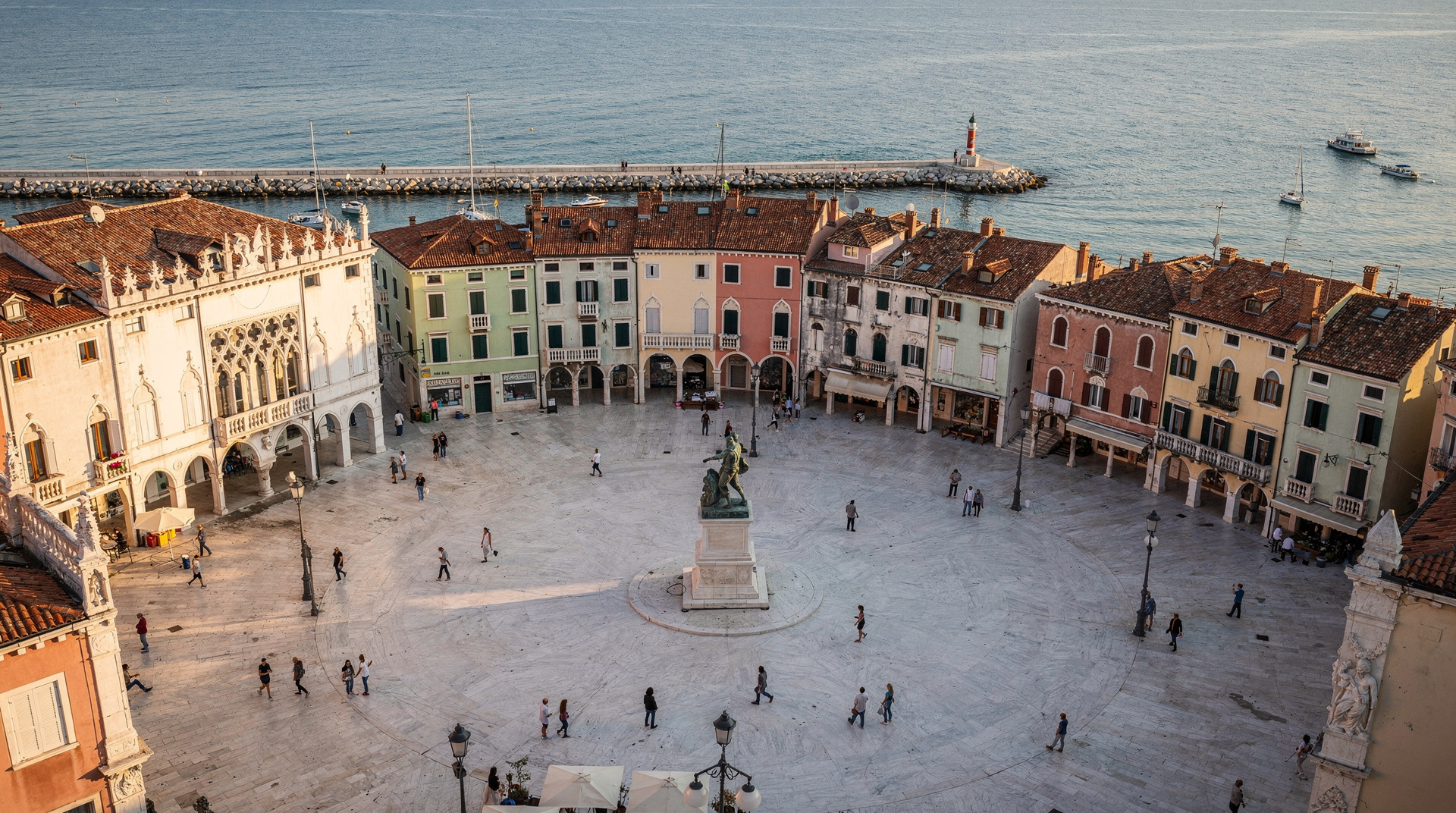
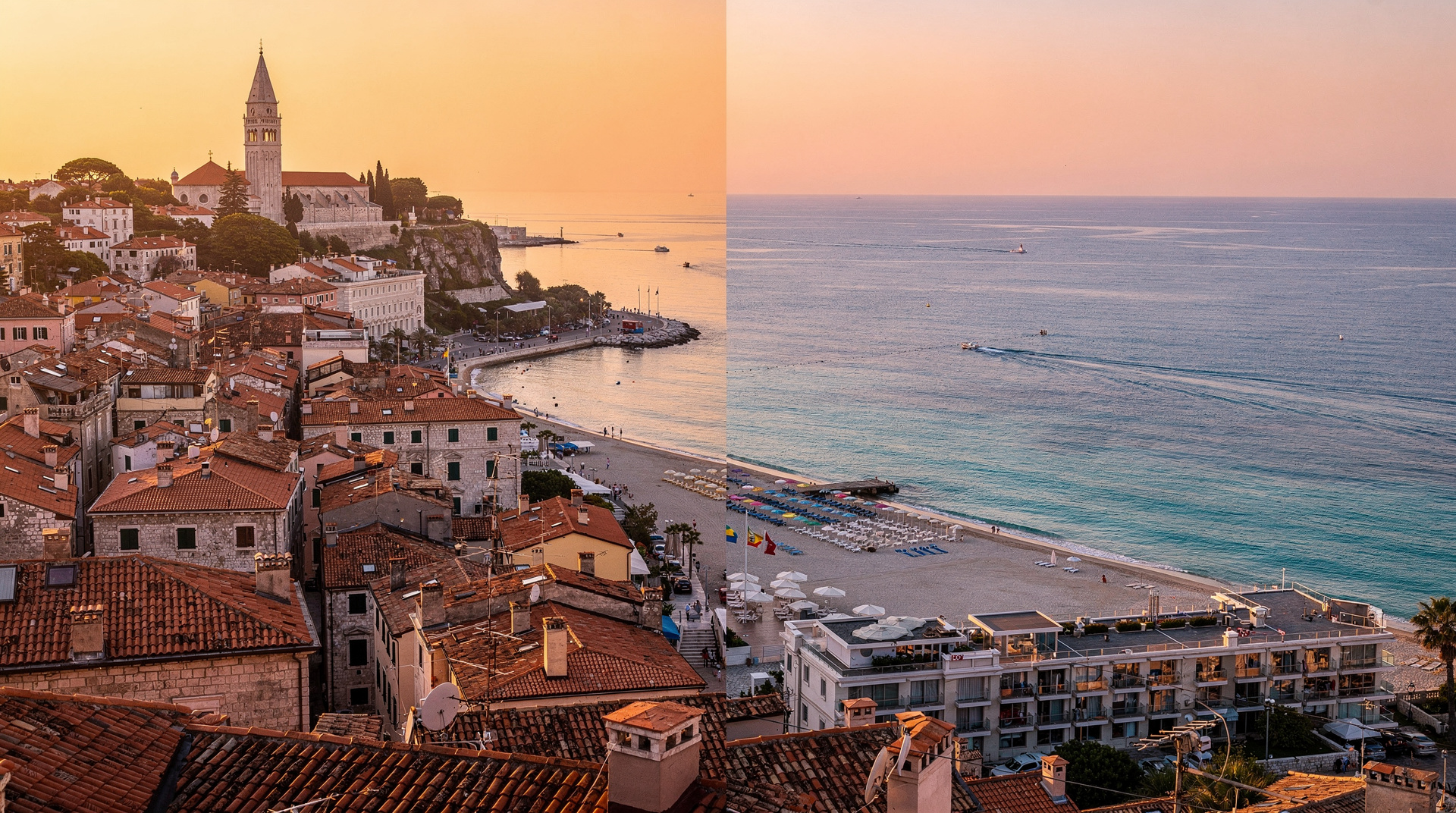
The Slovenian coastline gets most of the attention. The medieval towns of Piran, Koper and Izola are justifiably celebrated. But most visitors who spend two or three days on the coast never venture more than a few kilometres inland — and this is the part that contains, arguably, some of the most interesting landscape and culture in the region.
| Where | Hinterland behind Koper, Izola and Piran |
| Must-see | Hrastovlje’s Dance of Death fresco |
| Getting there | Car recommended; bus to Hrastovlje possible |
| Best time | September–November (olive harvest, truffles) |
| Time needed | Half-day minimum, 2 days for the full circuit |
| Combine with | The Slovenian coast (Piran, Koper) |
Slovenian Istria is the portion of the Istrian peninsula that falls within Slovenia — a triangular wedge of hills, karst plateaus, vineyards and olive groves stretching from the coastal towns to the border with Croatia in the south and east. The landscape is Mediterranean-influenced in the lower hills (olive trees, cypress, vineyards) and more austere karst in the higher ground. It contains the finest olive oil in the country, one of the most significant medieval fresco cycles in the Alps, the world’s original Lipizzan stud farm and a network of cycling trails following the bed of an old railway.
The geography
The region falls roughly into three zones:
The lower coastal hills (from sea level to around 400 m): olive groves, vineyards, Mediterranean scrub. The villages here — Marezige, Šared, Dekani — are working agricultural settlements producing the Belica olive oil that has put Slovenian Istria on the international food map. The Karst plateau edge is visible to the north.
The Karst plateau (400–600 m): limestone, dramatic sinkholes (dolines), sparse vegetation and underground water. This is the landscape associated with the Škocjan Caves and Postojna (though both of those sit just north of Slovenian Istria proper). The plateau is cooler and windier than the coast below.
The southern valleys: The Rižana and Dragonja river valleys cut through the hills toward Croatia, forming the border region. The Dragonja valley in particular has well-preserved hilltop villages and the least-visited landscapes in the region.
Hrastovlje: the mandatory stop
If you visit only one place in the Slovenian Istria hinterland, make it Hrastovlje. A small village about 15 km east of Koper (20–25 minutes by car), it appears unremarkable from the approach road — a quiet settlement of perhaps 100 inhabitants on a low hill.
The reason to come is the Church of the Holy Trinity (Romanska cerkev sv. Trojice), a Romanesque church inside a remarkable set of intact defensive walls built in the 15th century against Ottoman raids. The church is small; the defensive enclosure towers above it on three sides. Step inside and you find one of the greatest surprises in Slovenian art: every surface of the interior — walls, ceiling, arches — is covered with a continuous fresco cycle painted in 1490 by Johannes de Castua.
The Dance of Death (Danse Macabre) panel is the centrepiece: a procession of figures from all levels of medieval society — Pope, Emperor, King, Bishop, Knight, Merchant, Peasant, Child — each led by a dancing skeleton toward the grave. The iconography is consistent with the late Gothic tradition that swept through European art following the Black Death, but the execution here is of exceptional quality and the preservation is remarkable.
Opening hours and entry (approximately EUR 3) are managed by the local parish. The church is open daily in season (April–October); winter visits require advance arrangement.
Lipica: the Lipizzan stud farm
The Kobilarna Lipica (Lipica Stud Farm) is the original breeding ground of the Lipizzan horse, the white breed trained at the Vienna Spanish Riding School. The stud was founded in 1580 by the Habsburgs, who needed horses for the imperial court — the local terrain and the Karst grass were considered ideal for producing the compact, strong horses they required.
The farm is 25 km from Koper (around 25 minutes by car) and offers guided tours daily. The tour includes the stables, the paddocks, the museum and an introduction to the breeding and training programme. On certain days, training performances and classical riding shows are scheduled — check the current programme when booking.
See current prices on the official Lipica website (lipica.org). Children find the horses engaging, and the setting — white horses against the stark Karst landscape — is photogenic.
A practical note: Lipica sits inside a restricted zone (not open for drive-through). Follow the signposting from the Sežana junction.
Olive oil: the Slovenian Istria speciality
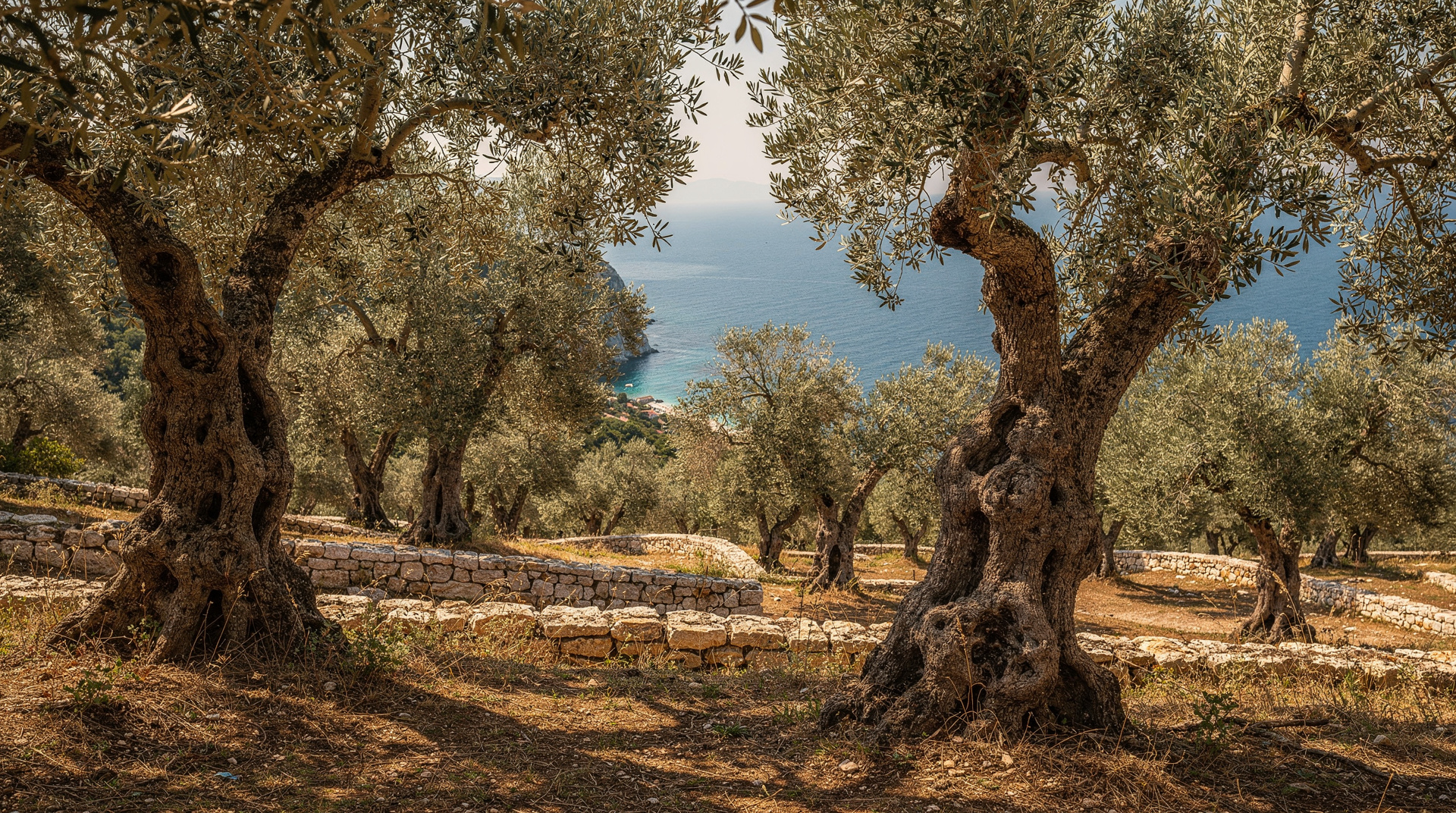
The olive groves of Slovenian Istria produce some of Europe’s highest-rated extra-virgin olive oils. The dominant variety is Istrska Belica — a vigorous, cold-hardy cultivar with high polyphenol content that gives the oil its characteristic green colour, peppery finish and long shelf life.
Several estates have won international recognition at competitions including the New York International Olive Oil Competition. Key producers in the Marezige and Šared areas include Oljarna Koper (cooperative), Štefelin estate and several family-run mills. Many offer tastings and direct sales, typically EUR 12–20 for premium 500ml bottles.
Harvest season: October to early November, when fresh-pressed oil is available directly from the press. Visiting during harvest is recommended for those interested in the production process.
A land and sea tasting tour of the Koper Riviera includes olive oil tastings, wine and local food from the hinterland producers — an efficient way to sample the best regional produce in a single half-day.
Wine: Malvazija and Refošk
The coastal hills produce two main wine varieties:
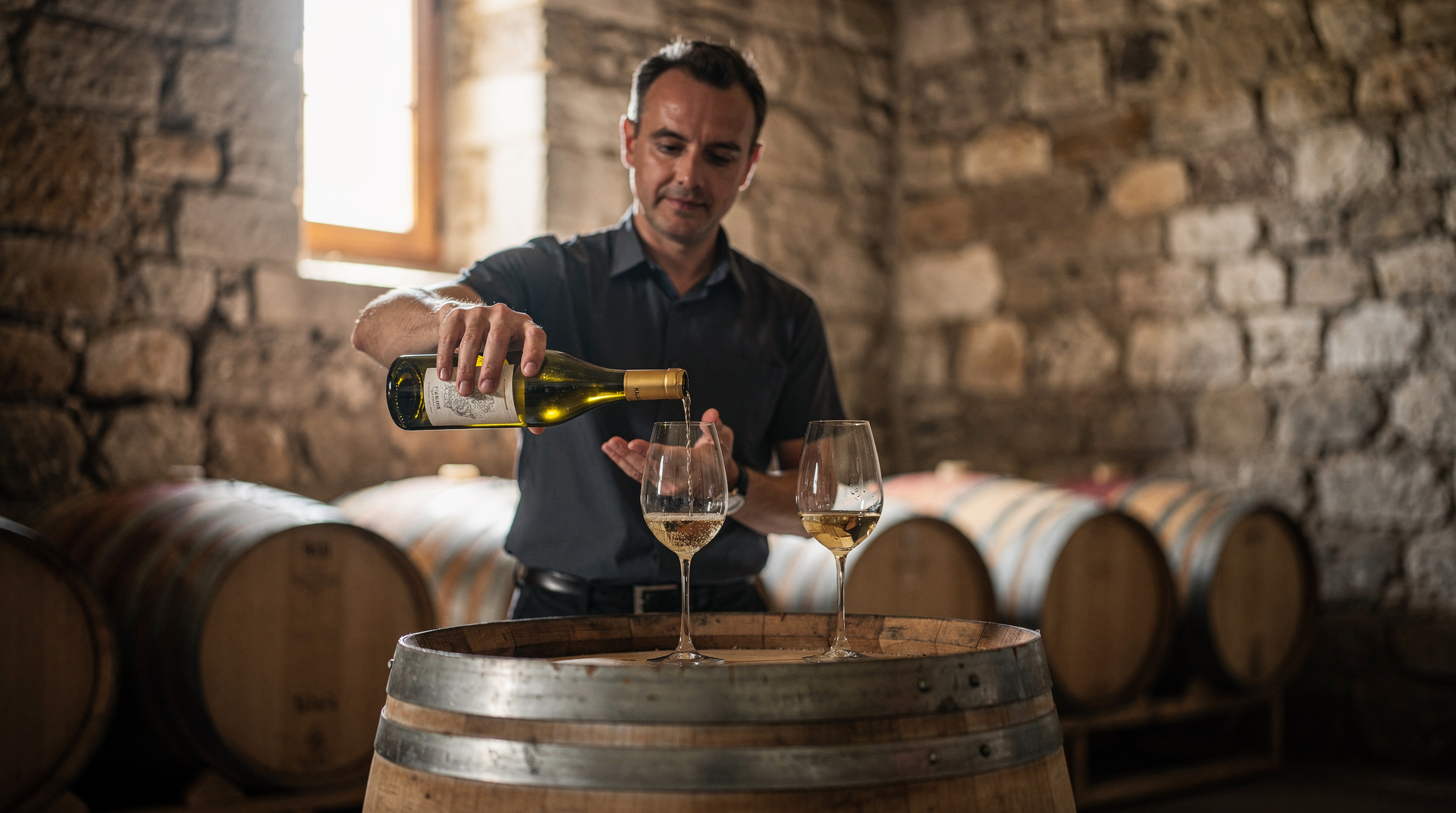
Malvazija Istrska: A dry white with a distinctive mineral quality, stone-fruit character and reasonable body. Pairs beautifully with the local seafood. Made across the entire Istrian peninsula; Slovenian versions tend to be slightly lighter and more aromatic than their Croatian counterparts.
Refošk (Refosco): A full-bodied red grape producing robust, tannic wines with dark berry fruit. Best with red meat and game; the local version ages well for 3–5 years. See the Slovenian wine guide for a broader overview.
Wine estate visits are common in the area. Several producers around Koper and Izola accept visitors for tastings. As with olive oil, advance booking is recommended.
Truffles
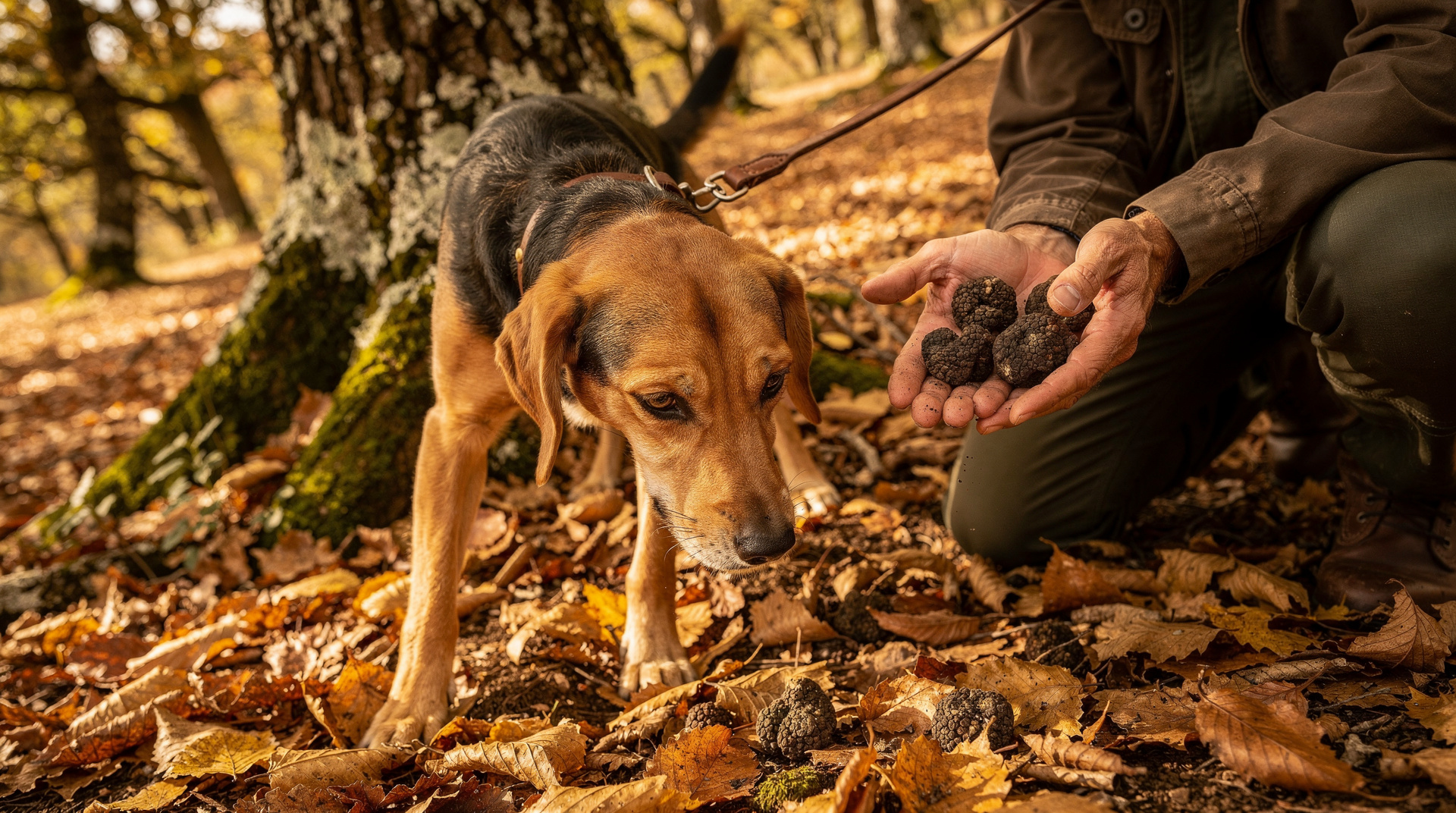
The forests of Slovenian Istria contain both black and white truffles. The hunting season runs from late summer (for summer black truffles) through autumn (for the premium autumn black truffle and, in good years, the highly prized Tuber magnatum pico white truffle). See the truffle hunting guide for full detail on participating in a truffle hunt.
The Parenzana cycling trail
The most practical way to explore the hinterland without a car is the Parenzana cycle and walking route, following the bed of the old narrow-gauge railway from Trieste to Poreč (operational 1902–1935).
The Slovenian section runs approximately 35 km from Koper to the Croatian border near Dragonja, passing through Izola, the coastal hinterland and the Dragonja valley. The route is well-marked (waymarked with the Parenzana logo), largely traffic-free and passes through villages, olive groves and vineyards.
Key sections:
- Koper to Izola (7 km): flat coastal approach, easy
- Izola to Portorož junction (12 km): through the hills, with some climbing
- Portorož junction to border (16 km): through the Dragonja valley, quieter
E-bike rental is available in Koper, Izola and Portorož (EUR 20–35 per day). Standard bikes are feasible but the hill sections require moderate fitness.
An e-bike tour along the Parenzana is an excellent guided introduction to the trail, covering the highlights between Koper and Piran with stops at viewpoints and local producers.
Sečovlje saltpans
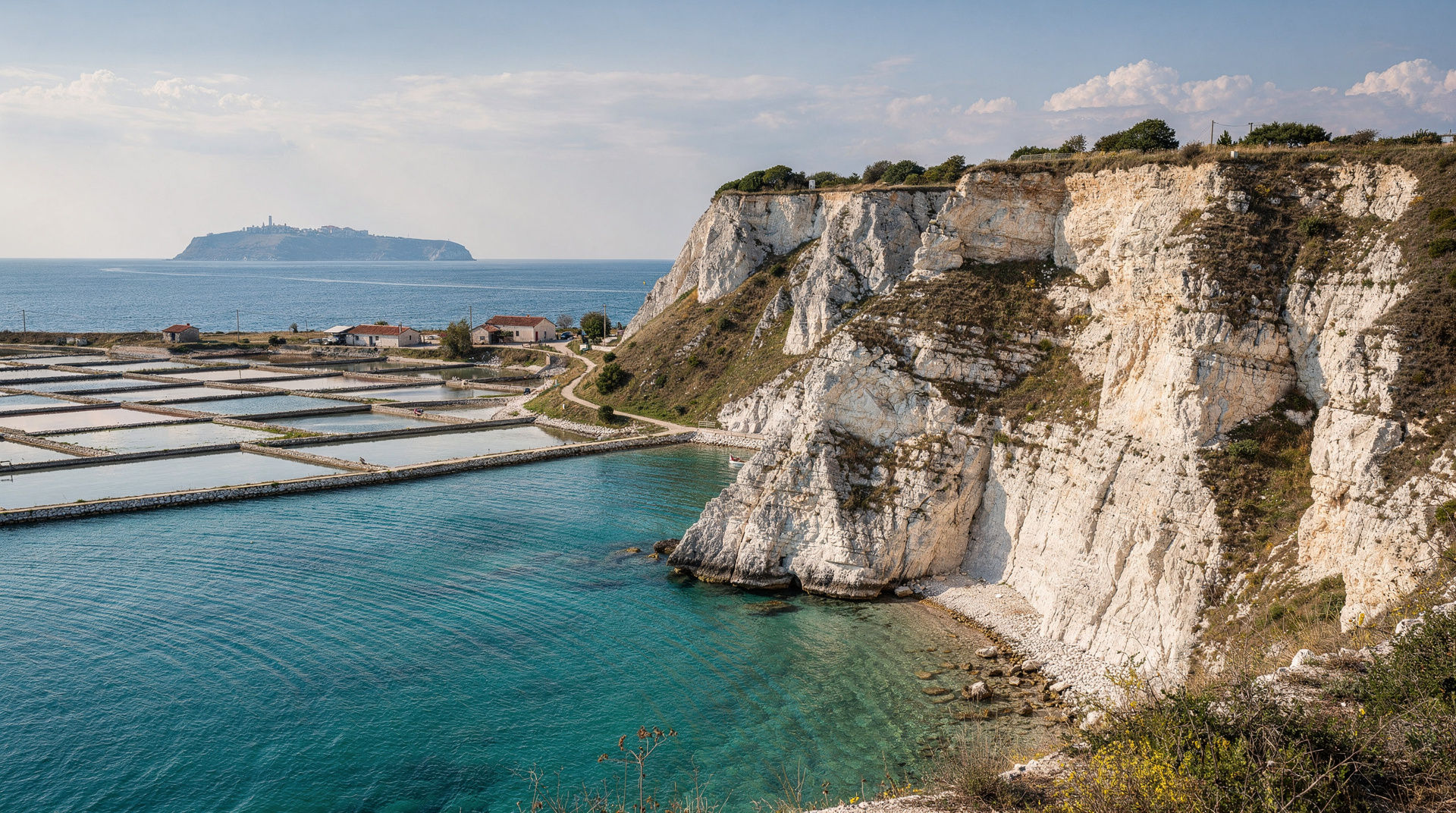
Just south of Portorož, the Sečovlje saltpans are the largest area of saltpans in Slovenia and one of the last surviving traditional salt-making operations on the Adriatic. The active pans have been harvested since the 13th century; the reserve section is now a protected nature reserve that attracts flamingos and 300+ bird species. See the Portorož guide for access details.
Getting around Slovenian Istria without a car
A car makes the hinterland significantly more accessible, but it is not strictly necessary for the highlights.
By bike: The Parenzana trail (Koper to Croatian border) covers the main hinterland cycling route. E-bikes available in Koper, Izola and Portorož make the hill sections straightforward.
By bus to Hrastovlje: Bus connections from Koper to Hrastovlje run several times daily (journey around 20–25 minutes). Check the Arriva Slovenia timetable for current schedules.
By taxi from Koper: For Lipica, Hrastovlje and olive country visits, a half-day taxi hire from Koper (approximately EUR 80–120 for 4 hours) is an efficient option for small groups.
Organised tours: Several operators in Piran and Koper offer half-day or full-day guided tours of the hinterland combining Hrastovlje, olive oil tasting and sometimes Lipica. Ask at the tourist information offices.
The Bora wind: the hinterland’s defining weather event
The Bora (Burja in Slovenian) is a katabatic wind that blows from the northeast across the Karst plateau and down to the Adriatic coast. It can be fierce — gusts above 100 km/h have been recorded in the Karst — and it is the defining weather event of the region.
The Bora typically arrives with the passage of cold fronts, particularly in autumn and winter. In Slovenian Istria, the wind is strong enough to close roads (the A1 motorway occasionally closes sections near Kozina) and to push parked cars. Locals know which villages are sheltered and which are fully exposed.
For visitors: the Bora creates dramatic light and crystal-clear visibility, particularly after it has blown overnight. A Karst morning after the Bora has cleaned the air offers views from the plateau across the Gulf of Trieste that reach the Venetian lagoon on a clear day. The wind is unpleasant to stand in but beautiful to witness from shelter.
What to buy in Slovenian Istria
The hinterland’s best products to take home:
Istrska Belica olive oil: The premium product of the region. Buy from producers directly (better quality, better prices) or from specialist delicatessens in Koper. Premium 500ml bottles run EUR 12–20.
Piran salt products: Fleur de sel, salt with herbs, black salt and salt-infused products from the Sečovlje saltpans. Widely available in coastal shops; the saltpan shop itself has the full range.
Local wine: Malvazija (dry white) and Refošk (robust red) from the Istrian estates. Buy direct from producers during harvest season (September–October) or from wine shops in Koper’s old town.
Truffles: In season (September–November for black truffles, and occasionally white truffle), fresh or preserved truffles can be bought from hunters and specialist shops. See truffle hunting guide for current sourcing options.
Prsut (Istrian dry-cured ham): Similar to Italian prosciutto, cured with Piran salt and local herbs. Available from butchers and delicatessens throughout the region.
Combining Slovenian Istria with the wider coast
Slovenian Istria works best as an addition to a coast visit rather than as a standalone destination. The ideal combination:
- 2 nights in Piran (old town, coast, saltpans)
- Half-day Hrastovlje and/or Lipica (by car or taxi from Koper)
- Lunch or dinner at a gostilna above the coast (try the village of Marezige for the local olive oil district)
- Optional: olive oil or wine tasting at an estate
For truffle season (September–November), a day trip specifically to a truffle hunt near Buzet (just across the Croatian border, 30 minutes south) is the most immersive way to experience the autumn harvest tradition. See truffle hunting guide.
Seasonal notes
Spring (April–June): The hills are at their greenest. Olive trees in flower. Good cycling conditions. The coastal hinterland has its own microclimate — slightly cooler than the coast, with occasional rain.
Summer (July–August): Hot. The hills provide some relief from the coast’s heat. Truffle hunting for summer varieties begins in July.
Autumn (September–November): Peak season for the hinterland. Olive harvest (October). Truffle season (September–November). Wine harvest (September). The most interesting time to visit the food-producing parts of the region.
Winter: The Karst can be cold and windy (the Bora wind is severe here in winter). Most estate visits and walking options remain accessible but the atmosphere is quiet.
Birdwatching in Slovenian Istria
The coastal and hinterland landscape of Slovenian Istria is excellent for birdwatching, particularly during spring and autumn migration.
The Sečovlje saltpans: The most important birdwatching site on the Slovenian coast. The saltpans attract flamingos (regular summer and autumn visitors), herons, egrets, terns and dozens of wader species during migration. Spring (April–May) and autumn (August–October) are the peak migration periods. The nature reserve entrance includes access to the observation areas.
The Škocjanski zatok nature reserve (near Koper): A small brackish lagoon near the Koper port area that is Slovenia’s most important site for wintering waterbirds. December and January typically bring the highest numbers — up to several thousand ducks, coots and diving birds. The reserve has hides and marked observation points.
The Strunjan cliff: The sea cliffs at Strunjan nest peregrine falcons (confirmed breeding pair). The cliff-top path offers eye-level views of nesting alcoves and is one of the more unusual birdwatching positions in Slovenia.
The hinterland olive groves: The olive grove landscape above Koper is good for migrant warblers and flycatchers in April–May. Subalpine warbler, common redstart and various Sylvia warblers are regular.
The Slovenian birdwatching society (DOPPS) publishes records and maps; the coastal sites are among Slovenia’s most-watched locations.
A practical itinerary for Slovenian Istria
A well-organised 2-day Slovenian Istria hinterland itinerary:
Day 1:
- Morning: Drive from Koper to Hrastovlje (20 min). Visit the Church of the Holy Trinity and the Dance of Death fresco (allow 1 hour).
- Late morning: Drive to Lipica (15 min from Hrastovlje). Guided tour of the stud farm (1.5–2 hours including stable visit).
- Lunch: Gostilna in Lipica or return toward Koper for a mid-town restaurant.
- Afternoon: Olive oil tasting at a Marezige area estate (pre-book; allow 1.5 hours).
- Evening: Return to Piran or Koper for dinner.
Day 2:
- Morning: Cycle the Parenzana trail from Izola toward Portorož (12 km hinterland section, 2–3 hours with stops).
- Afternoon: Visit the Sečovlje saltpans and salt museum (2 hours).
- Evening: Seafood dinner in Piran or Izola.
This itinerary covers the main Slovenian Istria attractions efficiently without rushing. A car is needed for the Day 1 programme; Day 2 is cycle-based.
See the Slovenian coast guide for the coastal context, and Koper guide for transport connections into the region.
Is Slovenian Istria worth a dedicated day, or just a stop?
For most itineraries, Slovenian Istria works best as a half-day or full-day addition to a coastal stay rather than a destination in its own right — the sites (Hrastovlje, Lipica, an olive oil estate) are spread out enough to need a car but not dense enough to fill several days on their own. The exception is truffle or olive harvest season (September–November), when a full day dedicated to the hinterland — a morning truffle hunt, an afternoon olive oil tasting, dinner at a hinterland gostilna — becomes a genuine highlight rather than a supplementary stop. Compare this to the coast itself, covered in the Slovenian coast guide, which rewards a longer dedicated stay of its own.
Frequently asked questions about Slovenian Istria guide
What are the best villages to visit in Slovenian Istria?
Hrastovlje is the top priority — a small hill village with a 15th-century fortified church containing a remarkable Dance of Death fresco cycle. Gračišče is a beautiful medieval hilltop village with well-preserved walls. Marezige and the surrounding hills are the heart of olive oil production. Lipica, home of the Lipizzan horse stud, is 20 minutes from Koper.Is Lipica worth visiting?
Lipica is worth visiting if you have an interest in horses or Baroque equestrian culture. The Lipica stud farm is the original breeding ground of the Lipizzan breed — the white horses trained at the Spanish Riding School in Vienna. Guided tours run daily, including stable visits and, on certain days, performances. Children find it engaging; adults with no particular horse interest may feel it is enough for a 90-minute visit.Where can I find the best olive oil in Slovenian Istria?
The Malinska and Šared areas above Koper have the highest concentration of olive estates. The Belica variety (also called Istrska Belica) is the local speciality — a peppery, grassy oil consistently winning international awards. Many estates offer tastings and direct sales, typically between EUR 12–20 for a 500ml bottle of premium oil. Book tastings in advance, particularly September–November during harvest.What is the Parenzana trail?
The Parenzana was a narrow-gauge railway running from Trieste to Poreč (1902–1935). The Slovenian section has been converted into a 35 km cycling and walking trail from Koper to the Croatian border near Dragonja, passing through Izola and the coastal hinterland. It is the most scenic cycling route in the region and is well-signposted with E-bike rental available in Koper, Izola and Portorož.What is the Hrastovlje Dance of Death fresco?
The Romanska church of the Holy Trinity in Hrastovlje contains a complete cycle of late Gothic frescos painted by Johannes de Castua in 1490. The most celebrated section depicts the Danse Macabre — Death leading figures from all levels of medieval society to the grave, from the Pope and King to the peasant and the child. It is one of the finest examples of late medieval wall painting in the Alps and is remarkably well preserved. Entry approximately EUR 3.Is Slovenian Istria worth visiting without a car?
It is possible but limited. Buses connect Koper to Hrastovlje several times daily, and the Parenzana cycling trail is accessible by bike from Koper, Izola or Portoroz. Lipica and the olive oil estates are much harder to reach without a car or an organised tour, since public transport does not serve them directly. A half-day taxi hire from Koper is a practical car-free alternative for small groups.When is the best time to visit Slovenian Istria for food?
September to November is peak season: olive harvest runs through October, truffle season runs September through November, and wine harvest happens in September. This is when olive oil estates and truffle hunters are most active and most willing to host visitors. Spring (April-June) is better for green landscapes and cycling than for food-focused visits.
Top experiences
Bookable activities with verified prices and instant confirmation on GetYourGuide.