Piran vs Portorož: which Slovenian coastal town to stay in?
Ljubljana: UNESCO Škocjan Caves and Piran day trip
Should I stay in Piran or Portorož?
Piran for atmosphere — it's one of the most beautiful small medieval towns on the Adriatic, car-free, genuinely Venetian in character and unforgettable at dusk. Portorož for convenience and beach facilities — larger hotels, sandy beach, spa resort infrastructure, easier parking. Most visitors stay in Portorož (cheaper, more rooms) and spend their time in Piran (15 minutes on foot or by bus).
Piran vs Portorož: choosing where to stay on Slovenia’s coast
Slovenia’s Adriatic coastline is only 46 km long — the shortest national seafront in Europe — but it punches well above its weight for character and quality. The two main visitor destinations are side by side on the Gulf of Piran: Piran, the medieval town on a peninsula, and Portorož, the resort bay immediately to its south-east. They are 3 km apart and complementary. The question is not really which one to visit, but where to base yourself.
| Piran | Portorož | |
|---|---|---|
| Character | Medieval, Venetian, car-free | Purpose-built resort |
| Beach | Small rock/concrete platforms | Best sandy beach on the coast |
| Hotel choice | Limited, books out fast | Large selection, all budgets |
| Getting there | Bus ~2h30 from Ljubljana, EUR 11–13 | Bus ~2h30–2h45 from Ljubljana, EUR 12–15 |
| Best for | Atmosphere, evenings, photography | Beach holidays, spas, families |
Piran: the character town
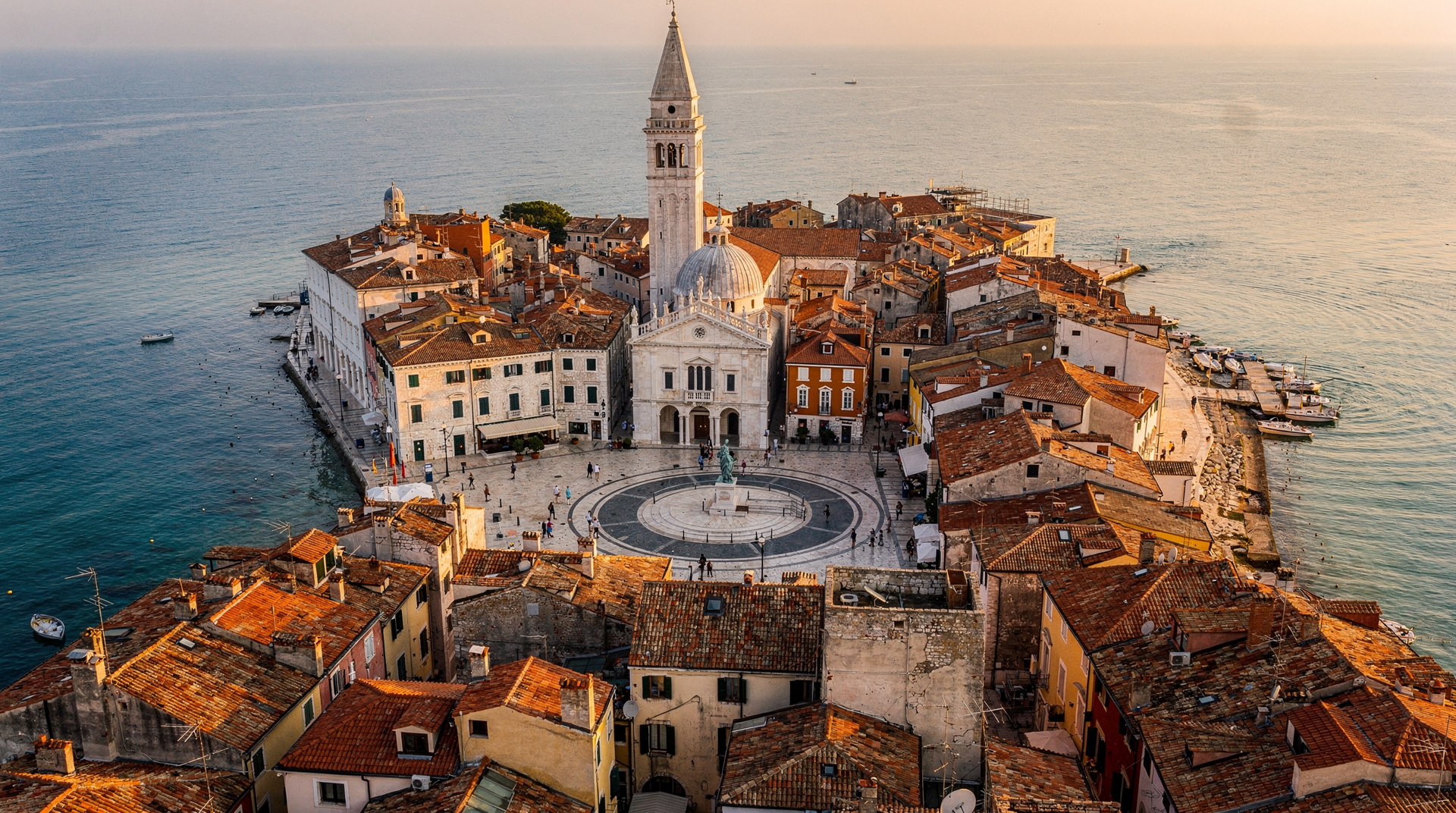
Piran’s visual template was set during the 500 years it spent as a Venetian possession, and the architecture never really changed. The streets are narrow enough to touch both sides with outstretched arms. The bell towers are Venetian campanile. The painted facades are in shades of terracotta, ochre and cream. Tartini Square — an oval piazza facing the sea — is anchored by the Cathedral of St George on a hilltop, a loggia and a statue of the violin maestro Giuseppe Tartini, born here in 1692.
Walking in Piran in the early morning, before the tour coaches arrive from Ljubljana and the Italian border, is one of the best experiences on the Slovenian coast. At dusk, when the day-trippers have left and the piazza fills with locals eating at the tables outside Tartini’s café, it’s even better.
What Piran does well:
- The medieval old town: genuinely one of the most beautiful small towns on the Adriatic, not an exaggeration
- Town walls and views: a preserved section of the Venetian walls circles the hilltop; the view of the peninsula and the open sea is exceptional
- St George’s Church: the 17th-century church above the town with a terrace and its own bell tower (EUR 1.50 to climb)
- Sea promenade: the path around the peninsula’s western tip at Fiesa is quiet and spectacular
- Tartini Square: the main piazza, lined with cafés, restaurants and the Memorial Hall
- Seafood: fresh fish and seafood at the restaurants on the waterfront and in the lanes behind
What Piran doesn’t do well:
- Hotel quantity: there are relatively few hotels and they book up fast in summer. The large traditional option is Hotel Piran (sea views, decent, around EUR 120–160/night in season)
- Parking: the old town is car-free. Park in the multi-storey at the town entrance (EUR 1.50/hour) or use the Fornače park-and-ride (EUR 5/day with shuttle to town)
- Beach: Piran’s beaches are small concrete and rock platforms. There is no sand beach within the old town
- Price per room: the limited supply pushes prices up; comparable quality is cheaper in Portorož
Portorož: the resort town
Portorož was developed as a Habsburg spa resort in the late 19th century, rebuilt substantially in the 20th and retains the DNA of a deliberate beach resort. The bay is sheltered, the main beach is sandy (unusually for this coast), and the hotel infrastructure is the best on the Slovenian Adriatic.
The Kempinski Palace Portorož is the headline property — a grand early-20th-century hotel restored to a proper luxury standard, with spa facilities, a private beach section and direct sea views. The Palace sits at the northern end of a long promenade of large and mid-range hotels. It’s a functioning resort town, not a medieval gem, but it does its job well.
What Portorož does well:
- Beach: the longest and sandiest beach on the Slovenian coast, good facilities, beach bars, sun loungers (EUR 10–15/day), calm sheltered water
- Hotel variety: large selection of hotels from budget to luxury, better value than Piran for most categories
- Spa: several large thalasso spa hotels (Grand Hotel Metropol, Lifeclass Hotels); the brine baths here have been used medically since the Habsburg era
- Accessibility: bus connection to the rest of Slovenia is easier via Portorož than Piran; the coastal bus route runs regularly
- Evening options: more restaurants, bars and the casino for those who want nightlife options
What Portorož doesn’t do well:
- Character: the resort strip lacks the architectural coherence and atmosphere of Piran. It’s comfortable and functional
- Old town: there is no old town in Portorož — that’s 3 km down the road
The Tartini Square experience
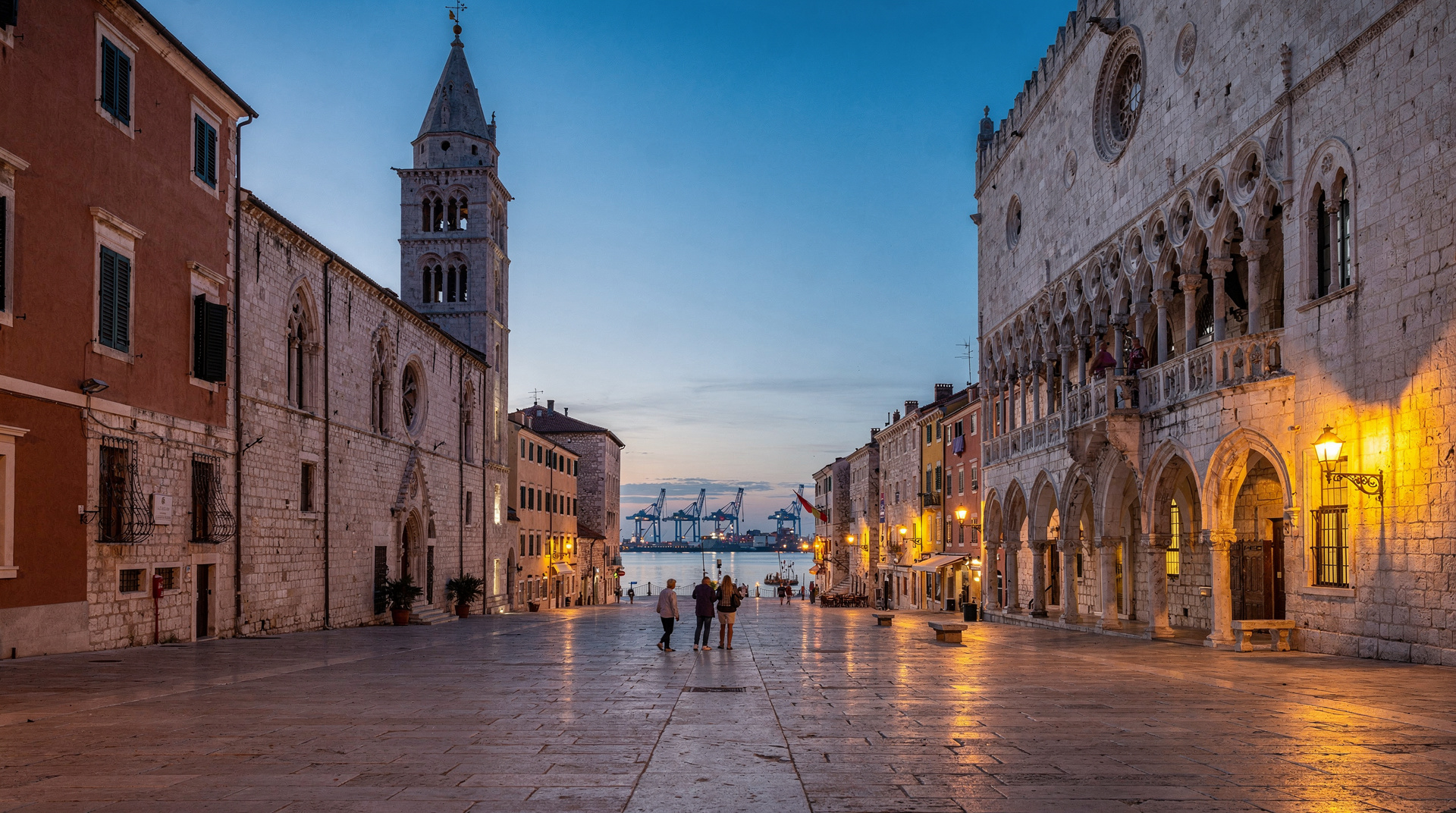
Tartini Square (Tartinijev trg) is the heart of Piran and the most beautiful public space on the Slovenian coast. The oval-shaped piazza is named after Giuseppe Tartini (1692–1770), the baroque violinist and composer who was born in Piran. His statue stands at the centre. The square is ringed by Venetian Gothic and Baroque facades, a covered loggia, café tables and, at the sea-facing end, open water.
The best time to be here: late afternoon in September, when day-trippers have left, the light turns golden on the painted facades, and locals occupy the café tables for the evening ritual of coffee and conversation. The Memorial Hall (formerly the central loggia) sometimes hosts small concerts.
The square is car-free. There are no large souvenir shops on the square itself — the commercial side of Piran is concentrated in the lanes behind. This is part of what makes Tartini Square so effective: it still feels like a real place that also happens to be beautiful, rather than a backdrop for tourism.
The practical recommendation
Stay in Portorož if: you want a beach holiday with good hotel infrastructure, spa access and easy logistics. Piran is a 15-minute bus ride or 35-minute walk for evenings and sightseeing.
Stay in Piran if: the medieval atmosphere is the point and you don’t need beach hotel facilities. Rooms book out months ahead in summer — plan well in advance. You’ll sleep to the sound of the sea.
Day-trip from Ljubljana: both towns are easily visited in a day from Ljubljana by bus (2h30–3h), though a night on the coast is worth it. The Škocjan Caves and Piran day trip from Ljubljana combines the karst caves with the coast in a single well-organised day. Adding Predjama Castle to the Škocjan and Piran itinerary covers three of Slovenia’s Karst highlights in one day.
What else is on the Slovenian coast
The Slovenian Adriatic extends from the Italian border at Trieste to the Croatian border south of Sečovlje, taking in Koper, Izola, Piran and Portorož.
Koper: The largest coastal city and the regional capital. A largely functional port city with a charming medieval old town (Tito Square and the Praetor’s Palace) that most visitors miss. Good stop if you’re driving along the coast.
Izola: Between Koper and Piran, a working fishing town that has become fashionable for younger Slovenian visitors. Good fish restaurants and local vibe; fewer tourists than Piran.
Sečovlje Salinas: A salt pan nature reserve at the Croatian border — flamingos and migratory birds in a flat, windswept landscape. Unusual and worth a detour.
The Slovenian coast is best approached as a two-to-three day segment of a broader Slovenia trip — combining it with Škocjan Caves (45 min from the coast) and the Karst region makes a natural circuit from Ljubljana. ### Eating on the Slovenian coast
Slovenian coastal cuisine draws on Italian, Venetian and Mediterranean traditions. Fish and seafood are the cornerstone: grilled brancin (sea bass), orada (sea bream), scamp (langoustines), calamari and the local buza (rock bream). Olive oil is produced locally (Slovenian Istrian olive oils are internationally award-winning and excellent). Pasta and risotto appear on most menus, reflecting the Venetian inheritance.
In Piran:
- Restauracija Neptun: long-established fish restaurant on the harbour, excellent fish and squid, EUR 20–35 per main
- Pri Mari: smaller, more intimate, good local recommendations
- Caffe Tartini: on Tartini Square, coffee and light meals, the right place for a mid-afternoon pause
In Portorož:
- Staro Sidro: solid fish restaurant near the marina
- Hotel Kempinski Palace restaurant: the highest-end option, fine dining prices
- Bar Cantina: casual terrace bar on the promenade
Practical eating advice: for the best-value fish, look for restaurants a block or two back from the waterfront — the harbour-facing positions command a premium. Lunch menus (fixed-price two or three courses) are significantly cheaper than evening à la carte. Locally, the traditional meal time is lunch (12:30–14:00) rather than a late dinner, though tourist restaurants adapt.
Getting to the coast from other Slovenian highlights
The Slovenian coast pairs naturally with:
Škocjan Caves (45 min by car): the most dramatic pairing in southern Slovenia. Arrive at Škocjan for the morning tour, drive to Piran for the afternoon. The Škocjan and Piran day trip from Ljubljana covers this route with guided transport.
Postojna and Predjama (1h15 by car from Piran): a longer day but doable. See the caves in the morning, drive to the coast for a late afternoon swim. The reverse works as well — stay on the coast and day-trip to the caves.
Trieste, Italy (30 min by car): the closest international city. Trieste has excellent coffee (the hometown of Illy and Lavazza’s regional competitor), a grand Austro-Hungarian seafront, and the Miramare Castle above the bay. A half-day excursion from Piran.
Goriška Brda (1h by car): the wine hills on the Italian border. A coastal stay combined with a wine country excursion makes an excellent 3-day circuit.
For detailed cave information, see the Škocjan Caves guide. For the broader Slovenia itinerary, getting around Slovenia covers all the logistics.
Activities beyond swimming and sightseeing
Sailing and boat hire: Portorož marina is the main hub for boat hire on the Slovenian coast. Day charter and half-day boat trips into the Gulf of Piran and along the coast are available. Popular with Italian day-trippers from Trieste and Venice.
Cycling: the Parenzana cycle route follows the course of the old narrow-gauge railway that connected Trieste to Poreč in Croatia. The Slovenian section runs from Koper through the hills above the coast toward the Croatian border — beautiful landscape, well-maintained gravel surface, around 35 km in Slovenia. Suitable for all fitness levels on an e-bike.
Diving: the Gulf of Piran has several accessible dive sites, including the deliberately sunk wreck of the Barricade (an Italian warship). Visibility in the northern Adriatic is typically good from June to October. Dive operators in Portorož offer guided dives and equipment hire.
Saltworks visit: the Sečovlje Salinas nature reserve at the Croatian border combines active salt production (visiting May–September) with a wetland nature reserve. The Museum of Salt-Making explains the traditional harvesting methods. Flamingos and spoonbills are regular visitors in spring and autumn.
Where to stay: specific hotel notes
In Piran:
- Hotel Piran (3-star, EUR 100–160): the main hotel in Piran, right on the waterfront with sea views from many rooms. Solid mid-range option with the genuine Piran atmosphere.
- Val Hostel: small, well-reviewed hostel in the old town; a good budget option
- Apartments and Airbnb: the most atmospheric option — staying in an old Venetian building in the maze of lanes. Quality varies; read reviews carefully.
Note: Piran’s car-free old town means arriving with luggage involves either a trolley on the cobblestones or advance coordination with your accommodation about parking and luggage drop-off.
In Portorož:
- Kempinski Palace Portorož (5-star, EUR 250–450): the finest hotel on the Slovenian coast. A restored Austro-Hungarian palace with direct beach access, a serious spa and a restaurant that justifies the price.
- Grand Hotel Bernardin (4-star, EUR 130–220): large resort hotel with beach access, spa, pools and comprehensive facilities. Very family-friendly.
- Hotel Apollo (3-star, EUR 90–140): adequate mid-range option; good location on the promenade
- Lifeclass Hotels (various 4-star properties, EUR 100–180): a chain focused on thalasso spa treatments; popular with European health-holiday visitors
Day-tripping to Piran from elsewhere
Piran is worth visiting even if you’re not staying overnight. From Ljubljana (2h30 by bus), the town can be reached for a long afternoon: arrive at 14:00, walk the town walls, sit in Tartini Square at sunset, return on the 19:30 or 20:30 bus. A quick but satisfying day.
From the Postojna/Škocjan area (45 min–1h by car), the coast rounds out a karst-and-coast day perfectly. The pairing of underground majesty in the morning and Adriatic light in the afternoon is one of the more satisfying combinations Slovenia offers.
From Trieste (30 min by car or local bus): popular Italian day trip. The Italian tourists know Piran well — which tells you something about its quality relative to the Italian coastline immediately to the north.
Seasonal notes for the coast
The Slovenian coast is genuinely seasonal. Peak season (July–August) brings full hotels, crowded beaches and warm, calm sea (sea temperature 25–28°C in late July). Shoulder season (June, September) is ideal — warm sea, manageable crowds, lower prices. May can be cool (sea around 16–18°C) but Piran in May has a charm that peak summer loses entirely.
October to May: most Portorož hotels remain open (the large spa hotels stay busy year-round), but Piran’s tourist economy quietens considerably. The town is at its most atmospheric and least crowded in November and March.
Specific seasonal notes:
- July–August: book accommodation 2–3 months ahead; Piran’s old town fills almost entirely. The small beaches (including Piran’s beach on the south side of the peninsula, Fiesa beach 1.5 km away) become busy by 10:00
- June and September: the sea is warm (21–23°C), the weather reliable, the crowds 40–50% lower than peak summer. The best time
- April and October: can be sunny and 18–20°C with minimal visitors. Some restaurants close Monday–Tuesday
- November–March: quiet. Some hotels offer winter spa packages. The bora wind (a cold, dry north-easterly from the Karst plateau) can be strong and cold, though this is more of a feature than a bug in Piran’s winter character
A note on Slovenian Italian
A significant portion of Piran’s population and the broader Slovenian Istria region is ethnically Italian or Slovenian-Italian. Piran’s old name is Pirano (Italian), and you’ll see bilingual signage (Slovenian and Italian) throughout. Many older residents speak Italian as a first language. This dual heritage is visible in the architecture, the food and the family names of local businesses. It gives the coast a character distinct from the rest of Slovenia — genuinely Venetian in feel, not just architecturally.
The food reflects this too: in the best coastal restaurants, Slovenian and Italian influences genuinely overlap. Fresh pasta and risotto made with local Adriatic fish, Istrian olive oil and local wine (Malvazija from the Slovenian coast) is the regional cuisine at its best — different from both Italian Istria to the south and the Central European cooking of inland Slovenia.
The practical middle ground: staying in Izola instead
A third option that many repeat visitors eventually settle on is neither Piran nor Portorož but Izola, the working fishing town midway between the two. Izola has fewer sights than Piran and a less polished beach than Portorož, but it has a genuine local atmosphere, noticeably cheaper accommodation, and arguably the best-value seafood restaurants on the coast. It sits on the same local bus line, so both Piran (15 minutes) and Portorož (10 minutes) remain easy day trips. For visitors who find Piran’s summer crowds and Portorož’s resort scale both slightly off-putting, Izola is worth serious consideration as a base — see the full Izola guide for hotel and restaurant specifics.
Which one for how long you have
One day only: base the day around Piran itself — walk the walls, climb the bell tower, have lunch a street back from Tartini Square, and if time allows, a short walk to Portorož for a look at the beach before heading back.
A weekend (2 nights): stay in Piran if character matters more than beach time; stay in Portorož if you want a proper sandy beach and don’t mind the shorter walk over for dinner. Either way, you’ll experience both towns.
A week on the coast: split the nights — two or three in Piran for the atmosphere, the rest in Portorož or Izola for the beach and lower prices, with day trips to Koper, the Sečovlje saltpans and possibly Trieste across the border. The Slovenian coast guide has the full week-long framework.
Planning the rest of your coast stay
Once you have chosen a base, the coast slots easily into a wider trip. The Piran travel guide goes deeper on the old town itself, while the Portorož guide covers the resort side in more detail. If you are building a full route, the coast and mountains itinerary shows one way to pair the sea with the Julian Alps.
Travellers who want to compare the towns with the wider region can read about Piran as a destination and the Slovenian Istria overview. If beaches are the main priority, the best beaches in Slovenia guide helps you weigh the coast against the lakes. Anyone arriving by road should read the driving and vignette guide before setting off, and those without a car will find the options in public transport in Slovenia.
Frequently asked questions about Piran vs Portorož
What is Piran actually like?
Piran is a medieval Venetian town on a narrow peninsula jutting into the Adriatic. The streets are too narrow for cars, the buildings are in classic Venetian Gothic style, and Tartini Square (named for the composer Tartini, who was born here) is one of the most beautiful small piazzas on the Adriatic. Walking the town walls and watching the sun set over the sea from the town walls or the St George's Church terrace is extraordinary. The population is about 4,500.What is Portorož like?
Portorož (Port of Roses) is a purpose-built beach resort — wide sand-and-pebble beach, large hotels, spa facilities, a casino and good road and bus connections. It is pleasant and functional but lacks the character of Piran. Hotels here tend to be larger and better value than in Piran. The beach is the best on the Slovenian coast. Think: a well-run Adriatic resort rather than a medieval gem.Can I stay in Portorož and visit Piran?
Yes, very easily — they're 3 km apart and connected by a frequent local bus (EUR 1.30) and a walkable coastal path (about 30–40 minutes on foot). Staying in Portorož gives you better hotel choice and beach access, and Piran is a short bus or walk away for evenings and sightseeing. This is the most common and practical arrangement.How do I get from Ljubljana to Piran/Portorož?
Arriva buses run from Ljubljana to Portorož/Piran several times daily. The journey takes 2h30–3h (some require a change in Koper). Cost is around EUR 11–13. By car, the route via the A1 motorway to Koper takes about 1h30. Note that you need the Slovenian e-vignette for the motorway. Piran's old town is car-free — park in the main car park at the entrance (EUR 1.50/hour) or use park-and-ride.When is the best time to visit the Slovenian coast?
June and September are ideal — warm (sea temperature 20–24°C), less crowded than July–August, accommodation prices lower. July and August are peak season: Piran and Portorož fill up completely, prices spike and the atmosphere is festive but dense. May is pleasant but the sea is cooler (16–18°C). October–April is quiet; some hotels and restaurants close seasonally.
Top experiences
Bookable activities with verified prices and instant confirmation on GetYourGuide.