Getting to Slovenia: flights, buses, trains and driving from Europe
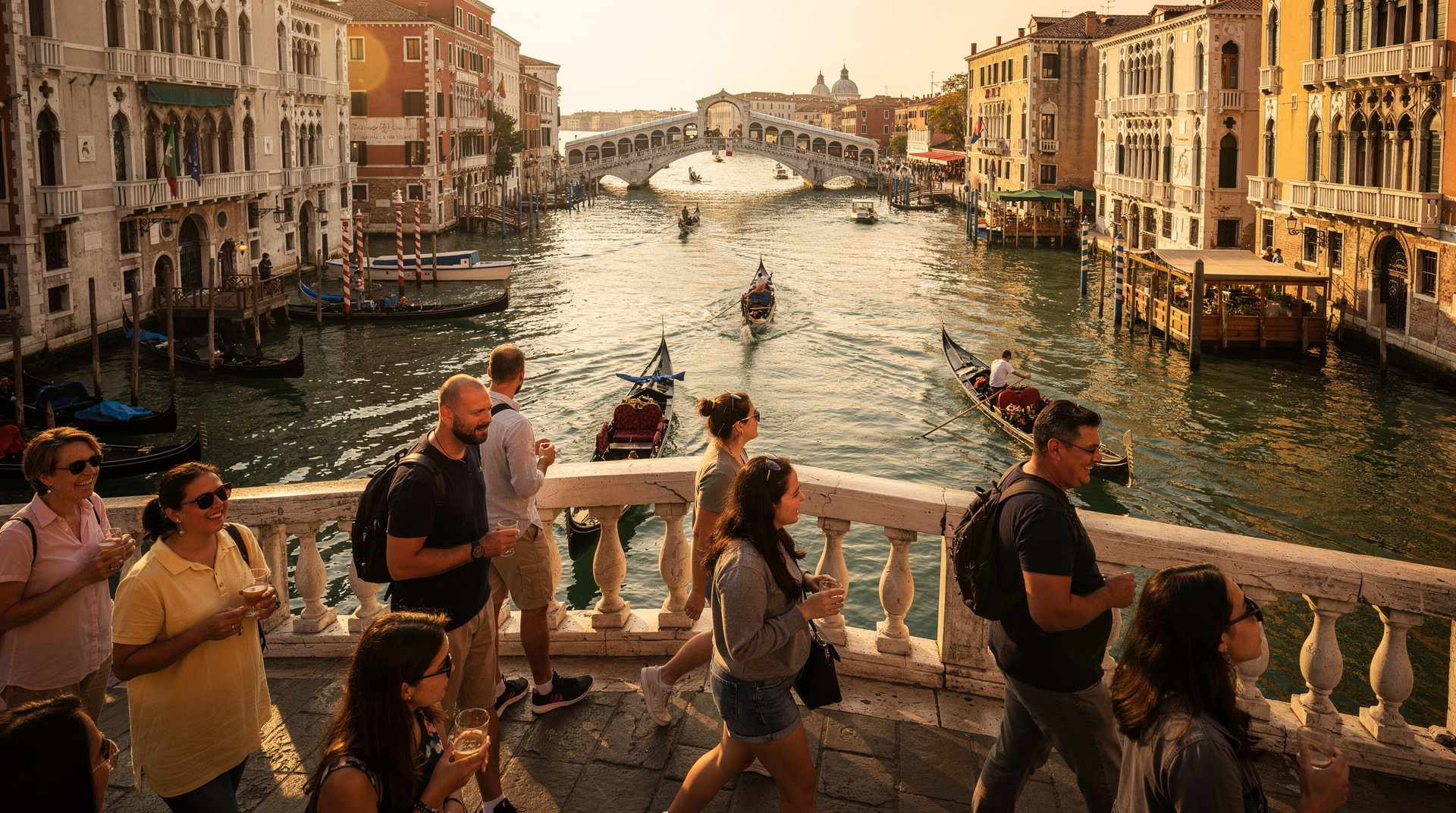
Ljubljana: bus transfer to/from Venice Marco Polo Airport
What is the easiest way to get to Slovenia?
From the UK and most Western European countries, flying is the fastest option — Ljubljana Airport has direct connections to London, Amsterdam, Frankfurt, Vienna and other hubs. Venice, Trieste and Klagenfurt airports are often cheaper alternatives with good ground connections. From Central Europe, the train (via Vienna or Zagreb) and overland buses are practical. Slovenia is in Schengen — no border formalities for EU/UK citizens.
How to get to Slovenia: all your options in 2026
Slovenia sits at the heart of Central Europe, bordered by Austria, Italy, Croatia and Hungary, and connected by good road and rail links to all of them. Getting here is easier than its modest international profile suggests. Ljubljana has direct flights from most major European cities, and for those flying into Venice, Trieste or Vienna, the overland connection is straightforward.
| Fastest from UK | Direct flight to LJU, ~2h15 |
| Often cheapest | Fly to Venice (VCE), transfer ~1h45 |
| Best overland option | Train or bus from Vienna, Zagreb or Trieste |
| Visa | Not required for EU/UK/US/Canada/Australia up to 90 days |
| Currency | Euro; no exchange needed |
By air: flying into Ljubljana
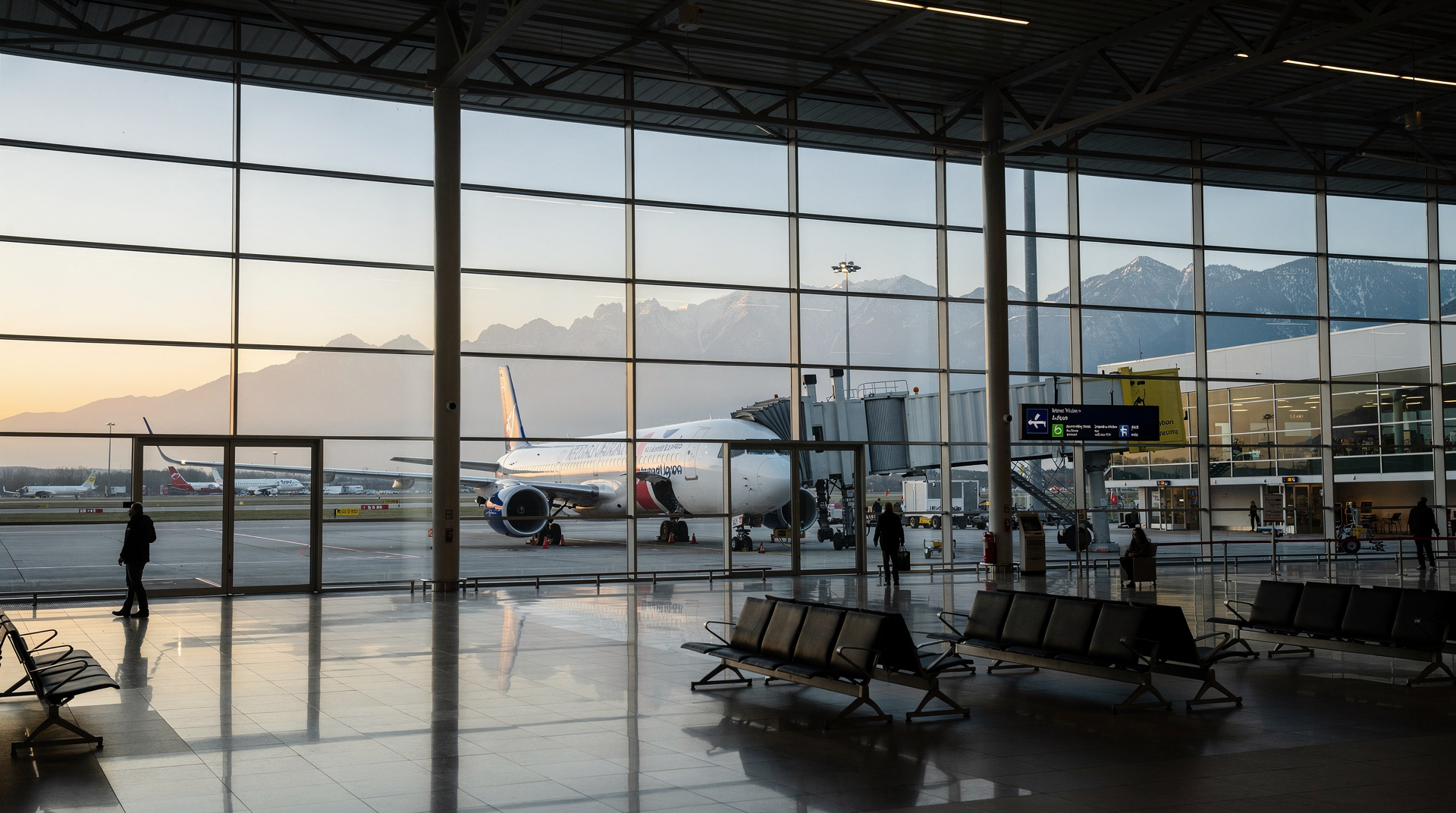
Ljubljana Jože Pučnik Airport (LJU) is 27 km north-west of the capital. It connects to the following destinations with scheduled services in 2026:
- London Heathrow (British Airways, daily in summer, several per week in winter)
- London Gatwick and Stansted (easyJet, Ryanair, seasonal)
- Amsterdam Schiphol (KLM/Air France, daily)
- Frankfurt (Lufthansa/Eurowings, daily)
- Vienna (Austrian Airlines, multiple daily)
- Munich (Lufthansa, daily)
- Zurich (Swiss, daily)
- Brussels (Brussels Airlines, seasonal)
- Warsaw (LOT, several weekly)
- Istanbul (Turkish Airlines, several weekly)
- Rome (Ryanair, seasonal)
Flight time from London is about 2h15. From New York or other transatlantic origins, the most common routing is via Vienna (55 min connection to Ljubljana), Frankfurt or Amsterdam.
From the airport, the Nomago airport bus to Ljubljana city costs EUR 4–6 and takes 45 minutes. A private airport transfer makes more sense for groups or heavy luggage. See the full Ljubljana Airport guide for all options.
Alternative airports: often cheaper
For many visitors, flying into a nearby airport and completing the journey overland is cheaper overall — sometimes significantly so.
Venice Marco Polo Airport (VCE) — 1h45 by road
Ryanair, easyJet, Wizz Air and many other low-cost carriers serve Venice from across Europe and the UK. Flights are often EUR 50–100 cheaper per person than comparable flights to Ljubljana. The transfer to Ljubljana by bus or shared transfer takes about 1h45 and costs EUR 25–35 per person.
The direct bus transfer between Ljubljana and Venice Airport runs regularly and is reliable. Factor in EUR 25–35 per person for the transfer and you often still save money compared to flying directly into LJU.
Note: Venice has two airports — Marco Polo (VCE, closer) and Treviso (TSF, Ryanair’s base, 40 minutes from Venice and about 2h from Ljubljana). Check which airport your ticket uses.
Trieste Airport (TRS) — 1h20 by road
Smaller airport used mainly by Ryanair. The transfer to Ljubljana takes about 1h20. Day trip transfers from Trieste to Ljubljana run regularly and Trieste itself rewards a stopover — the seafront Austro-Hungarian city with its Piazza Unità, coffee culture and literary history is a pleasant half-day extension.
Klagenfurt Airport (KLU) — 1h30 by road
Small Austrian airport, occasionally useful for routes from Germany and Eastern Europe. Klagenfurt is also a useful base for a road trip that starts in Austria and enters Slovenia via the Loibl or Karavanke routes.
Vienna International Airport (VIE) — 4h by car or train
Vienna connects to intercontinental routes that Ljubljana cannot. From the US, Canada, Australia and Asia, routing via Vienna is the most practical option. Austrian Airlines operates multiple daily Vienna–Ljubljana flights (55 minutes). Alternatively, the train from Vienna to Ljubljana takes about 6h and runs daily.
Zagreb Airport (ZAG) — 2h by road
Useful for travellers arriving from North America on Turkish Airlines, Air Serbia or Emirates via connecting hubs in Istanbul, Belgrade or Dubai. Transfers between Ljubljana and Zagreb run daily on the motorway.
The honest slow travel case for overland entry
There is a genuine argument for arriving in Slovenia by train from Vienna or by bus from a neighbouring country rather than flying directly. The reasoning:
You see more: arriving in Ljubljana by the Nightjet from Vienna, or crossing by car through Carinthia, gives you the approach through the Eastern Alps that flying misses entirely. The gradual change in landscape — from Austrian alpine valleys to the Ljubljana basin — is part of the story of what makes Slovenia distinct.
You contribute less to carbon: the train from Vienna to Ljubljana produces roughly 90% less CO2 per passenger than the equivalent flight.
You can stop: the overland option makes Klagenfurt (Austria), Trieste (Italy) or Zagreb (Croatia) viable stopover points. A night in Trieste before crossing into Slovenia is an excellent use of a travel day — the city rewards 12–24 hours and the crossing to Slovenia is 1h20.
It’s comfortable: the ÖBB Nightjet sleeper from Vienna arrives in Ljubljana early morning, well-rested. For travellers coming from Germany or Austria, this is genuinely the most civilised way to arrive.
The counterargument: it’s slower and the logistics are more complex, particularly for families or those with complex connections. For travellers flying from outside Europe, the overland option only applies to the final leg from a European hub.
Planning your arrival: what to sort before you land
A few practical items to handle before arrival make the first day significantly smoother:
E-vignette (if driving): buy at evinjeta.dars.si at least 18 hours before you plan to use the motorway. Register your number plate and the dates you’ll be in Slovenia. Costs EUR 16 for one week.
Transfer or bus pre-booking: the Nomago airport bus does not require a reservation, but shared transfers (GetYourGuide, local transfer companies) benefit from advance booking, especially in summer when demand is high.
Currency: Slovenia uses the euro. No currency exchange needed. ATMs at Ljubljana Airport and throughout Slovenia dispense euros. Card payments are accepted virtually everywhere, including at petrol stations and most gostilnas.
SIM card or roaming: EU roaming rules mean that all EU residents pay domestic rates throughout the EU including Slovenia. UK SIMs have different roaming arrangements post-Brexit — check with your provider. Local SIMs (A1, Telekom, Telemach) are available at the airport and in Ljubljana for affordable data plans.
Downloads: download Google Maps offline for Slovenia before arriving (especially useful in mountain areas with patchy data coverage). The Arriva app for bus timetables. The SŽ app for trains.
By train: connections from neighbouring countries
From Vienna (ÖBB, 6h): The ÖBB Eurocity train connects Vienna to Ljubljana via Graz and Maribor. Daily services, with a Nightjet overnight option — leave Vienna late evening, wake up in Ljubljana. Book at oebb.at or Rail Europe.
From Venice/Trieste (2h30–3h): Through trains from Venice or Trieste involve a change at Villa Opicina or Divača. Check SŽ (potniski.sz.si) and Trenitalia together. The Karst section of this route is beautiful.
From Zagreb (2h15–2h30): Daily train services on the Ljubljana–Zagreb line run via Dobova. Check SŽ and HŽ (Croatian Railways). The route is straightforward and the border crossing seamless.
From Budapest (7–8h): Via Zagreb, or via Maribor and a connection in Austria. Long but possible on Interrail or Eurail pass.
Interrail/Eurail: Slovenia is included in all major European rail passes. For a multi-country trip including Austria, Croatia or Italy, a regional pass can offer value. Calculate carefully — domestic Slovenian fares are cheap enough that the pass rarely pays off for Slovenia alone.
By bus: the overland option
Long-distance buses offer the cheapest international connections to Slovenia.
FlixBus covers Ljubljana from Vienna, Graz, Klagenfurt, Zagreb, Split, Sarajevo, Belgrade and other cities. Fares start at EUR 10–15 one-way and increase with demand. Books at flixbus.com.
Eurolines connects Ljubljana with major Western European cities including Paris, Amsterdam and Brussels on multi-day routes — practical for those combining Slovenia with a wider European road trip.
Arriva operates the cross-border service from Trieste to Ljubljana. The journey takes about 1h20 from Trieste bus station, with several daily departures.
From Croatia: FlixBus and Arriva connect Zagreb to Ljubljana multiple times daily (about 2h15, EUR 8–15). From Pula and the Istrian coast, connections via Rijeka are available.
FlixBus routes to Slovenia
FlixBus has significantly improved international bus connections to Ljubljana over the past three years. Current routes include:
- Vienna to Ljubljana: several daily, 4h30, from EUR 10
- Graz to Ljubljana: several daily, 3h, from EUR 8
- Klagenfurt to Ljubljana: several daily, 2h, from EUR 7
- Zagreb to Ljubljana: multiple daily, 2h15, from EUR 6
- Split to Ljubljana: 1–2 daily in summer, 7h, from EUR 20
- Sarajevo to Ljubljana: 1 daily, 8h30, from EUR 25
- Munich to Ljubljana: daily, 6h30, from EUR 15
FlixBus is the cheapest option for most overland connections. The main drawback is that long-distance buses take longer than trains and are less comfortable for journeys over 4 hours. For Vienna–Ljubljana or Zagreb–Ljubljana, FlixBus is a reasonable choice. For Munich–Ljubljana, the overnight train (if available) is often more restful.
Book at flixbus.com with flexible cancellation policies widely available.
By car: the overland drive
Slovenia’s four land borders are all Schengen crossings with no routine passport checks or customs delays. You drive through without stopping.
From Austria: The fastest route is via the Karavanke Tunnel under the Alps (E61 motorway, EUR 9 tunnel toll, then the Slovenian e-vignette applies immediately). From Klagenfurt to Ljubljana takes about 1h30. The scenic alternative is over the Ljubelj Pass, slower but beautiful.
From Italy: From Trieste, the A4 motorway reaches the Slovenian border at Fernetti in minutes and continues to Ljubljana (about 1h from Trieste). From Venice, the A4–A23–A28 route connects to the border near Gorizia (about 1h30 to Ljubljana).
From Croatia: The motorway from Zagreb crosses at Obrezje/Bregana, one of the busiest border crossings in the region. From Zagreb to Ljubljana takes about 2h on the motorway. Note that Croatia has its own motorway vignette system — buy it at the Croatian border or online.
From Hungary: The E65 motorway crosses at Murska Sobota/Rédics. From Budapest, the journey to Ljubljana is about 4h30.
Remember: buy the Slovenian e-vignette at evinjeta.dars.si before using any Slovenian motorway. See the driving in Slovenia guide for details.
Entry requirements and border formalities
EU and Schengen citizens: Free movement throughout. Your EU ID card or passport grants entry without restriction.
UK citizens (post-Brexit): Visa-free for up to 90 days in any 180-day period. Valid passport required (not ID card). ETIAS will be required from a date not yet announced — check the official EU ETIAS website before booking.
US, Canadian, Australian, New Zealand and most other Western nationals: Visa-free for 90 days in any 180-day period. The 90-day counter applies across the entire Schengen area, not just Slovenia.
ETIAS: The European Travel Information and Authorisation System will require pre-travel registration (EUR 20, valid 3 years) for currently visa-exempt non-EU nationals. Not yet in operation — the start date will be announced several months ahead. Monitor the official EU announcement rather than relying on indirect sources.
Passports: Must be valid for the duration of your stay. There is no 6-month validity rule in Slovenia/Schengen (unlike some non-Schengen countries), but your passport must not expire during your trip.
Entry requirements in detail
Schengen rules for non-EU visitors: The 90-day rule is often misunderstood. You can stay in the entire Schengen area for a maximum of 90 days in any 180-day rolling period — not 90 days in Slovenia specifically. So if you’ve spent 60 days in France and Germany earlier in the year, you only have 30 days remaining for Slovenia. Keep track of your Schengen days; border officials may ask.
Documents to carry:
- Valid passport (for non-EU nationals) or EU ID card (for EU nationals)
- Return ticket or onward travel evidence may be requested at entry (rare but possible)
- Proof of accommodation for the first night
- Sufficient funds evidence (not commonly checked but technically required)
Registering your stay: Hotels and hostels register your stay with the local police automatically. If you’re staying in a private rental (Airbnb etc.), the host should register you — in practice this is rarely checked for short stays but is legally required.
Health and travel insurance: EU citizens are covered by the EHIC/GHIC card for emergency state healthcare. Non-EU nationals should have comprehensive travel insurance that covers medical evacuation. Slovenia’s public healthcare is good but emergency costs can be significant without insurance.
Flying from North America, Australia and Asia
Slovenia has no intercontinental flights. The routing for long-haul visitors:
From North America: Best connections are via Vienna (Austrian Airlines direct from New York, Chicago, Washington, Toronto, Los Angeles), Frankfurt (Lufthansa from most North American cities) or Amsterdam (KLM). Vienna is the smoothest connection — 55 minutes onward to Ljubljana.
From Australia and New Zealand: Via Dubai (Emirates), Singapore (Singapore Airlines) or Abu Dhabi (Etihad) to a European hub, then connect to Ljubljana or Venice. Emirates operates direct Vienna services which can work well.
From Asia: Via Frankfurt, Amsterdam, Vienna or Istanbul. Turkish Airlines serves Ljubljana directly from Istanbul — useful if you’re routing via the Middle East.
Baggage and customs on entry
As a Schengen country, Slovenia has no customs checks for EU visitors arriving from another Schengen country. Visitors from outside Schengen (UK, US, Australia etc.) arriving directly from a non-Schengen country pass through standard EU customs:
- Duty-free allowances: 200 cigarettes, 1L spirits or 2L wine, EUR 430 in goods (air/sea arrivals) or EUR 300 (land border arrivals)
- No restrictions on cash amounts, but anything over EUR 10,000 must be declared
- Standard prohibited items: fresh meat, some dairy, plants without phytosanitary certificates (coming from outside the EU)
Arriving from another EU/Schengen country: no customs, no declaration, walk through.
What to do if your flight is cancelled or delayed
Ljubljana Airport is small enough that disruption there ripples quickly — there are no replacement buses or trains to the city while the motorway is blocked. Practical notes:
- If your flight to LJU is cancelled, check alternatives into Venice or Vienna and organise an overland connection
- If you’re stranded at the airport, the options are limited to the airport hotel and the town of Brnik/Kranj nearby
- Most major airlines serve LJU through their hub airports — any cancellation or delay at the hub (Vienna, Frankfurt, Amsterdam) tends to cascade to the Ljubljana leg
Travel insurance that covers alternative transport is genuinely worth having for Slovenia specifically, given the limited onward options at the airport.
Getting around once you’ve arrived
Once in Slovenia, your transport options expand significantly. The getting around Slovenia guide is the comprehensive overview. For specific routes:
- Ljubljana Airport to the city and Bled
- The Ljubljana–Bled corridor in detail
- Public transport options throughout Slovenia
- Car rental and driving with the vignette
Arriving in Ljubljana: what to do first
From the airport, the bus, taxi or transfer deposits you at the main bus station (or your hotel directly with a private transfer). The old town is a 20-minute walk from the station or 5 minutes by taxi. Accommodation is concentrated around the old town, with more options in the residential neighbourhoods of Šiška and Vič.
Once settled, individual destination guides cover Ljubljana, Lake Bled, Postojna Cave and all the main sites.
Booking flights: how far ahead and what to watch for
For summer travel (June–August), booking 3–4 months ahead typically secures the best fares on both Ljubljana-direct and Venice/Trieste routings, since low-cost carriers release their cheapest seats early and prices climb steadily as departure approaches. Shoulder season (May, September–October) is more forgiving — 6–8 weeks ahead is usually enough.
Watch specifically for the difference between Venice Marco Polo and Venice Treviso fares, since search engines sometimes blend both under “Venice” and the transfer times differ meaningfully; confirm the airport code before booking. For multi-city European trips, positioning Slovenia between two other destinations (for example, arriving via Vienna and departing via Venice) can avoid backtracking and is often no more expensive than a round trip through a single hub.
Choosing between Ljubljana and Venice as your arrival airport
This is the single most consequential arrival decision for many itineraries, so it is worth spelling out properly. Flying directly into Ljubljana (LJU) saves the 1h45 transfer and puts you in the city centre within 45 minutes of landing — the clear choice if Ljubljana and the Julian Alps are your primary focus and you want to minimise arrival-day friction. Flying into Venice (VCE) often costs EUR 50–100 less per person on the low-cost carriers, and makes sense if you are also spending time in Venice or northeastern Italy, if LJU’s flight schedule doesn’t suit your dates, or if the fare difference is large enough to offset the transfer hassle.
The middle path many visitors overlook: flying into Venice or Trieste and beginning your Slovenia trip from the west (Goriška Brda, the Soča Valley, then east to Ljubljana) rather than the more common Ljubljana-first routing. This avoids backtracking and turns the “cheaper but less convenient” airport into a genuinely sensible starting point rather than an inconvenience to be endured.
Timing your arrival around the Slovenian week
A minor but useful piece of planning: avoid arriving late on a Sunday if your first stop is a small town or rural area, since many restaurants and shops close on Sundays outside the main cities, and a late Sunday arrival in, say, the Soča Valley can mean a limited dinner choice. Arriving in Ljubljana itself on a Sunday is not a problem — the city centre and its restaurants operate close to normal. If your itinerary starts in a rural gostilna-dependent area, a Monday or midweek arrival gives more options for that first evening meal.
Frequently asked questions about Getting to Slovenia
Do I need a visa to visit Slovenia?
Slovenia is a Schengen member. EU citizens need only an ID card or passport. UK, US, Canadian, Australian and most other Western nationals can visit for up to 90 days in any 180-day period without a visa. ETIAS (the EU's new electronic travel authorisation) is not yet in operation; its start date will be announced several months ahead — check the official EU ETIAS website before travelling.Is there a direct flight from the UK to Ljubljana?
Yes. British Airways operates London Heathrow–Ljubljana direct. easyJet and Ryanair fly Gatwick/Stansted to Ljubljana. Frequency varies by season — multiple daily flights in summer, reduced to a few per week in winter. Flight time is about 2h15. For cheaper fares, check flights to Venice, Trieste or Klagenfurt and factor in the overland transfer.Can I travel to Slovenia by bus from nearby countries?
Yes. FlixBus and Eurolines connect Ljubljana with Vienna, Zagreb, Trieste, Klagenfurt and other European cities. From Vienna the journey takes about 4h30; from Zagreb about 2h15; from Trieste about 1h20. Schedules are daily and fares are typically EUR 15–40. This is particularly practical from neighbouring Austria, Croatia and Italy.What is the ETIAS and how does it affect my visit?
ETIAS (European Travel Information and Authorisation System) is a pre-travel authorisation that EU authorities are introducing for nationals of countries currently exempt from Schengen visas, including UK, US, Canadian and Australian citizens. It is expected to cost EUR 20 and be valid for 3 years. As of mid-2026 it was not yet mandatory — check ec.europa.eu/home-affairs for the current implementation status before booking.Can I drive to Slovenia from Austria, Italy or Croatia?
Yes. Slovenia borders Austria to the north, Italy to the west, Croatia to the south and Hungary to the north-east. All are EU Schengen countries (Croatia joined Schengen in 2023), meaning free movement at borders — no passport checks, no customs queues. From Klagenfurt (Austria) it's about 1h30 to Ljubljana; from Trieste (Italy) about 1h; from Zagreb (Croatia) about 2h. Remember to buy the Slovenian e-vignette before using the motorway.
Top experiences
Bookable activities with verified prices and instant confirmation on GetYourGuide.