Ljubljana to Bled: all transport options compared for 2026
Ljubljana: convenient transfer to/from Bled
What is the best way to get from Ljubljana to Bled?
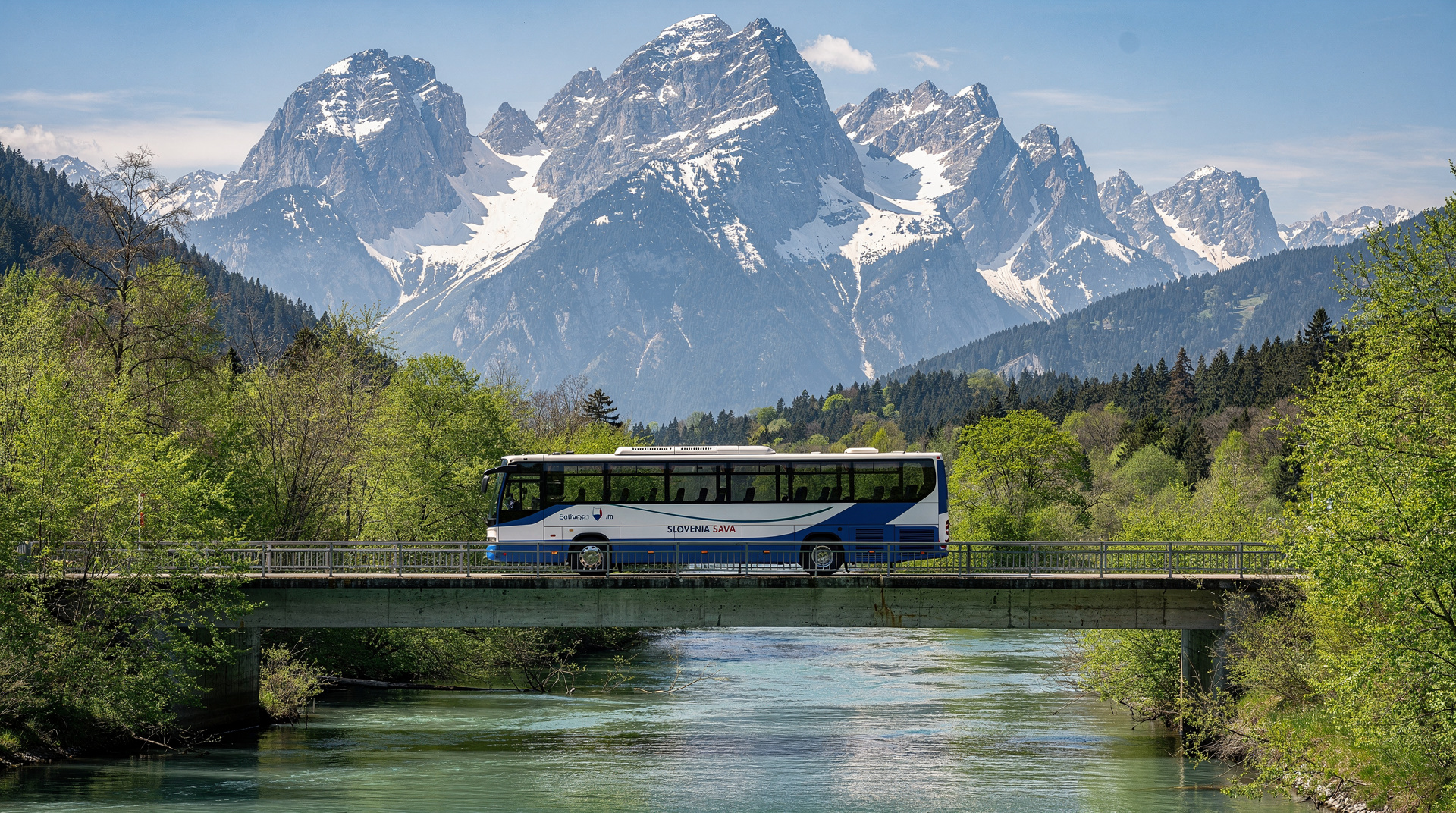
The Arriva bus is the best value and drops you in Bled town centre; check fares and timetables on the Arriva website. A shared transfer is faster with door-to-door convenience. Driving takes 50 minutes. The train to Lesce-Bled station plus connecting bus adds complexity without saving time or money.
Ljubljana to Bled: every option compared
The Ljubljana–Bled corridor is the single most-travelled tourist route in Slovenia. It’s 55 km, takes 50 minutes by car and is served by multiple transport options at very different price points. The question is not whether you can get there — it’s which option fits your trip best.
| Where | Ljubljana bus/train station to Bled bus station |
| Cost | Varies by option; the bus is the cheapest |
| Time needed | Varies by option; 50 min by car |
| Getting there | Arriva bus, shared/private transfer, train+bus, self-drive |
| Best time | Early bus (06:00–07:00) to beat the day-trip crowds |
Option 1: the Arriva bus (best value)
The direct Arriva bus from Ljubljana bus station to Bled runs throughout the day. For fares, journey times and the current timetable, see the Arriva website.
Where to board: Ljubljana’s main bus station (Avtobusna postaja) at Trg Osvobodilne fronte 4, adjacent to the railway station. About 20 minutes on foot from the old town, or 5 minutes by taxi.
Where it drops you: Bled bus station, on the western edge of town. From there, the lake is a flat 5-minute walk. This is genuinely convenient — no taxi or further connection needed.
Booking: the Arriva website, or buy at the station counter or on the bus. No advance booking required, but in peak summer it is worth checking times and arriving a few minutes early on the busiest weekend departures.
Limitations: Services thin out after around 21:00. The last bus back to Ljubljana from Bled typically departs around 20:30–21:00 (check the current timetable — it changes seasonally). If you’re planning a late dinner in Bled, you may need a taxi or transfer for the return.
Option 2: shared transfer (best balance)
Shared transfers run from Ljubljana to Bled on scheduled departures, typically using minivans. Check the operator for current prices; the advantage is door-to-door service and a faster journey (no local stops en route).
Book a shared transfer from Ljubljana to Bled for the convenience of hotel pick-up and Bled drop-off at your accommodation, without paying private taxi rates. Particularly useful if you have luggage or are travelling at a time when the bus schedule is thin.
Option 3: private transfer (best for groups)
A private car or taxi from Ljubljana to Bled is priced per vehicle, so check the operator for the current price. With four passengers the cost per person can be competitive with the shared transfer, with the added flexibility of your chosen departure time and a guaranteed direct route.
For families with children or anyone with significant luggage, the private transfer is often the most practical option. The journey time of 40–50 minutes is the same as driving yourself.
Option 4: driving your own or rental car
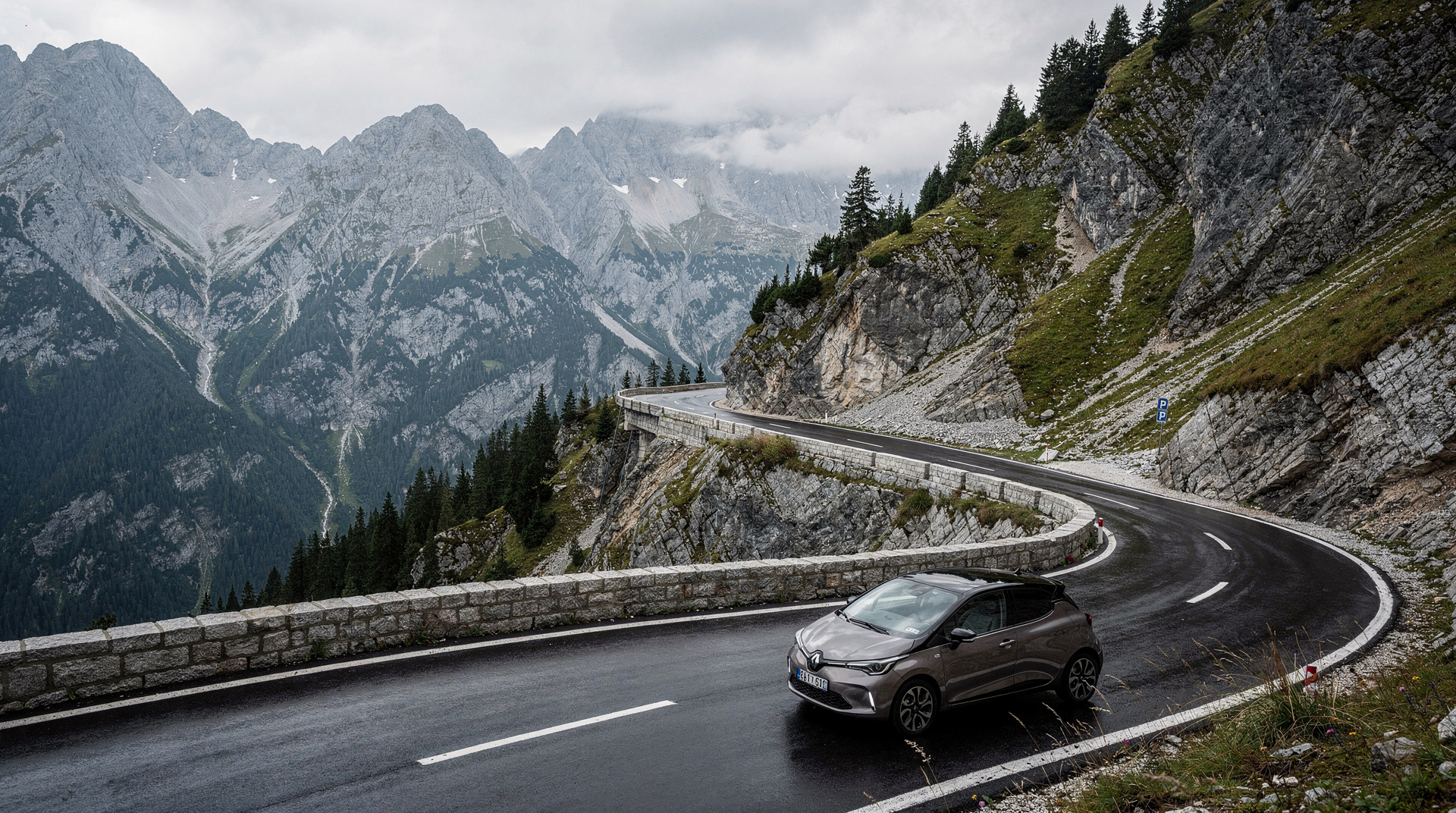
Ljubljana to Bled is 55 km via the A2 motorway. The drive takes about 50 minutes in normal conditions — less in the morning, slightly more in Friday-afternoon traffic in summer. You need a valid Slovenian e-vignette to use the motorway; buy it at evinjeta.dars.si before you go.
The scenic alternative via the regional road (avoid the motorway, follow signs for Kranj then Radovljica) takes about 1h10 and is perfectly pleasant — though the motorway is faster and the scenery is similar. If you haven’t already sorted the e-vignette or a rental car, the driving in Slovenia vignette guide and the car rental guide cover both before you set off.
Parking at Bled: the main lakeside car parks fill fast in summer. Peak season (July–August) weekend mornings: arrive before 08:00 for lakeside parking. The Grajsko Kopališče car park on the south shore is cheaper and a 15-minute walk from the island viewpoints. Expect to pay EUR 1.20–2 per hour.
If you’re planning to use Bled as a base and make day trips further into the Julian Alps (Vintgar, Bohinj, Kranjska Gora, Vršič Pass), having a car in Bled is a significant advantage — Lake Bohinj is 30 minutes by car and awkward by public transport; Vintgar Gorge is 4 km from Bled but requires either a walk, taxi or bike.
Option 5: train to Lesce-Bled
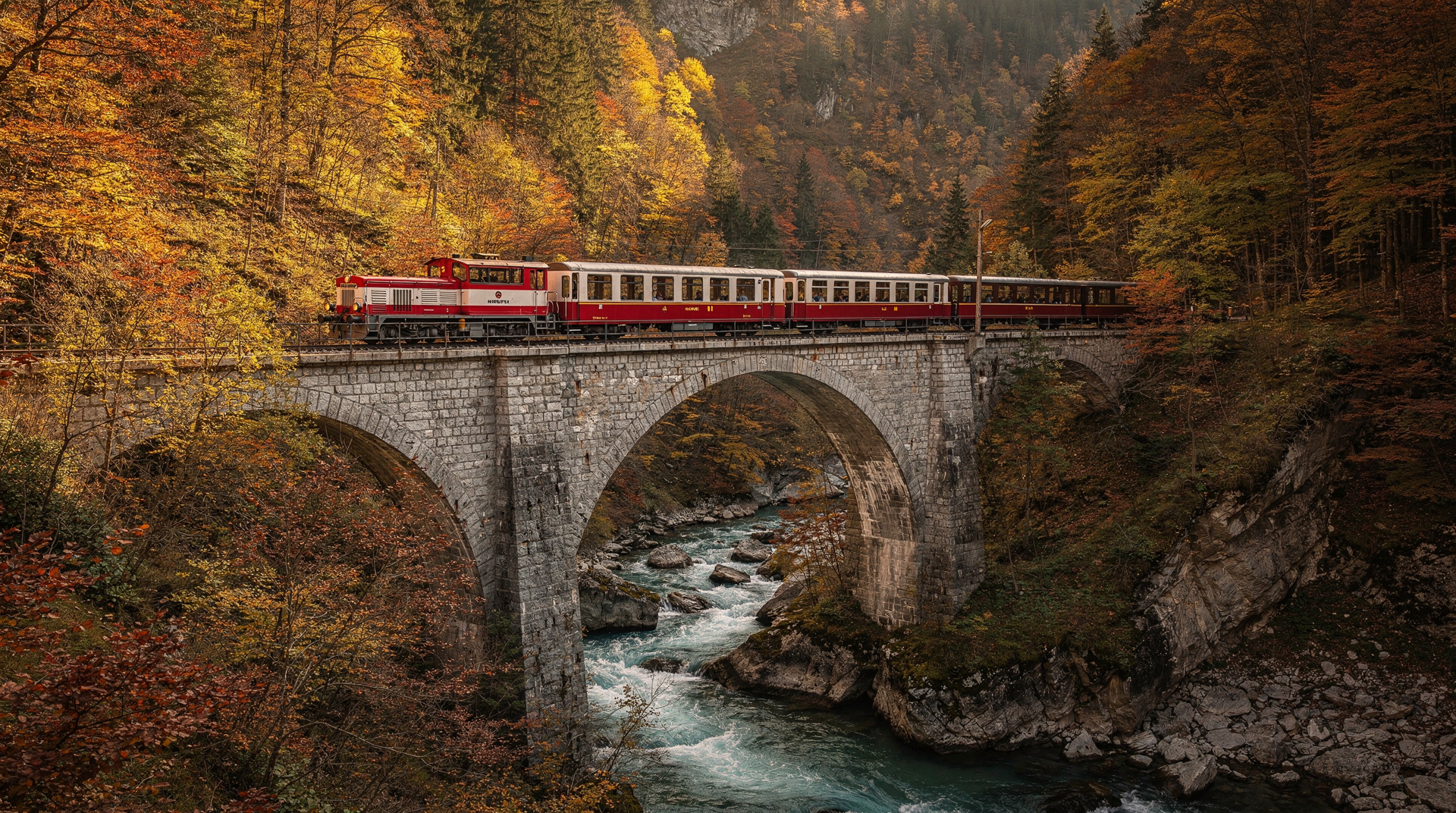
Several daily trains from Ljubljana stop at Lesce-Bled station, 4 km from the lake. For times and fares, see the Slovenian Railways website. From Lesce-Bled station, local bus #35 connects to Bled town (check the Arriva website for the timetable), or a taxi covers the short distance.
In total, the train + bus route takes similar time to the direct Arriva bus to Bled and involves an extra connection. It’s not a bad option, but it offers no practical advantage over the bus for most visitors. The train is slightly more scenic through the Sava Valley section. If you enjoy train travel for its own sake, this is a pleasant journey — just not a more efficient one.
From Ljubljana Airport directly to Bled
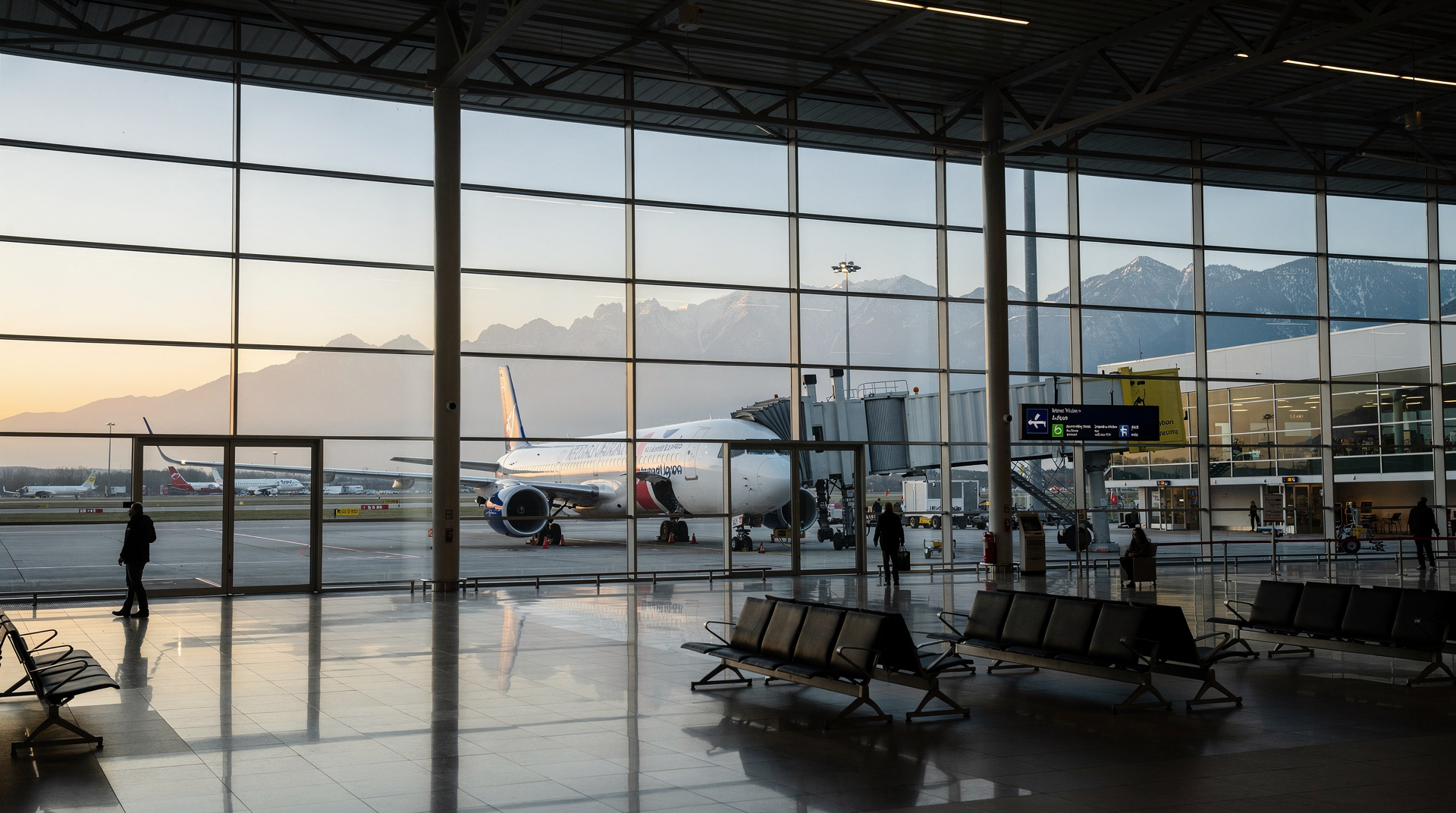
For travellers arriving at Ljubljana Airport who want to head straight to Bled without spending time in Ljubljana, a direct airport-to-Bled transfer takes about 40 minutes (bypassing the city entirely) with shared and private options (prices vary by operator).
The direct transfer from Ljubljana Airport to Bled is the cleanest option for arrival day — you’re at your hotel in under an hour. By public transport, the alternative is the airport bus to Ljubljana station (45 min) followed by the Arriva bus to Bled — a 2h+ journey with a wait at the bus station. The Ljubljana Airport guide and the broader getting to Slovenia guide cover the arrival side of the trip in more detail if you’re still planning flights.
If you’re just day-tripping from Ljubljana
If you’re based in Ljubljana and want to visit Bled as a day trip (a very common combination), the bus is the most obvious option. Leave Ljubljana by 08:00 to reach Bled before the main wave of tour buses at 10:00.
For a fully organised experience, a guided day tour to Bled from Ljubljana includes transport and a local guide — particularly good if it’s your first visit and you want context about the castle, island and Slovene history before exploring independently.
Timing your journey: avoiding the crowds
The single biggest variable in a Bled visit is what time you arrive. The first tour buses pull into Bled at around 09:30–10:00 on peak summer days. By 10:30, the lakeside path is busy. By 11:00, the pletna queue is long. By noon, parking is full and most of the cafés have queues.
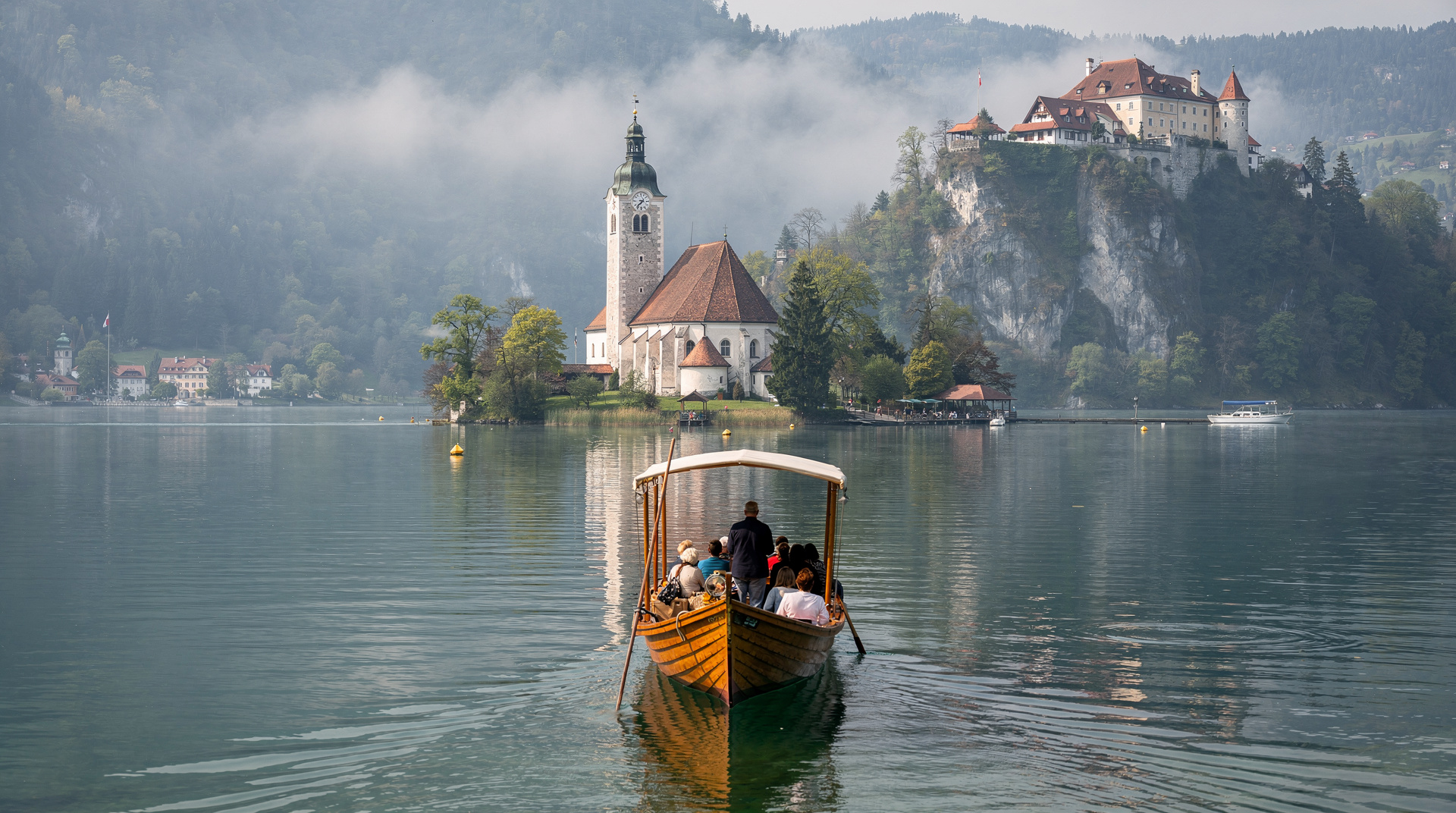
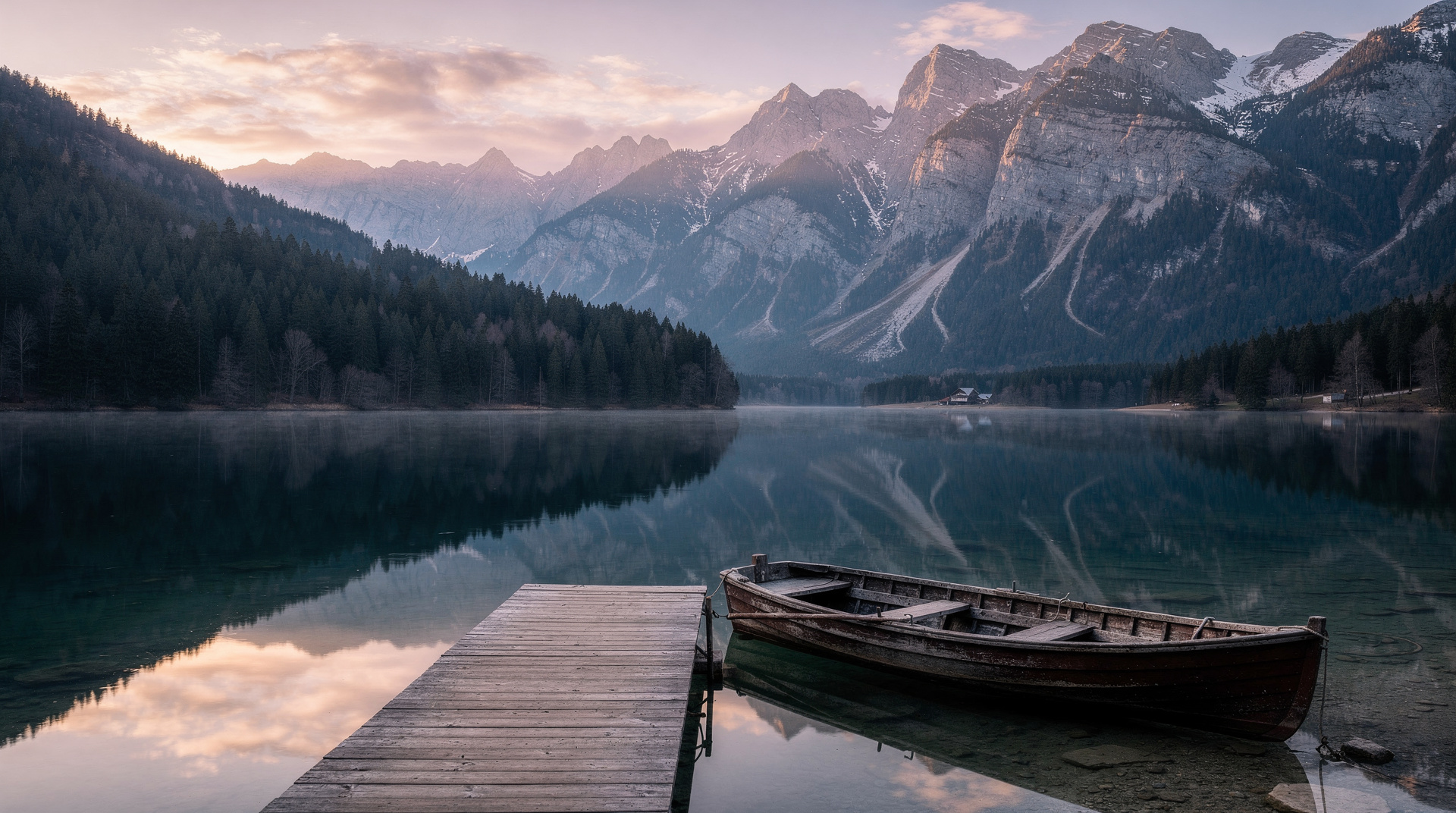
Arrive before 08:00 and you have a completely different experience: the lake is still, often misty in the early morning, the footpath is quiet, and the island church is visible without the foreground crowd. The first Arriva bus from Ljubljana leaves at 06:00–07:00 (check current timetable); arriving in Bled at 08:00 puts you there in optimal time.
In July and August, this early start matters significantly. In May, June, September or October — it matters less. The shoulder season gives you a more relaxed Bled experience at any arrival time.
For the return journey: if you’ve arrived early and spent the morning at the lake, consider staying for dinner (quieter after 17:00 as day-trippers leave) and catching a later bus back. The 18:00–19:00 window at Bled in summer, with late golden light on the water, is one of the most beautiful times of day.
Comparing the journey experience: what you actually see
The Ljubljana–Bled bus route runs through the Sava Valley, passing below the Karawanks mountain range that forms the Austrian border. On the northbound journey, the peaks of the Julian Alps start appearing on the left (west) side of the bus around Kranj — the first tangible sign that you’re entering alpine country. The lower slopes are dotted with farms and beech forests. The upper peaks carry snow well into May.
By car on the motorway (A2), the scenery is similar but slightly obscured by sound barriers near Kranj. The regional road via Radovljica (slower by 15 min) is arguably more scenic and passes through the old town of Radovljica — worth a stop if you have time for its well-preserved medieval town centre and beekeeping museum.
By transfer, the experience is the same as driving — you see the same scenery from the back seat with the added comfort of not navigating yourself.
How much time do you need?
Half-day from Ljubljana: arrive by 08:00, walk the lake circuit (6 km, 1.5h), climb Ojstrica viewpoint (15 min up, 10 min down), cream cake, return bus by 13:00. Works for a tight schedule.
Full day: add the pletna boat to the island (allow 1.5h for the experience), the castle visit (1.5h), and a proper lunch or swim at the lake beach. Return by 18:00 or 19:00.
Overnight: the best way to experience Bled. See the lake at dawn before the day-trippers arrive, explore Vintgar Gorge in the afternoon, and have the lakeside to yourself in the evening. Vintgar Gorge is 4 km from Bled and one of the most beautiful gorge walks in the Alps — a half-day that more than justifies staying overnight.
Summary: which to choose
| Option | Cost (per person) | Time | Best for |
|---|---|---|---|
| Arriva bus | See operator | See operator | Budget, solo, flexible timing |
| Shared transfer | Varies | Varies | Convenience, small groups |
| Private transfer | Varies | Varies | Families, heavy luggage |
| Drive yourself | Variable (vignette + fuel) | 50 min | Day-trippers with a car |
| Train + bus | See operator | See operator | Train enthusiasts |
| Airport direct | Varies | 40 min | Arrival day, straight to Bled |
What to do when you arrive in Bled
Bled town is small and walkable. From the bus station, the lake is a 5-minute flat walk south. From the Bled parking areas, the island viewpoints are a 5–15 minute walk depending on which shore you approach from.
Immediate orientation:
- The lakeside path (6 km, flat) circles the entire lake and is the best introduction
- The best elevated view is from Ojstrica (15-min steep climb from the south shore) or Mala Osojnica (25 min, higher, even better)
- The pletna boat dock for Bled Island is on the north shore, near the rowing club
- Bled Castle is on the cliff above the north shore — access by funicular (paid) or a steep walk up from the castle parking area; see the Bled Castle guide for whether the interior is worth the ticket
- Bled cream cake: the Park Café near the main parking area is the traditional place; also available at the hotel on the lake
- The pletna crossing to Bled Island is a highlight for most first-time visitors — the Bled Island guide covers timings, cost and the church bell tradition
Eating and drinking in Bled: Local restaurants fill up by noon in peak season. For lunch on a day trip, arrive early or book ahead. The Tourist Information Centre at the lake can advise on current opening times. The gostilna options a few minutes outside the village centre are generally better value than the tourist-facing restaurants on the main promenade.
Onward from Bled
To Lake Bohinj (30 min by car, 50 min by bus): the natural next stop for Julian Alps visitors. The bus runs several times daily from Bled to Bohinjska Bistrica, then on to Bohinj. By car, follow signs for Bohinj via Bohinjska Bistrica — the valley road is scenic.
To Kranjska Gora (35 min by car): ski resort and gateway to Vršič Pass. No direct bus from Bled; change in Jesenice. By car, the A2 motorway toward the Karavanke Tunnel, then exit for Kranjska Gora.
To Vintgar Gorge (4 km from Bled centre): no regular bus service. Options: walk (45 min each way), hire a bike, take a taxi or join a guided tour. Open approximately April–October. One of the best short walks in Slovenia — 1.6 km gorge walk ending at a waterfall. See the Vintgar Gorge guide for all the details.
To Bovec and the Soča Valley (1h45 by car via Vršič Pass, seasonal): the most dramatic drive from Bled. The Vršič Pass is closed November–May. See the Vršič Pass guide for the road specifics. By public transport, there is no practical direct connection — the Bovec bus from Ljubljana is the alternative.
Back to Ljubljana: the same options in reverse. Last bus from Bled to Ljubljana is typically around 20:30–21:00 (check the current timetable on the Arriva website). If you miss the last bus, you will need a taxi back to Ljubljana.
The bus journey itself: what to expect
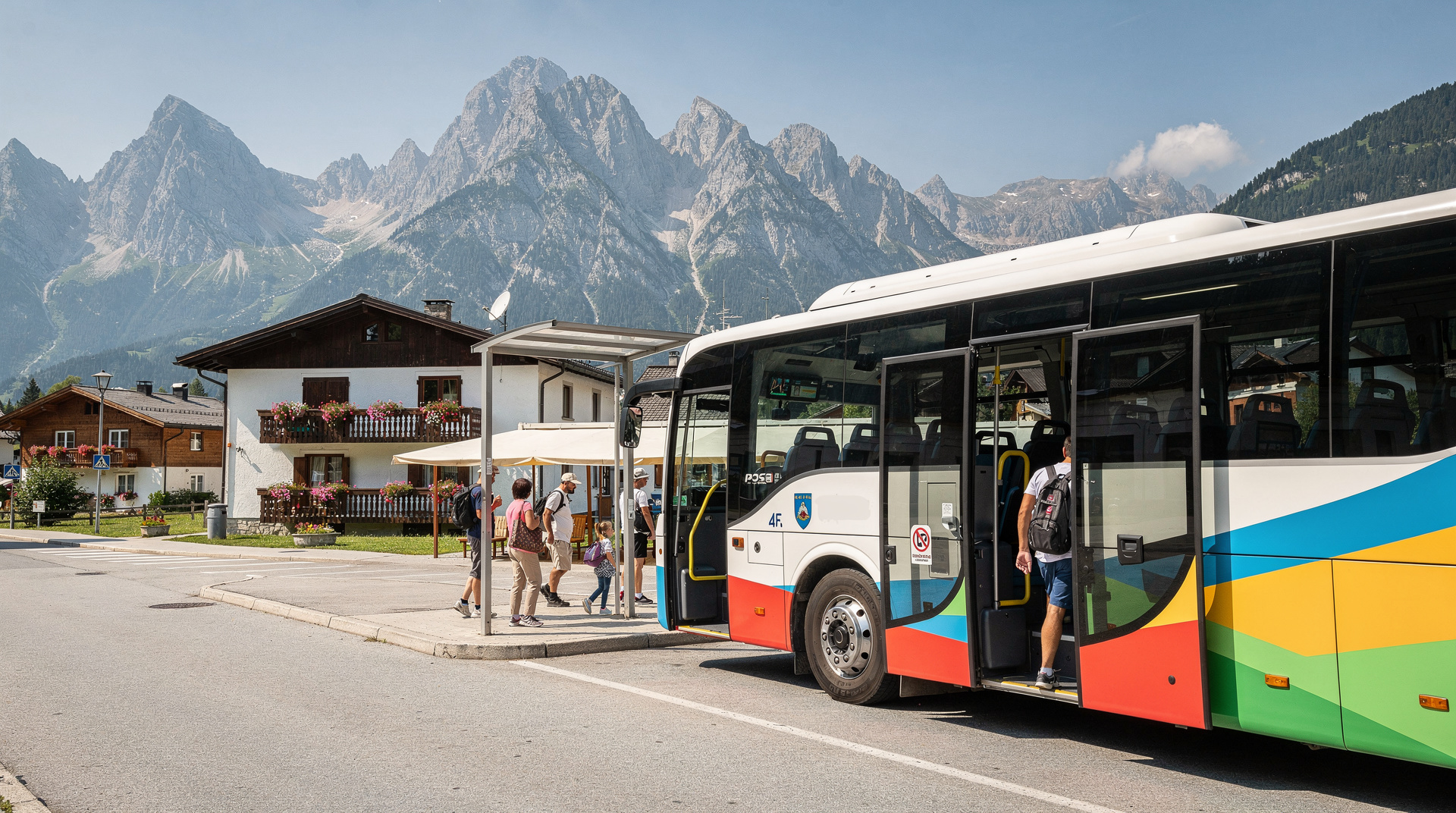
The Arriva bus from Ljubljana to Bled is a standard long-distance coach. Air conditioning runs in summer. Seats are not assigned — first-come, first-served. The luggage hold underneath the bus takes one large case per person.
The route goes: Ljubljana bus station → A2 motorway north → Kranj exit → regional road through Kranj → Lesce-Bled junction → Bled bus station. The motorway section is fast; the regional road through Kranj’s outskirts adds a few minutes but gives you early views of the Karawanks mountains.
What to look for on the journey: from Kranj onward, the peaks of the Julian Alps appear ahead. On the approach to Bled, you catch a first glimpse of the lake through the treeline about 3 km before the bus station. The driver announces Bled in Slovenian; it’s also displayed on the electronic board.
Return journey tip: the last evening bus from Bled back to Ljubljana departs around 20:30–21:30 (check the current timetable on the Arriva website — it changes seasonally). If you’re having dinner in Bled, keep track of the last departure time. Missing it means a taxi ride back to Ljubljana.
Doing Ljubljana and Bled without backtracking
If your trip continues beyond Bled rather than looping back to Ljubljana, it’s worth planning the transport as a one-way chain rather than a return journey. A common and efficient pattern: fly into Ljubljana, spend one or two nights in the capital, transfer to Bled (bus or shared transfer), spend two or three nights based there for the lake and Vintgar, then continue onward to Bohinj or Kranjska Gora before eventually looping back to Ljubljana Airport for departure — sometimes via a direct transfer that skips the capital entirely on the way out.
Buses and shared transfers both handle one-way legs without penalty; renting a car one-way (pick up in Ljubljana, drop off near Bled or Kranjska Gora) is also possible through most agencies, usually for a modest surcharge.
Luggage and logistics between Ljubljana and Bled
Storing luggage is rarely a problem on this route. Ljubljana’s bus and train stations both have left-luggage facilities if you want to explore the capital hands-free before heading to Bled later in the day. Most Bled accommodation accepts early check-in or will store bags if you arrive before your room is ready, which matters if you’ve taken an early bus specifically to beat the crowds. Buses have an underneath luggage hold that takes one large case per passenger without extra charge; shared transfers typically allow one large and one small bag per person — check when booking if you’re travelling with more.
What a return trip costs in total
For a same-day round trip from Ljubljana, the bus is the cheapest option per person, while a shared transfer costs more. Driving yourself has a fixed cost for the vehicle regardless of group size, which is where a car starts to make sense once there are three or more of you. For an overnight stay in Bled, add one-way costs only, since you won’t be retracing the same route the same day.
Tips for specific types of visitor
Solo travellers: the bus is the obvious choice — cheap, frequent and direct. Combine with a bike hire in Bled for the lake circuit and the Ojstrica climb.
Couples: bus or shared transfer to Bled, then rent an e-bike or kayak for the day. A pletna boat to the island plus the viewpoint climb is a full and memorable day.
Families with children: private transfer is the most comfortable option with pushchairs and bags. The flat lakeside path is perfect for small children. The pletna boat is popular with kids (short crossing, ring the church bell). Bled cream cake is a required family ritual.
Groups of 4+: private transfer from Ljubljana or airport becomes cost-competitive with the bus when you divide the fare. Calculate the comparison for your group.
Day-trippers from Ljubljana: the earliest reasonable bus from Ljubljana gets you to Bled by 09:00–09:30. Arrive earlier (08:00) on summer weekends — take the 07:00 bus from Ljubljana if you want the lake before the crowds.
For the onward journey from Bled to Lake Bohinj (30 min), or exploring Triglav National Park, the getting around Slovenia guide covers all your options in detail. For the full picture of the lake itself once you arrive — beyond just how to get there — see the Lake Bled complete guide.
Frequently asked questions about Ljubljana to Bled
How often does the bus run from Ljubljana to Bled?
Arriva buses run from Ljubljana bus station to Bled throughout the day. Early morning and late evening services are less frequent. For current fares, journey times and timetables, see the Arriva website or the official Ljubljana bus station website. No booking required, but advance purchase saves time.How much does a transfer from Ljubljana to Bled cost?
Prices for shared and private transfers vary by operator and season, so check the operator when booking. For groups of 4, a private transfer can become price-competitive with four individual bus tickets, plus the added convenience of door-to-door service and your own departure time. Book shared transfers via GetYourGuide or direct transfer operators.How long does it take to drive from Ljubljana to Bled?
About 50 minutes — 55 km via the A2 motorway (the fastest route). You need a valid Slovenian e-vignette to use the motorway. Without it, the regional road via Radovljica takes about 1h10. Parking at Bled in summer fills by 09:30 on busy days — aim to arrive before 08:00 if you want a lakeside spot.Is there a direct train from Ljubljana to Bled?
Not exactly. The nearest station is Lesce-Bled (4 km from the lake), served by several trains daily from Ljubljana (see the Slovenian Railways website for times and fares). You then need local bus #35 or a taxi to reach Bled town. Total time is comparable to the direct bus, but with an added connection. Most visitors find the direct Arriva bus simpler.Can I get from Ljubljana Airport directly to Bled without going through the city?
Yes. Direct transfers from Ljubljana Airport to Bled take about 40 minutes and bypass Ljubljana entirely. Prices vary by operator, so check when booking. This is usually the best option for travellers arriving by plane who want to head straight to the Julian Alps region.
Top experiences
Bookable activities with verified prices and instant confirmation on GetYourGuide.