Public transport in Slovenia: buses, trains and getting around without a car
Ljubljana: airport bus transfer to/from the station
Can you travel around Slovenia by public transport?
You can reach Ljubljana, Lake Bled, Postojna, Piran and Maribor by bus or train from Ljubljana. The Soča Valley, Logar Valley, Škocjan Caves, Goriška Brda and most rural destinations require a car or taxi. For a trip focused on the main highlights, public transport works well. For flexible exploration of the whole country, a rental car is necessary.
Getting around Slovenia without a car
Slovenia’s public transport network covers the main tourist corridor reliably — Ljubljana, Bled, Postojna and the coast are all comfortably reachable by bus. Beyond that corridor, services thin out and the country starts to feel inaccessible on public transport alone.
This guide covers every option, with honest assessments of where buses and trains work well and where they don’t.
If you are still deciding on the shape of your trip, the first time in Slovenia guide and the how many days in Slovenia guide help you judge how much ground a car-free visit can cover. Our trains in Slovenia guide goes deeper on the rail network, and if you eventually decide that buses are not enough, the car rental in Slovenia guide and the driving and vignette guide cover the alternative.
| Main operator | Arriva (buses), Slovenian Railways/SŽ (trains) |
| Cost | around EUR 6–13 for most Ljubljana day-trip routes |
| Works well for | Ljubljana, Bled, Postojna, Piran, Maribor |
| Struggles for | Soča Valley, Logar Valley, Goriška Brda, rural spas |
| Booking | Same-day usually fine; book ahead in peak summer |
Buses: the backbone of Slovenian public transport
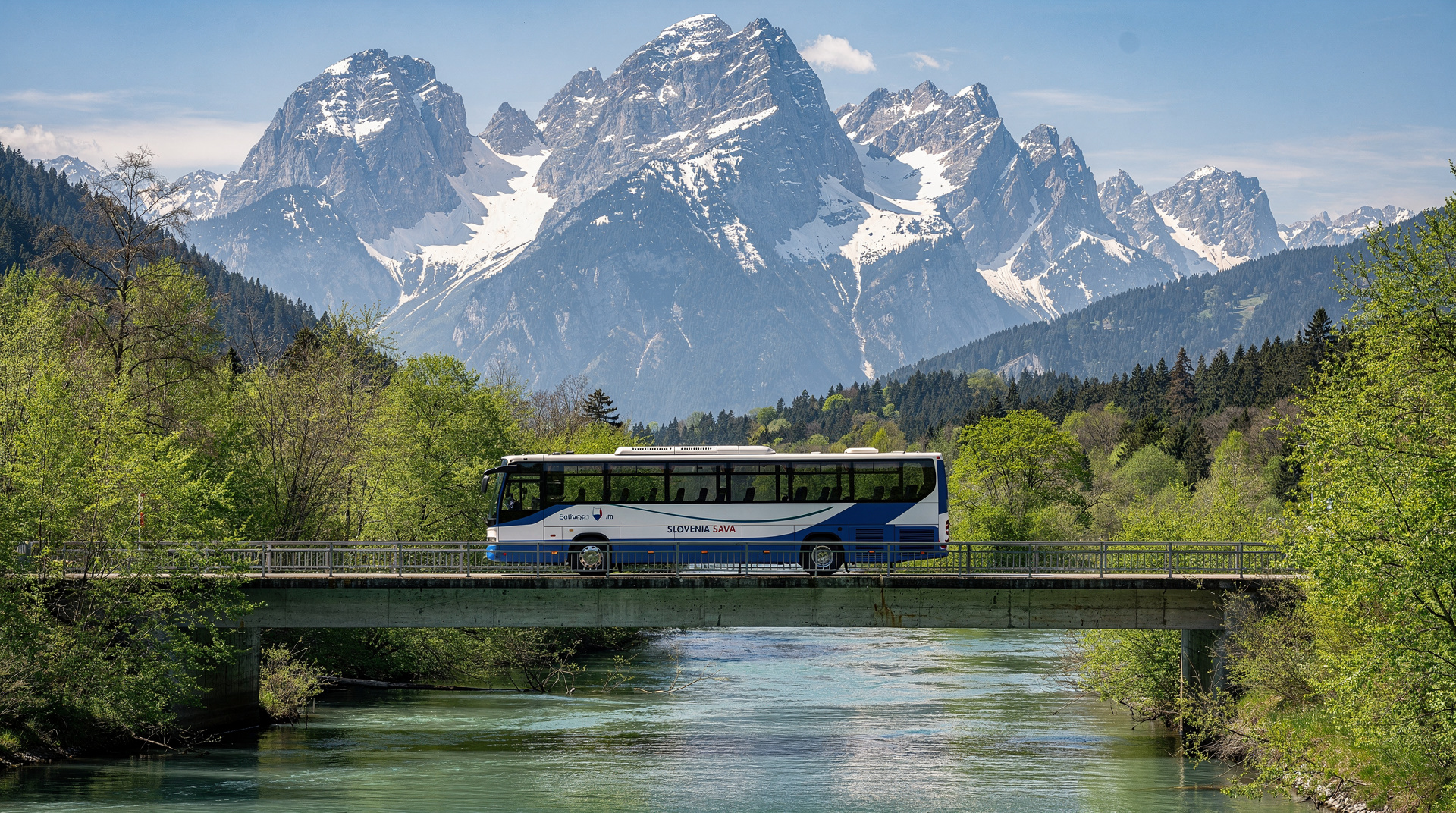
Arriva operates the majority of intercity bus services in Slovenia. The buses are modern, air-conditioned and generally punctual. Arriva’s website (arriva.si) has timetables, fares and online booking in English. You can also buy tickets at the bus station counter or on the bus itself.
Nomago is the other significant operator, running the Ljubljana Airport shuttle and several long-distance routes.
Key routes from Ljubljana:
| Destination | Frequency | Duration | Price |
|---|---|---|---|
| Lake Bled | Every 30–60 min | 1h20 | ~EUR 6 |
| Kranjska Gora | 3–4 daily | 2h | ~EUR 8 |
| Postojna | Several daily | 1h | ~EUR 6–7 |
| Piran/Portorož | 4–5 daily | 2h30 | ~EUR 11–13 |
| Maribor | Multiple daily | 2h15 | ~EUR 10–12 |
| Bovec | 2 daily (summer) | 3h | ~EUR 13–15 |
| Koper | Several daily | 2h | ~EUR 9–11 |
Booking advice: On the Ljubljana–Bled route, buses are usually not full and you can buy on the day. For the coast and Bovec in summer, booking ahead at arriva.si is sensible — seats run out on warm weekends.
Limitations:
- Sunday and evening services are significantly reduced on all routes
- There is no direct Bled–Postojna bus (you must change in Ljubljana)
- Rural areas are served by one or two buses per day, or none at all
- The Soča Valley is technically reachable by bus, but only with an early start and limited return options
Trains: scenic but limited
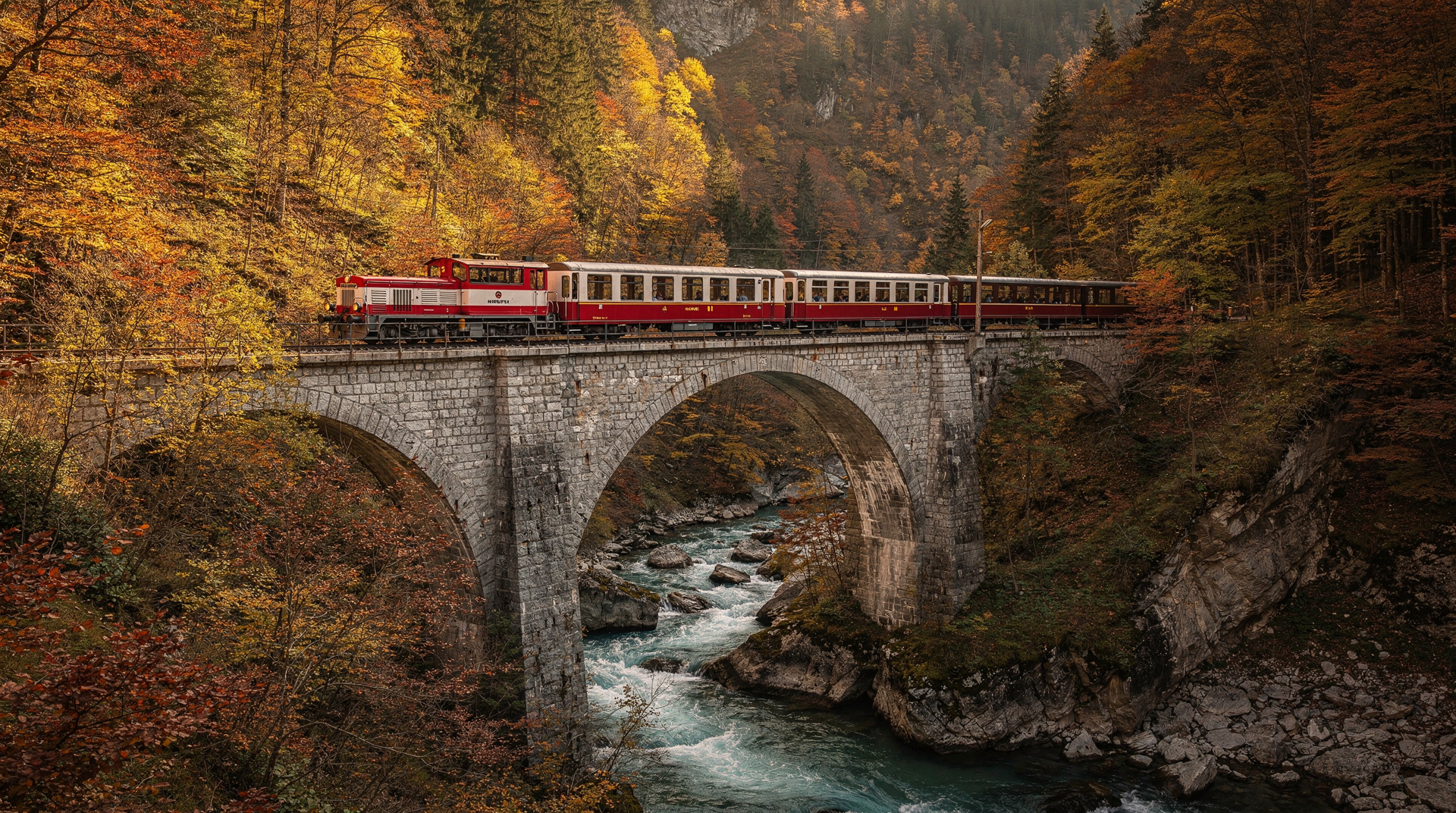
Slovenian Railways (SŽ) covers a network of about 1,200 km. The rolling stock ranges from modern regional trains to older diesel units on rural branches. Timetables and fares are at potniski.sz.si. The booking system is in English.
Best train routes for tourists:
Ljubljana → Maribor: The fastest and most useful train route in Slovenia. InterCity and regional services run multiple times daily. Journey 1h45, fare EUR 8–12. The route passes through the Sava Valley and is pleasant if unremarkable scenery.
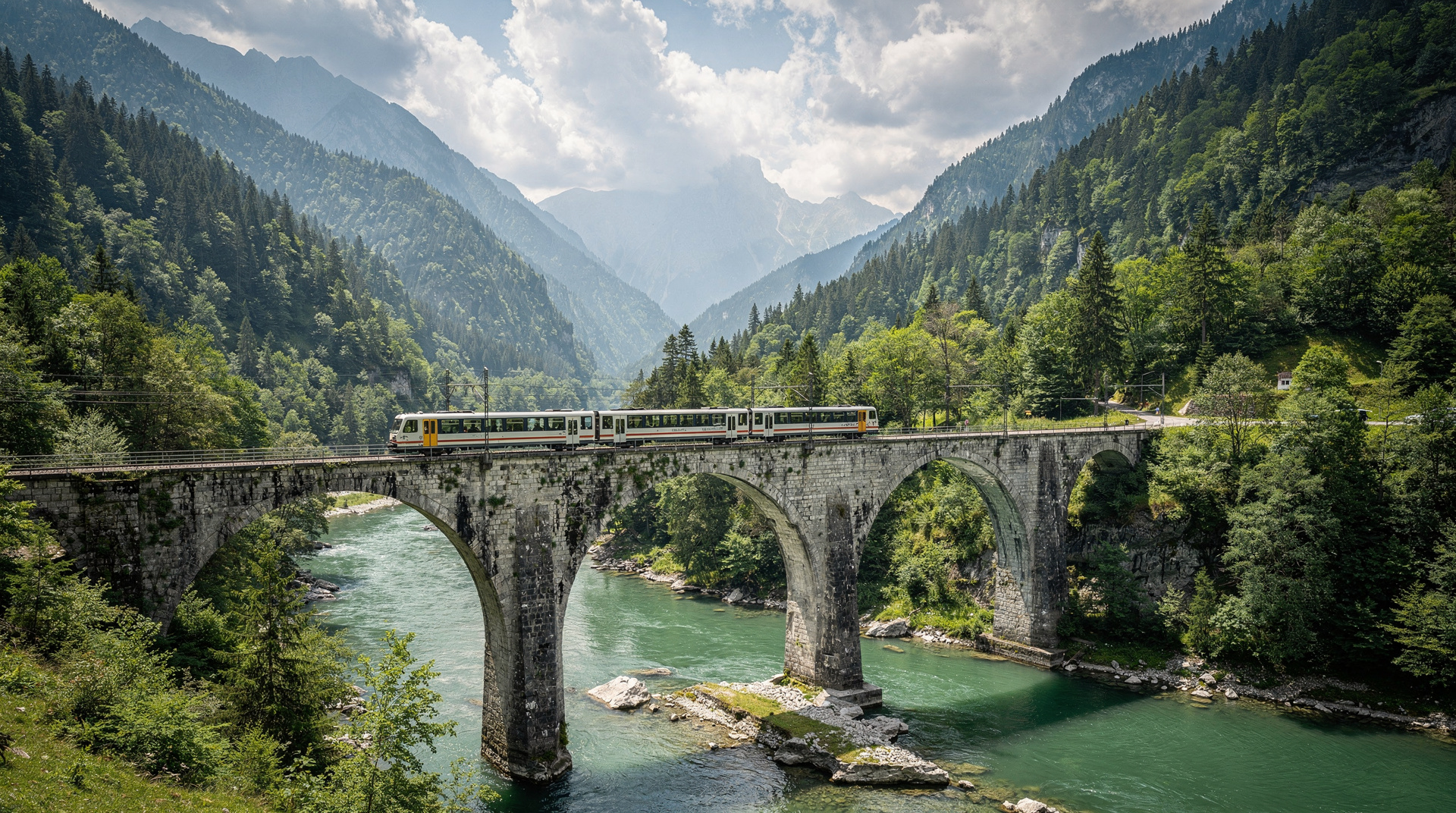
Ljubljana → Postojna → Sežana → Trieste: One of the most scenic train routes in the region. The Karst section between Postojna and the sea cuts through dramatic limestone terrain. The full journey to Trieste (across the Italian border) takes about 2h30. A handful of daily services; check Trenitalia as well as SŽ for the onward Italian section.
Ljubljana → Koper (coast): Direct summer trains run to Koper on the coast, taking about 2h30. The descent to the Adriatic through Karst scenery is beautiful. Services are reduced or absent in winter.
Ljubljana → Lesce-Bled: Trains to Lesce-Bled station run a few times daily (about 50 minutes, EUR 6–8). The station is 4 km from Bled town — you need the local bus #35 to complete the journey. Given this inconvenience, most visitors take the bus directly to Bled.
What trains don’t serve: Piran (no station), Bovec (no station), Bohinj village (local train to Bohinjska Bistrica, then bus), the Soča Valley proper, Škocjan Caves (nearest station is Divača, then taxi or bus).
Ljubljana city transport
Ljubljana’s urban bus network (LPP) covers the city and suburbs. For most tourists, it’s rarely needed — the old town, central market, train station and most hotels are walkable. If you need to reach the outskirts or the park-and-ride facilities, LPP is reliable and cheap.
Urbana card: Load credit onto the card (EUR 1.30 per trip vs EUR 2.10 cash). The deposit is EUR 2, refundable at the LPP office. For a one-day tourist visit, cash or walking is simpler. For a 3+ day city stay, the card makes sense.
Kavalir electric buggies provide free transport in the pedestrian zone of the old town — genuinely useful for those who prefer not to walk.
Once you are in the city, the Ljubljana old town guide and the Ljubljana in one day guide show how much can be done entirely on foot, and the Ljubljana destination page gives the wider picture of the capital as your transport hub.
Intercity shared taxis and transfers
Shared transfers fill the gap between public buses and private taxis. They’re typically 2–3× more expensive than the bus but significantly cheaper than a private car.
The Nomago airport bus is the cheapest link between Ljubljana Airport and the city. For the Bled route, shared transfers between Ljubljana and Bled are the most flexible option if you miss the bus or arrive at an odd hour.
Organised day tours: the best option for Postojna and Predjama
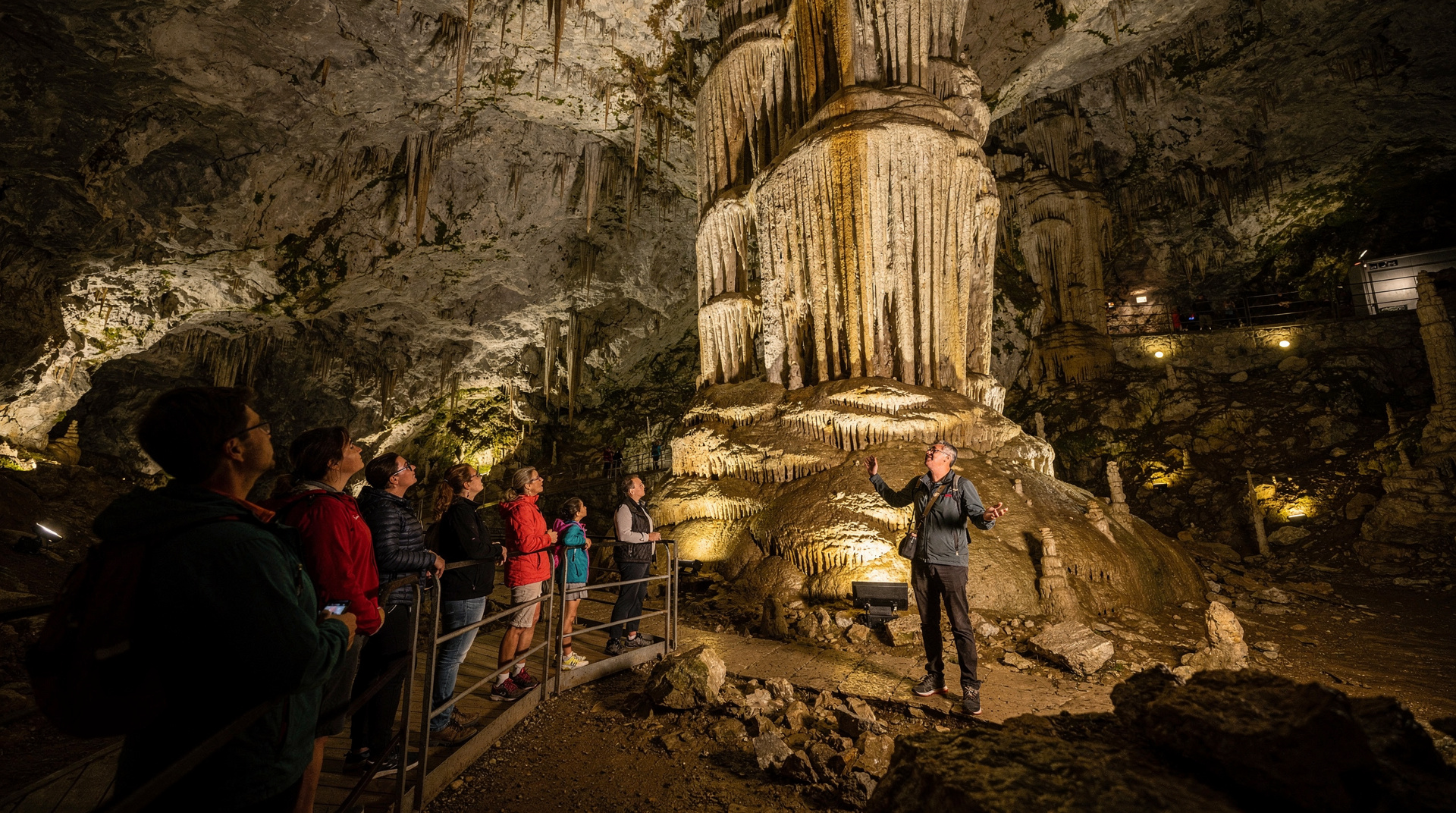
If you’re visiting Postojna and Predjama Castle in the same day, the public bus to Postojna works fine for the cave itself. But the 9 km between Postojna Cave and Predjama Castle is where independent travellers without a car get stuck — there is no regular bus between them. The Postojna Cave and Predjama half-day tour from Ljubljana solves this neatly, combining both sites with transport included.
Similarly, a guided day trip to Lake Bled from Ljubljana is often the simplest option for those who want to avoid navigating bus timetables on their first day in Slovenia.
What you genuinely cannot reach by public transport
To be honest about the limitations:
Soča Valley (Bovec, Kobarid): technically reachable by bus, but the 2 daily services in summer with early departures make independent scheduling difficult. Without a car, you’re dependent on tour operators.
Logar Valley: no practical public transport. A car or organised tour only.
Goriška Brda wine hills: no public bus to the villages. Requires a car or taxi from Nova Gorica.
Škocjan Caves: the nearest bus stop is in Škocjan village (served by occasional buses from Divača). Divača is on the Ljubljana–Trieste train line. Manageable but slow — allow half a day in each direction.
Triglav summit area: you can reach the trailheads at Pokljuka or from Kranjska Gora by bus, but the access to high-altitude routes is much easier by car.
Most rural thermal spas: require a car or a taxi from the nearest town.
Practical tips for bus travel
- The Ljubljana bus station (Avtobusna postaja) is adjacent to the railway station at Trg Osvobodilne fronte 4
- Real-time departures are displayed on screens at the station
- Arriva buses have luggage compartments for large bags (no extra charge)
- The Arriva website and app work well for journey planning
- On the Ljubljana–Bled route, sit on the right side (if heading north) for views of the Karawanks mountains
- Take snacks for longer journeys — service stops are short and not always at suitable times
How to plan a car-free Slovenia trip
A car-free Slovenia trip requires a different structure than a driving trip, but it’s genuinely viable for the main highlights. Here’s how to plan it:
Base in Ljubljana: Ljubljana is the hub. Almost every tourist destination in Slovenia is accessible as a day trip from the capital, even if some require planning. Your hotel in Ljubljana is your fixed point.
Day 1 — Ljubljana: explore the old town, Central Market, castle and river on foot. Everything is walkable.
Day 2 — Lake Bled: take the 07:00–08:00 Arriva bus (arrive before the crowds). Walk the lake, do the island or the viewpoint, eat lunch, return on the late afternoon bus. Perfect day trip.
Day 3 — Postojna Cave: morning Arriva bus to Postojna (1h). Join a cave tour. Return on the afternoon bus. Alternatively, combine with an organised tour that also covers Predjama Castle (which you can’t do on public bus alone).
Day 4 — Piran: early morning Arriva bus (2h30). Arrive by 11:00. Walk the old town, eat seafood lunch, walk the walls at sunset. Return on the evening bus. Long day but memorable.
Day 5 — onwards: for Bohinj (connect at Bled), Maribor (direct bus or train), or Škocjan Caves (organised tour recommended without a car).
This five-day structure covers Slovenia’s highlights entirely by public transport. The only things you’ll miss: the Soča Valley, rural wine country, Logar Valley and other sites that genuinely require a car.
If you want a ready-made version of this plan, the Slovenia in 5 days without a car itinerary lays it out day by day, and the Ljubljana and Bled in 3 days itinerary is a shorter alternative. For the individual stops, see the Lake Bled complete guide, the Postojna Cave guide and the Piran travel guide. The Ljubljana to Bled transport guide compares every way of making the most popular trip.
Using buses for regional day trips
Without a car, the most efficient pattern for a Slovenia trip is to use buses for the major routes (Ljubljana–Bled, Ljubljana–Postojna) and organise the trickier connections via guided day tours. This hybrid approach is significantly more flexible than trying to do everything by scheduled public transport.
Day-trip combinations that work well by public transport:
- Ljubljana → Bled (morning bus) → Bled → Ljubljana (evening bus): excellent, no issues
- Ljubljana → Postojna (morning bus) → Postojna → Ljubljana (afternoon bus): works well, cave tour fills the middle
- Ljubljana → Piran (morning bus) → Piran → Ljubljana (evening bus): long but doable, excellent day
Day-trip combinations that are difficult by public transport:
- Bled + Bohinj in one day by bus: possible but requires careful timetable planning; last bus from Bohinj back to Bled can be late afternoon
- Bled + Vintgar Gorge by public transport: Vintgar is 4 km from Bled with no regular bus — taxi or walk required
- Postojna + Predjama Castle: the 9 km between them has no regular bus — this combination effectively requires a car or a tour
Inter-town taxis
In areas where buses are infrequent, local taxis fill the gap. All Slovenian towns and most tourist villages have at least one local taxi company. Fares are metered or agreed in advance. Key distances and approximate taxi costs:
- Bled bus station to Bled Lake: 5 min walk, no taxi needed
- Lesce-Bled train station to Bled town: EUR 8–10 (10 min)
- Postojna bus stop to Postojna Cave: 20-min walk or EUR 5–7 taxi
- Divača train station to Škocjan Caves: EUR 8–12 (4 km)
- Piran bus stop to Piran old town: 5 min walk, no taxi needed
Booking apps and digital tools
- Arriva app (iOS/Android): real-time timetables, ticket purchase, departure alerts
- SŽ app (Potniški promet): Slovenian Railways booking and timetables
- Google Maps: surprisingly complete for Slovenian bus routes, including stop-level timetables. Use for journey planning before booking at arriva.si
- Maps.me: good offline maps with public transport routes marked
- Moovit: public transport app covering Ljubljana’s LPP buses with real-time departures
Onward trips from the main corridor
Several destinations in this guide are covered in more depth elsewhere. The Maribor city guide explains what to see once the train arrives, the Škocjan Caves guide describes the visit that follows the Divača connection, and the Lake Bohinj guide is worth reading before you plan the Bled to Bohinj leg. For airport arrivals, the Ljubljana airport guide covers the shuttle and its alternatives.
Getting to Slovenia by public transport
For arrivals from neighbouring countries: FlixBus and Eurolines serve Ljubljana from Vienna, Zagreb, Trieste and other European cities. Day trips from Trieste to Ljubljana run regularly and are popular for Italian visitors. The getting to Slovenia guide covers all international transport options in detail.
School holidays and seasonal timetable changes
Slovenian public transport runs on two basic schedules: the standard weekday/Saturday timetable, and a Sunday/holiday reduced timetable. Slovenian public holidays include New Year’s Day (1–2 Jan), Prešeren Day (8 Feb), Easter weekend, Labour Day (1–2 May), Statehood Day (25 June), Assumption (15 Aug), Reformation Day (31 Oct), All Saints Day (1 Nov) and Christmas (25–26 Dec).
On public holidays, the reduced Sunday schedule applies — significantly fewer buses on most routes. If you’re planning travel on a Slovenian public holiday, check arriva.si specifically for the holiday timetable rather than the standard weekday one.
Summer timetable changes (approximately mid-June to mid-September) generally add frequency on tourist routes (more Ljubljana–Bled services, more Ljubljana–Piran services). Off-peak/winter timetables reduce frequency on all routes.
Accessibility on public transport
Slovenian buses and trains have varying accessibility. The newer Arriva coaches on main routes (Ljubljana–Bled, Ljubljana–Piran) have low floors or boarding steps with a foldable ramp — check when booking if this is a requirement. Older vehicles on rural routes do not have wheelchair access. Ljubljana’s LPP city buses are mostly low-floor and accessible.
Slovenian Railways has accessible carriages on IC trains (Ljubljana–Maribor). Regional trains are less consistently accessible. Pre-notification to SŽ (at least 24 hours ahead) enables station staff to assist at Ljubljana station.
For visitors with significant mobility restrictions, private transfers remain the most flexible and accessible transport option throughout Slovenia.
Bus stations and facilities in Ljubljana
Ljubljana bus station (Avtobusna postaja): Trg Osvobodilne fronte 4. This is the main hub for all Arriva and Nomago intercity services, as well as the airport bus, and international FlixBus/Eurolines services. The station has:
- Ticket counters (open 05:30–22:00)
- Online booking kiosks
- Left-luggage counter (not lockers — staffed desk, EUR 2–3/bag/day)
- A bar and basic café
- ATM
- Real-time departure boards
The station is directly adjacent to Ljubljana train station — both platforms share the same forecourt. The combined complex is a 20-minute walk from the old town via Slovenska cesta, or a 5-minute taxi.
Boarding and fare tips
On the bus: most Arriva drivers accept cash for tickets. For intercity routes, buying online at arriva.si is marginally cheaper and guarantees a seat on busy routes. Payment on the bus is by cash; exact change is not required but appreciated. No card payment on board as a rule — check online first.
Luggage hold: Arriva buses on intercity routes have luggage holds accessible from the outside. Load your suitcase before boarding and retrieve it after arrival. The hold is not locked; valuable items should travel with you in the cabin.
Seat assignment: most Slovenian buses are first-come-first-served, not assigned seating. On busy summer routes (Ljubljana–Bled on Friday afternoon, Ljubljana–Piran on summer weekends), arriving 10–15 minutes early improves your seating options.
Honest limitations: what public transport can’t do
To close honestly: Slovenia’s public transport is reliable and good value on the main tourist corridor. It is not comprehensive. Several of the country’s best experiences — the upper Soča Valley, Triglav base areas, Logar Valley, wine country, the back roads of Karst — are simply not accessible by bus. Visitors without a car will see a subset of Slovenia. This is worth knowing in advance so you can either rent a car, join tours for specific sites, or build an itinerary around what public transport actually serves well.
The payoff for the bus-and-foot approach is that it forces you to slow down in the places you do reach — and Ljubljana, Bled and Piran are all excellent places to be slow in.
For planning any journey in Slovenia, the getting around Slovenia guide is the comprehensive starting point.
Frequently asked questions about Public transport in Slovenia
How do I get from Ljubljana to Lake Bled by public transport?
Arriva buses run from Ljubljana bus station to Bled roughly every 30–60 minutes throughout the day. The journey takes about 1h20 and costs around EUR 6 each way. This is the most practical option for day-trippers or those staying overnight in Bled. Trains reach Lesce-Bled station (4 km from the lake) — you'd need a connecting bus from there.Is there a bus from Ljubljana to Postojna?
Yes. Several Arriva buses per day run from Ljubljana to Postojna, taking about 1 hour and costing EUR 6–7. Services run throughout the day but are less frequent in the evenings. From Postojna bus stop, the cave entrance is a 20-minute walk or a short taxi. There is also a train (about 1h from Ljubljana to Postojna station, EUR 5–8).How do I get to Piran by public transport?
Arriva buses run from Ljubljana to Piran/Portorož with a few services daily. The journey takes approximately 2h30 and costs EUR 11–13. Some services are direct; others require a change in Koper. In summer, additional services run. From Piran bus stop, the old town is a 5-minute walk.Is the Ljubljana bus card system worth using for tourists?
Ljubljana city buses (LPP) use the Urbana card, loaded with credit. A single fare is EUR 1.30 with the card. For city transport during a multi-day stay, the card makes sense (deposit EUR 2, refundable). For most tourists spending 1–2 days in the city centre, walking and cycling are more practical than city buses.What is the Nomago airport bus?
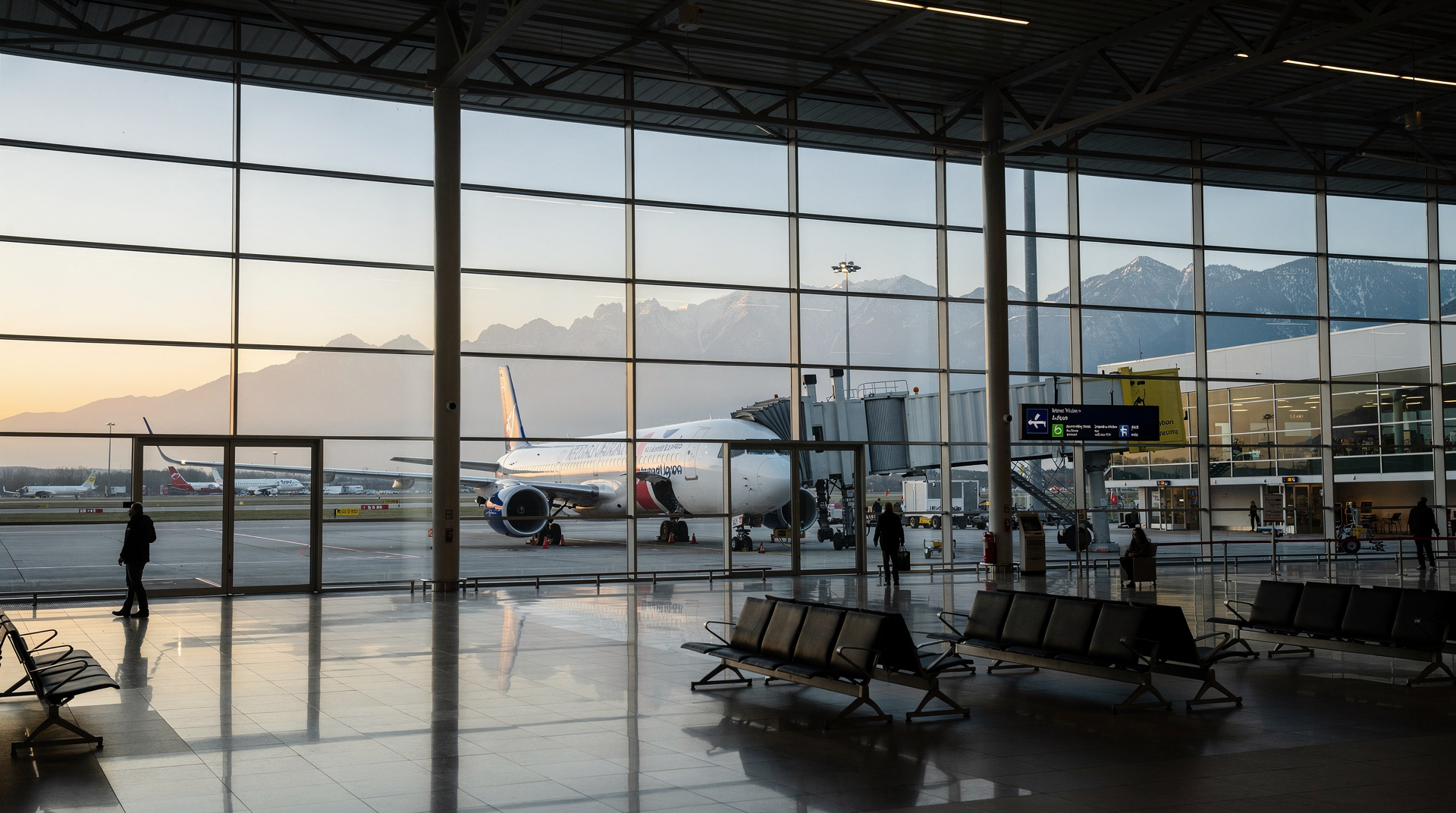
Nomago operates the shuttle between Ljubljana Airport and the main Ljubljana bus station, running roughly every 30–60 minutes. The fare is EUR 4–6 and the journey takes 45 minutes. This is by far the cheapest way into the city from the airport. Tickets can be bought on the bus, online or at the bus station.
Top experiences
Bookable activities with verified prices and instant confirmation on GetYourGuide.