Best photography spots in Slovenia: timing, access and honest assessments
| Best for | Landscape and travel photographers, any skill level |
| Golden hour window | 20 min (midsummer) to 1hr+ (October) |
| Essential gear | Tripod, polarising filter, telephoto |
| Toughest access | Ojstrica at dawn (before 8am in summer) |
| Easiest wins | Piran sea walls, Nebotičnik rooftop |
What the photographs leave out
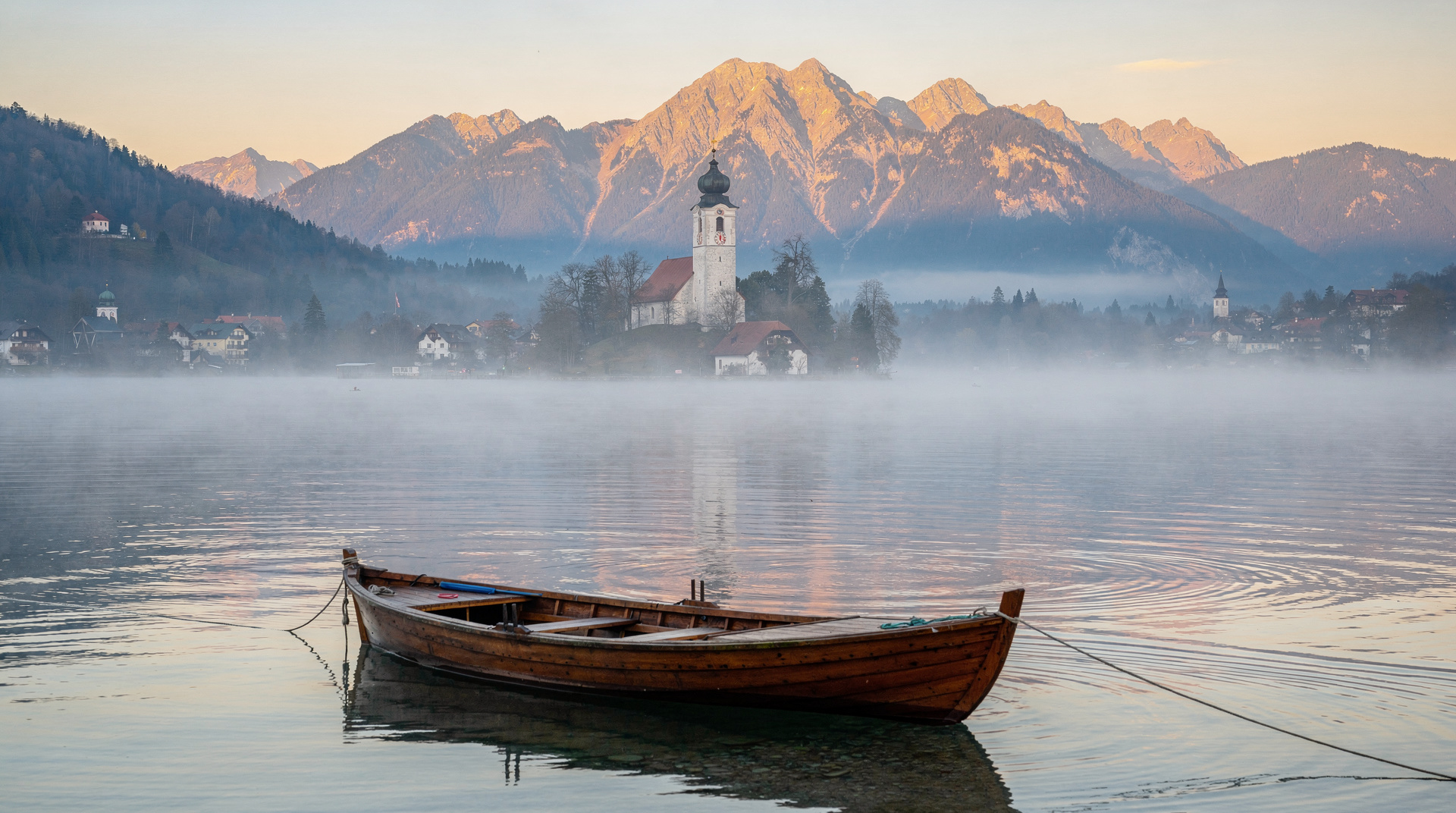
Every Slovenia photography guide leads with the same image: Lake Bled from Ojstrica, island church in the foreground, castle on the cliff, mountains behind. The image is real. What it hides: this shot requires arriving at 5:30am in summer to have it to yourself. By 7am there are fifteen people with tripods at the same viewpoint.
This guide is about the photographs and the reality behind them. It covers the timing, the access, and — for each location — what version of the shot is actually achievable versus what requires professional equipment, perfect conditions, or more luck than most people have.
Lake Bled: Ojstrica viewpoint
The shot: island in foreground, castle on cliff background, lake surface perfectly still.
When: golden hour at dawn, May-October. The mist in October adds atmosphere unavailable in summer.
Access: 20-minute scramble from south shore car park, path marked.
Honest note: the shot you see in every magazine requires still water (wind creates surface ripple that ruins the reflection), dawn light (midday light is flat and harsh), and no drone activity overhead (common in summer and affects your sky). It is achievable. It requires planning.
The Lake Bled photo diary covers this location in full detail, including the alternative Velika Osojnica viewpoint and the castle terrace angle.
Soča River: Napoleon Bridge section, Kobarid
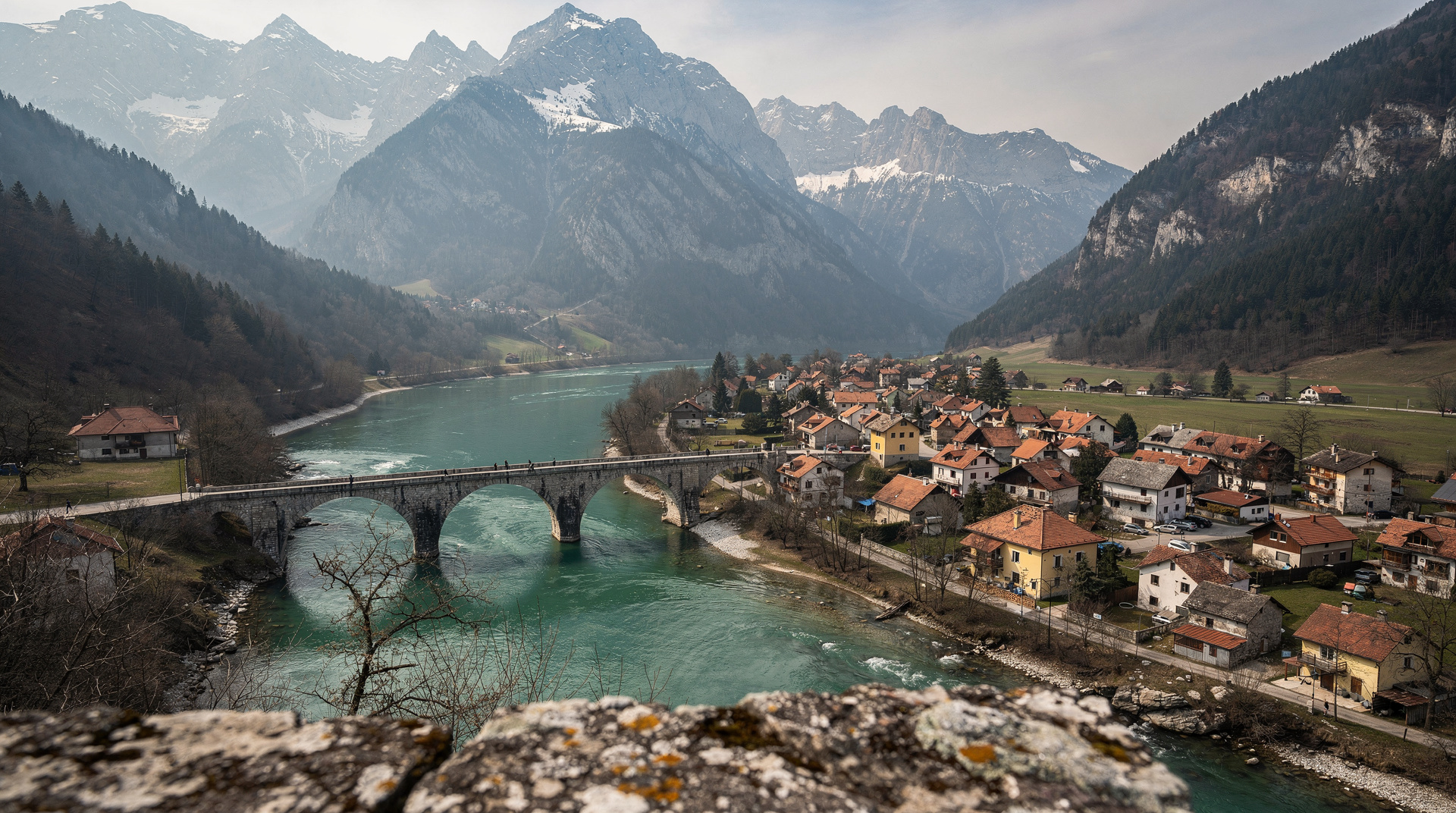
The shot: turquoise river visible through limestone gorge from stone bridge.
When: any time with good light; midday in summer over-saturates the colour.
Access: 15-minute walk from Kobarid town centre on the historical trail.
Honest note: the turquoise is real but varies by season. Peak snowmelt (May-June) makes the river run faster and slightly more opaque; late summer makes it clearer and more distinctly turquoise. Autumn light (October) with lower sun angle backlit through the gorge walls is the professional standard.
Lake Bohinj: western end at Ukanc
The shot: the lake’s western shore with Vogel mountain rising above, autumn colours reflecting in still water.
When: early morning, September-October. The Vogel gondola provides a top-down perspective as a second option.
Access: drive to Ukanc at the western end of Lake Bohinj.
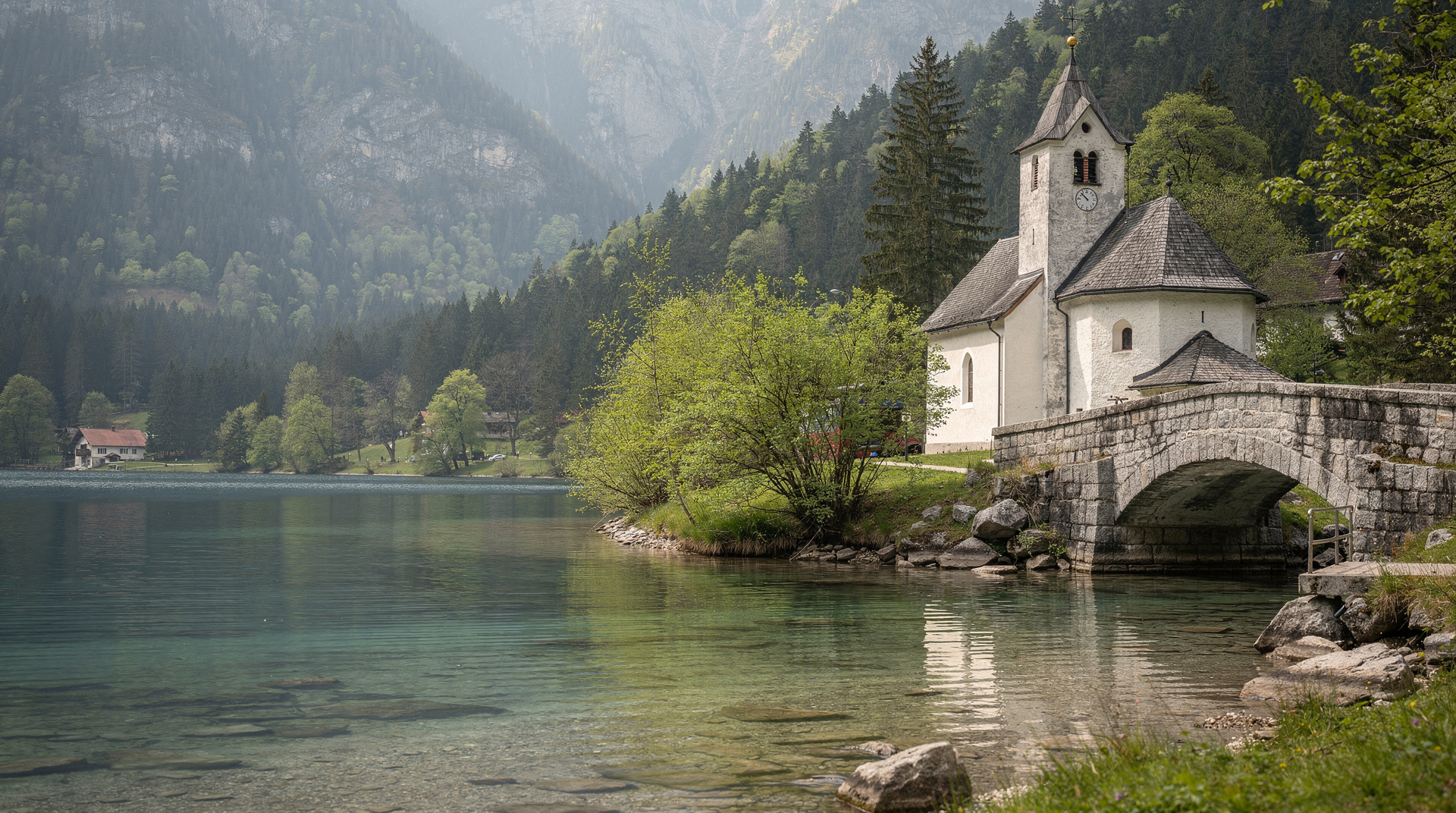
Honest note: Bohinj is often cleaner photographically than Bled because it has fewer people in frame. The church at Ribčev Laz on the eastern end (Romanesque, stone bridge in front, mountains behind) is an under-used composition.
Soča Valley: the river from Šunikov water grove
The shot: wide river across a gravel bed with the Julian Alps above, blue-green water in the middle distance.
When: any season but most dramatic at high water (May-June).
Access: small car park near Šunik village, 10-minute walk to the river.
Honest note: this section of the Soča Valley is less visited than the gorge sections near Bovec. The wide gravel bed allows compositions that are impossible in the narrow gorge sections.
Vintgar Gorge
The shot: wooden walkway through narrow limestone gorge, turquoise water below, vertical walls rising.
When: morning light enters the gorge; midday is darker.
Access: 4 km from Bled, small entry fee.
Honest note: Vintgar Gorge is simultaneously one of the most photographed and most difficult to photograph locations in Slovenia. The narrow gorge and the wooden walkway mean you have very little compositional flexibility. Arrive early and work with what you have. Note: closed November to April.
Goriška Brda: the Smartno-Dobrovo ridge
The shot: terraced vineyards in autumn colour, village silhouette on hilltop, Julian Alps behind.
When: golden hour, mid-October. The vine leaves are at peak colour and the mountains often carry fresh snow.
Access: drive the ridge road between Smartno and Dobrovo in Goriška Brda.
Honest note: this is the most underused major photography location in Slovenia. The combination of vineyard colour, medieval architecture and Alpine background is extraordinary and receives very little international attention.
Predjama Castle
The shot: castle built into the cliff face, grey limestone above, green valley below.
When: afternoon light hits the cliff face; morning has the castle in shadow.
Access: 9 km from Postojna, clearly signed.
Honest note: Predjama Castle looks like a composited image even in person. The challenge is finding a composition that avoids the car park in the foreground. Walk 200 m up the valley path to the left of the entrance for the clean angle.
Vršič Pass: the road and the Russian Chapel
The shot: road with numbered hairpin bends, mountains above, valley below.
When: late afternoon, the sun hits the road from the west. Autumn with snow on the upper peaks.
Access: Vršič Pass road, closed November-May.
Honest note: the view that photographs best is from above hairpin 24, looking down at the hairpin below with the valley in the background. Pull off carefully — the road is narrow and shared with cyclists.
Velika Planina: the hut village
The shot: wooden huts with painted decoration in alpine meadow, mountains behind, blue sky above.
When: early morning in June-July when the meadow flowers are out and the hut exteriors are freshly painted.
Access: cable car from Kamnik, then chairlift.
Honest note: the plateau photographs better at the edges than at the centre. The huts are densely clustered in the main settlement; walk 10 minutes to the outer huts for cleaner compositions against the sky.
Piran: the old town from the sea walls
The shot: Venetian campanile above terracotta rooftops, sea visible behind.
When: golden hour at dusk; the campanile catches the last light while the town goes into shadow.
Access: Piran sea walls, free to walk.
Honest note: the postcard Piran photograph (aerial perspective of the peninsula) requires a drone or a very elevated position — neither easily available. The ground-level view from the sea walls is more intimate and less clichéd.
Logar Valley: the Rinka Waterfall
The shot: waterfall in front of the cirque of peaks, forested valley walls with autumn colour.
When: October, when the surrounding forest is in full colour and the waterfall runs at good volume.
Access: end of the Logar Valley road, 45-minute walk.
Honest note: the waterfall is in shadow in the morning; afternoon light catches the rock face above. The wide angle (valley walls and waterfall together) requires a wide lens; the waterfall alone works with a standard lens.
A guided alternative to scouting locations yourself
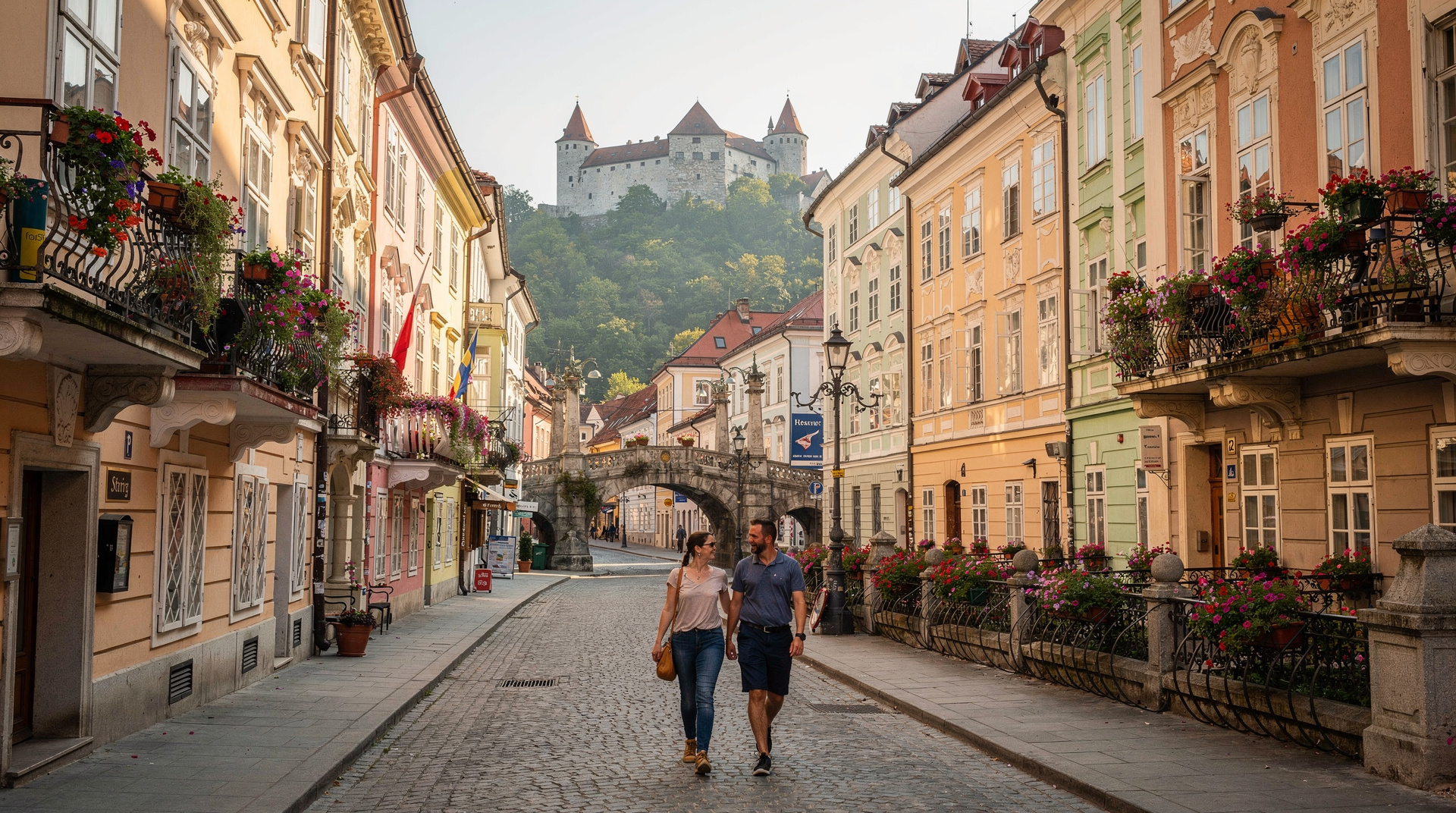
Working out sunrise timing, parking and the exact scramble path to Ojstrica on your first morning costs most visitors a wasted attempt. A private photography-minded walking tour of Ljubljana’s old town, or a small-group excursion into the Julian Alps, shortcuts the location-scouting and puts you at the right spot at the right time on your first try.
Ljubljana photo landmarks walking tourFor the mountains specifically:
Julian Alps guided hiking day trip from BledEquipment notes
For landscape photography in Slovenia: a tripod is essential for the dawn shots at Bled and for long-exposure waterfall work. A polarising filter transforms the Soča River shots by reducing surface glare and increasing colour saturation. A telephoto allows compression of the Bled island-castle-mountain composition.
The Slovenia packing guide covers general equipment for the country’s conditions.
A wide-angle lens (16-24mm equivalent) covers most of the classic compositions on this list — Bled’s island-and-castle, the Vintgar walkway, the Brda ridge road — while a mid-telephoto (70-200mm) is what actually produces the “compressed mountains behind the lake” look that makes Bled and Bohinj photographs feel dramatic rather than flat. Neutral density filters are worth packing specifically for the Savica Waterfall and Rinka Waterfall in Logar Valley, where a slower shutter speed smooths the water without needing to wait for overcast conditions.
Seasonal photography calendar
February-March: winter light is the most dramatic for architectural photography in Ljubljana — the low sun angle hits the Plečnik bridges and market at an angle that summer overhead light cannot produce. Snow on the Ljubljana castle hill, when it falls, is reliably photographed and rarely over-photographed.
May: the alpine meadows at Bohinj, Pokljuka and Velika Planina are at their peak wildflower state. The snowfields on the Julian Alps are still present above 1800 m; the combination of white peaks and flower meadow has no equivalent at any other time of year. The Vršič Pass has just reopened and the larch forest at the top of the pass is fresh green.
June: the longest light of the year. Golden hour in June begins after 8pm; the combination of long evenings, warm light, and the Alpine landscape produces the most technically flattering conditions for landscape work. The Soča River in June is running at good volume and maximum colour intensity.
September: this is the professional travel photographer’s choice month. The light quality is similar to May; the harvest adds colour to the wine country; early morning mist settles in the lake basins and river valleys. The crowds have dropped from July-August but the scenery is at peak.
October: autumn colour peaks from mid-October. The Brda vineyard leaves, the chestnut forest around Bled, the larch zone on the Vršič — all turn simultaneously in the second and third weeks of October. The combination of colour and the still-dramatic mountain backdrop is the year’s best image opportunity.
The local photography community
Slovenia has an active amateur and professional photography community. The Ljubljana Photography Club and the online Slovenian photography forums maintain location databases and current conditions reports that are more useful than most travel articles for specific sites.
Several Slovenian photographers offer guided photo walks in Ljubljana and the Julian Alps — local knowledge of specific light conditions, viewpoints that are not on the standard circuit, and the best weather windows. For serious landscape photographers spending a week in the country, a half-day with a local guide at Bled or in the Soča Valley typically reveals at least two or three viewpoints that are not in any travel article.
Best months by subject: a quick reference
| Subject | Best months | Why |
|---|---|---|
| Alpine wildflowers + snow contrast | May | Meadows peak while snowfields remain above 1800m |
| Turquoise river colour (Soča) | Late summer, low water | Clearer water concentrates the mineral turquoise |
| Autumn foliage | Mid-late October | Brda vines, Bled chestnuts and Vršič larches all turn |
| Architectural / low-sun light in Ljubljana | Feb-March | Low winter sun angle suits the Plečnik bridges |
| Alpine meadows + long evening light | June | Longest golden hour of the year |
Drone photography notes
Drone photography in Slovenia is regulated under EU drone regulations (EASA). The main restrictions relevant to photographers:
- Triglav National Park: drones prohibited without specific permit
- Within 5 km of Ljubljana Airport: flight restricted (includes approaches to the capital)
- Above populated areas: specific operational requirements
The Soča Valley outside the national park sections, the Logar Valley, and the wine country hills are generally accessible for drone photography under standard open-category rules. Always check the current EASA drone map before flying.
The lake Bled area has become heavily regulated for drone use due to the volume of operators; specific no-fly zones around the island and the main viewpoints now apply. Check the current status on the official digital sky Slovenia portal. The drone shots that appear on social media from Bled were typically taken before the current restrictions were implemented.
Top experiences
Bookable activities with verified prices and instant confirmation on GetYourGuide.