Logar Valley: Slovenia's most beautiful glacial valley
Logar Valley (Logarska dolina) is Slovenia's finest alpine valley: glacial cirque, Rinka waterfall, traditional farmsteads and serious hiking. Practical
Logar Valley day trip from Ljubljana
Quick facts
- Best time to visit
- May–October; peak waterfall flow May–June
- Days needed
- 1–2 days
- Getting there
- Car from Ljubljana (2h) or Celje (1h); limited summer bus service
- Budget per day
- EUR 55 to 120
The valley that does not try to be Bled
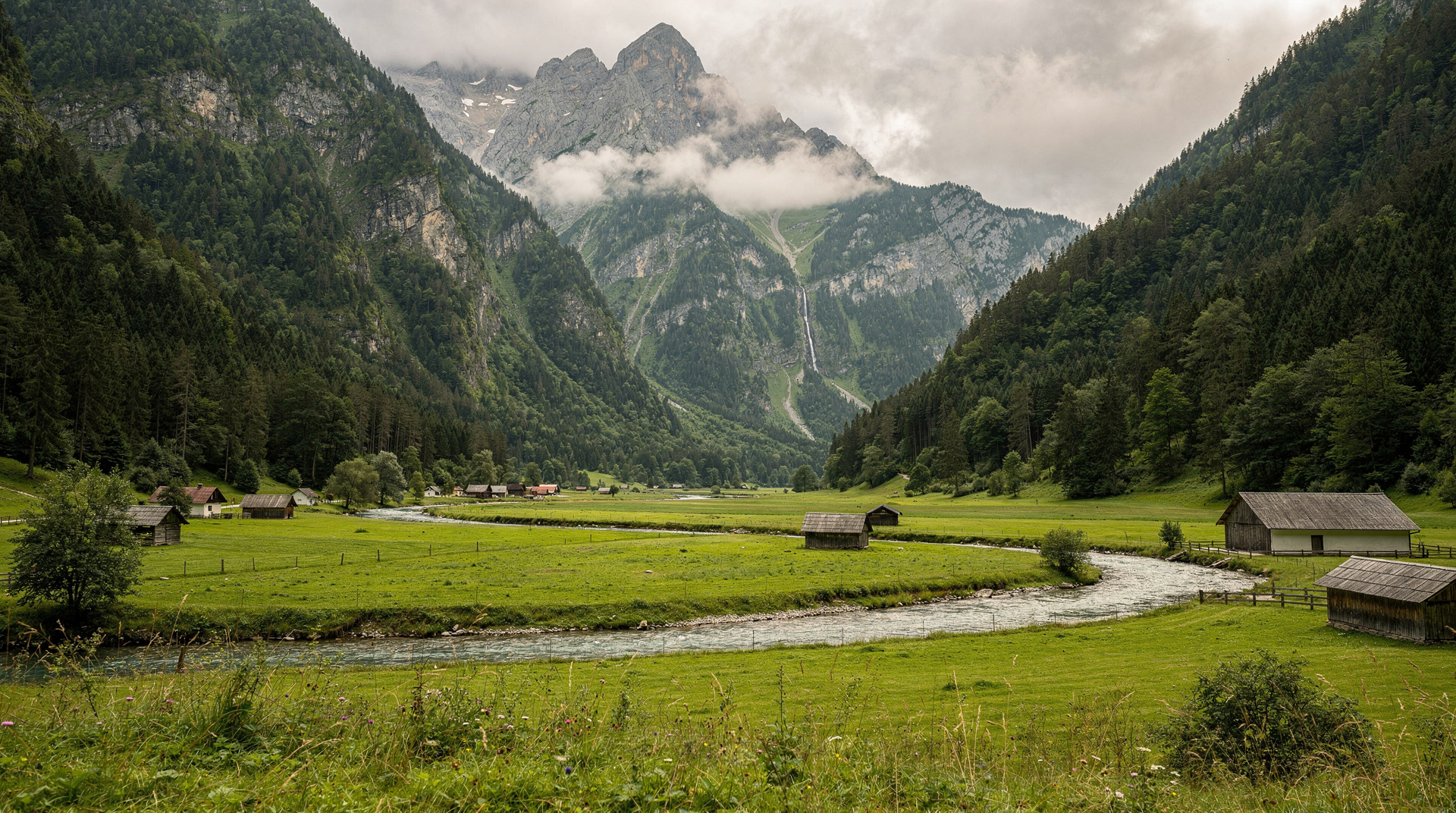
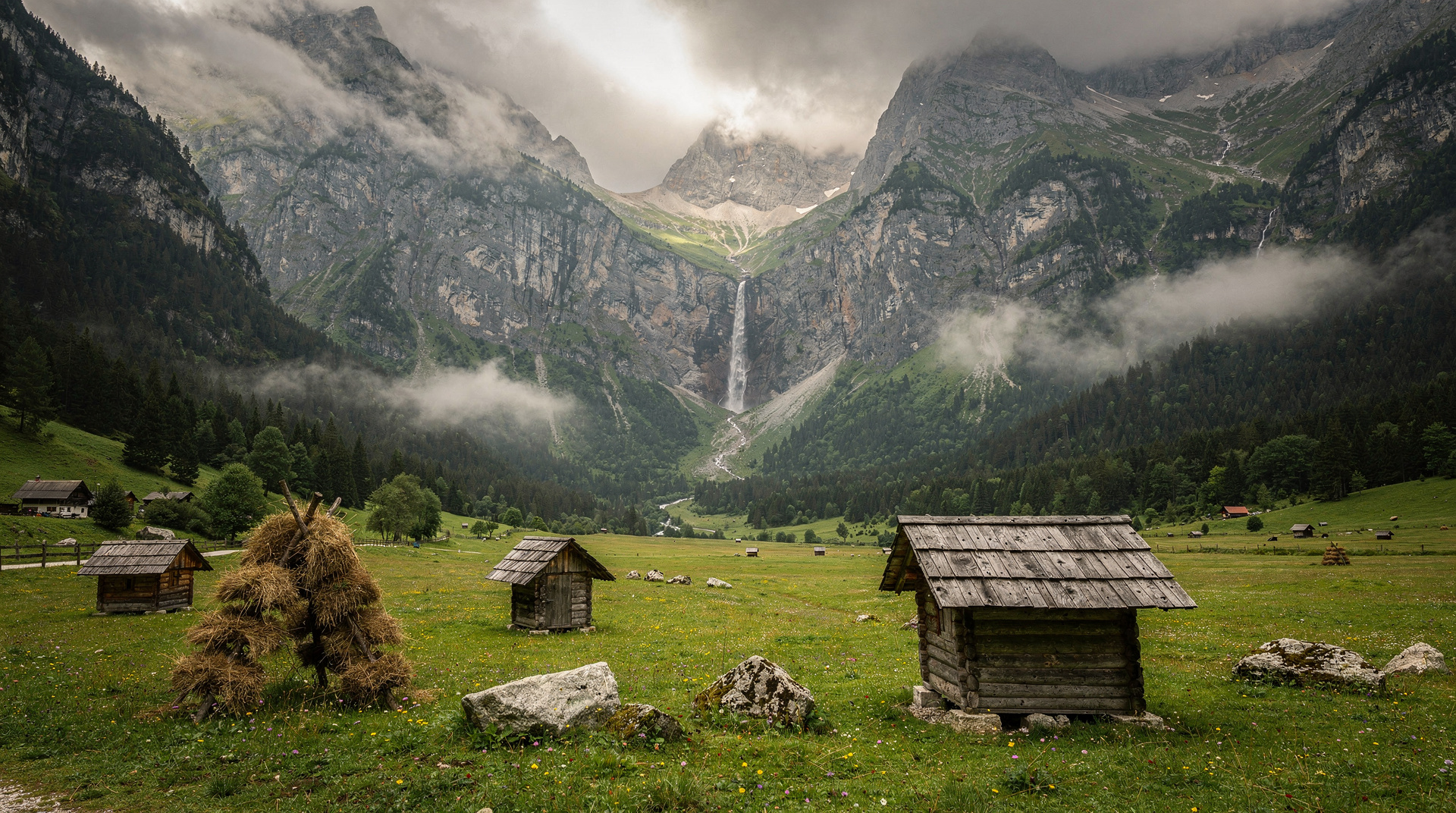
The Logar Valley (Logarska dolina) occupies the head of the Savinja river system in the Kamnik-Savinja Alps, about 90 km northeast of Ljubljana. It is a glacial cirque — a bowl carved by a glacier and then abandoned, leaving steep limestone walls on three sides, a flat valley floor threaded by the young Savinja river, and at its head, the Rinka waterfall dropping 90 metres in a single plunge over a limestone cliff.
| Where | Kamnik-Savinja Alps, eastern Slovenia (90km from Ljubljana) |
| Cost | around EUR 55–120/day; EUR 7 valley car entry |
| Time needed | 1–2 days |
| Getting there | Car essential, or a day tour from Ljubljana/Celje |
| Best time | May–June for the waterfall; September–October for colour |
It is one of the most beautiful alpine valleys in Slovenia, and it receives a fraction of the attention that Lake Bled gets. There are no boat trips or selfie queues. There is a car park at the valley entrance (EUR 7 per car in summer, collected at the barrier), a handful of traditional farmstead restaurants, and a network of walking and hiking trails that range from a flat valley floor stroll to serious mountain routes towards the Ojstrica and Planjava peaks.
If you have a car and are in central or eastern Slovenia, a day trip to Logar Valley belongs on your itinerary. If you do not have a car, an organised tour is the practical solution — the valley is accessible from Celje by a narrow mountain road that is not served by regular public transport.
Getting to the valley
By car from Ljubljana: take the A1 motorway east towards Celje (about 55 km), exit at Arja vas or Šentjur, then follow regional roads north through the Savinja valley via Mozirje and Nazarje to Solčava and the valley entrance. Total distance about 100 km, driving time approximately 1h45–2h depending on traffic. The last 20 km from Mozirje is a two-lane mountain road with moderate gradients.
By car from Celje: about 65 km, 1 hour, following the Savinja valley north. This is a particularly scenic drive.
Organised tour: a Logar Valley and Solčava Panoramic Road day tour picks up from Celje or Ljubljana and covers the valley floor, the Rinka waterfall walk, and the panoramic road above — the practical option if you are carless. A separate Logar Valley day trip from Ljubljana covers the same territory from the capital.
Summer bus: from late June to late August, a limited bus service (2–3 runs daily) connects Celje with Solčava. This is not reliable enough for a day trip without a confirmed return seat — check schedules at the Celje bus station before relying on it.
What to do in the valley
Walk to the Rinka waterfall. From the car park at the valley head (about 6 km from the entrance barrier, well signposted), a flat gravel path leads in 25–30 minutes to the base of the Rinka. The falls are highest in May and June when snowmelt is at maximum. By August they have reduced to perhaps a third of the spring volume; still beautiful but less dramatic. The path is suitable for children and anyone with reasonable mobility. A café at the waterfall operates in summer months.
The valley floor walk. A marked circular route runs along the valley floor past the traditional farmsteads (kmetije), the church of St Ulrich, and the river — about 6 km total, flat, very easy. This is the right choice for families, casual walkers, and anyone who wants the valley experience without committing to a mountain day.
Hike to Ojstrica or Klemenča jama. For serious hikers, the routes from the valley floor up to the ridge walk connecting Ojstrica (2350 m) and Planjava are among the best in the Kamnik-Savinja Alps — steep, exposed in places, requiring appropriate footwear and summer conditions. Allow a full day from the valley floor. Check weather forecasts at meteo.arso.gov.si before setting out; afternoon thunderstorms are common in summer.
The Klemenča jama cave (about 3 km from the valley entrance on a marked path) is a short climb to a cave shelter with views back down the valley. Worth 45 minutes as an alternative to the Rinka if you prefer variety.
The Solčava Panoramic Road
The Solčava Panoramic Road (Solčavska panoramska cesta) is a circular loop above the Logar Valley and surrounding countryside, connecting Solčava village with a series of traditional farmsteads that have converted portions of their operations to tourism — selling homemade cheese, cured meats, local honey and apple juice, some offering simple lunches.
The road itself is single-lane in places and requires care; it is entirely passable in a normal car outside winter. The views from the road down into the valley and across to the Kamnik-Savinja peaks are extraordinary on a clear day. Allow 1.5–2 hours to drive the loop with stops.
The farmsteads along the panoramic road typically offer lunch (EUR 10–18 for a traditional meal) and sell produce. Plesnikova domačija is one of the best known and most reliably open. These are real working farms — not tourist restaurants with a farm aesthetic — so service can be slow and the menu is whatever they have that day.
Where to stay
In the valley itself: around a dozen traditional farmsteads (turistične kmetije) offer rooms and apartments — sleeping in a converted hay barn or farmhouse loft is the authentic experience here. Prices around EUR 45–75 per person including dinner and breakfast. Book well ahead for July, August and September weekends. Plesnikova domačija, Lenarčičeva domačija and Pr’Ojstrnku are established and reliable.
In Solčava village: a few guesthouses in the village above the valley provide a quieter and slightly cheaper base (EUR 40–60 per person half board) — good if you are staying multiple nights.
In Mozirje or Nazarje: larger towns in the Savinja valley below with more hotel options and a more convenient position if you are also visiting Celje. Car required for daily access to the valley.
The valley in different seasons
May and June are the optimal months: Rinka waterfall at maximum flow, alpine meadows in flower, and visitor numbers still manageable. The road into the valley is clear of snow by early May in most years. This is the best time for photography — soft light, green meadows, full waterfall, and relatively uncrowded.
July and August are the busiest months. The car park at the valley entrance fills by 10 am on summer weekends; arriving before 8 am or after 4 pm avoids the peak. Prices at farmsteads increase slightly. The hiking is excellent.
September and October bring beech forest turning red and gold — the valley’s most dramatic colour. Fewer visitors, excellent mushroom hunting in the surrounding forest, and comfortable hiking temperatures (10–18°C). The Rinka waterfall is lower but the light is extraordinary.
November to April: the road into the valley is snow-covered and may be impassable for standard cars (chains required from roughly November to April). Some farmstays close for winter. The valley is skied and snowshoed by those equipped for it.
Paragliding above the valley
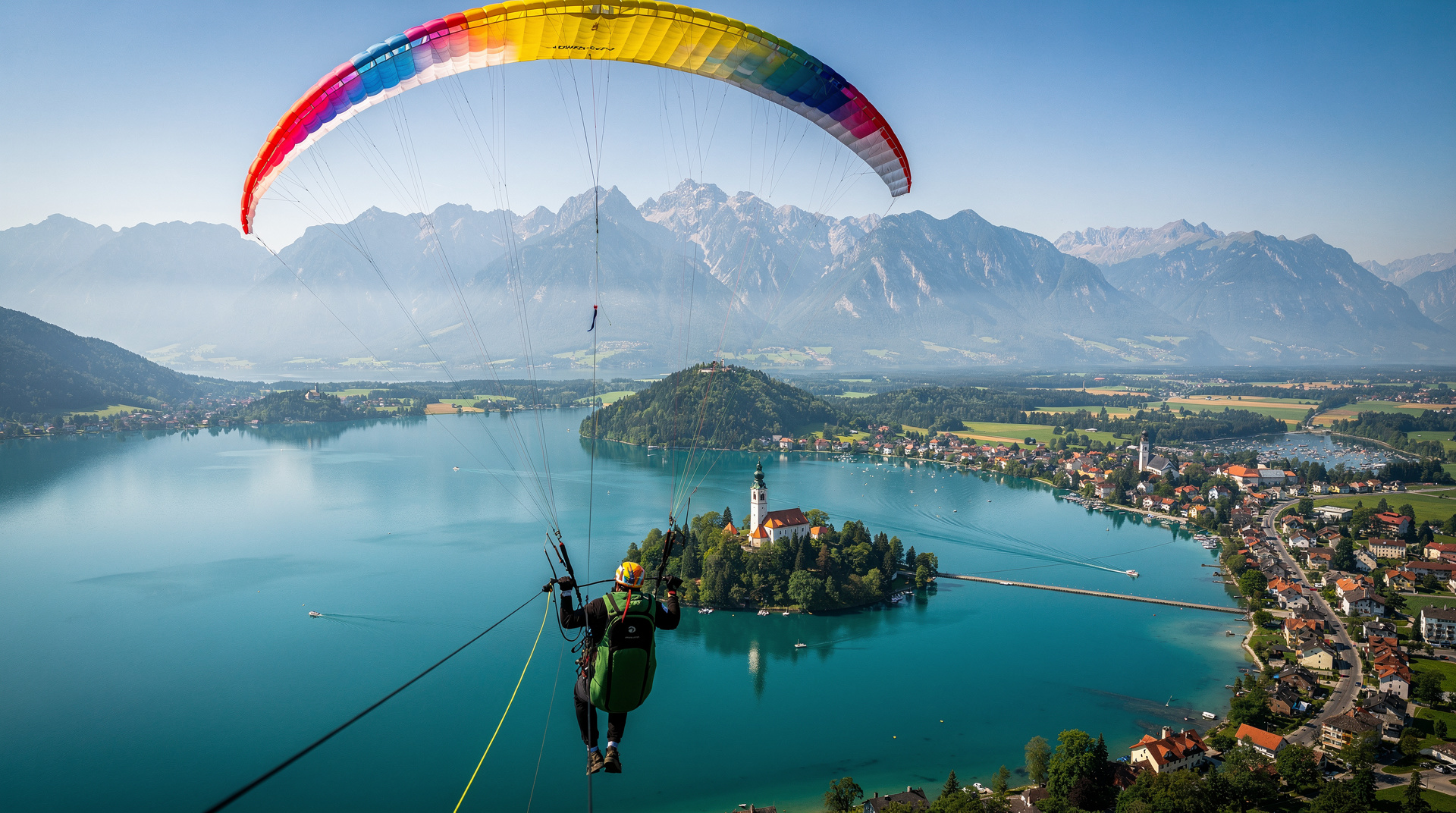
The Golte plateau, reached from the valley’s south side via Mozirje, offers tandem paragliding with views directly over the Logar Valley cirque. On a clear day from the air, the glacial origins of the valley are visible in a way that ground-level observation cannot convey. A tandem paragliding flight from Golte with Logar Valley views is memorable and not especially expensive (around EUR 80–110 for 20–30 minutes). No experience required.
Honest notes
The EUR 7 car entry fee is legitimate — it funds maintenance of the valley’s trails, car parks and facilities. It is collected at a barrier 1 km inside the valley entrance. Have cash available, though card payment is increasingly accepted.
Mobile coverage in the valley is limited. Download offline maps before you leave the main road.
Weather changes fast. The Kamnik-Savinja Alps are among the wettest mountain areas in Slovenia. Even in summer, afternoons can bring quick-building thunderstorms. Check the forecast and start any mountain route early.
Not a substitute for the Julian Alps: the Logar Valley is beautiful and much quieter than Bohinj or Bled, but the mountains here (Kamnik-Savinja range) are genuinely demanding. If you are not an experienced alpine hiker, stick to the valley floor and Rinka routes. For a broader planning comparison of Slovenia’s best walking terrain, see the best hikes in Slovenia guide and the Julian Alps hiking guide.
Logar Valley versus other alpine valleys
| Logar Valley | Vrata (Triglav) | Bohinj valley | |
|---|---|---|---|
| Crowds | Low | Moderate | Moderate–high |
| Access | Car / narrow mountain road | Car | Car or bus |
| Best feature | Rinka waterfall, glacial cirque | Triglav north face | Lake + 7 Lakes Valley |
| Difficulty ceiling | Serious (Ojstrica ridge) | Very serious (Triglav ascent) | Moderate |
| Good for families | Yes (valley floor) | Limited | Yes |
The practical takeaway: choose Logar Valley if you want dramatic alpine scenery with minimal crowds and are happy with a valley-floor walk rather than a summit; choose Bohinj if you want a lake and a wider range of easier trails; choose Vrata only if summiting Triglav is the actual goal.
Wildlife and nature
The Logar Valley and the surrounding Kamnik-Savinja Alps support populations of brown bears, lynx, chamois and deer — the same wildlife complex as the Julian Alps and Triglav National Park, but with significantly fewer visitors and a more intact forest ecosystem. You are unlikely to see a bear on a casual day hike (they are nocturnal and avoid humans), but their presence is real. The valley farms keep animals — cows on the Solčava Panoramic Road farmsteads produce the milk for the local cheese and butter you will eat at lunch.
Golden eagles nest on the Ojstrica cliffs above the valley. Early morning in June or September, before the car park fills, is the most likely time to see them quartering the valley below the ridge.
Wildflowers: the Logar Valley floor and the meadows along the Solčava Panoramic Road are among the most botanically diverse areas in Slovenia. In June, the hay meadows above the valley road contain 40–60 plant species per square metre — a density that has largely disappeared from lowland and agricultural Europe. This is a function of the traditional farming practices maintained by the farmsteads: no herbicides, late cutting, natural fertilisation.
The Robanov kot and Matkov kot
The Logar Valley is the most famous of three glacial cirques at the head of the Savinja system, but two neighbouring valleys — Robanov kot (directly to the east) and Matkov kot (further east) — offer similar glacial valley scenery with even fewer visitors. Both are accessible by car on rough but passable roads. Neither has the Rinka waterfall, but the silence and the sense of being in unmaintained mountain landscape is more complete.
Robanov kot has one working farmstay (Robanovka) that offers rooms and meals. Matkov kot is truly remote and uninhabited — a circular hike of the valley floor and back takes about 3–4 hours and the main reward is solitude and views of the Mrzla Gora ridge.
Neither valley has any services beyond the one farmstay in Robanov kot, so bring water and food if you’re spending the day. Both are reachable only by car, and the roads are rougher than the main Logar Valley approach — a standard car manages them in dry conditions, but check locally after heavy rain, when the gravel sections can wash out.
Practicalities at the valley entrance
The village of Solčava (the last settlement before the valley entrance barrier) has a tourist information office, a small supermarket, and two or three cafes and guesthouses. If you arrive without reservations, this is the place to make enquiries. Solčava also marks the start of the Solčava Panoramic Road loop.
Fuel: the nearest fuel station is in Mozirje or Nazarje (the main towns in the Savinja valley below, about 25 km south). Fill up before heading to the valley.
Emergency and mountain rescue (GRZS): the Slovenian mountain rescue service is active in these mountains. In case of emergency, dial 112. The mountain rescue hut at the Rinka waterfall is staffed in summer months.
Combining with eastern Slovenia
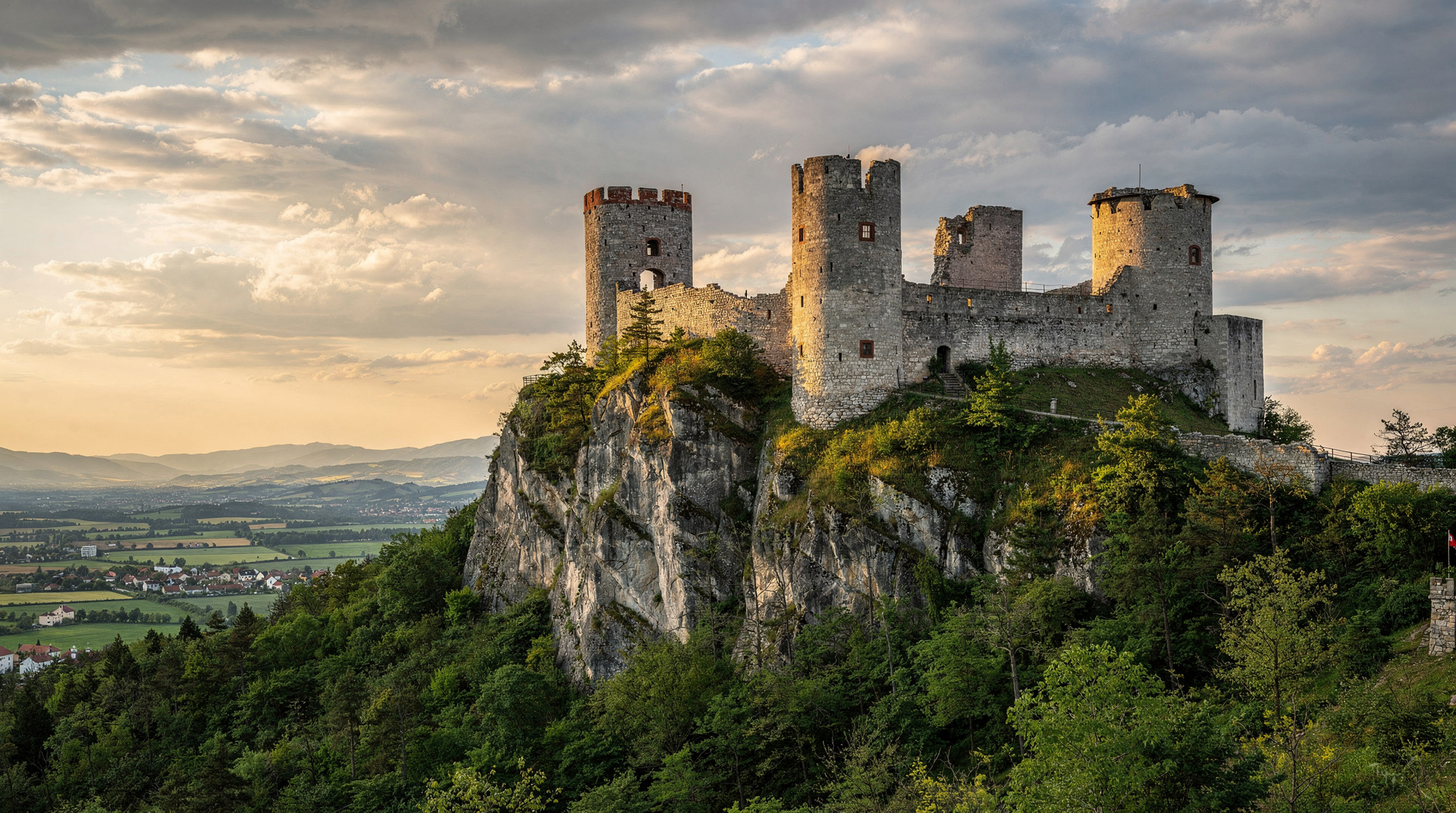
Logar Valley sits close enough to the eastern cities to combine into a longer itinerary. Celje, with its restored medieval castle, is about an hour south and a reasonable overnight base if you’re touring the region without returning to Ljubljana each night. Further east, Maribor and its wine culture, and Ptuj, Slovenia’s oldest town, both pair well with a Logar Valley visit into a 3–4 day eastern Slovenia loop that most visitors skip in favour of the Julian Alps and coast — unfairly, given how uncrowded and rewarding this corner of the country is.
The Logar Valley guide goes deeper into the hiking routes, seasonal conditions and farmstay recommendations. The getting around Slovenia guide covers the logistics of reaching the valley without a car.
Top experiences
Bookable activities with verified prices and instant confirmation on GetYourGuide.