Fly fishing in Slovenia: marble trout, the Soča, and how to get a permit
Slovenia: guided fly fishing tour
Can you fly fish for marble trout in Slovenia?
Yes, but the permit system is strict. Fly fishing on the Soča and its tributaries requires a daily or seasonal permit issued by the fishing management concession for each river section. Day permits run EUR 60–120 depending on the stretch. Guided tours from Bohinj handle permit logistics for visitors.
Slovenia’s fly fishing reputation
Slovenia has a disproportionate reputation in the European fly fishing community. A country smaller than Switzerland has produced multiple world championship-winning competitive fly fishing teams, and the river system that underpins this — the western Slovenian drainage basin of the Soča, Idrijca, and Krka rivers — holds marble trout (Salmo marmoratus), huchen (Hucho hucho), grayling, and wild brown trout in rivers of exceptional clarity.
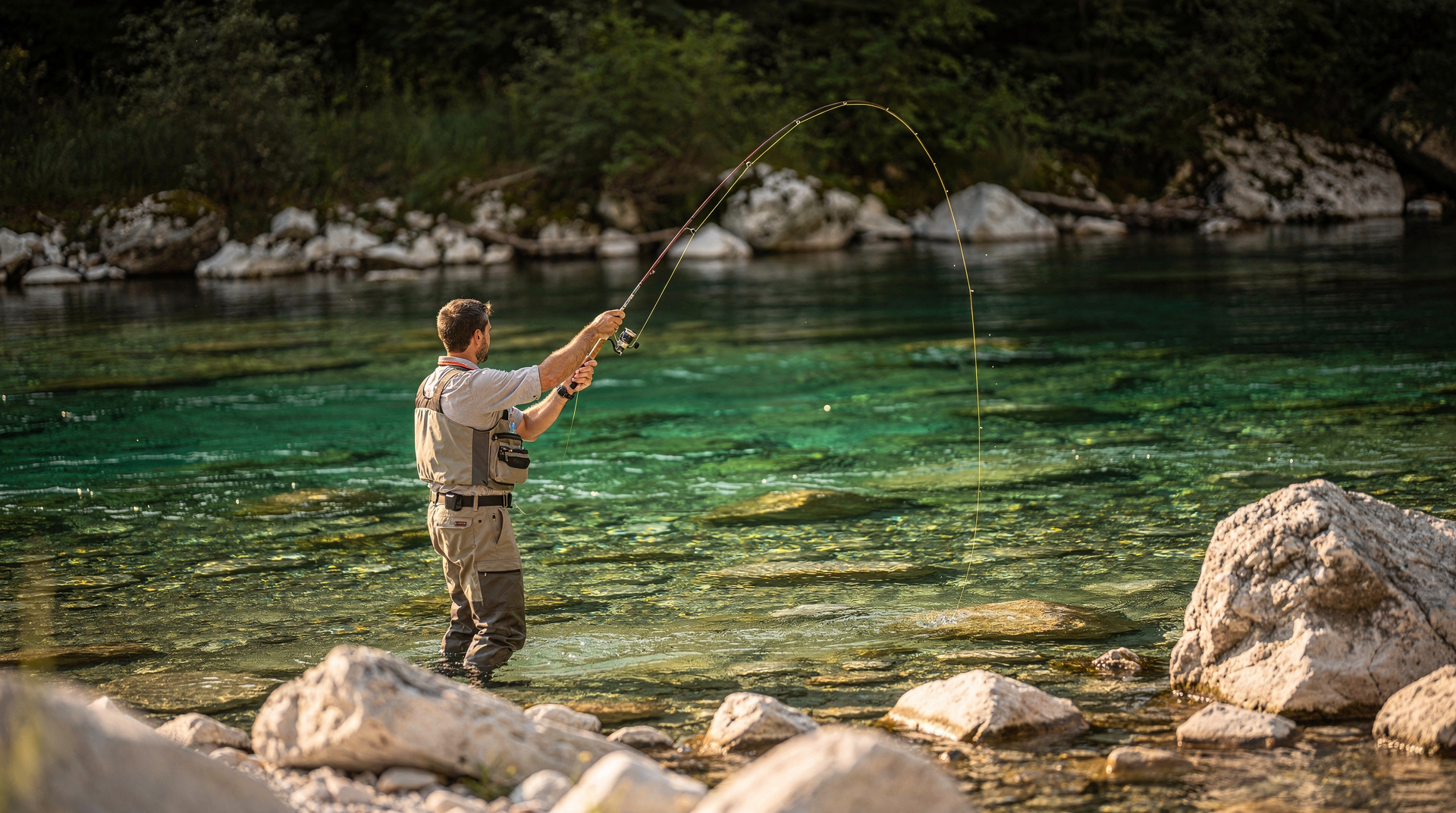
The marble trout is the primary draw. It is endemic to the western Slovenian and northeastern Italian river systems — found essentially nowhere else in the world with a self-sustaining wild population — and can reach 80cm+ in the larger Soča pools. Catching a marble trout on a dry fly in turquoise water in a canyon is, by the accounts of anglers who have done it, among the finer experiences available to freshwater fly fishermen in Europe.
This guide covers the permit system, the best rivers and stretches, guided tour options, and the honest complexities of fishing in a strictly managed environment.
| Where | Soča (Bovec/Kobarid), Idrijca, Lake Bohinj area rivers |
| Cost | Day permit EUR 60–120; guided full day EUR 150–300 |
| Best months | June (best), September (second-best) |
| Rules | Catch-and-release for marble trout on most sections, barbless hooks |
| Booking | Book guided tours and accommodation 6–8 weeks ahead for June |
The marble trout
Salmo marmoratus is the Italian common name; in Slovenian, the fish is the soška postrv (Soča trout). The marble pattern — irregular pale marble veining on a brownish-grey base — makes it visually distinctive from any other trout. Large specimens are substantially heavier-bodied than similarly-sized brown trout.
The population was critically endangered by hybridization with introduced brown trout in the 20th century. Current management is aggressive: the Soča and its major tributaries are catch-and-release only for marble trout on most sections, and many stretches have strict fly-only or dry-fly-only designations. The conservation program is working — populations have stabilized and are recovering in the most-managed sections.
The biology relevant for visiting anglers: marble trout feed opportunistically throughout the day but show the most consistent surface activity in late afternoon and evening from late May through September. They hold in the deeper pools and canyon walls of the Soča, and in the gravel runs and turbulent sections of the tributaries. They are not notably harder to catch than brown trout of equivalent size, but the river’s clarity means they can see you from further away than you expect.
The permit system
Slovenia’s freshwater fishing is managed through a system of regional fishing clubs (ribiška družina) that hold concessions from the state for specific river sections. Visitor access is through daily or seasonal permits purchased from these clubs or their authorized agents.
Daily permits for the Soča near Bovec: EUR 60–80 per day for the main sections, higher (EUR 80–120) for the most productive marble trout stretches. These permits cover a designated section of river for one day, and include specific regulations (fly-only, catch-and-release, bag limits if applicable) that vary by section.
Purchasing permits: Day permits can be purchased at the fishing club offices in Bovec and Kobarid, at some local accommodations, and increasingly online through the MKGP (Slovenian fisheries registration system) portal. Availability on popular sections in peak season (June–August) is not guaranteed on the day of arrival — book ahead.
The honest reality: The permit system is more complex than a simple “buy and fish” structure. Different sections have different concession holders, different regulations, and different availability. The simplest way to access the best water without navigating this independently is a guided tour.
Guided fly fishing from Bohinj
Lake Bohinj is the primary base for guided fly fishing tourism in Slovenia, partly because the surrounding river system (the Bohinj Bistrica, the upper Sava Bohinjka, and easy access to the Soča basin) provides excellent variety, and partly because the guides based here have built a strong international reputation over decades.
A guided full-day fly fishing tour from Bohinj typically includes: permit arranged by the guide, transport to the best available section for current conditions, all-day guiding with instruction and technique advice, lunch, and equipment if required.
Guided fly fishing tour from Lake BohinjWhat guided tours deliver: The principal value is permit access and local knowledge. Guides know which sections are fishing well on a given day (water level and temperature dependent), can read the river for productive holding positions, and manage the permit acquisition that would otherwise require a day of bureaucratic navigation for a first-time visitor.
Price: EUR 150–300 per person for a full guided day, depending on group size and specific river section. Includes permit and local transport. Fishing equipment (rod, reel, line, flies) can be provided for an additional fee or included in some packages.
The Idrijca and other rivers
The Soča is the famous river but not the only productive water in western Slovenia.
Idrijca: A tributary of the Soča, the Idrijca has a significant marble trout population and arguably the most consistent evening rises of any river in the system. The stretch from Spodnja Idrija downstream has produced some of the largest documented marble trout in recent years. Access is through the Ribiška Zveza Idrija concession.
Soca above Bovec (Trenta valley): The upper Soča, from its source in the Trenta valley, is a smaller, shallower river with different character from the canyon sections. The marble trout here are smaller but more approachable on technical dry fly. The upper section is within Triglav National Park; regulations are particularly strict.
Krka: The Karst region’s primary river, the Krka near Novo Mesto, holds good grayling populations in its upper section and is underutilized by international visitors compared to the Soča system. A second destination for those extending a Slovenia fishing trip.
Unec and Pivka (disappearing rivers): A Karst curiosity — rivers that seasonally disappear underground in the Karst plain, re-emerging kilometres later. Fishing these sections requires specific local knowledge; the populations are small but the setting is unique.
Season and conditions
March–April: The season opens on most sections on 1 March (exact opening varies by concession). Spring conditions mean snow-cold water (6–9°C), high flows, and marble trout not actively surface feeding. This is deep nymph territory — rewarding for technique-focused anglers, less so for dry fly purists.
May–June: The recommended season for most visiting anglers. Water temperatures rise to 12–16°C, hatches begin in earnest (March Brown, Blue Winged Olive, first Mayfly), and marble trout move to surface feeding. June is the most reliable month for consistent dry fly fishing on the Soča system.
July–August: Water temperatures peak (18–21°C on the main Soča, slightly lower in the canyon sections). Marble trout become more nocturnal and surface feeding concentrates in low-light periods. Late evenings (7–9pm) are the productive window. Day fishing is possible but requires deeper nymphing.
September: Autumn conditions restore surface activity. Water cools to 13–17°C, hatches renew with the Grannom sedge and various blue-winged olive varieties. The afternoon/evening window extends compared to August. September is consistently rated by guides as the second-best month (after June) for Soča marble trout.
October–February: Restricted access (many sections close September 30 or October 15). The Krka grayling season extends later. Check specific concession regulations for exact closing dates.
Equipment
If you are fishing independently (with a day permit rather than a guide), basic requirements:
Rod: 9-foot #4 or #5 for most Soča sections. The river is not narrow — casting room is not the constraint, presentation accuracy is. A #3 for the narrow upper Soča/Trenta sections.
Line: Floating line for dry fly work. A sinking tip is useful for deep nymphing in April–May and mid-summer.
Flies: The Soča system is well-documented in fly fishing literature. Key patterns include: Elk Hair Caddis and Sedge variants (June–September), Parachute Adams and BWO variants (May–September), Czech nymphs and heavy stonefly nymphs for deep spring fishing. Local flies tied by Slovenian guides are worth purchasing at local tackle shops — they are matched to the specific hatches and river character.
Waders and wading boots with felt or rubber soles: The Soča limestone is exceptionally slippery. Felt or rubber cleated soles are not optional — studded wading boots are the minimum. Many accidents on the Soča involve anglers wading without proper grip footwear.
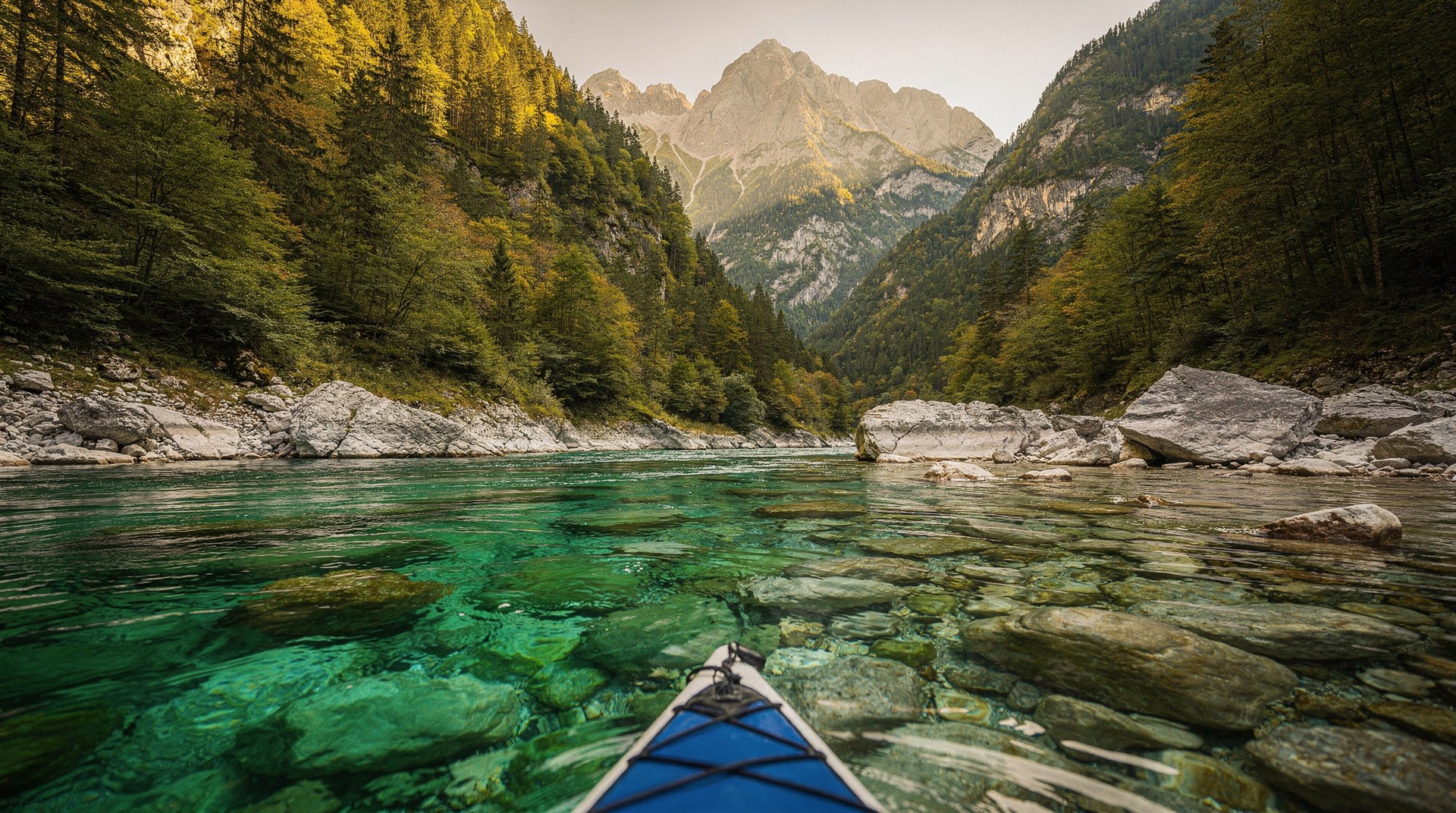
Polarized glasses: The clarity of the Soča makes sight fishing for individual marble trout genuinely possible on the shallower sections. Polarized amber or brown lenses are the most effective for reading the green-tinted water.
Where to stay for fly fishing access
Bohinj area: Lake Bohinj has accommodation with anglers specifically in mind at some guesthouses near the river access points. The village of Bohinjska Bistrica (5km from the lake) has direct access to the Sava Bohinjka.
Kobarid: Kobarid is positioned between the main Soča sections and the Idrijca, and the town has established relationships with fishing guides. A good base for multi-river variety.
Bovec: For the upper Soča and Trenta valley sections, Bovec is the obvious base. Operators here can arrange permits and guiding, though the primary fly fishing infrastructure is more developed in Kobarid.
For the broader water sports picture — what else the Soča River offers beyond fishing — see the white-water sports guide and the adventure sports in Slovenia overview.
Marble trout fly patterns: what works on the Soča
Local knowledge on fly selection for the Soča system is not easily found in generic fly fishing literature. Slovenian guides have developed specific patterns over decades of fishing this water, and several are worth knowing:
Soča Emerger: A minimalist emerger pattern imitating the March Brown and Blue Winged Olive emergence stages. Hook sizes 14–18. The sparse tying suits the clear water, where overly dressed flies are often refused.
Slovenian March Brown: A local variant of the standard March Brown that uses indigenous fox fur dubbing and specific starling hackle proportions. Used in April–May when the first significant hatches appear.
CDC patterns: Cul-de-canard (CDC) feather-based patterns are particularly effective on the Soča because the natural oil in CDC fibres creates a trapped air bubble that rides the surface film precisely as marble trout expect their prey to behave. The local versions use CDC sourced from the Slovenian Alps — slightly different fibre length and density from imported material.
Czech nymphs (tungsten-weighted): For spring and mid-summer nymphing when fish are not surface feeding. Size 10–14, tungsten bead in gold or black. The Czech nymphing technique itself was developed on rivers similar to the Soča — the short-line, high-stick method suits the broken water sections between the pools.
Most of these patterns are available at local tackle shops in Kobarid and Bovec. Buying locally also supports the guide community’s knowledge transfer, and the shop staff can advise on current hatch conditions.
The marble trout conservation programme
The conservation programme that has stabilized the marble trout population is worth understanding if you are fishing here — it affects your fishing regulations and explains the management decisions you will encounter.
The issue: in the 1970s–1990s, hatchery-bred brown trout were introduced to the Soča system to supplement sport fishing. Brown trout interbreed with marble trout, producing hybrid offspring. Over two generations, hybridization had replaced significant portions of the pure marble trout population with hybrids.
The response: from the 1990s onward, the Zavod za ribištvo (Slovenian Fisheries Research Institute) began systematic removal of non-marble hybrids from priority sections and restocking with pure-bred marble trout from populations that had maintained genetic integrity in remote upper tributaries. The genetics programme used DNA testing to verify purity before restocking.
Current status: marble trout populations in the best-managed sections (upper Soča, Idrijca headwaters) are recovering. The more popular sections accessible to tourism still show hybridization, which is why certain sections have stricter regulations (catch-and-release only, some sections fly-only).
For visiting anglers, this means: the section you are fishing matters. The strictest regulation sections are often the best fishing.
Regulations: what visiting anglers need to know
Slovenian fishing regulations are set at the national level with concession-specific additions for each river section.
National rules (all sections):
- Valid fishing licence from your home country is not sufficient. You must purchase a Slovenian day or season permit.
- Permits are tied to specific river sections — purchasing a Soča permit does not give access to the Idrijca.
- Catch-and-release is mandatory for marble trout on most sections. Brown trout bag limits vary by section (typically 1–3 per day).
- Barbless hooks are required on catch-and-release sections.
- Night fishing is prohibited on most sections (sunset to sunrise restriction).
Reporting: Some sections require anglers to record catches (even catch-and-release). This data feeds the population management programme. The reporting is done via the concession app or paper form at the permit office.
Foreign licence recognition: Slovenia is a signatory to the European Fishing Licence (EFL) system, but this does not replace local permits — it supplements them. Check the specific requirements at point of permit purchase.
Guided fishing vs independent fishing
The simplest comparison:
Guided: The guide purchases the permit, selects the section based on current conditions, provides local fly patterns, and instructs on river reading. You arrive and fish. Best for first-time visitors to Slovenia or those with limited time.
Independent: You navigate the permit system, select your section based on online resources and local advice, and manage all logistics. Better for experienced anglers who want full flexibility and are comfortable with the permit bureaucracy.
The permit bureaucracy is the main barrier for independent fishing. The MKGP online system has improved significantly in recent years (available in English), but section-specific restrictions and real-time availability information are easier to navigate with local guidance on the first visit.
Accommodation for fishing visitors
Several guesthouses in the Kobarid and Tolmin area specifically cater to fishing visitors — they maintain relationships with local guides, have drying rooms for waders and kit, and can arrange permit purchase as part of accommodation booking.
Kobarid is the most practical base for multi-river variety (Soča, Idrijca, access to Tolminka). Lake Bohinj suits those combining fishing with the Bohinj valley experience and the specific Sava Bohinjka fishery.
Early booking (6–8 weeks ahead) is advisable for the June peak season at fishing-focused accommodations. The fishing visitor community is international — British, German, and Czech anglers are frequent visitors — and the limited inventory of suitable accommodation fills early.
Combining fly fishing with the rest of a Slovenia trip
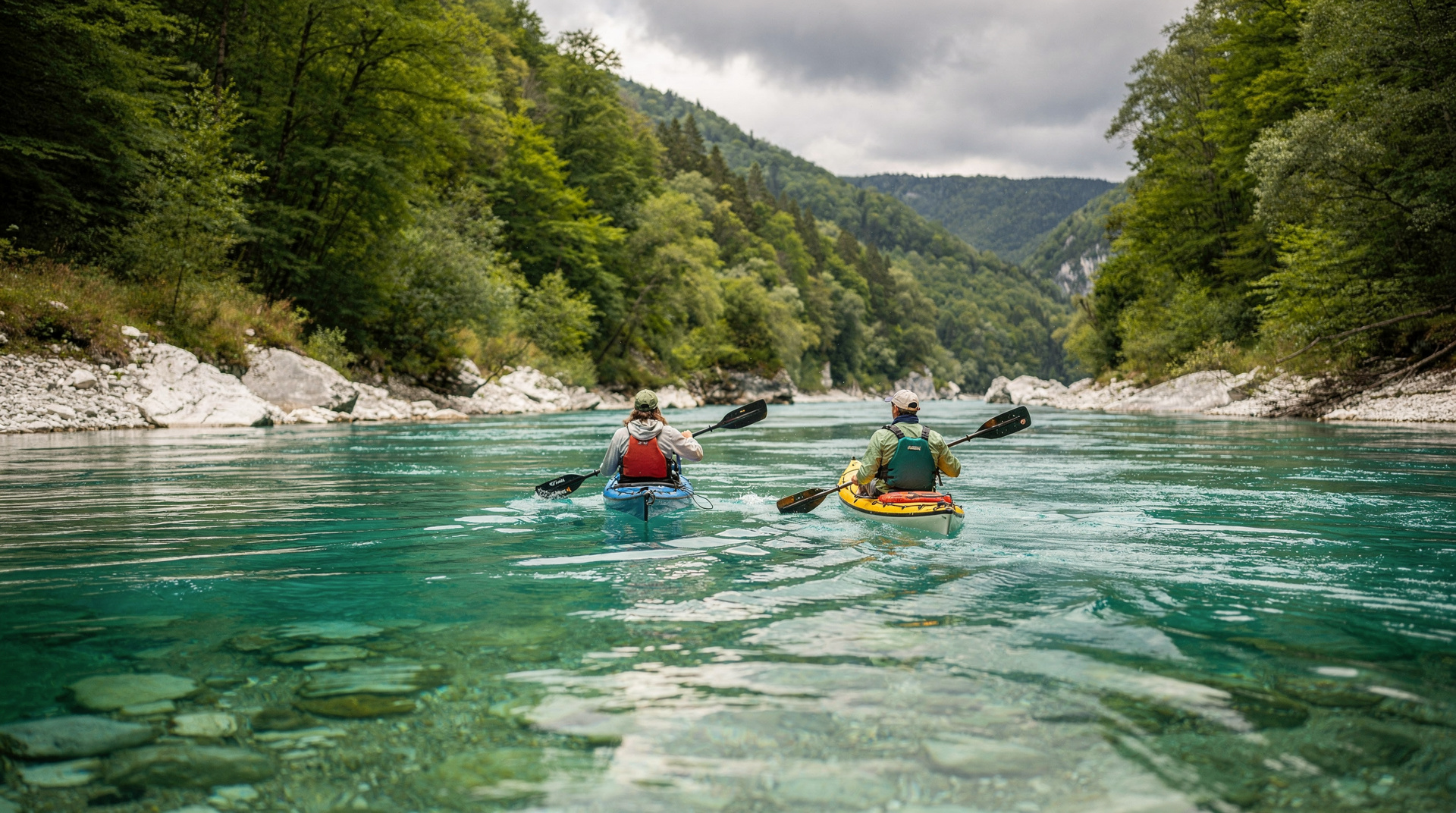
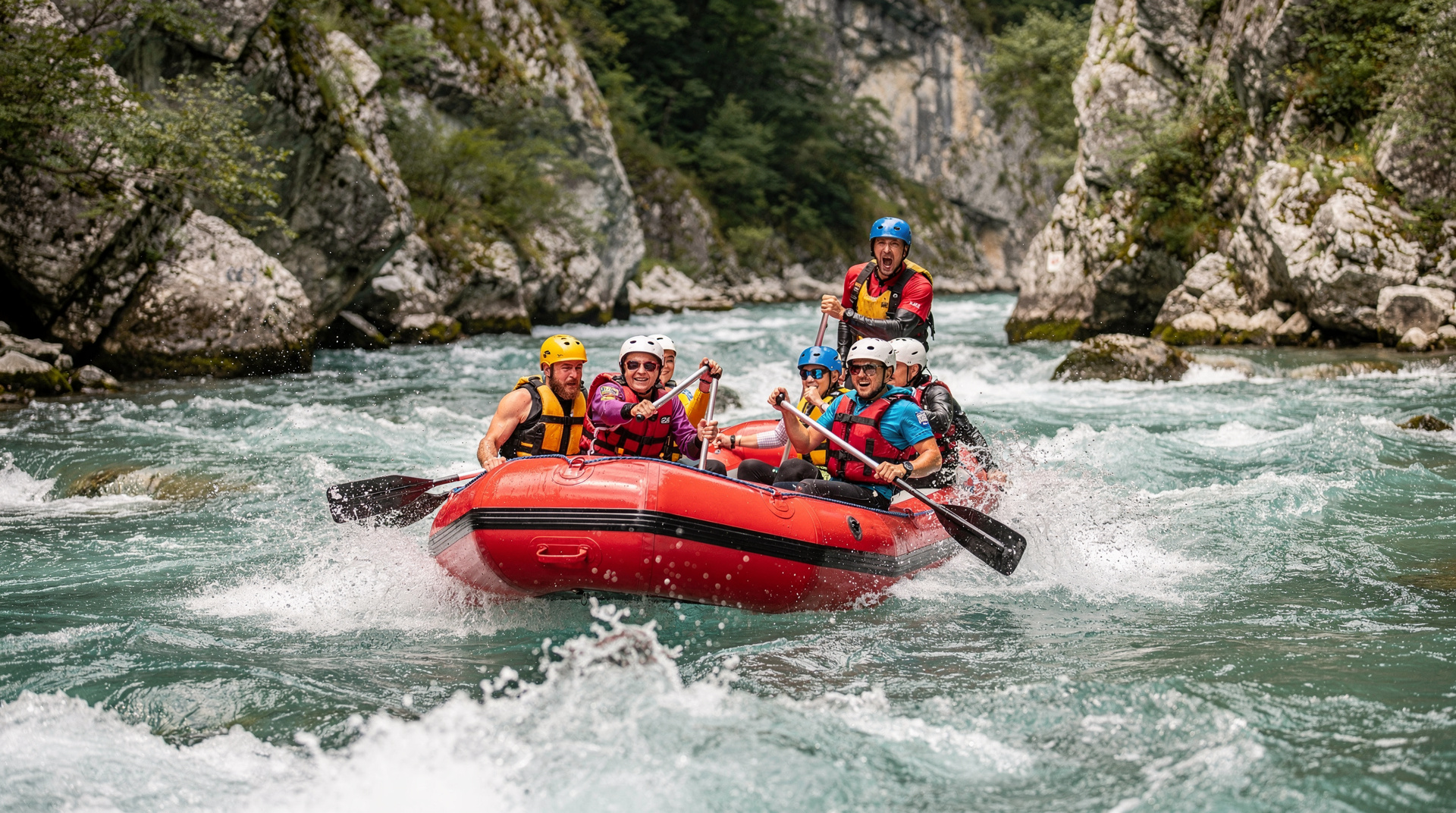
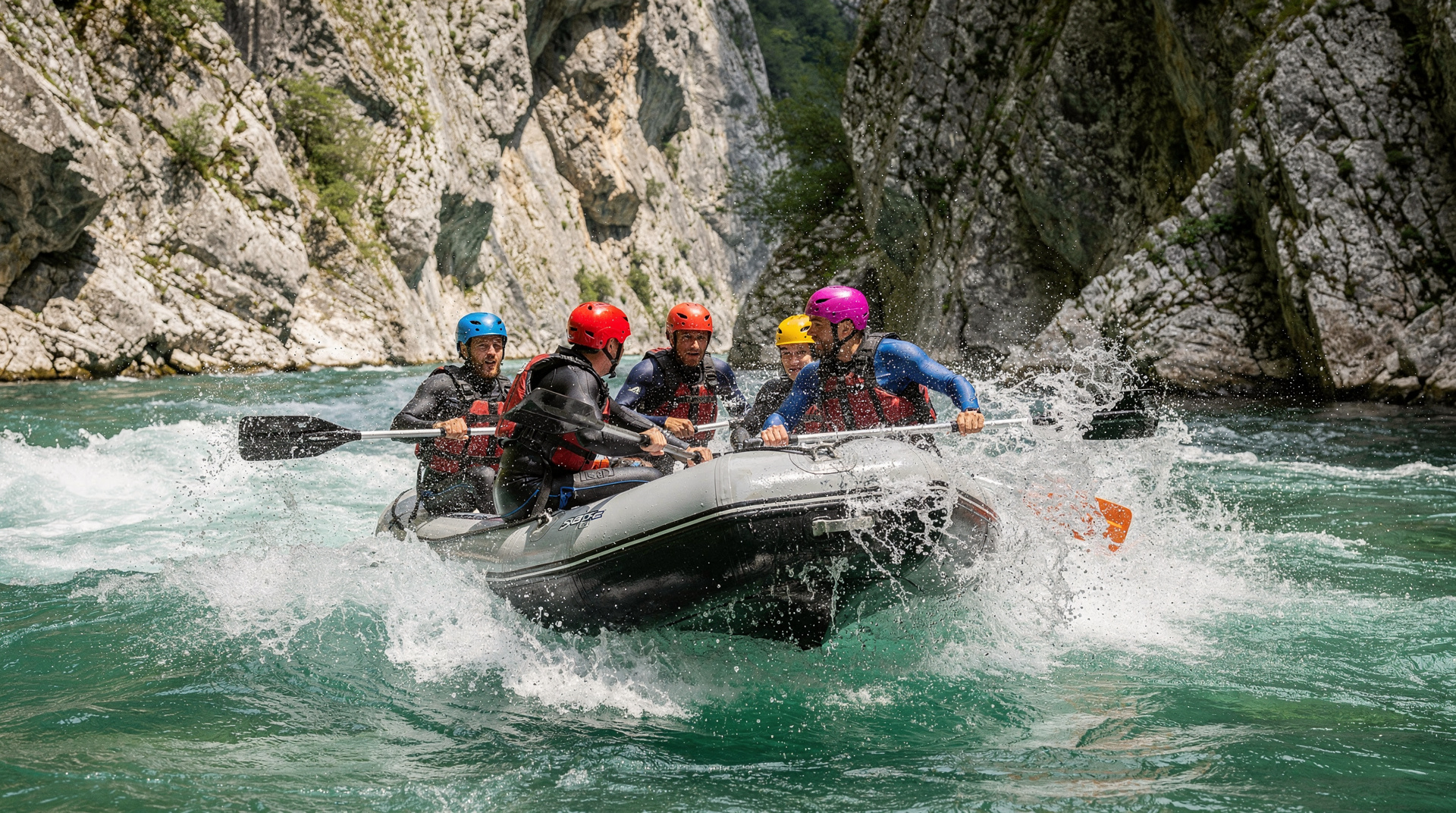
Fly fishing rarely stands alone in a Slovenia itinerary — most visiting anglers are travelling with a partner or family who want a broader trip, and the Soča Valley base makes this genuinely easy. On a non-fishing day, the white-water sports guide covers rafting, kayaking and canyoning on the same river you have been fishing, which is a natural way for a non-angling companion to experience the Soča directly. A companion who would rather be on the water than beside it can book a whitewater rafting trip on the Soča near Bovec while you fish.
Lake Bohinj itself offers hiking, the Vogel cable car and a quieter lakeside alternative to Bled for rest days between fishing sessions. For a full-day change of pace, the broader adventure sports in Slovenia overview lists the other activities the Soča and Julian Alps region supports.
A practical week for a fishing-focused visitor: two to three days based in Kobarid fishing the Soča and Idrijca, a rest day exploring the Soča Valley’s First World War history and the turquoise river on foot or by bike, then a move to Bohinj for two days combining a final river session with hiking and the wider Triglav National Park scenery.
What guided tours do not tell you upfront
A few honest details that are easy to miss when booking online. First, weather and water level genuinely dictate the day’s plan — a guide may change the planned river section on the morning of your trip if recent rain has coloured the water, and this is a sign of a good guide rather than disorganisation. Second, the “full day” advertised typically means 6–8 hours of actual fishing time once transport and lunch are accounted for, not a dawn-to-dusk session.
Third, equipment provided in package deals is usually adequate rather than premium — anglers particular about their gear should confirm exactly what is included and consider bringing their own rod if it packs easily. Fourth, photographs of your catch (particularly marble trout, which must be released quickly) require the guide’s cooperation and quick handling; ask about the photo process before the fish is in hand rather than during the moment itself.
Planning the rest of the trip around your river days
Fishing days are shaped by light and water, which leaves the middle of the day free. If you are building a longer trip, the Soča adventure itinerary and the Julian Alps itinerary both pass through the valleys where the best rivers run, so you can slot fishing sessions into a route that already makes sense. Those who prefer a looser plan can read the Soča Valley day trip guide and the Bovec adventure base guide to see what else fits around a permit day.
Getting to the water matters more than most visitors expect. The Soča and Bohinj fisheries are far from the capital, so read the car rental guide and the driving and vignette guide before you decide how to arrive. A car gives you the freedom to chase the section that is fishing best, while the getting around Slovenia guide explains what is realistic without one.
Timing your visit is part of the fishing itself. The best time to visit Slovenia and the month-by-month weather guide help you read snowmelt and rain, which decide whether a river is clear or coloured. Many anglers pair a June trip with the Slovenia in summer guide for the wider picture, and September visitors will find the Slovenia in autumn guide useful for what else is open.
Between sessions, there is plenty to do close to the water. The Julian Alps hiking guide and the Soča trail hike follow the same turquoise river on foot, which is a good way to scout pools you may fish the next day. The Triglav National Park guide explains the protected area that surrounds the upper river and why its rules are tighter than elsewhere. For a quieter lakeside rest day, the Lake Bohinj guide covers what the valley offers beyond the water you are fishing.
Frequently asked questions about Fly fishing in Slovenia
Do I need a guide to fly fish in Slovenia?
Not legally, but it is strongly recommended for a first visit. The permit system is split across multiple regional concessions with section-specific rules, and navigating it independently for the first time can consume most of a day. A guided tour from Bohinj arranges the permit, picks the best current section, and adds local fly patterns and river-reading knowledge that would otherwise take years to build.What is the best month for marble trout on the Soča?
June is consistently rated the best month by local guides, with reliable surface hatches and water temperatures in the ideal range for dry fly fishing. September is a close second, with renewed autumn hatches. July and August see marble trout become more nocturnal as water warms, pushing the best fishing to late evening. March and April are cold, deep-nymph conditions rather than dry fly season.
Top experiences
Bookable activities with verified prices and instant confirmation on GetYourGuide.