Kranjska Gora ski resort: the complete guide for your ski trip
Vogel Ski Center: day skiing with instructor from Bled
Is Kranjska Gora a good ski resort?
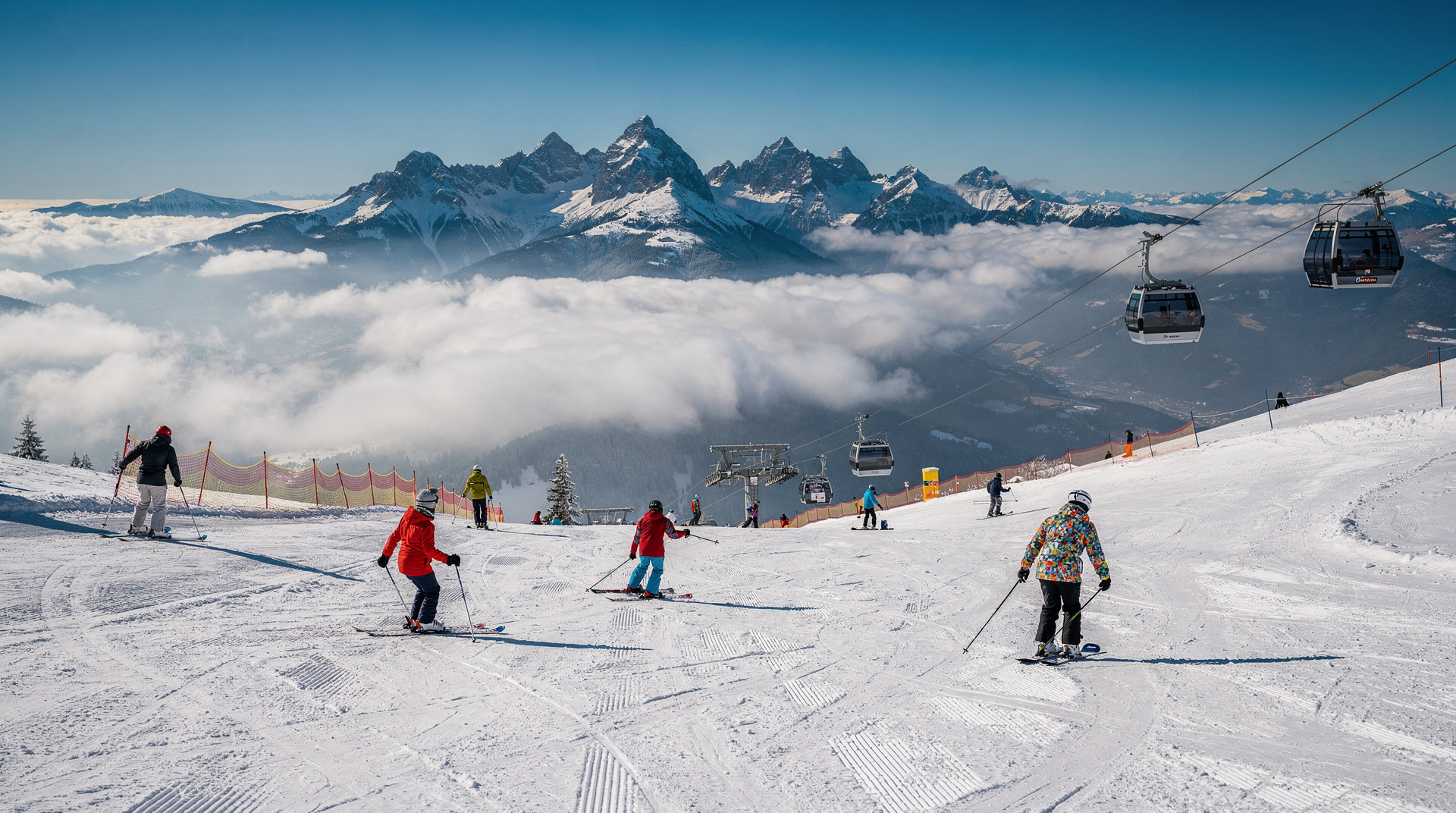
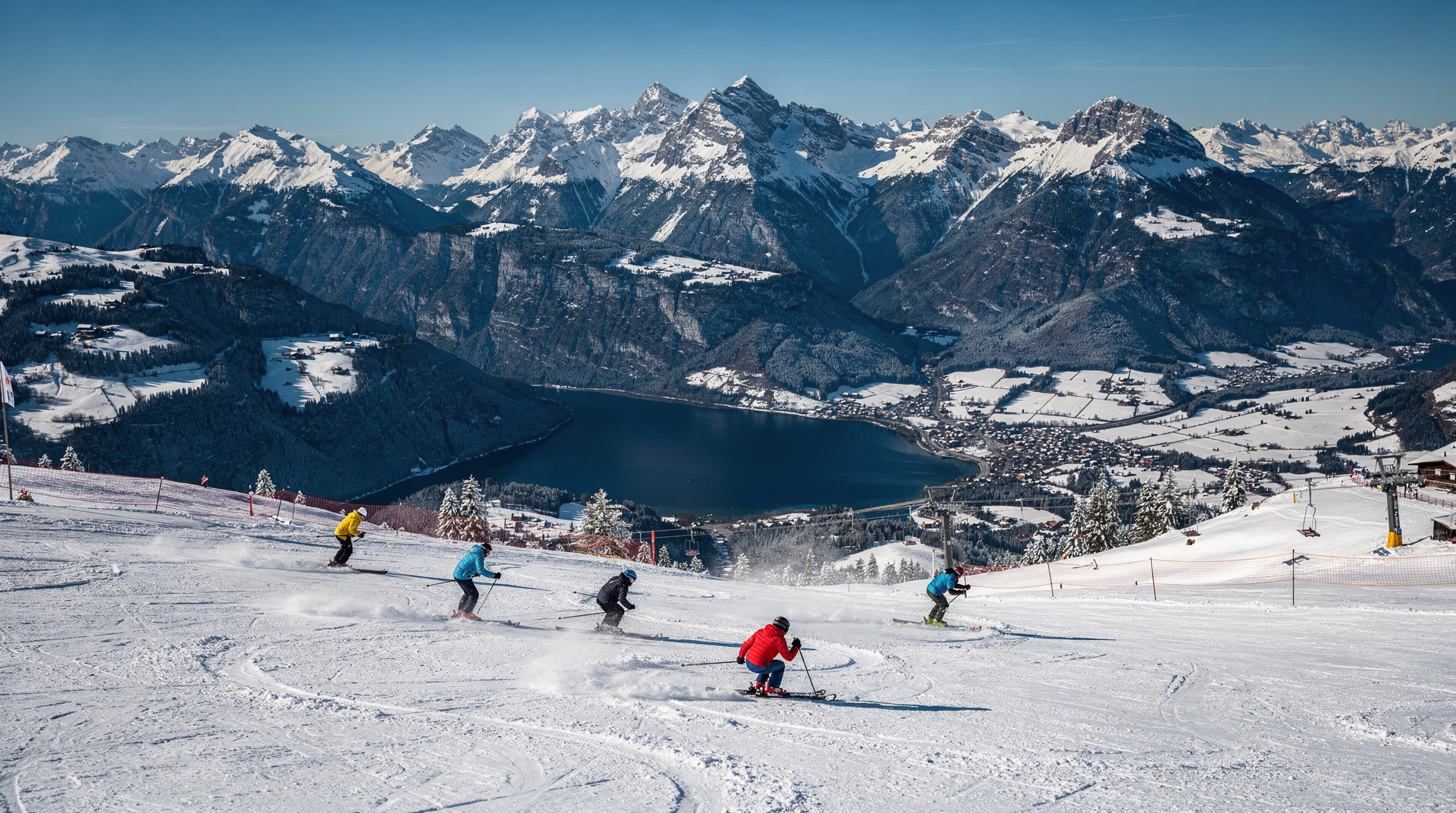
Yes — particularly for beginner to intermediate skiers, families and those wanting a World Cup atmosphere without Western Alpine prices. The resort hosts the annual Vitranc downhill and slalom races, has 20 km of well-groomed pistes, an excellent ski school and one of the most scenic settings in the Julian Alps. Advanced skiers will exhaust the marked terrain in 2–3 days.
Kranjska Gora ski resort: everything you need to plan a ski trip
Kranjska Gora is Slovenia’s most internationally known ski resort. Tucked into the far northwest corner of the country, where Slovenia meets Austria and Italy at a point called the “tripoint” (Dreiherrenspitz), the resort sits in a broad valley flanked by the Julian Alps on one side and the Karawanken range on the other.
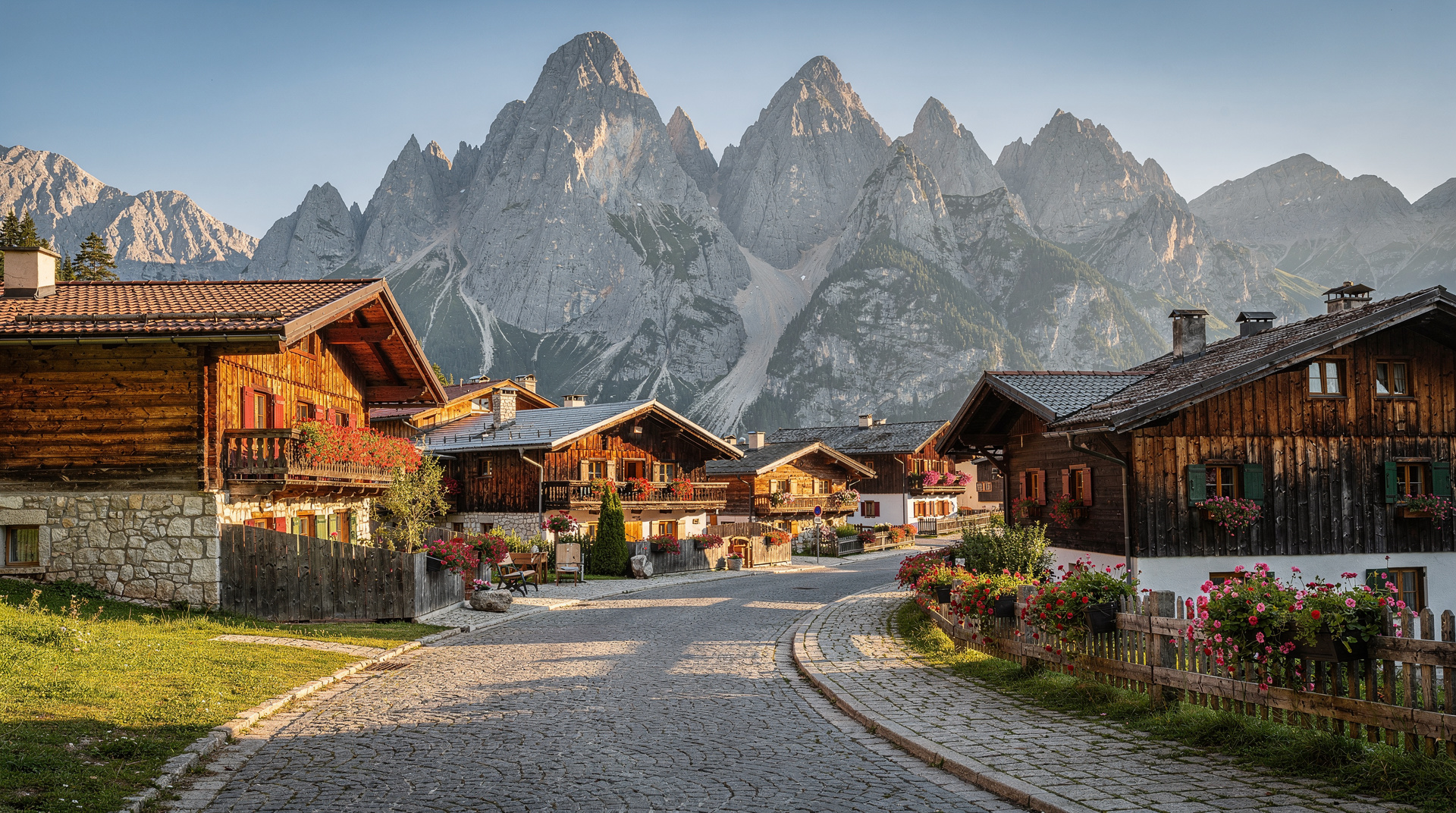
The village itself is compact and pleasant — a proper mountain settlement that existed before the ski industry and retains something of its character. Hotels, guesthouses, restaurants and ski rental shops line the main street, all within a few minutes’ walk of the lift base. The setting is one of the most beautiful in Slovenian skiing.
| Where | Kranjska Gora, northwest Slovenia (near the Austria/Italy tripoint) |
| Best for | Beginner–intermediate skiers, families, World Cup atmosphere |
| Day pass | Around EUR 42–50 adult, 2025–26 season |
| Terrain | 20 km marked pistes, 480 m vertical, plus 40 km cross-country |
| Getting there | 1h20 by car from Ljubljana, 35 min from Lake Bled |
| Book ahead for | Vitranc race weekend (late Jan/early Feb), February half-term |
The ski area
The main ski area sits immediately above the village, accessible from several lift entry points:
Podkoren-Vitranc: The home of the World Cup course. The Vitranc run is 750 metres long with a 240-metre vertical drop and average gradients that put it among the most technically demanding on the men’s circuit. For recreational skiers, the Vitranc sector offers a variety of runs including some of the resort’s best intermediate terrain.
Šmarjetna gora sector: Gentle slopes directly above the village, ideal for beginners and for first-day warm-up runs.
Total terrain: approximately 20 km of marked and groomed pistes, served by a mix of chair lifts, gondolas and T-bar lifts. The lift system has been progressively modernised; the main gondola and the Vitranc chair lifts have been updated within the past decade.
Vertical drop: approximately 480 m from the top station (1,291 m) to the base area (810 m).
Piste breakdown (approximate):
- Green (beginner): 4 km
- Blue (easy/intermediate): 9 km
- Red (intermediate/advanced): 6 km
- Black (advanced): 1 km
The honest assessment: Kranjska Gora’s marked terrain is best suited to beginner to intermediate skiers. The World Cup course and some of the upper red runs will keep stronger skiers busy, but those who have skied larger resorts will recognise that the marked terrain can be covered in 2–3 days. Off-piste options exist in the surrounding mountains for ski tourers, but the marked area itself is limited.
Ski school
The Kranjska Gora ski school is one of the better operations in Slovenia, with a large team of instructors and comprehensive programmes for all levels.
Group lessons: Available for adults and children, typically in groups of 5–8. Lessons run for 3 hours in the morning or afternoon. Price: approximately EUR 25–35 per person per half-day. Weekly group courses (5 mornings) are available for around EUR 120–155 for adults.
Private lessons: EUR 40–60 per hour for one instructor with up to 3 students. Recommended for beginners who want faster progress or for advanced skiers who want personalised coaching.
Children’s ski school: The “snow garden” for the youngest learners (4–6 years) uses equipment and games designed for small children. Ages 7+ join the regular ski school groups. A supervised day programme allows parents to ski independently.
Lessons are available in English, German and Italian in addition to Slovenian. Booking in advance is strongly recommended in January–February.
Travel insurance: standard travel policies do not always cover skiing as standard — check that your policy explicitly includes winter sports and piste rescue before you travel, and keep the policy number accessible on your phone. Mountain rescue in Slovenia is professional and fast, but an uninsured rescue or repatriation can run into thousands of euros.
Cross-country skiing at Kranjska Gora
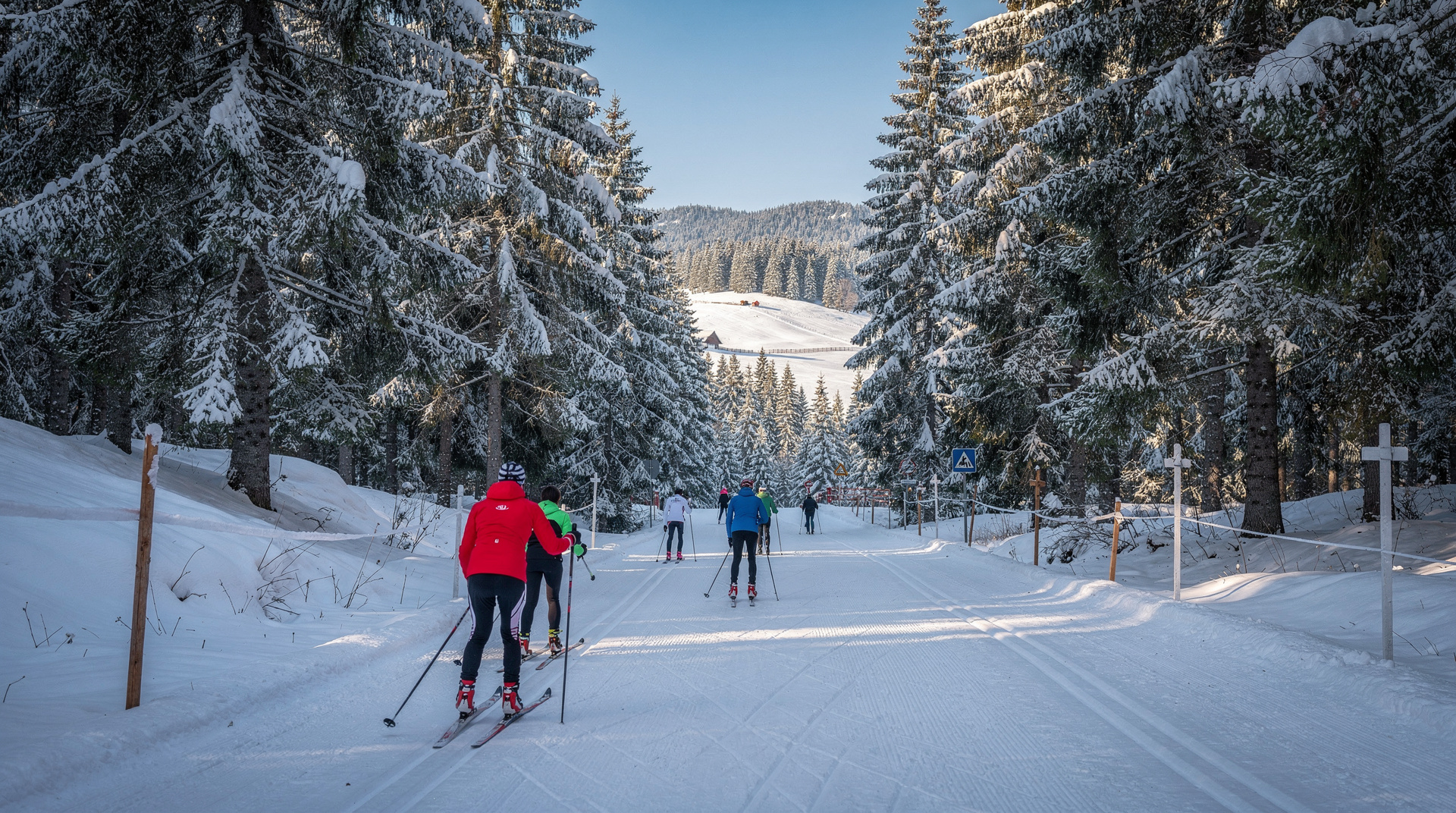
This is one of the resort’s genuine competitive advantages. The Planica valley, running south from Kranjska Gora toward Rateče, contains one of Europe’s finest cross-country skiing networks.
The Planica Nordic Centre: Built and upgraded for international competitions (the Planica ski jumping venue is here), the Nordic Centre offers professionally groomed classic and skating tracks, a warm-up hall and rental equipment. This is where World Cup cross-country and ski jumping events are held.
Trail network: Over 40 km of groomed trails run through the valley and along the lower mountain slopes. Trails are suitable for all levels, from flat valley routes for beginners to technically demanding circuits for experienced cross-country skiers. Trail maps are available at the cross-country ticket offices.
Passes: Cross-country passes are separate from the downhill lift pass. A day trail pass costs approximately EUR 8–12.
Renting equipment and buying lift passes
Most visitors rent rather than bring their own gear, and Kranjska Gora is well set up for it. A dozen or more rental shops line Borovška cesta and cluster around the main lift entry points, with standard adult ski, boot and pole packages running approximately EUR 20–30 per day (better-value multi-day rates and 10–15% online pre-booking discounts are common). Snowboard packages are similarly priced. Helmets are included as standard at most shops and strongly recommended even if not legally compulsory for adults.
Lift passes: buy at the ticket offices near the main gondola or online in advance to skip the queue on busy mornings. Multi-day passes (3, 5, 6 days) offer meaningful savings over buying single days, and the pass is usually valid across the whole lift network including the Vitranc and Šmarjetna gora sectors. RFID cards are used at most turnstiles — keep the card accessible in a jacket pocket rather than a bag.
Ski servicing: several shops offer same-day edge sharpening and waxing (EUR 10–20), worth it if you are skiing more than 3–4 days and notice the skis losing grip on the harder upper pistes.
Comparing rental to Vogel or Krvavec: rental prices across Slovenia’s three main resorts are broadly similar (EUR 20–30/day for a standard package), so there is little reason to shop around between resorts on price alone. What differs more is availability of specific sizes and models in peak weeks — booking online 2–3 days ahead in February all but guarantees the equipment you want, while walking in on a busy Saturday morning can mean settling for whatever is left.
Getting to Kranjska Gora
By car from Ljubljana: A2 motorway north to the Jesenice exit, then follow signs west through the Sava valley to Kranjska Gora. Approximately 1h20. In heavy snow conditions, this journey can extend to 1h45–2h. Winter tyres are mandatory on Slovenian roads from 15 November to 15 March.
By car from Lake Bled: 35 minutes via Mojstrana. This makes a ski day from Bled very practical.
By bus from Ljubljana: Arriva operates services to Kranjska Gora approximately every 2 hours, journey around 1h45. The bus stop is in the village centre, close to the ski lifts.
Ski equipment transport: Most visitors with ski equipment prefer a car. If arriving by bus, all ski rental shops are within 5 minutes of the bus stop.
Where to stay
In Kranjska Gora village: Most accommodation is in the village itself — hotels, apartments, guesthouses. No ski-in/ski-out accommodation in the strict sense (the lifts are a 5–10 minute walk from most hotels), but the village is compact enough that this does not matter. Hotels in Kranjska Gora are typically in the EUR 80–200 per night range in peak season.
In surrounding villages: Gozd Martuljek (5 minutes from KG) and Rateče (10 minutes) have smaller guesthouses and apartments at lower prices.
Book early for: Vitranc race weekend (late January/early February) — the village fills months in advance for this event. February half-term periods across Central Europe (German, Austrian, Czech school holidays) are also very busy.
Combining with other winter activities
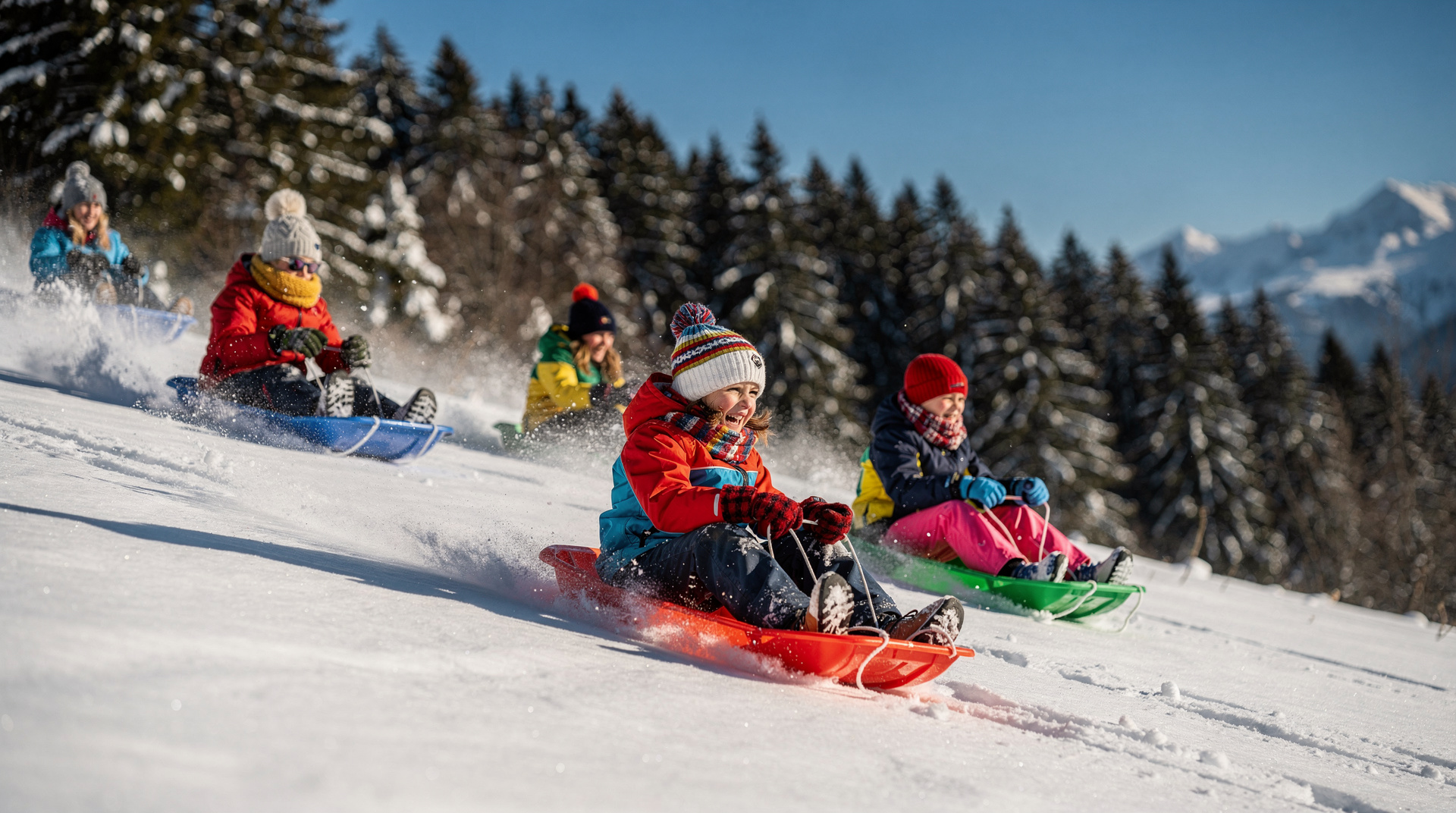
Sledding: The resort operates a dedicated sledding slope separate from the ski pistes. See sledding guide for detail.
Snowshoeing: Marked snowshoe routes run through the Planica valley and onto the lower forested slopes around the resort. Equipment rental available.
Lake Bled in winter: 35 minutes away. The lake in snow is extraordinary, and the combination — morning skiing at Kranjska Gora, afternoon at Bled — makes for an excellent full winter day. See Slovenia in winter activities guide.
Vršič Pass: The famous mountain pass north of Kranjska Gora closes in winter (approximately November to May, snow-dependent). But the lower stretches of the road offer good snowshoe and winter hiking terrain.
Planica: the ski jumping capital
Two kilometres from Kranjska Gora, the Planica valley is famous for a different winter sport entirely: ski jumping. Planica has held world records for ski jumping distance multiple times, and the Planica Nordic Centre is one of the most important ski jumping facilities in the world.
The ski flying hill (Letalnica bratov Gorišek) is the largest in the world by jump record. World Cup ski jumping and Nordic combined events are held here annually in the spring (usually March), drawing significant crowds. The hills are visible from the cross-country skiing trails in the valley — you will be skiing beneath structures that have seen jumps of over 250 metres.
In summer, Planica opens for tourism (ski jump tower visits, museum). In winter, the cross-country trails run through the Nordic Centre grounds, and when major events are being held, the Planica valley fills with spectators. The World Cup Nordic event in March is one of the best spectator sports experiences in Slovenia.
The Vitranc World Cup ski races
The Kranjska Gora World Cup takes place each January (usually the last weekend of the month) on the Vitranc slope. Slalom and giant slalom events run on consecutive days, drawing the world’s best racers and a crowd of passionate spectators — mostly Austrian and Slovenian, with a significant party atmosphere.
Watching the races: Free on the slope itself (barrier viewing areas). Ticketed for the finish area stands (EUR 20–40 depending on day and location). The race atmosphere in the village is electric on race days — après-ski starts early and runs late.
Accommodation for race weekend: The village is essentially sold out 3–4 months in advance. If you want to attend the Vitranc races, book accommodation immediately when the race date is announced (typically published in autumn). Alternative: stay in Jesenice or Kranjska Bistrica (30–40 minutes away) and commute in.
Nightlife and après-ski
Kranjska Gora has a modest but genuine après-ski scene by Alpine standards. The village bars open in the late afternoon as skiers come off the mountain; the most popular are clustered along the main street (Borovška cesta).
The atmosphere is relaxed rather than raucous — more family-friendly Slovenian resort than Austrian party town. Hot drinks, Slovenian wine (try the local Renski rizling from Štajerska), and local beer (Union or Laško) in a warm bar after a cold day on the mountain. A pleasant end to a ski day.
Restaurants: Several good options in the village. For traditional Slovenian food, look for gostilnas serving roast pork (pečenica), bean soup (jota) or Kranjska sausage (Kranjska klobasa). Prices are moderate by alpine standards.
Practical notes for a Kranjska Gora ski trip
Accommodation booking timeline:
- Race weekend (late January): book immediately when the date is announced, 3–4 months ahead
- February half-term weeks: 2–3 months ahead
- January (non-race) and December: 4–6 weeks usually sufficient
- March: often bookable 1–2 weeks ahead
Budget planning: A 3-night, 3-day ski package at Kranjska Gora (mid-range hotel, 3-day ski pass, equipment hire) runs approximately EUR 500–700 per person. Add ski school (group, 3 half-days) for another EUR 75–100. This compares well with equivalent packages in Austria or Switzerland at EUR 900–1,400 per person.
Combining with Austria or Italy: From Kranjska Gora, the Nassfeld ski area in Austria is 40 minutes by car. Tarvisio (Italy) is 35 minutes. On a multi-day trip, a day across the border gives advanced skiers more terrain variety without dramatically increasing the overall cost.
Cross-country skiing logistics: The Planica Nordic Centre is 2 km from the village — a short drive or a 20-minute walk on the valley path. Trail passes are sold at the Nordic Centre, not at the village ski offices. Equipment rental is available at the Nordic Centre.
Getting to the slopes from your accommodation: The ski area has several lift entry points around the village. Most hotels can tell you the nearest entry point. The morning rush (08:30–10:00) can involve short queues at the most popular entry lifts; using a less-central entry point often means shorter waits.
Kranjska Gora for non-skiers in your group: The Planica valley walking path, the village itself and the Vršič road (closed in winter but walkable on snowshoes for the lower sections) all provide activities for non-skiing members of a group. The Nordic Centre has observation areas for watching cross-country skiing. Kranjska Gora works for mixed groups in a way that purely ski-focused resorts sometimes do not.
Honest assessment
Kranjska Gora excels at the combination of a pleasant village atmosphere, accessible beginner and intermediate terrain, excellent cross-country infrastructure and a price point well below the Western Alpine alternatives. The World Cup races bring genuine international prestige and a festival atmosphere.
The limitation is size: if you are a strong skier looking for 6–7 days of varied terrain, you will want to combine Kranjska Gora with other resorts (Vogel, Krvavec, or crossing into Austria/Italy for a day). For a 3–4 day ski holiday, particularly with mixed ability groups or families with children, it is the right choice.
Building a wider winter trip around Kranjska Gora
Because the marked terrain here is modest, many visitors treat Kranjska Gora as one stop in a longer winter holiday rather than the whole plan. The winter Slovenia itinerary shows how a week can be split between the mountains and the cities, and the Julian Alps itinerary is a good fit if you want to stay in the north-west and add variety around the ski days.
If you are still deciding when to travel, the best time to visit Slovenia guide and the month-by-month weather guide help you weigh snow reliability against crowds. For a broader view of what else the season offers away from the lifts, see Slovenia in winter and the blog piece on winter magic.
Families will find more on pacing, lessons and non-ski days in the Slovenia for families guide. Those arriving by air should read the Ljubljana airport guide and getting to Slovenia before booking transfers, and anyone renting a car for the Sava valley road will want the car rental guide and the vignette guide.
A ski trip also pairs naturally with a night or two in the capital. Ljubljana is an easy add-on at either end of the trip, and the Lake Bled guide covers the lake that many skiers visit on a rest day. For a first visit that mixes the Alps with the main sights, the Ljubljana and Bled itinerary is a useful starting point, and the Planica and Triglav side of the park is worth a look on the map before you set off.
The Vršič Pass: summer’s star attraction, winter’s boundary
The Vršič Pass (1,611 m) is the highest mountain pass in Slovenia and a celebrated road in any season. But in winter, the pass closes with first snow — typically in November — and does not reopen until May.
This means the Vršič is off the table for winter visitors. What it leaves instead is the knowledge that the mountains to the south — Triglav National Park, the Soča valley — are completely separated from Kranjska Gora by snow and altitude in winter. The resort sits at the end of a valley that becomes a cul-de-sac in winter, which is part of what gives Kranjska Gora its concentrated, self-contained character as a resort.
The beginning of the Vršič road is accessible on snowshoes from the edge of the village — the lower hairpin bends make an interesting winter walking objective in good conditions.
Nearby Jazerci: the quieter corner
North of Kranjska Gora, the border village of Rateče has a different character from the busy resort centre. The Planica valley begins here, and the village itself is a working agricultural community with a few guesthouses.
Rateče church: The Church of Saints Hermagoras and Fortunatus has a 15th-century origin with some interesting fresco fragments. Worth a brief visit if you are walking in the area.
The tripoint area: 2 km north of Rateče, the borders of Slovenia, Austria and Italy meet at a single point in the mountains. A walking trail leads to a memorial marker at the boundary — an unusual combination of three countries’ mountain environments visible from a single spot.
Jasnica: A small lake in the valley between Kranjska Gora and Rateče, frozen in winter and surrounded by meadows. A pleasant flat walk of 3–4 km from the village, accessible in winter on cleared paths.
Seasonal guide for Kranjska Gora
Late November to mid-December: Snowmaking begins. Conditions can be marginal on lower runs depending on natural snow. Cross-country trails may be groomed if sufficient snow. Quietest and cheapest period — good for those who do not need guaranteed conditions.
Mid-December to early January: Christmas and New Year period. The village is decorated and atmospheric. Conditions generally improving; the resort is moderately busy.
January (post-New Year to race weekend): The best value window. Good to excellent snow conditions, lower occupancy than February. The Vitranc race at the end of January is the week to avoid or specifically target.
February: Peak season. School holidays across Central Europe make this the busiest and most expensive month. Book 2–3 months ahead.
March: Excellent ski conditions at altitude; spring snow in the afternoons can be heavy but enjoyable. The village begins to quieten after mid-March. Prices drop noticeably.
| Period | Snow reliability | Crowds | Value |
|---|---|---|---|
| Late Nov–mid Dec | Marginal, snowmaking-dependent | Quiet | Cheapest window |
| Mid Dec–early Jan | Improving | Moderate (holidays) | Fair |
| January (pre-race) | Good to excellent | Low | Best value |
| Vitranc race weekend | Good | Very high, book months ahead | Poor unless you want the race |
| February | Best of the season | Peak, book 2–3 months ahead | Most expensive |
| March | Excellent at altitude | Thinning after mid-month | Good value |
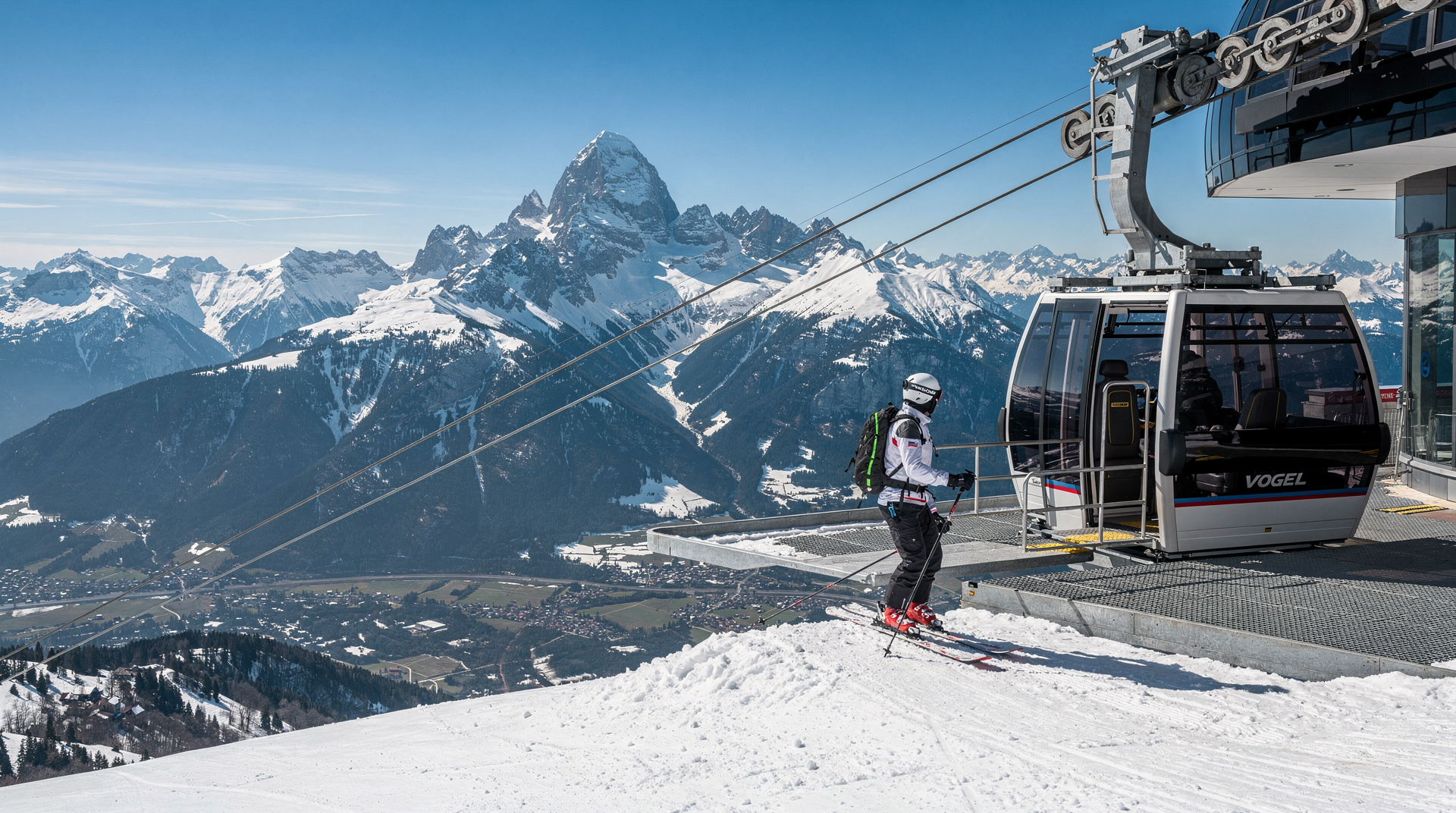
A guided full-day option for skiers who also want the Julian Alps scenery beyond the piste is worth considering on a rest day: a guided ski day with an instructor at nearby Vogel pairs well with a Kranjska Gora base for visitors touring more than one Slovenian resort.
Non-skiers in your group, or anyone without a car, can still see the area on a rest day: a guided day tour from Ljubljana to the Soča valley and Kranjska Gora takes the driving off your hands.
See the full skiing in Slovenia guide for how Kranjska Gora compares with Vogel and Krvavec.
Frequently asked questions about Kranjska Gora ski resort
What level of skier is Kranjska Gora best suited to?
Beginner to intermediate. The resort has good gentle terrain for first-timers and a well-organised ski school. Intermediate skiers will enjoy the variety of groomed runs. Advanced skiers will appreciate the Vitranc course and the off-piste options, but may feel limited on the marked terrain after 2–3 days. Snowboarders are welcome throughout.How much does a day pass cost at Kranjska Gora?
A full-day adult ski pass costs approximately EUR 42–50 for the 2025–26 season (half-day options available). Children's passes are EUR 22–28. Multi-day passes (3, 5, 6 days) offer proportional savings. Compare with the Vogel and Krvavec passes — Kranjska Gora is the most expensive of the three main resorts but still significantly cheaper than comparable Austrian or Italian resorts.What is the ski season at Kranjska Gora?
Typically December to March, with the main pistes opening in late November to mid-December depending on natural snow. January and February are the most reliable months. The Vitranc World Cup races are held in late January or early February. Snowmaking covers approximately 90% of the pisted terrain, providing reliable conditions even in marginal winters.Is there cross-country skiing at Kranjska Gora?
Yes — one of the resort's strongest features. Over 40 km of groomed cross-country trails run through the Planica valley and the surrounding landscape, including the famous Planica Nordic Centre (home of ski jumping world records). The flat valley floor is perfect for classic and skating cross-country skiing. Trail passes are separate from the downhill ski pass.How do I get to Kranjska Gora from Ljubljana?
By car: A2 motorway north to Kranjska Gora exit (Jesenice), then northwest. Approximately 1h20. By bus: Arriva services run from Ljubljana, approximately 1h45. A car is strongly recommended for ski equipment transport, though buses are practical for those renting equipment at the resort.What is the Vitranc race?
The Kranjska Gora Vitranc Alpine Skiing World Cup takes place annually in late January or early February on the Vitranc slope — a technically demanding course that tests the world's best slalom and giant slalom racers. Spectating is free on the course itself and tickets are required for the finish area. The race weekend brings a festival atmosphere to the village.Do I need to rent skis in Kranjska Gora or bring my own?
Renting is the practical choice for most visitors, particularly those arriving by bus or flying in. Multiple rental shops line the main street and the lift base, with standard ski, boot and pole packages running approximately EUR 20–30 per day (discounts for multi-day hire and online pre-booking). Bringing your own gear only makes sense if you already own boots that fit well and are travelling by car — airline ski-carriage fees often erase any saving.
Top experiences
Bookable activities with verified prices and instant confirmation on GetYourGuide.