Mountain biking in Slovenia: Soča Valley trails, e-bikes, and where to ride
Bovec: e-bike tour exploring hidden gems
Is the Soča Valley good for mountain biking?
Yes. The Soča Valley around Bovec has a well-developed trail network ranging from easy valley-floor gravel tracks to technical alpine singletrack above 1,500m. E-bike guided tours make the terrain accessible to all fitness levels. Season runs May–October.
Mountain biking in the Soča Valley
| Where | Soča Valley/Bovec and Kranjska Gora, Julian Alps |
| Cost | Guided e-bike half-day around EUR 60–90; rental EUR 35–55/day |
| Time needed | Half-day for gravel/e-bike routes, full day for Kanin descents |
| Getting there | Own car, limited bus bike-carriage, or a guided tour transfer |
| Best time | June–September for the full trail network |
The Soča Valley and the wider Bovec area have developed a mountain biking infrastructure over the last 15 years that is considerably more developed than most visitors expect. What began as operator-led e-bike tours on gravel roads has expanded into a network of marked singletrack, flow trails, technical descents, and long-distance cross-country routes connecting the valley to the Triglav National Park boundary.
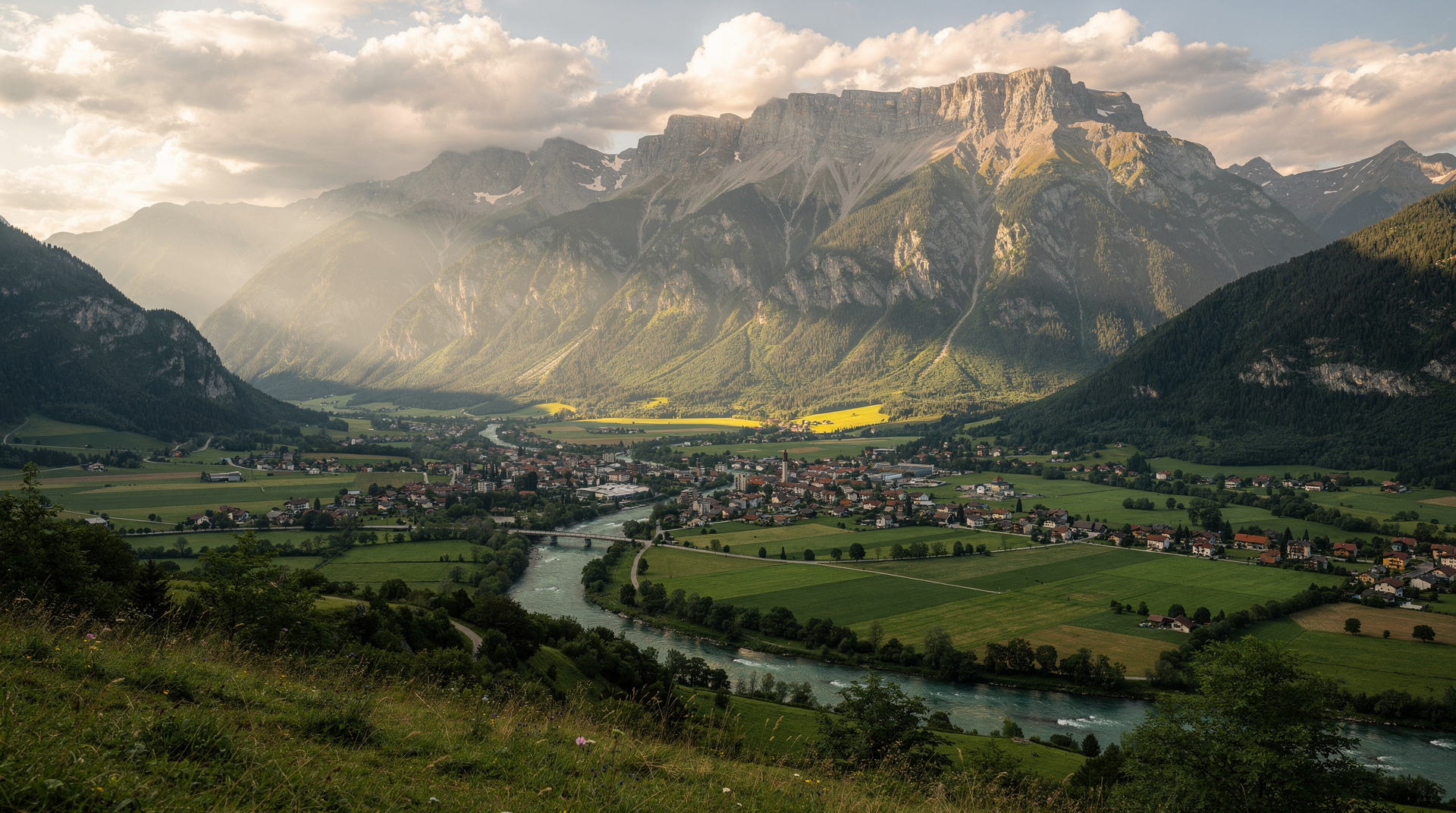
The terrain here is exceptional for mountain biking in the same way it is exceptional for river sports: the vertical range is large (valley floor at 200–400m, ridgelines at 2,000m+), the limestone geography creates varied trail character, and the valley itself — with the Soča running through it — makes the visual backdrop to most rides genuinely striking.
This guide covers the trails, the guided options, the e-bike offer, and the second main mountain biking region in Slovenia: Kranjska Gora in the northwest Julian Alps.
Trails near Bovec
Valley floor and gravel routes (easy–moderate)
The most accessible riding in the Soča Valley is on gravel and tarmac tracks along the valley floor between Bovec and Kobarid. The valley is flat to gently undulating at this level; the roads are low-traffic, and the scenery — with the Soča visible much of the way and the canyon walls rising above — is excellent.
The Bovec–Kobarid valley track is approximately 20km one way and takeable on any bike. With an e-bike, the gradients involved are trivial. On a standard mountain bike, the effort is moderate.
This is the right route for:
- Riders who want the valley experience without technical trail commitment
- Groups with mixed abilities
- Non-biking sections of a multi-activity day (one way by bike, return by car or taxi)
The hidden gems e-bike tour
The guided e-bike tour marketed as “hidden gems” covers locations in the Bovec area that the standard tourist circuit misses — side valleys, gorge viewpoints, historic wartime sites from the Isonzo Front, small villages above the valley floor. The guide’s knowledge of these spots is the genuine value of the tour.
E-bike tour of Bovec’s hidden gems — guided half-dayDuration: approximately 3–4 hours. Difficulty: easy to moderate (e-bike assist manages the incline sections). Suitable for most adults with basic cycling ability.
Kanin trails (advanced)
The Kanin massif above Bovec, accessed via the cable car, provides a different order of mountain biking. The plateau at 2,000m+ has long descents — 1,500m+ vertical — on trails ranging from technical singletrack to more open alpine terrain. This is for experienced mountain bikers specifically seeking vertical descent.
The cable car allows you to ascend with the bike (check current bike transport policy at time of visit — this changes seasonally). The descent to the valley floor typically takes 1.5–2.5 hours depending on route and ability.
The Soča Valley Ultimate Explorer e-bike
The longer-format e-bike tour covering a substantial section of the Soča Valley from a central Slovenia departure point. This is a good option for those who want the full valley perspective in a single guided day without driving.
Soča Valley ultimate explorer e-bike tourMountain biking in Kranjska Gora
Kranjska Gora is Slovenia’s primary ski resort town and has developed mountain biking as a summer offering with particular success. The resort infrastructure — lift access, trail maintenance, signage — is more developed here than in the Soča Valley, and the riding has a more traditional Alpine resort character.
The Kranjska Gora Bike Park: The ski slopes above town have been converted for summer biking with designated flow trails, jump lines, and freeride sections. This is lift-accessed downhill/enduro riding for those who specifically want that format.
Cross-country routes: The valley connecting Kranjska Gora to the Planica valley (site of the ski jumping venue) is flat and scenic — a popular local cycling route. Further afield, trails connect through the mountains toward Italy and Austria.
The Vrsic Pass road: In season (May–October), the serpentine road over the Vrsic Pass is used by cyclists as a climb. It is not a mountain bike trail in the singletrack sense — it is tarmac — but the 1,600m climb to the pass is a serious workout with exceptional views and minimal traffic (the road is narrow and one-way sections slow cars significantly).
E-bikes in Slovenia: practical notes
E-bike guided tours have become the most practical format for visitors who want to cover significant terrain in the mountains without being professional cyclists. The assist provided by modern e-bike systems means that climbs that would be exhausting on an analogue bike become manageable for most adults.
What to know:
- E-bikes provided on guided tours are quality electric mountain bikes with hydraulic brakes and quality suspension. They are not urban e-bikes with thin tires.
- Battery range on the tours offered is not a concern — tours are designed within the range of a single charge
- Helmet is mandatory; most operators provide helmets with the bike
- No specific certification or licence is required to ride a standard e-bike in Slovenia
If you want to rent rather than tour, e-bike rental in Bovec is available from several operators at EUR 35–55 per day. Detailed maps of the marked trail network are usually included.
Season and conditions
May: Trails at valley level are good. Higher trails (above 1,200m) may still be wet or patchy with snow. Good season for valley riding, caution on the alpine singletrack.
June–September: Full season. All trails operational. July–August are hot at valley level (25–32°C) — early starts recommended for all-day rides. The Kanin trails and Kranjska Gora higher routes provide naturally cooler conditions.
October: Valley trails excellent in good weather. Higher routes depend on conditions. Some guided tour operators end their season by mid-October.
November–April: Mountain trails are generally inaccessible due to snow and wet conditions. Road cycling possible on valley roads in mild weather but mountain biking in the proper sense is off-season.
Mountain biking vs other activities in Bovec
Mountain biking in the Soča Valley is a complement to, not a replacement for, the water activities. The most natural positioning:
For visitors who are already active cyclists: A half-day e-bike tour or a Kanin descent fills an afternoon that cannot be on the water (bad weather for canyoning, or you’ve already done rafting and canyoning on previous days).
For groups with mixed interests: The valley floor gravel route is achievable for most adults and gives the non-rafting members of a group a morning activity while others are on the water.
For longer Bovec stays (4+ days): Mountain biking naturally fills Day 3 or 4 after you have covered the primary water activities.
For the complete Bovec activity breakdown — how to sequence the full menu over multiple days — see the Bovec adventure base guide and the adventure sports overview.
Getting there with a bike
If you are bringing your own mountain bike:
Car: Bikes travel easily on standard roof or rear carriers. The approach roads to both Bovec and Kranjska Gora are tarmac with no access restrictions for bikes.
Bus: The bus to Bovec from Ljubljana has limited bike carriage (one or two bikes at the driver’s discretion). Book ahead and confirm capacity. An advance phone call to the bus operator is advisable.
Rental: If you do not want to transport a bike, e-bike and mountain bike rentals in both Bovec and Kranjska Gora are of sufficient quality for most trail uses. Full-suspension enduro bikes for the technical descents are available at specific operators — ask at booking.
Flying in with a bike: International visitors flying into Ljubljana Airport and travelling on to Bovec or Kranjska Gora should factor in the extra logistics of a bike bag — there’s no dedicated bike-transport shuttle from the airport, so a private transfer or rental car with roof rack space is the practical solution. Most visitors who fly find it simpler to rent locally rather than manage a bike case through two flights and a transfer; the quality of rental bikes in both areas is high enough that this rarely feels like a compromise.
Trail maps and navigation
The Triglav National Park trail marking system covers hiking routes; mountain bike-specific trails are marked separately in the Bovec and Kanin area. Free maps are available from the Bovec Tourist Information Centre (on the main square) and from most bike rental shops. The Komoot platform has good user-submitted trail data for the Soča Valley; GPS tracks are downloadable for offline use.
The Soča Valley as a cycling landscape
The Soča Valley rewards cycling that goes beyond the marked trail network. The secondary roads and farm tracks in the valley bottom connect villages, riverside viewpoints, and historic sites in a way that the main road does not. On a bike — particularly an e-bike — you can explore connections that a car passes too quickly and a walker takes too long to reach.
Some specific spots worth targeting:
Most na Soči reservoir: The wide reservoir where the Soča meets the Idrijca is reached by a valley road from Bovec (approximately 35km). The shoreline has a particular stillness in the morning — the turquoise water at the broadest point of the Soča system, with limestone peaks above. Reachable on a standard e-bike in 2.5–3 hours at easy pace.
Soča Trail sections: The marked Soča Trail (Pot Soče) runs 25km from Trenta to Bovec. Sections of this are cyclable, particularly the lower portion from Log pod Mangartom to Bovec. The combination of trail views and proximity to the river makes this more interesting than the parallel road.
Abandoned wartime roads: The Isonzo Front (WWI) left an extensive network of supply roads cut into the valley walls. Many of these are now tracks accessible by mountain bike and connect viewpoints above the valley floor that the standard road network does not reach. A guide with local knowledge (which the hidden gems e-bike tour provides) is the most efficient way to access these.
Gravel cycling vs mountain biking in the Soča Valley
The distinction matters if you are choosing between bringing a gravel bike and a mountain bike:
Gravel bike (drop bar, 35–45mm tyres): Suitable for the valley floor roads, the Soča Trail lower sections, and the tarmac approaches to higher trails. Not appropriate for the Kanin technical singletrack or the steep forest tracks above the valley.
Hardtail mountain bike (XC/trail geometry, 100mm fork): The versatile choice for most Soča Valley riding. Handles the gravel tracks, the lower trail sections, and the moderate singletrack. Cannot fully exploit the Kanin descents.
Full-suspension mountain bike (enduro geometry, 140mm+ fork): Required for the Kanin technical descents and the steeper singletrack. Not necessary for valley-floor e-bike touring.
If renting, specify your intended riding — valley touring vs technical descents — so the rental shop provides the appropriate bike.
Cycling culture in Slovenia
Slovenia has a stronger cycling culture than its size might suggest. The Vuelta and Tour de France have both included Slovenian-born riders in recent years (Tadej Pogacar’s dominance of grand tour cycling from 2020 onwards has substantially raised the country’s cycling profile internationally). The result is that infrastructure for cyclists — dedicated bike paths in cities, bike-friendly accommodation, quality rental operations — is more developed than in comparable mountain regions of Austria or Italy.
In Ljubljana, cycling is a primary commuter mode; the city has a dense bike-lane network and a public bike rental scheme (BicikeLJ). For mountain visitors, this urban cycling infrastructure is less directly relevant, but it signals a national attitude toward cycling that manifests in trail maintenance standards and operator quality in the mountain areas.
Combining mountain biking with water sports
The natural pairing in the Soča Valley is:
Morning water (rafting, canyoning, kayaking) + afternoon bike: Water sports typically run 9am–1pm. An afternoon e-bike tour (starting 2–3pm) uses the remaining daylight and covers terrain the morning activity did not.
Morning bike + afternoon water: Less common because most commercial water sports operate on morning schedules, but possible with afternoon rafting or SUP slots (some operators run afternoon sessions in summer).
Full bike day: If you want to fully dedicate a day to cycling — perhaps after 2–3 days of water activities — the Kanin descent or the valley-to-Kobarid circuit gives a satisfying long ride without repeating terrain.
For the Bovec multi-day activity sequencing advice — how all activities fit together over 3–5 days — see the Bovec adventure base guide.
Bovec’s bike infrastructure: what exists and what is still developing
The mountain biking infrastructure in the Soča Valley has developed rapidly since 2015 but is still less developed than Kranjska Gora’s resort infrastructure or the major bike parks in the Dolomites. Being honest about this helps set expectations:
What is well-developed: The valley floor routes, the guided e-bike tour offer, the rental market, and the connection between operators and accommodation. These work smoothly and are worth booking.
What is still developing: The dedicated singletrack network above the valley floor around Bovec. Some trails exist and are of good quality; the signage and waymarking is inconsistent compared to an established bike park. Without a guide who knows the current trail state, following generic GPX files can lead to trail sections that are overgrown or incorrectly described.
The Kanin trails: These are the best technical riding in the area, but the access (cable car + descent) is weather-dependent and the trail state varies significantly by month. Best conditions: July–September after the snow has cleared and before autumn wet conditions begin.
Recommendation: For a first visit focused on mountain biking, Kranjska Gora’s established bike park infrastructure is more reliable. For a multi-activity visit where mountain biking is one element of a broader Bovec stay, the valley routes and guided e-bike tours are excellent.
Reading the terrain: what makes the Soča Valley rideable
The terrain characteristics that matter for mountain biking:
Rock type: Limestone. Provides excellent grip when dry; becomes extremely slippery when wet. The Soča Valley sees approximately 2,200mm of rainfall per year (one of the highest in Slovenia), but summer dry spells are common and June–September typically sees extended dry periods ideal for technical riding.
Elevation change: The valley floor is at 200–400m; the Kanin plateau is at 2,000m+. The vertical available is significant for descent-focused riding. The approach climbs are correspondingly long (1,500m+ for a Kanin descent means a 2–3 hour climb or cable car access).
Trail surface: Valley floor routes are gravel road and hard-packed earth. Mid-altitude routes (600–1,200m) are forest track and natural singletrack. Kanin and high alpine trails are open rocky terrain — technically demanding but scenically exceptional.
Traffic: The Soča Valley is a national park area; motor vehicle traffic on the secondary roads used for mountain biking is minimal. You are not sharing trail space with ATVs or off-road motorcycles as you might be in less-controlled terrain.
What to eat and drink on a long bike day
The Soča Valley’s cafés and gostilne are primarily positioned for the main tourist route — not optimized for cyclists needing to refuel mid-ride. Practical approach:
Self-provision for rides longer than 3 hours: Pack lunch, gels/bars, and 2–3L water from Bovec before departure. There are few reliable mid-route food stops on the off-valley trails.
Post-ride in Bovec: The main square café and the gostilne handle the post-activity meal well. The local honey (from Kanin area beekeepers) is worth buying at the farmer’s market or the Mercator for immediate consumption.
Electrolytes: The physical output on a Kanin descent is high; the descent is fast but the climb or cable car time means extended effort. Electrolyte supplementation is more relevant here than on a valley floor tour.
The e-bike demographic
An honest note on who does the e-bike guided tours in the Soča Valley:
The typical participant is not a dedicated mountain biker. They are a general-fitness outdoor visitor who wants to see the valley at a pace faster than walking, in terrain that a standard hike does not access, without needing to be a competitive cyclist. This is the correct framing for the product.
The e-bike tours deliver on this: they take participants to viewpoints and valley corners that are 8–12km from town — accessible by bike, impractical on foot for a half-day, not particularly interesting by car. The guide’s local knowledge of these specific spots is the value that no GPX track replicates.
If you are a dedicated mountain biker, the e-bike tour is not your product. The Kanin technical trails or the regional network accessed via rental is where the serious riding is. If you are a general visitor who cycles occasionally and wants to explore the Soča Valley terrain, the guided e-bike format is well-designed for you.
Choosing between the main tour formats
| Option | Difficulty | Duration | Best for |
|---|---|---|---|
| Bovec hidden gems e-bike | Easy–moderate | 3–4 hours | First-timers, families, general fitness |
| Soča Valley ultimate explorer | Moderate | Full day | Visitors wanting the full valley in one guided day |
| Kanin cable car descent | Advanced | 1.5–2.5 hours descent | Experienced riders seeking vertical and technical terrain |
| Kranjska Gora bike park | Beginner–advanced (lift-graded) | Flexible, by run | Riders who want reliable, maintained trail infrastructure |
Soča Valley ultimate explorer e-bike tour and the Bovec hidden gems e-bike half-day remain the two most booked formats for visitors without their own technical mountain bike, and both can be combined with water sports on the same trip — see the adventure sports in Slovenia guide for how operators typically bundle multi-activity days, and the via ferrata guide if you want to add a third adrenaline activity to a Bovec stay.
Fitness and preparation
Guided e-bike tours require no specific training — most adults in reasonable general health manage the 3–4 hour hidden gems format comfortably, since the motor handles the elevation gain. The Kanin descent and any self-guided technical singletrack are a different matter: prior mountain biking experience, confidence descending on loose rock and roots, and a realistic assessment of your bike-handling skill all matter more than raw fitness. If in doubt, book a guide for a first Kanin descent rather than following a GPX track alone — local knowledge of current trail conditions (a washed-out section, a fallen tree) is not something a downloaded route file captures.
Frequently asked questions about Mountain biking in Slovenia
Do I need mountain biking experience to join a guided e-bike tour in the Soča Valley?
No. The guided e-bike tours are designed for general-fitness outdoor visitors rather than dedicated mountain bikers — the electric assist manages the climbs, and the routes stay on gravel tracks and easier trail sections rather than technical singletrack. Basic cycling ability (balance, braking, comfort riding on uneven surfaces) is enough. Dedicated mountain bikers looking for technical riding should target the Kanin descents or rent a full-suspension bike instead.Is Kranjska Gora or the Soča Valley better for mountain biking?
It depends on what you want. Kranjska Gora has the more developed, reliable infrastructure — a proper lift-accessed bike park with maintained flow trails and clear signage, closer to a Dolomites-style resort experience. The Soča Valley offers a wider range of terrain (valley floor gravel, wartime tracks, the technical Kanin descents) but the higher singletrack network is less consistently marked. First-time visitors wanting guaranteed quality trails should lean toward Kranjska Gora; those building a multi-activity Bovec trip will find the Soča Valley routes a good complement to water sports.
Top experiences
Bookable activities with verified prices and instant confirmation on GetYourGuide.