Paragliding in Slovenia: Bovec, Bohinj, and tandem flights
Bovec: tandem paragliding in the Julian Alps
Where can I go paragliding in Slovenia?
The two main sites for tandem paragliding are Kanin above Bovec (Julian Alps, with Soča Valley views) and Vogel above Lake Bohinj (with lake and mountain views). Both operate April–October; Kanin flights typically run 20–45 minutes, Vogel 15–30 minutes.
Paragliding in the Julian Alps
| Where | Kanin above Bovec, or Vogel above Lake Bohinj |
| Cost | Around EUR 70–100/person including cable car and equipment |
| Time needed | 2–3 hours total (cable car, fitting, flight, descent) |
| Getting there | Cable car from Bovec town or from Ribčev Laz, Bohinj |
| Best time | April–October, morning slots (8–11am) most reliable |
Slovenia’s geography delivers two of the better tandem paragliding sites in Central Europe within 60km of each other. The Kanin massif above Bovec and the Vogel ski centre above Lake Bohinj both offer launch altitudes above 2,000m, reliable thermal conditions for soaring flight, and mountain scenery that makes the views as significant a part of the experience as the flight itself.
Tandem paragliding requires no experience or training from the passenger — you are harnessed to an experienced pilot who controls the wing, manages the thermals, and lands safely regardless of wind conditions. Your role is to run a few steps on launch, lift your legs as instructed, and enjoy a 20–45 minute flight across a mountain landscape.
This is not the same as learning to paraglide solo. If you want to develop actual paragliding skills, that requires a multi-day course and different operators. What this guide covers is tandem tourism paragliding — excellent for the experience of flight and the views, not a technical flying qualification.
Paragliding from Kanin above Bovec
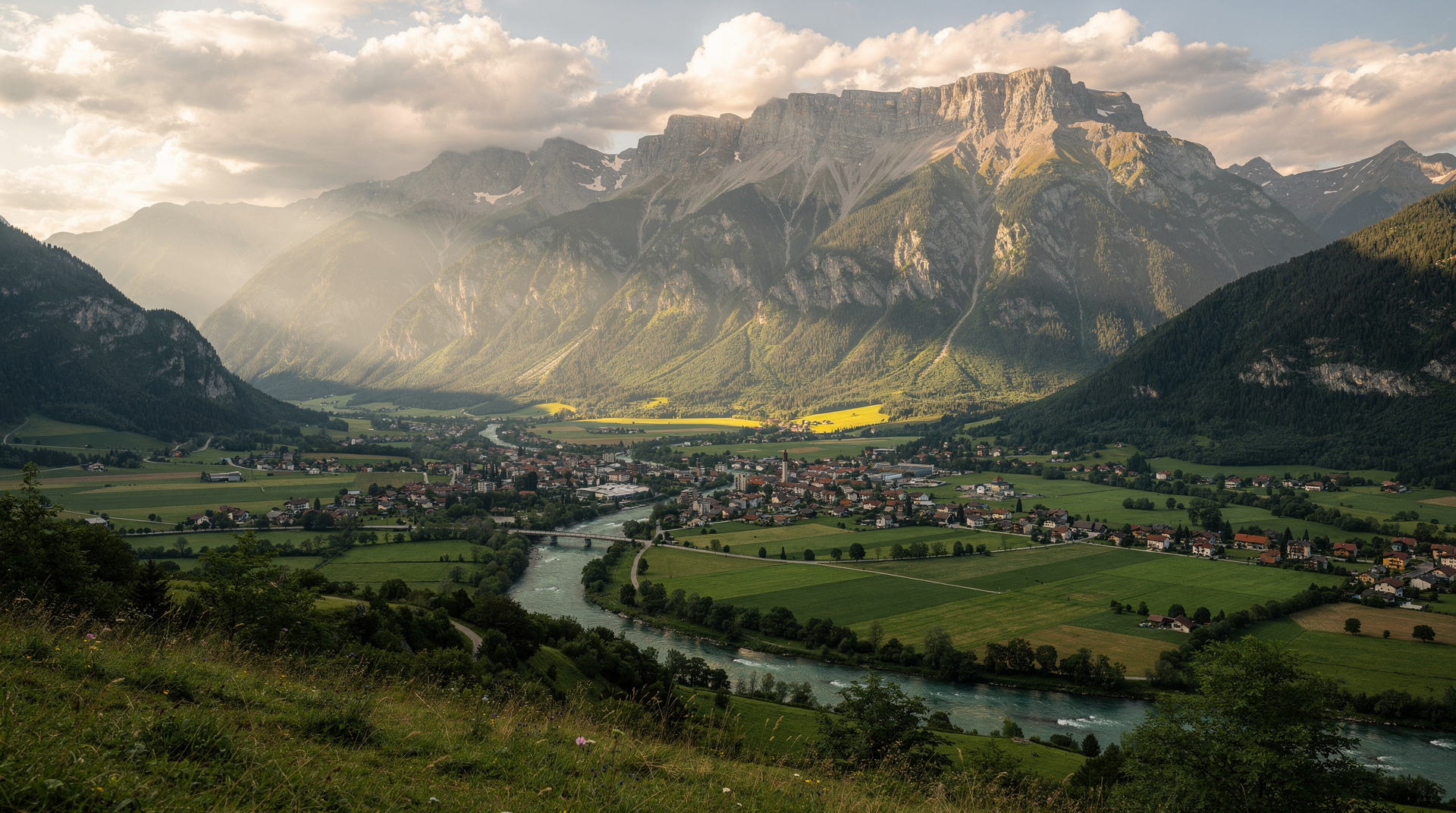
Kanin is the massif that rises directly above Bovec to 2,587m. The cable car ascends from Bovec to the plateau at around 2,200m, and tandem flights launch from here. The flight path typically follows the thermal structure over the Soča Valley below, circling as the pilot finds lift, before a gentle descent to the landing zone in the valley near Bovec.
Flight duration: 20–45 minutes, depending on thermal conditions. In good morning thermal weather, pilots can extend flights significantly; in weaker conditions, a 20-minute flight covers the essentials.
Views during flight: The Soča Valley floor is directly below — the river’s turquoise colour is visible from altitude. Triglav and the Julian Alps ridge to the east, the Italian Dolomites to the west. On clear days, the Adriatic is visible to the southwest. The altitude and the wing-silhouetted shadows moving across the valley floor are consistently mentioned by passengers as the high points.
Best conditions: Mornings in stable high-pressure weather. Afternoon convective storms develop in July–August and can ground flights from midday onward. Early morning bookings (8–10am slots) have the most reliable flying window in peak season.
Book tandem paragliding over the Soča Valley from KaninPractical details
Price: EUR 70–100 per person including cable car and equipment. Solo harnesses and integrated tandem harnesses are used — you wear the harness from the cable car station.
Weight limits: Most operators accept passengers 40–100kg. Outside this range, consult the operator directly — some have extended capacity wings. Height is not a limiting factor.
Age: Typically 5 years minimum, no upper age limit for healthy adults. Children require parental consent.
Book ahead: In July–August, book 2–3 days ahead. Cancellations due to wind or weather are refunded or rescheduled. Morning slots go first.
Physical requirements: None. Running ability on launch is helpful but not essential — pilots can launch in still conditions with a standing start if needed.
Acrobatic paragliding from Vogel above Bohinj
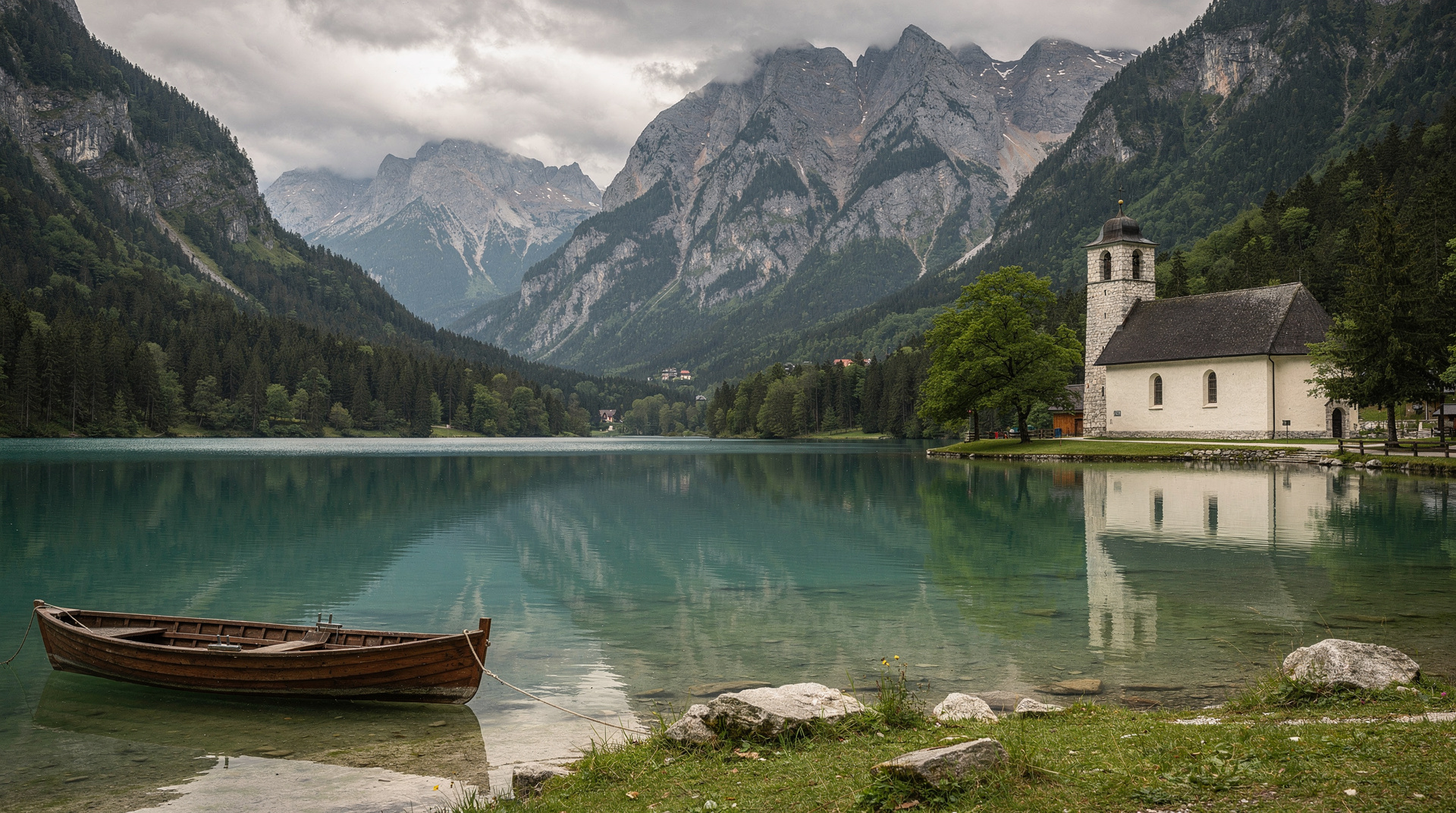
The Vogel ski centre cable car rises from Lake Bohinj to 1,540m, and the flight zone above gives access to the lake and mountain panorama. The acrobatic tandem flights offered here differ from the Bovec/Kanin style in one significant way: the pilot performs paragliding aerobatics — wingovers, spiral dives, and related manoeuvres — with the passenger.
This is a fundamentally different experience from a standard scenic tandem flight. The acrobatic version involves deliberate G-forces, inverted moments, and the kind of physical sensation that some people find exhilarating and others find uncomfortable. The views are also excellent, but the point of the Vogel acrobatic flight is the flying rather than the sightseeing.
If you want acrobatics: the Vogel flight is one of the more accessible places to experience certified paragliding aerobatics with a professional pilot in a genuinely scenic environment.
If you want scenic soaring: a standard tandem flight from either site will serve you better.
Acrobatic tandem paragliding from Vogel above Lake BohinjKanin vs Vogel: which to choose
| Kanin (Bovec) | Vogel (Bohinj) | |
|---|---|---|
| Launch altitude | ~2,200m | ~1,540m |
| Flight duration | 20–45 min | 15–30 min |
| Style | Scenic soaring | Acrobatic option |
| Views | Soča Valley, Triglav, Italian Alps | Lake Bohinj, Triglav, Julian Alps |
| Best for | Valley + alpine panorama | Aerobatic experience, lake backdrop |
| Access | Cable car from Bovec | Cable car from Bohinj village |
Both are excellent. The choice is primarily about style (scenic vs acrobatic) and which base you are travelling from. If you are staying in Bovec, Kanin is the obvious choice. If you are at Lake Bohinj or Lake Bled, Vogel is 30–45 minutes away by car.
What to wear and bring
Paragliding companies provide the harness, flight suit, and helmet. What to bring:
- Comfortable clothing with no loose elements (scarves, untied hoods — these become a problem at altitude)
- Closed-toe shoes with ankle support for the run-in on launch
- Sunglasses and sun protection — UV intensity above 2,000m is significant
- A camera or phone in a secure pocket (many pilots accept GoPro mounts on helmets)
The cable car ascent requires a light layer — temperatures at 2,200m are typically 8–12°C cooler than in the valley, even in August.
Safety
Slovenian tandem paragliding is regulated by the Paragliding Association of Slovenia, which certifies pilots and maintains equipment inspection standards. Commercial tandem pilots are required to hold a BHPA (or equivalent) advanced instructor rating.
The main practical safety concern is weather. Paragliding in thunderstorm conditions is not done by professional pilots — flights are grounded well before weather deteriorates to dangerous levels. This means cancellations, which the operators manage with rescheduling or refunds. If you are visiting for 2+ days, weather cancellations rarely mean you miss the activity entirely.
Wind limits: flights operate in winds up to approximately 15–20 knots. Above this, conditions are unsuitable for safe launching. The Kanin plateau and Vogel face are monitored by the operators’ weather stations; pilots decide on the morning of the flight.
Air-sickness: uncommon on standard scenic flights with good thermal conditions. More common on acrobatic flights (Vogel style). If you are prone to motion sickness, tell the pilot — they can adjust the flight profile. Taking standard anti-nausea medication 1 hour before the flight is a reasonable precaution for sensitive passengers.
Combining paragliding with other Bovec activities
Paragliding uses the morning most effectively (thermal conditions). This makes it naturally paired with afternoon activities:
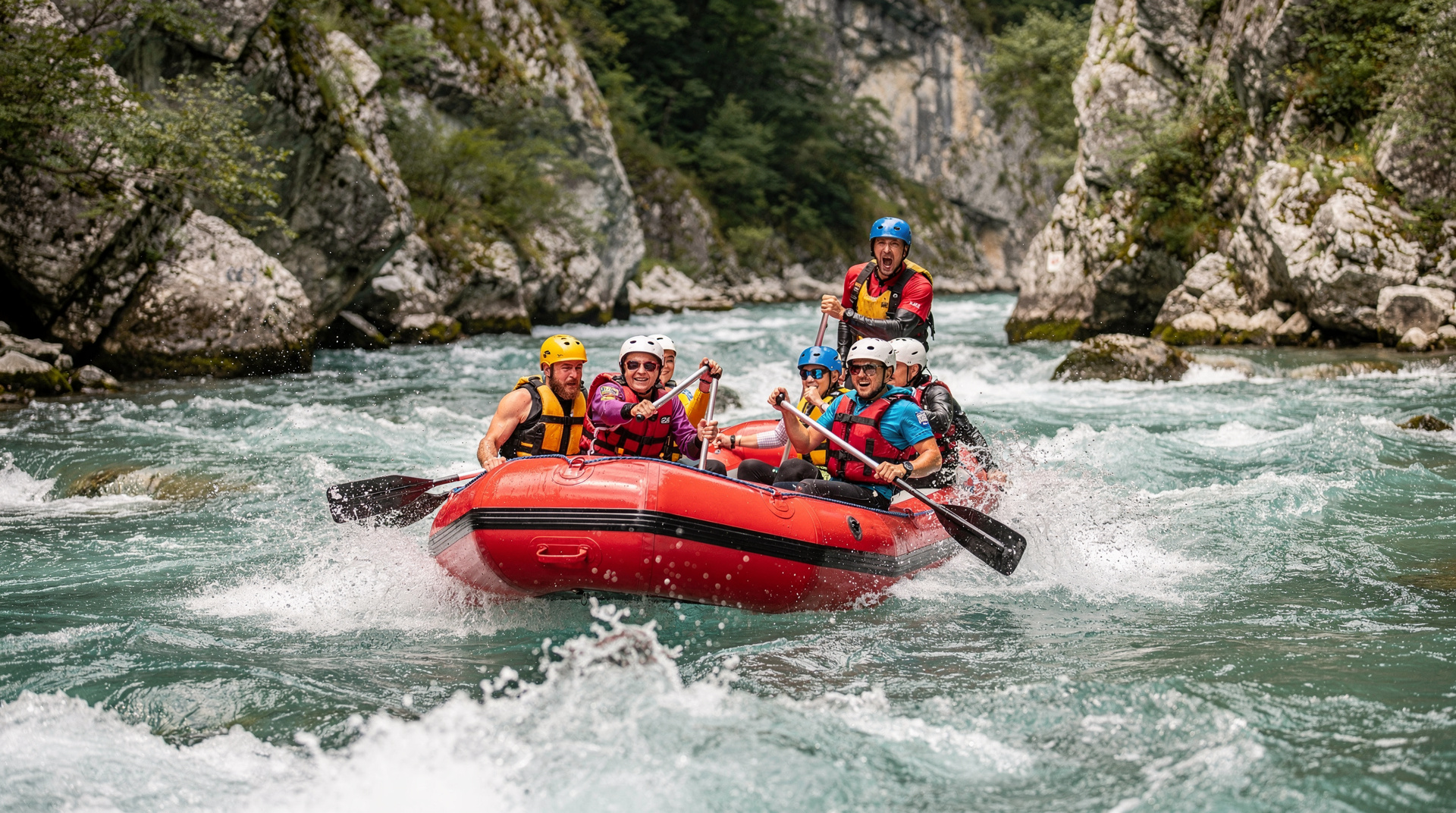
Paragliding morning + rafting afternoon: The cable car ride and flight take 2–3 hours total; afternoon rafting slots start at 1–2pm. A full adrenaline day with completely different physical experiences.
Paragliding + zipline on consecutive days: Both use the Kanin cable car. You could theoretically do both on the same day (cable car up, fly down, cable car up again for zipline), though most visitors prefer to give each its own half-day.
Paragliding + hiking: A Kanin plateau walk (the Kanin-Prestreljenik trail is accessible from the cable car top station) after the flight gives a ground-level perspective on the terrain you just flew over. Allow 2–3 hours for the plateau walk.
For the full Bovec multi-activity picture, see the adventure base guide and the adventure sports overview.
Getting to the launch sites
Kanin from Bovec: The cable car base station is in Bovec town, a 5-minute walk from the main square. The cable car runs 8am–6pm in summer. Operators typically handle bookings, cable car, and equipment at the base station.
Vogel from Bohinj: The Vogel cable car base is at the western end of Lake Bohinj, 5km from Ribčev Laz village. Car park at the base station. The cable car is closed for maintenance until 1 December 2026 (check the Vogel website for the reopening date).
Bovec is 2h 15min from Ljubljana by car. Bohinj is 30min from Lake Bled and 1h 15min from Ljubljana. Both are best accessed by car if you are planning activity-focused visits.
The flight experience in detail
First-time tandem passengers tend to describe the same sequence of stages. Knowing what to expect reduces the anxiety element that can otherwise dominate the early part of the experience.
The cable car ascent: The cable car to Kanin takes approximately 20–25 minutes and covers a 1,700m vertical gain. The view from the cabin changes from valley-floor forest to alpine rock and, by the top station, snow fields in early season. Temperature drops 10–12°C from Bovec valley to the Kanin plateau. The visual orientation this provides is useful — you understand the scale of the landscape before you leave the ground under wing.
Equipment fitting: Harness fitting takes 15–20 minutes. You are essentially sitting in a bucket seat suspended from the harness attachment points. Modern tandem harnesses are very comfortable for flight; they are less comfortable standing still (the weight distribution is designed for the air position). Guides check fit carefully.
The launch run: The standard tandem launch requires you to run 3–5 steps down a slope while the wing inflates above you. The ground angle and the pilot’s timing mean that you are off the ground within those steps — you do not need to run fast or jump. “Run and don’t stop” is the instruction. Most people’s runs last approximately 2 seconds before lift.
The first minute: The transition from running on the ground to floating is immediate and disorienting in the positive sense. The valley floor drops away below, and the visual processing takes 30–60 seconds to calibrate. This is the most intense part of the experience for most people.
The flight: After the first minute, the sensation stabilizes into a persistent gentle movement and the continuous change of perspective as the pilot circles for lift. The sounds are wind and the occasional adjustment of lines. Conversation with the pilot is straightforward — they are directly behind you, and most pilots actively point out landmarks during the flight.
Landing: A gentle slope landing, usually a run-in or sit-down depending on approach speed. Guides manage the final approach; your instruction is “feet up and forward” as the ground approaches.
Thermal flying: what it means for your experience
Thermals are rising columns of warm air that allow paragliders to gain altitude rather than simply gliding down. The Kanin launch site has reliable morning thermals that develop as the alpine rock surface warms after sunrise. This is why morning slots are preferred: stronger thermals allow the pilot to extend flight duration significantly — a 20-minute glide becomes a 40-minute soaring flight.
Thermal conditions are not the same as turbulence. A well-managed thermal is a smooth upward movement. What can be uncomfortable is the edge of a thermal — the boundary between rising and descending air — which can produce a brief pitching sensation. Experienced pilots actively avoid the roughest edge conditions; what you experience in a commercial tandem flight is the managed version.
In stable high-pressure weather with strong morning thermals, pilots can take passengers to altitudes significantly above the launch point before beginning the descent. In these conditions, the Triglav ridge and the Italian mountains beyond are visible at a scale that ground-level photographs cannot capture.
Paragliding and photography
The Soča Valley from 2,200m provides a specific photographic opportunity: the river’s turquoise colour is visible from altitude on clear days, snaking through the canyon below. The castle at Kobarid is visible to the south, the Lake Bled area occasionally to the east in perfect visibility.
For photographs of yourself during the flight, a chest-mounted camera is the most practical setup — hands-free, stable, and covering the most interesting angle (your perspective toward the valley). Selfie-stick style shooting works but produces shakier results. The pilot can sometimes take photos on your phone if you hand it forward during the flight. Many operators also offer a paid photo/video package where a second pilot or a helmet-mounted camera on the tandem pilot captures the flight professionally — worth considering if you’d rather stay fully present in the moment than manage a camera yourself.
Slovenia’s paragliding schools
If your interest extends beyond a single tandem flight to learning to paraglide, Slovenia has several BHPA-affiliated paragliding schools that offer beginner courses (typically 5–7 days for an EP/Club Pilot licence). The most established are based in the Bovec and Bohinj areas, using the same launch sites as the tandem operations.
A beginner paragliding course in Slovenia costs approximately EUR 800–1,200 for the full programme including equipment hire, instruction, and the required training flights. The Julian Alps provide excellent instruction conditions with a range of sites from student-appropriate gentle slopes to more advanced cross-country terrain.
For visitors with an existing paragliding licence from another country, most Slovenian sites operate on a visiting pilot basis — check with local clubs for current site protocols and permission requirements.
Many first-time tandem passengers ask whether a single flight gives any real sense of whether a full course would suit them. It’s a reasonable proxy but not a complete one: a tandem flight tells you how you react to altitude, the launch run and sustained time in the air, all useful data points. What it doesn’t test is the ground-handling skills, the weather judgment and the solo decision-making that a course actually teaches — those only develop through the training itself. Passengers who love the tandem experience and are seriously considering a course are usually better served contacting a school directly for a taster ground-handling session before committing to the full 5–7 day programme.
The altitude difference: what it changes
Most tandem paragliding tourism in Central Europe uses launch altitudes of 800–1,200m above the landing zone. The Kanin launch is at 2,200m, landing in the Bovec valley at approximately 475m — a vertical of around 1,700m. This difference is not just a number.
At 2,200m, the air is 20% thinner than at sea level. The wing requires a slightly longer run-in on launch, the thermal activity extends to greater altitude, and the visual scale of the mountain environment is qualitatively different from a sub-1,000m site. You are genuinely in the alpine zone — snow patches on the Kanin plateau are visible from the launch site in May and June, and the rock is exposed limestone rather than forested ridge.
The practical consequence for passengers: the flight covers more altitude, takes longer to complete even at the same horizontal distance, and offers the specific views of a 2,000m+ alpine environment that lower sites cannot access. The Italian mountains visible from 2,200m are at eye level rather than in the distance below.
Wind conditions and why morning matters
The Bovec valley has a distinctive daily wind pattern driven by thermal differential between the valley floor and the Kanin plateau. The mechanics:
As the valley floor heats through the morning, air rises and is replaced by cooler air drawn down from the plateau. By mid-afternoon, this circulation has established a sustained valley breeze that can exceed safe launching limits for paragliding.
Morning flights (8–11am) happen before this circulation fully develops. The air is calmer, thermals are just beginning to form, and the launch window is reliable.
By 1–2pm in stable summer weather, the valley wind makes launching on Kanin increasingly difficult. By 3pm in many conditions, the day’s flying is done.
This is why operators push morning bookings and why afternoon “we can probably go” availability in July–August is unreliable. The earlier the slot, the higher the probability of the flight going ahead and reaching full duration.
What tandem paragliding does to your sense of scale
This sounds philosophical, but visitors consistently report a specific perceptual shift during extended paragliding that is worth naming: the landscape below begins to look like a map.
At normal ground level, the Soča Valley is a series of local viewpoints — the river here, the mountain there. From 2,200m circling on a thermal, the valley floor, the canyon trace of the river, the road system, the village clusters, and the forest edge are all simultaneously visible as a coherent spatial system. The brain, which processes altitude differently from horizontal distance, registers this as a map rather than a landscape.
Most passengers who return from longer flights (30+ minutes) describe being able to see the spatial relationships of the valley in a way that affected their subsequent experience of driving through it. The mental model of the geography is permanently updated.
This is not a selling point that operators typically lead with. It is an honest description of a secondary effect that paragliding commonly produces.
Insurance and medical
Commercial tandem paragliding in Slovenia includes operator liability insurance as part of the booking. Personal travel insurance with adventure sports cover is advisable as supplementary cover.
Medical contraindications that operators screen for: recent surgery (within 3 months), severe heart conditions, epilepsy, and significant mobility impairments that prevent the running launch. If you have questions about a specific condition, contact the operator before booking — they will provide honest guidance rather than simply disqualifying you.
Combining paragliding with a wider Julian Alps trip
Paragliding rarely stands alone in a Slovenia itinerary — it’s usually one element of a broader adventure-focused stay in Bovec or Bohinj. A sensible sequencing for a 3–4 day trip built around the Julian Alps: use the first day for arrival and orientation, the second morning for the Kanin or Vogel flight while conditions are calmest, and the afternoons and remaining days for water sports on the Soča, a zipline session, or lake time at Bohinj.
Because paragliding depends heavily on morning weather, booking it earlier in a multi-day stay leaves room to reschedule to a second morning if the first is cancelled, rather than gambling on a single slot on your last available day.
Choosing between Kanin and Vogel by base location
If you haven’t yet decided where to stay, the paragliding site can reasonably tip the decision. Visitors basing themselves in Bovec for the Soča Valley’s water sports get Kanin paragliding as a natural addition with no extra driving. Visitors centred on Lake Bled or planning a Bohinj day already have Vogel within easy reach and can add the acrobatic option as a change of pace from the lake’s more sedate activities. Trying to do both sites on the same trip is realistic only if you have 4+ days and don’t mind roughly 1.5 hours of driving between the two bases.
Frequently asked questions about Paragliding in Slovenia
Is tandem paragliding in Slovenia safe for beginners with no experience?
Yes — tandem flights require no prior experience or training. You are harnessed to a certified pilot who handles the wing, the thermals and the landing; your role is limited to a short run on launch and following simple instructions like lifting your legs. Commercial operators are regulated by the Paragliding Association of Slovenia and pilots hold advanced instructor ratings. The main variable is weather, which operators manage conservatively by grounding flights before conditions become risky.Which is better for a nervous first-timer: Kanin or Vogel?
Kanin above Bovec is the better choice for a first-timer who wants scenic soaring without deliberate aerobatics — the standard flight profile is smooth and the emphasis is on the views. Vogel above Bohinj also offers standard scenic flights, but it's specifically known for its acrobatic tandem option, which involves wingovers and spiral dives that some passengers find thrilling and others find uncomfortable. If in doubt, book a standard scenic flight and specify no acrobatics when booking, regardless of which site you choose.
Top experiences
Bookable activities with verified prices and instant confirmation on GetYourGuide.