Pokljuka Plateau: Bohinj's quiet highland above the tree line
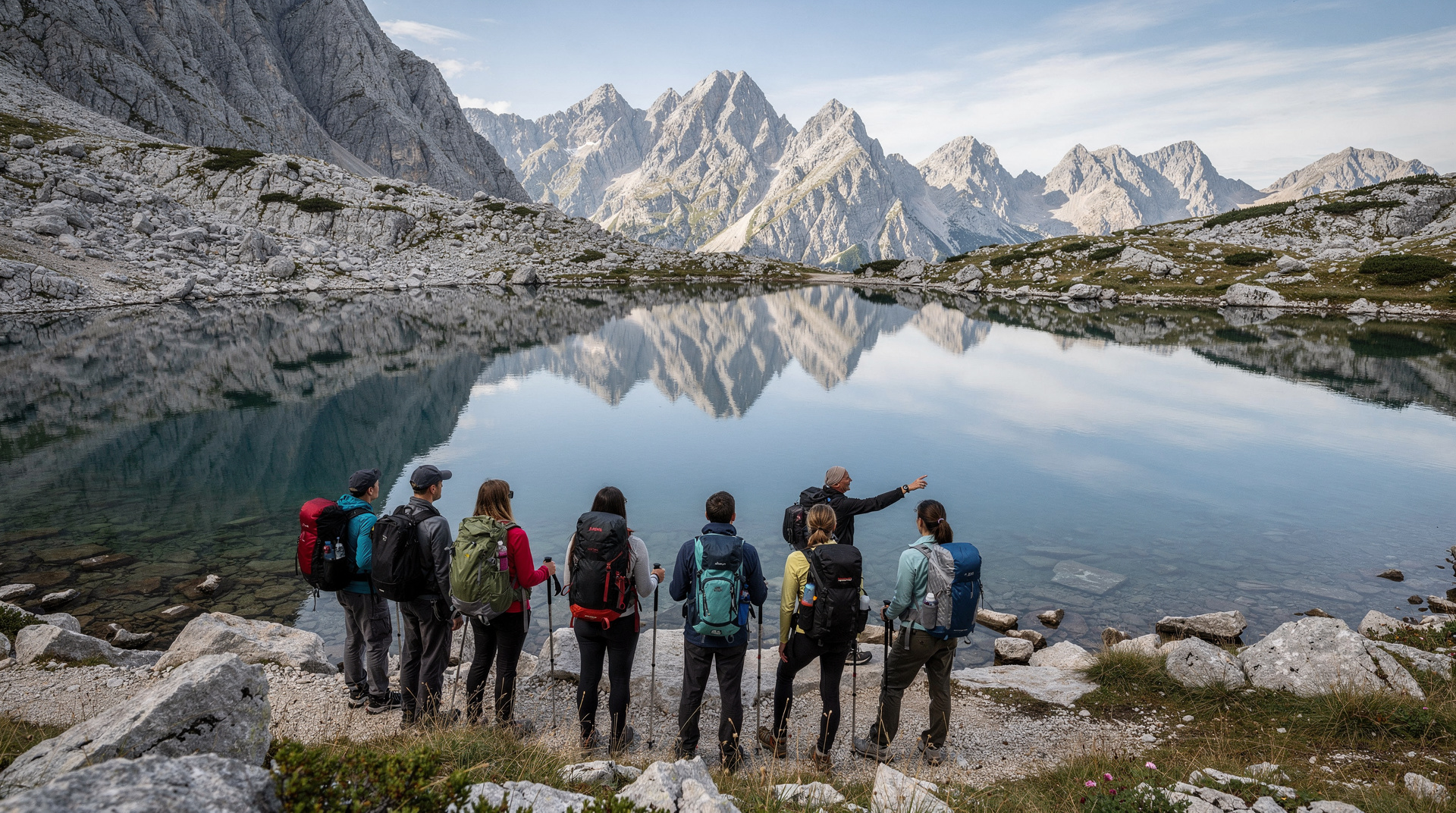
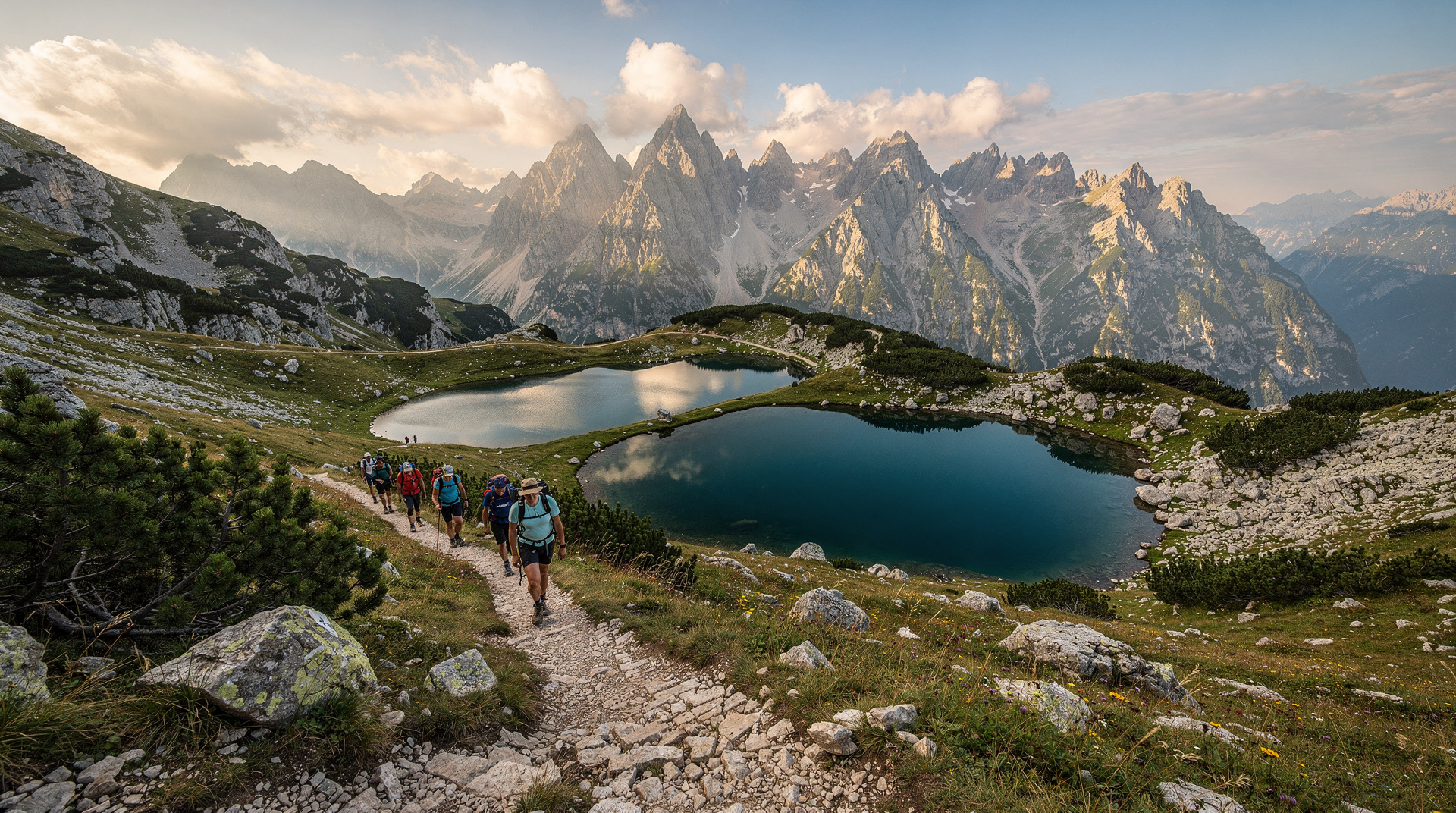
Triglav National Park: 7 Lakes Valley hiking tour
What is the Pokljuka Plateau and how do you get there?
Pokljuka is a high limestone plateau at 1,300 m above Lake Bohinj in Triglav National Park. It's reached by road from Bled (30 min) or Bohinj (20 min). The plateau has marked hiking trails, a biathlon centre, and a working forest environment — flat enough for families, remote enough to feel genuinely wild.
Pokljuka: the plateau that most Bled visitors never find
The case for going to Pokljuka when you’re already at Bled
Most visitors to Bled spend their time at the lake, perhaps take the cable car to Bled Castle, and leave. A significant number make it to Bohinj and possibly to Vintgar Gorge. Almost none make it to Pokljuka — despite the fact that it is 8 km from Bled and 30 minutes by car.
The reason to go: Pokljuka is what the lower Julian Alps look like when you strip away the tourist infrastructure. The spruce forest at 1,300 m is primary — unlogged, dense, with a floor of moss and low bilberry. The meadow clearings have a quality of silence that the lake shores don’t — above the birds and the distant sound of a stream, there is almost nothing. For visitors spending several days in a region where every viewpoint has a car park and every waterfall has a boardwalk, the quietness of Pokljuka is a genuine contrast.
The practical case is simply the access: no gondola, no queue, no admission fee. Drive up the mountain road, park, walk into the forest.
| Where | Rudno Polje, Pokljuka Plateau, Triglav National Park |
| Cost | Free — no admission, just parking and fuel |
| Time needed | 2–3 hours for the main circuit; half a day with Uskovnica |
| Getting there | 8 km mountain road from Bled or Bohinj (30/20 min by car) |
| Best time | Early morning in June, or midday in August for bilberries |
The Pokljuka Plateau (Pokljuška planota) sits at 1,300 metres above sea level in a corner of Triglav National Park that most foreign visitors overlook completely. It is neither particularly dramatic nor particularly famous — but it offers something neither Bled nor Bohinj can: a high alpine environment that is genuinely quiet, accessible by car in 30 minutes from Bled, and suitable for people who are not serious mountain hikers.
The plateau is a flat-to-gently-rolling limestone karst surface covered by spruce and fir forest, with clearings of alpine meadow and peat bog. It sits above the tree line in the strict sense — the upper edge of the plateau at around 1,400 m opens to limestone grassland with views toward Triglav and the higher Julian Alps peaks. The Biathlon World Cup is held here in the winter (Pokljuka is one of the sport’s main venues), which means the plateau has excellent groomed trails in winter and well-maintained paths in summer.
Why visit Pokljuka
The primary reasons to go to Pokljuka are:
- It is quiet — you are unlikely to encounter more than a handful of other people on the forest circuits
- It is accessible without significant effort — the road goes straight to 1,300 m
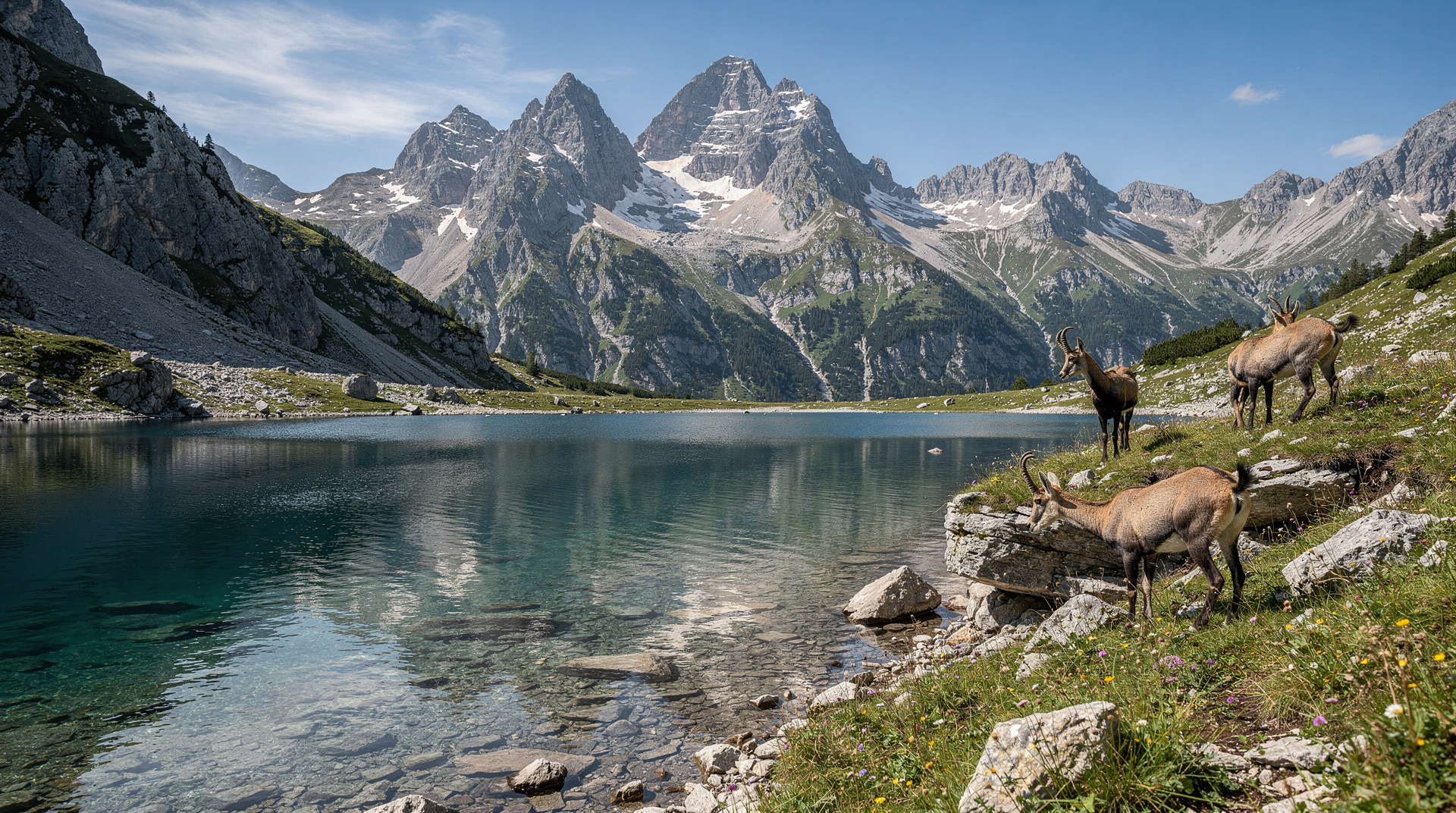
- It is genuinely within the national park — the forest is primary, the air is clean, and in early morning the chance of seeing deer or chamois is real
- It is an alternative to the main Bohinj attractions for those who have already done the cable car and the lake
The Pokljuka Plateau as a forest ecology
The plateau is covered primarily by Norway spruce (Picea abies) — the classic Central European mountain forest species. At Pokljuka’s elevation (1,200–1,350 m), the spruce forms dense stands with limited understorey (the canopy blocks most light). The forest floor is a carpet of mosses, bilberry (Vaccinium myrtillus), and wood sorrel. The smell — of damp spruce needles, lichen, and cold air — is the smell of high Central European forest and is the sensory signature of the plateau.
In the meadow clearings and around the biathlon centre, the vegetation shifts to mountain grassland with gentians, clovers, and, in August, abundant bilberry fruit. The bilberries are free to pick and eat — a tradition on Pokljuka and a legitimate reason to visit in late August.
The plateau supports a population of roe deer and, with patience and early starts, chamois on the upper ridges above the tree line. The black woodpecker (Dryocopus martius) is heard throughout the forest — a loud, echoing call that is one of the defining sounds of primary mountain spruce. The Ural owl, a large forest owl of primary spruce woodlands, also nests here.
The biathlon centre and starting point
The main starting point for Pokljuka walks is the Rudno Polje biathlon centre (1,346 m), accessible by road from Bled (turn off at Bohinjska Bela, 8 km, 15 min) or from Bohinj (turn off near Bohinjska Bistrica). The centre has a car park, a small café open in summer and winter, and toilet facilities. In summer, the biathlon range is quiet and you can walk around the shooting range to understand the scale of the venue.
From Rudno Polje, the main hiking circuits fan out into the forest. The trails are marked with the standard red-and-white Slovenian system and are clear on the 1:25,000 Triglav National Park map.
Best walking circuits
Rudno Polje circuit (2h, easy): a flat 6 km loop through mixed forest and meadow clearings, with views to Triglav opening up at the higher meadows. Suitable for families with young children and people who want a gentle walk in a national park setting. The forest floor in summer is covered with bilberries (borovnice) in August — a free snack on the trail.
To the Uskovnica Plateau (3h, moderate): from Rudno Polje, a trail climbs moderately to the Uskovnica shepherd plateau (1,480 m) — a high meadow with a small mountain hut. Views from Uskovnica across the whole Bohinj Valley to Vogel and the southern Triglav massif. The hut (Planinska koča na Uskovnici) serves traditional food in summer. Return the same way or via a longer forest loop.
Lipanca and the high ridgeline (4–5h, strenuous): from Rudno Polje, a more demanding trail climbs to the Lipanca meadows (1,630 m) at the edge of the plateau. From here, the view opens directly to the Triglav north face. The trail continues (with significant further elevation gain) toward the high summits — but Lipanca itself, with a small hut, is a rewarding destination without going further.
To Triglav from Pokljuka (multi-day): for those who want a less-used approach to Triglav, the plateau is the start of the Pokljuka route — a longer, less crowded path to the Vodnikov dom hut (1,817 m) and then the summit. This is a 2–3 day undertaking and requires the same via-ferrata preparation as any Triglav ascent.
Wildlife on the plateau
The Pokljuka Plateau has one of the most significant populations of European brown bears in Slovenia. Sightings on marked trails are rare, but the evidence — tracks, scat, scratch marks on trees — is present if you know what to look for. The plateau is also home to chamois on the upper ridges, roe deer in the forest, and an exceptional variety of forest birds including the black woodpecker and Ural owl.
In autumn (October), deer rut in the forest clearings near the plateau edges — early morning visits in October have a realistic chance of hearing the stag calls.
Getting there
By car: the easiest option. From Bled, take the road toward Bohinjska Bela, then turn south at the sign for Pokljuka/Rudno Polje. The road climbs through forest for 8 km to the plateau. From Bohinj (Bohinjska Bistrica), a similar road climbs 10 km to Rudno Polje. No e-vignette required on this road (it’s not a motorway).
By bus: there is no regular public bus to Pokljuka. From Bled or Bohinj, a taxi to Rudno Polje costs approximately EUR 20–25 each way. Some hiking tours from Bled include the plateau in their routing — worth checking current tour programmes.
For those combining Pokljuka with Bohinj, the guided Bohinj and Seven Lakes hike sometimes incorporates Pokljuka as an alternative routing. Julian Alps hiking tours from Bled can also include the plateau on quieter-trail days.
What the plateau looks like in different lights and seasons
Pokljuka is a plateau that changes character more than most alpine environments. A few specific scenarios:
Early morning in June: the low sun cuts horizontally through the spruce forest, lighting up columns of mist rising from the damp forest floor. The clearings are briefly gold before the sun climbs above the treeline. The deer are most visible in this window. This is the best photography opportunity on the plateau.
Midday in August: the forest is dark and cool (a contrast from the heat in Bled or Bohinj). The meadow clearings are bright; the bilberry fruit is ripe and purple on the low bushes; there are almost no other visitors. The biathlon range is empty and quiet. This is Pokljuka at its most practically accessible.
A rainy day in September: the spruce forest smells intensely of resin and earth. The moss on the forest floor turns vivid. The clearings are soft underfoot. This is not unpleasant — it is the forest at its most forest-like, and the rain tends to be light rather than heavy above 1,300 m on autumn afternoons.
A clear winter day: the plateau carries 50–100 cm of snow, the groomed biathlon tracks are visible as white corridors through the forest, and the surrounding peaks catch the orange light of a winter sunset. Cross-country skiers appear and disappear between the trees. The stillness is profound.
When to visit
Summer (June–September): the main hiking season. The forest is at its greenest in June and July; bilberries are ripe in August; the autumn colours begin in October. The biathlon centre café is open in summer for drinks and light meals.
Winter (December–March): Pokljuka becomes a cross-country skiing and snowshoeing destination. The biathlon groomed tracks are excellent for classic-style cross-country skiers; snowshoe circuits are marked through the forest. The World Cup biathlon events (January–February) draw crowds, but outside event weeks the plateau is peaceful.
Spring (April–May): the forest is beautiful in late spring, but the roads may have some sections of residual ice or mud in early April. The huts on the upper plateau may not yet be open.
Combining with Bohinj
Pokljuka and Lake Bohinj are the natural combination for a day based in the Bohinj area. Spend the morning on the plateau (2–3 hour walk), return to the valley for lunch, then take the Vogel cable car in the afternoon or walk the lakeside. A full but relaxed day without the intensity of the Seven Lakes Valley.
Pokljuka in the context of Triglav National Park
The Pokljuka Plateau was incorporated into Triglav National Park in 1981. It represents the park’s eastern limb — geographically distinct from the high Julian Alps peaks to the west, but part of the same protected ecosystem. The plateau is classified as a Special Protection Area under the EU Habitats Directive for its bird populations, particularly the capercaillie (the large woodland grouse that requires undisturbed spruce forest for breeding).
The park management has invested in the plateau’s trail infrastructure precisely because the flat terrain and easy access make it a good “pressure valve” — attracting visitors who might otherwise crowd the Seven Lakes Valley or the Bohinj cable car. This is worth understanding as a visitor: the plateau serves a specific ecological function, and the park has been deliberately developed here to absorb visitors without directing them all to the most sensitive high-altitude zones.
The Biathlon World Cup and what it means for infrastructure
Pokljuka hosts the IBU Biathlon World Cup in January, typically drawing 15,000–20,000 spectators and extensive media coverage. The biathlon calendar events at Pokljuka are among the best-attended in the sport globally (Slovenian biathlon culture is deeply embedded). For the summer visitor, the consequence of this winter profile is excellent trail infrastructure: the groomed winter tracks become well-maintained hiking and cycling paths, the car park at Rudno Polje is large and well-serviced, and the area has reliable mobile coverage (necessary for event broadcast logistics).
The biathlon shooting range, visible from the main car park, can be walked around in summer. The scale of the facility — 30 firing lanes, electronic targets, a 12 km race course — is impressive, and seeing it in the context of the surrounding forest gives a sense of how athletic the sport actually is.
Day-trip logistics from Bled and Ljubljana
From Bled (35 min by car): Pokljuka is one of the easiest escapes from the Bled crowds. Drive the 8 km mountain road to Rudno Polje, park, walk for 2–3 hours, return. The round trip from Bled (including driving) takes under 4 hours — easy half-day.
From Ljubljana (1h15 by car): the plateau is an underrated day trip from the capital. Ljubljana’s proximity (70 km via the A2 and Bled exit) makes it accessible for a morning walk in summer. You are in mountain air, above 1,300 m, within 75 minutes of Ljubljana’s city centre.
Without a car: no direct bus to the plateau. From Bled, a taxi to Rudno Polje costs approximately EUR 25–30 each way. The guided hikes that include Pokljuka are limited compared to the Bohinj/Seven Lakes guided options, but some providers offer bespoke routes that include the plateau. The Bohinj and Seven Lakes guided hike sometimes includes Pokljuka as an alternative day when high-altitude conditions are poor.
What to combine Pokljuka with
The plateau pairs naturally with Lake Bohinj — it is only 15 km by road from Rudno Polje to the lake. A full day combining a 3-hour plateau circuit with the afternoon at Bohinj (lake walk, Savica Waterfall, or the Vogel cable car) is a satisfying Bohinj-area day without the intensity of the Seven Lakes Valley.
For a multi-day programme: use Pokljuka as a rest or acclimatisation day before a more demanding hike. A day on the plateau at 1,300 m, with modest exercise, prepares the legs and lungs for the Seven Lakes Valley or the Triglav routes on the following days.
For a broader look at hiking in the national park, see the Triglav National Park guide and the Julian Alps hiking guide. For a ranked overview of all hiking options in the country, see best hikes in Slovenia.
What the plateau is not
Pokljuka is not dramatic in the way that the Julian Alps peaks are dramatic. There is no signature single view, no famous waterfall, no iconic photograph to take away. It is a quiet, forested highland that rewards slow attention — the smell of the spruce forest, the silence above the tree line, the quality of light through the canopy in the early morning. Visitors who arrive expecting the spectacle of Bled or the grandeur of Triglav will be underwhelmed. Visitors who come for a quiet walk in the park will find exactly that.
Pokljuka versus the Seven Lakes Valley: which quiet-hiking day to pick
Visitors deciding between Pokljuka and the Seven Lakes Valley — Triglav National Park’s other major hiking option from the Bohinj area — should know they solve different problems. The Seven Lakes Valley is a serious full-day hike (8–10 hours) to a genuinely spectacular high-alpine lake chain, physically demanding and often busy with other hikers on the main trail. Pokljuka is a half-day, low-effort forest walk that is almost never crowded and asks nothing of your fitness.
If you have one day and want the more memorable single experience, choose the Seven Lakes Valley; if you want a relaxed, uncrowded morning or a rest day between more demanding hikes, choose Pokljuka. Many visitors with three or more days in the Bohinj area do both — Pokljuka as a gentle warm-up, the Seven Lakes Valley as the main event. See the Julian Alps hiking guide for how the two fit into a broader hiking itinerary, and best hikes in Slovenia for the full ranked list.
Frequently asked questions about Pokljuka Plateau
Do you need hiking experience to visit Pokljuka Plateau?
No — the Rudno Polje circuit is a flat, well-marked 6 km loop suitable for families and casual walkers with no hiking experience. Only the longer routes toward Uskovnica, Lipanca or Triglav require fitness and mountain experience. Most visitors can enjoy Pokljuka with nothing more than sturdy shoes and a couple of hours.Is there anywhere to eat on the Pokljuka Plateau?
Yes, in a limited way. The Rudno Polje biathlon centre has a small café open in summer and winter serving drinks and light snacks. The Uskovnica mountain hut (Planinska koča na Uskovnici), about 3 hours' round trip on foot, serves traditional Slovenian mountain food in summer. Beyond these two points, there is no other food service on the plateau, so pack water and snacks for longer circuits.
Top experiences
Bookable activities with verified prices and instant confirmation on GetYourGuide.