Family Slovenia 5-day itinerary
From Ljubljana: Postojna Cave and Predjama half-day tour
Slovenia with children: a genuinely family-friendly destination
Slovenia is an excellent destination for families. The country is compact, roads are good and safe, the lakes and rivers are clean enough for swimming, and the cave systems are the kind of thing children remember for years. The pacing of a Slovenian family holiday is naturally gentle — a lake morning, a castle afternoon, an ice cream at the village café — without the forced marching of a city-heavy European trip.
This five-day itinerary is built around four destinations that work particularly well with children: Lake Bled (boat rides, swimming, cream cakes), Lake Bohinj (swimming, waterfall, cable car), Postojna Cave (underground train, stalactites, the famous olm salamander) and Ljubljana (castle, market, interactive museums). The itinerary starts at Bled rather than Ljubljana so that children arrive at the most immediately exciting destination first.
Honest age guidance: most activities here work from about age 5 upwards. Postojna Cave has a 10°C year-round temperature — bring extra layers for young children even in summer. The pletna boat to Bled Island involves 99 stone steps with no handrail at the top; fine for most children over 6.
| Where | Lake Bled → Lake Bohinj → Postojna Cave → Ljubljana |
| Best age | Roughly 5+ (some activities need 6+, see notes) |
| Total driving | Under 350 km, no single leg over 1.5 hours |
| Best time | June–September for swimming; May and September for fewer crowds |
| Biggest cost | Postojna Cave entry (around €34.90 adult; child prices on postojnska-jama.eu) |
| Car needed | Yes — a rental with a child seat booked in advance |
Day-by-day snapshot
| Day | Base | Focus |
|---|---|---|
| 1 | Bled | Arrival, lake first look, free beach |
| 2 | Bled | Island, pletna boat, Vintgar Gorge |
| 3 | Bohinj | Savica Waterfall, Vogel cable car, swim |
| 4 | Ljubljana | Postojna Cave, Predjama Castle |
| 5 | Ljubljana | Castle, market, departure |
For families who want more lake time and less driving, the Slovenia summer lakes and beaches 9-day itinerary slows this same core down considerably; for a shorter city-only taste with kids, see the Ljubljana with kids guide.
Day 1 — Arrive at Lake Bled
Drive from Ljubljana Airport to Lake Bled (55 km, 50 minutes). Book a hotel with a garden or pool if travelling in summer — children benefit from outdoor space after a long journey. Penzion Mayer (from €100, garden) or the Triglav Hotel (lake access) work well for families.
The late afternoon at the lake is perfect for a first introduction — walk the 6 km circuit (manageable for children aged 6+, though younger ones may need carrying on the final stretch) or just sit at the western beach and let the mountains do their work.
The free public beach near Camping Bled is the best family swimming spot — shallow entry, clean gravel beach, dramatic backdrop. The water reaches 22–24°C by July. The paid lido (€8 entry) has changing rooms and a small slide.
Dinner: the Bled village has several family-friendly restaurants. Pizzeria Rustika does good wood-fired pizza, and any gostilna will accommodate children without fuss — Slovenians are warmly hospitable to families.
Day 2 — Lake Bled: island, castle and gorge
This is the full Bled day and children tend to love it. Start with the pletna boat to Bled Island.
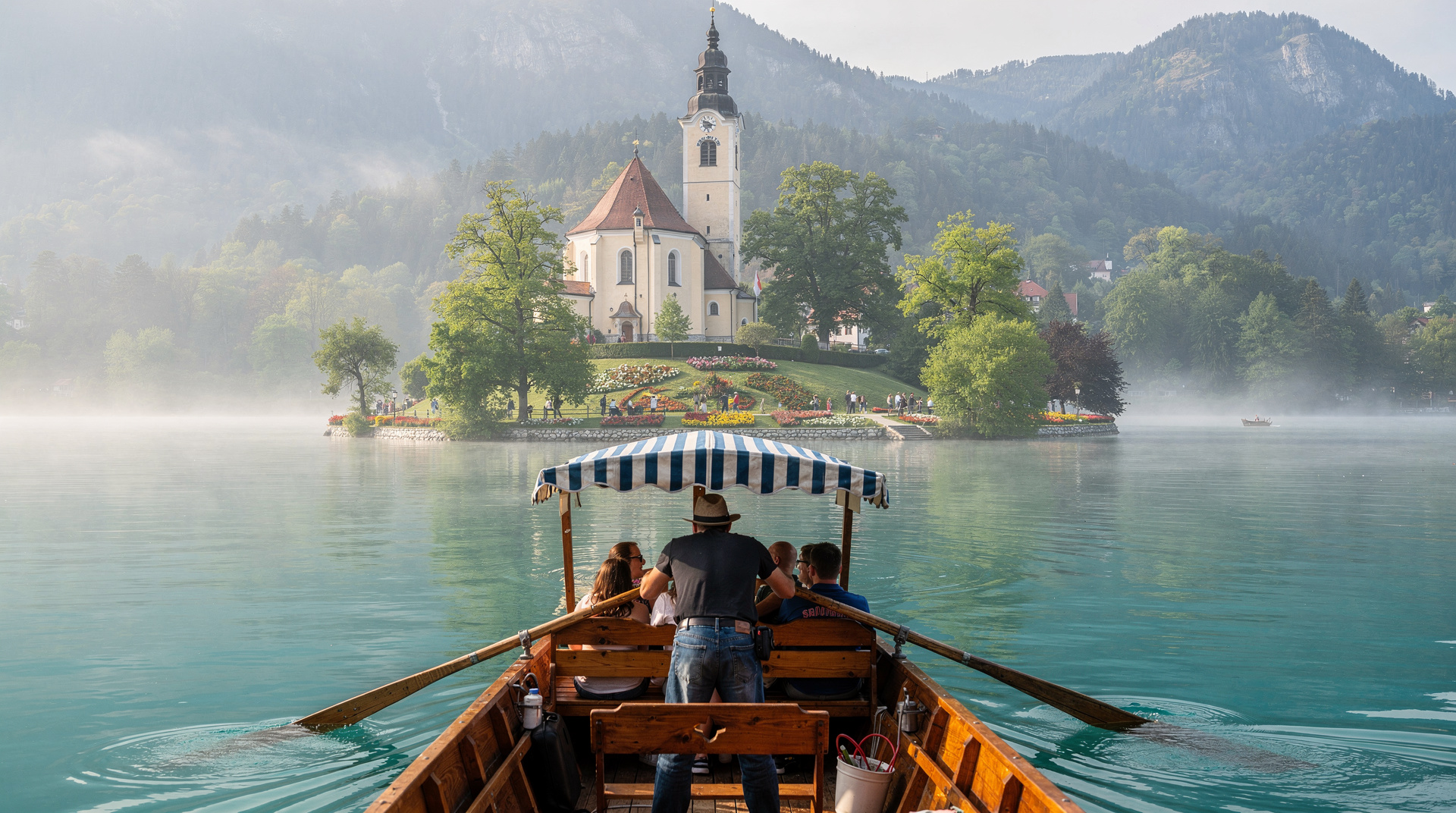
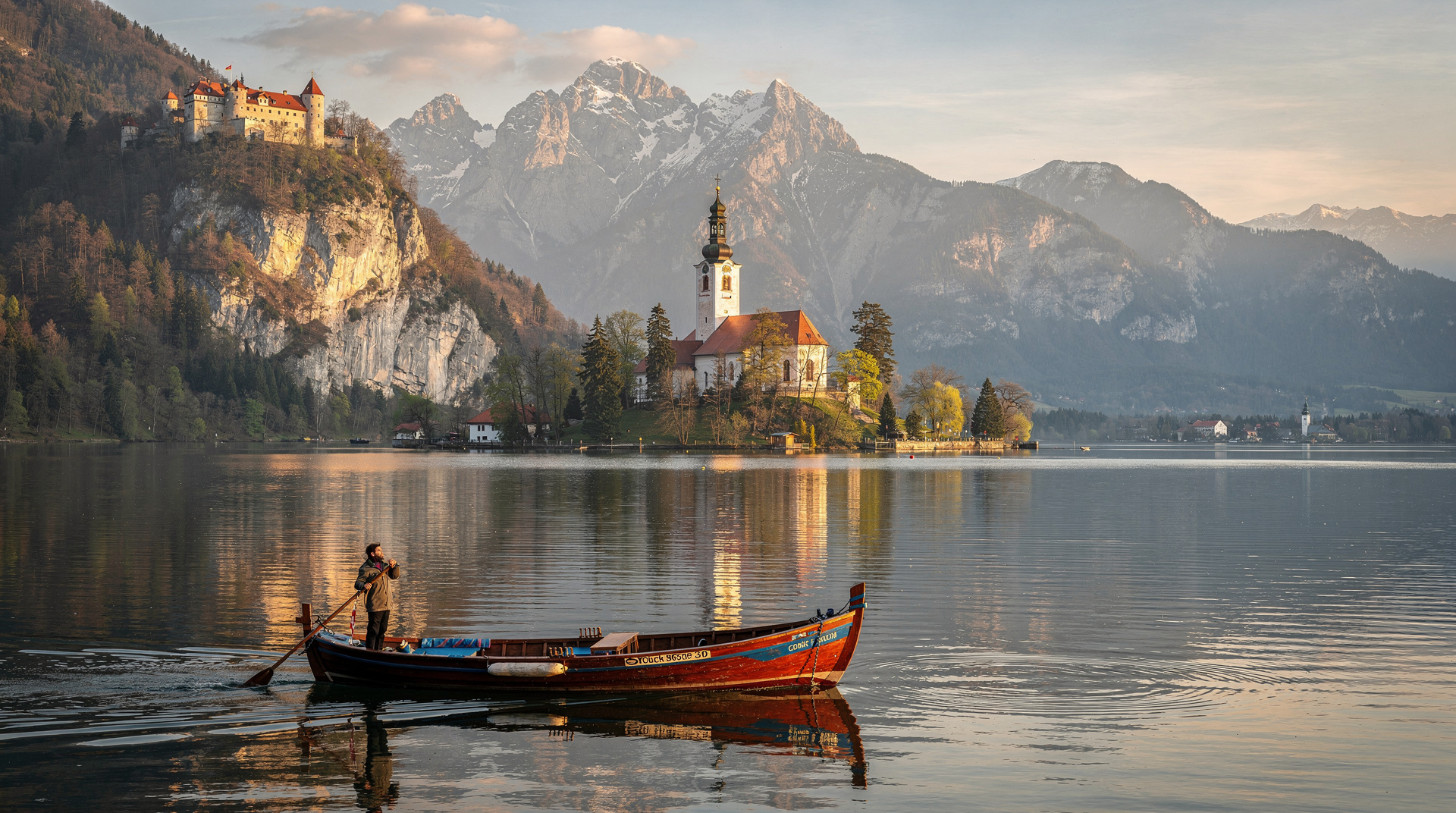
The pletna boat to Bled Island with a guide and cream cake is one of the best family experiences in Slovenia — the wooden boat, the island church, the bell-ringing (children find this excellent), and the cream cake at the landing. Duration around 1.5 hours. Minimum age is usually 3+.
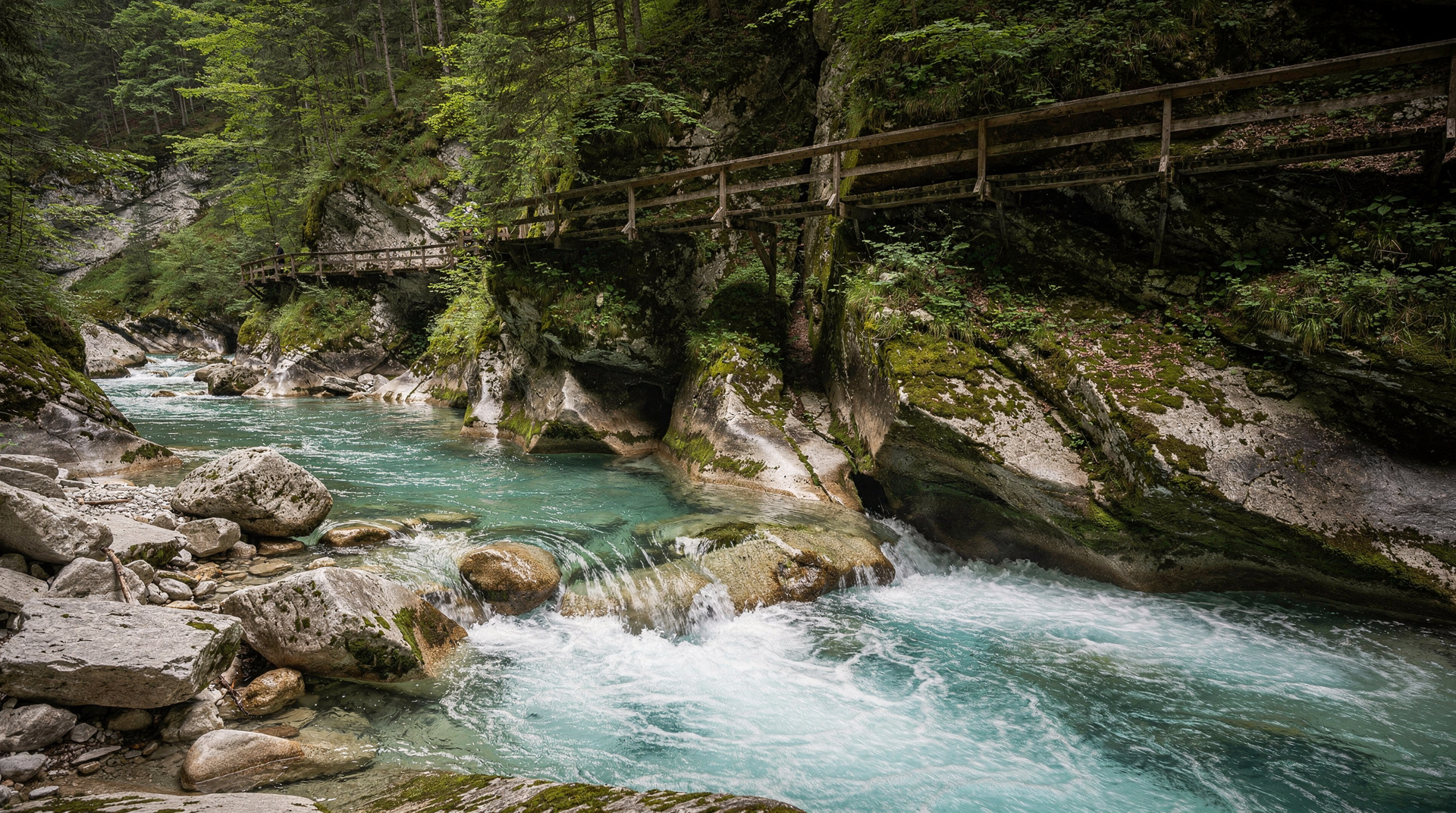
After the island, drive to Vintgar Gorge (4 km from the village). Open April–October. The 1.6 km boardwalk along the gorge is stroller-friendly at its start and pushes close to the rushing turquoise water for an experience children genuinely engage with. Note that the boardwalk does narrow in places and strollers may need to be carried on some sections. Bring waterproofs — the spray from the waterfalls reaches the boards.
The Alpine fairytale tour from Bled covers the gorge and surrounding valley in a guided format — useful if you want the storytelling and local natural history presented to children in an engaging way.
Afternoon: a cremšnita (the Bled cream cake, €3–4) is obligatory. Slaščičarna Šmon is the original bakery. Then the small beach for a swim before dinner.
Day 3 — Lake Bohinj: waterfall and cable car
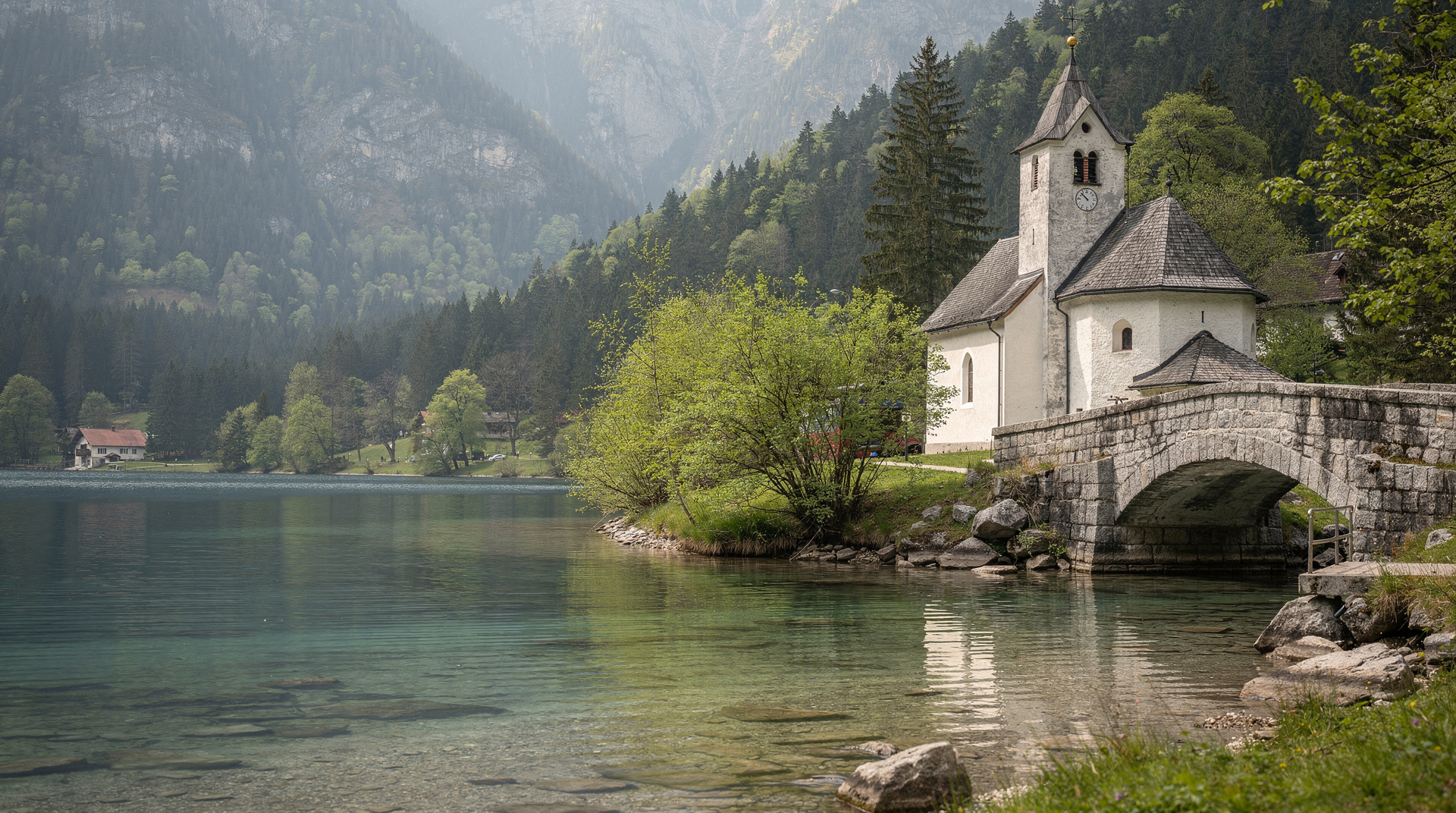
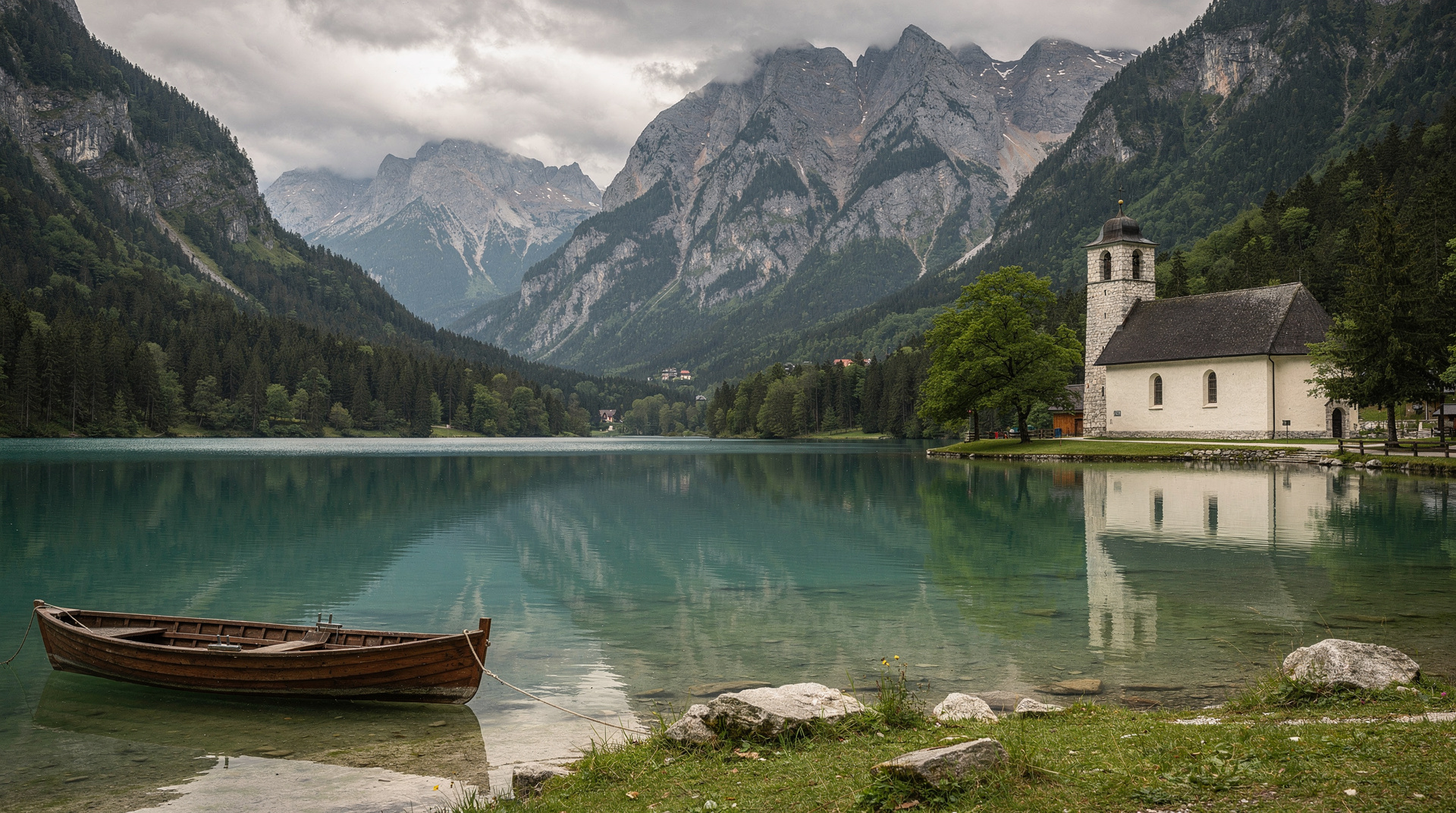
Drive from Bled to Lake Bohinj (30 minutes). Bohinj is immediately different from Bled — larger, quieter, wilder, and with mountains that feel closer and more impressive.
The Savica Waterfall (20-minute walk from the Ukanc car park, €4 entry from age 16, free for under-16s) is a high-impact family experience: a 78-metre cascade visible from well before you reach it, with a pool at the base and a wooden bridge across the outflow. Children aged 5+ manage the path easily; those under 5 may need assistance on the steeper section.
The Lake Bled, Lake Bohinj and Savica Waterfall tour from Bled covers both lakes and the waterfall in one guided day — a useful option if you prefer not to navigate the valley independently.
The Vogel cable car (€32–35 return adult, €15–19 child) from Ukanc lifts the family to 1,540 m in 4 minutes. The view from the top station encompasses the entire Bohinj basin, Triglav, and on clear days the Adriatic. There is a small restaurant at the top. Children generally find cable cars exciting; the enclosed gondola is comfortable.
Swim at the lake before returning to Bled. The small beach at Ribčev Laz (east end) has calm, shallow water ideal for younger children.
Day 4 — Postojna Cave and Predjama Castle
Drive from Bled to Postojna Cave (110 km, 1.25 hours). This is the day most children remember longest.
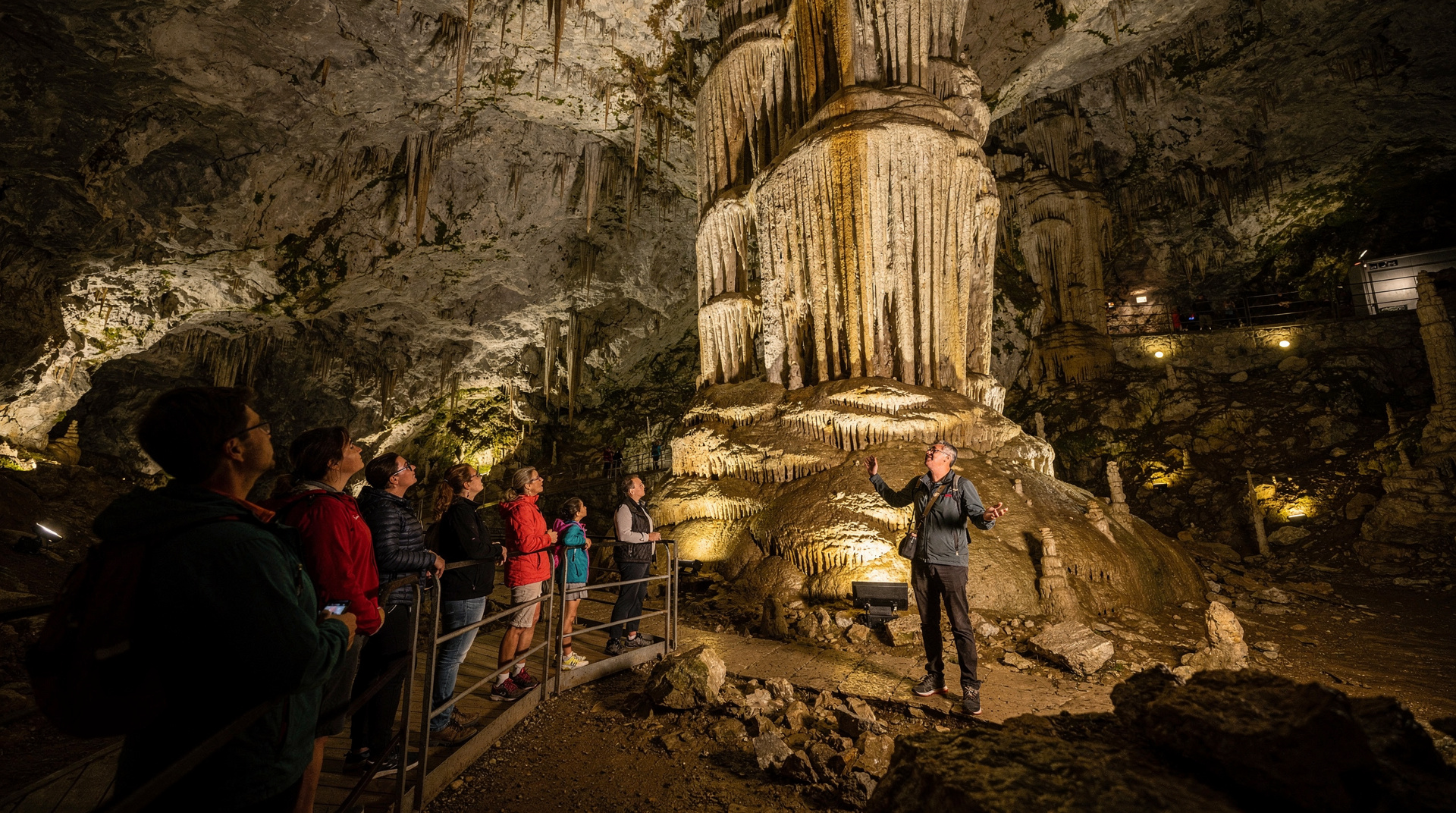
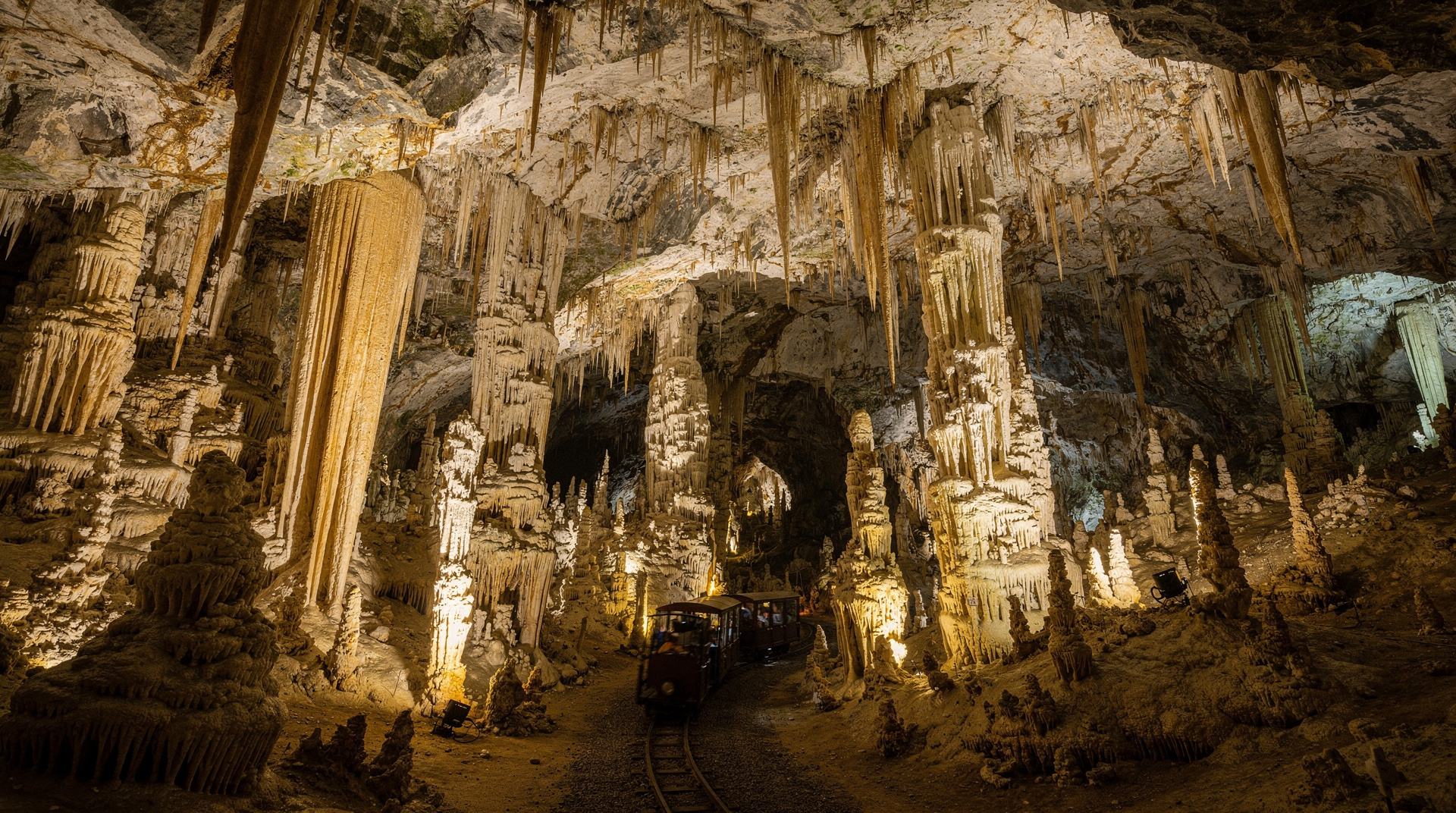
The underground railway that carries visitors 2 km into Postojna Cave is genuinely thrilling for younger children — the open carriages rush into the mountain through narrow passages lit by flashing lights before opening into vast illuminated chambers. The 1.5-hour guided walk (minimum age for the tour is normally 3+, though infants in backpacks are common) passes through chambers the size of cathedrals hung with stalactites.
The Postojna Cave and Predjama Castle combined half-day tour is the most efficient way to see both with children — no driving between sites, guide explains everything at a level accessible to younger visitors, and entry is included.
The olm (Proteus anguinus) — the pale, blind cave salamander that lives in the cave streams — is one of the world’s strangest animals, and children who know about it before visiting become obsessed. It can be seen in the dedicated tank near the cave exit. Look up the olm in advance to prime the excitement.
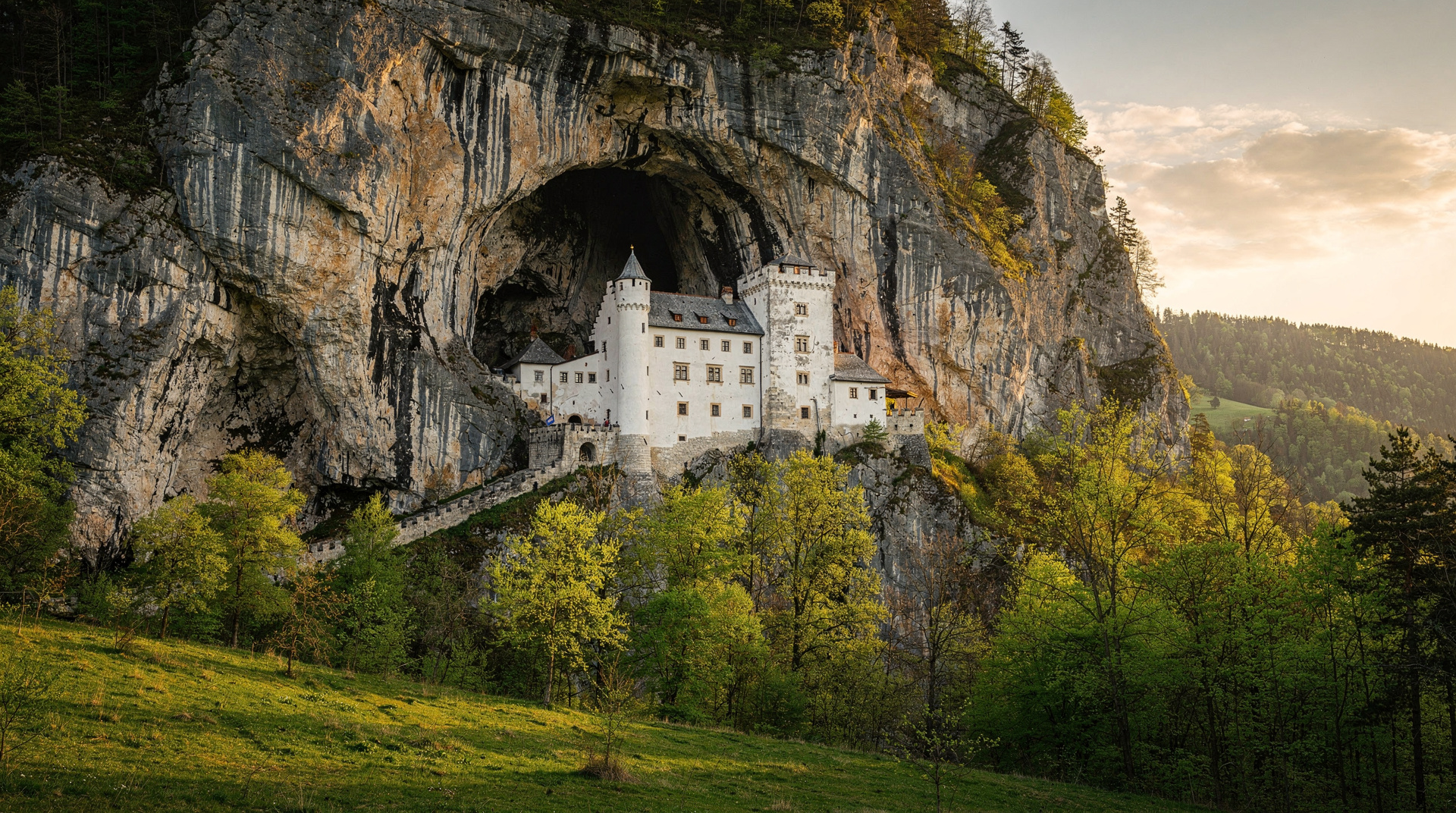
Predjama Castle (9 km from Postojna): the cliff-face castle looks exactly like something from a fairy tale, and the story of Erazem Lueger (the knight who held it against a siege using secret cave passages) is told explicitly for children in the castle’s family guide. Combine the visit with a short walk up to the cliff base for the best view.
Drive to Ljubljana for the final night (52 km, 45 minutes from Postojna).
Day 5 — Ljubljana: castle, market and departure
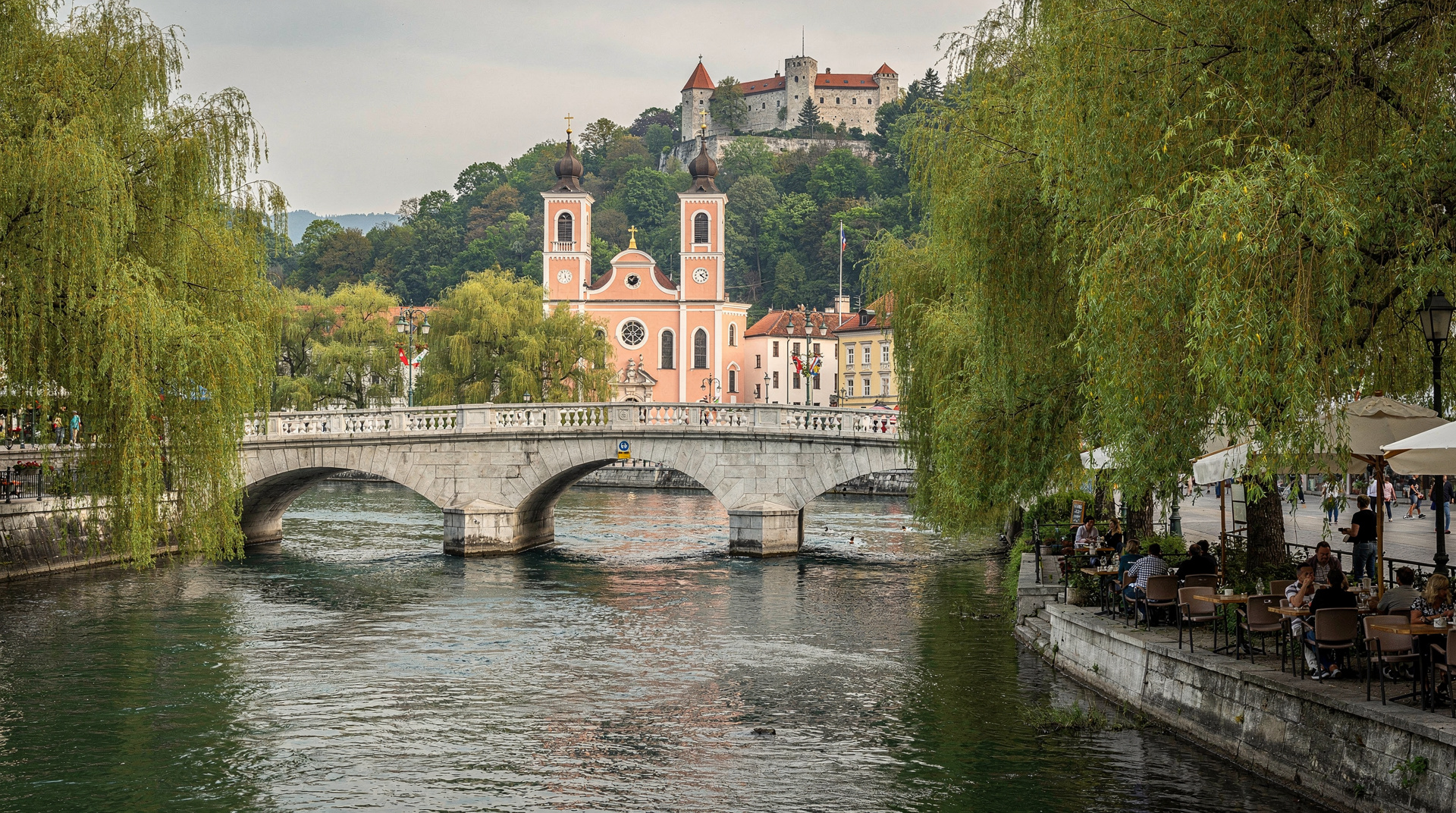
A gentle final morning in Ljubljana before the airport. Arrive in the city for 9:30 and walk directly to the riverside market — the honey stalls are fascinating for children (local beekeepers often bring observation hives), and many vendors offer tastings.
Ljubljana Castle for the view: take the funicular (€6 return, reduced fare €4.50) and walk the castle circuit. The castle has a small children’s museum (“Museum of Puppetry”) that runs well and is directly above the old town. Bring the castle map for the children to navigate — this is a reliable engagement strategy.
The City Museum of Ljubljana (Gosposka ulica, €6 adult, children free under 6) has a permanent installation on the Roman city of Emona — there are interactive sections that work well with school-age children.
If it is warm enough, the Tivoli park (Ljubljana’s main urban park, 15 minutes’ walk west of the old town) has playgrounds, a roller-skating rink and café. A good final destination before the airport shuttle.
Airport shuttle from the central bus station: €4 adult, €2 child. Every 60 minutes; journey 50–55 minutes.
Family practical notes
Car seat: Rental companies offer child seats (€10–15/day); book in advance. Slovenian law requires appropriate restraints for all children under 12 or under 135 cm.
Pushchair/stroller note: Ljubljana’s old town cobblestones and Vintgar Gorge’s narrower sections can challenge pushchairs. A baby carrier/backpack carrier is more practical for Slovenia.
Swimming: Lake Bled and Bohinj are clean but unlifeguarded. The paid lido at Bled (€8) has lifeguards and a shallow entry area with a designated children’s section. Children should always be supervised in all natural water, including the lakes and the Radovna River near Vintgar.
Postojna temperature: The cave is a constant 10°C. Even in July this feels very cold after a hot car journey. Bring a light fleece or jacket for every member of the family — the cave operators sell fleece rentals at the entrance (€1–2) but it is better to bring your own. The underground train is open-sided carriages, so the rush of air while travelling makes it feel even colder.
Food: Slovenian gostilne are welcoming to families. Most menus include simple pasta, chicken dishes and chips for reluctant young eaters. Local honey (kranjski med) is genuinely good with bread. The kremšnita at Bled is reliably popular with children, and potica (rolled nut pastry, available from bakeries nationally) is Slovenia’s equivalent of a croissant — a reliable, non-exotic choice for younger palates. Vegetarian options are well covered in most mid-range restaurants.
Driving with children: Slovenia is an excellent family road-trip country — no route in this itinerary involves more than 1.5 hours of driving in a day. The roads are generally excellent and the scenery keeps older children interested. The A2 motorway from Ljubljana to Bled is straight and fast; the Bohinj mountain road is slower but not stressful. Park at the Bled lido car park (€1.50/hour) for central access to the lake.
Pace guidance: Five days is comfortable rather than rushed — there are optional activities each day rather than mandatory schedules. On any day when children are tired or the weather is poor, substituting an unplanned swim, a playground visit or an ice cream stop in the village is always the right call.
Why Slovenia works well for families
Several practical factors make Slovenia particularly family-friendly compared with more visited European destinations:
The country is small and compact, so no single journey in this itinerary exceeds 110 km. Triglav National Park, which covers most of the northwest, is crisscrossed with waymarked trails of all difficulty levels — finding a walk appropriate for a 7-year-old or a 70-year-old is straightforward. The lakes are clean and swimmable from June through September. The cave systems — both Postojna Cave and the UNESCO-listed Škocjan Caves — are genuinely extraordinary experiences that children engage with more intensely than most adult-focused museums.
The culture is also broadly hospitable to families. Slovenians take children seriously — not as small adults to be quietened, but as participants in the same public life. Gostilne without children’s menus are rare; playgrounds appear in every village; the lakeside facilities at Lake Bled and Lake Bohinj are well maintained and free.
The practical costs are also lower than comparable Alpine or Mediterranean destinations. A family of four can eat a full Slovenian gostilna meal for €60–80; the cave entries (€34.90 adult at Postojna; see postojnska-jama.eu for child prices) are the largest single expenses; hotel rooms that comfortably accommodate a family cost €100–160/night in mid-range establishments outside peak August.
Extending for older children or teenagers
If travelling with teenagers who want more activity, the five-day family itinerary can be supplemented with:
- Vintgar Gorge gorge swim in season (the upper pools are accessible with supervision, extremely cold, extremely popular with local teenagers)
- Canyoning near Bled for ages 12+ (the beginner canyoning near Bled involves short abseils and cold-water jumps, well-managed by local operators)
- The Vogel cable car above Bohinj (1,540 m in 4 minutes, genuinely impressive for any age)
- Mountain biking on the Pokljuka plateau above Bohinj (easy plateau trails, rental available at the plateau)
- The Planica ski-jumping venue near Kranjska Gora (open as a summer visitor centre, with a slide and viewing platform over the enormous jump)
For younger children (under 5), the five-day itinerary works well at a slower pace — prioritise the pletna boat, Savica Waterfall, Postojna Cave and the Ljubljana market as the core four experiences, and fill remaining time with lake swimming and gostilna lunches.
Booking notes for family travel
School holiday dates: Slovenian school holidays overlap with those of Austria and Germany (late June–late August, Christmas, Easter). The peak family period at Lake Bled is the last two weeks of July and all of August — prices are highest and availability tightest then. July and early June are significantly better for families who can travel outside school holidays.
Accommodation with family rooms: In Slovenia, “family room” generally means a double and a single bed, or a double with a pull-out sofa. Confirm exact sleeping arrangements when booking. Hotels that specifically cater to families: Penzion Mayer in Bled (garden, ground-floor rooms), Hotel Jezero in Bohinj (lake views, children’s play area), Hotel Cubo in Ljubljana (extra bed option), and the Sava Hotels group (Bled and Ljubljana, larger rooms standard).
Rainy-day options: Every destination on this itinerary has indoor alternatives for rainy days. In Ljubljana: the National Museum (interactive sections, children free under 6), the Museum of Puppetry (Ljubljana Castle), the natural history museum. At Bled: the castle interior is undercover; the kremšnita bakery requires no outdoor time. Bohinj: the Bohinj Museum in Stara Fužina is a small but well-done local history museum. Postojna Cave is the best rainy-day activity in Slovenia — underground, constant 10°C, completely weather-independent.
Slovenian food for children: Beyond the standard pasta and pizza (widely available), local children’s favourites include Prekmurska gibanica (layered pastry with poppy seeds, walnuts, cottage cheese and apples), jota (bean and sauerkraut soup, warming in cooler weather), potica (rolled nut pastry, sweet), and the ubiquitous kremšnita at Lake Bled. Most gostilne allow child-sized portions if requested.
Driving with a car seat: Slovenia’s rental car companies (Hertz, Avis, Europcar at Ljubljana Airport) provide child seats at €10–15/day — reserve when booking the car, not on arrival. Slovenian law requires appropriate child restraints for all children under 12 or under 135 cm regardless of seating position.
Health, safety and practicalities with children
EU citizens should carry a European Health Insurance Card; non-EU families need travel insurance with medical cover, since Slovenian hospitals will otherwise bill directly. Pharmacies (lekarna) are well stocked and English is widely spoken by pharmacists in tourist areas — useful for sun cream, insect bite treatment or a child’s stomach upset after an unfamiliar meal. Mobile coverage is reliable even in the Bohinj valley and around Postojna, so a local eSIM or EU roaming plan keeps navigation and emergency contact simple throughout.
Sun protection matters more than visitors expect: the reflective water at Bled and Bohinj, plus altitude at the Vogel cable car top station, increases UV exposure. Pack reef-safe sunscreen and hats for young children, and keep a change of clothes accessible in the car for the inevitable lake-edge soaking. For a broader view of what else works well with young travellers around the country, the Slovenia for families guide covers destinations beyond this five-day loop, including options for older children who want more adventure.
Nappies, formula and standard baby food brands are available in supermarkets (Mercator, Spar) in every town on this route, so there is no need to over-pack from home. Public toilets at the main tourist stops (Bled lakeside, Postojna Cave visitor centre, Ljubljana Castle) are clean and usually have a baby-change facility, though smaller village stops may not.
What to do if a day gets rained out
Postojna Cave is unaffected by weather and can absorb a rained-out afternoon from any other day in the itinerary with only a short detour — it sits roughly midway between Bled/Bohinj and Ljubljana. If Bled’s lake activities are washed out, the castle interior and the Museum of Puppetry both work indoors, and Radovljica’s apiculture museum (a 15-minute drive) is an underrated wet-weather option that most families enjoy. Bohinj has fewer indoor fallbacks, so treat a rainy Bohinj day as a good excuse to swap in Postojna Cave a day early and rearrange the order.
Top experiences
Bookable activities with verified prices and instant confirmation on GetYourGuide.