Summer lakes and beaches Slovenia 9-day itinerary
Lake Bled: stand-up paddleboarding tour
Slovenia’s best summer: four water worlds in nine days
Slovenia is not the obvious summer sun holiday — it does not have sand beaches, and the sea is a short coastal strip shared with Croatia and Italy. What it has instead is more interesting: mountain lakes with clarity that puts the Mediterranean to shame, an Adriatic town so perfectly preserved that you would swear you had taken a wrong turn into the 14th century, and a river whose impossible blue-green colour stops rational thought entirely.
This nine-day itinerary chains Slovenia’s four best summer water destinations into a logical south-westward loop: Lake Bled and Lake Bohinj in the north, then over the mountains into the Soča Valley, then south to Piran and the Adriatic coast. Total driving is around 450 km — modest, and every road section is scenic.
Summer timing note: July–August is hot (25–32°C in the lakes and coast) and busy. Arrive at Bled before 9:00 to see the lake before the tour buses. The Soča Valley and Bohinj are less affected by mass tourism. Piran fills in August — book accommodation two to three months ahead.
| Where | Lake Bled → Lake Bohinj → Soča Valley → Piran → Ljubljana |
| Cost | mid-range, around €450 total driving distance in fuel/tolls |
| Time needed | 9 days |
| Getting there | hire car recommended; Vršič Pass crossing needs a car |
| Best time | July–August for warmth, June/September for fewer crowds |
| Book ahead | Piran accommodation 2–3 months ahead for August |
Day 1 — Arrive at Lake Bled
Drive from Ljubljana Airport to Lake Bled (55 km, 50 minutes). If arriving in the afternoon, check in and walk to the free public beach (Camping Bled shore) for a first swim. The lake reaches 22–24°C in July–August and the mountains above make the swimming experience genuinely surreal.
The best swimming is from the western shore near Camping Bled (free) or from the flat rocks on the south shore near the rowing club. Avoid the commercial lido on weekends when it is overcrowded.
Evening: dinner at Gostilna pri Gardu near the lake or Pizzeria Rustika in the village. The light on the water at sunset is the best free experience in Slovenia — sit at the lakeside and wait for it.
Day 2 — Lake Bled: the full experience
Early morning lake circuit walk (depart before 7:00 for the mist-on-water conditions). Then the pletna boat.
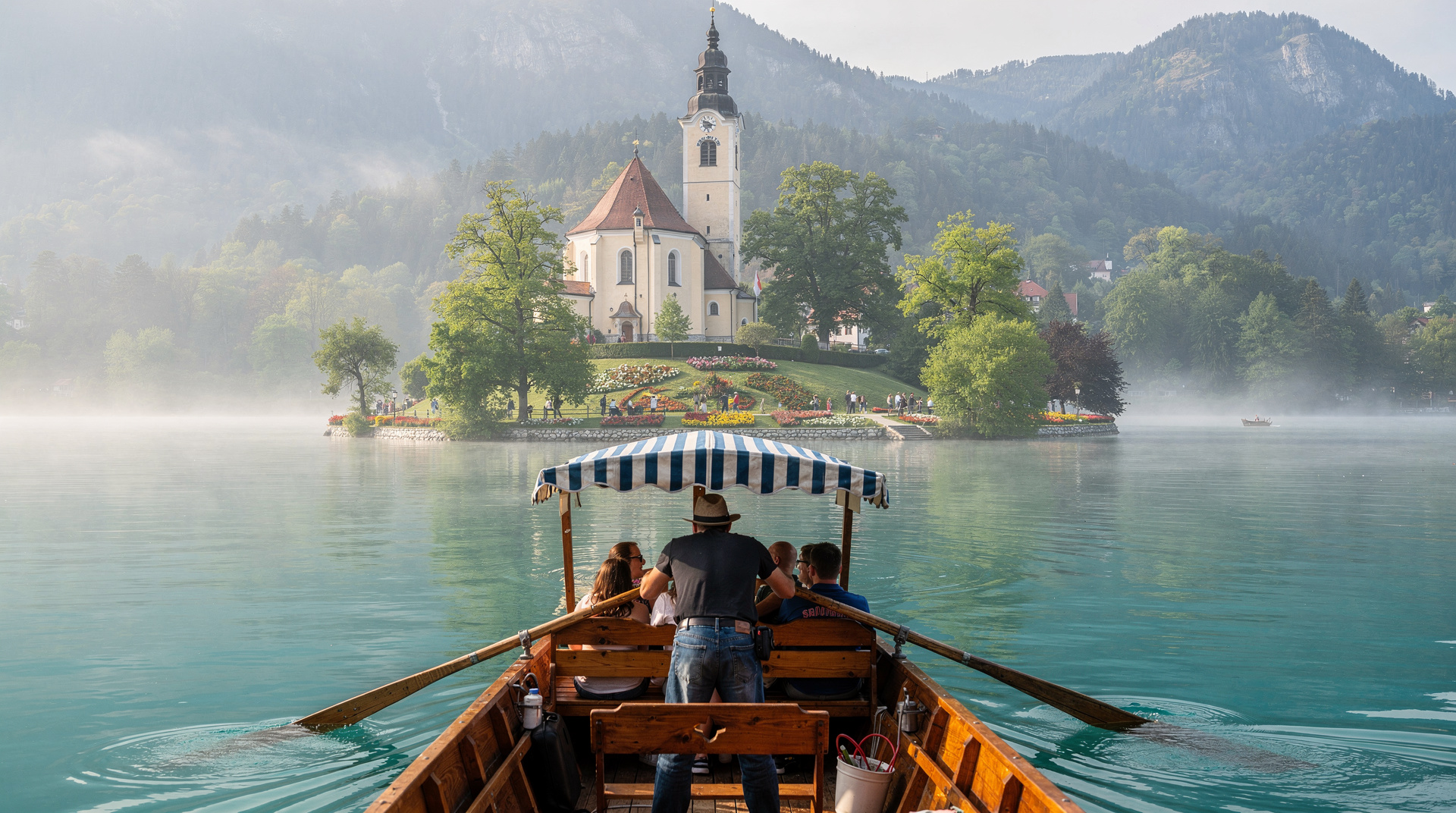
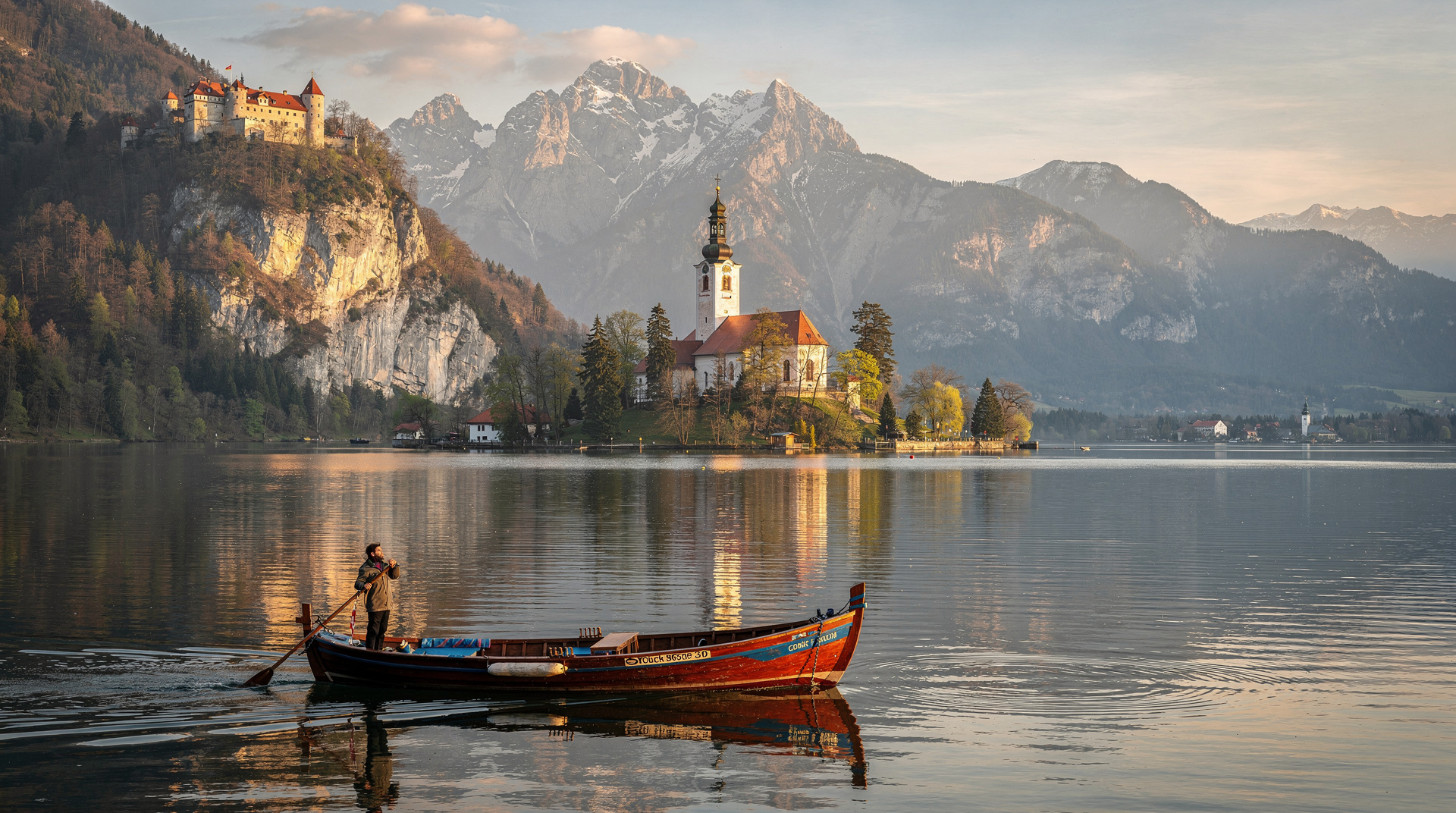
The pletna boat to Bled Island with a guide and cream cake — the hereditary boatmen have rowed this flat-bottomed boat since 1590. The island church, the bell, the 99 steps, the cream cake. Two hours, €19–25.
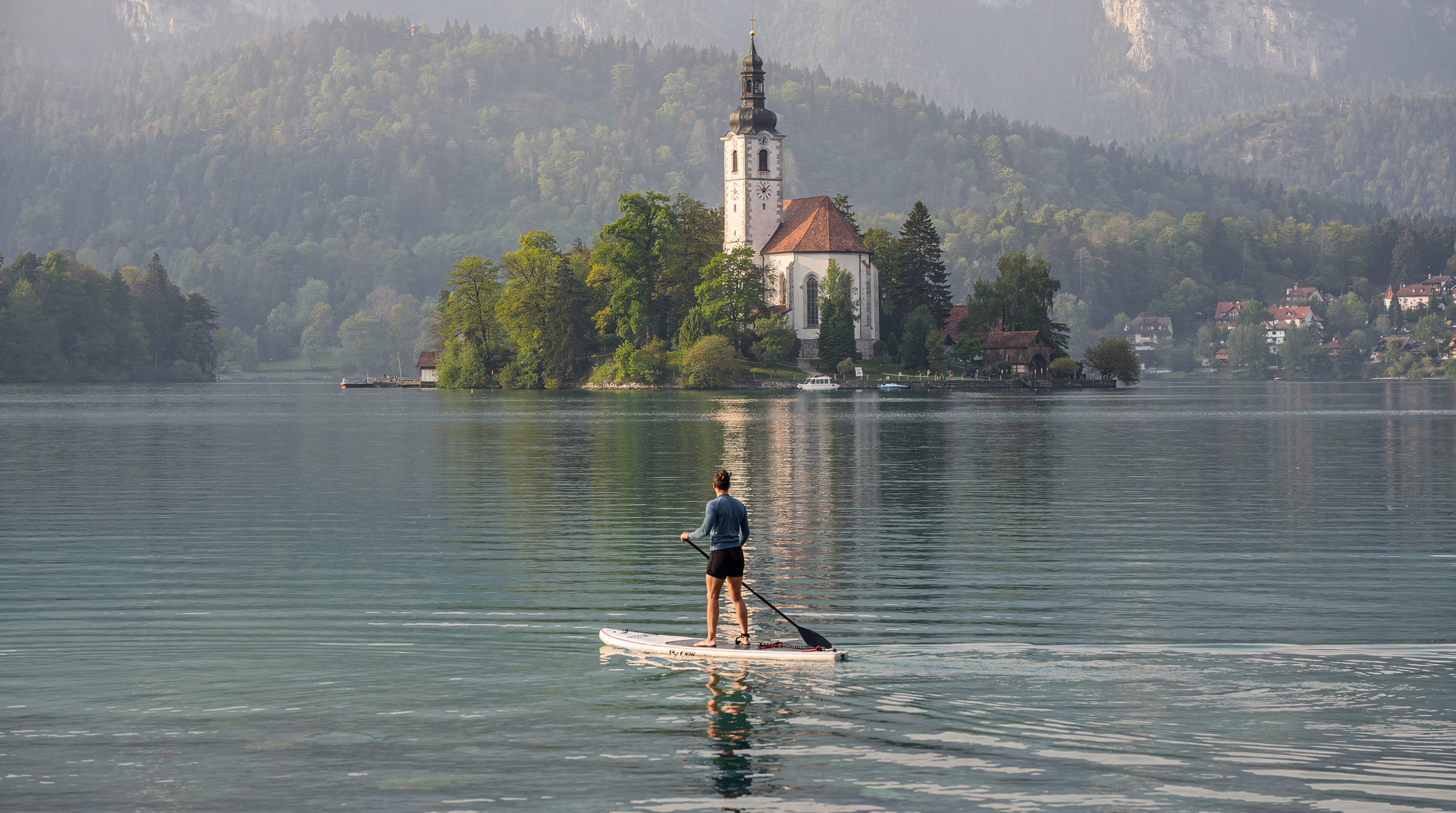
After the island, kayak or paddleboard the lake in the afternoon. Stand-up paddleboarding is the quietest and most beautiful way to see the lake from the water:
Lake Bled stand-up paddleboarding tour runs about 2 hours with an instructor and covers the lake’s key viewpoints from the water — the island, the castle cliff, the mountains reflected in the surface. Available to beginners.
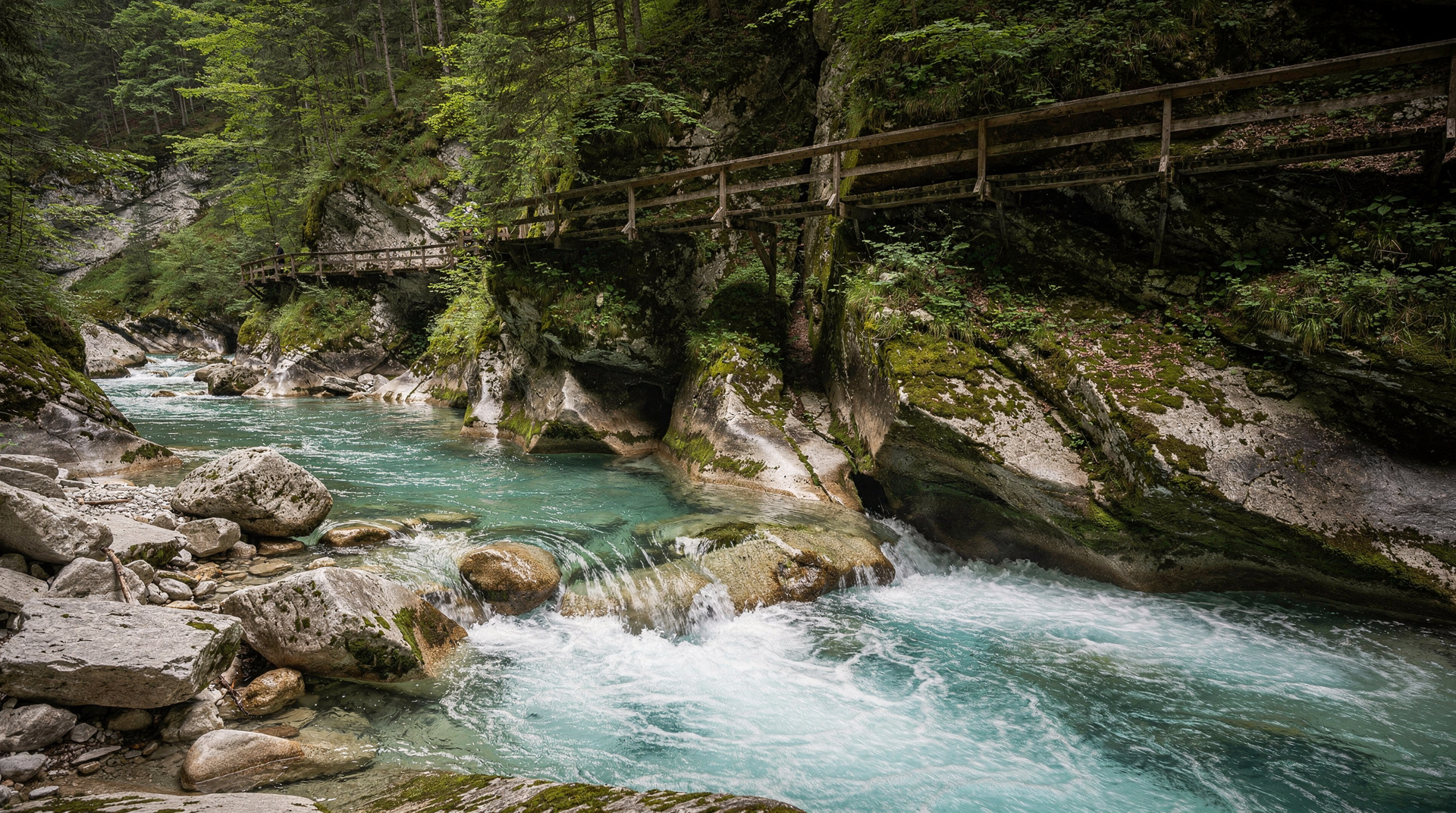
End the day at Vintgar Gorge — 4 km from the village, free shuttle bus in season, €15 entry. The gorge boardwalk in the late afternoon light, with the turquoise water below and the limestone walls above, is one of Slovenia’s finest experiences. Allow 90 minutes.
Day 3 — Lake Bohinj: swimming and the waterfall
Drive 30 minutes west to Lake Bohinj. This is the right lake for a day of pure swimming — the water is cleaner and less crowded than Bled, and the surrounding mountains give a wilder atmosphere.
Best swimming spots: the small beach at Ribčev Laz (east end), the quieter pebble shores along the south side (accessible via forest path), and the utterly wild section at the western end near Ukanc where the meadows run down to the lake.
The Savica Waterfall (20-minute walk from Ukanc, €4): a 78-metre cascade into a pool of unreal colour, reachable via a short but steep path through the forest. Worth the legs.
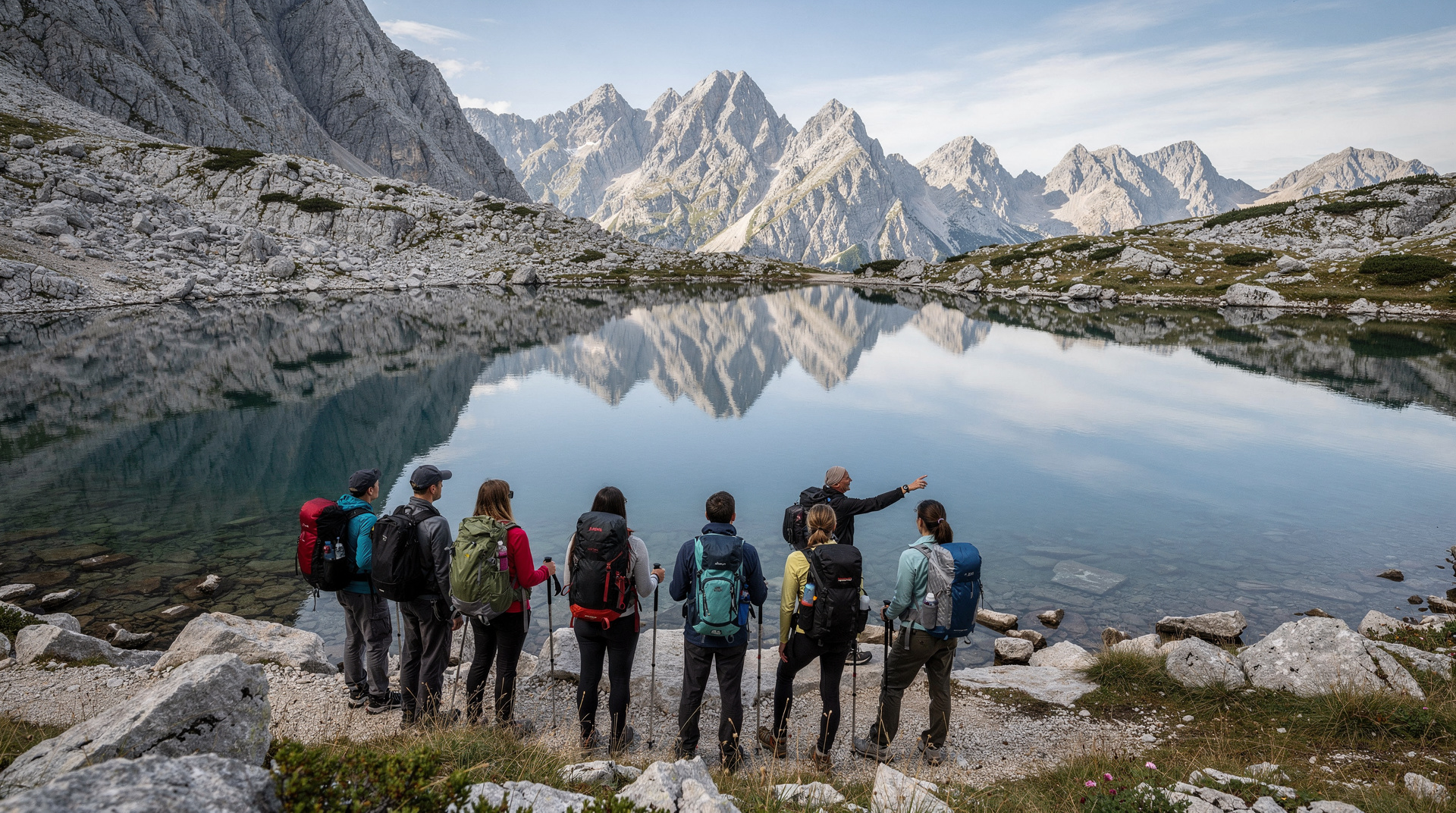
The guided 7 Lakes Valley hiking tour from Bohinj is available for those who want to go higher — a full mountain day through the glacial lakes of the Triglav National Park interior. Book in advance; a brilliant contrast to the lake-based relaxation of the rest of the trip.
Return to Bled or stay overnight in Bohinj (Hotel Jezero, from €90, good lake position).
Day 4 — Crossing to the Soča: Vršič Pass
This is a driving day that most visitors find more memorable than many designated “activity days”. From Bohinj (or Bled), drive northwest to Kranjska Gora (35 minutes) and then over the Vršič Pass into the Soča watershed.
Road 206 climbs through 50 numbered hairpin bends to 1,611 m and descends through the Trenta valley to the Soča. Stop at the Russian Chapel (WWI memorial, built by Austro-Hungarian prisoners of war), the summit viewpoint (15-minute walk, panorama over both valleys), and the source of the Soča at the bottom of the south face.
The source of the Soča is accessible via a short path from the road through the Trenta gorge — the river emerges from a cave already in its characteristic blue-green, in a pool surrounded by white limestone. Photograph it before you see anything else of the river; it is still the purest version of the colour.
Check in to Bovec accommodation: Dobra Vila (boutique, from €130) or one of the simpler pensions (from €60). Evening walk along the Soča above the town.
Day 5 — Soča Valley: rafting and wild swimming
A water day on the Soča River — the defining experience of this part of Slovenia.
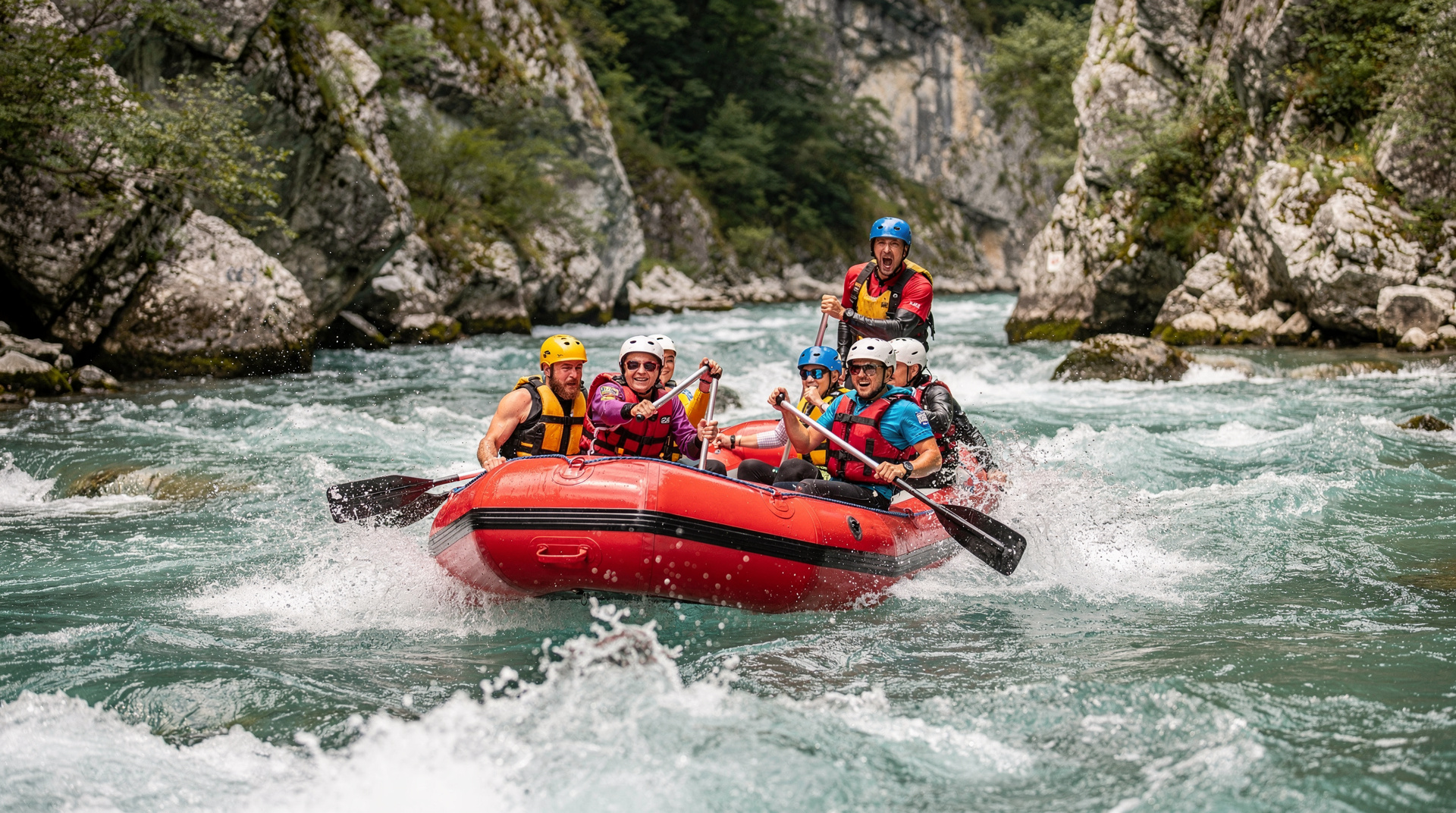
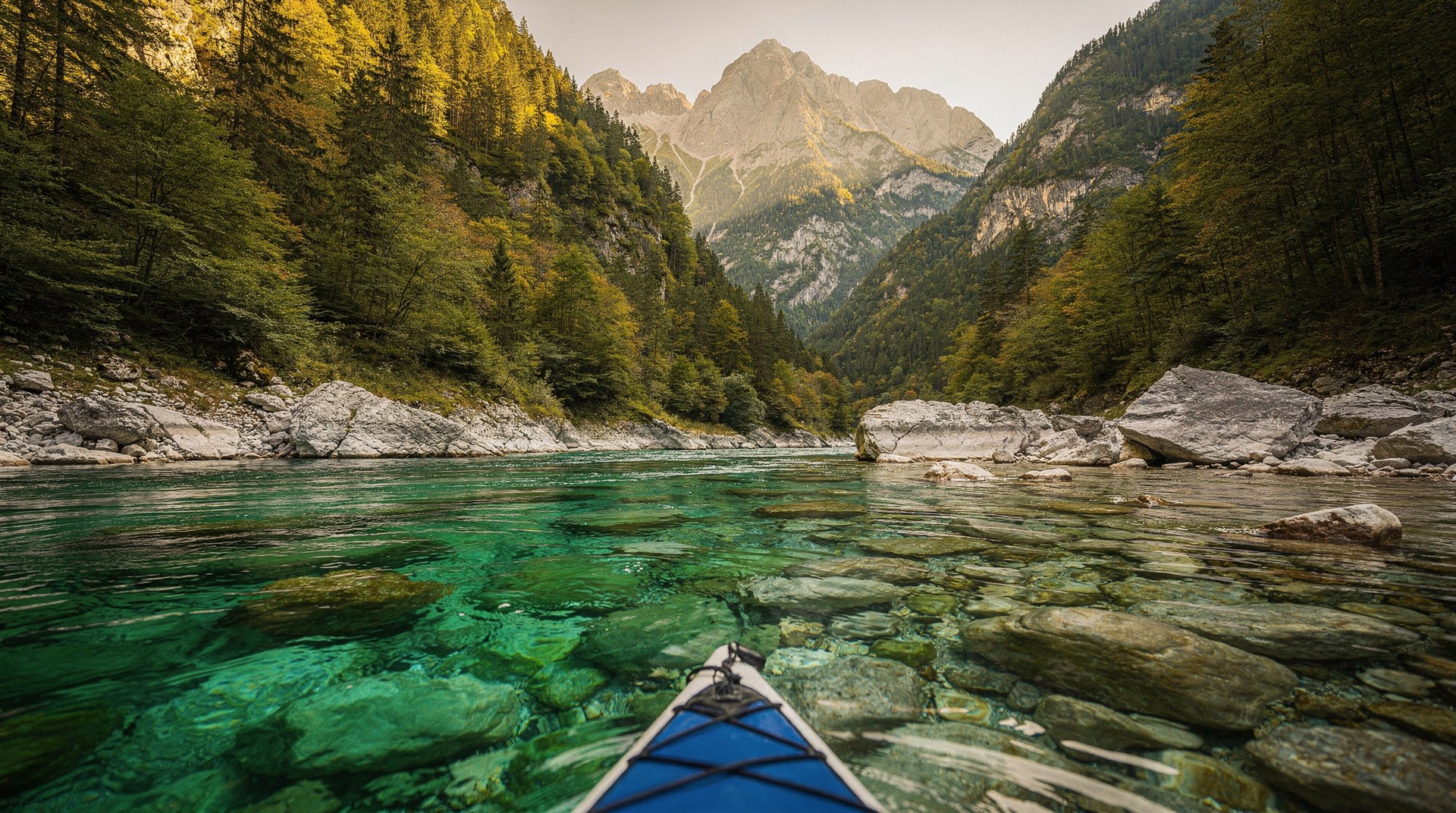
Whitewater rafting on the Soča from Bovec — 8 km of Class III rapids through a narrow canyon, wetsuits provided (the water is 12–16°C even in August). The colour of the water when you are inside it, surrounded by limestone walls, is extraordinary. Book the morning session.
Afternoon: find a natural swimming pool in the valley. The stretch of Soča between Bovec and Trenta has dozens of natural pools formed in limestone basins — pull off the road wherever you see parked cars and a path down to the water. These are free, often uncrowded after 14:00, and some of the finest natural swimming in Europe.
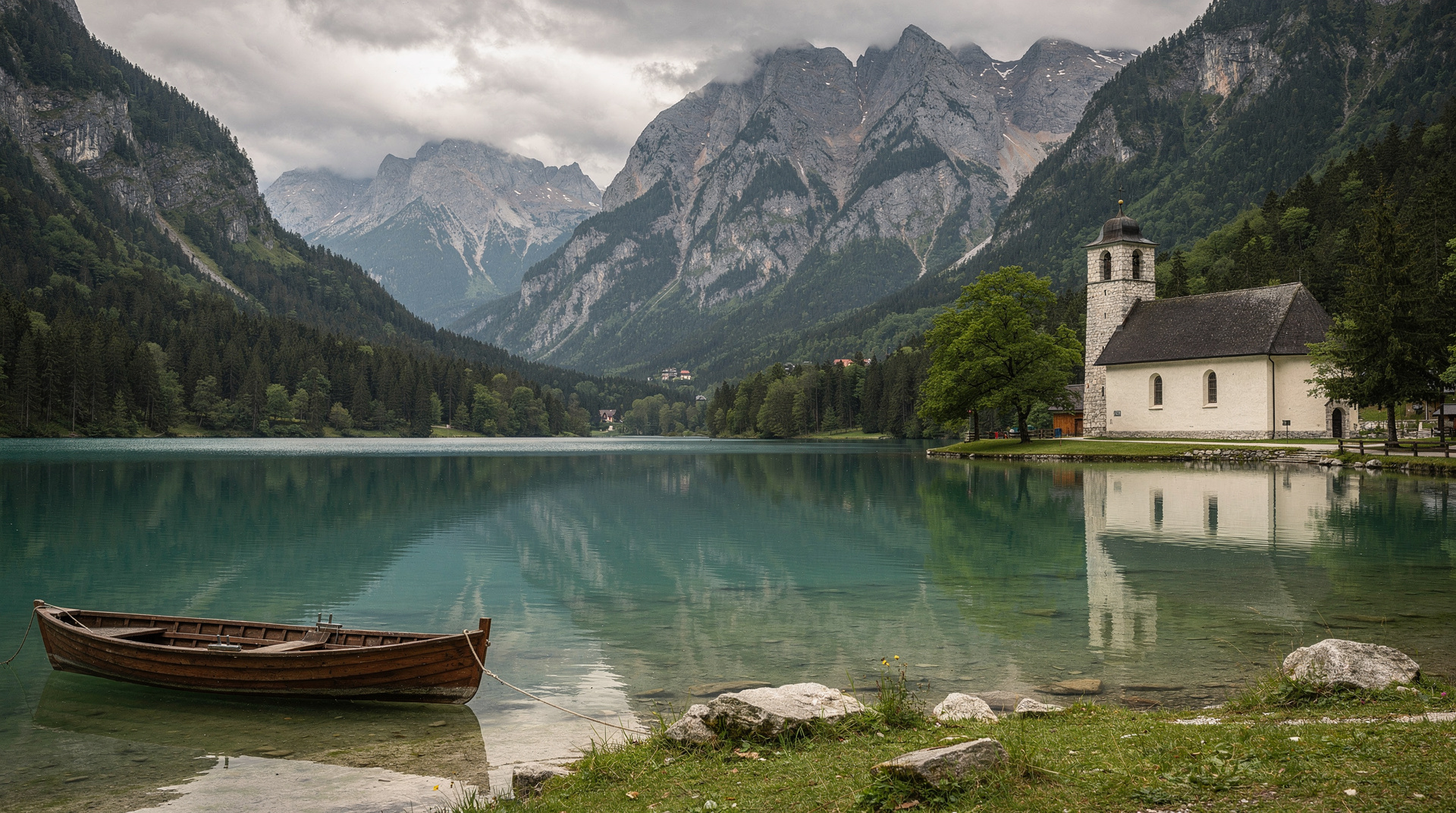
The Predil Lake (15 km east of Bovec, toward the Italian border) is a different experience — a high-altitude lake in a dramatic mountain cirque, with the abandoned fortress of Fort Hermann on the far shore. The water is colder than the Soča but crystal clear.
Day 6 — Kobarid and the Emerald Route
Drive south from Bovec to Kobarid along the valley road (26 km, 30 minutes) — this section of the Soča, known as the Emerald Route, is the most photographed stretch of the river. Stop at every viewpoint.
The Kozjak Waterfall is 30 minutes’ walk from Kobarid along the riverbank — a cascade hidden inside a narrow cave at the end of a beautiful forest path. The pool below the falls is swimmable in summer (it is dark and cold and wonderful).
Kobarid Museum (€7) covers the WWI Isonzo front — one of Europe’s best war museums, even for non-history travellers. The landscape context (you will have been walking and swimming through it for two days) makes the museum deeply resonant.
Drive south from Kobarid toward the Karst plateau and the coast. The route via Tolmin and Idrija (120 km to Piran, 2 hours) is scenic; the motorway route via Ljubljana (180 km, 2.25 hours) is faster. Arrive in Piran in the evening.
Day 7 — Piran: the Venetian coast
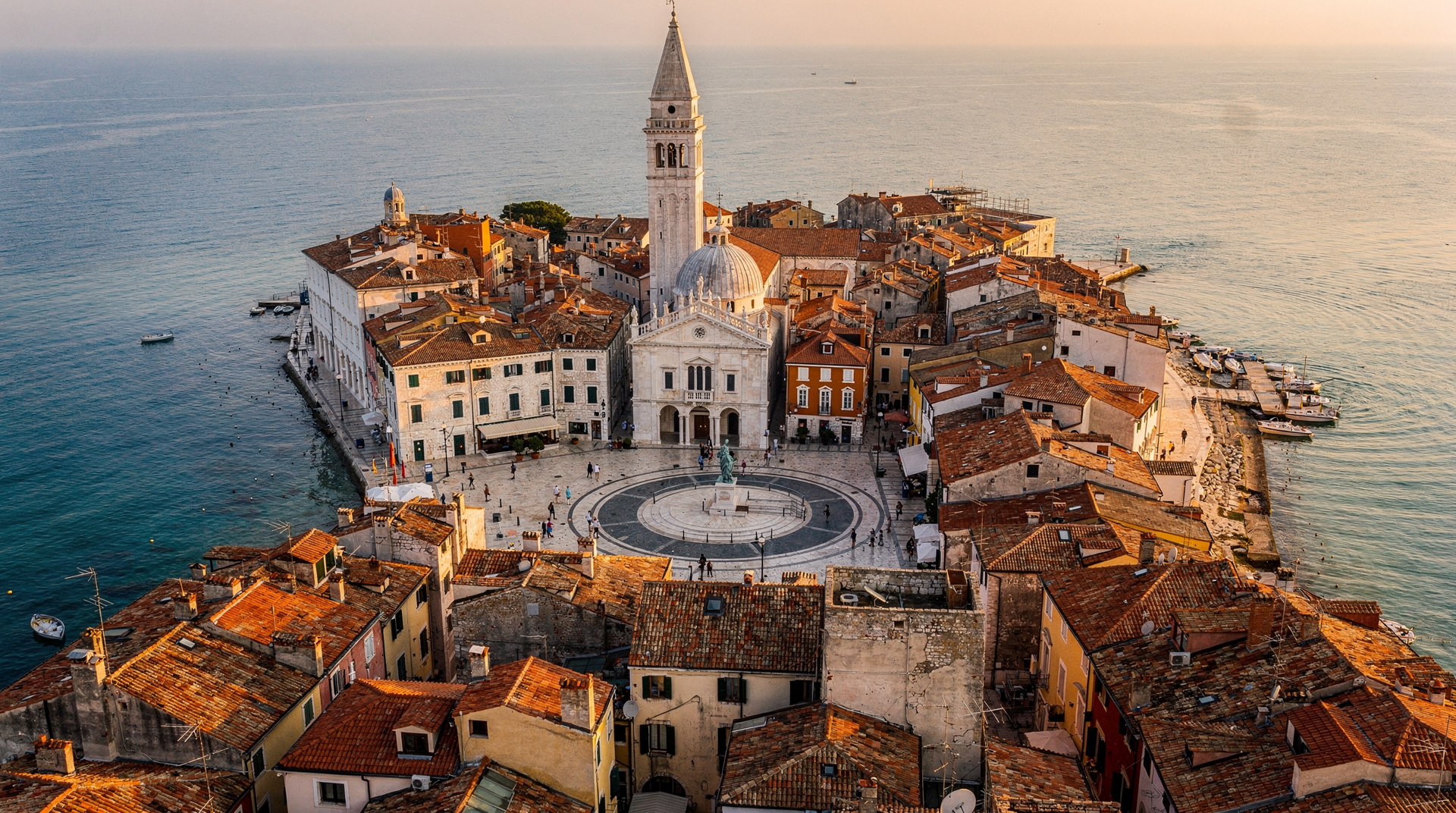
Piran is the finest coastal town in Slovenia — a Venetian-built fishing port at the tip of a rocky promontory, with Gothic palaces, medieval walls and a harbour that still smells of fish and salt air. It receives far fewer visitors than Dubrovnik or Rovinj and feels like a real town as much as a tourist destination.
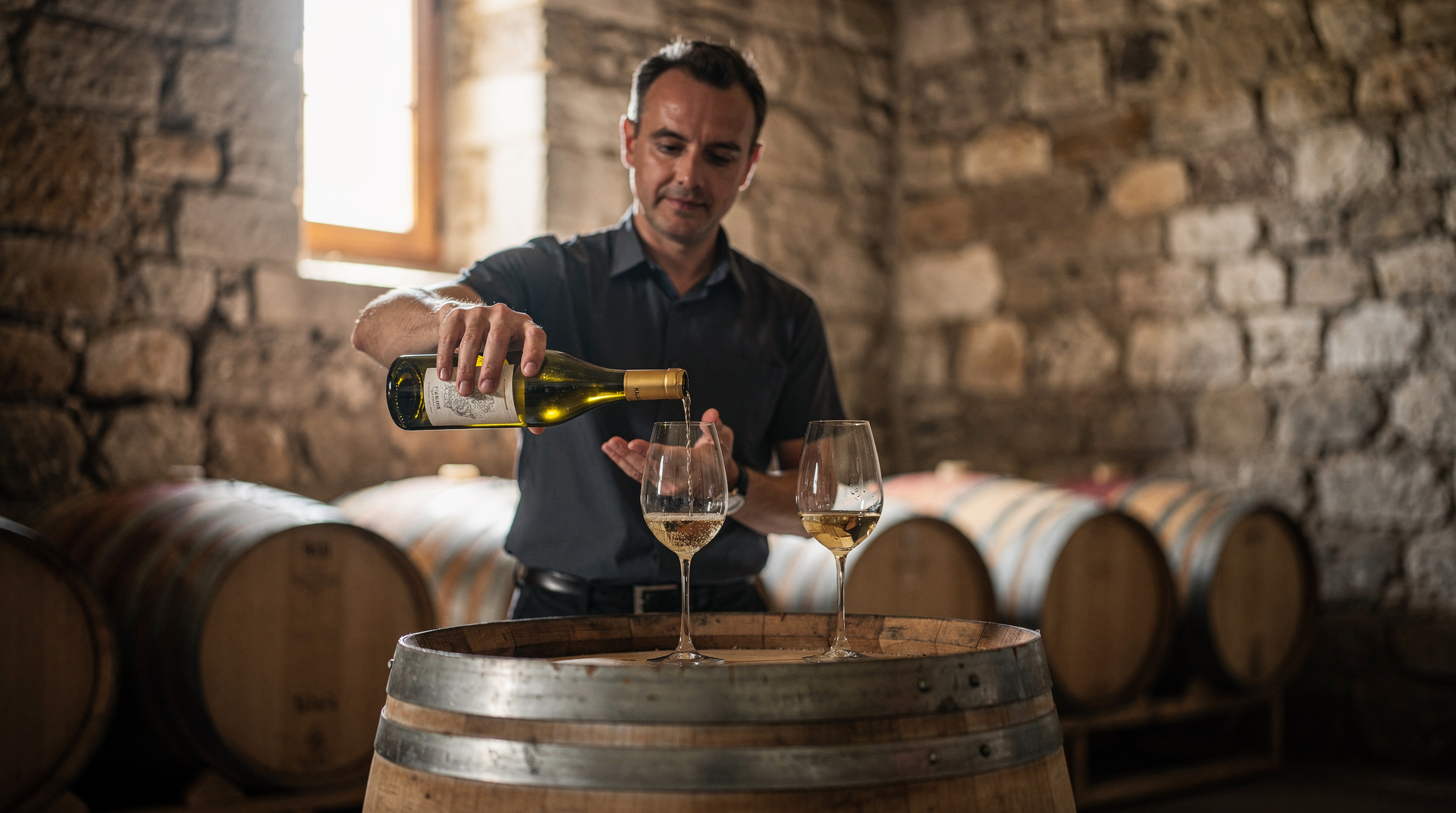
The Piran walking tour with local wine and food tasting is an excellent morning activity — the guide covers the town’s Venetian history and current cultural identity while feeding you local olive oil, prsut, Malvazija wine and seafood. Duration 2–2.5 hours.
Afternoon: swim. The rocks below the town walls (follow the path from the north side of Tartini Square past the lighthouse) offer the best local swimming. The water is warm (26–28°C in August), clear and deep enough for jumping from the lower rocks.
The Strunjan Nature Reserve (6 km north of Piran, accessible by boat or the coastal path) has a quieter pebble beach and the only sea cliff on the Slovenian coast — a 20-metre white limestone bluff called the Strunjan flysch. The short coastal walk from Portorož to Strunjan is one of the most rewarding in the region.
Evening at Riva restaurant (seafood, €30–40) or a picnic at the harbour bought from the morning fish market.
Day 8 — Coast exploration: Portorož and saltpans
A relaxed day along the Slovenian Riviera. Portorož (5 km from Piran) is the larger beach resort — more infrastructure, more sunbeds, longer sandy beaches. The Grand Hotel Bernardin Beach is the main commercial beach; the smaller Ena plaža at the western end is cleaner and less crowded.
The Sečovlje Saltpans (5 km south of Portorož) are a natural park and a remnant of medieval salt production — shallow rectangular pans worked by traditional methods, with flamingos and other wading birds in season. The Saltpan Museum shows the extraction process; the landscape of pink-tinged pans against the Adriatic is unexpectedly photogenic.
If you want one more swim in exceptional water: drive the 30 km to Strunjan (see Day 7) or take the boat excursion from Piran harbour to the Caves of Strunjan.
Evening: the sunset aperitivo from the Piran city walls is the last unmissable experience of this itinerary. Walk the intact medieval walls (free) in the 30 minutes before sunset and watch the light change over the Adriatic toward Trieste.
Day 9 — Return to Ljubljana via the Karst
Drive from Piran to Ljubljana (133 km, 1 hour 20 minutes) via the A1 motorway. Allow time for a final stop.
Option 1: Škocjan Caves en route (40 km from Piran, tours run on the hour, €18). The UNESCO-listed underground canyon is the geological counterpart to the surface landscapes of the last 8 days.
Option 2: the Lipica Stud Farm (10 km from Škocjan) for a guided tour and the famous Lipizzaner horses.
Option 3: drive directly to Ljubljana for a final lunch at the riverside market and the airport shuttle.
Return car at Ljubljana Airport and take the shuttle (€4, 50 minutes).
Summer logistics
Beat the Bled crowds: Arrive before 9:00. The lakeside between 8:00 and 9:30 is peaceful and often misty; between 10:00 and 16:00 it is genuinely crowded. Plan to be back at the lake for late-afternoon swimming (16:00–18:30) when day-tripper coaches depart and the water and light are at their best.
Soča swimming safety: Some Soča pools have currents even when they look calm — stay in established swimming spots with visible flow patterns and avoid jumping into unknown pools. The water is cold (12–16°C even in August); get in gradually and watch for cramp. Children should not swim alone. Follow local advice about conditions after rainfall, when the current increases significantly.
Piran July–August: Very busy. Accommodation books out months ahead — reserve at least 2 months ahead for August. If you have not reserved in Piran, consider Portorož (larger, more accommodation available, 5 minutes by bus from Piran) or Izola (quieter alternative 10 km north, with a good beach and less tourist infrastructure).
Road to Vršič: 50 hairpin bends, some single-lane sections, no barrier on many corners. Drive slowly, use the horn before blind corners, pull over at the wider sections for oncoming vehicles. Spectacular but not relaxed — allow at least 2 hours for the full crossing with stops. Do not attempt in heavy rain, fog or after a recent landslide warning.
Is this itinerary family-friendly?
Yes, with adjustments. Lake Bled and Lake Bohinj both have shallow, gently shelving swimming areas suitable for children, and the pletna boat ride to Bled Island is a genuine highlight for younger kids. The Soča Valley section needs more care: the natural swimming pools vary in depth and current, and the cold water (12–16°C) is a harder sell for children than for adults — stick to the calmer, clearly shallow pools and skip the whitewater rafting for anyone under the operators’ minimum age (usually 10–12).
Piran and the coast are the easiest days for families, with warm, calm water and gentle rocky entry points below the town walls. Families with young children often shorten this itinerary to six or seven days, dropping one of the Soča Valley days in favour of extra time at Bled or on the coast.
Water temperatures and swimming seasons
Slovenia’s freshwater lakes and the Soča have very different temperature profiles from the Adriatic coast:
| Location | June | July | August | September |
|---|---|---|---|---|
| Lake Bled | 18–20°C | 22–24°C | 22–24°C | 18–20°C |
| Lake Bohinj | 17–19°C | 21–23°C | 20–22°C | 17–19°C |
| Soča River | 10–12°C | 12–16°C | 13–16°C | 11–14°C |
| Adriatic (Piran) | 22–24°C | 26–28°C | 26–28°C | 23–25°C |
The Soča is substantially colder than the lakes throughout the summer — wetsuits are provided for all water sports activities, but for natural swimming you need to be comfortable with cold water. The lakes warm up significantly in late July and August and reach their peak temperature around the last two weeks of August.
The Adriatic at Piran is warmer than any freshwater option, with the best conditions in August. The Slovenian coast is a short stretch (47 km coastline), and swimming is from rocks, concrete platforms and small pebble beaches rather than sand. The water clarity is better than the Croatian resorts further south.
Packing for a summer water itinerary
This trip means changing between swimwear and normal clothes constantly, so pack accordingly. A quick-dry towel (or two) saves space and dries between stops better than a beach towel. Water shoes or old trainers are essential at the Soča’s limestone-bottomed pools and the rocky swimming spots below Piran’s town walls — bare feet on wet limestone is a common way to end a swimming day early. A dry bag protects phones and car keys during paddleboarding and kayaking sessions.
Reef-safe sunscreen matters more than usual here: several of the lake and river swimming spots are shallow and enclosed, and the environmental guidance for the Soča’s protected sections asks visitors to use mineral-based sunscreen. Bring a light wetsuit top or rash vest if you tend to feel the cold — the Soča stays at 12–16°C even in peak summer, noticeably colder than the lakes or the Adriatic.
The argument for the lakes-to-coast routing
The nine-day sequence — Alpine lakes first, Adriatic coast last — is deliberately structured to build through contrasts. Starting at Lake Bled and Lake Bohinj anchors the trip in the Julian Alps at their most classical. Crossing the Vršič Pass into the Soča Valley is the most dramatic single day on the itinerary — a landscape transformation so complete that it feels like entering a different country.
The Soča Valley itself is the most emotionally intense section, between the colour of the water and the weight of the WWI landscape. Piran and the coast then provide the relaxation counterpoint — slower pace, Mediterranean warmth, good wine, excellent fish.
The pattern mirrors Slovenia’s geography: the country slopes from the Julian Alps in the northwest down through the karst plateau to the Adriatic in the southwest. This itinerary follows that slope at the right pace — leisurely going down, with enough time at each transition to absorb the change.
The alternative routing (coast first, then mountains) works less well emotionally. The lakes and mountains feel like the trip is escalating; the coast feels like it is winding down. Starting with Piran and ending at Bled produces an anti-climactic ending. Start in the mountains.
Frequently asked questions about Summer lakes and beaches Slovenia 9-day itinerary
Can I do this itinerary without a car? Not comfortably. The Vršič Pass crossing on Day 4 and the natural swimming spots along the Soča Valley are only realistically reachable by car; public buses run between the main towns but not to the pools, viewpoints and quieter beaches that make this itinerary worthwhile. If you don’t want to drive, consider basing yourself in Ljubljana and using guided day trips like the Lake Bled paddleboarding tour instead of the full loop.
Is the Soča really too cold to enjoy swimming in? It’s cold but genuinely swimmable for most people once you’re in — the shock passes within a minute or two. If you run cold, stick to the natural pools in the early afternoon when the sun has warmed the shallows, or prioritise the lakes and coast for extended swimming and treat the Soča as a rafting/kayaking river rather than a lounging spot.
Top experiences
Bookable activities with verified prices and instant confirmation on GetYourGuide.