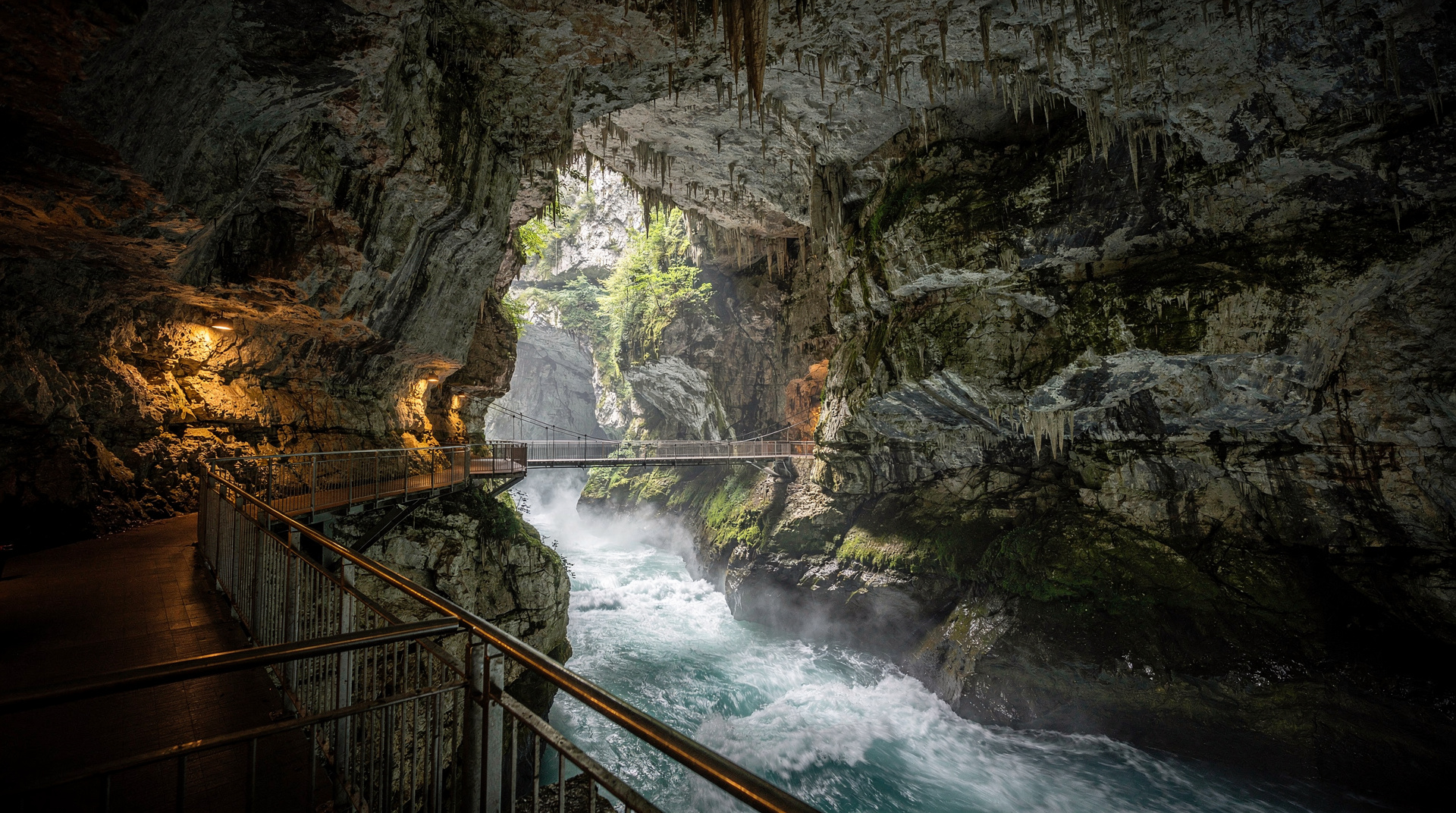
Slovenia and Croatia 10-day itinerary
From Ljubljana: Rastoke, Plitvice to Split or Dubrovnik tour
Slovenia first, Croatia second: the smart Balkans opener
The combination of Slovenia and Croatia is one of Europe’s most satisfying road trips. The countries share a border, a Habsburg history and a Adriatic coastline, but they feel utterly different — Slovenia is alpine and green and compact; Croatia is sun-baked limestone, pine-forest coast and Baroque cities. Together they complement each other perfectly.
This 10-day itinerary spends five days in Slovenia (the right amount to see the essentials without rushing), crosses to Croatia via the karst plateau and Plitvice Lakes, and finishes on the Dalmatian coast. It is designed for travellers arriving via Ljubljana Airport or coming overland from Vienna, Venice or Zagreb.
Car hire is strongly recommended — the route is possible partly by bus and tour but the flexibility to stop at viewpoints, find swimming spots and arrive in small towns before the tour buses is worth the extra cost.
| Where | Ljubljana → Bled → Postojna → Piran → Rijeka → Plitvice → Split/Dubrovnik |
| Countries | Slovenia (5 nights), Croatia (5 nights) |
| Distance | Roughly 800–900 km total |
| Car needed | Strongly recommended; some sections possible by bus |
| Budget | Around €3,000–3,850/couple for 10 days, excluding flights |
Day-by-day snapshot
| Day | Base | Focus |
|---|---|---|
| 1–2 | Ljubljana | Old town, castle, museums |
| 3 | Bled | Island, pletna boat, Vintgar Gorge |
| 4 | Postojna/Piran | Cave, Predjama, drive to coast |
| 5 | Piran | Old town, coastline |
| 6 | Rijeka/Opatija | Border crossing, Habsburg coast |
| 7 | Plitvice | National park, Rastoke |
| 8 | Split/Dubrovnik | Drive south |
| 9 | Split/Dubrovnik | City exploring |
| 10 | — | Return or fly out |
If Croatia isn’t part of the plan, the Slovenia highlights 5-day itinerary covers the Slovenian half of this route on its own; for the coast-and-wine variant within Slovenia alone, see the coast and mountains 7-day itinerary.
Day 1 — Ljubljana: arrival and old-town evening
Fly into Ljubljana Airport (LJU) and take the €4 shuttle bus to the city centre (50 minutes). Or drive from Venice (3 hours) or Trieste (1.5 hours) if arriving overland.
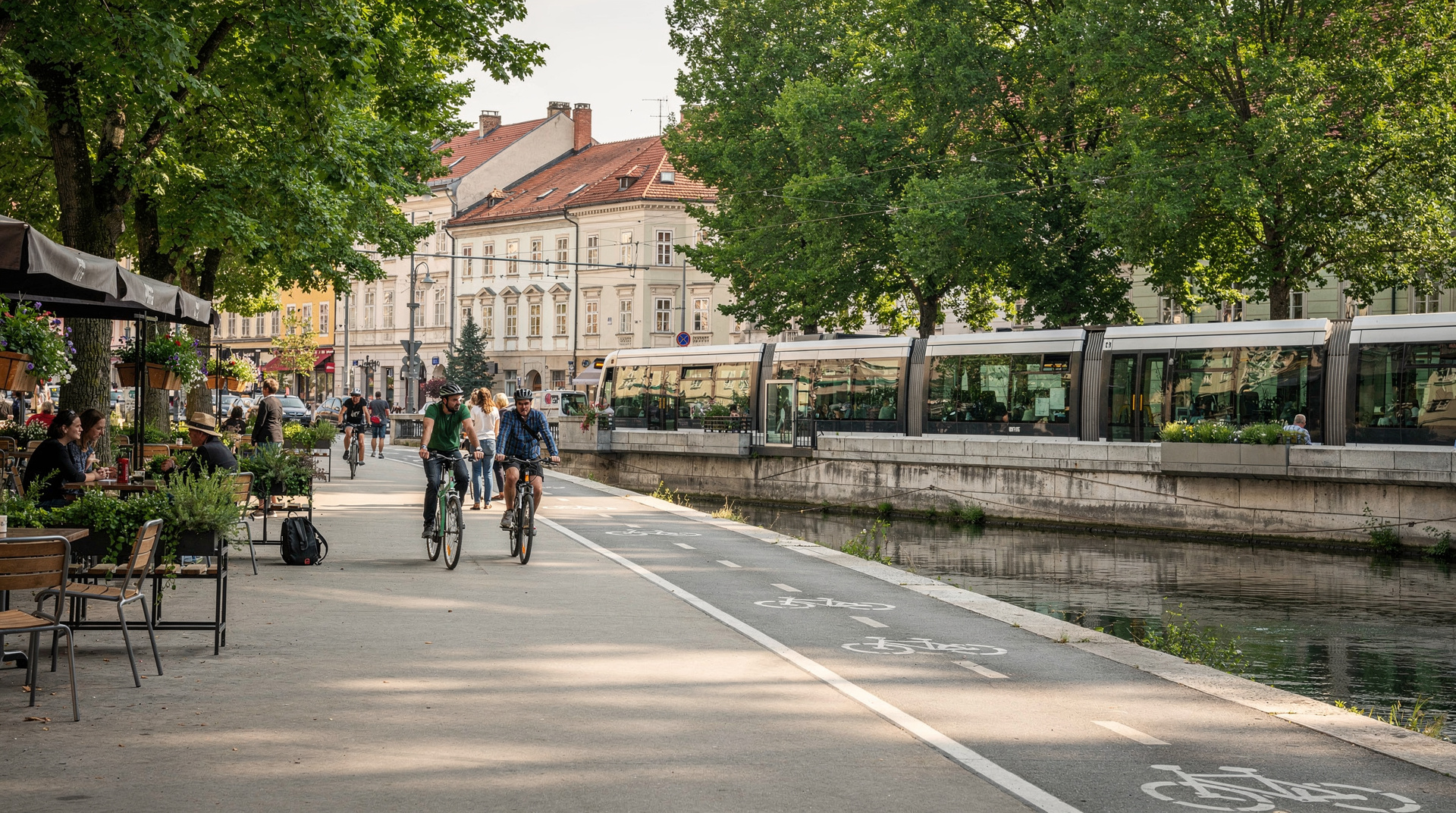
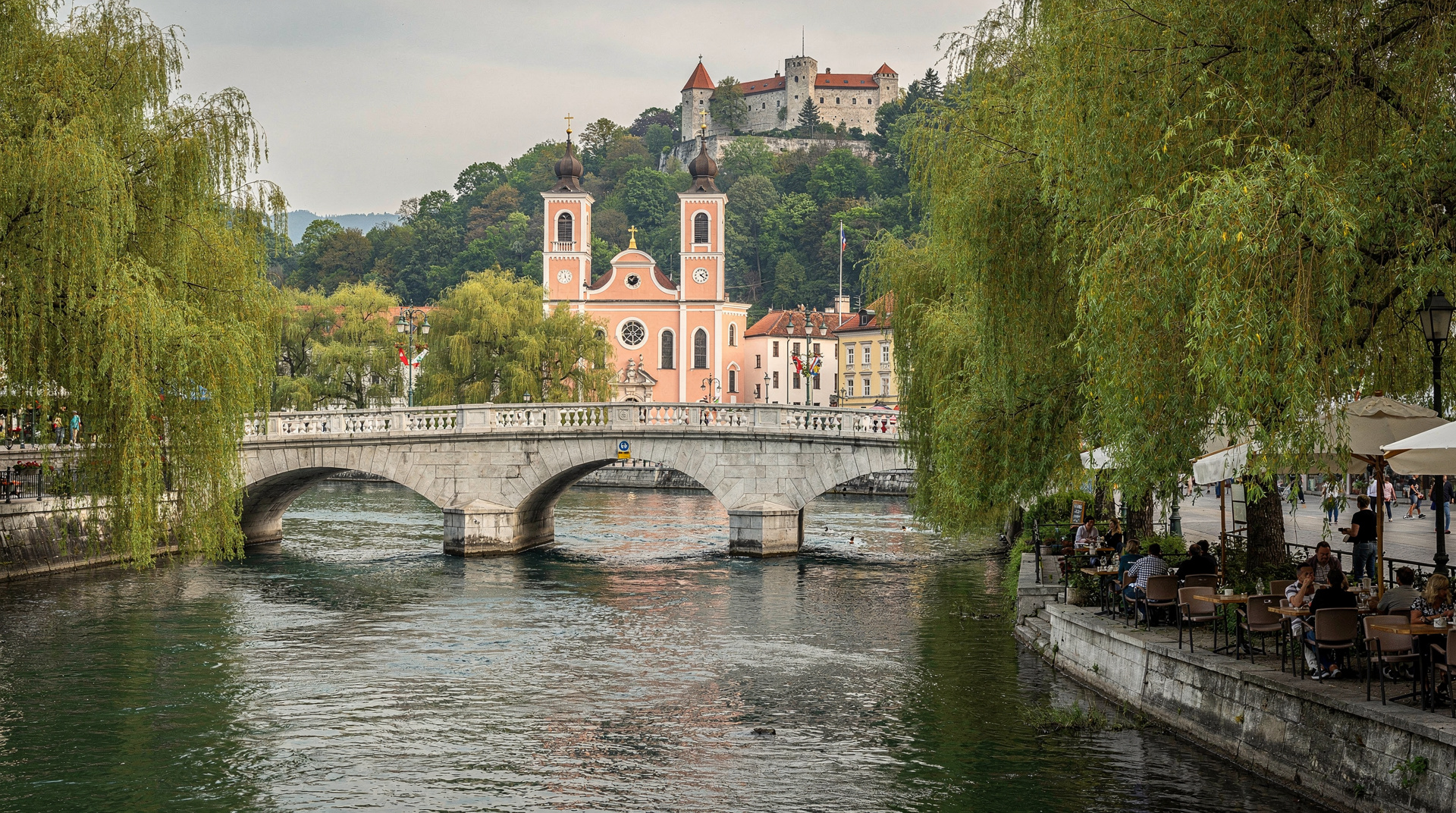
Ljubljana rewards an evening arrival. The riverside café culture, the Dragon Bridge, the illuminated castle and the compact old town lanes all work particularly well in the late light. Dinner at Gostilna pri Škofu or Restavracija 2053 — allow €15–25 for a full meal with wine.
Day 2 — Ljubljana fully explored
Give the capital a full day. The Plečnik architectural trail (Triple Bridge → Market Hall → National Library → Trnovo Bridge) takes the whole morning. The castle is optional but the terrace view justifies the funicular ride (€6 return). The National Museum (€8) is worth 90 minutes.
A private guided walking tour of Ljubljana’s old town brings the city’s architectural, political and culinary history together in a single narrative — a genuinely good use of 2–3 hours on your first full day.
Afternoon: the Metelkova arts district, then coffee in Trnovo, then a slow riverside evening. Ljubljana has excellent nightlife for a city of 300,000 — the Metelkova clubs and the Cankarjev dom cultural centre both programme interesting events.
Day 3 — Lake Bled (day trip or overnight)
Drive to Lake Bled (55 km, 50 minutes) for the day or for an overnight stay. Arrive by 8:00 for the quiet lakeside.
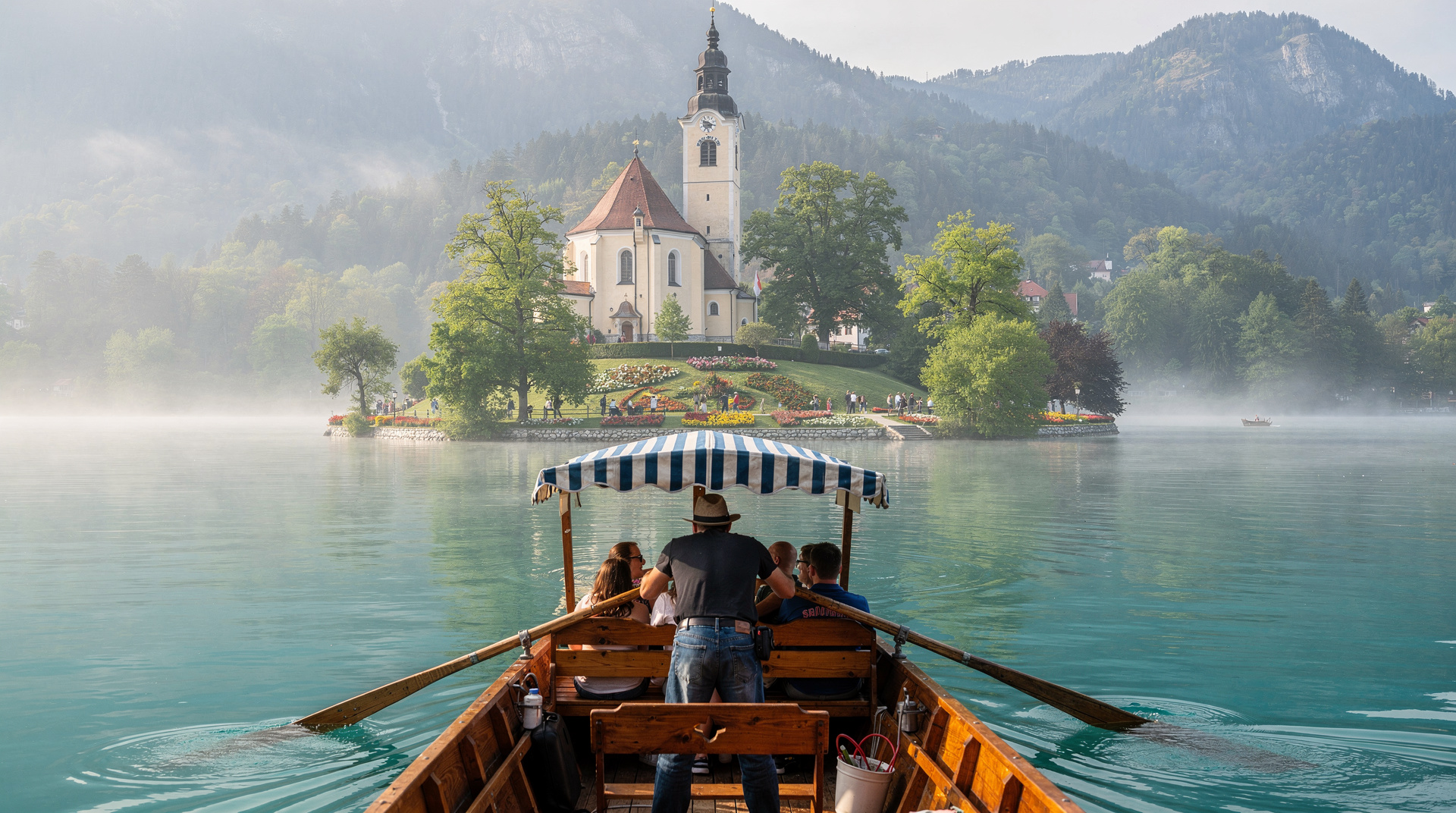
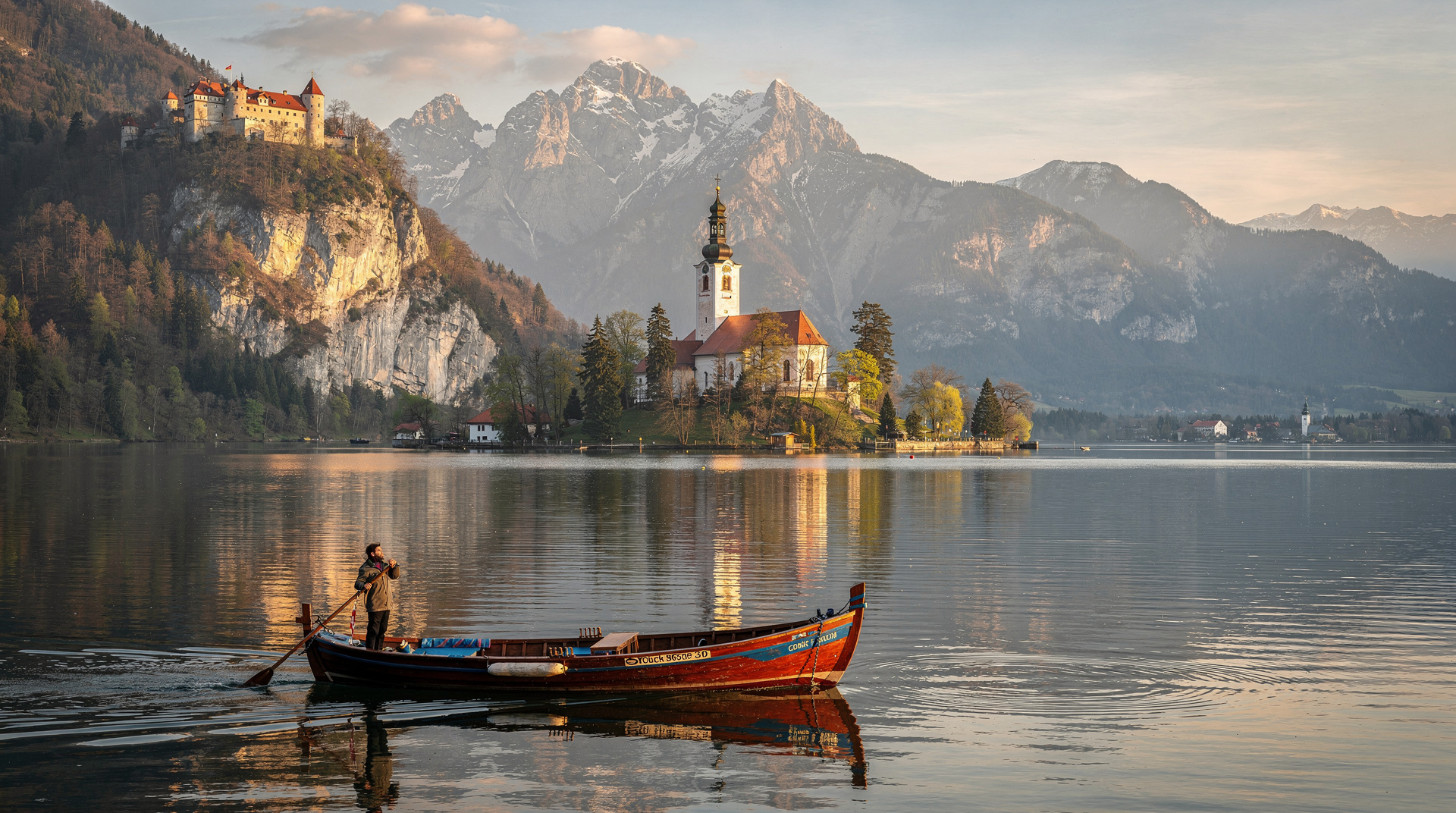
The pletna boat to Bled Island with a local guide and cream cake is the single most characteristically Slovenian tourist experience — the flat-bottomed boat, the 99 stone steps to the church, the bell-ringing, the cream cake at the landing. Budget 2 hours.
After the island, drive 4 km to Vintgar Gorge for the 1.6 km boardwalk above the Radovna River (€15 entry, open April–October). This is non-negotiable on a Slovenia itinerary — the water colour and the gorge walls are extraordinary.
If staying overnight in Bled: Penzion Mayer (from €100) or Rikli Balance Hotel (from €160). If returning to Ljubljana: back for dinner and the night.
Day 4 — Postojna Cave and the road south
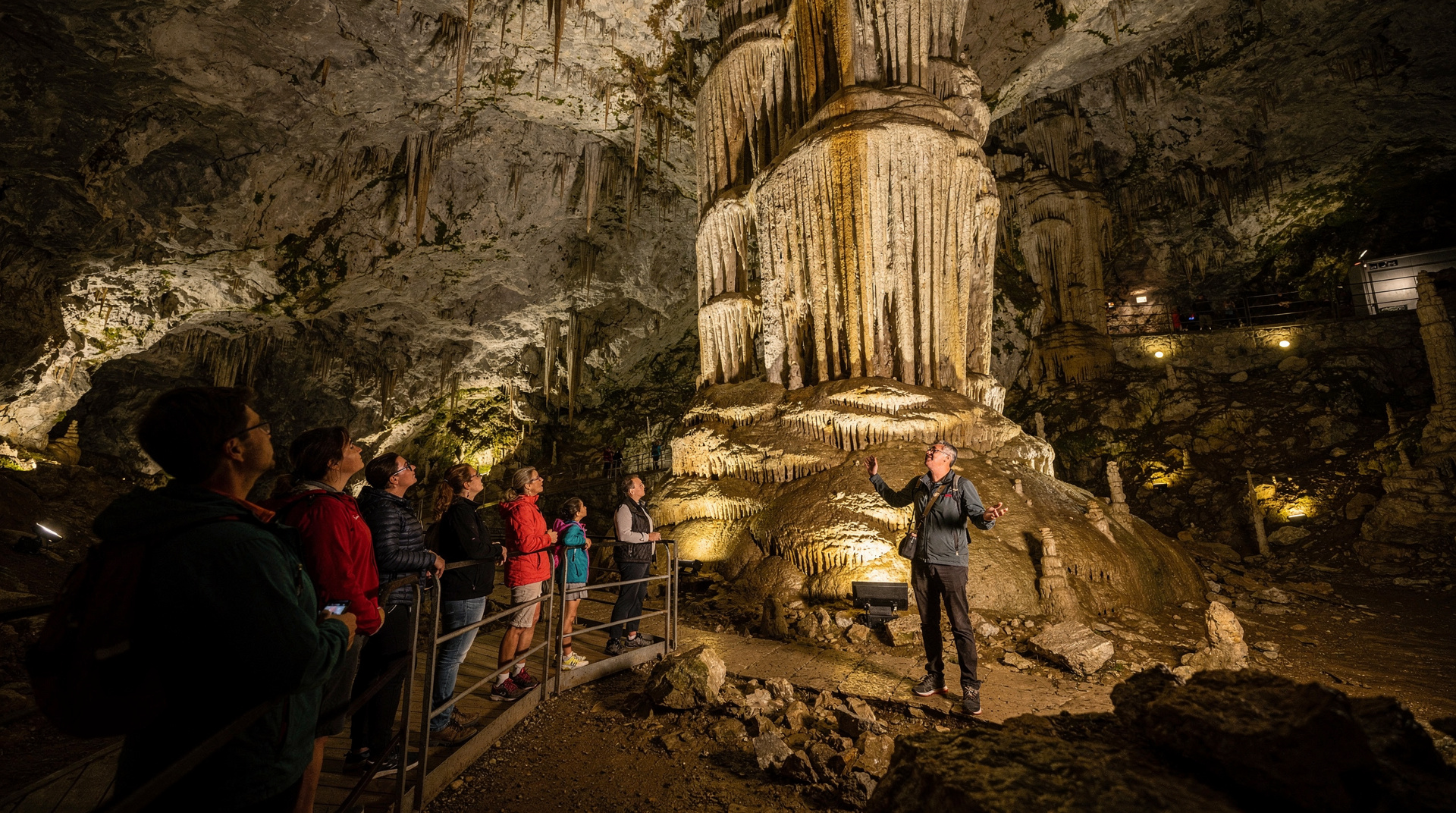
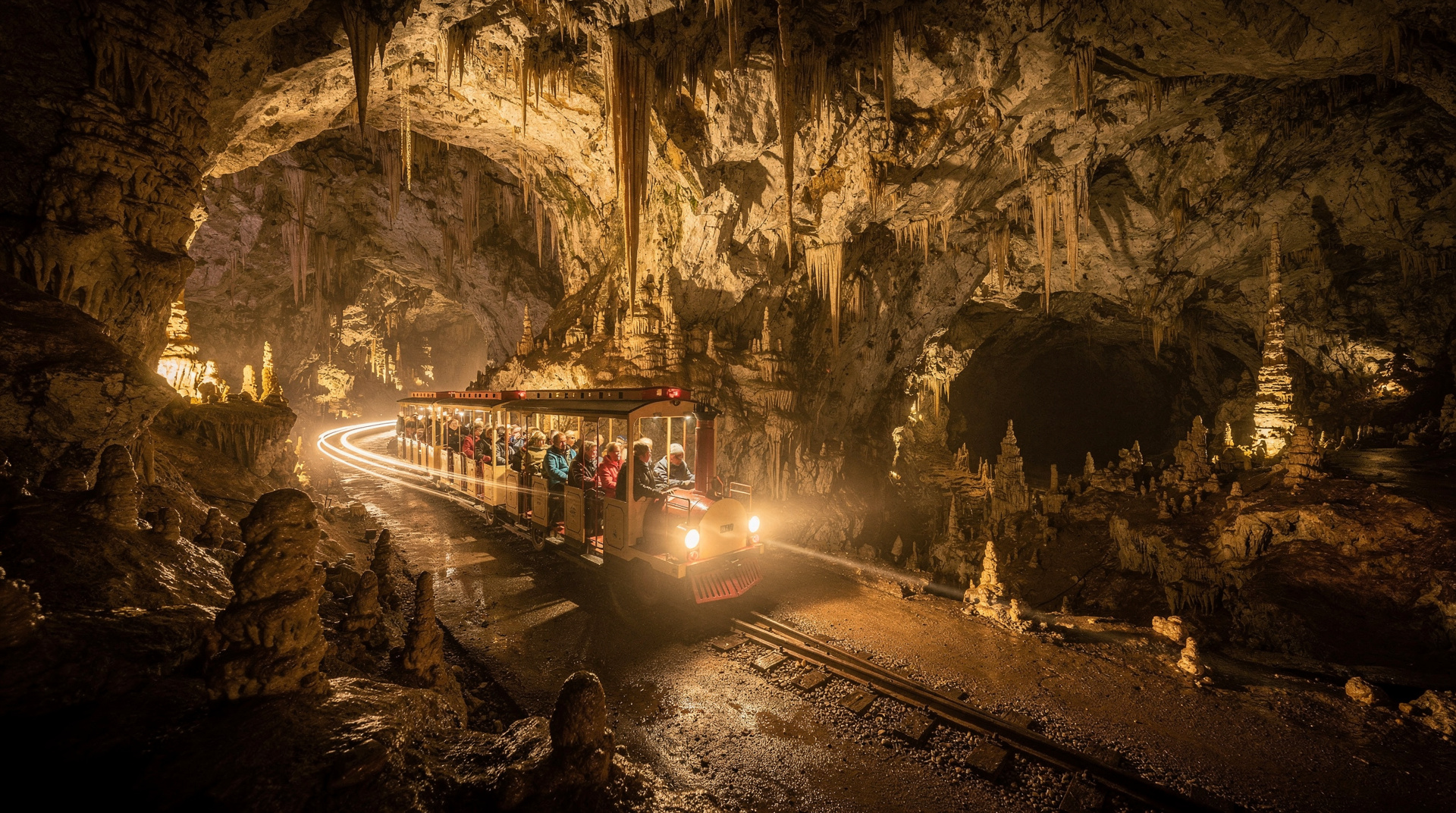
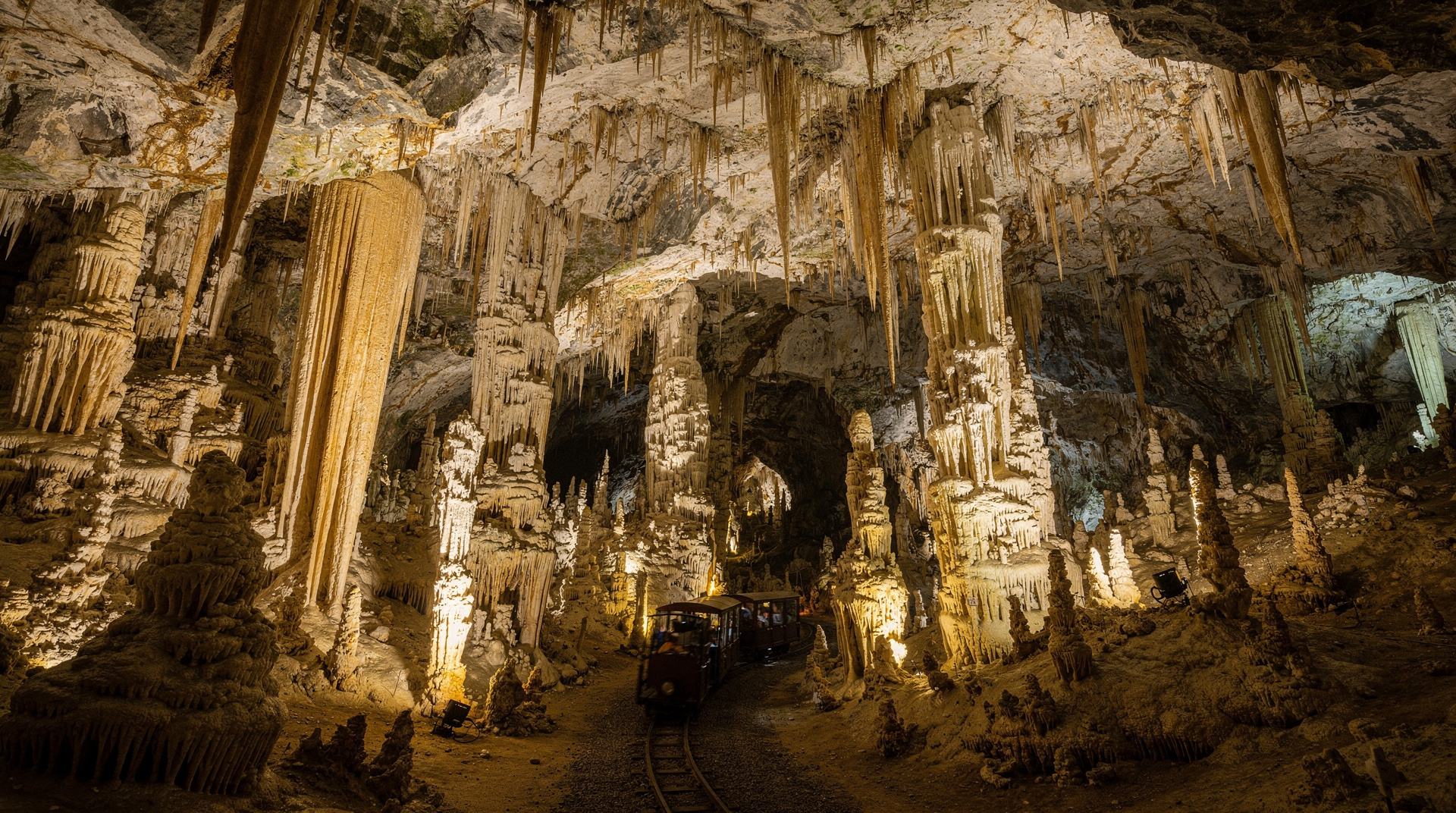
Drive Ljubljana to Postojna Cave (52 km, 45 minutes) in the morning. Tickets are sold only on the official website, so book online with date and time (€34.90 adults). The underground railway and 1.5-hour guided walk through enormous stalactite chambers is genuinely impressive — it is touristy but it is genuinely spectacular.
The Postojna Cave and Predjama Castle combined half-day tour handles entry, transport and guiding for both sites — Predjama Castle (9 km from Postojna) is a Renaissance fortress built into a cliff face that is arguably even more photogenic than the cave.
Afternoon: if you have time and energy, the 40-km detour to Škocjan Caves is worth making. Unlike Postojna, Škocjan is a UNESCO-listed underground canyon — a wild, dark, reverberating chasm — rather than a decorated gallery. Tours run hourly, €18, no advance booking. Many travellers rate it more impressive than Postojna.
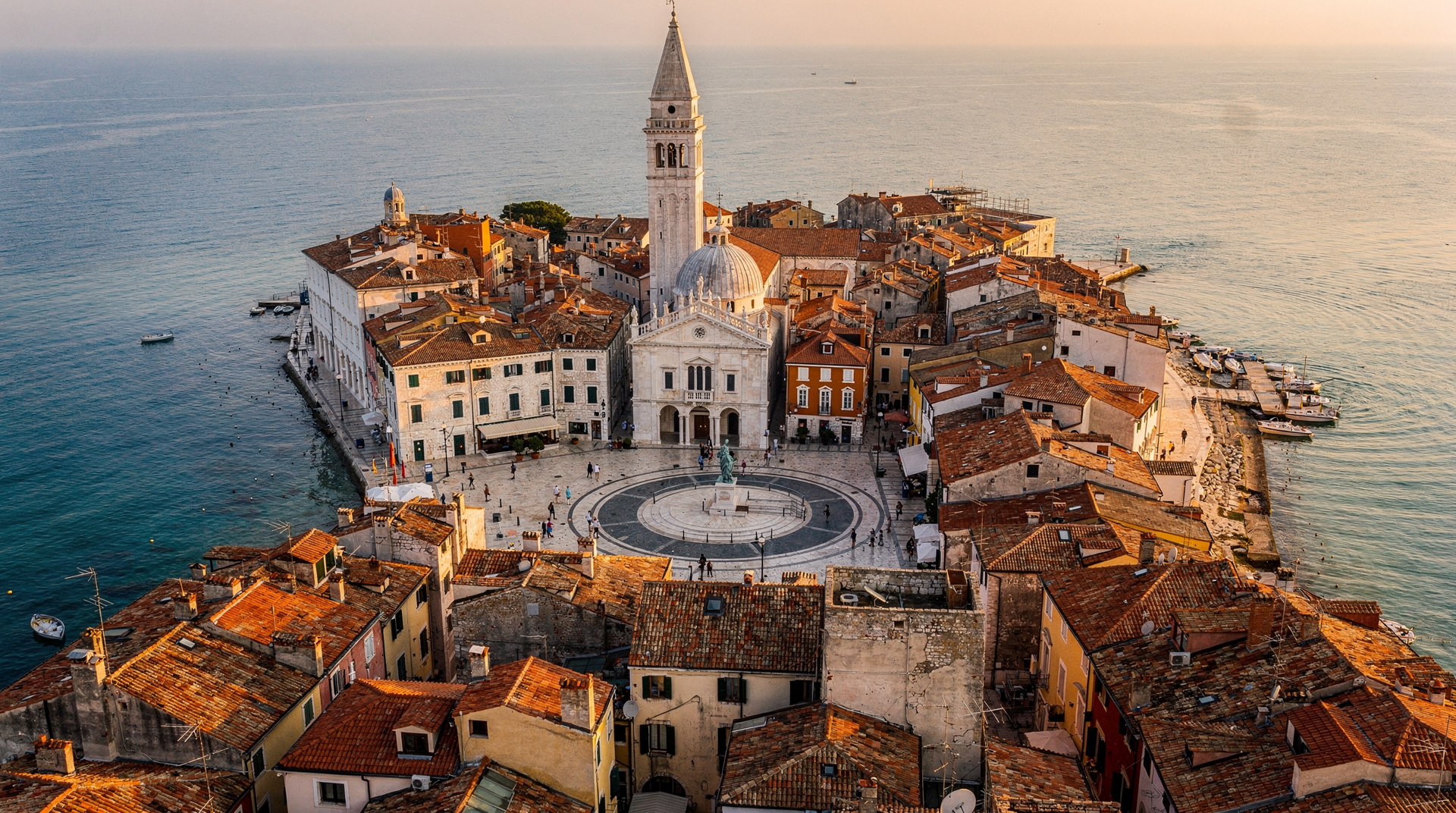
Continue south to Piran in the evening (80 km from Postojna, 1 hour). Piran is the loveliest town on the Slovenian coast and deserves a night.
Day 5 — Piran and the Slovenian coast
A private walking tour of Piran with a local guide is an excellent morning activity — the guide covers the town’s Venetian history, its role as a disputed territory after both World Wars, and the current identity questions of Slovenian Istria.
Spend the afternoon swimming from the rocks below the town walls (free, better than the municipal beaches) or walking to the lighthouse at the tip of the peninsula. The narrow lanes behind the waterfront are full of locals doing their morning shopping — Piran has a permanent population of about 4,000 and feels like a real town as much as a tourist destination.
Evening: seafood at Riva (harbour front, €30–40) or a sunset aperitivo at the wall cafe.
Day 6 — Border crossing to Croatia: Rijeka and Opatija
Drive from Piran south along the coast into Croatia. The border crossing at Sečovlje or Koper is usually fast (EU citizens, Schengen). Drive to Rijeka (130 km, 1.5 hours from Piran).
Rijeka is Croatia’s most underrated city — a Habsburg port with a strong coffee culture, excellent seafood and the country’s best carnival. The Korzo promenade, Trsat Castle (free) and the covered market are all worth an hour each.
Continue 15 km south to Opatija for the night — a Habsburg resort town with grand 19th-century villas, a clifftop promenade and the Kvarner Riviera’s clearest water. Hotel Miramar (from €90) or Amadria Park Hotel (from €120) are good mid-range options.
Day 7 — Plitvice Lakes National Park
Drive from Opatija to Plitvice Lakes (200 km, 2.5 hours). Plitvice is Croatia’s most visited national park — 16 interconnected turquoise lakes connected by waterfalls, boardwalks through the water. Genuinely extraordinary. Entry is €25–35 depending on season; book online.
Allow a full day — Route A or B (the loop trails) takes 4–6 hours. The upper lakes are less crowded than the lower lakes; start there if arriving before 10:00.
The Ljubljana to Split tour via Rastoke and Plitvice is a useful option for those who want guided coverage of Plitvice and the Rastoke watermills without driving — the tour runs day return or through to the coast.
If driving, the village of Rastoke (5 km from Slunj, 30 km north of Plitvice) is a remarkable detour: mills and waterfalls right through the village, with restaurants built over the water.
Day 8 — Drive to Split or Dubrovnik
Drive south from Plitvice to Split (300 km, 3.5 hours). The route crosses Dalmatia and descends to the coast at Zadar or Split. Both are worth at least an afternoon.
Split’s Diocletian’s Palace (an entire neighbourhood built inside a 4th-century Roman emperor’s retirement residence) is one of the best-preserved ancient monuments in Europe. The palace walls contain apartments, restaurants, bars and a cathedral — it is lived in, not just preserved.
Alternatively, continue to Dubrovnik (another 3 hours south) if that is your endpoint.
Day 9 — Dalmatian coast
Explore Split or Dubrovnik properly. In Split: the fish market, the Meštrović Gallery, a boat to the island of Šolta or Brač. In Dubrovnik: walk the city walls (€35, worth it), the cable car to Mt Srđ, the Lokrum island ferry.
Day 10 — Return or fly out
Fly home from Split Airport (SPU) or Dubrovnik Airport (DBV), or continue east to Bosnia or Montenegro. Alternatively, take the overnight ferry from Split to Ancona (Italy, 10 hours) and continue west.
Practical notes for the combined trip
Car hire: Renting in Slovenia and dropping in Croatia is possible but attracts a cross-border fee (typically €50–100 extra per day from Slovenian operators). It is often cheaper to rent in Croatia separately — pick up in Rijeka or Split after doing Slovenia. Check with your rental company about cross-border terms before booking.
Border crossings: Slovenia–Croatia is an EU internal border (both Schengen) — no passport control for EU citizens, quick for others. Road signs switch immediately to Croatian, currency changes from euro to euro (Croatia has used the euro since January 2023).
Driving distances (indicative): Ljubljana to Piran 133 km; Piran to Rijeka 130 km; Rijeka to Plitvice 200 km; Plitvice to Split 300 km.
Budget: Slovenia mid-range (€110–150/person/day); Croatia slightly cheaper at €80–120/person/day including accommodation, food and entry fees.
Planning the Slovenia–Croatia sequence
The most common question about this itinerary is which country to start with. The answer depends on your flight options. Most people flying from Western Europe can reach Ljubljana Airport more easily than Dubrovnik or Split on direct routes, making Slovenia the natural start. Returning from Split or Dubrovnik airports is straightforward — both have excellent connections to major European hubs.
If flying into and out of the same airport: consider flying into Ljubljana and out of Dubrovnik, or into Dubrovnik and out of Ljubljana (one-way flights within Europe are increasingly affordable and avoid backtracking). Rome2rio and Kiwi.com are the best tools for building multi-destination routing.
Why Slovenia first: Starting in Ljubljana and working south means your energy and enthusiasm are highest for the Alpine landscapes, which reward early-morning starts. By the time you reach Croatia, you can afford to slow down — Split and Dubrovnik are best enjoyed at a slower pace than Slovenia’s physical terrain demands.
The logical border crossing: Piran to Rijeka is the most seamless transition — both coastal, both historically Venetian-influenced, both oriented toward the Adriatic. Arriving in Rijeka from Piran feels like a continuation of the Adriatic story rather than an abrupt cultural change.
Day-by-day budget breakdown
For a couple travelling mid-range, the full 10 days costs approximately:
| Category | Slovenia (5 nights) | Croatia (5 nights) |
|---|---|---|
| Accommodation | €700–900 | €600–800 |
| Food | €350–450 | €300–400 |
| Entry fees | €150–200 | €150–200 |
| Transport | €200–250 | €150–200 |
| Activities | €200–300 | €100–150 |
| Total per couple | €1,600–2,100 | €1,300–1,750 |
Combined total for two people over 10 days: approximately €3,000–3,850, excluding flights.
What distinguishes this from the average Balkans trip
The Slovenia–Croatia combination is well-travelled, and most standard tours cover Postojna Cave and Plitvice in the same day (rushed, unsatisfying) or skip Slovenia’s highlands entirely in favour of the Croatian coast. This itinerary deliberately reverses the typical logic:
It spends the first half in Slovenia — Ljubljana properly explored, Lake Bled with an early morning lake circuit, Škocjan Caves rather than rushing Postojna — and arrives in Croatia with a full Slovenian picture already assembled. The Croatian half then benefits from context: the Venetian connection between Piran and Istria, the karst geology continuing from Slovenia’s cave country into Croatia’s Plitvice, the Habsburg architecture linking Ljubljana with Rijeka and the Dalmatian coastal towns.
The Kobarid Museum detour (if added — it is 2.5 hours from Bled) provides the WWI context that connects to the Italian-Austrian battlegrounds on the Isonzo Front and to Croatia’s wartime experiences in a much later conflict. Slovenia and Croatia share a recent history that makes the 1991–1995 period more legible when you understand where both countries came from.
Driving vs public transport for the combined trip
The 10-day itinerary is designed around a hire car, but it can be done partly without one:
Slovenia section: Entirely feasible by bus and organised day trip (see the no-car itinerary). Ljubljana, Bled and Postojna are all well-connected.
Border crossing: The Piran–Rijeka coastal route runs by local bus via Koper (1.5 hours, changes required). The Arriva and Brioni bus network covers most coastal towns.
Croatia section: Harder without a car. Rijeka to Plitvice by bus requires at least one change (Karlovac or Zagreb) and takes 3–4 hours. Split to Dubrovnik is 3–4 hours by bus (reliable, comfortable). For Plitvice specifically, organised day trips from Zagreb, Zadar or Split are the most practical car-free option.
What Slovenia adds to a Croatia trip
Most visitors coming to Croatia from Western Europe pass through or over Slovenia without stopping. This is understandable — Croatia has three international airports with cheap flight connections, a coastline of extraordinary variety and a Mediterranean summer appeal that Slovenia’s interior cannot match for beach holidays.
But Slovenia adds dimensions to a Croatia trip that the coast alone cannot provide. The Alpine landscapes of Lake Bled and Lake Bohinj offer a physical contrast to Croatia’s limestone coast that makes both more interesting by comparison. Ljubljana is a more intimate and more architecturally coherent capital than Zagreb (which is larger and more fragmentary).
And the karst geology that produces Slovenia’s cave systems continues directly into Croatia’s Plitvice Lakes — understanding the karst mechanism at Škocjan Caves or Postojna Cave makes Plitvice’s disappearing rivers and reappearing lakes immediately legible.
The cultural argument: Slovenia and Croatia have a shared Habsburg history (both were parts of the Austro-Hungarian Empire until 1918), a shared Yugoslav history (1945–1991), and then divergent post-independence trajectories. Slovenia joined the EU in 2004 and adopted the euro in 2007; Croatia joined in 2013 and adopted the euro in 2023. The similarities and differences are worth exploring on the ground — the architecture, the food, the infrastructure, the attitudes toward tourism all tell the story of two countries that started in the same place and arrived somewhere rather different.
Essential items for the combined trip
- Valid passport (non-EU) or EU ID card for all Schengen crossings
- E-vignette for Slovenian motorways (€16 for one week, buy at dars.si)
- Croatian motorway toll (pay at toll booths, credit card accepted)
- European Health Insurance Card (EU citizens) or travel insurance with medical coverage
- Plitvice Lakes tickets booked online in advance (they sell out in July–August)
- Adapter for Croatian plug types if charging EU-format devices (not required — Croatia uses the same Type C/F as Slovenia and most of Europe)
Connectivity and money across two countries
Both Slovenia and Croatia use the euro, which simplifies budgeting considerably compared with a few years ago. EU roaming plans and most eSIMs cover both countries under the same data allowance, since both are in the EU’s roam-like-at-home zone; non-EU travellers should buy a single EU-wide eSIM before departure rather than switching SIM cards at the border. Cards are widely accepted in both countries, including at Plitvice’s ticket machines and most Dalmatian coast restaurants, but carry €50–100 in cash for Croatian toll booths that occasionally have card-reader outages, and for smaller Rijeka and Opatija cafés.
Mobile signal is reliable along the entire route, including the Vršič-free coastal transfer between Piran and Rijeka and the Plitvice–Split motorway, so live traffic and border-wait information is available throughout — useful in July–August when the Slovenia–Croatia crossing can see queues at peak weekend changeover times (Saturday mornings especially).
Extending or shortening the loop
Couples with fewer than 10 days can drop the itinerary to 7 by cutting one Croatian coastal city (Split or Dubrovnik, not both) and treating Plitvice as a single overnight stop rather than a full day. Travellers with extra time should add it to Slovenia rather than Croatia — the Julian Alps 7-day itinerary shows what an extra 2–3 days in the Slovenian mountains unlocks before crossing the border south.
Is 10 days really enough for both countries?
The honest answer is that 10 days delivers a genuine, satisfying taste of both countries but not a deep exploration of either — five days each is enough to see the headline sights without feeling rushed, but not enough to add the Julian Alps’ Vršič Pass or Croatia’s Istrian peninsula. Travellers who find themselves wanting more of one country than the other by day 5 should feel free to adjust the remaining nights accordingly; the itinerary is a template, not a fixed script. For a Slovenia-only alternative that goes deeper into the mountains instead of crossing the border, the Julian Alps 7-day itinerary is the natural comparison.
Top experiences
Bookable activities with verified prices and instant confirmation on GetYourGuide.