Julian Alps 7-day road trip itinerary
From Bled: full-day Triglav National Park tour
The full Alpine loop: Slovenia’s mountain heartland
Seven days is enough to complete one of Europe’s most rewarding Alpine road loops: the chain of landscapes that runs from Lake Bled west to Kranjska Gora, over the iconic Vršič Pass into the Soča Valley, south through Bovec and Kobarid, and back east via the Isonzo battlefields and the Karst plateau. The entire circuit covers roughly 400 km of driving — but what driving.
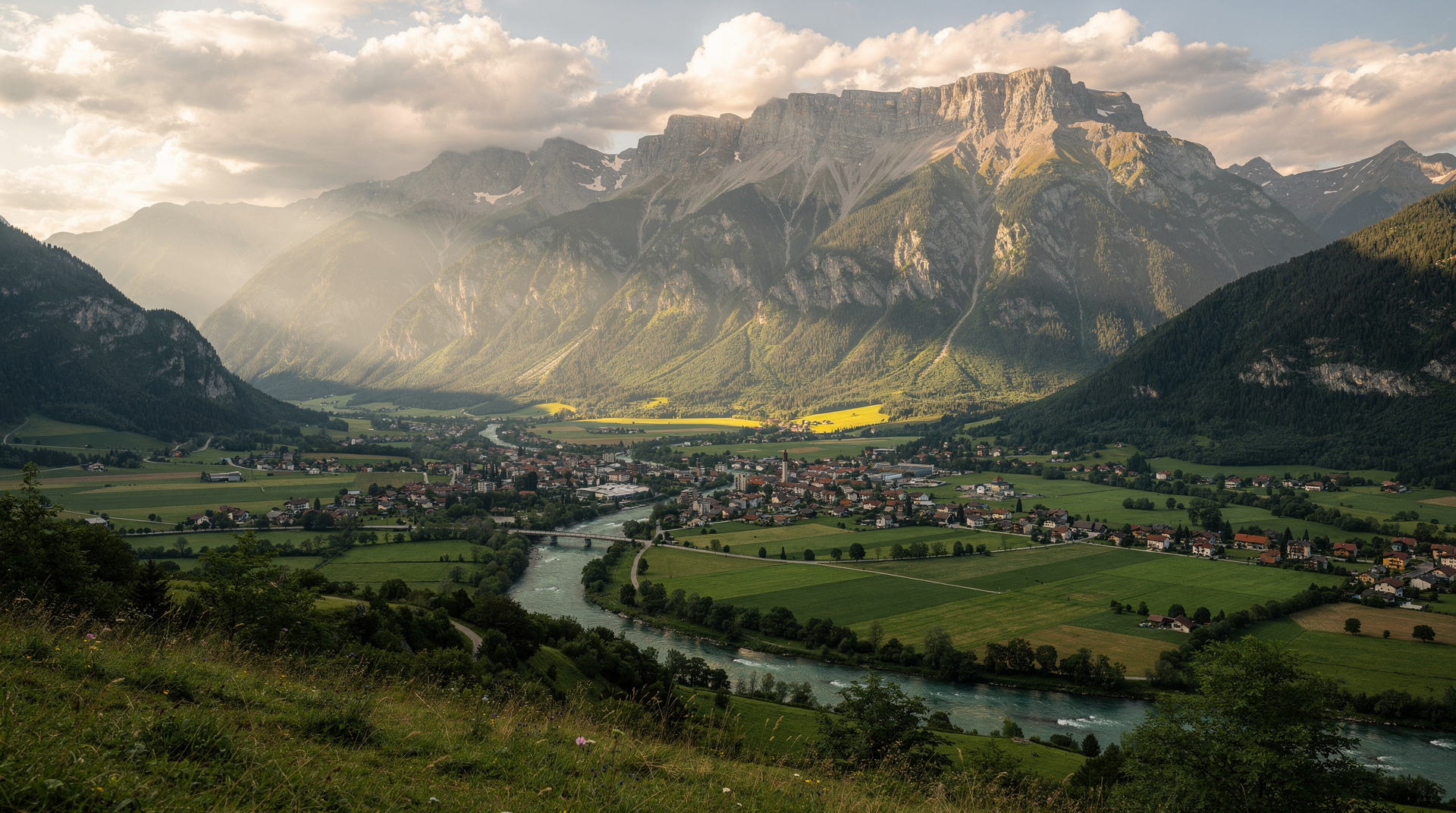
The Julian Alps form the south-eastern corner of the Alpine arc, and they are Slovenia’s natural defining feature. Triglav National Park covers most of the area in this itinerary — 880 km² of protected mountain terrain. The scenery transitions from the Karavanke limestone giants above Bled through the green pastoral bowl of Bohinj, over the rust-red scree of Vršič into the impossible emerald of the Soča Valley — a colour change so dramatic it looks like a film set.
Critical note on the Vršič Pass: Road 206 over the pass (1,611 m) is closed approximately November through May due to snow. If travelling outside that window, the loop must be done in two halves — Bled/Bohinj from the east, Bovec/Soča from the west via Tolmin.
| Where | Bled → Bohinj → Kranjska Gora → Vršič Pass → Bovec → Kobarid → Ljubljana |
| Distance | Roughly 400 km |
| Difficulty | Moderate — the Vršič crossing and optional 7 Lakes hike are the demanding parts |
| Best time | June–September; road closed roughly November–May |
| Budget | Mid-range, around €120–160/person/day plus activities |
| Car needed | Yes — essential for the Vršič Pass and Soča Valley |
Day-by-day snapshot
| Day | Base | Focus |
|---|---|---|
| 1 | Bled | Arrival, first evening |
| 2 | Bled | Lake circuit, pletna boat, Vintgar, Bohinj comparison |
| 3 | Bled | Bohinj valley, 7 Lakes hike or cable car |
| 4 | Bovec | Kranjska Gora, Vršič Pass crossing |
| 5 | Bovec | Rafting, canyoning, paragliding |
| 6 | Kobarid | Isonzo battlefields, Kozjak Waterfall |
| 7 | Bled/Ljubljana | Triglav tour or return |
If you want the coast and wine hills instead of a second lap of the mountains, the coast and mountains 7-day itinerary shares the Bled opening but diverges south to Piran; for a slower, less driving-heavy version of the Soča section alone, see the Soča adventure 7-day itinerary.
Day 1 — Arrive in Bled
Drive or bus from Ljubljana Airport to Bled (55 km, 50 minutes). Pick up your hire car at the airport if arriving by air. In Bled, resist the urge to exhaust all the sights immediately — save the lake circuit for the next morning.
Instead, spend the afternoon acclimatising. Walk the east shore of Lake Bled to the Ojstrica viewpoint (15 min steep walk, free) for the overview. Grab a kremšnita at Slaščičarna Šmon (€3–4) — this is the birthplace of the cream cake and there is no better place to try it.
Evening at Bled: dinner at Ostarija Peglez’n (traditional Slovenian food, €15–25) and an early start scheduled for tomorrow.
Day 2 — Lake Bled in full
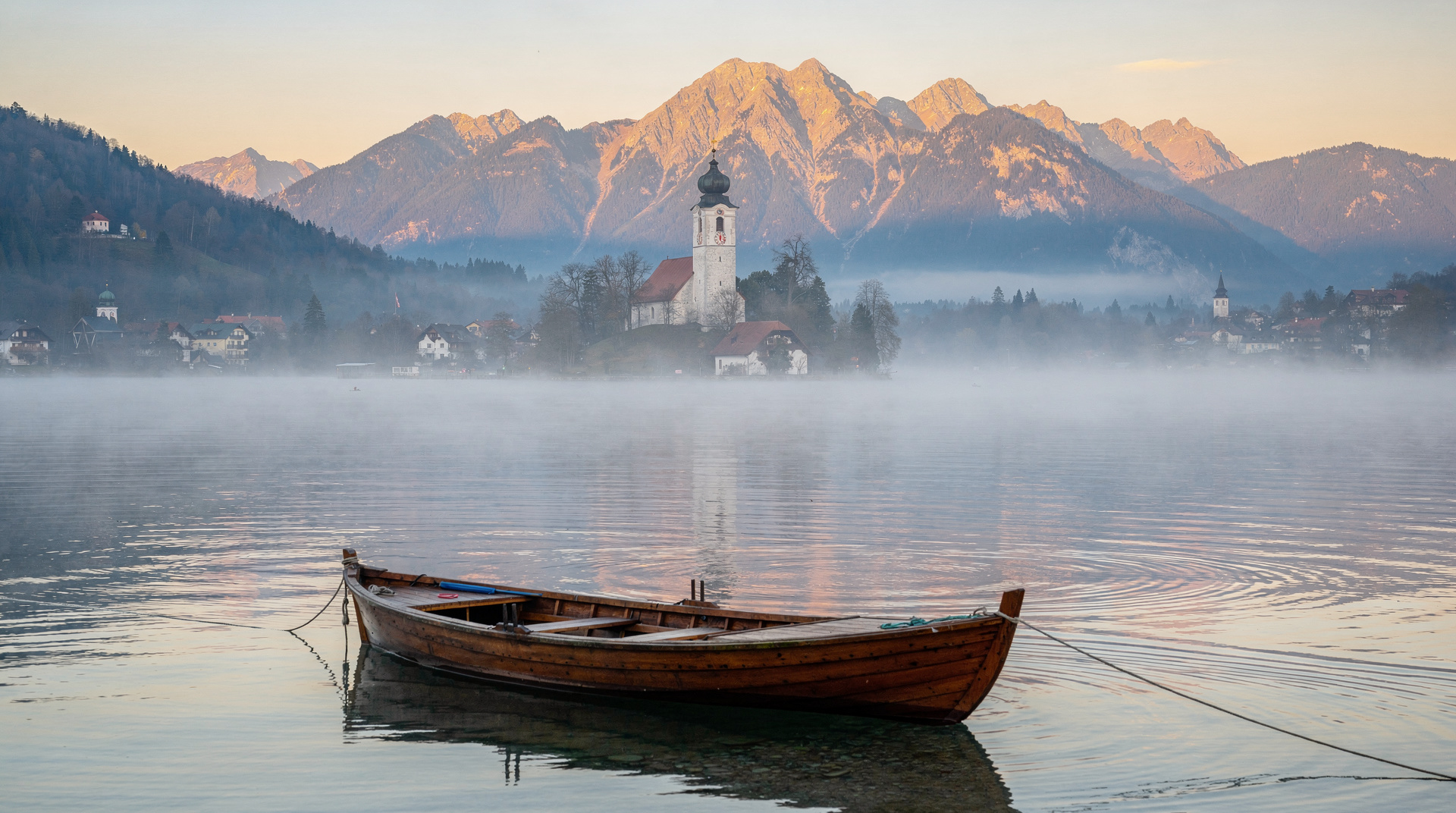
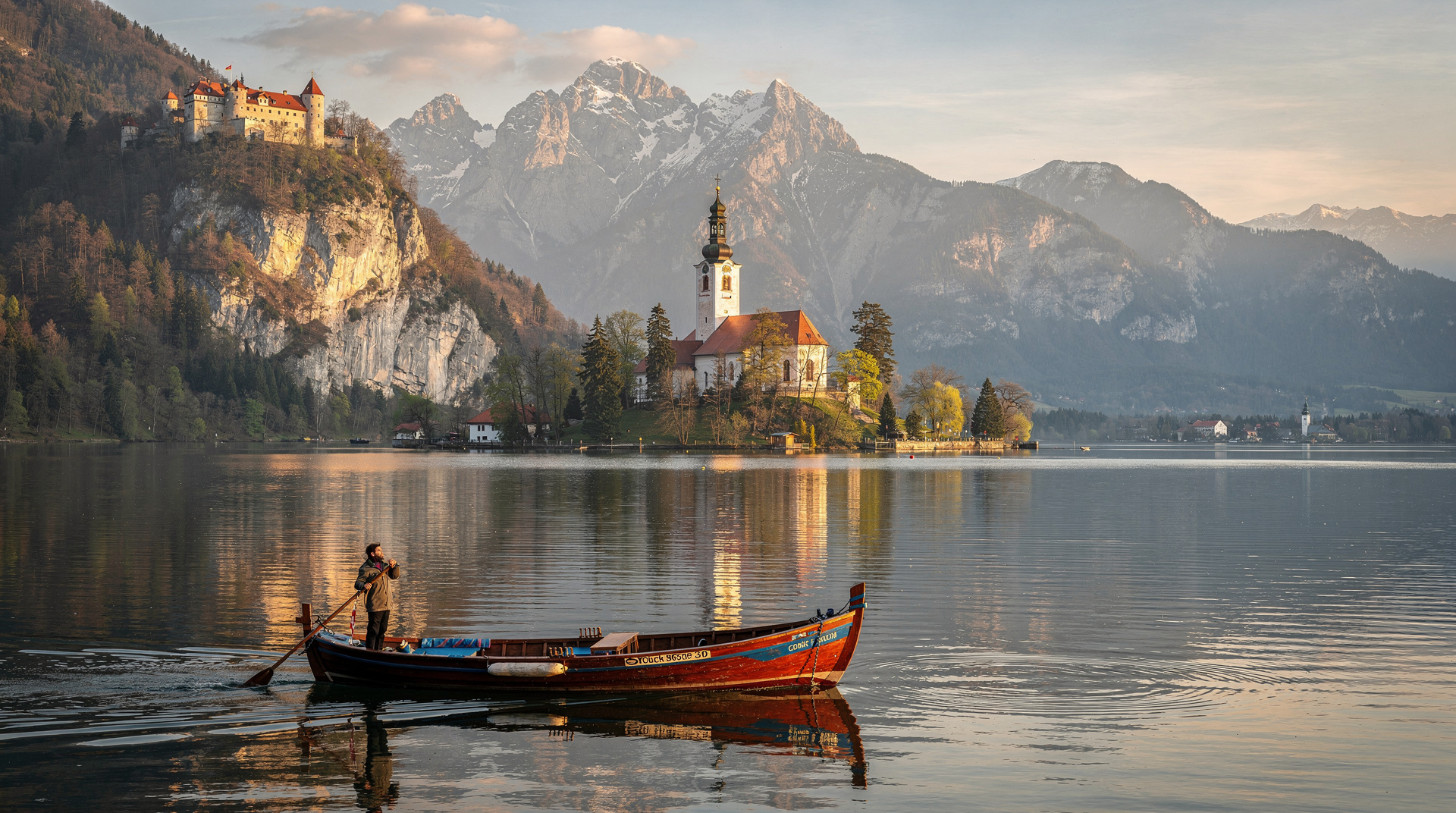
Dawn at Bled is transformative. Set an alarm for 6:30 and walk to the north shore — the castle and island are reflected in still water and the only other people around are fishermen and a few photographers. Walk the full 6 km lake circuit before the tour buses arrive.
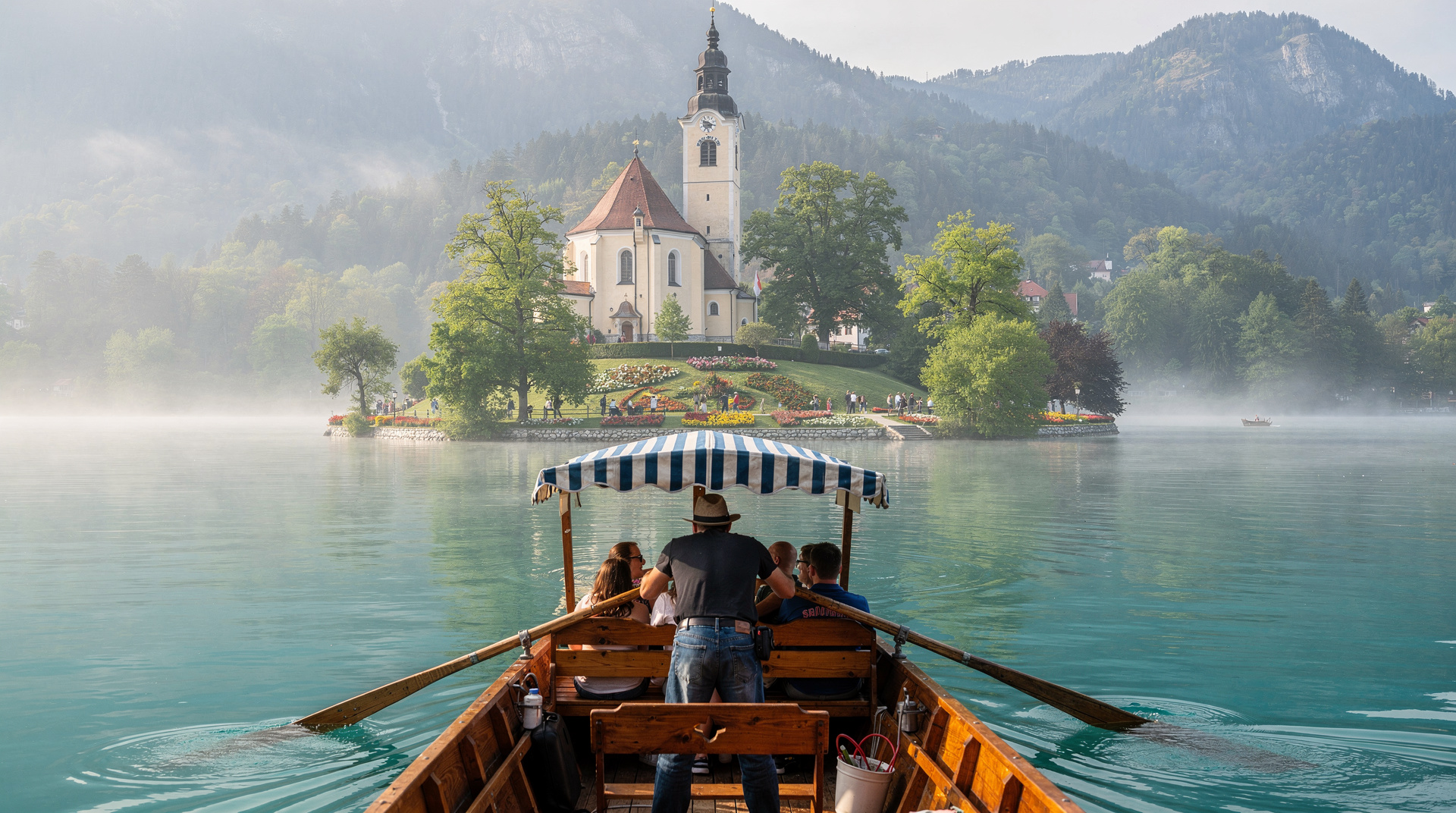
Take the pletna boat to Bled Island mid-morning once the boatmen have started their day — the flat-bottomed wooden craft is rowed standing by boatmen from hereditary families who have had the concession since the 17th century.
After the island, drive to Vintgar Gorge (4 km, signposted). Open April–October, entry €15. The 1.6 km boardwalk above the Radovna River is magnificent — sheer limestone walls, cascades, and pools of crystal water. Return to Bled for lunch.
In the afternoon, drive 30 minutes west to Lake Bohinj for comparison with Bled. Bohinj is larger, deeper, less touristy and arguably more beautiful. The mountains rise directly from the southern shore. Swim if warm enough, or walk to the Savica Waterfall (20 minutes from the car park, €4).
Return to Bled for night two.
Day 3 — Lake Bohinj and mountain hike
Dedicate a full day to the Bohinj valley. Drive from Bled (30 minutes) and begin with the Vogel cable car (€32–35 return) from Ukanc — at 1,540 m the panorama takes in Triglav, the entire Bohinj basin and, on clear days, the Adriatic coast.
For a serious mountain day:
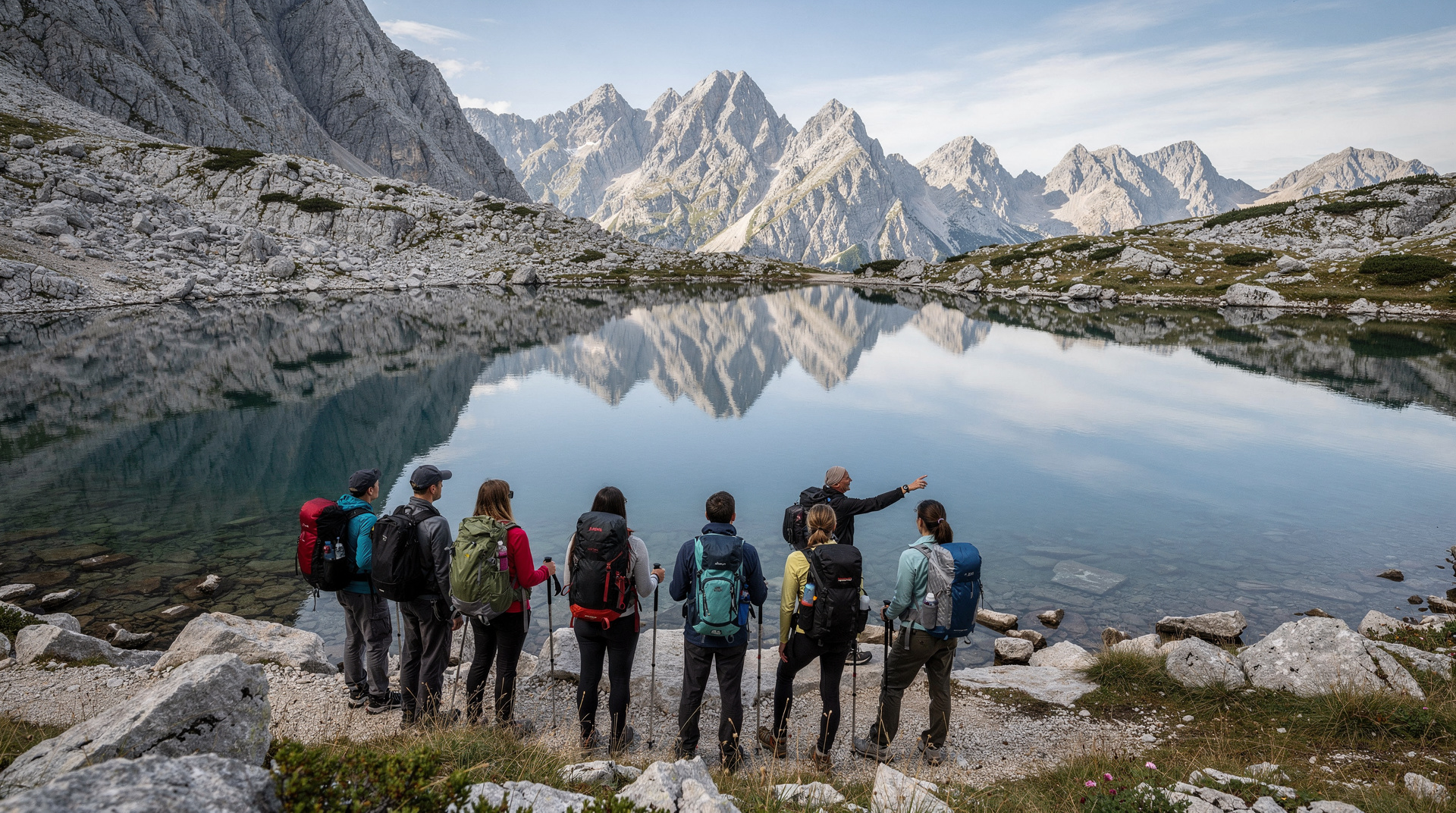
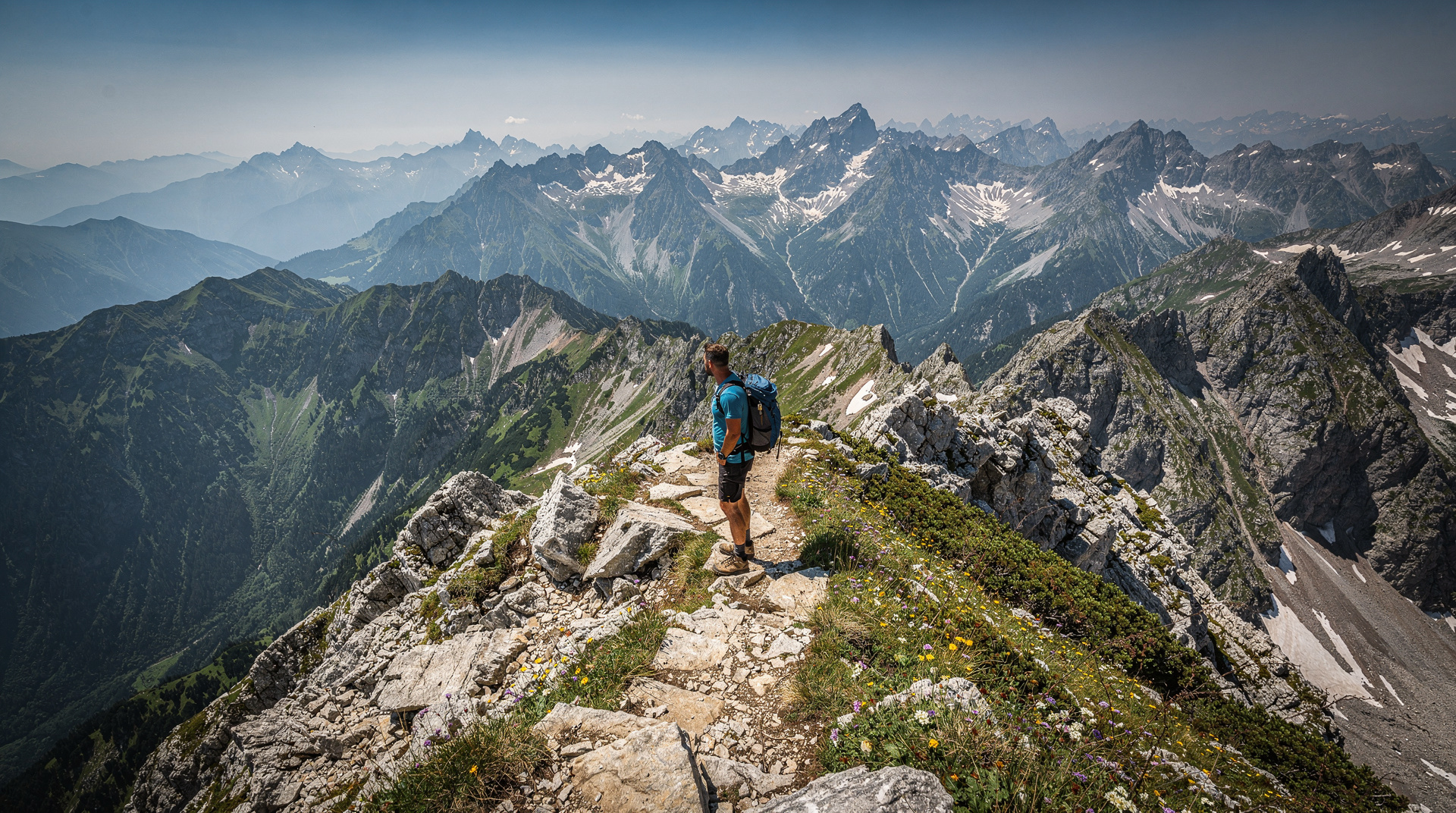
The guided 7 Lakes Valley hiking tour from Bohinj takes you through one of the most celebrated routes in Triglav National Park — 15 km through the valley of seven glacial lakes, with views of Triglav throughout. You need reasonable fitness and proper hiking boots. Duration is around 8 hours.
For something less demanding, walk the Bohinj lake circuit (12 km, 3–4 hours), which passes through Ribčev Laz, Stara Fužina and the western meadows before returning along the north shore. The valley is extraordinarily quiet compared with Bled and the light on the water in the afternoon is superb.
Lunch at Gostišče Erlah near Stara Fužina for local trout and a views of the valley. Return to Bled overnight.
Day 4 — Kranjska Gora and the Vršič Pass
Check out of Bled and drive northwest to Kranjska Gora (35 km, 40 minutes). The town is Slovenia’s main ski resort and in summer a pleasant base for mountain biking, hiking and the Planica ski-flying venue. Allow 1–1.5 hours to explore the Jasna Lake (2 km east of the village, free entry, with two beautiful teal ponds) and the Pericnik Waterfall (10 minutes from the road, free).
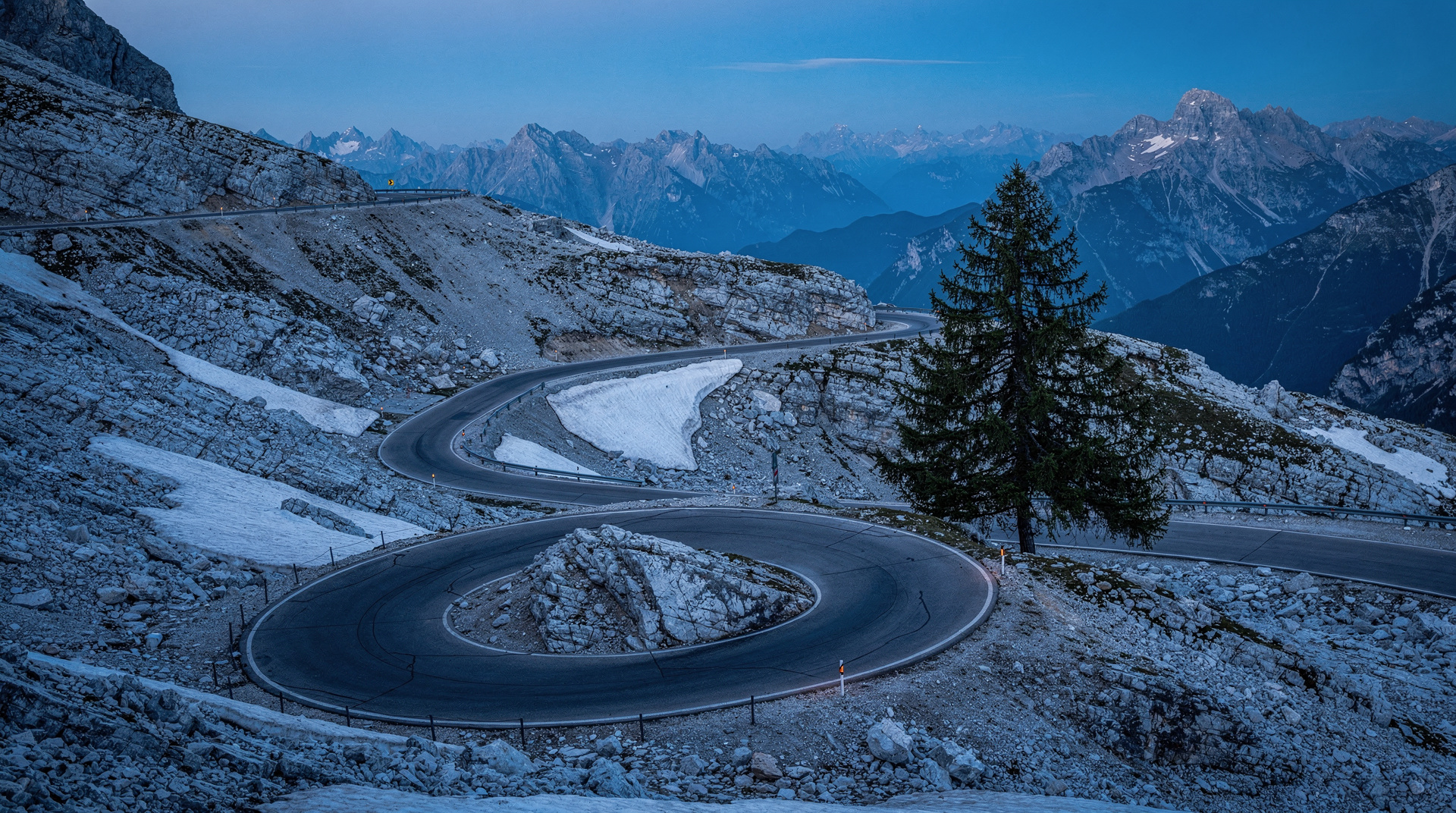
After Kranjska Gora, drive the Vršič Pass (Road 206). The pass road climbs through 50 numbered hairpin bends to 1,611 m — the views over the Sava valley on the north side and the Soča sources on the south side are extraordinary. Allow 1.5–2 hours to drive it properly, stopping at the Russian Chapel (built by POWs in WWI), the Vršič summit car park (walk 15 minutes to the ridge for the full panorama) and the Soča springs.
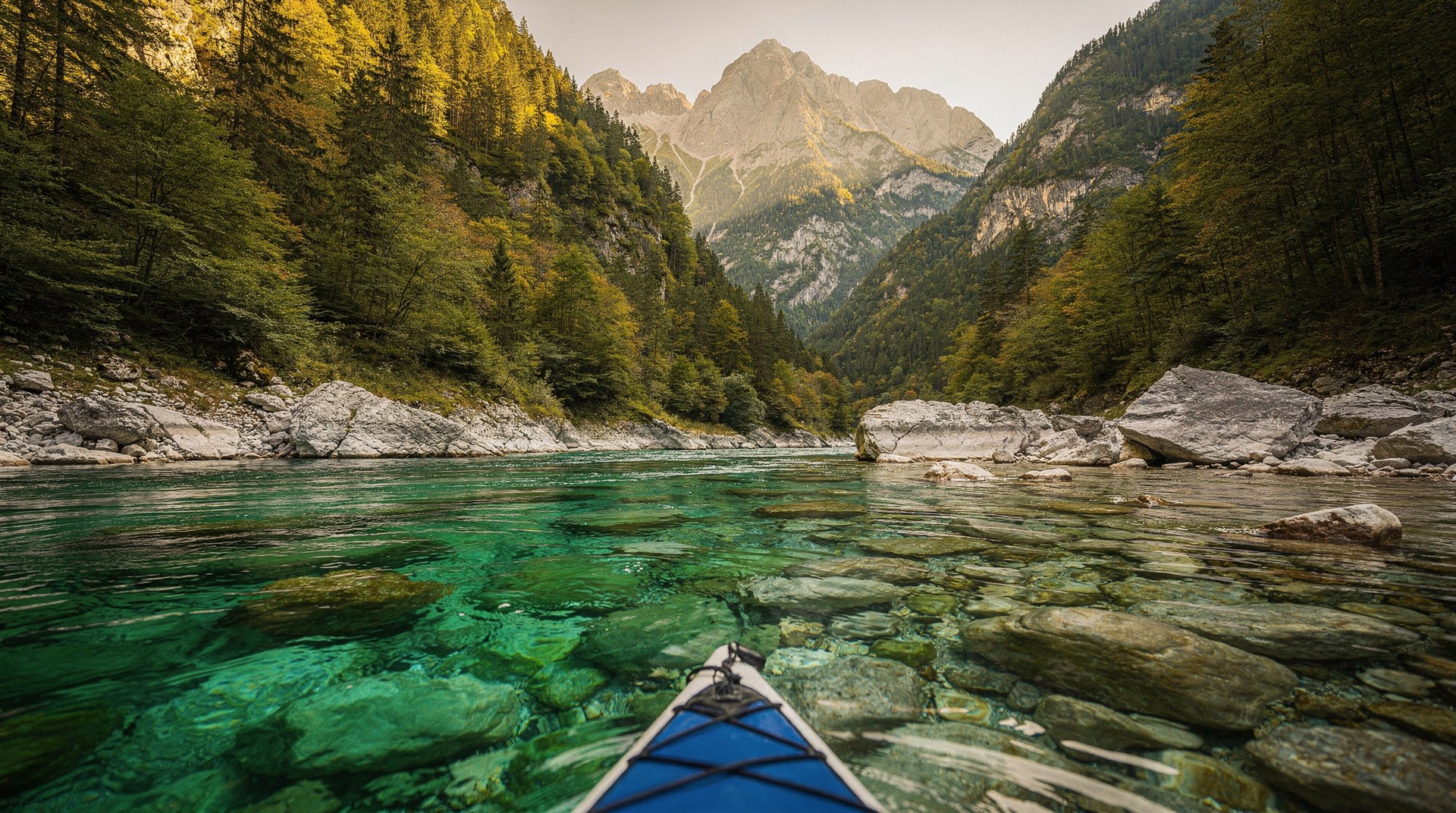
At the foot of the south side, stop at the source of the Soča (a short walk from the road) — the river emerges from a cave in a colour that should not physically exist. Check in to accommodation in Bovec or the upper Trenta valley: Dobra Vila Bovec (boutique hotel, from €130) or Hostel Sanje ob Soči (from €35 for dorms).
Day 5 — Bovec: rafting, canyoning, paragliding
Bovec is Slovenia’s adventure sports capital and the Soča Valley’s main hub. The river here has Class III–IV rapids and the water is cold (12–16°C) even in August — wetsuits are provided for all water activities.
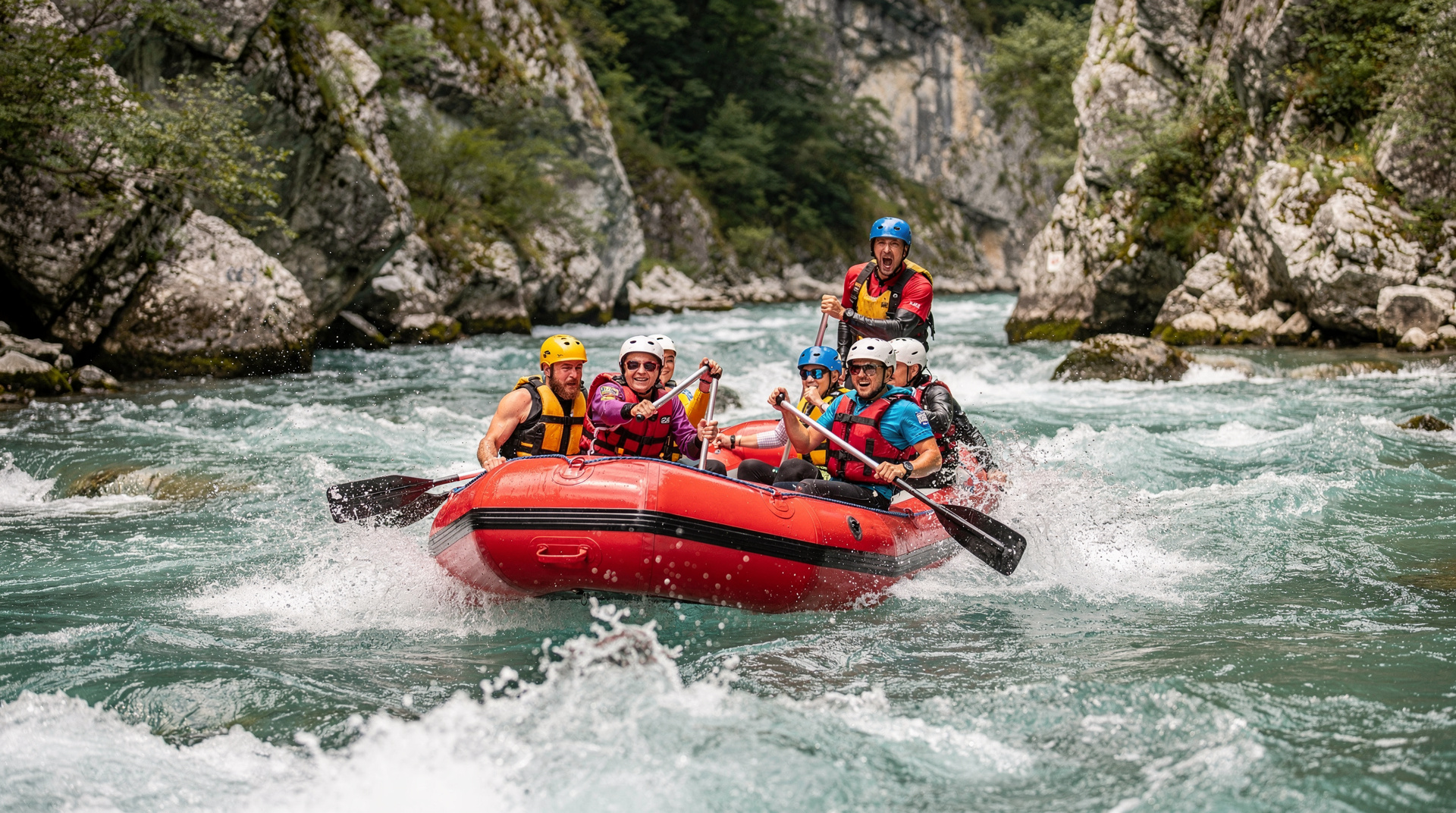
Whitewater rafting on the Soča River from Bovec is the defining experience of this region — 8 km of rapids through a narrow limestone canyon, with the surreal blue-green water all around you. Duration is around 2–3 hours, cost around €45. Book in advance in summer; multiple operators depart from the Bovec centre.
Afternoon options: canyoning in the Sušec Gorge (a narrow slot canyon with natural water slides and jumps, €60–80 for a half day), tandem paragliding from Kanin mountain (€130 for a 20-minute flight with views over the entire Julian Alps), or simply drive the valley south to Kobarid along the Emerald Route (officially one of the most beautiful river roads in Europe).
Evening in Bovec: the small town has a surprisingly good restaurant scene. Gostilna Sovdat is the reliable choice for local trout, mushroom risotto and Soča Valley lamb.
Day 6 — Kobarid and the Isonzo battlefields
Drive south from Bovec to Kobarid (26 km, 30 minutes). Kobarid (known in Italian as Caporetto) was the site of the most significant WWI battle on this front — the Kobarid Museum won the Council of Europe Museum Prize in 1993 and is one of the finest war museums on the continent. Entry is €7; allow 2 hours.
From the museum, the signposted Kobarid Historical Walk (5 km, 2 hours) passes Italian war memorials, ossuary, Napolonov most (Napoleon Bridge) and the Kozjak Waterfall. The waterfall is one of Slovenia’s most hidden gems: a 15-metre cascade into a narrow cave, reachable via a 30-minute walk along the Soča River.
For those who want one more Soča activity, the stretch of river between Bovec and Kobarid includes calmer sections suited to kayaking and SUP.
In the afternoon, decide on your route back: either continue south through Tolmin toward the Karst plateau (useful if adding Škocjan or Postojna to the trip) or begin the loop back east toward Ljubljana via the Idrija mercury-mine town (UNESCO, worth a stop).
If ending in Ljubljana, drive Kobarid–Ljubljana (120 km, about 2 hours via Idrija and the motorway).
Day 7 — Bled revisited or return to Ljubljana
Option A: If you have not yet done the Triglav National Park full-day tour, this is the day.
The full-day Triglav National Park tour from Bled covers the Bohinj valley, Pokljuka plateau and key Triglav viewpoints in a guided circuit — ideal for those who want the mountain context without organising independent hiking logistics.
Option B: Drive back to Ljubljana (55 km, 50 min) and spend the morning in the city before flying out. The Trnovo neighbourhood, south of the old town, is worth exploring if you have extra time — it is the quiet, local-life version of Ljubljana that most visitors miss.
Practical notes for the Julian Alps loop
Best months: June, July, August, September. The Vršič Pass typically opens in late May and closes in November (exact dates depend on snow — check promet.si or the ARSO weather service). September is arguably the best month for this itinerary: warm days, cool nights, fewer tourists than August, autumn colours beginning in the higher forests, and water temperatures in the Soča still swimmable.
Driving the Vršič: Road 206 has 50 numbered hairpin bends, each marked with a stone number. There is no barrier on many sections and the road is 1.5 lanes wide in places — pull over to the wider sections when meeting oncoming coaches (common in summer mornings). Drive in low gear on the descent (south side) to save brakes. Do not attempt in heavy rain, fog or after a landslide warning. The road is free to use; there is a small car park at the summit. Allow at least 1.5 hours for the crossing with stops, and up to 3 hours if you stop at all viewpoints and the Soča source.
Car type: Any standard hire car manages the Vršič Pass in good summer conditions. Higher ground clearance (small SUV) is marginally more comfortable on the rougher sections of the south face but is not required. Check the road status at promet.si before setting off and do not drive it at night unless you know it well.
Accommodation strategy: Two nights Bled (days 1–2), one night Bled (day 3, or Bohinj), check out from Bled area and check in to Bovec after the Vršič crossing (day 4–5), then Bohinj or Bled again for night 6. The Bovec accommodation booking is the most time-sensitive — book 6–8 weeks ahead for July/August.
Bovec accommodation options: Dobra Vila (boutique hotel, the finest in the area, from €130/night), Hotel Kanin (mid-range, central, from €90), Hostel Sanje ob Soči (the best-positioned hostel in Slovenia, dorms from €35), and several apartments and pensions. The Trenta valley (15 km north of Bovec, toward the Vršič) has a few quieter options including the traditional Korita pension.
Budget: Mid-range, around €120–160/person/day for accommodation, food and one activity. Water sports activities add €45–130 per session depending on type. A full 7-day budget for two people (mid-range, with 4–5 paid activities) is approximately €1,700–2,200.
What makes the Julian Alps different from other Alpine destinations
The Julian Alps are the south-eastern corner of the Alpine arc — the point where the mountains meet the Mediterranean climate and the Adriatic. This positioning creates conditions that distinguish the area from the Austrian or Swiss Alps: the vegetation is lusher (Mediterranean influence), the summers are warmer, and the light — particularly the afternoon light in the Soča Valley — has a golden quality that photographers find obsessive.
The mountains are also geologically younger and more dramatically shaped than the rounded Central Alps — the Triglav massif, the Kanin plateau above Bovec and the limestone towers of the Martuljek group near Kranjska Gora all have the sharp, fractured character of relatively recently uplifted rock. The karst geology means water disappears underground and re-emerges as springs and river sources of startling clarity — the Soča source and the Savica Falls both demonstrate this dramatically.
Triglav National Park (Slovenia’s only national park) covers 880 km² of the Julian Alps and is one of the oldest protected areas in the Alps, first designated in 1924. The rules are taken seriously: no wild camping, no drones in most areas, no picking of alpine flowers, dogs on leads in designated areas. The network of marked trails (the Julian Alps have some of the best-maintained trail marking in Europe) makes the area accessible without a guide, though guided hiking provides valuable ecological and geological context.
Kranjska Gora as a base: the town is better for sleeping than the Bovec area (more hotel options, slightly lower prices) and gives easy access to the Planica ski-flying venue, the Jasna Lakes and the Pericnik Waterfall. It is 35 minutes from Bled and 1 hour from Bovec via the Vršič. If the Vršič is your priority and you want to sleep at altitude, the huts above the pass (Koča pri Triglavski roži, Erjavčeva koča) offer basic but rewarding mountain accommodation in summer.
Kobarid deserves a note beyond the obvious: the town is one of Slovenia’s most interesting places to eat (Hiša Franko needs no further recommendation), and it occupies one of European history’s most significant battlefields. The Isonzo Front — 29 battles between Italian and Austro-Hungarian forces between 1915 and 1917, with a combined casualty count of over 300,000 — was fought in this exact valley. The Kobarid Museum is one of the best and most honest WWI museums in Europe. The landscape’s beauty and its historical weight co-exist in a way that makes time spent here among the most thought-provoking in the entire itinerary.
Fitness and gear for the Julian Alps loop
This itinerary earns its “moderate” rating from two elements: driving the Vršič Pass (concentration and nerve, not fitness) and the optional 7 Lakes Valley hike (genuine fitness — 7–8 hours, 800 m of ascent, proper boots required). Neither is mandatory to enjoy the trip; the Vogel cable car and the Bohinj lake circuit are easier substitutes that still deliver the Alpine scenery. For a realistic sense of what “moderate” and “difficult” mean on marked Slovenian trails, the best Slovenia hikes guide rates routes honestly rather than by marketing copy, and the Julian Alps hiking guide covers trail options beyond the ones featured here.
Pack for a temperature swing of 10–15°C between the Soča Valley floor and the Vršič summit, even in high summer — a light waterproof and a warm layer are not optional at 1,611 m. Water shoes or old trainers are worth bringing for the Soča’s rafting and canyoning days, since wetsuit booties provided by operators can run large.
Connectivity and money on the loop
Mobile coverage is solid in Bled, Bohinj and Kranjska Gora but patches out on the Vršič summit and in stretches of the upper Trenta valley — download offline maps for the pass crossing. Cards are accepted at nearly every hotel, restaurant and activity operator on this route; carry around €50–100 in cash for the Kobarid Museum entry, small gostilne and the Vršič summit car park, which are more likely to be cash-only. For a full cost breakdown of a trip like this, see the Slovenia trip budget guide.
Top experiences
Bookable activities with verified prices and instant confirmation on GetYourGuide.