Slovenia highlights 5-day itinerary
From Ljubljana: Lake Bled day tour
Slovenia’s greatest hits in a single road trip
Five days and a rental car is the most efficient way to sample everything that makes Slovenia worth the flight: a walkable, architecturally distinctive capital, an Alpine lake so photogenic it causes traffic jams, a gorge that nobody who visits ever forgets, and a cave system so vast it has its own underground train.
This itinerary is designed for first-timers who want to cover the essentials without feeling rushed. The total driving distance is around 350 km over five days — less than the distance from Paris to Lyon. Roads are excellent, and the e-vignette motorway sticker (€16 for one week) is compulsory; buy it online at the Dars website before you leave home or at the border to avoid a €300–800 fine.
The routing runs Ljubljana → Bled → Vintgar → Bohinj lookout → Ljubljana → Postojna → Ljubljana, which keeps backtracking minimal and allows a relaxed pace.
| Where | Ljubljana → Bled → Vintgar → Bohinj → Postojna → Ljubljana |
| Distance | Around 350 km over 5 days |
| Car needed | Yes — this itinerary is built around a rental |
| Best time | May–October; Vintgar Gorge closed roughly November–March |
| Budget | Around €130–170/person/day, mid-range |
Day-by-day snapshot
| Day | Base | Focus |
|---|---|---|
| 1 | Ljubljana | Old town, castle, market |
| 2 | Bled | Island, Vintgar Gorge, swim |
| 3 | Ljubljana | Bohinj valley detour, return |
| 4 | Ljubljana | Postojna Cave, Predjama Castle |
| 5 | Ljubljana | Trnovo, food tour, departure |
For first-timers who’d rather do this without renting a car, the Slovenia 5-day itinerary without a car covers almost the same ground by bus and organised tour; for a longer version with the coast and wine hills added, see the coast and mountains 7-day itinerary.
Day 1 — Ljubljana: arriving and orienting
Pick up your hire car at Ljubljana Airport or in the city centre on day 2 if flying in the evening. Park in the AS Kongresni trg underground car park (€2.20/hour, free evenings after 20:00) — driving in the old town is heavily restricted, and the best of Ljubljana is on foot.
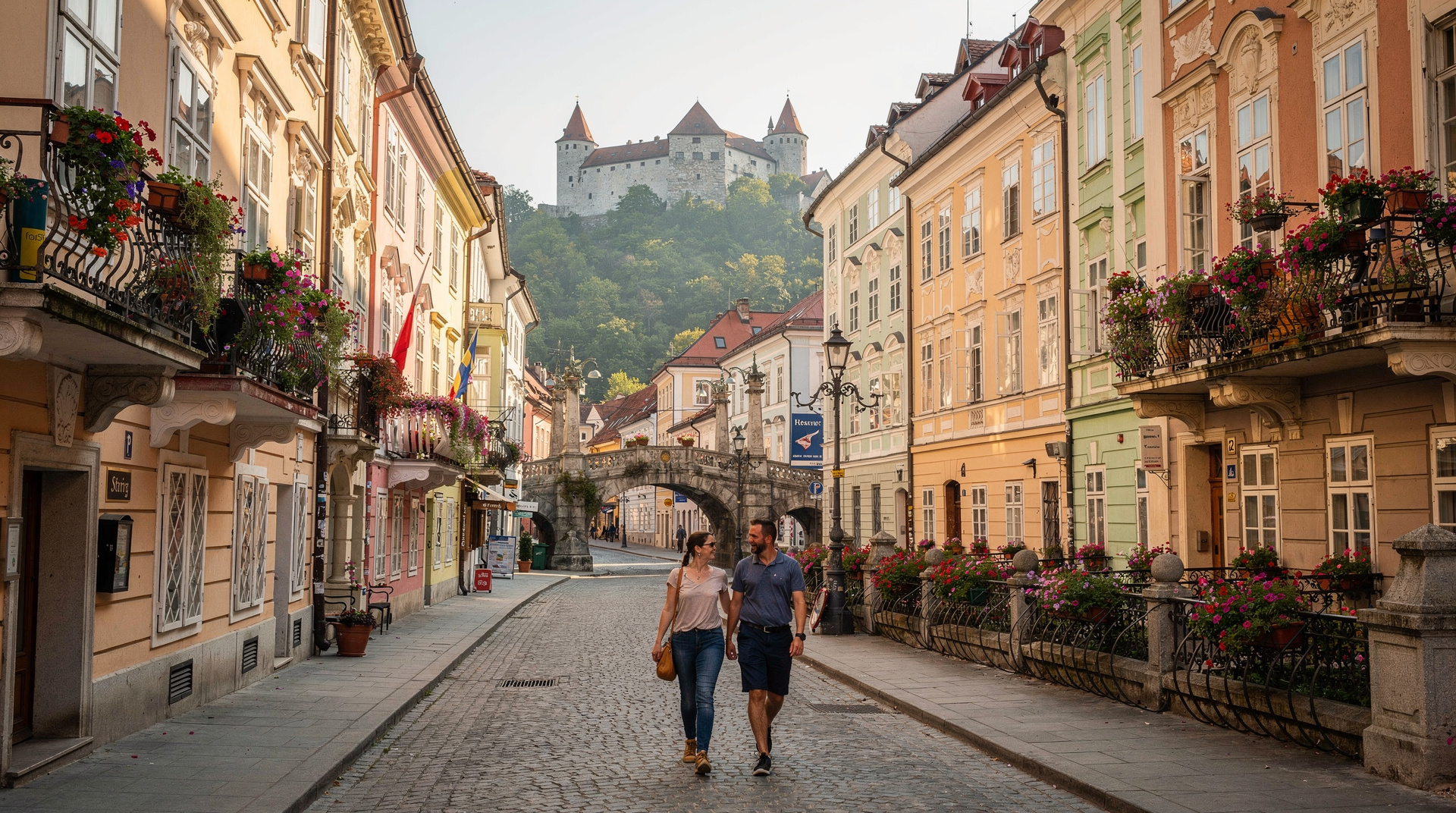
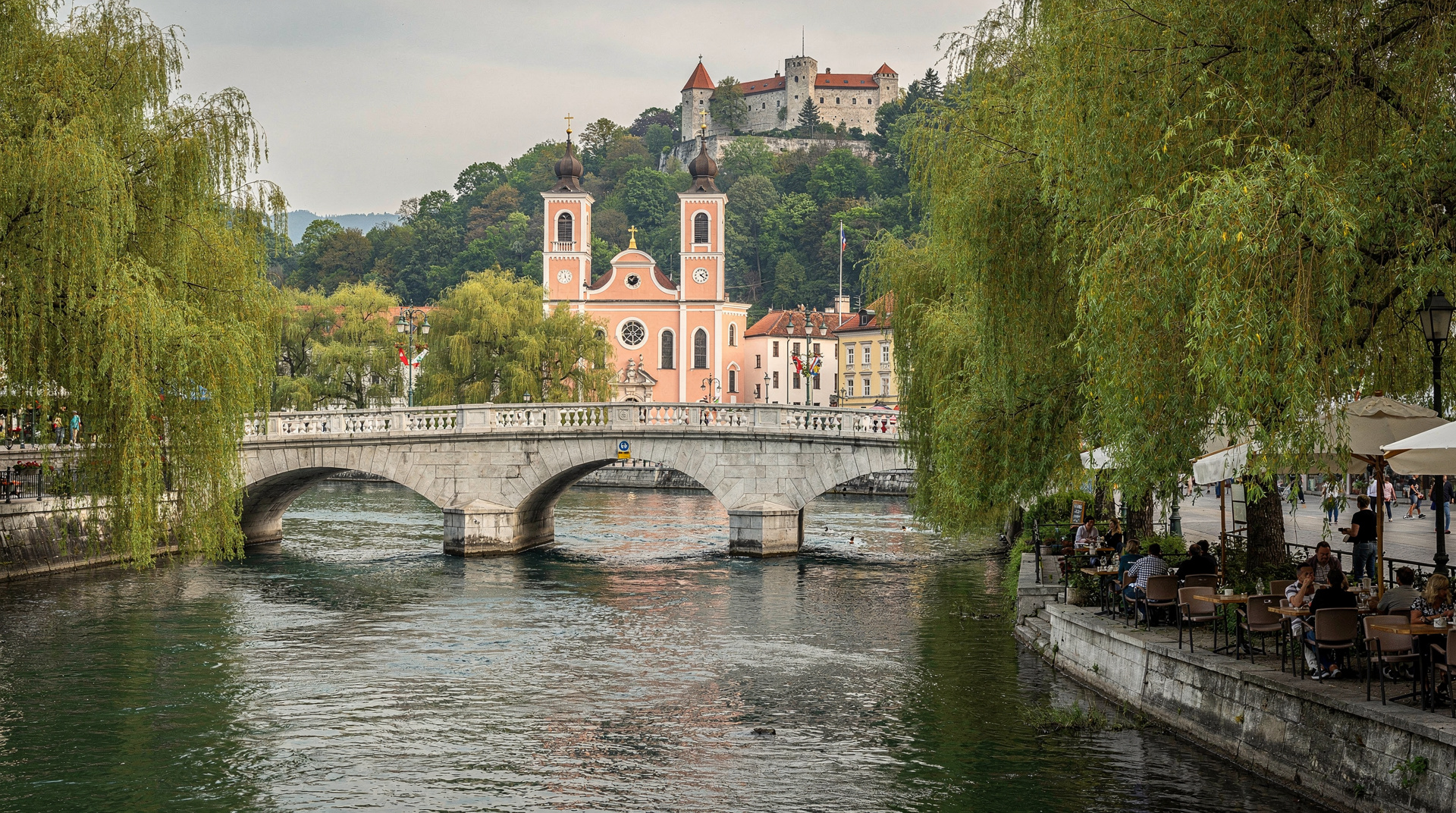
Start at Prešeren Square, the city’s living room, and spend the morning in the old town. Cross the Triple Bridge south into the medieval lanes, pick up local honey or cheese at the riverside market (Monday–Saturday), then climb to Ljubljana Castle — either by funicular (€6 return) or on foot via the zig-zag path. The castle museum is optional; the panoramic terrace is free and essential.
A private guided walking tour of Ljubljana’s old town turns a pleasant stroll into a proper cultural education — the guide’s knowledge of Jože Plečnik’s design decisions, the Austro-Hungarian legacy and the Yugoslav years gives the city real depth.
For lunch, the market offers excellent options — look for the prepared food stalls in the covered hall on Adamič-Lundrovo nabrežje. In the evening, take a slow walk along the Ljubljanica river and eat at Gostilna pri Škofu (around €15–20 for a main, 10 minutes’ walk from the centre).
Ljubljana repays an evening on its own terms: the café terraces on the south bank of the river, the smell of grilling from the riverside gostilne, the city’s unhurried atmosphere. Dedicate the afternoon and evening to simply wandering.
Day 2 — Lake Bled: early start beats the crowds
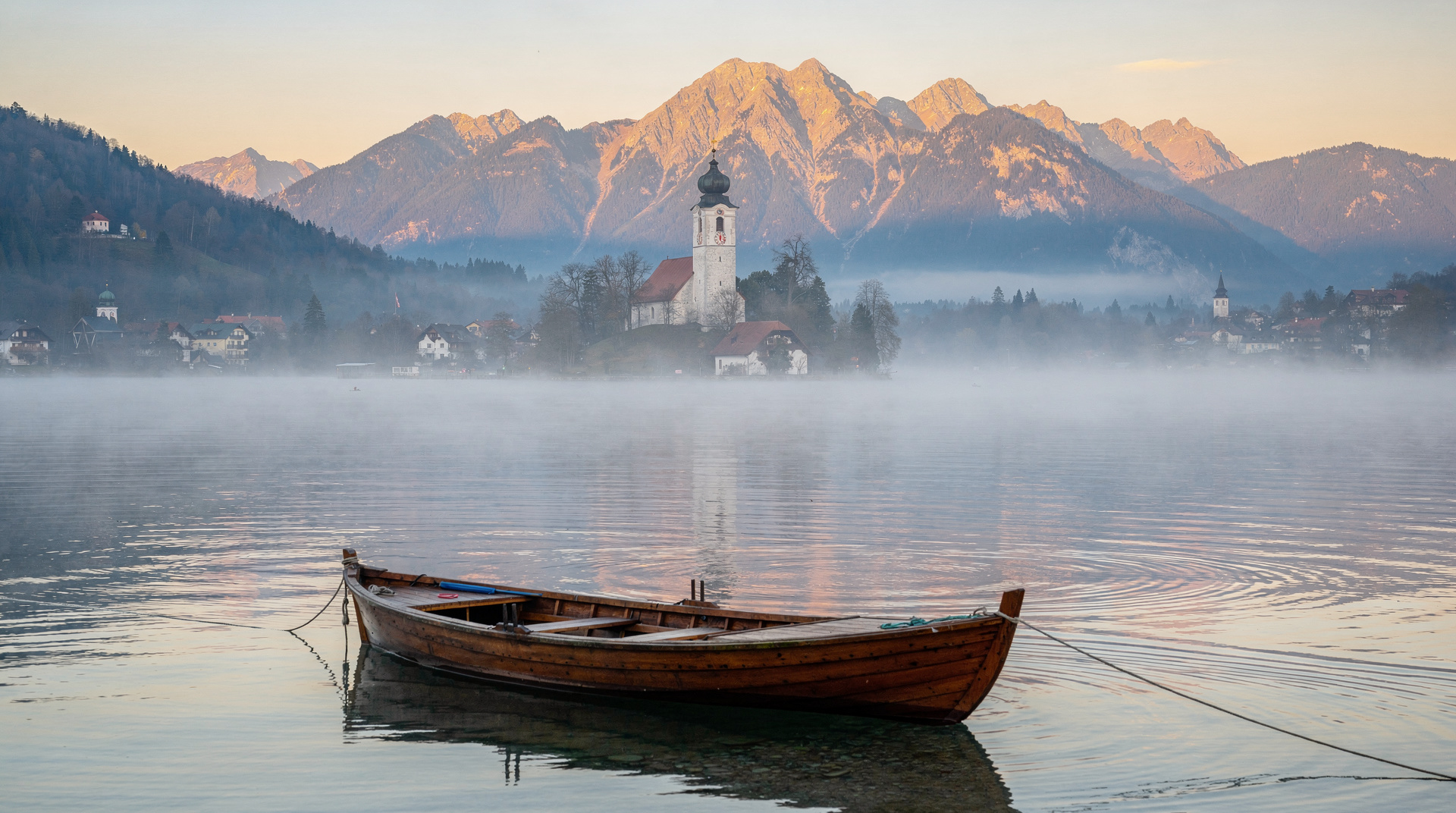
Drive Ljubljana to Bled (55 km, about 50 minutes on the motorway). Leave by 7:30 if at all possible — the lakeside is ethereal in early morning mist, and you want the rowing boats to yourself.
Walk the entire lake circuit (6 km, roughly 1.5 hours) before doing anything else. The best photography spots are the north shore (Mala Osojnica viewpoint is a steep 20-minute hike above that path and is breathtaking) and the east shore from the Ojstrica viewpoint (15 minutes’ walk up). Both are free.
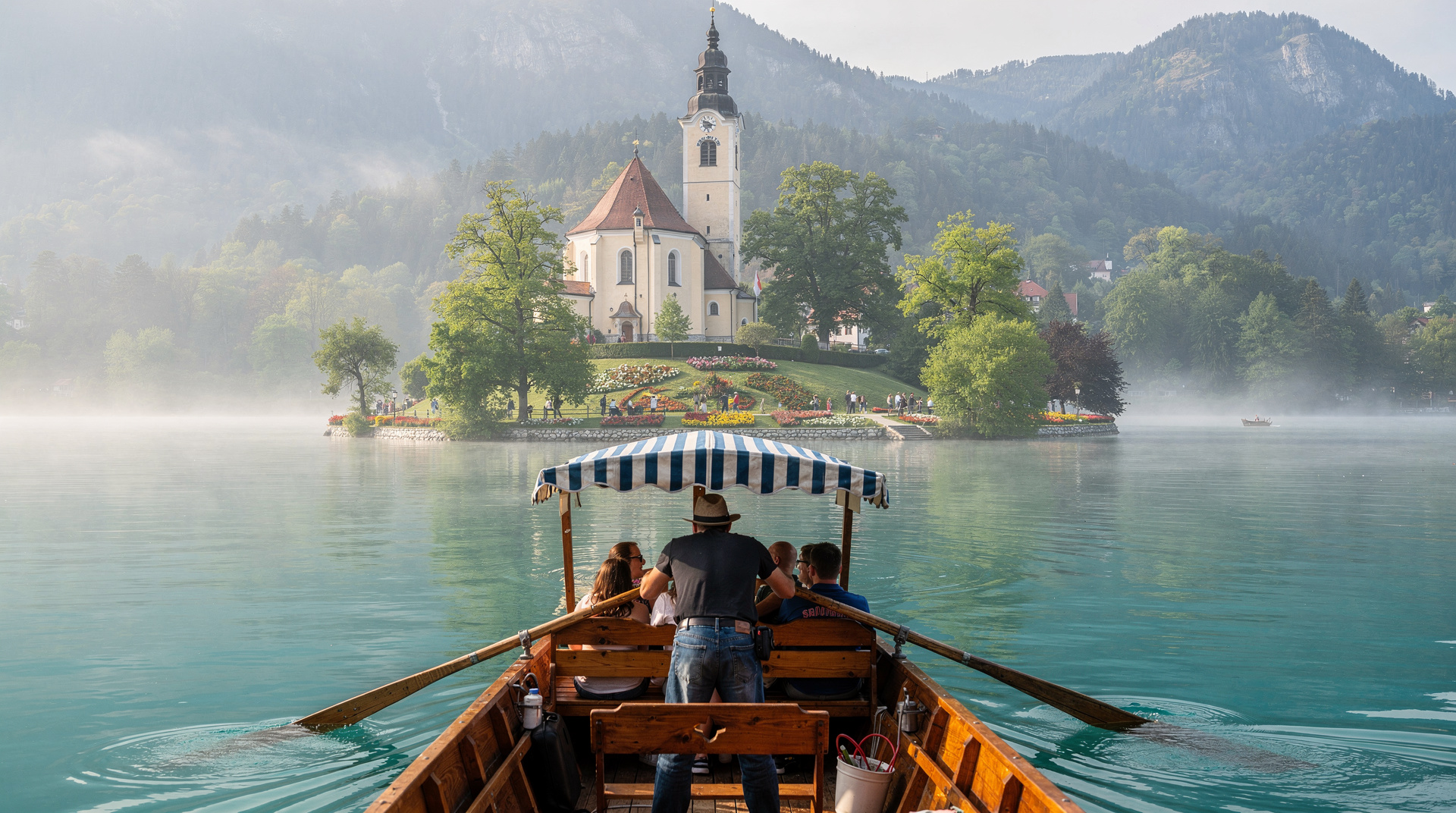
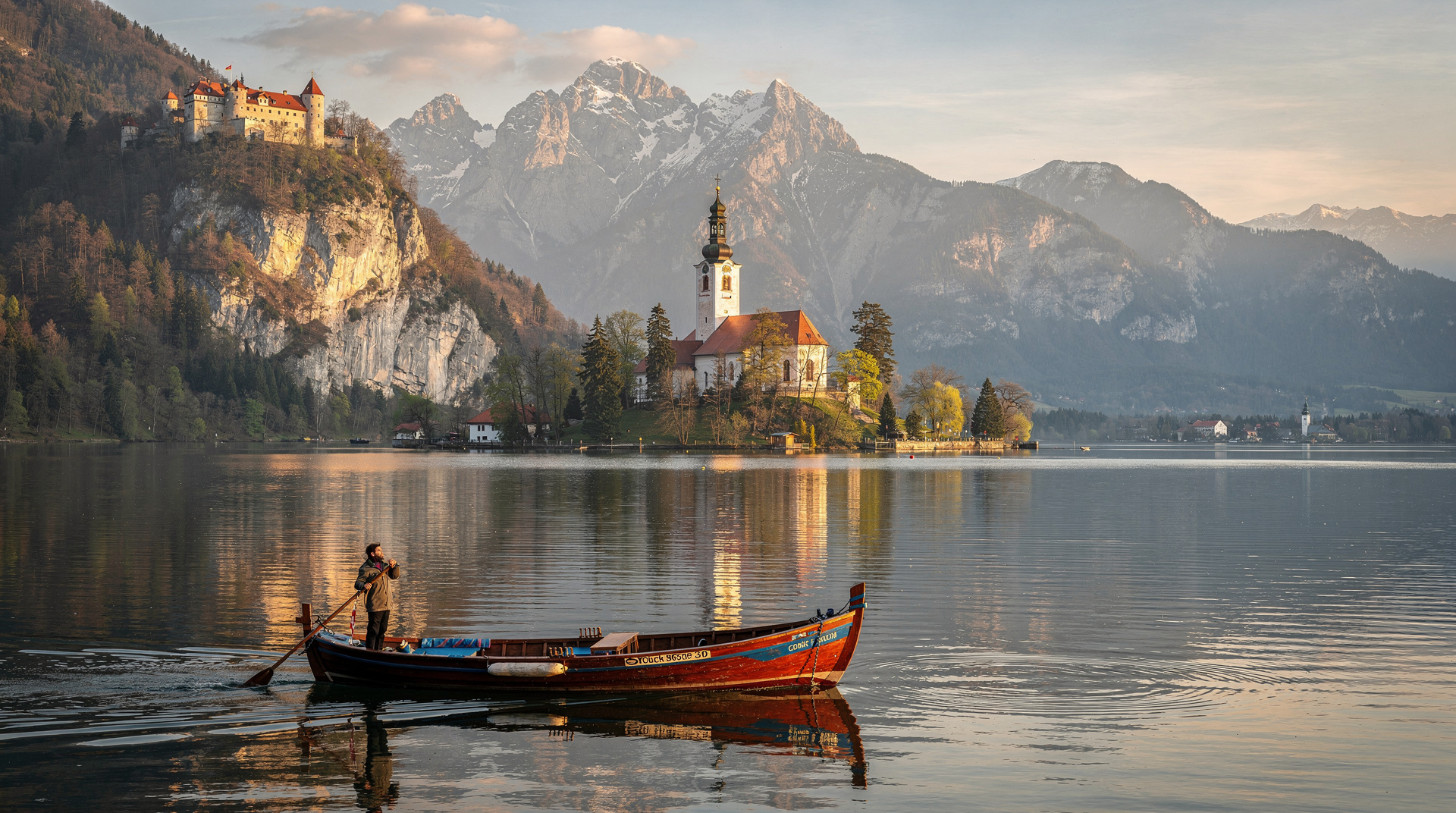
Take the traditional pletna boat to Bled Island — the flat-bottomed wooden boat is rowed standing up, an ancient Bled tradition. The guide explains the island church’s history while you eat a cremšnita (Bled cream cake) on the way back.
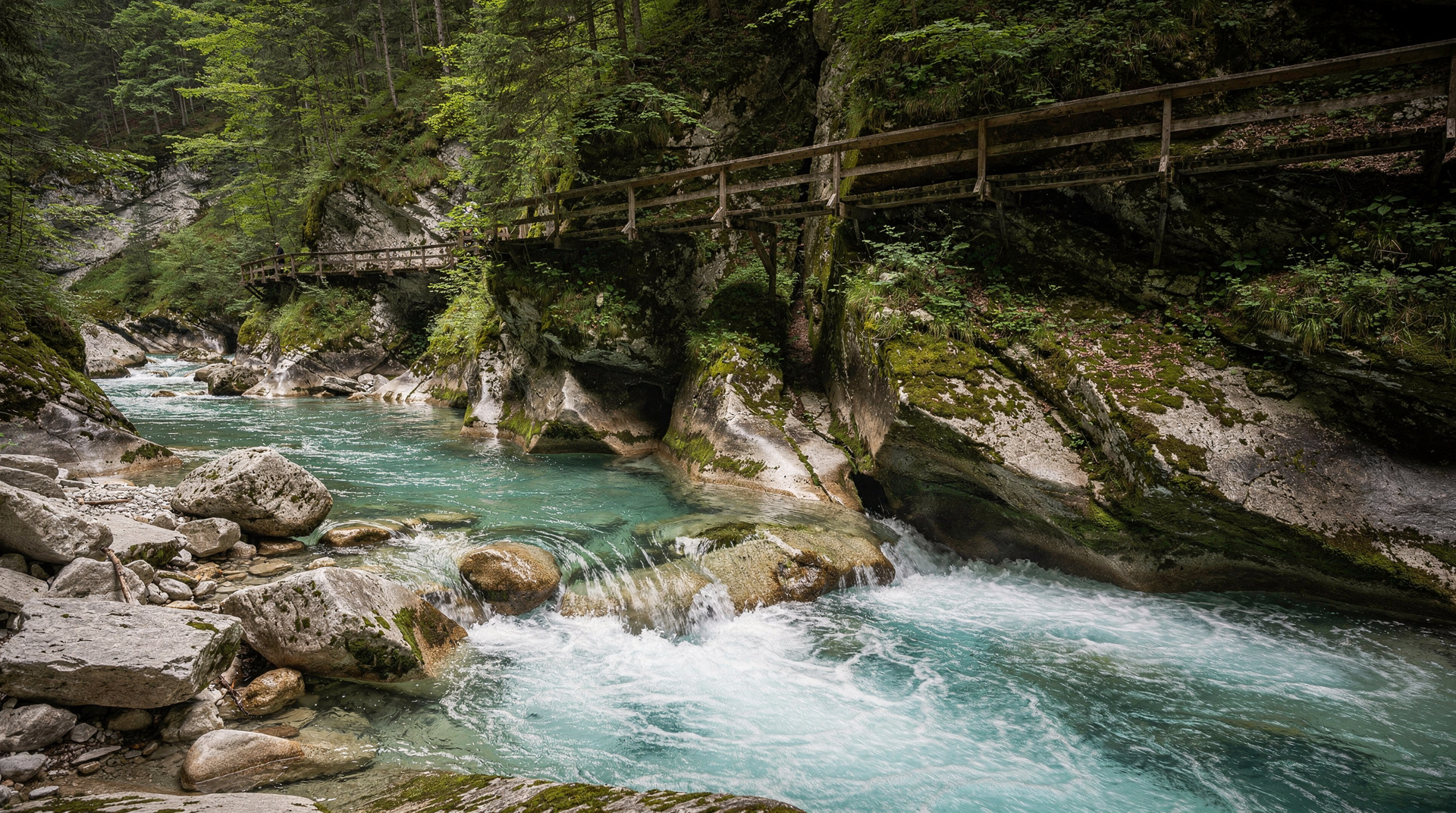
After the island, drive to Vintgar Gorge — 4 km from Bled, signposted from the village. The gorge boardwalk (€15 entry, open April–October) runs 1.6 km above a rushing glacial river, with waterfalls, pools and emerald water. Allow 1.5 hours and wear shoes with grip — the boards are wet. This is genuinely one of Slovenia’s finest experiences; photographers should come back in late afternoon when the light hits the water.
Return to Bled for lunch at Gostilna Lectar in Radovljica (15 minutes by car) or pick up supplies from the Mercator supermarket for a lakeside picnic. Spend the afternoon swimming at the free beach near Camping Bled (look for the gravel path west of the camping entrance) or kayaking on the lake.
Stay the night in Bled: Penzion Mayer (from €100), Vila Bled (the former Tito residence, from €180) or the Rikli Balance Hotel (from €160, directly on the lake).
Day 3 — Bohinj valley and return to Ljubljana
Before leaving the Bled area, drive 30 minutes west to Lake Bohinj — a quieter, larger Alpine lake inside Triglav National Park that most visitors skip in favour of Bled. The water is cleaner, the atmosphere calmer, and the mountains closer. Swim if the weather allows, or walk the 12 km circuit of the lake for 3–4 hours.
The Savica Waterfall (€4 entry, 20-minute walk from the Bohinj car park) is a worthwhile detour: a 78-metre double cascade into a teal pool. For views over the valley, take the Vogel cable car (€32–35 return) to 1,540 m — on a clear day the panorama extends from Triglav to the Adriatic.
Return to Ljubljana in the afternoon (50 minutes from Bohinj). Use the evening for anything you missed on day one: the National Museum of Slovenia (€8), the Modern Gallery, or a longer session at the market. Try Pivnica Union (the local brewery’s pub) for Slovenian beer and hearty food at moderate prices.
Day 4 — Postojna Cave and Predjama Castle
Drive Ljubljana to Postojna (52 km, about 45 minutes). Postojna Cave is the most-visited tourist site in Slovenia — roughly 900,000 people a year — and deserves an honest warning: in peak summer it feels like queuing at a theme park, with hundreds of people filing onto the narrow underground railway platform simultaneously. Arrive before 9:00 or after 15:00 to avoid the worst congestion.
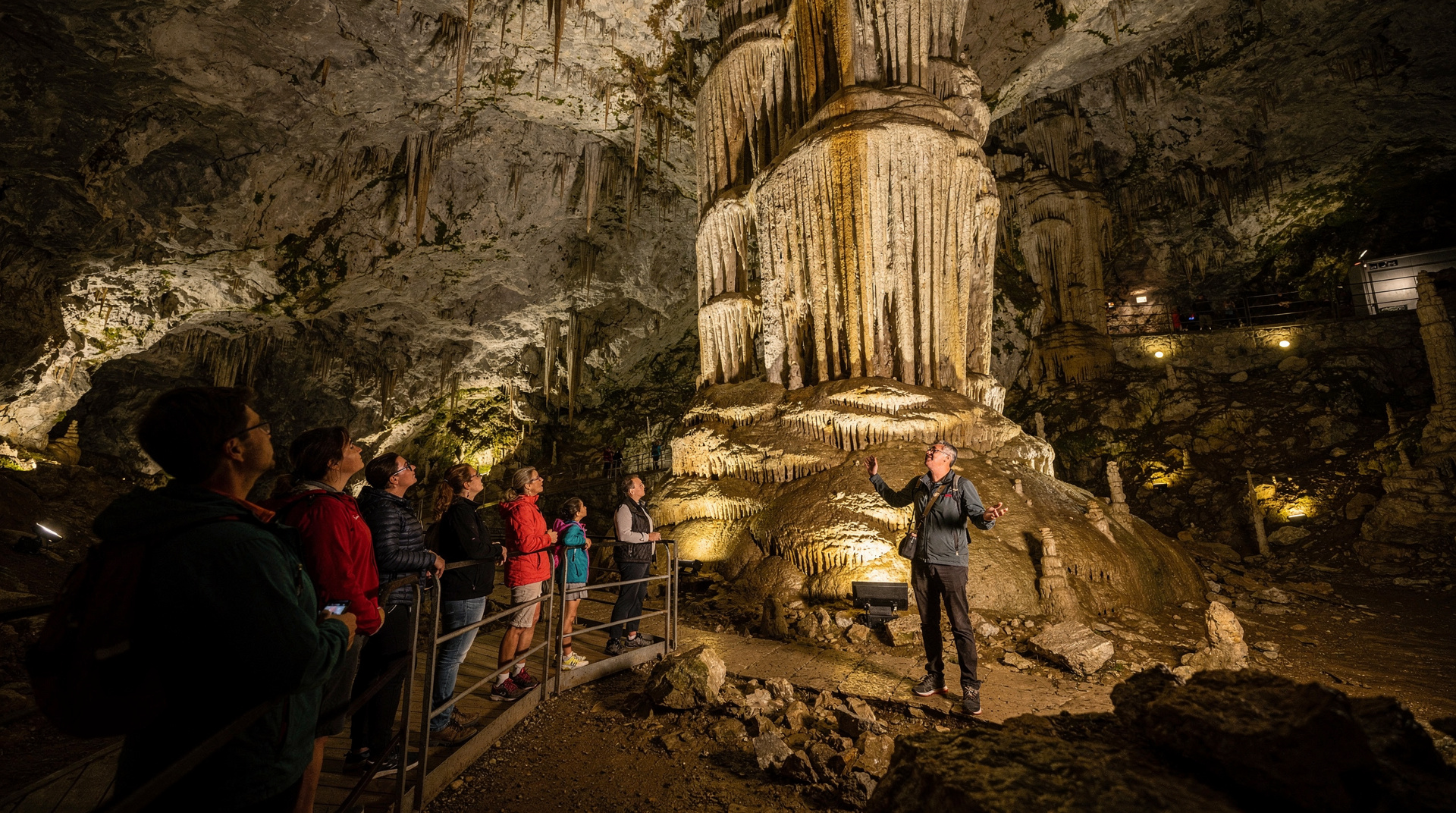
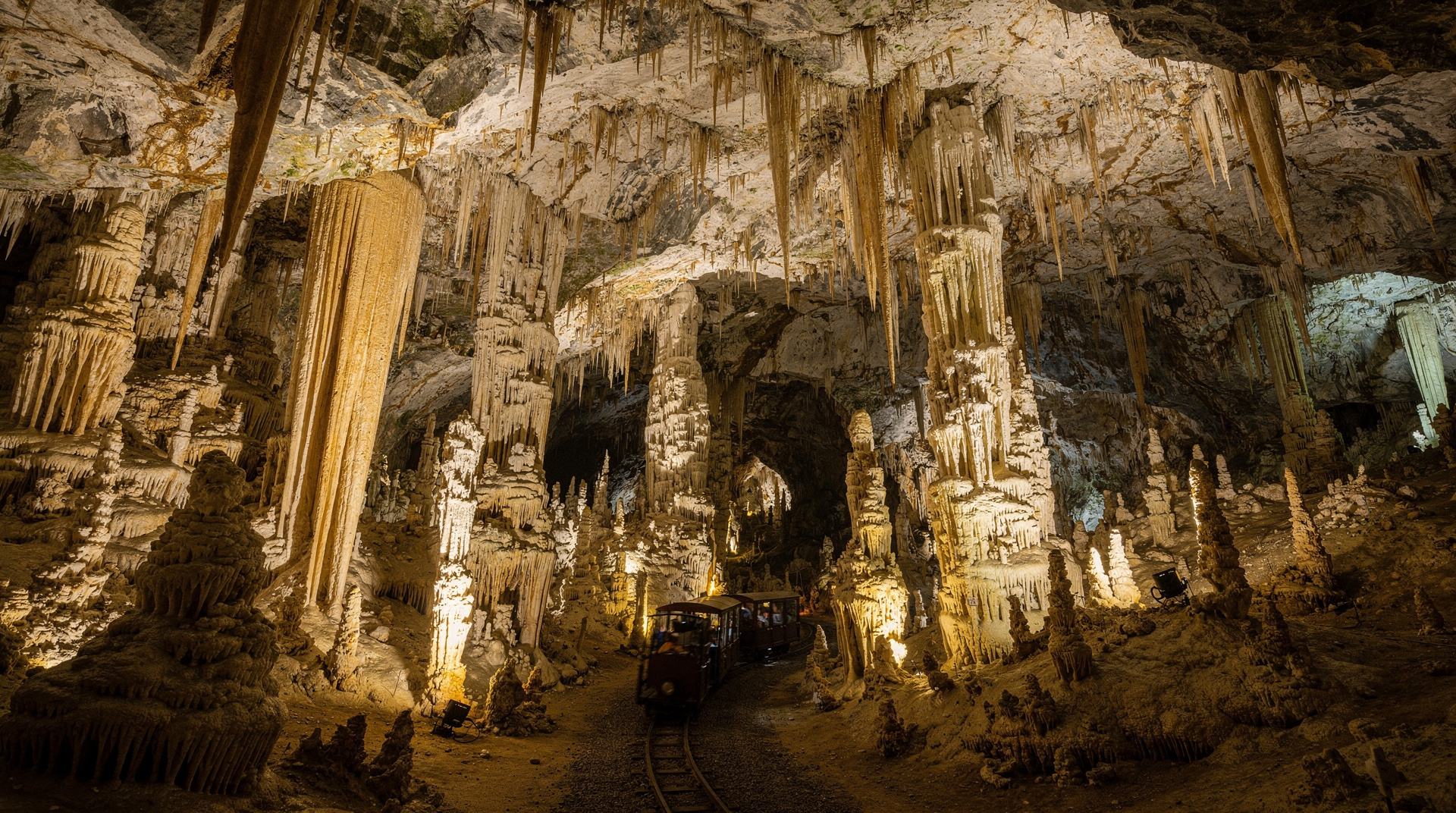
That said, the cave itself is genuinely spectacular. The underground railway carries you 2 km into the mountain before you walk through vast chambers hung with hundreds of thousands of stalactites. The 1.5-hour guided tour is the only way in. Entry is €34.90 for adults; tickets are sold only on the official website, so book online with your date and time.
The combined Postojna Cave and Predjama Castle half-day tour is the most efficient way to see both in one go, with transport and entry included — worth it if you are not driving.
Predjama Castle is 9 km from Postojna and one of the most dramatic sights in Slovenia: a Renaissance fortress built directly into the mouth of a natural cave in a 123-metre cliff. Entry is €24 (or combo with Postojna). The interior is small, the history involving a 16th-century outlaw knight is colourful, and the setting is genuinely unlike anything else.
For an alternative or addition: Škocjan Caves (40 km from Postojna) is a UNESCO-listed rival to Postojna that many geologists rate as more impressive — a wild underground canyon rather than a decorated gallery. It receives far fewer visitors and cannot be booked in advance (tours run on the hour, €18). If Postojna feels too crowded, Škocjan is the honest recommendation.
Return to Ljubljana for the night. Dinner at Strelec inside Ljubljana Castle (€40+ for a tasting menu) is the splurge option if you are celebrating; Pri Škofu remains the best-value local cooking.
Day 5 — Ljubljana’s neighbourhoods and departure
Reserve the last morning for the parts of Ljubljana that tourists typically miss. The Trnovo district south of the old town is student territory: the Trnovo Bridge (another Plečnik design), the riverside willows and the Sunday market at Gallusovo nabrežje. Grab breakfast at Tozd bar or Café Rog.
If you want a final organized activity, the Ljubljana food tour with 10 tastings runs in the morning and covers six or seven locations through the market and old town — an excellent way to consolidate the Slovenian food experience before you leave.
The guided Ljubljana food tour with 10 authentic local tastings runs approximately 3 hours and costs around €65 per person — it covers the riverside market, deli stops and a couple of sit-down spots.
Return the car and take the airport shuttle (€4, 50 minutes) or a private transfer (€35–45) to Ljubljana Airport. Alternatively, continue by bus to Venice (3 hours), Zagreb (2 hours) or Vienna (6 hours).
Practical notes
Car rental: Best booked from Ljubljana Airport. Expect €30–55/day for a compact car in summer; rates drop 20–30% in spring and autumn. All major international agencies (Hertz, Avis, Europcar, Sixt) are present at the airport terminal. An e-vignette motorway sticker is €16 for one week — buy online at dars.si before arrival or at the border crossing (or petrol stations inside Slovenia). Driving without a vignette carries fines of €300–800. Winter tyres are mandatory November 15–March 15; hire cars are equipped accordingly.
Driving notes: Ljubljana to Bled is 55 km (50 min on the A2/E61 motorway); Bled to Bohinj is 26 km (30 min on the local road via Bohinjska Bistrica); Ljubljana to Postojna is 52 km (45 min on the A1 motorway). Total driving over 5 days: roughly 350 km. Slovenian motorway speed limits are 130 km/h (motorway), 100 km/h (expressway), 90 km/h (main road), 50 km/h (town). Speed cameras are frequent.
Accommodation strategy: Two nights Ljubljana (days 1 and 3–4), one night Bled (day 2) works well and avoids double-packing. Alternatively, base entirely in Ljubljana and day-trip to Bled and Postojna — adds driving but simplifies logistics. Hotels in Bled are significantly more expensive than Ljubljana (30–50% premium for comparable quality), so the day-trip-from-Ljubljana approach saves money.
Seasonal notes on Vintgar Gorge: The gorge is closed approximately November through April and opens for the season in late April or early May. Check vintgar.si before planning. In peak summer (July–August), the gorge is busy from 10:00 onwards — arriving at opening time (8:00) or late afternoon (after 16:00) gives a much better experience.
Budget estimate: €130–170/person/day (mid-range accommodation €70–100/person shared, food €35–50, entry fees and one activity ~€40, car rental €15–27 per person per day if shared). Total per couple for 5 nights: roughly €1,300–1,700 excluding flights and car rental deposit.
What to skip: Ljubljana Castle interior (€17.10 online; terrace view is free and better). The Bled village tourist shops (overpriced trinkets; better souvenirs at the Ljubljana market). The Postojna gift shop (expensive and low quality — buy local honey and wine at the market instead). The Bled Golf Club (unless you play golf; the lakeside course is beautiful but expensive).
Key timing for this itinerary: The Bled day is day 2 rather than day 1 for a reason — you arrive in Ljubljana in the late afternoon, settle in, and start Bled fresh the next morning. Reversing the order means arriving at Bled tired and potentially in the afternoon when the crowds are worst.
Extending the itinerary
Five days on this route leaves several significant destinations untouched. The most logical extension:
Adding two days (7-day version): Continue from Postojna to Piran on the Adriatic (1 hour from Postojna, 80 km) for two nights on the coast. The Venetian town, its seafood, and the swimming from the rocks below the walls justify the extra days. Return to Ljubljana for the flight.
Adding three days (8-day version): From Bled, before coming back south, drive west to Kranjska Gora and over the Vršič Pass into the Soča Valley — the most dramatic landscape change in Slovenia. One night in Bovec, one day of rafting, then back east to Ljubljana. See the Julian Alps 7-day itinerary for the full version.
For more depth on the caves: Škocjan Caves are a UNESCO World Heritage Site 40 km from Postojna that most visitors skip in favour of Postojna. They are geologically different (a wild canyon versus a decorated gallery) and arguably more impressive. Adding Škocjan to day 4 makes for a long but extraordinary day: Postojna in the morning, Predjama mid-day, Škocjan in the afternoon, Piran for the night.
What makes Slovenia different from neighbouring Austria and Italy
Visitors coming from Vienna or Trieste often remark on how different Slovenia feels from its immediate neighbours, despite the shared history and the physical proximity. The country is smaller (20,273 km²), more forested (60% tree cover, the highest proportion in the EU), more immediately mountainous, and culturally more compact — the national identity is more legible, the traditions more visible and less diluted by regional variation.
The Austro-Hungarian legacy is present but filtered through Slovenian sensibility — the Art Nouveau Ljubljana looks more intimate and lived-in than Vienna’s imperial grandeur. The Italian coastal influence at Piran and Portorož produces Venetian-Gothic architecture and excellent seafood, but the pace and the prices are nothing like Italian coastal towns. The food is Central European in its bones — hearty, meat-forward, honey-obsessed — but the wine culture is increasingly Mediterranean in its ambition.
For visitors doing a Central European trip, Slovenia sits between Austria and Croatia in a way that amplifies both. After Vienna’s imperial scale, Ljubljana’s intimacy is refreshing. After Ljubljana’s Alpine beauty, Croatia’s Dalmatian coast is a completely different kind of spectacular. Five days in Slovenia bridges the two without feeling like a compromise — it is its own complete and satisfying experience.
The practical advantage: Ljubljana is the only major city in Central Europe where you can walk the entire old town in 20 minutes, eat excellently for €20, stay in a good hotel for €100 and reach mountains, caves and a sea coast all within 2 hours. That density of experience per day is the honest argument for Slovenia as a short-trip destination.
How many days does Slovenia actually need?
Five days covers the country’s essential highlights properly, but it is genuinely the minimum rather than the ideal. Travellers with a week or more consistently report that adding the Julian Alps’ Vršič Pass or two nights on the coast at Piran transforms the trip from “well-executed highlights reel” to “complete picture of the country.” The honest guidance: if five days is all you have, this itinerary is the right one and delivers real satisfaction; if you can stretch to seven, the Julian Alps 7-day itinerary adds the mountain drama that this route only glimpses. The how many days in Slovenia guide breaks the trade-offs down by traveller type in more depth.
Connectivity and money for the road trip
Cards are accepted at nearly every stop on this route, including the Postojna Cave ticket office and most Bled restaurants; carry around €40–60 in cash for the Vintgar Gorge entrance booth (card machines occasionally go offline) and for smaller village gostilne. Mobile coverage is reliable throughout — Ljubljana, Bled, Bohinj and Postojna all have solid 4G/5G, so navigation apps and the Dars vignette-checking tool both work without issue en route.
Parking in Bled village fills up in peak summer around the main lakeside car parks; arrive before 9:00 to get a space near the centre, or expect a 10–15 minute walk from the overflow parking further out.
Extending the road trip
The most natural additions to this five-day loop, in order of how well they fit the existing route, are: two nights in Piran after Postojna (turning this into the 7-day version described above), the Vršič Pass and Soča Valley via Kranjska Gora (the 8-day version), or a wine detour through Goriška Brda or the Vipava Valley on the way back from the coast. All three keep the same rental car and vignette already in place for this itinerary.
Top experiences
Bookable activities with verified prices and instant confirmation on GetYourGuide.