Slovenia 5-day itinerary without a car
From Ljubljana: Lake Bled day tour
Exploring Slovenia by bus and organised tour
Slovenia is remarkably well set up for car-free travel — more so than most of its neighbours. The capital is compact and walkable, the two most-visited lakes are connected by regular buses, and a dense network of organised day trips from Ljubljana means you can reach Postojna Cave, Škocjan, the Soča Valley and the Karst without a single hour at the wheel.
This five-day plan keeps costs lower than the car-based version (no rental, no fuel, no vignette) while covering the country’s four most rewarding destinations. The trade-off is less flexibility in timing — you will follow bus schedules rather than your own clock — but for most travellers that is a minor inconvenience.
Transport budget: Buses Ljubljana–Bled cost around €7.60 one way. The Ljubljana day trips to Postojna described below cost around €45–55 including transport.
| Where | Ljubljana → Bled → Bohinj → Postojna → Ljubljana |
| Car needed | No — buses, trains and organised day trips cover the whole loop |
| Best time | May–September; buses run less frequently off-season |
| Budget | Around €800–1,080/person for 5 days, lower than a car-based equivalent |
| Biggest saving | No rental, fuel, vignette or parking |
Day-by-day snapshot
| Day | Focus |
|---|---|
| 1 | Ljubljana old town and riverside |
| 2 | Lake Bled day trip |
| 3 | Lake Bohinj by bus |
| 4 | Postojna Cave and Predjama Castle |
| 5 | Final morning in Ljubljana |
For travellers who do want a car for the parts this route skips — the Vršič Pass, the Soča Valley, the wine regions — the Slovenia highlights 5-day itinerary covers similar ground with a rental car instead of buses.
Day 1 — Ljubljana: old town and riverside
Arrive by shuttle bus from Ljubljana Airport (€4, 50 minutes to the central bus station). The city centre is a 15-minute walk or a short tram ride from there.
Check in to a hotel near Prešeren Square or the old town — Hostel Celica (the converted prison, dorms from €30, private rooms from €80) is the cult choice; Hotel Cubo is mid-range from €130.
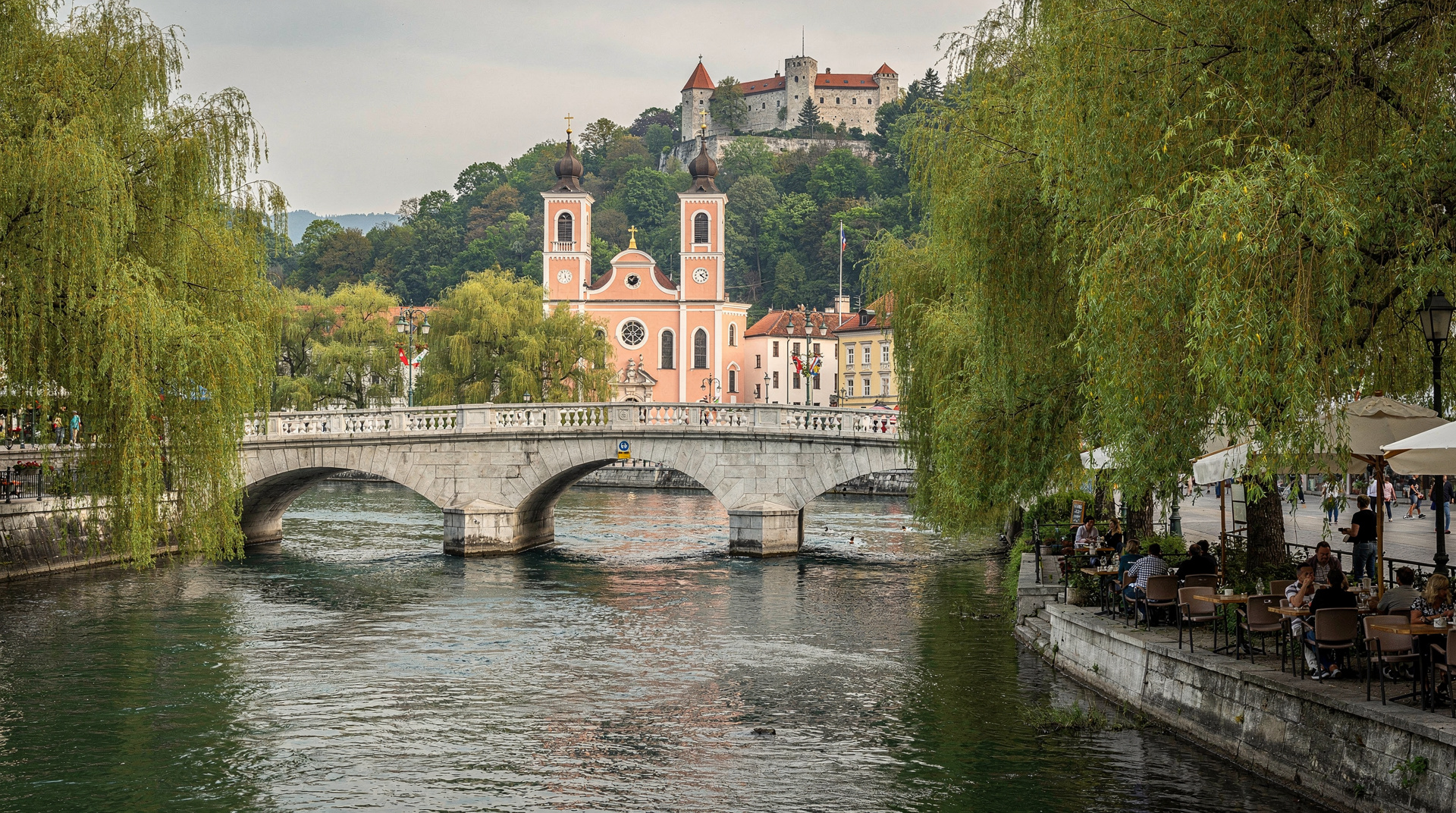
Spend the day exploring Ljubljana on foot. The city’s layout was largely shaped by Jože Plečnik, a Viennese-trained architect who redesigned the bridges, market buildings, city library and dozens of public spaces between the 1920s and 1950s. A self-guided Plečnik walk starts at the Triple Bridge and takes 2–3 hours.
Book a private walking tour of Ljubljana’s historic old town for context that transforms the cityscape from pleasant to genuinely fascinating — guides explain the political compromises that shaped every design decision.
Climb to Ljubljana Castle in the late afternoon for the panoramic view (funicular €6 return, or free on foot). Dinner at Gostilna pri Škofu or Stari Pisker, where a full meal with local wine costs €20–30.
Day 2 — Day trip to Lake Bled
Take the 8:00 or 8:30 Arriva bus from Ljubljana’s central bus station to Bled (€7.60, about 1 h 15 min). Arrive before the bulk of the day-trippers who come on organised coaches, which tend to arrive from 9:30 onwards.
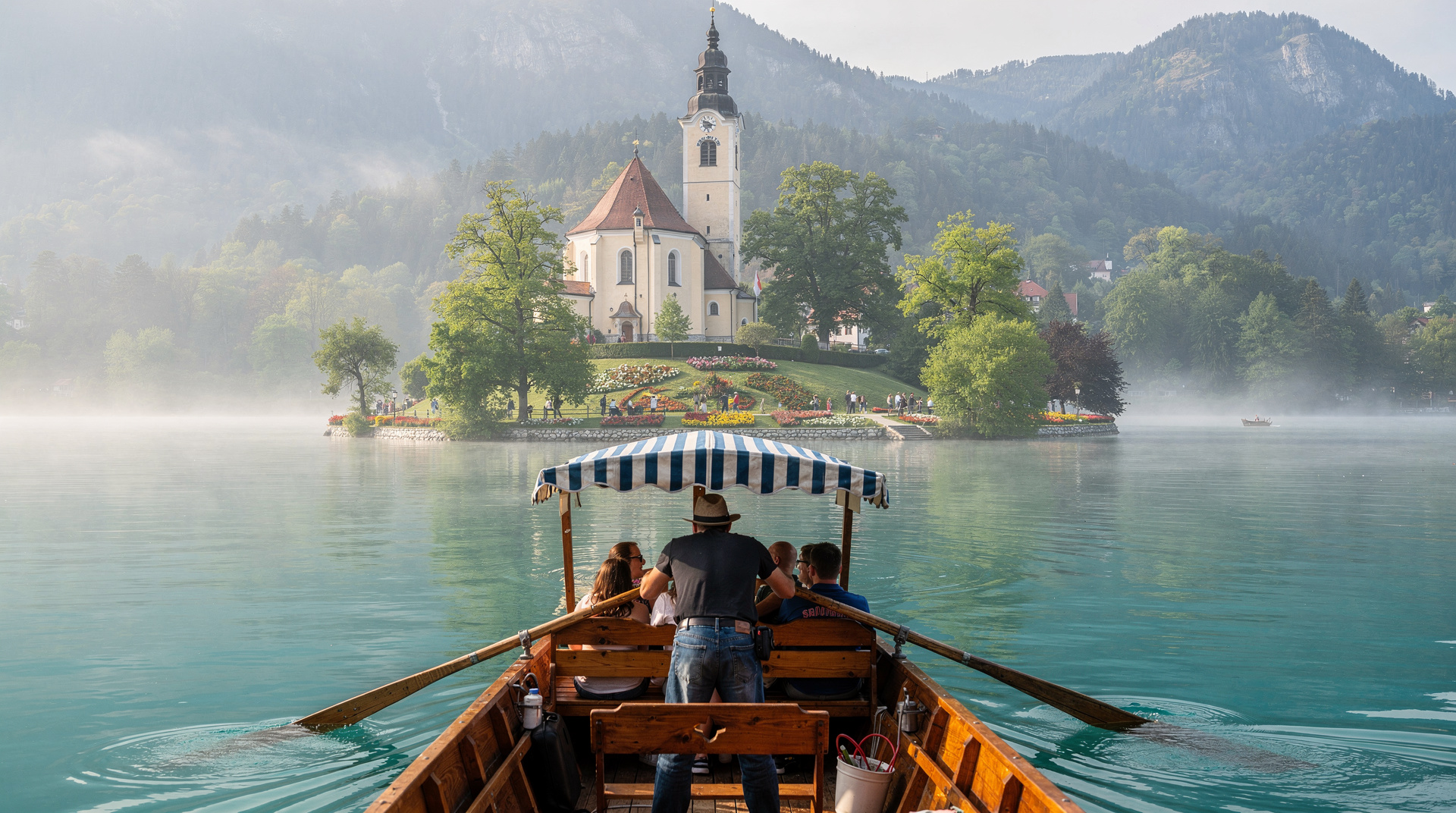
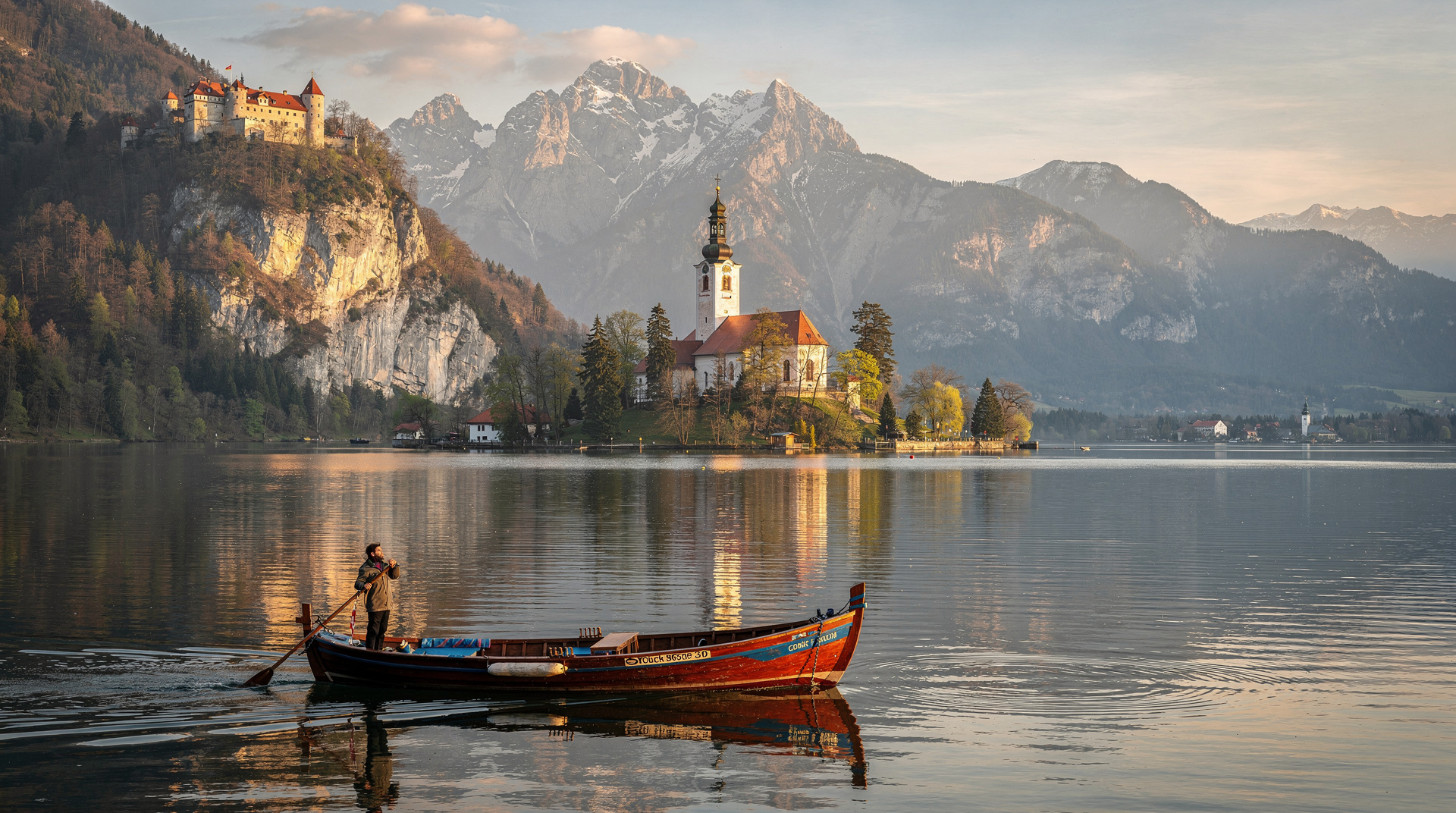
Walk the lake circuit (6 km, about 90 minutes), prioritising the north shore for the classic island-and-mountain photograph. Then take the pletna boat to Bled Island.
The pletna ride to Bled Island with a local guide and cream cake is one of Slovenia’s most characteristic experiences — the wooden boat, rowed standing up by a boatman from one of the hereditary pletnar families, costs around €19–25 and includes a guide on the island.
For Vintgar Gorge: there is a free shuttle bus from Bled town centre that runs May–October (check the Bled tourist office website for times — usually around every 30–45 minutes). Alternatively, it is a pleasant 4 km walk along the Radovna Valley. The gorge itself costs €15 entry and takes 45–60 minutes to walk.
Return to Ljubljana by bus in the early evening, or stay overnight in Bled if your schedule allows (see day 3 alternative below).
Day 3 — Lake Bohinj by bus
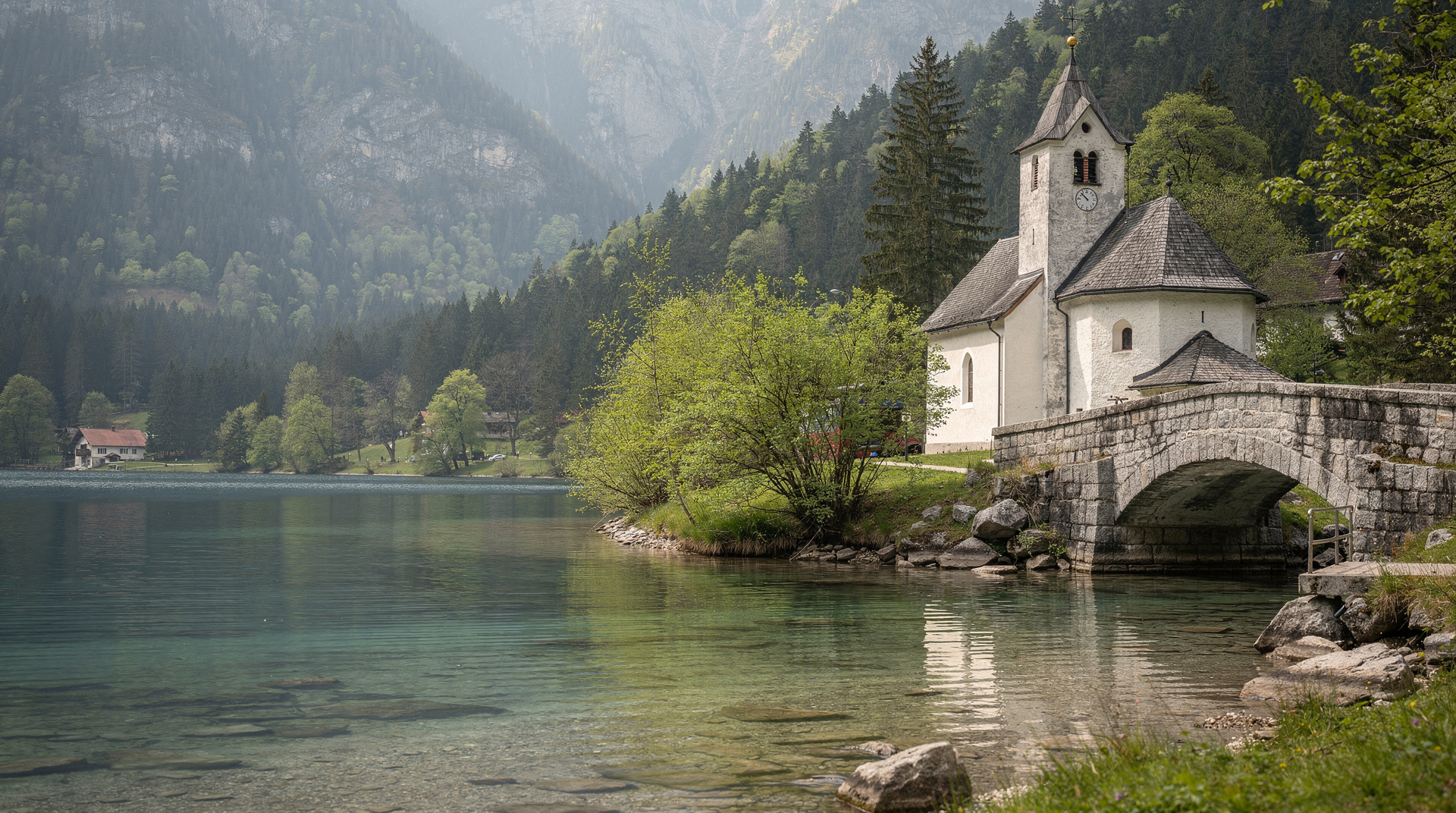
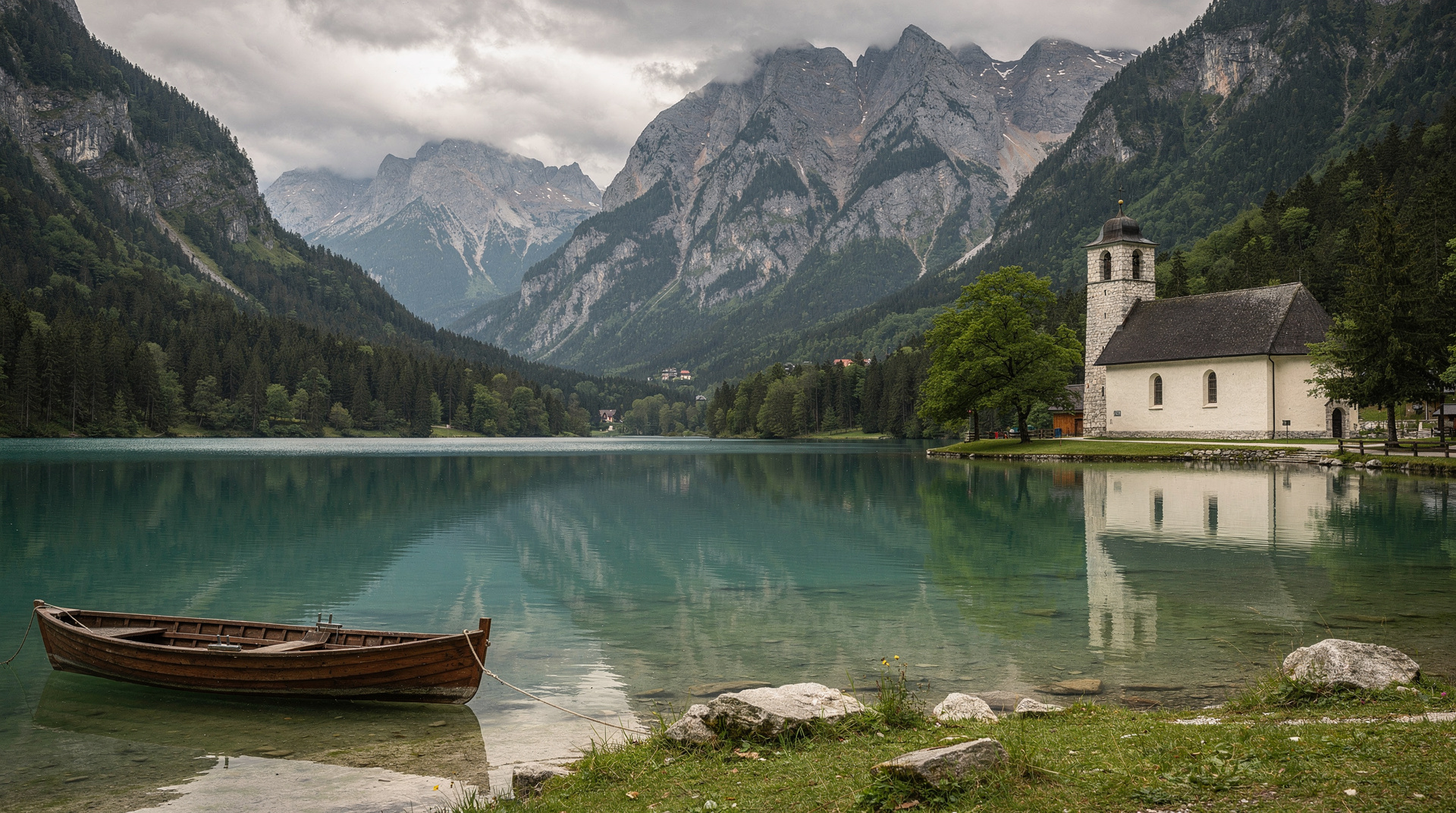
The local bus from Bled to Bohinj runs every 60–90 minutes (or take a direct bus from Ljubljana, 1 h 40 min). Bohinj is Lake Bled’s calmer, larger sibling — entirely within Triglav National Park, with mountains rising directly from the water.
The bus terminates at Ribčev Laz (Bohinj village) where the lakeside path begins. Walk west along the south shore to Stara Fužina (8 km round trip) or just find a quiet spot for swimming — Lake Bohinj has some of the cleanest water in Slovenia and a summer temperature of 22–24°C.
The guided 7 Lakes Valley hiking tour from Bohinj is available for those who want a guided mountain experience — a 15 km hike through Triglav National Park’s iconic valley that requires no technical mountaineering skills but does require reasonable fitness and walking boots.
For the Vogel cable car: the base station is 3 km west of Ribčev Laz (reachable by bus or taxi). The cable car (€32–35 return) lifts you to 1,540 m in about 4 minutes for panoramic views over the lake and Julian Alps. The Savica Waterfall is a 20-minute walk from the cable car base station (€4 entry).
Return to Ljubljana in the late afternoon by bus (last direct service usually around 17:30 — check timetables). Alternatively, change at Bled.
Day 4 — Postojna Cave and Predjama Castle
Join an organised day trip to Postojna Cave and Predjama Castle from Ljubljana — this is significantly easier than navigating independently, and well worth the convenience cost.
The Postojna Cave and Predjama Castle day trip from Ljubljana runs daily in season, includes transport, entrance fees and a guide, and costs around €75–85 per person. The tour leaves in the morning (check specific departure times when booking) and returns to Ljubljana by early evening.
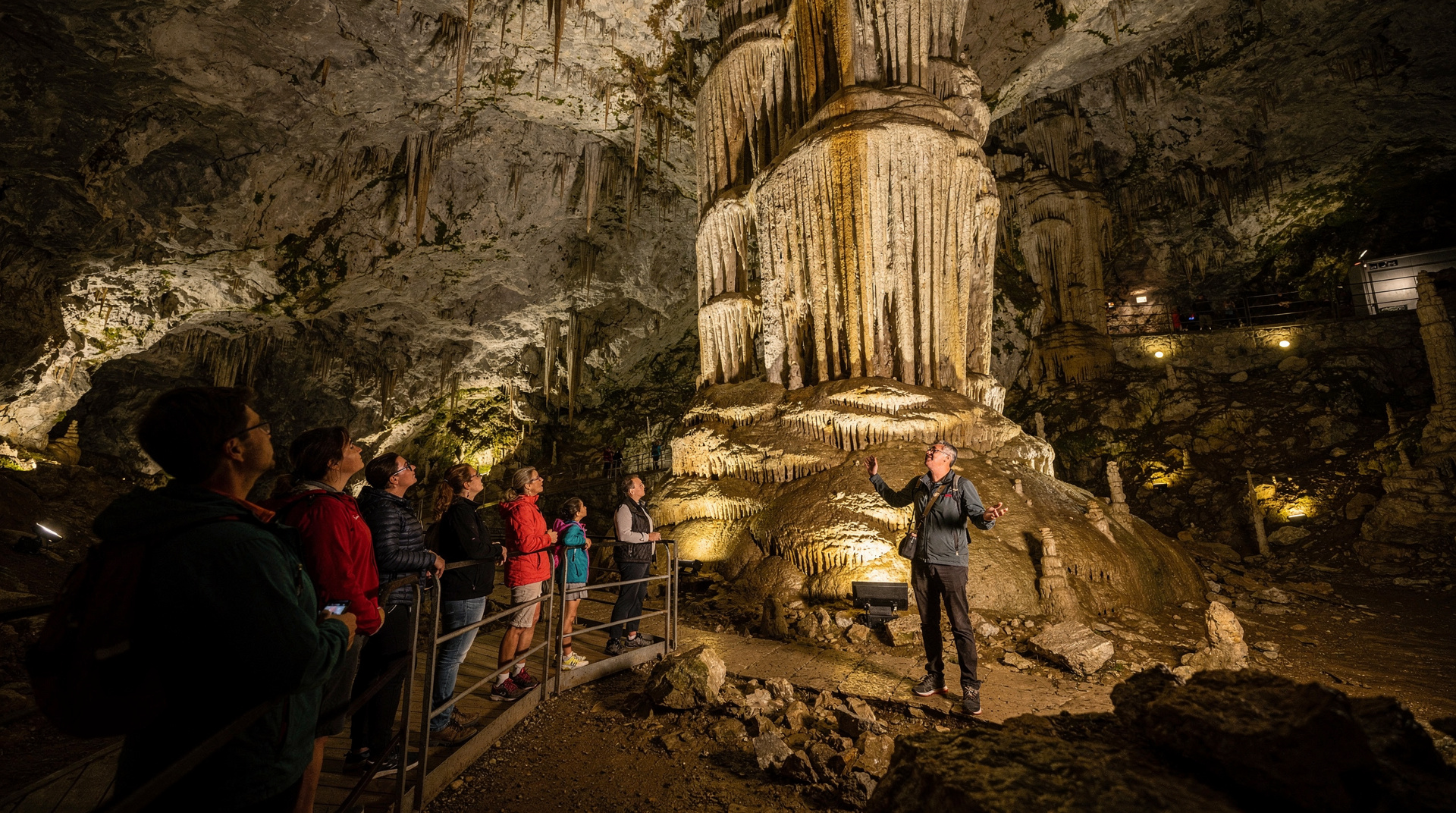
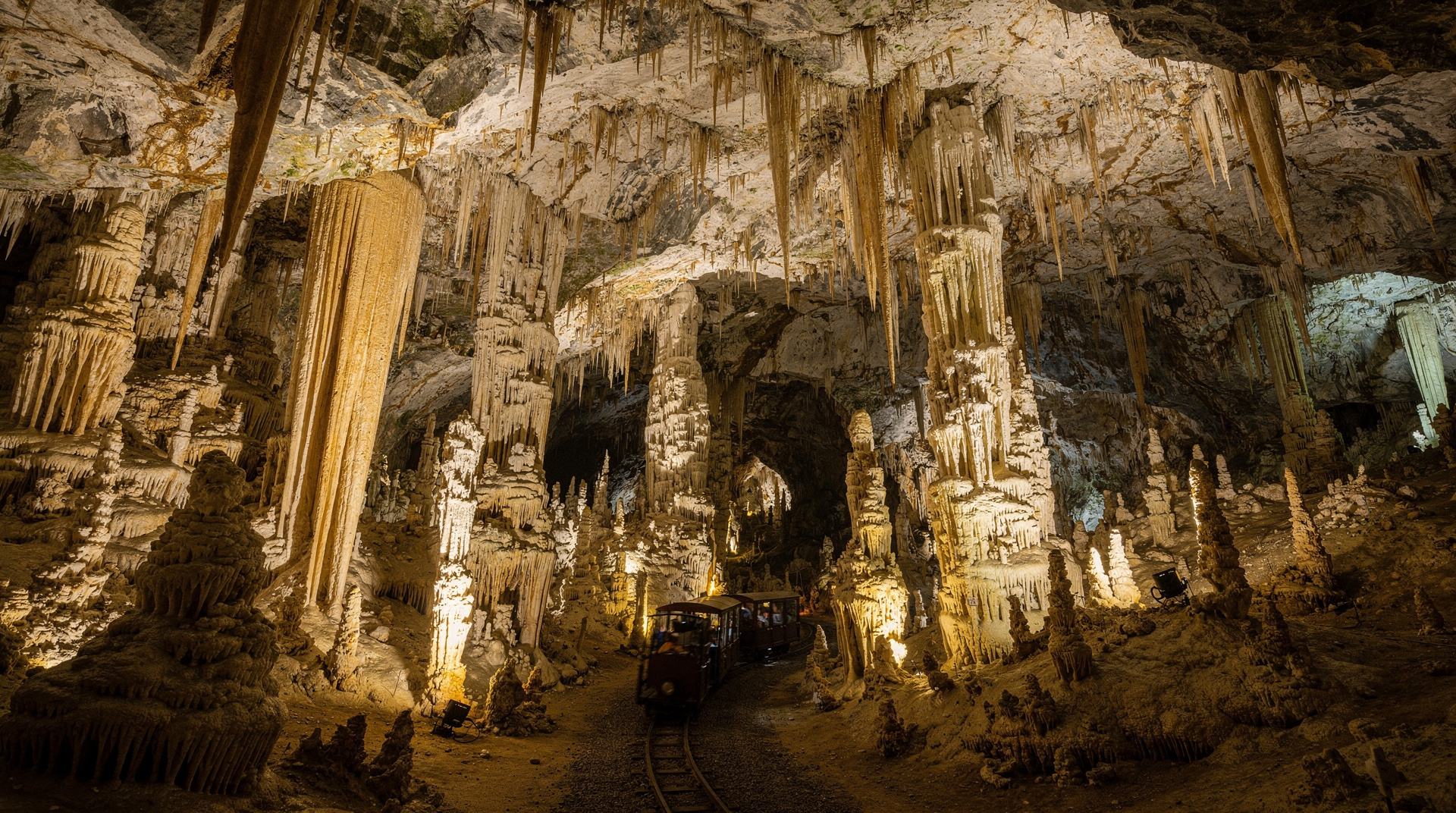
The cave itself: an underground railway carries you 2 km into the mountain, then a 1.5-hour guided walk passes through enormous chambers. The cave is 10°C year-round — bring a light jacket even in August. Predjama Castle (9 km from Postojna) is built into a cliff face and looks like something from a fairy tale: a Renaissance fortress stuffed into a natural cave opening 123 metres above the ground.
If the Postojna crowds deter you (and in summer they can be significant), Škocjan Caves is the honest alternative: a UNESCO-listed underground canyon that receives far fewer visitors, cannot be pre-booked, and is arguably more impressive geologically. The skocjanske-jame.si website shows daily tour times; tours run on the hour. Getting there without a car requires a Ljubljana day-trip tour or a taxi from Divača train station (12 km).
Return to Ljubljana for your final evening — Slovenian wine at Vinoteka Movia on Mestni trg or a beer at Pivnica Union near Šentjakobski trg.
Day 5 — Final morning in Ljubljana
Use the morning for what the rest of the trip did not allow. The National Museum of Slovenia (Muzejska ulica, €8, closed Mondays) covers the extraordinary Vače situla — a decorated bronze bucket from the 6th century BC — and a well-curated Roman section.
The Ljubljana food tour is one of the most enjoyable ways to spend a final morning:
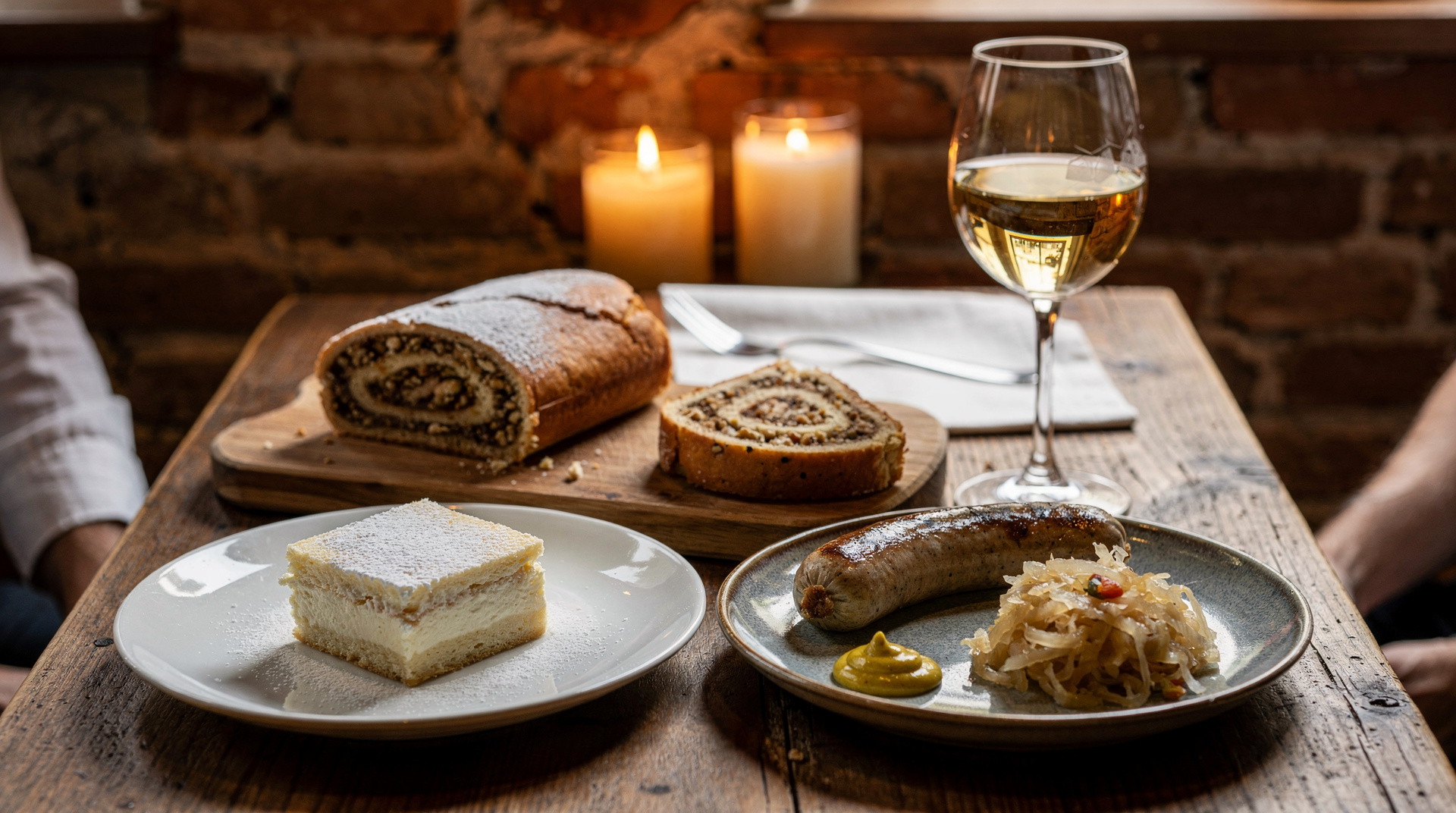
The guided food tour with 10 authentic local tastings runs about 3 hours (typically starting at 10:00), covers the riverside market, old-town delis and several sit-down tasting stops, and costs around €65. It functions as both a final meal and an education in Slovenian food culture — honey varietals, aged cheese, local wines, štruklji dumplings and the omnipresent kremna rezina.
After the tour, walk back to the bus station for the airport shuttle (€4, 50 minutes to Ljubljana Airport). Alternatively, continue your journey by bus: Zagreb is 2 hours away (from €15), Venice 3.5 hours (from €20), Vienna 5–6 hours.
Public transport cheat sheet
| Route | Operator | Duration | Approx. cost |
|---|---|---|---|
| Airport → Ljubljana centre | Markun/Goopti shuttle | 50 min | €4 |
| Ljubljana → Bled | Arriva bus | 1 h 15 min | €7.60 |
| Bled → Bohinj (Ribčev Laz) | Arriva bus | 30 min | €3.50 |
| Ljubljana → Bohinj (direct) | Arriva bus | 1 h 40 min | €9 |
| Ljubljana → Postojna | Train (change at Divača) or coach | 1–1.5 h | €6–9 |
| Ljubljana → Zagreb | FlixBus/Arriva | 2 h | €15–25 |
Timetables at ap.Ljubljana.si (Ljubljana bus station) and vlaki.si (trains). For day trips, book organised tours through GetYourGuide or directly at the Ljubljana tourist office.
Luggage storage: Available at Ljubljana central bus station and train station (€3–5/day).
What the car-free version does and does not give you
The honest comparison: travelling Slovenia without a car means accepting some limitations in exchange for some genuine advantages. The limitations are real — you cannot stop at a roadside viewpoint spontaneously, you cannot reach the Soča Valley or the Vršič Pass or the Logar Valley easily, and you follow bus timetables rather than your own. The advantages are also real: no driving stress on mountain roads, no vignette motorway sticker to buy, no navigating Slovenian parking, and significantly lower overall costs.
For the four destinations in this itinerary — Ljubljana, Lake Bled, Lake Bohinj and Postojna Cave — the car-free version gives you perhaps 90% of the experience. Ljubljana is definitively better without a car (parking is expensive and the old town is pedestrianised). Bled and Bohinj are easily reached by bus, and the key activities (the lake circuit, the pletna boat, the Vintgar Gorge, the cable car) require no car. Postojna is slightly more complex without a car, but the organised day trip solves this efficiently.
What this itinerary does not cover that a car would unlock: the Vršič Pass and Soča Valley (among the most beautiful roads and landscapes in the country), the Logar Valley in the Kamnik–Savinja Alps, the wine regions of Goriška Brda and Vipava Valley, and the more remote sections of Triglav National Park. If those are on your list, you need a car — or at least a few organised day trips that cover the main highlights.
Practical notes
Accommodation strategy: Staying entirely in Ljubljana and doing Bled, Bohinj and Postojna as day trips is perfectly viable and avoids packing and unpacking every night. The day trips to Bled (1 h 15 min each way) and Bohinj (1 h 40 min direct) are not exhausting. Postojna day trips are typically organised tours that manage the transport.
Alternatively: two nights Ljubljana, one night Bled, one night Bohinj, one night Ljubljana. More local atmosphere, slightly more complex logistics.
Budget breakdown (mid-range, per person, 5 days):
- Accommodation (4 nights): €80–120/night = €320–480
- Food (3 meals/day): €35–50/day = €175–250
- Transport (buses, shuttles, entry fees): €120–150
- Activities (food tour, pletna, Vintgar, Postojna day trip): €180–200
- Total: approximately €800–1,080 per person
This is substantially lower than a car-based equivalent (no car rental, fuel, vignette, parking), making the car-free version the better choice for solo travellers and budget-conscious pairs.
Best combination for a solo traveller: This exact itinerary, staying in Hostel Celica in Ljubljana (the converted prison hostel is one of the best for meeting other travellers) and doing the organised day trips, which are good for meeting people in the same situation.
Extending the trip: If five days becomes seven, add two nights in Piran (reachable by bus via Koper) or join the Škocjan Caves and Piran day trip from Ljubljana for a full Karst and coast experience. The bus from Ljubljana to Koper runs three times daily (1 h 15 min, €9) and connects to local buses for Piran.
The case for going car-free in Slovenia
Most travel guides default to recommending a hire car for Slovenia, and the advice is not wrong — the country’s mountain landscapes and wine regions genuinely reward the flexibility of self-driving. But the car-free option has real merits that are often understated.
The first merit is practical: Ljubljana’s parking system is one of the most frustrating aspects of visiting the city by car. The old town is fully pedestrianised, loading is timed and ticketed, the underground car parks are expensive (€2–3/hour) and fill on summer weekends. Arriving by shuttle bus and navigating the city on foot is genuinely simpler and more enjoyable.
The second merit is financial. A rental car for five days in summer costs €150–275 (compact, with vignette). The Slovenian motorway vignette is €16. Parking across five days costs €30–60. Total car overhead: €200–350, before fuel. The car-free equivalent — buses, day trips and one airport shuttle — costs around €120–150. The saving is €80–200 per person, which funds the food tour, the pletna boat and Postojna Cave combined.
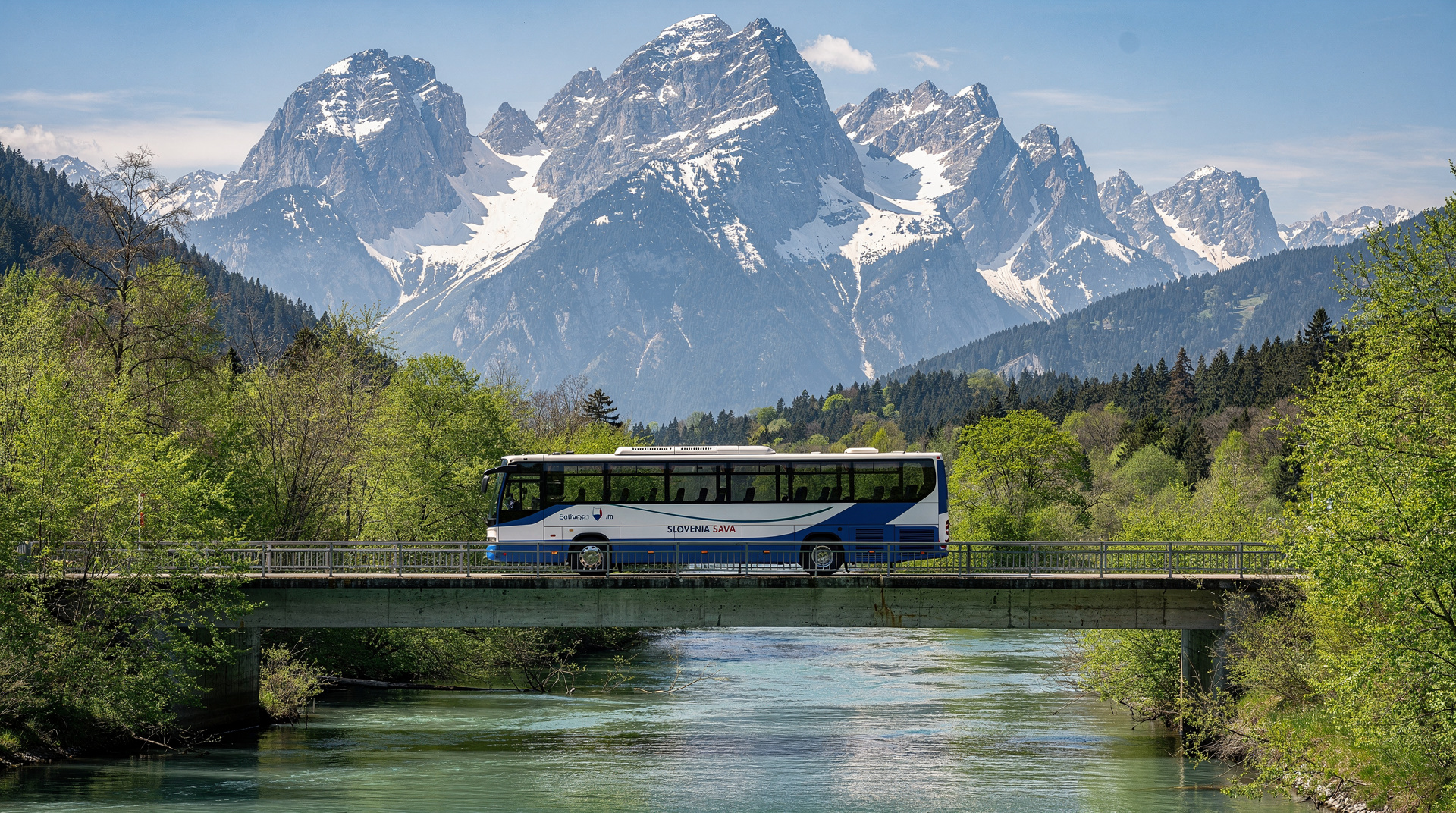
The third merit is experiential. Slovenia’s buses travel through the same mountain roads as hire cars, and the Sava gorge route between Ljubljana and Bled is beautiful through a bus window. The organised day trips use local guides with contextual knowledge that a self-driving visitor would not have access to without specific research. And the slower pace of bus travel — arriving at Bled having sat with other travellers rather than having navigated the motorway alone — can make the place feel more immediate.
The limitations remain real: no spontaneous stops, no Vršič Pass, no Soča Valley without an organised tour. But for five days focused on Ljubljana, Lake Bled, Lake Bohinj and Postojna Cave — Slovenia’s four most-visited destinations — the car-free itinerary gives up almost nothing and gains meaningful simplicity.
Connectivity and practicalities on the move
Bus and train timetables in Slovenia are reliable but seasonal — services thin out considerably outside May–September, so always check ap-ljubljana.si or vlaki.si the evening before rather than relying on memory. Mobile coverage is solid along every route in this itinerary, including the Bled–Bohinj road and the Divača area near Postojna, so live timetable apps work throughout.
Cards are accepted on most Arriva buses now, but keep €10–20 in coins or small notes as a backup, since driver card machines occasionally go offline on quieter rural routes. The public transport Slovenia guide and trains in Slovenia guide both go deeper into route planning than fits in a five-day itinerary.
If a rental car becomes appealing partway through the trip — a common change of heart once the Julian Alps come into view — the car rental Slovenia guide covers pickup logistics from Ljubljana city centre rather than just the airport, which is usually the cheaper and more flexible option for a late addition.
Extending the car-free trip
If five days becomes seven or more without ever renting a car, the most logical additions are a second night in Bohinj (rather than a day trip) for a slower pace, or a coastal extension to Piran via the direct Ljubljana–Koper bus. Both extensions keep the itinerary’s original logic intact — organised day trips and scheduled buses, no driving — while adding meaningfully different landscapes to the trip.
Solo travellers in particular benefit from this car-free structure: organised day trips and hostel dorms both put you alongside other travellers doing the same route, which is harder to replicate when driving independently between destinations at your own pace.
Top experiences
Bookable activities with verified prices and instant confirmation on GetYourGuide.