Birdwatching in Slovenia: the best sites, species and seasons
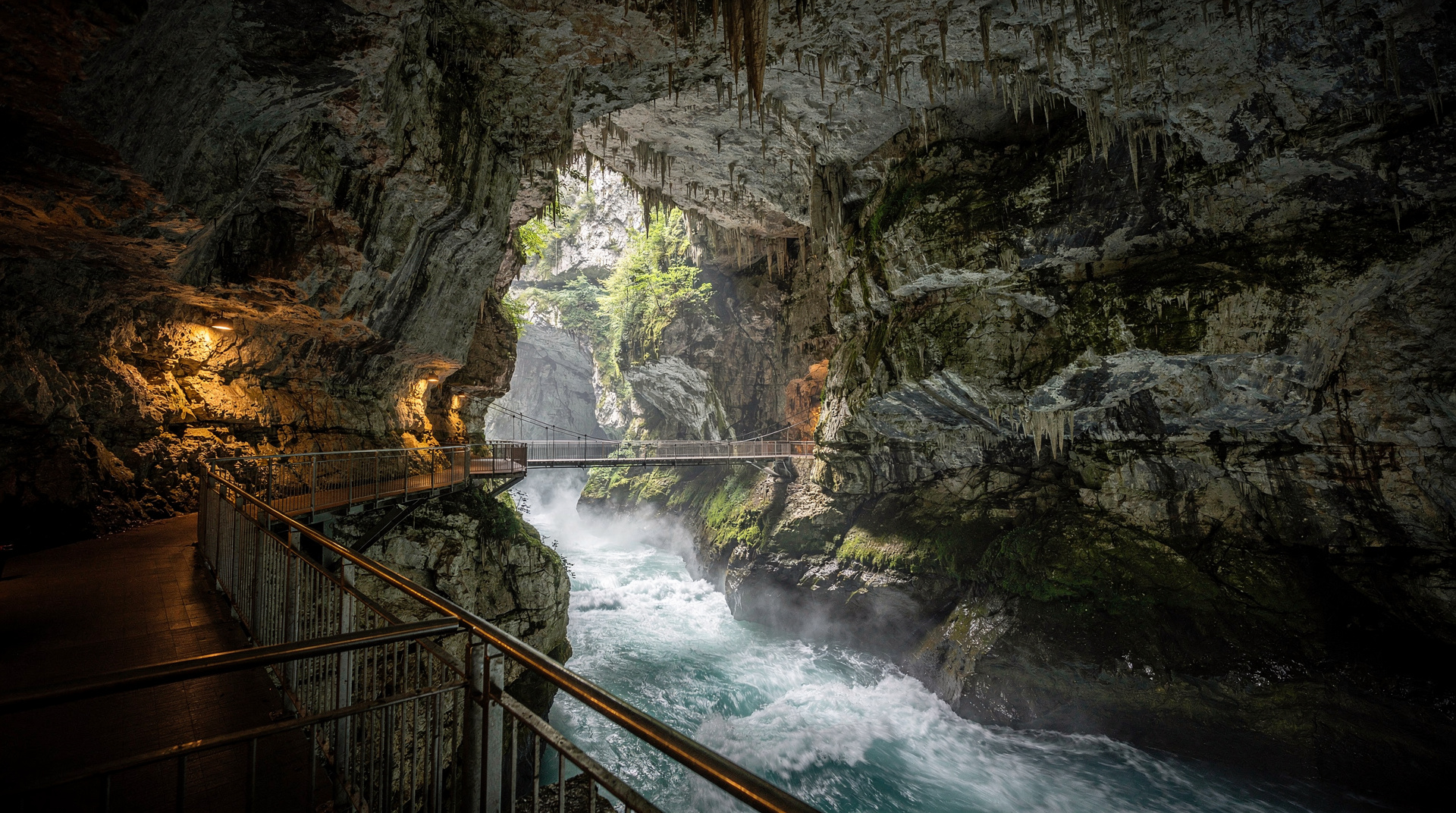
Ljubljana: Škocjan Caves, Rakov Škocjan and marshes tour
Is Slovenia a good birdwatching destination?
Excellent — Slovenia sits at the junction of several biogeographical zones (Alpine, Mediterranean, Pannonian and Dinaric), giving it an unusually diverse bird list for a small country. Over 380 species have been recorded. Key habitats include the alpine meadows and forests of Triglav National Park (golden eagle, wallcreeper, capercaillie), the Sečovlje saltpans (coastal waders and flamingos), Cerknica Lake (waterfowl, crakes) and the Soča Valley (dippers, kingfishers, eagle owls).
Birdwatching in Slovenia: why this small country punches above its weight
Slovenia is one of Europe’s most biodiverse countries relative to its size — just 20,273 km², but positioned at the junction of four major European biogeographic zones. To the north-west, the Julian Alps represent the Alpine zone: golden eagles, chamois, wallcreepers and capercaillie. To the south-west, the Karst and the Adriatic coast bring Mediterranean species. To the east, the Pannonian plains give access to steppe birds. And throughout, the extensive Dinaric forests support the full range of Central European woodland species.
This guide covers the best sites, the key target species and the practical information for a birdwatching trip to Slovenia — whether you have a single afternoon or a week.
| Where | Sečovlje Saltpans, Cerknica Lake, Triglav National Park, Soča Valley, Krakovo Forest |
| Best months | April–June (breeding), September–October (migration) |
| Cost | Free on public trails; guided days around EUR 80–150/person |
| Equipment | 8x42 binoculars, Western Palearctic field guide |
| Guide needed? | Recommended for alpine species; optional for wetland sites |
The five essential birdwatching sites
1. Sečovlje Saltpans (Sečovljske soline)
The saltpans near Piran on the Adriatic coast are the most important coastal birding site in Slovenia — a protected landscape of salt-evaporation pans, reed beds and brackish lagoons that attracts an exceptional variety of waterbirds, waders and passage migrants.
What to see: Greater flamingo (resident in small numbers, up to 30 birds most years), black-winged stilt (breeding), avocet, little egret, squacco heron, purple heron, Kentish plover, little tern (breeding), marsh harrier, hobby, Cetti’s warbler (heard constantly) and a full range of passage waders in spring and autumn.
When: Year-round, but April–September for the most species. The flamingos are most reliably seen from May to September. Wader passage peaks in May and August–September.
Access: From Piran, drive south towards the Croatian border; the saltpans are signed off the coastal road. The nature reserve has an information centre and marked trails (admission EUR 8). The boardwalk over the saltpans is excellent for close views.
2. Cerknica Lake (Cerknisko jezero)
Cerknica is one of the largest intermittent lakes in the world — a polye (karst polje) that fills with water in winter and spring and drains underground in summer, creating a vast wetland for much of the year. When full, it is a spectacular birding site; when dry (July–September usually), it becomes meadow.
What to see: Eurasian bittern (heard more than seen, the booming call is unmistakeable), little bittern, water rail, spotted crake, corncrake (in the drier margins), marsh harrier, white-tailed eagle (winter), bean goose, white-fronted goose (winter), various ducks.
When: Best from October through June while the lake is full. Spring (April–May) gives the peak of breeding activity — the crakes are calling from every reed bed and the harriers are displaying.
Access: From Ljubljana, about 45 minutes south via Logatec. The main viewing area is from the road along the northern shore near Dolenje Jezero village.
3. Triglav National Park (Julian Alps)
The alpine and subalpine habitats of Triglav support the full suite of European mountain birds. Key species:
Wallcreeper (Tichodroma muraria): The star species for visiting birders — a small, crimson-winged bird that creeps on vertical rock faces. Found on the limestone cliffs above Trenta, the Soča Valley and the walls of the Vršič Pass road. Easiest to find in spring when males display on the cliff faces.
Capercaillie (Tetrao urogallus): The largest grouse in Europe, in old spruce forest above 1,200 m. Males lek in April–May, producing a characteristic sequence of clicks, pops and hissing. Extremely sensitive to disturbance; observe from a distance.
White-backed woodpecker (Dendrocopos leucotos): One of Europe’s rarest woodpeckers, associated with old beech forest. Present in the Krakovo forest and some beech stands in the park. Look for excavated nest holes in old dead beeches.
Nutcracker (Nucifraga caryocatactes): The spotted, crow-sized bird of the high pine forest — common and approachable in the Pokljuka Plateau and above Kranjska Gora. Its cache-storing behaviour is critical for the regeneration of the Swiss stone pine.
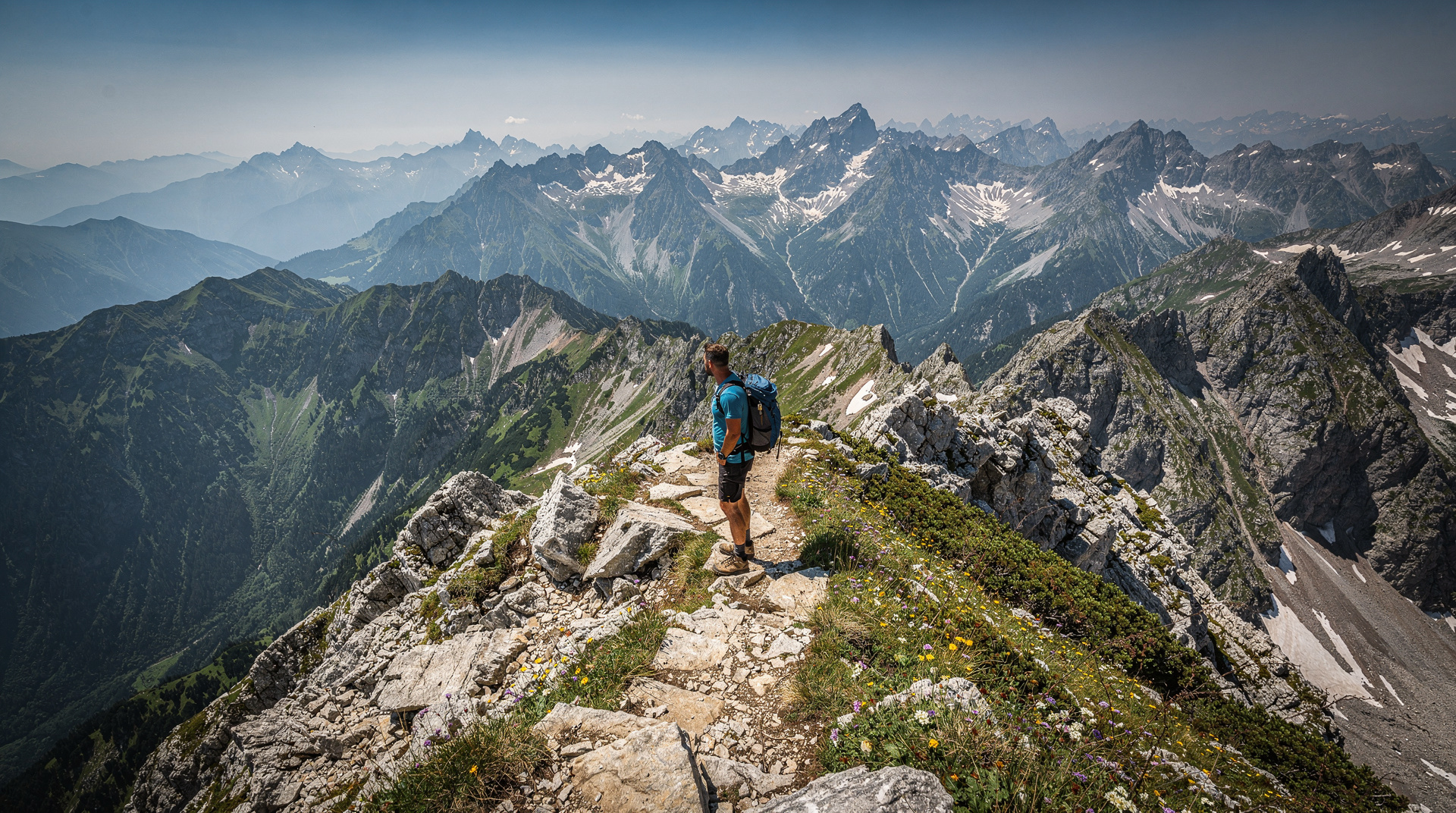
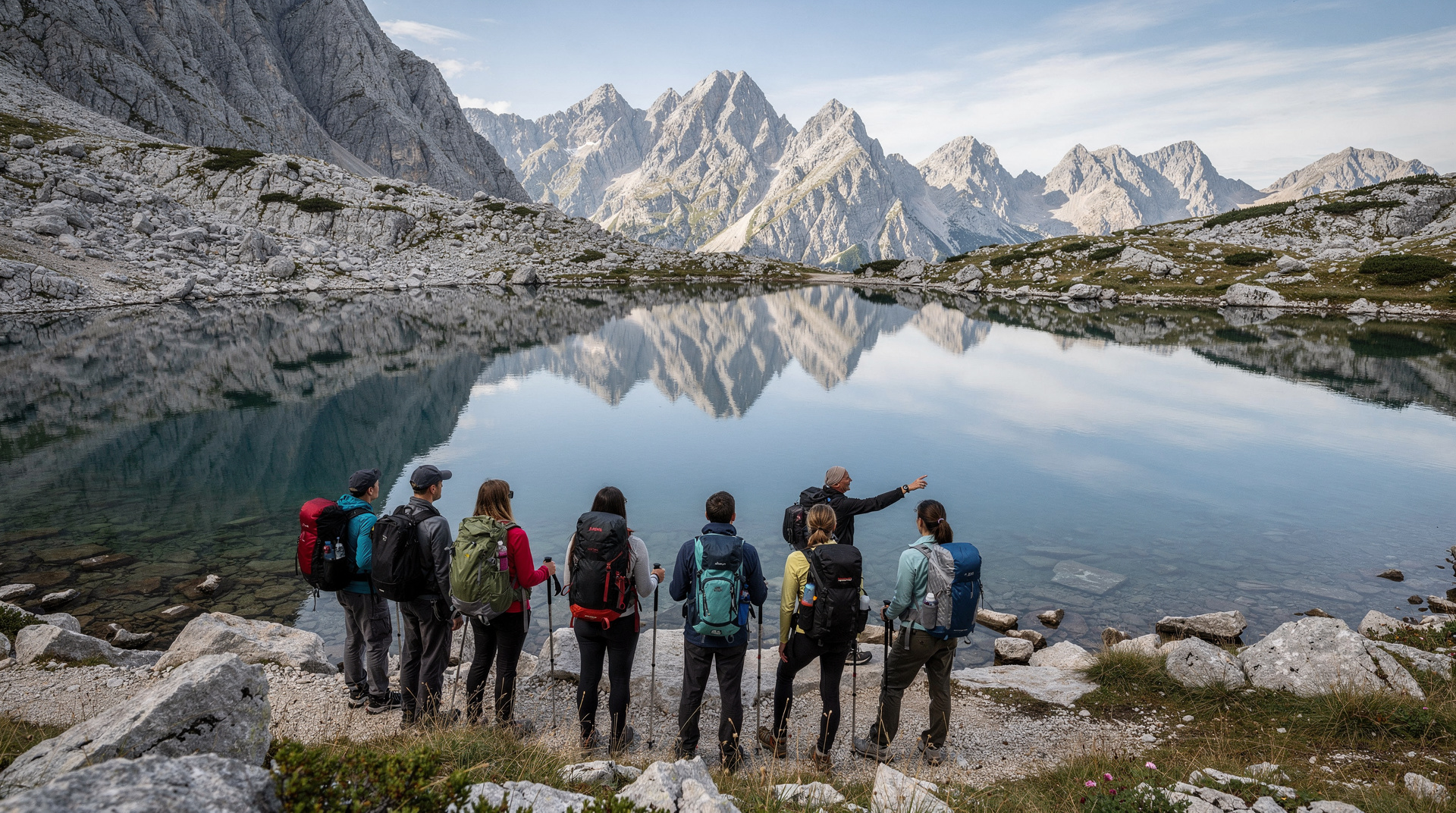
Guided day trip to Trenta — excellent for alpine birds4. Soča Valley
The Soča Valley is outstanding for river and gorge birds:
Dipper (Cinclus cinclus): Breeds on every fast-flowing section of the Soča and its tributaries. A plump, white-fronted bird that walks underwater searching for invertebrates. Seen from almost any bridge or rocky section of the river.
Kingfisher (Alcedo atthis): Present on the slower sections of the Soča, often perched on overhanging branches above clear pools.
Grey wagtail: Common on rocky riverbanks throughout the Soča system.
Eagle owl: The gorge walls and cliff faces of the Soča support breeding eagle owls. Heard best on warm spring nights.
Common sandpiper: Breeds on shingle banks along the Soča — the trilling call is a constant sound of the riverside in May and June.
5. Krakovo Forest
Near Kostanjevica na Krki in eastern Slovenia, Krakovo is one of the best sites for forest birds in the country — a lowland alluvial forest with very old trees that host the complete range of woodpeckers and associated cavity nesters. White-backed woodpecker, black woodpecker, grey-headed woodpecker, lesser spotted woodpecker and black stork all breed here. Access is free on the forest tracks.
Bohinj: alpine wetland birding
Lake Bohinj and its surrounding wetland meadows combine alpine and subalpine species in an easily accessible setting. The lake edge holds little grebe, tufted duck and common pochard. The Bohinjska Bistrica wetland (north-east of the lake) has corncrake (summer nights) and grasshopper warbler. The forests above the lake have all the typical mountain species plus breeding peregrine on the cliffs above the cable car.
Guided tour: Škocjan Caves, Rakov Škocjan and Cerknica marshesBirdwatching equipment for Slovenia
Binoculars: 8x42 is the standard recommendation for mixed habitat — good light gathering for forest work, powerful enough for open habitat. For dedicated alpine birding where birds may be on distant cliffs, 10x42 or a small spotting scope is useful.
Field guide: Any current Western Palearctic guide covers all Slovenian species. The Collins Bird Guide by Svensson et al. is the gold standard for European birding.
Photography: Slovenia’s bird photography potential is exceptional. Mountain species on clear limestone backgrounds, saltpan birds against the salt pan geometry, and dipper on the vivid Soča stones all make compelling images.
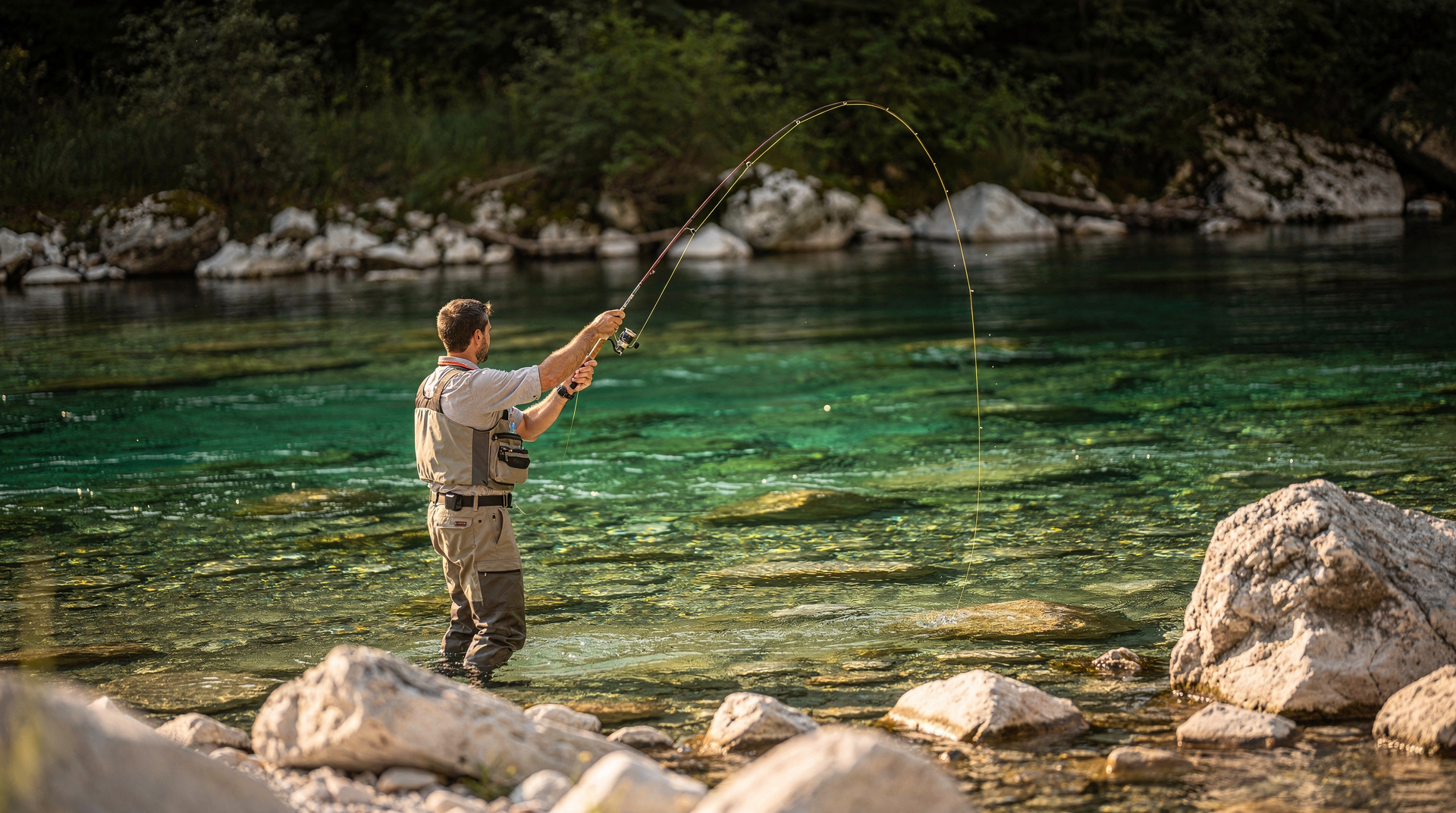
Guided birdwatching tours Guided nature and fly fishing tour in the Bohinj and Soča area Several Slovenian nature guides specialise in birding itineraries. For the alpine species (wallcreeper, capercaillie), guided visits are far more productive than independent searches — the guides know current territories and habitats.
Seasonal summary
| Season | Best for |
|---|---|
| March–April | Owls calling, first migrants, woodpecker drumming, capercaillie lek |
| May–June | All breeding species active, wallcreeper on display, peak diversity |
| July–August | Alpine species, saltpan flamingos and waders, fewer migrants |
| September–October | Southbound migration, raptors over the Karst, autumn wildfowl on Cerknica |
| November–February | Wintering wildfowl, winter thrushes, occasional snowy owl in severe winters |
For the full wildlife picture in Triglav National Park, the wildlife guide covers mammals, raptors and broader ecology. For a broader nature perspective, the national parks guide covers all of Slovenia’s protected areas.
Practical travel tips for birders
Slovenia Bird Observing Network (DOPPS): DOPPS (Društvo za opazovanje in proučevanje ptic Slovenije) is the Slovenian Ornithological Society and maintains a bird observation database, site guides and a list of recent sightings (in Slovenian, but navigable). Their website is a useful resource for current reports before your visit.
eBird: The Cornell Lab of Ornithology’s eBird platform has a rapidly growing database of Slovenian records. Search by hotspot to see what has been seen recently at Sečovlje, Cerknica and the main alpine sites. Slovenian birders are increasingly active on eBird.
Organised birdwatching tours: Several local nature guides lead dedicated birdwatching days in the key areas. A full day with a local guide in the Kočevski Rog forest (for white-backed woodpecker), or a dawn session at Cerknica, is far more productive than independent searching and typically costs EUR 80–150 per person.
Endemics and near-endemics
Slovenia has no true endemics among its birds, but it holds strong populations of several species that are of European conservation concern:
White-backed woodpecker: Dependent on old-growth beech forest with abundant dead wood. Slovenian forests (particularly Krakovo, Krokar and the beech stands of Notranjska) are among the best sites in Europe.
Corncrake: A migrant grassland bird that has declined catastrophically across most of Europe due to intensive agriculture. Slovenia’s traditional hay-meadow management (late cutting in the Kranjska Gora valley, around Bohinj and in the Kobarid area) maintains important breeding populations.
Black stork: A shy, forest-nesting stork that avoids agricultural areas. Slovenia’s mix of forest and clear rivers supports a healthy population. Most easily seen along the Sava Bohinjka below Bohinj in summer, or at Krakovo Forest.
Lesser kestrel: A small, colonial-nesting kestrel of warm rocky landscapes. The Karst above Trieste and the warm rocky slopes of the Vipava Valley support the northernmost regular breeding population in the region.
A suggested 3-day birdwatching itinerary
Day 1 — Alpine and forest: Base in Kranjska Gora or Lake Bohinj. Morning: drive to the Pokljuka Plateau for nutcracker, black grouse and capercaillie habitat. Afternoon: Bohinj lake for black stork, dipper and kingfisher. Dusk: listen for pygmy and Tengmalm’s owl on the forest road above the lake.
Day 2 — Soča Valley and gorges: Early morning in the Soča Valley for dipper, wallcreeper (cliff faces above Bovec and Trenta), grey wagtail and the whole river bird assemblage. Afternoon: Kobarid historical walk, then eagle owl search at dusk on the gorge walls.
Day 3 — Coast and wetlands: Drive to the Sečovlje Saltpans early morning for flamingos, waders and saltpan species. Stop at Strunjan coastal cliffs for red-backed shrike, subalpine warbler and fan-tailed warbler. Drive inland to Cerknica Lake for afternoon — bittern, harriers and crakes.
Eastern Slovenia: Pannonian and steppe birds
The eastern part of Slovenia — the Pannonian lowlands around Maribor, Ptuj and the Mura River — provides a completely different birdwatching habitat from the alpine and karst zones. Here, the landscape transitions towards the Hungarian and Croatian Pannonian plain, and with it come species that are entirely absent from western Slovenia:
White stork (Ciconia ciconia): Breeds in villages throughout eastern Slovenia, arriving from Africa in April and departing by August. The Spodnja Savinja Valley and the area around Ptuj have particularly good stork populations.
Roller (Coracias garrulus): One of the most spectacular European birds — electric blue with chestnut back, breeding in old tree cavities and hunting grasshoppers from utility wires. The Prekmurje region and the Sotelska area (near the Croatian border) are the best sites in Slovenia.
Corn bunting and quail: The farmland of Pannonian Slovenia still has good populations of both species, associated with the cereal fields and traditional field margins.
Mura River wetlands: The Mura River in the Prekmurje region (north-east Slovenia) is one of the last braided river systems in central Europe, with a mature riparian forest of oak and black poplar. White-tailed eagle, black stork, black kite and kingfisher are all present. The Mura is a Natura 2000 site.
Great bustard: Occasional records from the easternmost part of Slovenia near the Hungarian border, where the agricultural landscape briefly resembles the puszta.
Slovenia in the context of the Adriatic flyway
The Adriatic coast is one of the key flyways for passerine migration in autumn — birds from Scandinavia, central and eastern Europe concentrate along the coast before the sea crossing. Slovenia’s coastal zone, though small, is part of this flyway.
In early October, falls of migrants can be exceptional along the coast — exhausted warblers, flycatchers and thrushes pile into coastal scrub after overnight sea crossings. The most striking are ring ouzels (a mountain thrush), pied flycatchers and redstarts in the coastal Karst scrub. Local birdwatchers monitor the Strunjan headland and the Karst ridge above Trieste specifically for these autumn falls.
The Karst ridge itself — the escarpment above Piran and Trieste — is also a raptor watchpoint in autumn, with buzzards, honey buzzards, sparrowhawks and occasional rarer raptors moving south-west along the ridge edge.
For the full wildlife picture, see the Triglav National Park wildlife guide and the national parks guide.
Where to base yourself for a birding trip
Lake Bohinj is the most practical single base for a mixed alpine-and-wetland trip: 30–40 minutes from Pokljuka forest species, an hour from the Soča Valley’s dipper and wallcreeper habitat, and within range of a day trip to Cerknica Lake if you have a car. Accommodation in Bohinj is quieter and cheaper than Bled, which suits early starts.
Ljubljana works better if your priority is Cerknica Lake and the Sečovlje Saltpans, both under 90 minutes’ drive, plus easy access to the eastern Pannonian sites (Maribor, Ptuj) by motorway.
Piran or the coast is the right base if flamingos and coastal waders are your main target and you don’t intend to range far into the mountains — the saltpans are a 15-minute drive from most coastal accommodation.
Photography and recording notes
Slovenian birders increasingly use apps like Merlin Bird ID and BirdNET for call identification in the field, particularly useful for the owl chorus in Triglav’s forests where sightings are rare but calls are distinctive. A directional microphone and a phone with one of these apps can confirm species that would otherwise go unrecorded. For photography, a hide session at Cerknica or a guided alpine day gives far more reliable results than casual roadside stops — the birds are wary of direct approach across open ground.
A one-day itinerary if you only have Ljubljana as a base
For visitors without time for a multi-day trip, a single well-planned day from Ljubljana can still cover two very different habitats. Leave before dawn for Cerknica Lake (45 minutes south) for the first two hours of light, when crakes and bitterns are most vocal and waterfowl are most active.
By mid-morning, drive to the Sečovlje Saltpans (about 90 minutes further, or plan this as a separate coastal day) or, for a shorter loop, head instead to the Ljubljana Marshes (Ljubljansko barje) on the city’s southern edge, which holds corncrake, quail and marsh harrier within 20 minutes of the city centre and requires no early alpine drive at all. This compressed version won’t deliver alpine specialists, but it’s a realistic way to sample Slovenia’s habitat diversity without committing a full week.
Frequently asked questions about Birdwatching in Slovenia
What are the target species for birdwatchers in Slovenia?
Key targets include: wallcreeper (vertical rock faces, Soča Valley and Triglav), white-backed woodpecker (old beech forests), Ural owl (montane forest), Tengmalm's owl, pygmy owl, capercaillie (subalpine spruce), black grouse, golden eagle (Triglav and Soča), lesser kestrel (Karst region), roller (eastern Slovenia), great bustard (Pannonian plains), Eurasian bittern (Cerknica Lake), little bittern, Montagu's harrier and various breeding warblers.When is the best time for birdwatching in Slovenia?
April–June is the best overall period: breeding season is in full swing, forest species are singing and displaying, owls are calling on spring nights, and passage migrants pass through. Late April and May are ideal for the full range — alpine species becoming accessible as snow retreats, wetland species arriving, and forest species at their most vocal. September–October is excellent for passage migrants, especially along the Adriatic flyway.Where are the best sites for birdwatching in Slovenia?
The five essential sites: (1) Sečovlje Saltpans near Piran — waders, flamingos, herons; (2) Cerknica Lake — intermittent lake, crakes, bitterns, wildfowl; (3) Triglav National Park — golden eagle, capercaillie, wallcreeper; (4) Soča Valley — dipper, eagle owl, kingfisher, marsh harrier; (5) Krakovo Forest near Kostanjevica — one of Slovenia's best forest bird sites, with white-backed woodpecker.Are there guided birdwatching tours in Slovenia?
Yes — several specialist nature guides offer birdwatching days and multi-day tours in Slovenia, covering the alpine and wetland sites. The Soča Valley and Bohinj area have multiple wildlife guide options. Fly fishing guide services on the Soča often double as naturalist tours for clients interested in the river ecology.Can I see flamingos in Slovenia?
Yes, at the Sečovlje Saltpans near Piran. Flamingos (greater flamingo) first began appearing regularly in the saltpans in the early 2000s and now small numbers are present most of the year, particularly in spring and summer. The saltpans are a protected nature reserve — access is on signed paths; the flamingo pool is visible from the boardwalk trail.Do I need a permit to birdwatch in Slovenia?
No permit is needed to birdwatch from public paths, roads and marked trails, including at Cerknica Lake, the Sečovlje Saltpans boardwalk and throughout Triglav National Park. Some private hides and specific reserve zones may require a small entrance fee or advance booking through a local guide, but general birdwatching on foot is unrestricted.Is a local guide worth it for birdwatching in Slovenia?
For the harder alpine species — wallcreeper, capercaillie, Ural owl — yes, a local guide dramatically improves your odds by knowing current territories and calling behaviour. For the coastal and wetland sites (Sečovlje, Cerknica), independent birdwatching with a good field guide works well, since the target species are easier to locate without specialist knowledge.
Top experiences
Bookable activities with verified prices and instant confirmation on GetYourGuide.