Wildlife in Triglav National Park: what to see and where to find it
From Bled: full-day Triglav National Park tour
What wildlife can you see in Triglav National Park?
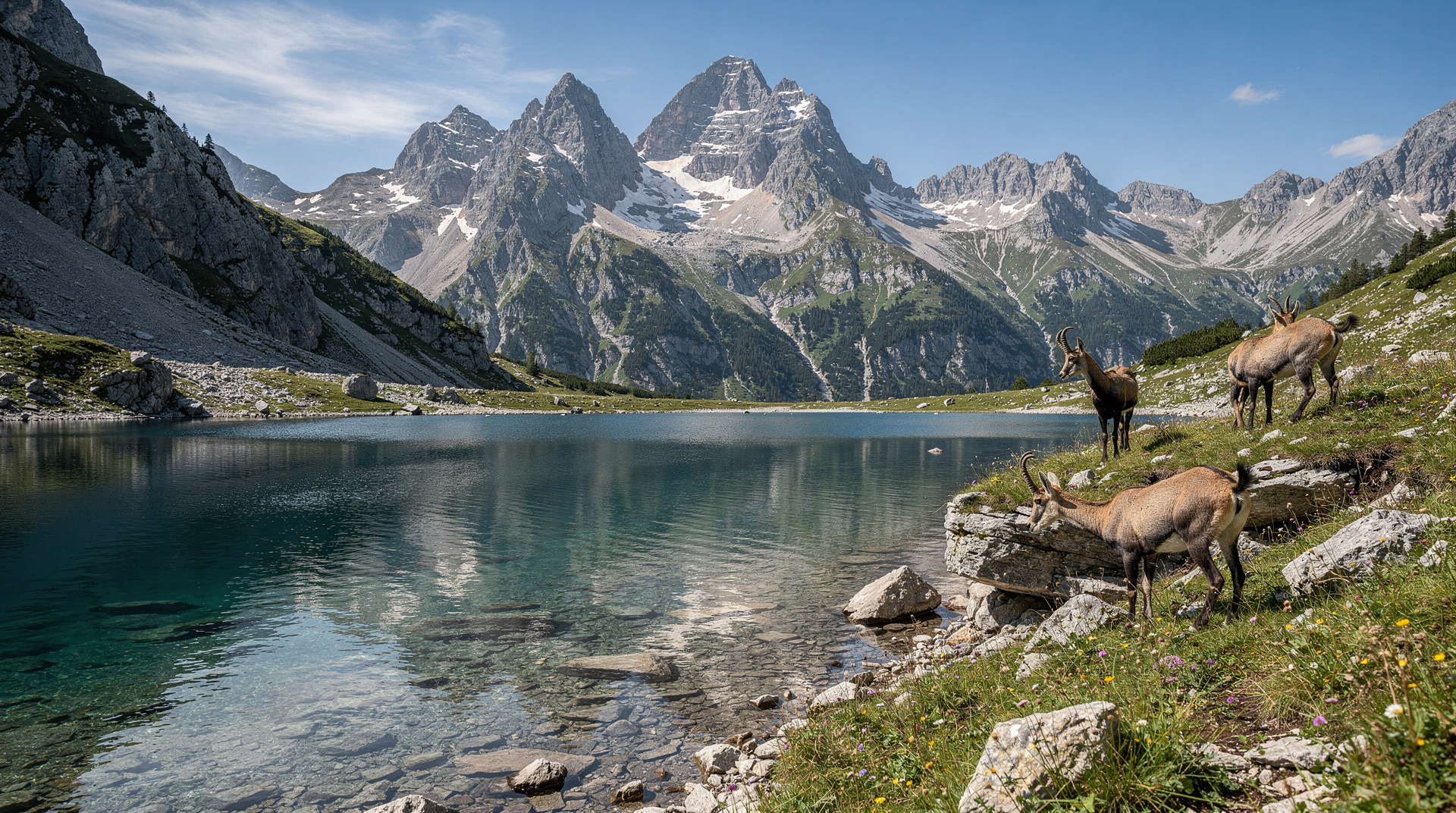
Triglav National Park hosts one of the richest alpine wildlife assemblages in Europe: chamois, ibex (reintroduced), Alpine marmots, golden eagles, eagle owls, Eurasian lynx, brown bears, common and fire salamanders, and the rare Proteus anguinus (olm) in underground caves. Chamois are the most reliably seen large mammal; marmots are excellent in the high meadows of the Pokljuka Plateau; golden eagles are seen on thermals over the Soča Valley and Trenta.
Wildlife in Triglav National Park: the complete guide
Triglav National Park is the only national park in Slovenia and covers 880 km² of the Julian Alps — from glaciated limestone peaks to deep-cut river gorges, from alpine meadows to subalpine forest. It is one of the few places in the Alps where the full spectrum of mountain wildlife is still intact: large predators, apex avian hunters, high-altitude ungulates and a remarkable diversity of birds and amphibians.
| Most reliable sighting | Chamois (rocky slopes above the treeline) |
| Best marmot spot | Pokljuka Plateau, Vršič Pass meadows |
| Rarely seen | Brown bear, Eurasian lynx (elusive, but present) |
| Best birding target | Wallcreeper (limestone cliffs, Trenta/Bovec) |
| Equipment | Binoculars (8x42 or 10x42) essential |
| Best season | June–September, October for the chamois rut |
The park is not a safari destination. Wildlife is seen through patience, early hours and the knowledge of where to look — not from a vehicle in open savannah. But for visitors willing to walk, look and wait, Triglav offers some of the best wildlife watching in central Europe.
The habitat mosaic
Triglav National Park contains several distinct habitats, each with its characteristic wildlife:
Alpine zone (above 1,800 m): The domain of chamois, ibex, marmot and the golden eagle. The rocky limestone faces, screes and high meadows are the classic environment for large alpine mammals. Snow lies here from November to May or June.
Subalpine zone (1,400–1,800 m): The transition zone of dwarf pine, Alpine rose and late-melting snowfields. Brown bear and lynx are present here but rarely seen. Capercaillie lek in this zone.
Montane forest (below 1,400 m): Mixed beech, spruce and fir forest, the richest zone for owls, woodpeckers and forest mammals. Red deer, roe deer, wild boar and red fox are common. Wolf sightings are rare but confirmed.
River and wetland: The Soča Valley and its tributaries, Lake Bohinj and the wetlands of the Bohinj basin hold dipper, kingfisher, common sandpiper, grey wagtail and breeding goshawk. The Soča River is the habitat of the Huchen (Danube salmon), one of Europe’s largest and most powerful freshwater fish, as well as the marble trout — a subspecies unique to the Soča system.
Chamois: the alpine emblem
The chamois (Rupicapra rupicapra) is the most characteristic large mammal of the Julian Alps and the most reliably seen. The population in and around Triglav National Park numbers in the thousands, and the animals are used to moderate human presence in the most-visited areas.
Where to find them: Rocky slopes above the treeline throughout the park. The most accessible viewing is:
- Above Kranjska Gora: The slopes above Prisank and Razor, visible from the Vršič Pass road
- Bohinj basin ridges: The rocky faces above Lake Bohinj, visible from the valley road
- Triglav north face area: Chamois commonly graze on the high meadows approaching Triglav
When: Year-round, but best in early morning and late afternoon when animals descend to lower pastures. The October rut (chamois mating season) brings males into unusual and conspicuous behaviour. In spring, females with kids appear on the lower rocky areas.
Equipment: Binoculars are essential — 8x42 or 10x42 are ideal for scanning rocky slopes at alpine distances.
Alpine marmot: the quintessential meadow mammal
The Alpine marmot (Marmota marmota) is perhaps the most appealing wildlife encounter in the high Alps. These large, burrowing rodents live in family colonies on high meadows and their whistling alarm calls are the characteristic sound of the alpine zone above 1,500 m.
Where to find them: The Pokljuka Plateau is one of the best places in Slovenia for marmots — a high forested plateau at 1,300–1,500 m with open meadows and good numbers of resident colonies. The Vršič Pass area (in the meadows below the road on the descent towards Trenta) reliably has marmots close to the path. The 7 Lakes Valley above Bohinj is excellent for marmot watching combined with a hike.
When: Active from late April to October; hibernate October–April. Most active in the morning before 10:00 and again in late afternoon.
Golden eagle: the apex aerial predator
The golden eagle (Aquila chrysaetos) is Slovenia’s most impressive bird of prey — a large, dark bird with a 2-metre wingspan that hunts chamois kids, marmots and hares on the open high terrain. Triglav National Park has several breeding pairs.
Where to look: Scan the sky above high valleys and ridges, especially on warm afternoons when thermals develop. The Soča Valley above Bovec, the Trenta Valley and the ridges above Bohinj are consistently good. Eagles often patrol the same routes; if you see one pass, stay and watch — it may return.
Identification: Much larger than the buzzard (which is common throughout the park). Adults have a golden-brown nape, dark brown body and a distinctive long tail with a pale base. Juvenile birds are dark with striking white wing patches and a white tail base.
Other raptors and owls
The park holds an impressive raptor and owl list:
-
Eagle owl (Bubo bubo): The largest owl in Europe, present in rocky gorges and cliff areas. Heard more often than seen; the deep hooting is one of the most atmospheric sounds of the Triglav night.
-
Tengmalm’s owl (Aegolius funereus): Breeds in old woodpecker holes in the montane forest; nocturnal and rarely seen but present throughout the park forest.
-
Pygmy owl (Glaucidium passerinum): Europe’s smallest owl, in mixed forest; daytime calling in spring.
-
Ural owl (Strix uralensis): Larger, paler than a tawny owl; rare but present in the older forest stands.
-
Wallcreeper (Tichodroma muraria): Not an owl but one of the most spectacular birds in the park — a starling-sized bird with crimson wing flashes that creeps on vertical limestone cliffs. Found on the rock faces of the Trenta Valley and above Bovec. A genuine target species for birders.
Brown bear: present but elusive
Brown bears (Ursus arctos) are present throughout the southern part of Triglav National Park and the forests below it. Slovenia has one of the healthiest brown bear populations in Europe (around 600–700 individuals nationally), and bears are confirmed breeding in the park area.
However, sightings are genuinely rare. Bears are intelligent and extremely wary of humans; in areas with high foot traffic (most of the park in summer), bears are active primarily at night. What you are far more likely to find is evidence — tracks in soft ground, overturned rocks, claw marks on trees.
If seeing bears is a priority, the brown bears guide covers the best areas and tour options in Slovenia, with the primary zone being the forests of south-eastern Slovenia (Kočevski Rog) rather than Triglav.
Eurasian lynx: the ghost cat
The Eurasian lynx (Lynx lynx) is Slovenia’s most elusive large predator — a cat the size of a large dog that is present in the park but seen perhaps once a year even by experienced naturalists. The national population numbers around 20–25 individuals, with confirmed territories in the Triglav area. Tracks are occasionally found in snow in the subalpine forest.
The Soča fish: marble trout and Huchen
The Soča River and its tributaries within the park support two fish of major conservation significance:
Marble trout (Salmo marmoratus): A subspecies of brown trout with a distinctive marbled pattern, endemic to the Soča system. It is one of the largest freshwater fish in the world — specimens of 120 cm and 25 kg have been recorded, though average catches are much smaller. The population collapsed in the 20th century due to stocking with non-native trout; conservation and reintroduction programmes have significantly improved numbers.
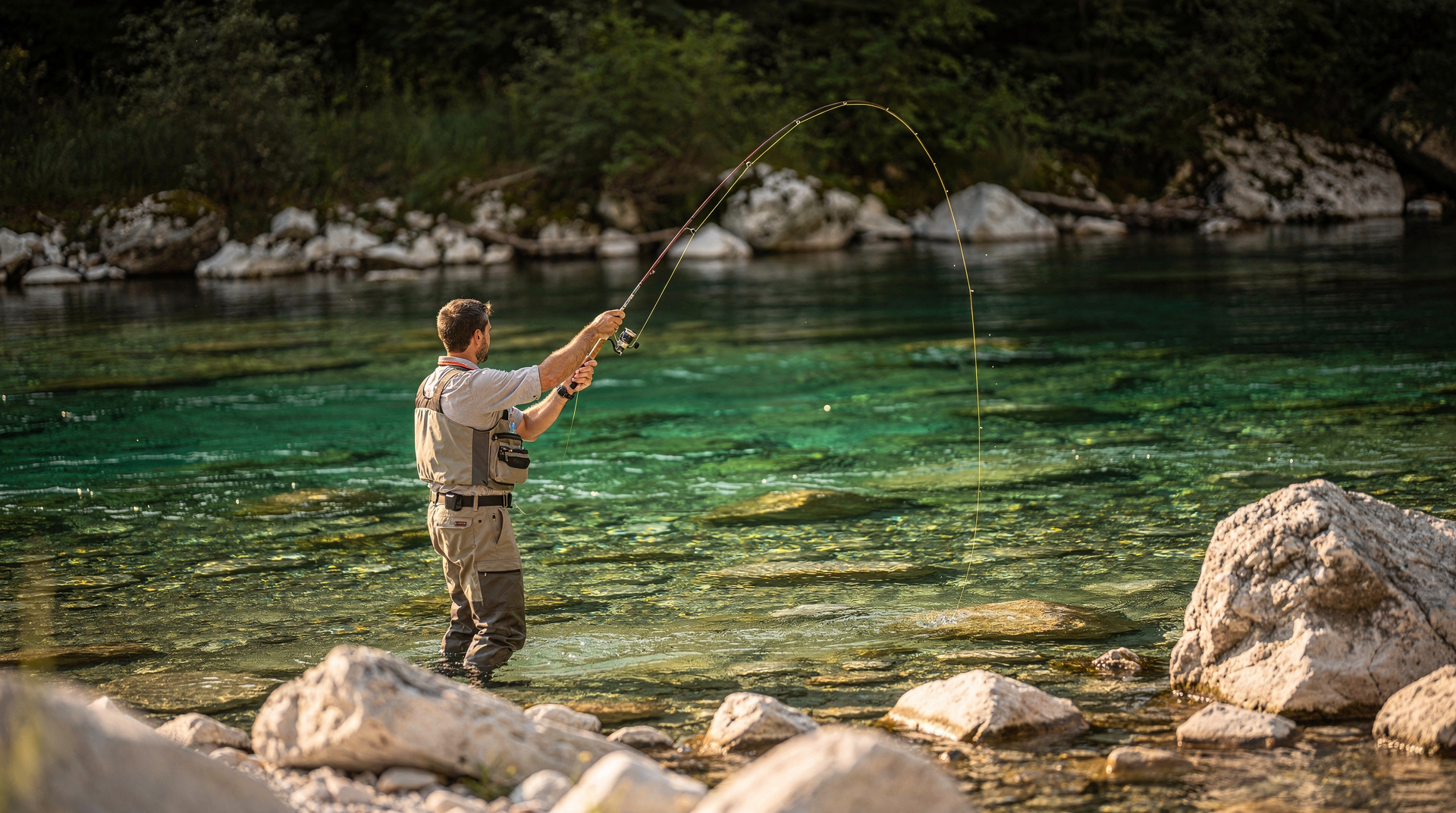
Huchen (Danube salmon, Hucho hucho): A large, silver-pink salmonid found in the fast sections of the Soča below the gorges. Can reach 1.5 m. The fly fishing here for both species is among the best in the Alps and the subject of active conservation management.
Guided fly fishing on the Soča and Sava riversBirds of the forest and meadow
Beyond the headline species, the park’s varied habitats support an excellent general bird list:
- Capercaillie (Tetrao urogallus): Large forest grouse, breeding in older spruce stands above 1,200 m; lekking in April–May
- Black grouse (Lyrurus tetrix): Subalpine zone lekking in April–May
- Nutcracker (Nucifraga caryocatactes): Common in pine forest above 1,200 m; their caches of pine seeds are vital for forest regeneration
- Alpine chough (Pyrrhocorax graculus): Abundant near mountain huts and summits, acrobatic fliers
Guided wildlife experiences Full-day guided Triglav National Park tour from Bled Guided day trip to Trenta and the Soča source from Bled For the most rewarding wildlife experience in Triglav National Park, going with a naturalist guide who knows the territories and behaviour patterns of the key species is far more productive than walking the marked trails. Guides also know the current status of protected nesting sites (golden eagle nests are strictly off-limits during the breeding season).
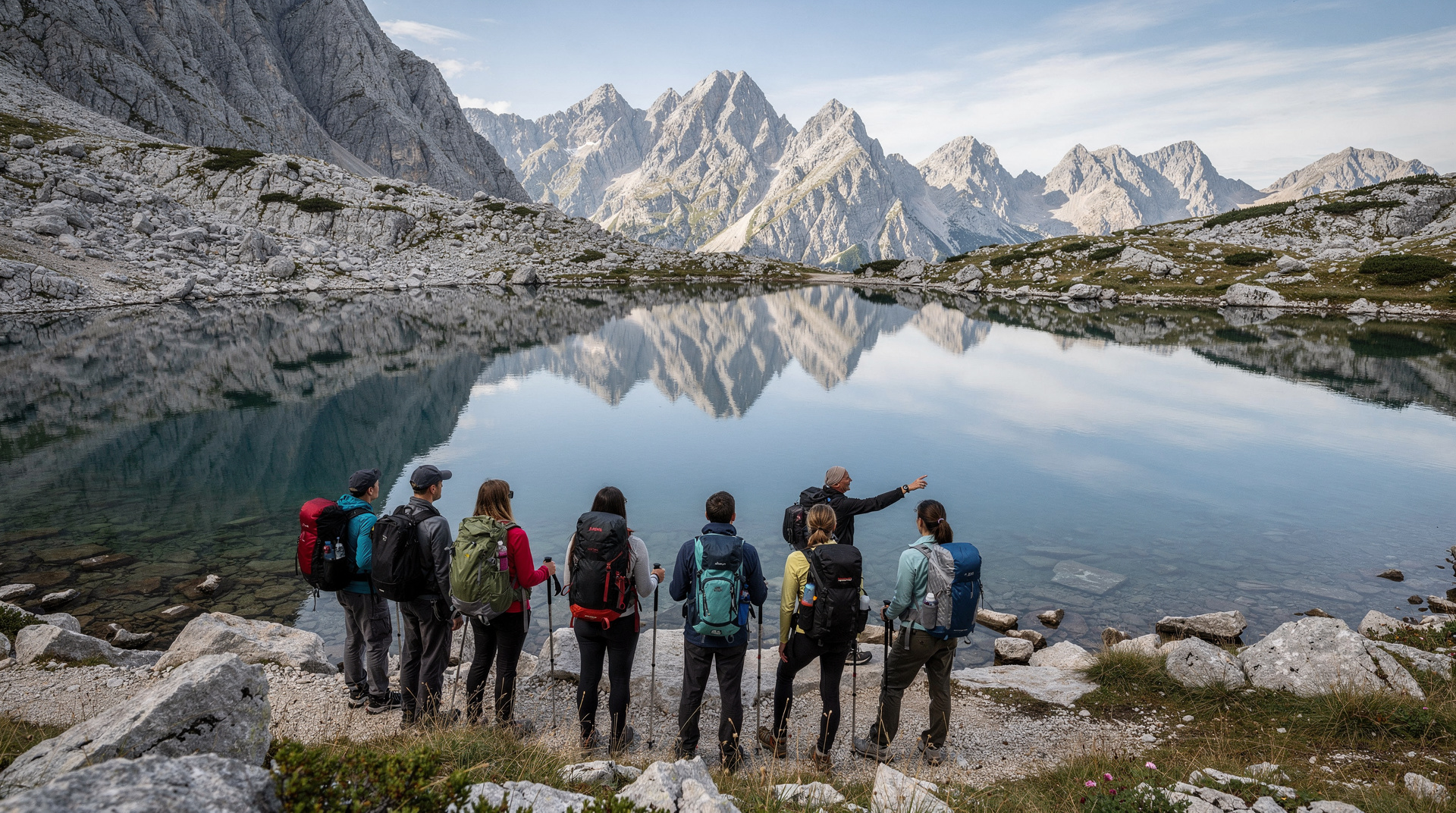
The 7 Lakes Valley hike combines extraordinary alpine scenery with excellent marmot and chamois habitat above Bohinj — one of the best wildlife walks in the park.
Guided hike: Triglav National Park and the 7 Lakes ValleyBest months for wildlife
| Month | Key activity |
|---|---|
| April | Capercaillie and black grouse lekking, first marmots emerging |
| May | Breeding birds active, chamois with kids on lower slopes |
| June | Full alpine activity, flowers at peak, marmots abundant |
| July–August | All species active, easier hiking access, chamois higher |
| September | Chamois rut beginning, excellent walking conditions, fewer people |
| October | Chamois rut peak, autumn colours, last marmots before hibernation |
| November–March | Bears and marmots in hibernation; lynx and wolf tracks in snow |
For broader context on Slovenia’s protected areas and wildlife corridors, the national parks and nature reserves guide covers the full picture.
The Pokljuka Plateau: the accessible wildlife zone
The Pokljuka Plateau at 1,300–1,500 m elevation is the most accessible high-altitude wildlife area in Triglav National Park. A forest road from Bled climbs to the plateau in about 40 minutes, opening onto a high karst plain of meadow, spruce and fir forest, with scattered sinkholes and a network of logging roads now used as hiking and mountain biking trails.
Pokljuka is the regular training ground for the Slovenian biathlon team (a World Cup biathlon venue is here), and in summer it is visited by hikers and cyclists. For wildlife, the plateau is exceptional for marmot, capercaillie (heard at dawn in the forest), nutcracker, several species of deer and, less commonly, bear.
From the plateau, marked paths lead to the summit of Debela Peč (1,696 m) for panoramic views, and to the edge of the Triglav north face hiking routes. Pokljuka is also the starting point for the high-level path to the Triglav Lakes Valley.
Night wildlife: owls and salamanders
Triglav National Park’s nocturnal wildlife is often overlooked. The night reveals:
Eagle owl: The enormous hooting of the eagle owl is heard on spring nights from valley sides and gorge walls throughout the park. Bovec, Kobarid and the Vrata Valley are all good listening points after dark.
Common and fire salamander: Both species are nocturnal and most active on warm, wet nights from April to October. The fire salamander (yellow-spotted on black) is one of the most beautiful amphibians in Europe and easily found on forest paths near streams after rain. The all-black Alpine salamander is found at higher elevations. Both are completely harmless and fascinating to observe; handle briefly if at all and always wet your hands first.
Glow-worm: The European glow-worm (Lampyris noctiluca) is present in the lower valley areas in June and July — females glow green from low vegetation to attract males. An entirely charming nocturnal experience in the right meadows.
Bats: The cave systems and old buildings throughout the park host multiple bat species, including several that are rare in western Europe. The greater horseshoe bat and the lesser horseshoe bat both breed in the Karst area. Bat-watching evenings are occasionally organised by local naturalists.
Water: the hidden wildlife of the Soča system
The Soča River system within Triglav National Park supports a complete freshwater food web of exceptional quality. The most visible components:
Dipper (Cinclus cinclus): Present on every fast-flowing section of the Soča and its tributaries in the park. This small, dark bird with its white bib regularly walks underwater in the current, feeding on invertebrates. It is the most reliably seen bird on any walk beside the river.
Common sandpiper (Actitis hypoleucos): The piping call and bobbing walk of the common sandpiper are inseparable from the Soča’s shingle beaches in summer. Arrives in April, leaves by August.
Eurasian otter: Present throughout the park’s rivers but rarely seen — active primarily at night and dawn. Evidence (spraints on prominent rocks at river confluences) is easier to find than the animal itself. The population in the Soča system is healthy.
Crayfish: The stone crayfish (Austropotamobius torrentium) is native to Slovenian rivers and under significant pressure from the invasive signal crayfish. Healthy populations remain in clean, cold tributary streams. Seen occasionally under rocks in shallow water.
Guided fly fishing and river wildlife tour — Soča and BohinjWildlife photography in the park
Photographing Triglav’s wildlife rewards the same patience the sightings themselves require. Chamois and marmots are approachable to a point with a long lens (300mm+ recommended) from a respectful distance — approaching too closely disturbs feeding and alarm behaviour and is discouraged by park rangers. Golden eagles are best photographed from a fixed vantage point where you have already seen one pass, since they patrol repeating routes along ridgelines.
For birders specifically targeting the wallcreeper or the forest owls, early morning in the Trenta Valley or around Bovec gives the best light and the quietest conditions — most owl activity (calling, occasional daytime sightings of Tengmalm’s or pygmy owl) happens at dawn and dusk. A local naturalist guide substantially improves the odds for the more elusive species, since they know current territories and can read fresh signs (tracks, calls, feeding remains) that most visitors would walk straight past.
For general hiking and logistics across the park, see the Triglav National Park guide, and for the highest-altitude wildlife habitat, the Seven Lakes Valley hike combines dramatic scenery with some of the park’s best chamois and marmot terrain.
Frequently asked questions about Wildlife in Triglav National Park
Where is the best place to see chamois in Triglav National Park?
Chamois are most reliably spotted on the rocky slopes above the treeline — the Vršič Pass area, the slopes above Kranjska Gora and the ridges above Lake Bohinj are all good. Morning and late afternoon are the best times; look for movement on light-coloured limestone faces. Binoculars are essential. In early summer, chamois with kids are common on the lower rocky pastures.Are there bears and wolves in Triglav National Park?
Brown bears are present throughout the southern and eastern parts of the park, but encounters are rare as bears are extremely shy and actively avoid humans. Wolf populations are recovering in Slovenia but remain scarce in the Triglav area specifically (they are more common in the Kočevski Rog region in south-eastern Slovenia). Lynx are a recovering population — sightings are rare but the species is confirmed breeding in the Triglav area.What is the best time of year for wildlife in Triglav National Park?
June–September is ideal: the high pastures are clear of snow, marmots are active, chamois with young are on the lower slopes, and alpine flowers attract insects and birds. May is excellent for bird song and breeding activity. October brings the chamois rut. Winter snow makes tracking possible but the high park is closed to casual visitors.Can you see golden eagles in the park?
Yes — golden eagles are resident in Triglav National Park and are seen reasonably regularly soaring on thermals, especially in the Soča Valley, Trenta and above the Bohinj basin. They hunt chamois and marmots above the treeline. The best views come from high vantage points — the Vršič Pass lookouts, the ridges above Bohinj and the open valley above the Soča source.What birds are special to Triglav National Park?
The park holds breeding pairs of golden eagle, eagle owl, Tengmalm's owl, pygmy owl, black grouse, hazel grouse, capercaillie, Ural owl, wallcreeper (on rock faces), Alpine chough, nutcracker and several species of woodpecker. The wallcreeper — a strikingly marked rock-face bird — is one of the most sought-after species, found on the limestone cliffs above Trenta and Bovec.Are guided wildlife tours available in the park?
Yes — several operators run guided wildlife and nature walks in the Triglav area, focusing on chamois tracking, bird identification and night hides for owls. Guided fly fishing on the Soča River is another nature-focused activity. For a full-day park experience with a naturalist, the guided Trenta day trip is the best option.What is the alpine salamander and where can you find it?
The Alpine salamander (Salamandra atra) is a small, all-black salamander unique to the Alps that gives birth to live young rather than laying eggs. It is found at higher elevations throughout the park, often on rocky paths during or after rain. The more colourful fire salamander (Salamandra salamandra) with its yellow spots is found at lower elevations. Both are completely harmless and fascinating to observe.
Top experiences
Bookable activities with verified prices and instant confirmation on GetYourGuide.