Brown bears in Slovenia: where to see them and what to expect
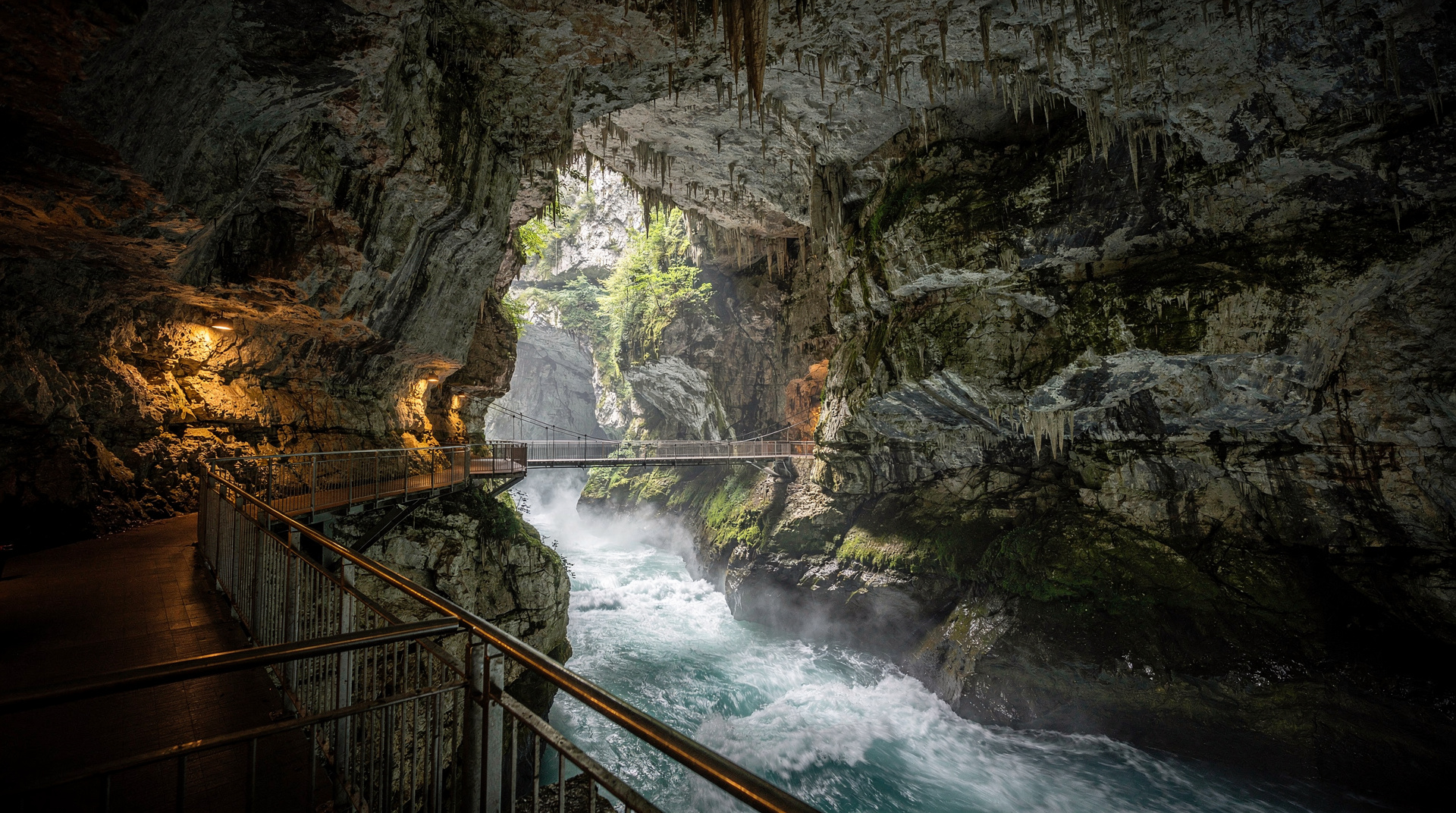
Ljubljana: Škocjan Caves, Rakov Škocjan and marshes tour
Where are brown bears in Slovenia and can you actually see them?
Slovenia has around 700–800 brown bears, one of the highest densities in Europe outside Romania and Russia. The main bear population is concentrated in the Dinaric forests of south-eastern Slovenia — the Kočevski Rog, Ribnica and Loška Dolina areas, about 80–100 km south-east of Ljubljana. Seeing a bear requires a guided hide visit, typically at dawn or dusk near a feeding station. Genuine sightings are likely with a good guide — these are not rare zoo animals but wild bears in their natural forest.
Brown bears in Slovenia: a genuine wildlife experience
Slovenia is home to one of the highest densities of wild brown bears in Europe. With 700–800 individuals in a country the size of Wales, bears are not a marginal, rarely-glimpsed species — they are a real presence in the forests of the Dinaric region, a functioning part of the ecosystem, and the subject of an active and well-organised wildlife tourism industry.
This guide covers where to find bears, how guided watching works, when to go, and what honest expectations look like.
| Where | Kočevski Rog / Ribnica area, 80–100 km SE of Ljubljana |
| Cost | Around EUR 80–120/person for a dusk hide session |
| Time needed | Half-day (mid-afternoon to dusk, 5–7 hours) |
| Success rate | Typically 70–90% with a good guide |
| Best months | April–May and August–October |
Why Slovenia has so many bears
The Dinaric forest of southern and eastern Slovenia is one of the most continuous areas of old-growth and semi-natural mixed forest in central Europe. The forests of the Kočevski Rog area — sometimes called the Kočevska forest — cover over 500 km² without a human settlement, connected to the forests of Croatia, Bosnia and beyond in a corridor that once extended from the Alps to the Balkans.
The bear population thrives here because the habitat is intact: old beech and fir provide the mast (beechnuts and fir seeds) that form a critical part of autumn bear diet; the forests are dense enough for undisturbed denning; and human pressure in this relatively depopulated part of Slovenia has historically been low.
Slovenia manages its bear population actively — hunting quotas are set annually to prevent overpopulation conflicts with livestock and beekeepers. The management is controversial among conservation groups but has been credited with maintaining the population’s wild character and preventing the habituation that characterises some bear populations.
Where bears are found
Primary zone: Kočevski Rog and surroundings (best for guided watching) The Kočevski Rog / Ribnica area in south-eastern Slovenia, centred on Kočevje (about 80 km south-east of Ljubljana), is the primary zone for organised bear watching. Most guides operating hide trips work from villages in this area — Draga pri Igu, Loška Dolina and the slopes of Kočevski Rog itself are the main areas.
Secondary zone: Snežnik Plateau and Notranjska The Snežnik Plateau (Slovenia’s highest karst plateau), the Loška Dolina valley and the Notranjska Regional Park between Postojna and Kočevje are all within the main bear range. Bears pass through the Karst, the Javorniki plateau and the forests above Ilirska Bistrica regularly, though organised watching is less developed here.
Triglav National Park and Julian Alps Bears are present throughout the park but in lower density. In the main tourist areas (Bled, Bohinj, Kranjska Gora), encounters with bears are extremely rare. Remote areas of the park (Trenta, the Tolmin gorges, the Pokljuka forest) may have occasional bear activity.
Guided bear watching: what to expect
The standard bear-watching format in Slovenia is a late-afternoon hide session. The logistics:
Arrival: You meet your guide in mid-afternoon (typically 14:00–15:00) at a pre-arranged point, often a small village near the forest. The guide checks conditions — recent bear sign, weather, wind direction — before proceeding.
The hide: A raised wooden structure in a forest clearing, accessed on foot from a quiet parking area. The approach is conducted in silence. Hides typically sit 3–8 metres above the ground, giving a clear view of the clearing below. Inside, the hide has small observation windows, basic seating and sometimes a toilet. No talking, no mobile phone use.
The wait: The classic hide session runs from approximately 15:00–17:00 (when you arrive) to 20:00–21:00 (dusk). Bears are most likely to appear in the 1–2 hours before dark — when the forest becomes quiet and the temperature drops. On many evenings, bears emerge earlier; on some, they do not appear until near dark or not at all (though success rates with good guides are 70–90%).
The sighting: Slovenian forest bears are not used to vehicles or people in the open — they are genuinely wild animals and would flee if they encountered a human on the path. From the hide, at a distance of 20–50 metres, they behave naturally: eating, investigating scents, occasionally sparring. Adult males may weigh 200–250 kg; females with cubs are smaller but more memorable to observe.
Group size and cost: Most hide sessions accommodate 2–6 people. Prices range from EUR 80–120 per person for a dusk session. Specialist multi-day bear watching tours are available.
What to bring for a hide session
- Warm clothing — forest clearings get cold after sunset, especially in spring and autumn
- Silent footwear (rubber-soled, no crinkly synthetics)
- Binoculars (8x42 ideal)
- Camera with a fast lens (50mm f/1.8 or telephoto with wide aperture) — light is low at dusk
- Water and snacks (eaten before entering the hide)
- Patience
Best times for bear watching
Spring (April–May): Bears emerge from hibernation hungry. Females with young cubs appear in April–May — the most exciting sighting for most visitors. Males emerge separately. Activity levels are high.
Summer (June–July): Bears feed on forest fruits, insects, roots and carrion. Activity is spread through dawn and dusk. Good for sightings but behaviour is less dramatic than spring or autumn.
Late summer/autumn (August–October): The hyperphagia period — bears eat 20,000+ calories per day to build fat reserves for winter. Beech mast is the critical food; bears concentrate around beech stands wherever the mast crop is good. Success rates for hide visits are typically highest in September.
Winter: Bears den from December through March. No sightings possible.
Bears elsewhere in Slovenia
Bears occasionally appear in unusual places — village outskirts near Kočevje, the forests above the Karst near Ilirska Bistrica, the Snežnik Plateau. In recent years, bears have been sighted as far north as the Kamnik Alps. These are dispersing young males exploring new territories.
Bear awareness for hikers: if you are hiking in the Kočevski Rog area, Snežnik Plateau or anywhere in the Dinaric forest, basic bear awareness applies. Make noise on the trail, do not approach a bear, and do not run. In the context of Slovenia’s popular hiking areas (Triglav, Bled, Bohinj), bear encounters are genuinely rare and not a reason to avoid hiking.
Bears and the Karst: the Postojna area
Bears are present in the forests above Postojna, in the Javorniki plateau and in the forest blocks between Postojna and Kočevje. However, tourist infrastructure for organised bear watching does not exist at Postojna Cave — if you want to combine a karst cave visit with bear watching, plan them as separate activities on different days.
Photography considerations
Bear photography from a hide is one of wildlife photography’s most achievable targets — you know roughly where the bear will be, and you have time to compose. Challenges: the light is very low at dusk, the bears move surprisingly quickly for their size, and forest backgrounds can be busy.
Recommended gear: a mirrorless camera with good high-ISO performance (ISO 6400+ without excessive noise), a telephoto lens (200–400mm) or a fast standard lens (50mm f/1.8 for ambient shots). Monopods are useful; tripods may be impractical in the confined hide space.
Nature tour: Škocjan Caves, Rakov Škocjan and the Dinaric forestFor the broader wildlife picture in Triglav National Park and the alpine zone, the Triglav wildlife guide covers species from chamois to golden eagle. The national parks overview covers all of Slovenia’s protected areas in context.
The bear population in context: numbers and management
Slovenia’s brown bear population of 700–800 individuals represents approximately 5–6% of the total European brown bear population outside Russia. The main European populations are in Romania (about 5,000), Russia, Finland and the Carpathian corridor. Slovenia’s Dinaric population is connected to the Croatian (about 800 bears) and Bosnian-Herzegovinian populations through forest corridors that are largely intact.
The Slovenian government manages bear numbers through annual hunting quotas set in cooperation with the wildlife research institute and conservation groups. Quota sizes are controversial — environmental groups argue they are too high; farmers and beekeepers affected by bear damage argue too low. In recent years, the quota has been 115–180 bears per year (supplemented by additional permits for problem individuals).
The management model is predicated on keeping bears wild and dispersed rather than concentrated in reserves. This is why guided hide watching works — bears are not in a reserve with feeding stations maintained purely for tourism but in their natural forest territory, and the hide is simply a structure that allows observation without disturbance.
Bear-related incidents in Slovenia: the honest picture
Slovenia has had very few bear attacks on humans — the records show fewer than a handful of incidents per decade, none of which were fatal in recent years. The vast majority of bear-human encounters end without incident: the bear is aware of the human before the human is aware of the bear, and it leaves.
The circumstances under which bears become aggressive are well understood: surprising a bear at close range (especially a female with cubs), approaching a feeding bear, or intervening between a female and her cubs. All of these situations are avoidable with basic trail sense:
- Make noise on the trail in bear country (talking, singing, bearing bells)
- Do not approach food sources (berry patches, carcasses) silently
- If you see a cub, assume a female is nearby and give wide berth
- In the unlikely event of a close encounter, speak calmly, back away slowly, make yourself large
Bear spray (capsaicin-based deterrent) is increasingly used in Slovenia and available in outdoor sports shops. It is effective in the rare situations where a bear does not flee.
Conservation challenges: the bear corridor
The long-term viability of Slovenia’s bear population depends on maintaining genetic exchange with the Croatian and broader Dinaric population. The primary corridor runs through the forests south of Kočevje, crossing the E61 motorway and the main Ljubljana–Rijeka railway line. Both infrastructure corridors have wildlife crossing structures, but the effectiveness of crossings for bears is still being monitored.
Urbanisation of former agricultural land in the corridor areas, and the fragmentation of forest by new roads, are the main emerging threats. Conservation organisations are working with road planners to incorporate wildlife crossing requirements into infrastructure expansion.
Combining bear watching with other activities
The Kočevski Rog forest is not only for bear watching. The area is also:
Cycling: The forests around Kočevje have excellent mountain biking trails on old forest roads, some of which pass through active bear habitat (the bears are generally not a concern for cyclists, who make enough noise to announce their presence).
History: The Kočevski Rog was the site of one of the darkest events of the Yugoslav partisan war — after the German surrender in 1945, thousands of anti-communist Slovenians and Croatian Ustasha prisoners were killed and buried in the forest caves. The Kočevski Rog massacre memorial at Macesnova Gorica is a place of national importance and is visited by Slovenians who want to understand this chapter of their history.
Mushroom and berry picking: The beech and fir forests of the Kočevje region are rich in chanterelles, porcini and other fungi in season (August–October). Local guides sometimes combine bear watching evenings with morning mushroom picking for a full nature experience.
Rogla and the Savinjske Alps: For visitors who want to continue from the bear area towards eastern Slovenia, the Pohorje Massif and Rogla ski area are 90 minutes east — offering a very different landscape from the Dinaric forest. The Logar Valley, one of Slovenia’s most beautiful glacial valleys, is 2 hours from Kočevje.
Where to stay for bear watching
The main base for bear watching is typically the Kočevje area itself — the town is functional if not beautiful, with accommodation in local guesthouses. Alternatively, the village of Draga pri Igu (20 minutes south of Ljubljana on the motorway) offers accommodation from which evening bear watching sessions are reachable in 30–45 minutes.
Many guided bear watching operators offer combined accommodation-and-session packages, which removes all logistics. These are the easiest option for international visitors and typically cost EUR 150–250 per person per night (accommodation + evening hide session included).
Prices for accommodation near the bear areas: basic guesthouses EUR 40–70 per night; a package with hide session EUR 150–250.
Guided nature tour in Slovenia — Bohinj and Soča areaWhat to expect emotionally from a hide session
First-time bear watchers often describe the hide session in three stages. The first hour is heightened alertness — every rustle in the undergrowth seems significant, and the silence of the hide amplifies small sounds. The second and third hours settle into a calmer, more attentive patience, as the forest’s own rhythm becomes apparent — birdsong, the occasional deer, the light changing. The final hour before dark, when bears are most likely to appear, tends to bring the alertness back, sharper this time because expectation has built. Guides manage this arc well, timing quiet commentary to keep guests engaged without breaking the silence the bears require.
Bears in Slovenian culture
Bears occupy a genuinely ambivalent place in Slovenian rural life — respected as a national wildlife success story and a draw for tourism, but also a real source of livestock and beekeeping losses for farmers living near the Dinaric forest. This tension shapes the annual hunting quota debate and is worth understanding if you want context beyond the tourism angle: the same bears that make for a memorable hide session are also a genuine management challenge for the communities who share the landscape with them year-round.
Weather and its effect on sightings
Bear activity is somewhat weather-dependent. Warm, still evenings tend to bring bears out earlier and more predictably, while heavy rain or strong wind can delay or reduce activity, since bears — like most wildlife — are less inclined to move in poor conditions. Guides monitor forecasts and will sometimes adjust session timing accordingly, but they rarely cancel outright, since even a lower-probability evening beats no attempt at all. If your schedule allows flexibility, ask your guide whether a different evening in your stay looks more promising based on the forecast.
Choosing between operators
Most bear watching in Slovenia runs through specialist wildlife guiding companies rather than general tour agencies. When comparing options, ask specifically about: hide capacity (smaller hides with 2–4 people generally give a more intimate, quieter experience than larger 6-person hides), whether supplementary feeding is used (most established operators do, which increases predictability without habituating bears to direct human contact), and the guide’s track record in the specific area you’ll be visiting — bear activity is territorial and guides who know individual animals’ patterns consistently report higher success rates than generalist operators covering a wider area.
Combining bear watching with a wider south-east Slovenia trip
The Kočevski Rog area sits far enough from the standard Ljubljana–Bled–coast circuit that most visitors treat it as a dedicated excursion rather than a stop on a wider loop. If you have the time, combining an evening bear hide with a night near Kočevje and a morning at the Rakov Škocjan natural bridges or a look at the Kočevski Rog history makes for a fuller two-day visit to a part of Slovenia most tourists never see. For visitors based in Ljubljana without a spare overnight, a single dusk session and drive back afterward is entirely feasible, arriving back in the capital by 22:00–23:00.
Fitting bear watching into a wider trip
Bear watching works best as one chapter of a longer wildlife-and-nature itinerary rather than the sole reason for a trip. If you are still shaping your route, the how many days in Slovenia guide helps you decide how much time a dedicated excursion can reasonably take, and the first time in Slovenia overview puts the country’s regions in context.
Because the bear area lies away from the main rail and bus corridors, getting there is easier with your own wheels. The car rental guide and the vignette guide cover what you need before heading south-east from the capital, and getting around Slovenia compares the alternatives if you prefer not to drive after dark.
Other wildlife and nature days to pair with a hide session
Travellers who enjoy the forest at dusk often like to add a gentler nature day elsewhere. Birdwatching in Slovenia covers another quiet, patience-based way to see wildlife, while the Postojna Cave guide and the Škocjan Caves page cover the underground side of the same karst landscape. For a very different kind of scenery, Velika Planina offers open alpine pastures, and the Logar Valley is a glacial valley worth the detour if you continue east.
If you are planning around the seasons, the best time to visit Slovenia guide and the Slovenia in autumn guide help you match your dates to the months when bears are most active. Those building a full route can browse the Slovenia highlights in 5 days itinerary and adapt it by swapping a day for the Kočevski Rog excursion, and the Slovenia hidden gems itinerary suits visitors who like to go off the usual circuit.
Frequently asked questions about Brown bears in Slovenia
Is Slovenia good for seeing brown bears?
Slovenia is one of the best places in Europe to see wild brown bears. With 700–800 individuals in a country of 20,000 km², the density is exceptional. Crucially, guided hide trips are well-organised and have high success rates — typically 70–90% of visits result in sightings from the hide, especially in the Kočevski Rog area. This is not a 'maybe you'll see one' situation; it is a well-established wildlife tourism activity.How do guided bear watching tours work?
The standard format is a late-afternoon to dusk session in a raised wooden hide overlooking a natural forest clearing, sometimes with supplementary food (berries, corn, fruit). You arrive in early afternoon, are guided silently to the hide by a local guide, and wait for 2–4 hours as the light fades. Bears emerge from the forest to feed. Group sizes are typically 2–6 people. The guides know the local bears individually and can often predict behaviour.Are the bears dangerous?
Wild bears are potentially dangerous and should never be approached. In the hide, you are at a safe distance and the bears are habituated to the hide's presence (not to humans — these are genuinely wild animals). Bears attack humans very rarely in Slovenia; the protocols around hide visits are careful and the risk is extremely low. Walking solo in bear country at dawn or dusk without a guide is not recommended.When is the best time of year to see brown bears in Slovenia?
April–October when bears are active (they hibernate roughly December–March). The best windows are: spring (April–May) when bears emerge hungry after winter and are most active; and late summer/autumn (August–October) when bears feed intensively to build fat reserves for winter. Early mornings and late afternoons are the most productive times.Can you see bears near Postojna Cave?
Not reliably. Although bears are present throughout the Dinaric forest zone that includes the area around Postojna, organised bear watching is concentrated further south-east in Kočevski Rog and the Ribnica–Loška Dolina area. Postojna Cave is primarily a karst cave destination. The best approach is to treat bear watching and Postojna as separate day trips.Is bear watching suitable for children?
Yes — bear watching from a hide is suitable for children aged 8 and above who can remain quiet for 2–4 hours. The experience is genuinely exciting for older children and teenagers. Very young children (under 5) may find the waiting difficult and could compromise the experience for other hide guests. Check with your guide whether children are welcome on a particular session.
Top experiences
Bookable activities with verified prices and instant confirmation on GetYourGuide.