National parks and nature reserves in Slovenia: a complete guide
From Bled: full-day Triglav National Park tour
How many national parks does Slovenia have?
Slovenia has one national park — Triglav National Park in the Julian Alps, covering 880 km² and the entire Slovenian portion of the Julian Alps. Beyond that, Slovenia has three regional parks (Notranjska, Kozjansko and Kolpa), two landscape parks and dozens of nature reserves, special protection areas and Natura 2000 zones. The total protected area covers about 14% of the country's territory.
Slovenia’s protected areas: national park, regional parks and nature reserves
Slovenia has one of the highest proportions of protected natural land in Europe — about 14% of the country’s territory is covered by some form of protection, from the single national park to over 350 individual nature reserves. For a country of just 20,273 km², this is remarkable, and it is the foundation of Slovenia’s extraordinary biodiversity.
This guide covers the main protected areas: what they protect, how they differ, and how to visit them.
| Where | Triglav NP (Julian Alps) + 3 regional parks + Natura 2000 network |
| Cost | Free entry to all parks; specific sites (caves, waterfalls) charge separately |
| Time needed | A day for one regional park, several days for Triglav NP |
| Getting there | Own car recommended for most; guided tours cover the main sites |
| Best time | June–September for hiking; May–June for Cerknica Lake birdlife |
Triglav National Park: the alpine heart
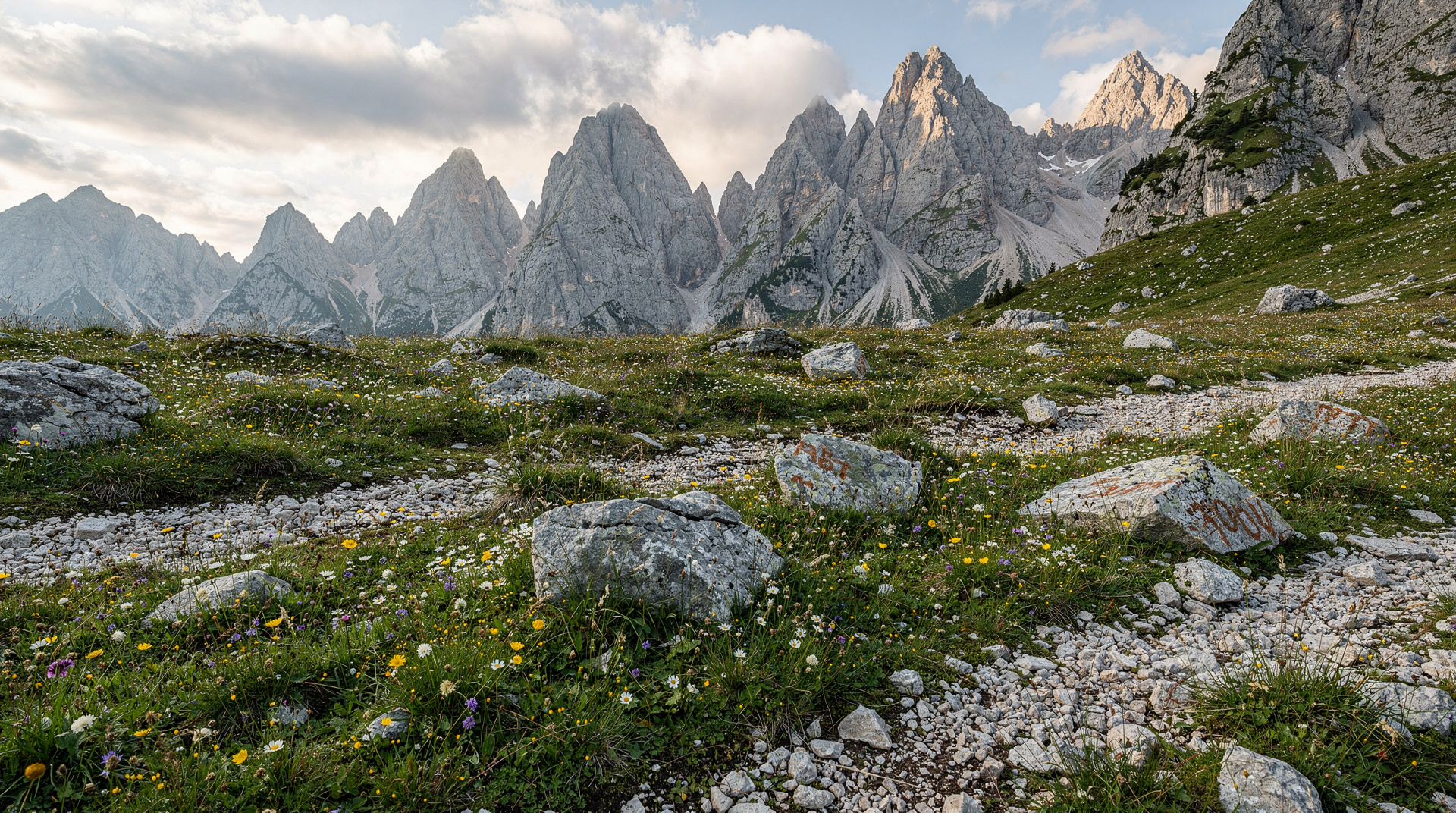
Triglav National Park is Slovenia’s only national park — a status it has held since its founding in 1981, though the protected area around Triglav was first established in 1924. The park covers 880 km² in the Julian Alps, encompassing:
- Mount Triglav (2,864 m), the highest peak in Slovenia and the national symbol (it appears on the Slovenian flag and coat of arms)
- The entire Soča headwater system from the Soča source in Trenta through the Trenta Valley
- Lake Bohinj, the largest natural lake in Slovenia
- The Pokljuka Plateau, a high forested karst plateau at 1,300 m
- The Vršič Pass, the highest mountain road in Slovenia
- Dozens of peaks above 2,000 m, including Razor, Prisank, Kanin and the Martuljek group
Zonation: The park has two zones:
- Core zone (strict protection): The highest areas above the treeline — no development, minimal infrastructure, strictly regulated entry
- Peripheral zone: The inhabited valleys, the lake shores, the ski area at Kranjska Gora; human activity is regulated but not excluded
Accessing the park: No entry fee; no permit required for hiking on marked paths. The park has excellent signage (marked paths with red-and-white blazes, numbered waypoints) and a network of mountain huts (planinskih koč) for overnight stays.
The big three visitor areas:
- Lake Bohinj and the Bohinj basin — accessible, beautiful, less crowded than Bled
- The Vrata Valley and Triglav north face — the classic summit approach
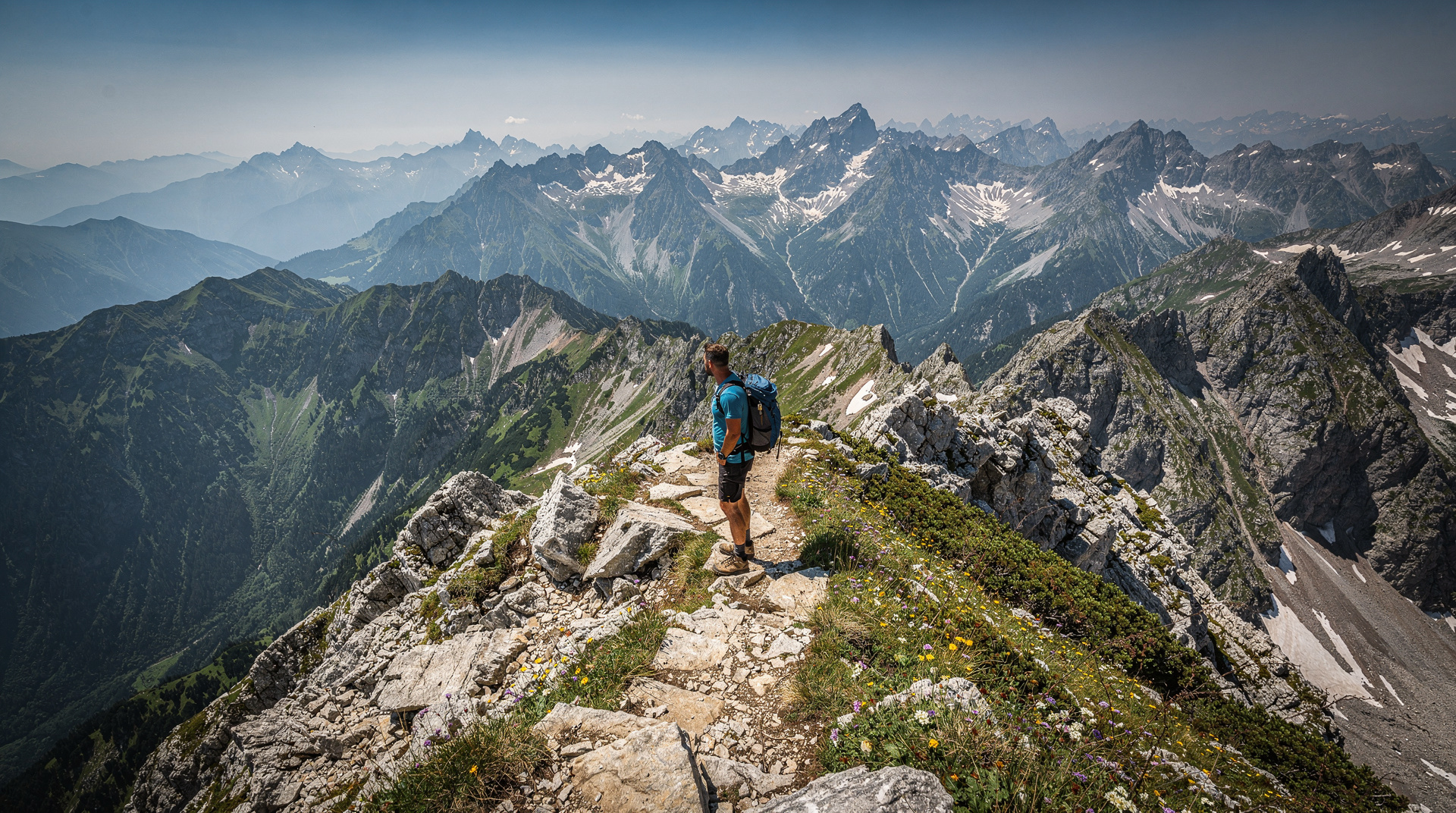
- The Trenta Valley and Soča headwaters — the wildest and least-visited section Full-day guided tour of Triglav National Park from Bled
Notranjska Regional Park
Notranjska Regional Park in south-western Slovenia is the most wildly beautiful of Slovenia’s regional parks — and the least visited by foreign tourists. The park covers the Notranjska plateau, including:
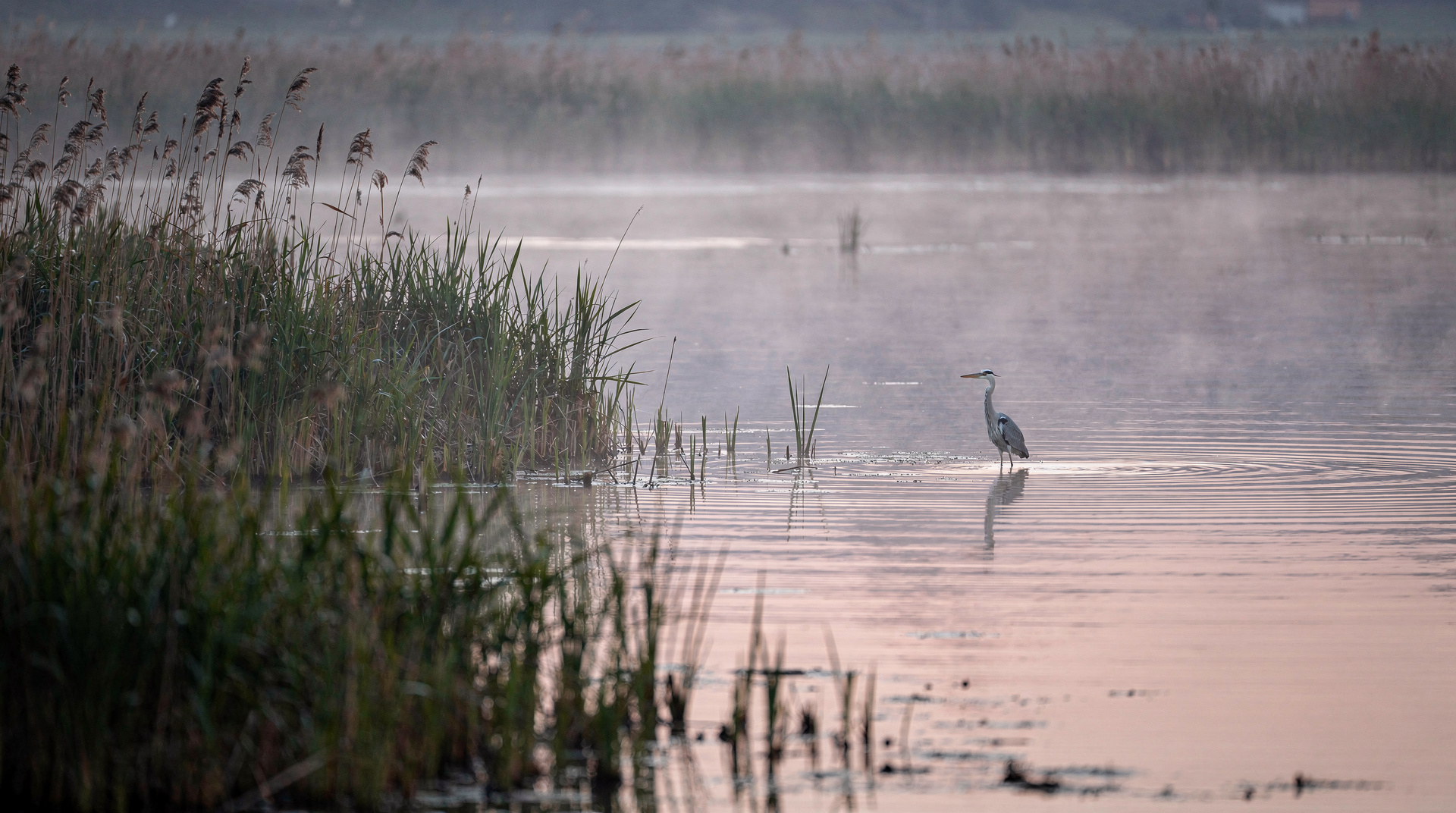
- Cerknica Lake (Cerknisko jezero): The intermittent lake that fills in winter and empties in summer, one of Europe’s most remarkable karst phenomena and an extraordinary wetland for birdwatching
- Rakov Škocjan: The collapsed cave valley with two natural stone arches and the Rak River flowing through
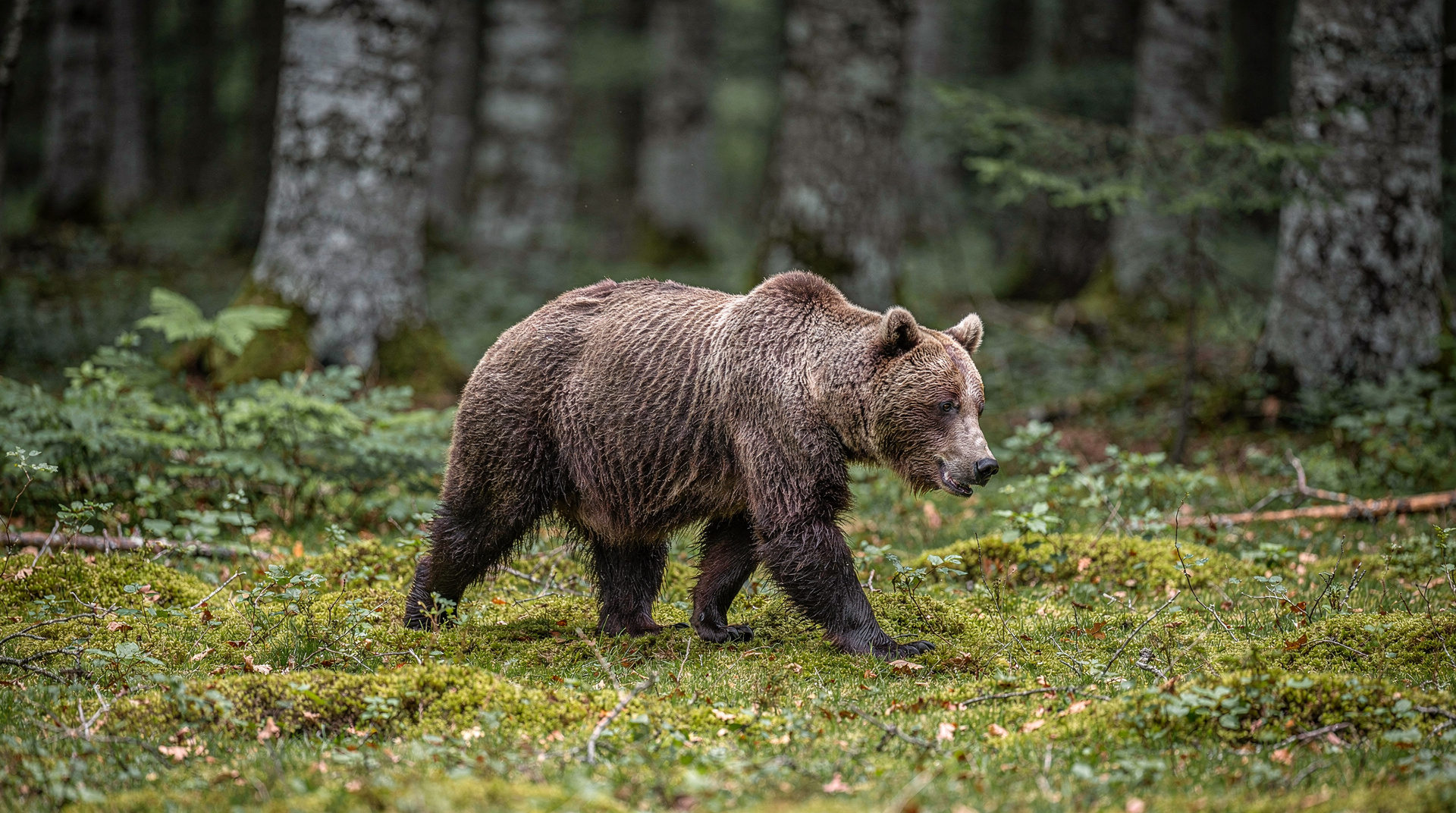
- Javorniki Plateau: Old Dinaric forest, part of the primary bear and lynx habitat
- Snežnik Castle and the Snežnik Plateau: A Renaissance castle in the middle of dense forest; the plateau above it has brown bears and the rare dormouse
Wildlife: Brown bear, Eurasian lynx (rare but confirmed), wolf (occasional), European otter, European pond turtle, white stork (in the meadows around Cerknica), great snipe, corncrake, bittern, marsh harrier. One of the most wildlife-rich areas in central Europe.
Access: From Ljubljana, about 45–55 minutes to the park edges. No entry fee; visitor centre at Snežnik Castle.
Seasonal timing matters more here than at almost any other Slovenian park. Cerknica Lake’s intermittent flooding cycle means the landscape looks completely different depending on when you visit: a shallow, bird-filled lake in winter and spring, then a grassy plain with grazing cattle by late summer. Visitors specifically chasing the birdwatching (white stork colonies, waterfowl) should target April–June, before the lake has fully drained; those wanting the dry meadow character and the Rakov Škocjan stone arches at their most photogenic come July–September.
Guided tour: Škocjan, Rakov Škocjan and the Notranjska wetlandsŠkocjan Caves Regional Park
Škocjan Caves are a UNESCO World Heritage Site (listed 1986) and managed as a regional park covering the cave system, the Reka River gorge and the surrounding karst landscape.
The park protects:
- The Škocjan cave system (24 km mapped passages, the Murmuring Cave underground canyon)
- The Reka River, which disappears underground at Škocjan and reappears 34 km away at the Timavo springs in Italy
- The Karst biosphere above — a complex of dry meadows, scrub and rocky outcrops rich in endemic plants and insects
- A Ramsar-designated wetland for the cave fauna
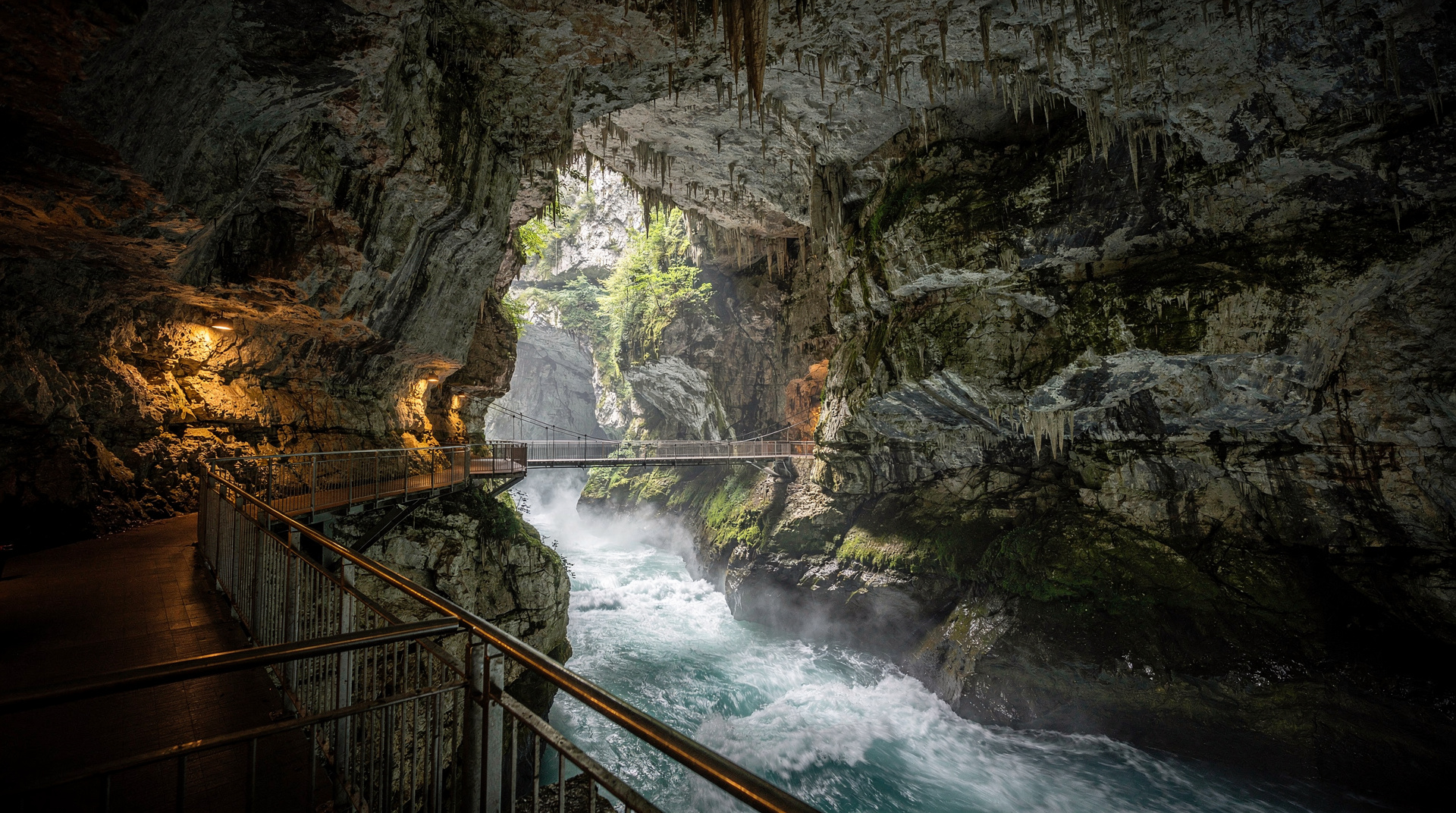
The caves are the most dramatic in Slovenia — the underground canyon (Murmuring Cave) is 146 metres deep and 120 metres wide, with the Reka River audible below the bridge. See the Škocjan day trip guide for full visiting details.
Kozjansko Regional Park
In eastern Slovenia, Kozjansko Regional Park covers the Sotla River valley and the Kozjanski hills — an agricultural landscape of orchards, old meadows, hedgerows and forested ridges that is one of Slovenia’s most important areas for traditional fruit varieties and for the birds associated with traditional farming: wryneck, red-backed shrike, white stork, corn bunting and grey partridge.
What makes it special: The park maintains traditional orchards (with varieties of pear, apple and plum that no longer exist elsewhere) and hay meadows managed as they were a century ago — important both culturally and ecologically. The flowers in May and June are extraordinary.
Access: About 90 minutes from Ljubljana, near Bistrica ob Sotli.
Kolpa Regional Park
The Kolpa River on the Croatian border is one of the warmest rivers in Slovenia, passing through dense Dinaric forest. The Kolpa Regional Park protects the river and the adjacent forest — primarily a landscape of clear, warm water (22–25°C in summer), old oak-hornbeam woodland and a relatively undisturbed fauna including Eurasian otter, kingfisher and black stork.
What makes it special: The swimming in the Kolpa is excellent (the warmest river in Slovenia, reliably warm enough by late June), the area is almost entirely free of tourists, and the surrounding forest is part of the Dinaric bear habitat corridor. Several riverside campsites and small guesthouses in the villages along the border make an overnight stay a realistic option for visitors wanting a genuinely off-circuit couple of days rather than a rushed day trip.
Natura 2000 network
In addition to the formal parks, Slovenia has designated approximately 37% of its territory as Natura 2000 — the EU’s network of protected areas for species and habitats listed under the Habitats Directive. This is one of the highest proportions in the EU. Key habitats protected include:
- Alpine habitats above the treeline in the Julian Alps
- The Dinaric beech and fir forests
- The Soča River for marble trout and Huchen
- The Pannonian forests and meadows of eastern Slovenia for steppe birds
- The coastal saltpans of Sečovlje
UNESCO designations
Škocjan Caves (1986): Natural World Heritage for the cave system’s karst formation and ecological significance.
Ancient and Primeval Beech Forests: The Krokar forest near Kočevje is part of the transboundary World Heritage designation shared with 17 European countries (listed 2017, extended 2021) for its old-growth beech-fir forest — one of the few remaining primary forests in Europe. Strictly protected as a nature reserve; access is on marked boundary paths only.
Visiting protected areas: general guidance
Slovenia’s protected areas are generally accessible without permits or fees (Triglav NP and regional parks are free to enter on marked paths). Exceptions are some specific sites within the parks that charge admission — the Škocjan Cave tour (EUR 18), the Savica Waterfall admission (EUR 4) and the Logar Valley road toll.
The overarching principle of the parks is that they protect natural processes rather than serving as open-air zoos. You may encounter wildlife, but it is never guaranteed, and active pursuit of wildlife off marked paths is not permitted. This is a feature, not a bug — Slovenia’s nature is genuinely wild precisely because it is not managed as a performance.
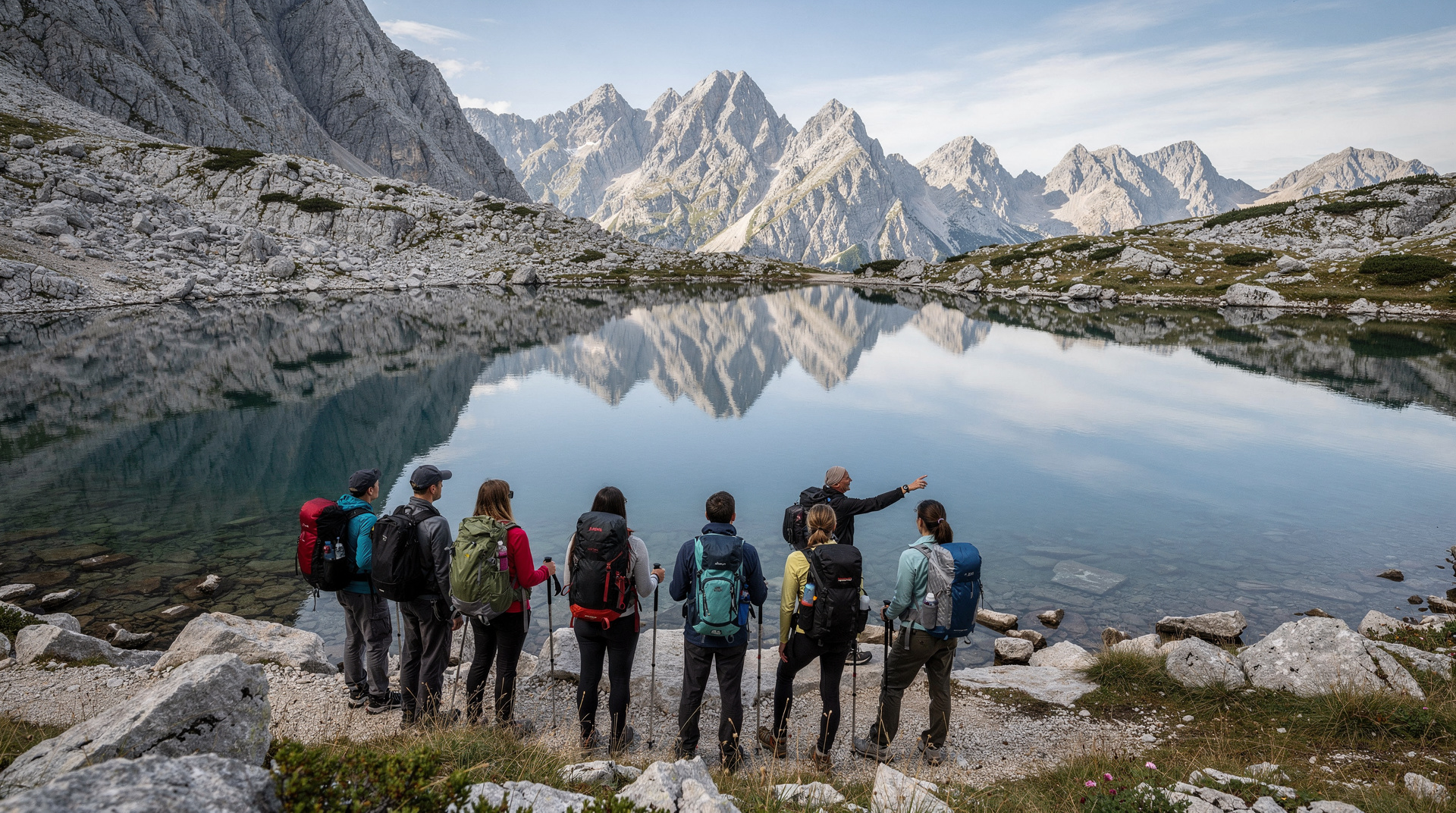
Guided hike in Triglav National Park — 7 Lakes ValleyFor the specific wildlife of Triglav National Park, the wildlife guide covers all the key species. For bears in the Dinaric forest, the brown bears guide is the dedicated resource.
Comparing Slovenian protected areas with other Alpine parks
Triglav National Park is often compared with its neighbours — the Triglav/Dolomiti park complex in Italy, the Austrian Hohe Tauern (the largest national park in the Alps at 1,800 km²) and the Swiss National Park in Engadin. The comparison reveals interesting contrasts:
Hohe Tauern (Austria/Germany): Much larger, better funded, with more infrastructure for wildlife watching (guided ibex walks, marmot presentations). Triglav is wilder in character and less managed for visitor experience.
Swiss National Park: The most strictly protected area in the Alps — no marked trails off designated paths, no dogs, no collecting. The wildlife here (ibex, chamois, red deer) is habituated to human presence on the trails and gives excellent close views. Very different from Triglav’s dispersed, unhabituated wildlife.
Julian Alps in Italy (Parco Nazionale del Gran Paradiso and Parco Dolomiti Friulane): Italy’s portion of the Julian Alps is split between several protected areas. Coordination with Slovenia’s Triglav park is improving; a transboundary biosphere reserve covering the full Julian Alps has been proposed.
Triglav’s distinctiveness is its combination of genuine wilderness (the core zone is largely inaccessible outside the marked high routes) with relatively easy access to the peripheral valleys. You can see alpine wildlife within an hour of Ljubljana; you can also spend a week without seeing another person on the high ridges.
Mountain huts in Triglav National Park
The network of mountain huts (planinska koča, plural koče) in Triglav National Park is the infrastructure that makes multi-day hiking possible. There are about 170 huts in the Slovenian mountains, including the park. Key details:
Booking: In July–August, huts on the main routes (below Triglav summit, in the 7 Lakes Valley, on the Triglav approaches from Bohinj) are fully booked weeks in advance. Book through the Alpine Association of Slovenia (pzs.si) website or directly with individual huts.
What they offer: Basic dormitory sleeping (sometimes small rooms available), simple hot meals (golaž, polenta, štrukli), beer and coffee. They are not hotels — sleeping bags are expected; mattresses and blankets are provided. Prices are approximately EUR 25–35 per person for a bed, EUR 8–12 for a main meal.
The most visited huts: Aljažev dom (in the Vrata Valley below the north face of Triglav), Planinski dom na Kredarici (just below the Triglav summit, the highest hut in Slovenia at 2,515 m), Koča pri Triglavskih jezerih (at the 7 Lakes Valley, above Bohinj).
Booking practicalities for international visitors: Most huts accept email or phone bookings and expect payment in cash (euros) on arrival, though a growing number now take card payments. Confirm this in advance if you’re relying on a card. Huts do not typically hold a reservation past a stated check-in window (often 6–7pm) without prior notice of a late arrival, so if a long approach hike is running behind schedule, a phone call ahead is worth the effort — mobile signal is patchy but usually available at ridge-level approaches to the main huts. Solo hikers should also register their planned route informally at the trailhead log, since huts and mountain rescue use these logs to track who is on the mountain.
The Soča headwaters: the wildest part of Triglav NP
The Trenta Valley and the upper Soča Valley represent the least-visited part of Triglav National Park — a deep, forested valley with a relatively small resident population and road access only from the Vršič Pass (closed winter) or from Bovec to the south.
The Trenta Valley has:
- The Soča source (an underground spring emerging from a cave wall, 90-minute round trip walk)
- The Trenta Museum (small, excellent exhibition on the valley’s ecology, geology and WWI history)
- The Alpinum Juliana (a historic alpine garden with 500+ species of alpine plants, open in summer)
- The Na Logu farm (traditional Trenta valley farmstead with local food)
The valley is most rewarding for those who specifically seek the quiet and the altitude — it is genuinely remote by Slovenian standards, with minimal tourist infrastructure compared with Bled or Bohinj.
Guided day trip to Trenta and the Soča Valley from BledResponsible visiting: what matters most
The main environmental pressures on Slovenian protected areas are:
- Foot traffic on high-altitude paths: Erosion is visible on the most popular routes to Triglav. Staying on marked paths is not just regulation — it is the practical protection of an irreplaceable alpine ecosystem.
- Noise and disturbance: Capercaillie, golden eagle and lynx are all sensitive to disturbance. Quiet movement on paths, no drones in the core zone, and respect for marked exclusion areas during breeding season are the key requirements.
- Waste: Slovenian mountain areas are generally clean; the culture of not leaving waste is strong. Pack out everything; do not bury food waste in alpine soil.
The wider context is that Slovenia’s protected areas function as a connected system — the corridors between Triglav, the Karst forest and the Dinaric mountains allow brown bears, lynx and wolves to move between them. Maintaining these corridors is the long-term conservation challenge, and it involves land-use decisions well beyond the park boundaries.
Which protected area suits which trip
| Park | Best for | Time needed | Distance from Ljubljana |
|---|---|---|---|
| Triglav National Park | Hiking, alpine scenery, multi-day trips | 1–5+ days | 1–2 hours to the edges |
| Notranjska Regional Park | Wildlife (bears, birds), quiet exploration | Half day–full day | 45–55 minutes |
| Škocjan Caves Regional Park | Dramatic cave scenery, UNESCO status | Half day | 1 hour |
| Kozjansko Regional Park | Traditional orchards, spring flowers | Half day | 90 minutes |
| Kolpa Regional Park | River swimming, forest, few tourists | Full day–overnight | 1.5–2 hours |
For most first-time visitors with limited time, Triglav National Park and Škocjan Caves cover the essential range of Slovenian landscapes — alpine and karst — in a manageable itinerary. Notranjska rewards visitors specifically interested in wildlife over scenery, and Kozjansko and Kolpa are best reserved for a second Slovenia trip or a dedicated slow-travel itinerary away from the main circuit.
A practical note on combining parks with day trips
Several of these protected areas pair naturally with existing day-trip circuits rather than requiring a dedicated visit. Notranjska sits directly on the route between Ljubljana and the coast, so it combines easily with a Soča Valley day trip itinerary or a Postojna/Škocjan cave day without significant extra driving. Lake Bohinj, inside Triglav National Park’s boundary, is the easiest single stop for visitors who want a taste of the park without committing to multi-day hiking logistics.
Frequently asked questions about National parks and nature reserves in Slovenia
What is Triglav National Park and what can you do there?
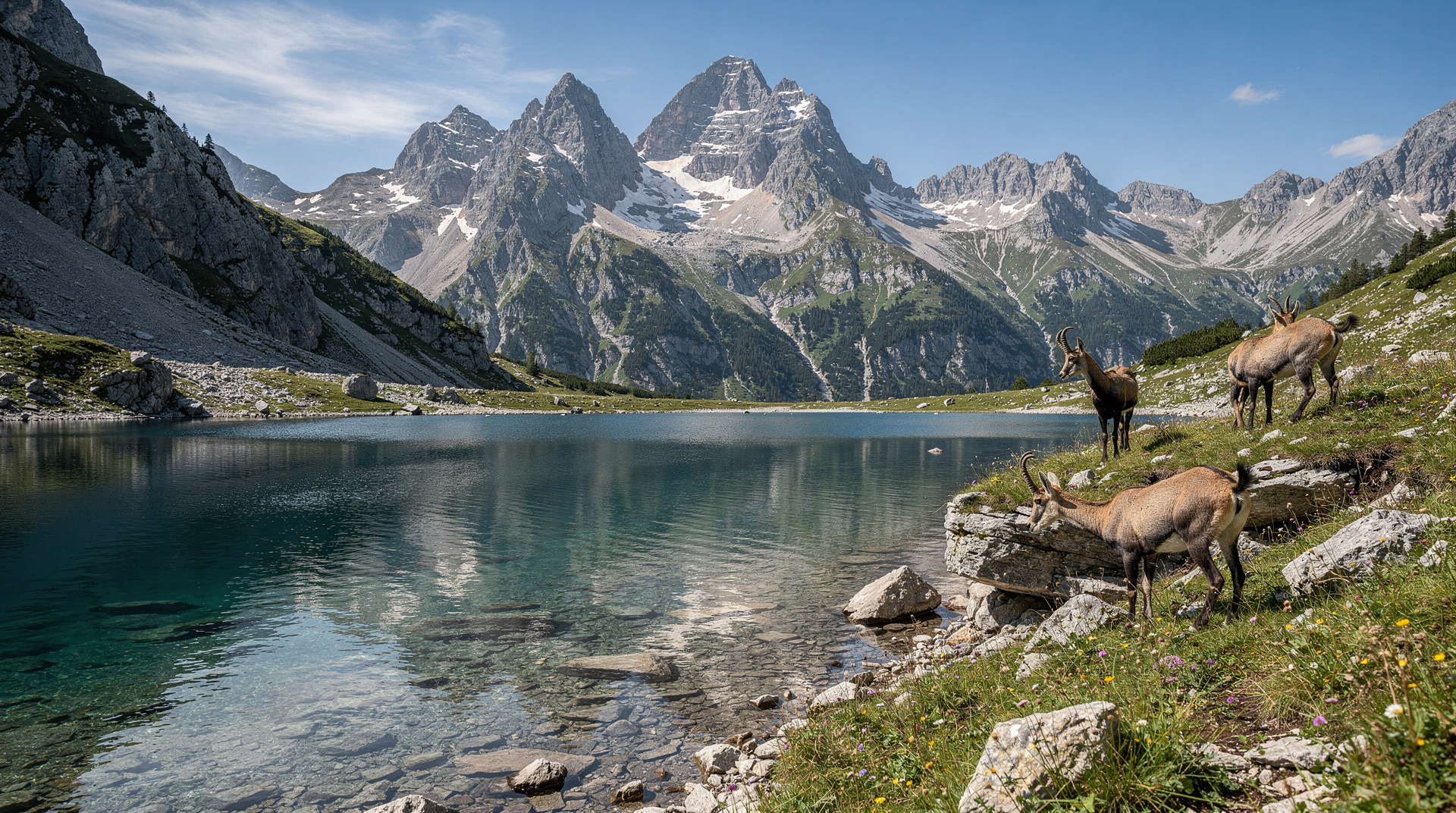
Triglav National Park is Slovenia's only national park, covering 880 km² of the Julian Alps from the Soča Valley to Bohinj and Kranjska Gora. Mount Triglav (2,864 m) at its centre is the national symbol of Slovenia. Activities include hiking at all levels, rock climbing, river swimming and kayaking, wildlife watching (chamois, golden eagle, marmot), skiing in winter, and cultural visits to the WWI sites of the Soča Front. The park's strict zone protects the core alpine zone from development.Can you camp freely in Triglav National Park?
Wild camping (bivouacking) is permitted only above the treeline for one night — not in established camping spots or near water sources. Camping in the forest zone is prohibited. Mountain huts (planinskih koč) are the standard accommodation for multi-day hiking in the park; they require advance booking in July–August. The three major huts below Triglav summit book out months in advance in peak season.What is the Notranjska Regional Park?
Notranjska Regional Park in south-western Slovenia protects the Notranjska forest — part of the Dinaric karst — along with Cerknica Lake (Europe's largest intermittent lake) and the Rakov Škocjan collapsed cave valley. It is the best regional park for wildlife: brown bears, lynx, wolves, Eurasian otter, great snipe, corncrake and Eurasian bittern are all recorded. Far less visited than Triglav, with genuinely wild character.Are UNESCO World Heritage sites the same as national parks in Slovenia?
No. Slovenia has two UNESCO World Heritage natural sites: Škocjan Caves (listed 1986 as a karst cave system) and the transboundary Ancient and Primeval Beech Forests (shared with 17 other countries, including Slovenia's Krokar forest near Kočevje). Neither is a national park. Škocjan has its own regional park designation; the beech forests are protected as strict nature reserves within the national forest system.What is the Soča Valley status — is it a protected area?
The upper Soča Valley (Trenta) is entirely within Triglav National Park. The middle Soča Valley (around Bovec and Kobarid) is partly within the park and partly covered by other protection zones. The Soča River itself is protected as a special protection area under Natura 2000 — the marble trout and the Huchen are among the designated species. Commercial rafting and kayaking are regulated but permitted.How do I get a permit for Triglav National Park hiking?
No entry permit is required for Triglav National Park — it is freely accessible on all marked paths. There is no entrance fee. However, parking at popular trailheads (Aljažev dom in the Vrata Valley, Pokljuka trailheads) is charged. The park does ask visitors to stay on marked paths, respect wildlife and not collect plants. Summit registration for Triglav is encouraged (not mandatory) at the trailhead log.
Top experiences
Bookable activities with verified prices and instant confirmation on GetYourGuide.