Ljubljana vs Zagreb: which capital to visit (or prioritise) in 2026?
Zagreb: private transfer to Ljubljana with optional stops
Should I visit Ljubljana or Zagreb?
Both are worthwhile Central European capitals, but they serve different interests. Ljubljana is smaller, prettier, extremely walkable and makes an excellent base for Slovenia's natural highlights. Zagreb is larger, with better museums, a stronger café culture and more genuine city character — it feels less like a tourist product. If your trip is primarily about nature and landscapes, Ljubljana. If you enjoy city life and culture, Zagreb has more depth.
Ljubljana vs Zagreb: the honest capital comparison
Two Central European capitals, two hours apart, with enough in common to confuse first-time planners and enough differences to matter. Ljubljana and Zagreb are both worth visiting, but they’re not interchangeable — they work well in sequence, and the choice of which to prioritise (if you have limited time) depends on what you want from a city.
At a glance: the key numbers
| Ljubljana | Zagreb | |
|---|---|---|
| Population | ~295,000 | ~800,000 |
| Old town size | Small (20 min to cross) | Medium (1h to cover properly) |
| UNESCO status | None (Plečnik nominated) | None |
| Days needed | 1.5–2 | 2–3 |
| Day-trip radius | Excellent (Bled, Postojna, Piran) | Good (Plitvice, Varaždin) |
| Museum quality | Adequate | Strong |
| Coffee culture | Good | Excellent |
| Nightlife | Moderate | Lively |
| Hotel price range | EUR 70–220/night | EUR 60–300/night |
| Best month | June, September | May, September |
The fundamental difference
Ljubljana is a capital that doesn’t try very hard to feel like one. It’s pleasant, walkable, architecturally coherent (Jože Plečnik redesigned much of the centre in the early 20th century, and the results are elegant) and serves primarily as a gateway to the natural highlights nearby. It’s a city where you walk, sit by the river, eat at the market and then get in a car or bus to go see the actual countryside. There is nothing wrong with this — it’s an excellent city for what it is.
Zagreb has proper city weight. It has a living Upper Town (Gornji Grad) with a cathedral, ban’s palace and several good museums. It has a café culture so embedded it’s a social institution. It has a food scene with genuine regional variation. It has neighbourhoods that feel like neighbourhoods rather than tourism infrastructure. It’s a city people actually live in, visibly and with some enthusiasm.
Neither is better. They’re different categories.
If Ljubljana is your side of the comparison, the Ljubljana old town guide and the things to do in Ljubljana page show what the city offers beyond the headline sights, and the Ljubljana destination page gives the wider picture.
Size and geography
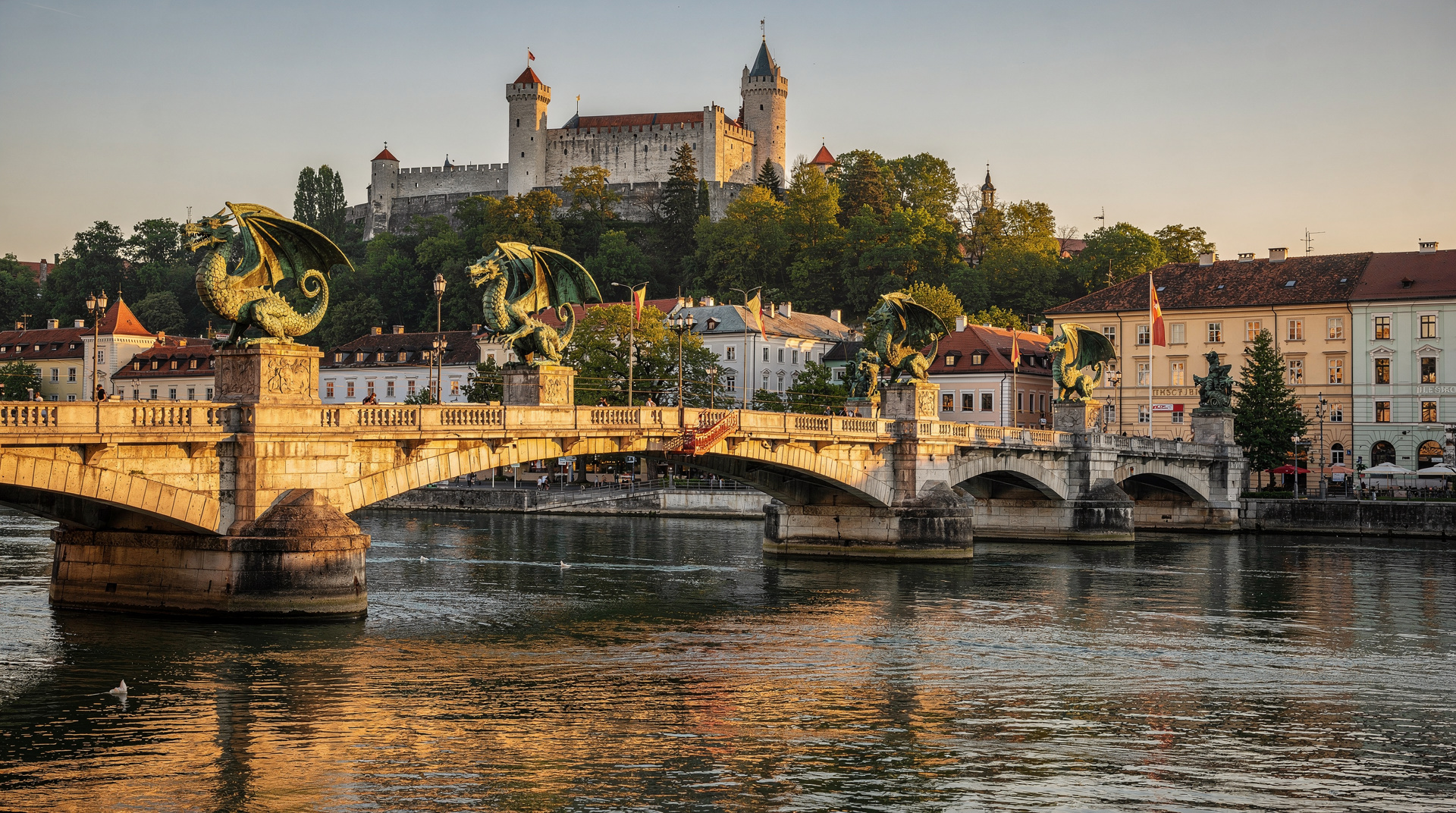
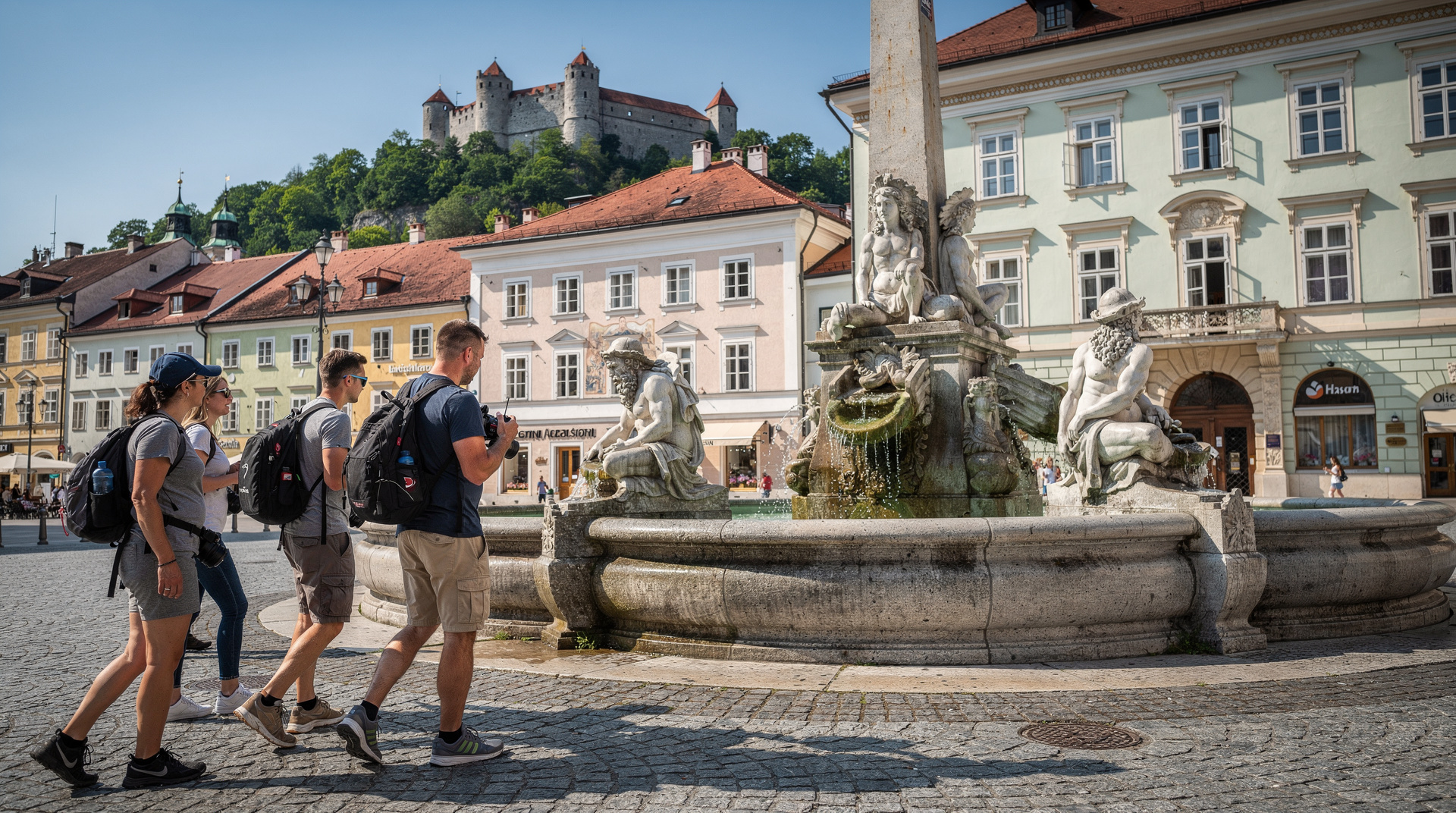
Ljubljana’s old town is tiny — the main pedestrianised streets between the market and the Prešeren Square take about 10 minutes to walk end to end. The castle is above it on a hill, accessible by funicular or a short climb. The Triple Bridge, Dragon Bridge, Plečnik’s covered market colonnade and the Robba Fountain are all within a 15-minute walking radius of each other. This makes for an extremely efficient city visit — you can see the highlights in a concentrated half-day and spend the afternoon at a riverside café or at the market.
Zagreb has a two-tier structure: the medieval Upper Town (Gradec and Kaptol) on a ridge, connected by the oldest funicular in the world to the Lower Town (Donji Grad) with its Austro-Hungarian boulevard architecture and grid of parks. The old town has a cathedral (damaged by the 2020 earthquake, still under repair), the Lotrščak Tower with its famous noon cannon, and the Museum of Broken Relationships (genuinely worth your time). The Lower Town has Dolac market, the Croatian National Theatre, Ban Jelačić Square and a succession of Viennese-style street cafés. It takes longer to cover properly — 2 days feels appropriate.
Museums and culture
Ljubljana’s best museums:
- National Museum of Slovenia (EUR 9, good prehistoric and medieval collection)
- City Museum of Ljubljana (EUR 6, Plečnik focus, worth it)
- Museum of Illusions (EUR 14, tourist-facing but kids love it)
- Natural History Museum (free Sundays, decent)
- Castle museum (included in castle entry, EUR 19)
Honest assessment: Ljubljana’s museums are fine but not exceptional. The city’s architecture (Plečnik’s bridges, market, Zmajski most) is more interesting than its museum content. The Ljubljana museums and galleries guide and the Plečnik architecture guide help you decide which indoor stops are worth your time and which architecture is best enjoyed simply by walking.
Zagreb’s best museums:
- Museum of Broken Relationships (EUR 6.50): a crowd-sourced collection of objects from failed love affairs, with accompanying text — unexpectedly moving and internationally acclaimed
- Museum Mimara (EUR 7.50): one of the most under-visited collections of European art in Central Europe — Old Masters, Egyptian antiquities, Pre-Columbian artefacts
- Croatian Museum of Naïve Art (EUR 4): small, very good collection of Croatian naïve art — a genuinely distinctive regional school
- Archaeological Museum (EUR 5): the Zagreb mummy with the world’s longest Etruscan inscription is worth a detour
Zagreb wins significantly on museums. If cultural depth matters to you, this is relevant.
Food and eating
Both cities eat well. For the Slovenian side in more depth, see the Ljubljana Central Market guide, the Ljubljana food tour guide and the gostilna dining guide. The specific differences:
Ljubljana’s food highlights:
- Central Market (Plečnik’s outdoor market): among the best urban food markets in Central Europe — fresh vegetables, honey, artisan cheese, prepared food stalls. At its best on Friday mornings
- Gostilna culture: traditional Slovenian cooking — bograč (beef stew), jota (sour turnip and bean soup), žlikrofi (Idrija dumplings), štruklji (rolled pastry), excellent trout from the local rivers
- Modern Slovenian: a growing number of serious restaurants doing refined Slovenian cuisine — Strelec in the castle, Chez Eric on the river, Geafood for fish
- Craft beer: a strong local microbrewery scene
Zagreb’s food highlights:
- Dolac market (the city’s outdoor market, daily): bigger and more varied than Ljubljana’s, with excellent local produce, flowers and prepared food
- Traditional Croatian cooking: štrukli (baked cottage cheese pastry — Zagreb’s own dish), roast meats, regional cured meats, excellent bread
- Coffee culture: Zagreb drinks more coffee per person than almost anywhere in Europe. The kavana tradition — sitting at a table with one coffee for two hours while conducting life’s business — is a real cultural institution. The outdoor terrace at Café Torino on Ban Jelačić Square is the archetype
- Restaurant variety: more international cuisine, more mid-range options, more evening energy
Nightlife and evening atmosphere
Ljubljana is quiet on weekday evenings. The riverside is animated until about 23:00, particularly in summer when bars and restaurants fill the Ljubljanica embankment. Metelkova (a former barracks turned arts/club complex near the city centre) is the late-night focus, but it starts late and runs through the night — not for casual visitors.
Zagreb is livelier and has more conventional evening economy. Tkalčićeva Street in the Upper Town is lined with bars that fill from 18:00 onward. The nightclub scene (clubs in the Lapidarij and around the train station area) operates later. Sunday afternoon coffee culture is serious business.
For visitors who like city evenings with restaurant options past 22:00 and bars that don’t feel deserted by 21:30: Zagreb. If you do stay in Ljubljana, the Ljubljana nightlife guide explains where the evening energy concentrates and how to make the most of a quiet-ish capital.
Getting between the two cities
The Ljubljana–Zagreb connection is easy. Direct transfers between Ljubljana and Zagreb take about 2 hours on the motorway. Trains run daily (2h15–2h30). FlixBus is cheaper but slower. The border crossing (Slovenia–Croatia, both Schengen since 2023) requires no formalities.
For a trip that combines both cities, the natural sequence is: arrive Ljubljana, spend 2 days, day-trip to Bled, then travel to Zagreb and continue into Croatia. Or reverse for a different rhythm. The Ljubljana to Bled transport guide covers that leg in detail if it’s part of your plan, and the getting around Slovenia guide covers the wider country beyond the capital.
Day trips from each city
From Ljubljana:
- Lake Bled (1h20 by bus)
- Postojna Cave (1h by bus or car)
- Piran and the Slovenian coast (2h30)
- Bohinj (2h by bus via Bled)
- Škocjan Caves (1h by car)
From Zagreb:
- Plitvice Lakes (2h by car — one of Europe’s great natural sites, EUR 26.50 entry)
- Varaždin (1h — Baroque old town and castle, excellent)
- Pula (2–3h — Roman amphitheatre, coastal town)
- Samobor (30 min — small town, excellent kremšnita cream cake)
- Lonjsko Polje nature reserve (1h — oak forest and villages, birds)
Both cities have excellent day-trip geography. Ljubljana’s options are more dramatic (alpine lakes, caves); Zagreb’s are more diverse in type. For the Slovenian side, the day trips from Ljubljana guide and the Lake Bled complete guide lay out the options, while the Postojna Cave guide covers the best-known underground option. If Slovenia’s landscapes are the deciding factor for you, the Slovenia vs Croatia guide goes further into that comparison at the country level, beyond just the two capitals.
Seasonal comparison
Ljubljana in summer (June–August): the riverfront café culture is at its peak. Street performances in the old town. The Central Market is at its most abundant. Warm evenings invite long outdoor dinners. The downside: the old town gets tourist-heavy in July–August and some locals leave for the coast.
Zagreb in summer: the city has a proper beach culture — urban swimming at Bundek lake, open-air cinema screenings, summer festivals. Warmer than Ljubljana (typically 28–33°C in July). The city centre gets busy but doesn’t feel like a tourist destination in the way Dubrovnik does.
Ljubljana in autumn (September–October): arguably the best time. The Julian Alps are accessible for the last good hiking weeks, the crowds thin, accommodation prices drop 20–30%, and the city café culture continues without the summer heat.
Zagreb in autumn: the Christmas market (from late November) is one of the best in Central Europe — multiple awards, atmospheric setting, warm punch and seasonal food. September–October is also excellent with mild weather and fewer tourists.
Ljubljana in winter: quiet, sometimes snowy (charming when it is). The Smučanje na Ljubljani (city skiing on Rožnik Hill) is a local tradition. Christmas markets are smaller than Zagreb’s but pleasant.
Zagreb in winter: the Christmas market (rated among Europe’s top five) draws visitors specifically. The city has more indoor cultural life (opera, theatre, concert season) than Ljubljana.
Zagreb’s off-the-tourist-trail
Medvednica Nature Park: the forested hill immediately above the city, accessible by cable car from Ilica Street (EUR 4 return). The summit at 1,033 m has the medieval fort Medvedgrad and views of the Alps to the north. 30 minutes from the city centre by cable car.
Mirogoj Cemetery: Zagreb’s main cemetery is among the best examples of Austro-Hungarian funerary architecture in the region — arcaded galleries, Neo-Renaissance pavilions and parkland. A genuine Zagreb experience, not a tourist attraction. Free entry, 20 minutes from the centre by tram.
Britanski trg Sunday antique market: small but active market; Croatian and Yugoslav antiques are affordable by Western European standards.
Bundek park and lake: south of the river, a popular local park with a small lake. Where Zagreb families go on summer weekends. Far from tourists and a good way to see the city as it is.
Ljubljana’s off-the-tourist-trail
Metelkova Mesto: the former Yugoslav People’s Army barracks, occupied by artists and alternative culture since 1993. The complex hosts clubs, galleries, a hostel and the Museum of Contemporary Art (MSUM) next door. The outdoor areas are at their best late on summer nights.
Tivoli Park: Ljubljana’s main city park, easily walkable from the old town. The long avenue (Jakopičev sprehajališče) with outdoor photography exhibitions, the castle hill visible at the far end. Where Ljubljana residents walk and cycle. Free.
Rožnik Hill: the forested hill visible from Tivoli Park. A 30-minute walk from the park to the hilltop restaurant (Gostilna pri Lajfu — good food with city views, open weekends). The most underrated half-day activity in Ljubljana.
BTC City: Europe’s second-largest shopping centre, east of the city. Completely un-touristy and a useful rainy-day option, with a cinema, indoor karting and all major international brands.
Planning the wider trip
If you are still shaping the overall route, the how many days in Slovenia guide and the first time in Slovenia guide help place the capital within a longer trip, and the Slovenia highlights in 5 days itinerary shows one way to do it. For a route that continues into Croatia, see the Slovenia and Croatia 10-day itinerary and the Zagreb from Ljubljana guide.
Which city suits which traveller
Rather than a single universal answer, the honest comparison depends on what kind of trip you’re actually planning.
| Traveller type | Better fit | Why |
|---|---|---|
| First-time Alps/lake visitor | Ljubljana | Bled, Bohinj and the Julian Alps are unmatched from here |
| Museum and gallery enthusiast | Zagreb | Deeper, more varied permanent collections |
| Solo traveller on a budget | Ljubljana | Smaller, safer to navigate on foot, cheaper hostels |
| Foodie chasing café culture | Zagreb | The kavana tradition runs deeper and wider |
| Family with young children | Ljubljana | Flatter, more compact, easier logistics |
| Nightlife-focused traveller | Zagreb | More venues, later hours, bigger scene |
| Photographer | Ljubljana | Plečnik’s architecture and the castle-river composition |
| Day-tripper wanting caves and coast in one loop | Ljubljana | Postojna, Škocjan and Piran are all within 2.5 hours |
A combined one-week itinerary
For travellers who want both cities without rushing either, a workable seven-day structure looks like this: two nights in Ljubljana covering the old town, castle and Central Market; a day trip to Lake Bled on day two or three; a transfer to Zagreb (2 hours) for three nights covering the Upper and Lower Town, Dolac market and the Museum of Broken Relationships; and a final day either as a Zagreb day trip to Samobor or an early departure. This sequence front-loads the nature-heavy portion of the trip while the weather and energy are freshest, and finishes on Zagreb’s stronger evening and café culture — a natural way to wind down before flying home.
Budget comparison over a typical day
Ljubljana and Zagreb are close in overall cost, but the split differs. In Ljubljana, accommodation tends to run slightly cheaper at the budget end but food at sit-down restaurants can match or exceed Zagreb once you’re off the market circuit. In Zagreb, museum entries add up faster if you’re visiting several (EUR 4–7.50 each), but everyday coffee and casual meals are noticeably cheaper than their Ljubljana riverside equivalents. Neither city is expensive by Western European standards — a realistic full day of sightseeing, meals and a drink or two runs EUR 50–80 per person in either city, excluding hotels.
The verdict: how to allocate time
If you have 5 days in the region: 2 days Ljubljana + Bled day trip, then 2 days Zagreb, then onwards.
If you have 10+ days: 2 days Ljubljana, 3 days Julian Alps region (Bled, Bohinj, Soča), Postojna/coast, then 2–3 days Zagreb, continue to Croatian coast.
If you must choose just one city: Ljubljana for nature-first travel; Zagreb for culture-first travel.
If you’re deciding based on flight availability rather than preference: both cities have well-connected regional airports, and the two-hour transfer between them is short enough that landing in one and departing from the other is a genuinely practical option — check whether an open-jaw flight itinerary saves you the backtrack.
The two cities work together, not in competition. Two hours apart — it’s a comfortable afternoon transfer. A private Ljubljana walking tour is the most efficient way to absorb the city’s highlights before moving on.
Ljubljana: what you’ll actually spend your time doing
A well-planned Ljubljana visit has a natural rhythm:
Morning: start at the Central Market (best on Friday, quieter on weekdays). Walk the colonnade (Plečnik’s loggia along the Ljubljanica), cross the Dragon Bridge (Zmajski most), pick up supplies from the market stalls. Wander into the old town lanes.
Mid-morning: cross the Triple Bridge (Tromostovje) to Prešeren Square — the social heart of the city. The Franciscan church is on the square. Continue up the steep lane behind the square toward the castle, or take the funicular (EUR 6 return, free with Ljubljana Card).
Lunch: Gostilna AS or Strelec restaurant in the castle for special occasions; Gostilna Pod Rožnikom in Tivoli park for a more local atmosphere; Sarajevo ‘84 on the main street for excellent burek at EUR 2.
Afternoon: the riverside (Cankarjevo nabrežje) has the most concentrated café strip. Riverfront tables at Kavarna Tromostovje or Movia wine bar. The riverside footpath runs south toward the Botanical Garden and north toward the covered market.
Evening: Metelkova arts centre (former Yugoslav People’s Army barracks, now alternative culture hub) starts late — more interesting after midnight. The river bars stay lively until midnight.
Zagreb: what you’ll actually spend your time doing
Morning: start at Dolac market above Ban Jelačić Square, open daily until early afternoon. Best produce, flowers and prepared food. Then walk the steps up to the Upper Town.
Mid-morning: the Upper Town. St Mark’s Church (the tiled roof is the postcard image), the Museum of Broken Relationships, the Lotrščak Tower and noon cannon. Walk the old walls toward the Art Pavilion viewpoint.
Lunch: the short funicular back to the Lower Town (EUR 0.66 — possibly the cheapest funicular in the world). Lunch at Vinodol or Noel for traditional Croatian; Mundoaka Street Food for something less formal.
Afternoon: the Lower Town. Zrinjevac park, the Archaeological Museum, the Croatian National Theatre exterior (Neo-Baroque masterpiece). The Mimara museum if art is your thing.
Evening: Tkalčićeva Street for the outdoor bar strip. Coffee culture starts from 17:00 with tables filling fast on warm evenings. Dinner at Restoran Boban for Croatian classics or Oxbo Urban Bar for modern cooking.
Hotels: where to stay in each city
Ljubljana:
- Old town luxury: Hotel Cubo (boutique, EUR 150–220) or Adora Hotel (smaller, EUR 130–180)
- Mid-range: Hotel Lev (classic Ljubljana hotel, EUR 110–160, near Tivoli park)
- Budget: Hostel Zeppelin (well-reviewed, central, from EUR 25/dorm or EUR 70 private)
- Ljubljana Card: if you’re spending 2+ days in the city, the Ljubljana Card (EUR 41/24h, EUR 49/48h, EUR 54/72h) covers public transport, castle funicular, museums and river cruise — often worth it
Zagreb:
- Upper Town boutique: Esplanade Zagreb (1925 grand hotel, EUR 200–300 — the most famous hotel in Croatia)
- Mid-range: Hotel Dubrovnik (EUR 140–200, excellent location on Ban Jelačić Square)
- Budget: Hostel Chillout or Shappy Hostel (central, from EUR 20–30/dorm)
- Zagreb Card: similar concept to Ljubljana Card, covers museums and trams — useful for multi-day city stays
Getting between the cities
Direct transfers between Ljubljana and Zagreb are the most flexible option — door-to-door, no changes, about 2 hours. Trains run a few times daily but take slightly longer (2h15–2h30) and the station is not as central in Zagreb. FlixBus is cheapest but can take 3h with stops.
The driving time is about 1h45 on a clear motorway — the A2 from Ljubljana connects to the A3 motorway in Croatia at Bregana. You’ll cross the Slovenian–Croatian border without stopping (both are Schengen). Note: Slovenia requires the e-vignette; Croatia requires its own motorway vignette (or pay at toll booths, Croatia still uses some booths on older sections).
For visitors flying in rather than overlanding, the getting to Slovenia guide and the public transport in Slovenia guide cover the practical arrival logistics on the Ljubljana side, useful if Zagreb is a side trip from a Slovenia-based itinerary rather than the other way round.
Frequently asked questions about Ljubljana vs Zagreb
How big are Ljubljana and Zagreb?
Ljubljana has about 295,000 residents; the greater city area about 550,000. It feels like a large town rather than a capital city — compact, walkable and somewhat quiet on weekday evenings. Zagreb has about 800,000 residents and genuinely feels like a Central European capital — multiple districts, a diverse food scene, regular cultural events and a functioning urban life beyond tourism.How long do you need in each city?
Ljubljana rewards 1.5–2 days for the classic highlights: old town, Central Market, castle, Dragon Bridge, river promenade. More time is best spent on day trips rather than in the city itself — the main sights are concentrated and quickly covered. Zagreb benefits from 2–3 days: the Upper Town (Gornji Grad), the Museum of Broken Relationships, the Dolac market, multiple restaurant districts and the vibrant café culture reward slower exploration.Which city has better food?
Zagreb has the edge for restaurant variety and depth. The café culture — kavana tradition, long breakfasts, outdoor terrace life — is stronger. Good local restaurants (konoba-style, farm-to-table, modern Croatian) are more numerous. Ljubljana has excellent food — the Central Market is outstanding, and Slovenian cuisine at its best (gostilnas, modern Slovenian cooking) is superb — but the restaurant scene is smaller.Which city is better for day trips?
Ljubljana is unbeatable for day trips — Lake Bled (1h20), Postojna Cave (1h), Piran (2h30) and the entire Slovenian Alps are all accessible in a day. Zagreb has Plitvice Lakes (2h), Varaždin (1h) and the Pula/Istrian coast (2–3h). Both cities work well as bases; Ljubljana's day-trip geography is arguably more dramatic.Is Ljubljana worth visiting on its own terms, or only as a base?
Both, honestly. The city itself is genuinely charming — the riverside Plečnik architecture, the pedestrianised old town, the Central Market, the café scene — and easily fills 1.5 days. But Ljubljana's strongest selling point for most visitors is its position as a gateway to Slovenia's natural highlights rather than as a cultural destination in its own right. Zagreb has more museum depth, livelier nightlife and more city substance.
Top experiences
Bookable activities with verified prices and instant confirmation on GetYourGuide.