Best thermal spas in Slovenia: ranked by experience and value
From Ljubljana: Lake Bled and Bled Castle trip
Which is the best thermal spa in Slovenia?
It depends on what you need. Terme Čatež is the best for families and the most comprehensive overall. Terme Olimia is the best for couples and the most scenic. Terme Radenci is the best for the traditional mineral-water health tradition. Terme Snovik is the best for a quick day trip from Ljubljana.
Best thermal spas in Slovenia: a category-by-category ranking
| Best overall | Terme Čatež (1h15 from Ljubljana) |
| Best for couples | Terme Olimia (1h30, Termalija adults-only zone) |
| Closest to Ljubljana | Terme Snovik (45 min) |
| Train-accessible | Terme Laško (45 min by rail) |
| Day entry | Around EUR 18–38 depending on complex and season |
Slovenia has over a dozen thermal spa complexes, ranging from large resort-style complexes with hundreds of rooms and water parks to intimate hotel spas with a single pool. Choosing between them depends on what you are looking for: family entertainment, couples’ wellness, medical tradition, proximity to Ljubljana or the best value for money.
This guide ranks the main options by use case and gives honest assessments of what each one delivers.
Best overall: Terme Čatež
Why: The most comprehensive thermal complex in Slovenia. The largest pool area, the most accommodation options, the best children’s facilities and good transport links from Ljubljana (1h15 east on the A2/E70).
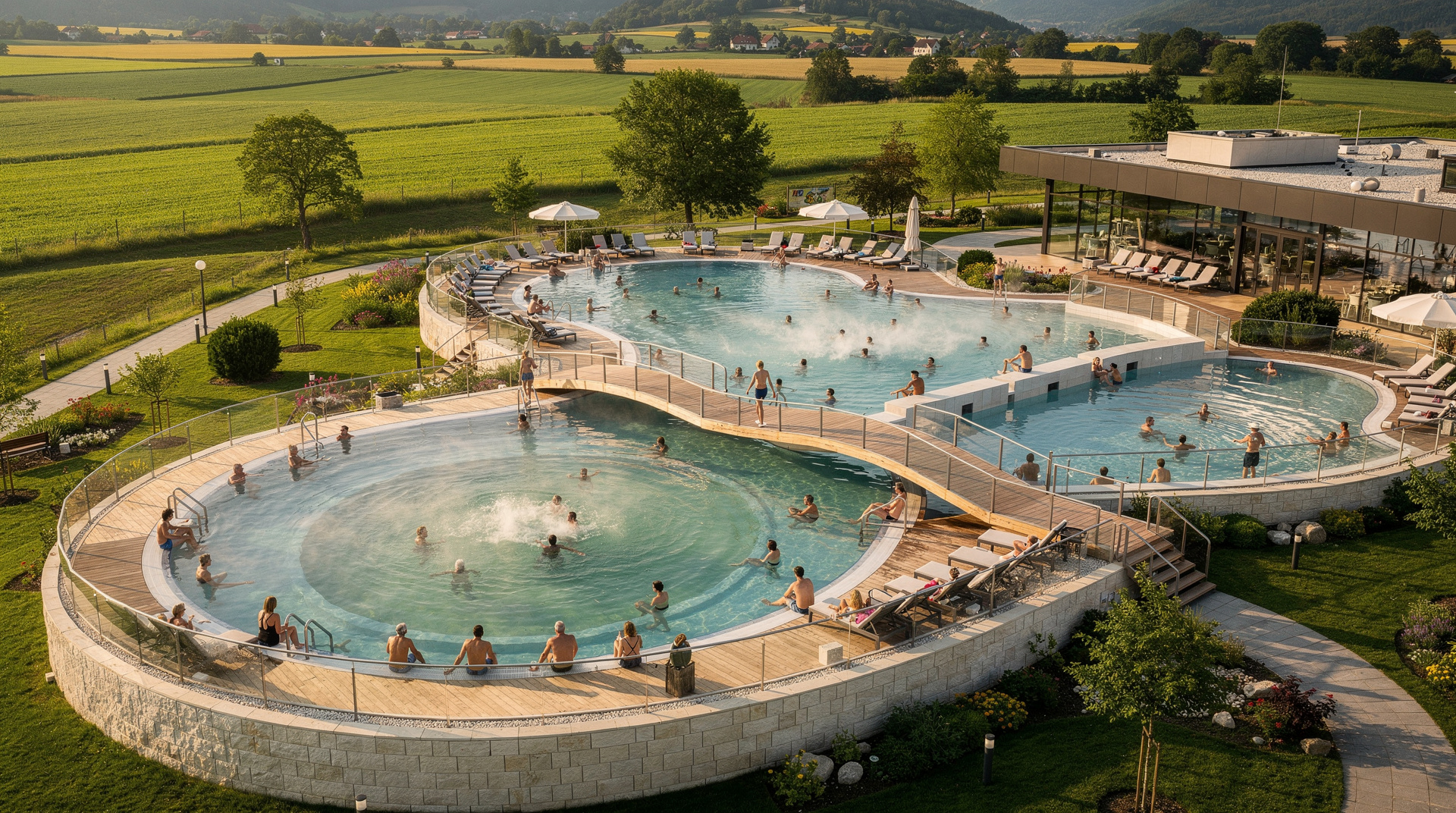
The offer: Terme Čatež has two distinct seasons. The summer water park (Aquapark, June–September) adds slides, wave pools and leisure areas to the thermal pools. The Winter Thermal Riviera operates year-round with covered outdoor pools at 32–36°C, indoor pools and sauna facilities. This is the only major complex where you can swim outdoors in warm water in midwinter.
Water temperature and quality: The thermal spring emerges at 36°C, rich in sodium, calcium and magnesium. Indoor and outdoor therapeutic pools are maintained at 28–36°C depending on the pool.
Day entry: EUR 20–35 depending on season and pool access. Summer water park entry is higher.
Accommodation: Four hotels within the complex (from budget to 4-star). Good family packages combining accommodation with multi-day pool access.
Best for: Families with children of all ages; those wanting the widest range of pools and activities; day trips from Ljubljana.
Honest limitation: The scale means it can feel crowded on summer weekends. Less intimate than smaller complexes.
Best for couples and adults: Terme Olimia
Why: The most scenically located thermal complex in Slovenia, with a well-designed adults-only wellness area that consistently receives the highest guest ratings for ambiance.
The offer: The Aqualuna water park has the family-friendly facilities. The Termalija 18+ area — separate from the main complex — has a more curated wellness experience: multiple sauna types, outdoor cold pools, thermal pools in a quiet setting, relaxation rooms with daybeds. This is where couples and adults seeking a genuine spa day should go.
Water temperature and quality: Olimia’s spring is 34°C at source, sulphur-rich. Therapeutic associations include skin conditions and joint health.
Day entry: EUR 22–38 depending on area and season. The Termalija area costs extra on top of the base entry.
Accommodation: Sotelia and Breza hotels (both 4-star), part of the Terme Olimia resort group. Multi-night wellness packages are among the best in Slovenia.
Best for: Couples seeking a proper wellness weekend; adults who want a quieter, more atmospheric spa experience; those combining with the Kozjansko wine region or eastern Slovenia.
Honest limitation: 1h30 from Ljubljana — too far for a half-day. Worth a night’s stay.
Best for the mineral-water health tradition: Terme Radenci
Why: Terme Radenci sits above the springs that source the famous Radenska mineral water — one of Central Europe’s most recognised mineral water brands. The therapeutic tradition here is the most medically serious of the Slovenian complexes, with an emphasis on the specific mineral composition of the water and its cardiovascular and circulation benefits.
The offer: Thermal pools (indoor and outdoor), a medical wellness centre offering formal health programmes (cardiovascular, anti-stress, weight management), and hotel accommodation. Less of a water park, more of a genuine spa in the Central European tradition.
Water temperature: The Radenci spring is naturally cold (10°C) and carbonated, then heated for therapeutic pools. The CO2-rich water is distinctive — you can feel the carbonation on your skin.
Day entry: EUR 18–28.
Best for: Those interested in the historical and therapeutic tradition; guests on longer wellness programmes; combining with Maribor or Ptuj on an eastern Slovenia itinerary.
Honest limitation: The most medically-oriented of the top complexes — not the best for pure recreational fun or children.
Best day trip from Ljubljana: Terme Snovik
Why: At 45 minutes from Ljubljana, in the Kamniška Bistrica valley near Kamnik, Terme Snovik is the most accessible major spa from the capital. The setting — with views of the Kamnik-Savinja Alps — is beautiful.
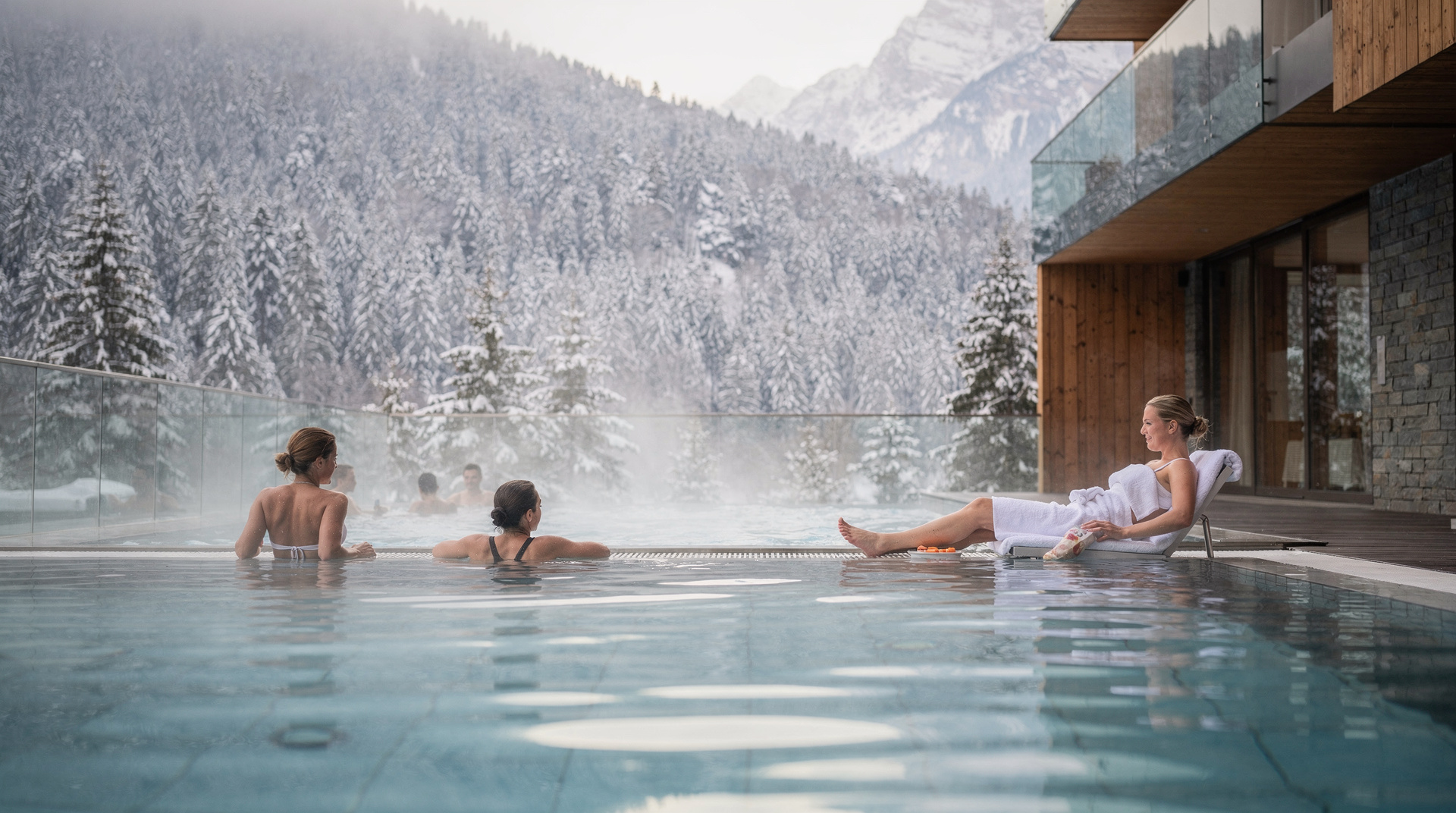
The offer: More compact than the major complexes. Outdoor and indoor thermal pools (32–34°C), sauna, accommodation in small wooden bungalows and a hotel. The outdoor pool with mountain views is genuinely lovely in spring and autumn.
Day entry: EUR 18–28.
Best for: Day trips from Ljubljana; those already visiting Kamnik or Velika Planina; guests wanting a quieter, smaller-scale experience.
Honest limitation: Not as comprehensive as Čatež or Olimia — one visit covers everything in 3–4 hours. For a full day, the larger complexes offer more variety. If you would rather pair a soak with sightseeing from the capital, a guided day trip to Lake Bled and its castle makes a good alternative on a day when the pools feel too quiet.
Best train-accessible: Terme Laško
Why: The only major thermal complex in Slovenia directly accessible by train from Ljubljana. Laško station is 45 minutes from Ljubljana on the Celje line, and the terme is a 10-minute walk.
The offer: Thermal pools (indoor and outdoor), sauna world, sports facilities, hotel. The surrounding town of Laško is pleasant (the Laško brewery produces its beer here) and worth an hour’s wander.
Day entry: EUR 18–28.
Best for: Car-free visitors; those combining with a Celje or Savinja valley itinerary.
Honest limitation: Not the most modern or comprehensive facilities in the comparison — worth going to if you lack a car; less compelling if you have one.
Best value: Terme Čatež in off-season
The major complexes all offer substantially reduced prices on weekdays and in shoulder season (October to May, excluding Christmas and Easter). The best value thermal spa day in Slovenia is typically a Tuesday at Terme Čatež in October or March: the largest facility at close to the lowest prices, with minimal crowds.
Specific value tips:
- Multi-day passes (3–5 days) at any complex offer around 15–20% savings per day
- Hotel + pool packages are routinely cheaper per unit than booking hotel and day entry separately
- Many complexes offer reduced evening entry (from 16:00 or 17:00) at around 50–60% of full-day price
The wellness hotels vs the public complexes
The complexes above are primarily public or semi-public day facilities with accommodation. Several Slovenian hotels offer spa access without the public complex environment:
Wellness hotels with quality pools: The Grand Hotel Toplice at Lake Bled has a private thermal pool for hotel guests. The Kempinski Palace in Portorož has an excellent indoor pool and spa. Various Kranjska Gora hotels have small pool and spa facilities.
These are smaller, more exclusive and significantly more expensive than the terme complexes. The day-visitor rate at a 5-star hotel pool is typically EUR 40–80 — twice the cost of a full-day terme. The trade-off is atmosphere and exclusivity.
For most visitors, the terme complexes offer better value. For those seeking a fully integrated luxury hotel wellness experience, the hotel spas at Bled, Portorož or Maribor are the correct choice.
Combining thermal spas with broader itineraries
Ljubljana base day trip: Terme Snovik (45 min, with Kamnik visit) or Terme Čatež (1h15, full day). On a rest day between soaks, a Slovenian wine tasting in Ljubljana is a relaxed, low-effort way to spend an evening.
Lake Bled base: Terme Čatež is 1h30 east, Terme Snovik is 1h north. Neither is ideal for a quick dip. Consider the hotel pools at Bled hotels for a shorter spa experience.
Eastern Slovenia circuit: Terme Olimia (Podčetrtek) + Ptuj (oldest Slovenian city) + Terme Radenci (Radenci) + Maribor. 3–4 days, all within 60 km of each other in the northeast.
Winter combination: Ljubljana Advent + Terme Čatež overnight. Two days, car or rental from Ljubljana.
Practical checklist for first-time terme visitors
If you have never visited a Slovenian thermal complex before, these practical points will make the experience smoother:
At the ticket desk: Tell the receptionist how long you plan to stay and which facilities you want access to. Most complexes have multiple ticket types (pools only, sauna included, full day, half day, evening). Ask which gives you access to everything you want.
The wristband system: Many modern complexes use an electronic wristband for locker access and cashless payment within the complex. Load some credit on arrival if you plan to eat or drink from the bar.
Shower discipline: Showering before entering pools is both polite and required. Most complexes have shower facilities immediately inside the changing rooms and also at pool entrances. Use them — the water quality and other guests’ experience depends on it.
The queue for sauna: On busy weekend days, popular sauna cabins can have short queues. Arrive early or visit outside peak hours for immediate access. The bio-sauna is almost always less busy than the Finnish sauna.
Food timing: The complexes’ restaurants are often mediocre and expensive. If you are visiting for a full day, consider having a large breakfast before arriving, a light snack from the complex’s snack bar at midday, and eating properly at a nearby restaurant outside the complex.
Driving after a long sauna session: Prolonged sauna and hot pool use can leave you feeling slightly lightheaded or fatigued from dehydration and the cardiovascular effects. Drink water steadily through the visit. If driving back to Ljubljana after a long day at Čatež, allow 30 minutes of rest and hydration at the complex before getting in the car.
For children at terme complexes
Children enjoy terme complexes enormously — the water parks, slides and leisure pools are specifically designed for family fun. Practical notes:
- Most complexes require children to be supervised by an adult in all pool areas at all times
- Sauna worlds are typically 18+ (confirm before bringing children)
- Children’s pool areas are usually equipped with slides, fountains and shallow water zones appropriate for under-10s
- Water shoes are recommended for children — the hard pool surrounds and tile floors can be slippery
- Apply sunscreen to children before arriving if outdoor pools are part of the plan
Age-specific notes:
- Under 4: The shallow pool areas are appropriate; most other facilities are not
- Ages 4–10: Water park slides (check height requirements), lazy rivers, outdoor pools
- Ages 10+: Most complex facilities including adult pool areas
Terme Čatež has the most comprehensive children’s programme. Terme Snovik is quieter and better for younger children who might find Čatež overwhelming.
The regional context: where each spa sits in Slovenia
Understanding where the major spas sit geographically helps with trip planning:
Central Slovenia (Ljubljana region):
- Terme Snovik: 45 min north of Ljubljana (Kamnik valley)
- Terme Laško: 45 min south by train (Savinja valley)
- No major spa complexes within 30 minutes of Ljubljana
Eastern Slovenia (most spa-dense region):
- Terme Čatež: 1h15 east (Sava valley, near Brežice)
- Terme Olimia: 1h30 southeast (Kozjansko region)
- Terme Radenci: 1h45 northeast (Prekmurje, near Austrian border)
- Terme Rogaška: 1h30 east (Rogaška Slatina, spa town)
Alpine region (Julian Alps):
- No major public spa complexes; hotel spas only
- Lake Bled hotel pools are the best option
- Terme Kranjska Gora: small hotel spa at the ski resort — see the Kranjska Gora ski resort guide for context on the wider area
Coastal region:
- Terme Portorož: thalassotherapy-based (seawater, brine), not thermal spring
- Terme Izola: smaller coastal facility
This distribution explains why most serious thermal spa trips in Slovenia focus on eastern Slovenia — that is where the geology concentrates the significant thermal springs.
Rogaška Slatina: the historic spa town
Rogaška Slatina deserves a specific mention as the most historically significant spa town in Slovenia — a Habsburg-era Kurort with architecture and an atmosphere unlike any of the more modern terme complexes.
The town was developed in the 19th century around the Donat Mg spring, a highly mineralised natural CO2 spring famous for its magnesium content. The Habsburg nobility and intelligentsia came here for the cure — the colonnades, the grand hotels and the mineral spring pavilions all date from this period.
What Rogaška offers today: The famous Donat Mg water (drunk for digestive and liver health), colonnaded spa walks, several hotel complexes with pool and treatment facilities, and one of the best-preserved 19th-century spa resort architectures in Central Europe.
Who it is for: Those interested in the historical spa tradition and the architecture. The spa facilities are not as comprehensive or modern as Terme Čatež or Terme Olimia — Rogaška trades on its heritage and the quality of its mineral water rather than water park infrastructure. A pleasant base for exploring the Kozjansko region.
Getting there: 1h30 from Ljubljana by car; accessible by bus.
Quick reference: choosing your terme by priority
Use this decision tree to choose the right complex:
I want the largest pool selection and best children’s facilities: Terme Čatež. Largest complex, most pool variety, best water park for children. 1h15 from Ljubljana.
I want the most scenic setting and best adults-only spa: Terme Olimia. The Termalija zone is excellent, the valley setting is beautiful. 1h30 from Ljubljana.
I want the historical mineral-water tradition: Terme Radenci. The CO2-rich carbonated spring and the medical wellness tradition. 1h45 from Ljubljana.
I want the quickest day trip from Ljubljana: Terme Snovik (45 min) or Terme Laško (45 min by train).
I want outdoor thermal pools in winter: Terme Čatež (Winter Thermal Riviera operates year-round outdoors).
I am travelling without a car: Terme Laško (train-accessible) or an organised day trip to Čatež.
I want a romantic couples weekend: Terme Olimia (Termalija adults-only zone, Sotelia hotel, scenic valley).
I am looking for a medical wellness programme: Terme Radenci (formal cardiovascular programme) or Terme Dobrna (rheumatic and nervous system tradition).
I want to combine a spa with a cultural sight: Terme Čatež + Brežice Castle (10 min), or Terme Olimia + Ptuj medieval castle town (30 min), or Terme Radenci + Maribor (45 min).
How Slovenian thermal spas compare internationally
For visitors who have used thermal baths elsewhere in Europe, a brief comparative note:
vs Hungarian baths (Budapest): Budapest’s famous bath culture (Széchenyi, Gellért) has more architectural grandeur and a stronger historical tradition. Slovenian terme are more modern, more pool-variety focused, less architecturally theatrical. Budapest is the better choice if architecture and history are primary interests; Slovenian terme are better value for a full pool and sauna day.
vs Austrian Therme (Therme Wien, Aqua Dome): Very comparable in quality and approach. Slovenian terme are typically 20–30% cheaper for day visits. The Austrian facilities tend to be more architecturally impressive and more polished. For value, Slovenia wins; for prestige infrastructure, Austria is better.
vs Czech spas (Karlovy Vary): The Czech tradition is drinking-cure focused (actually drinking the mineral water at the spring colonnades) rather than swimming in it. Very different experience; not directly comparable.
vs Italian terme: Italy has both grande-dame historic establishments and modern water parks. Quality varies more widely than in Slovenia, and pricing is less consistent. The Italian terme tradition is well-established but the best facilities are harder to identify without local knowledge.
The Slovenian advantage: Accessibility from a Central European trip, value for money, good sauna culture, reliable quality at the main complexes, and the combination with other Slovenian attractions (skiing, lakes, cultural sights) in a compact geography.
See the thermal spas complete guide for full detail on the main complexes, and spa resorts guide for the hotel-spa options.
Planning a spa day around the rest of your trip
A spa day works best when it replaces a slot you would otherwise lose to weather or tired legs. After a big hiking day, a soak is a sensible reward, and the best hikes in Slovenia guide helps you decide which days to keep light. If you are visiting in the colder months, the winter activities guide and the Slovenia in autumn guide show where a thermal pool fits among the other seasonal options.
For the sauna side of the visit, the saunas in Slovenia guide explains etiquette and what to expect in the sauna worlds, which is useful before you commit to an adults-only ticket. Families deciding between complexes will find more context in the Slovenia for families guide.
Getting there shapes the choice as much as the pools do. If you are travelling by public transport, read the trains in Slovenia guide before you pick a complex, and the five days without a car itinerary shows how a car-free trip hangs together. If you would rather drive to the eastern complexes, the car rental guide covers the practical side.
Snovik pairs naturally with Kamnik and the Velika Planina guide, so a morning in the hills followed by an afternoon in warm water makes an easy combined day. For the wider picture of how the spa regions connect, the thermal spas destination page gives an overview.
Frequently asked questions about Best thermal spas in Slovenia
Is Terme Čatež or Terme Olimia better?
Different strengths. Terme Čatež is larger, has more pool variety, better children's facilities and is closer to Ljubljana (1h15 vs 1h30). Terme Olimia is more scenic, has a better adults-only area and feels less hectic. For families, Čatež. For couples or adults wanting a quieter atmosphere, Olimia. Both are genuinely excellent.What is the best thermal spa for a day trip from Ljubljana?
Terme Snovik (45 minutes, near Kamnik) for proximity. Terme Čatež (1h15) for the most comprehensive day-trip experience. Terme Laško (45 minutes by train) if you do not have a car. None of the top-tier spa complexes are within 30 minutes of Ljubljana, so some travel is unavoidable.Are there thermal spas near Lake Bled?
There are no major thermal spa complexes at Lake Bled itself. The closest options are the Radovljica area or the hotels around Bled with small pool facilities. For a full thermal spa experience near the Julian Alps, Terme Kranjska Gora (a smaller hotel spa, not a full complex) is the local option. For a large thermal complex from a Bled base, Terme Čatež is around 1h30.Which Slovenian thermal spa has the best sauna facilities?
Terme Olimia's Termalija adults-only area is widely regarded as having the best sauna world in Slovenia — multiple cabin styles, outdoor cold pools, relaxation areas and a thoughtful layout. The sauna area at Terme Čatež is larger but less curated. See the saunas guide for more detail.Are there any natural outdoor hot springs in Slovenia?
Unlike Iceland or parts of Italy, Slovenia does not have accessible wild thermal springs where you can bathe without a facility. All the thermal springs are channelled into managed complexes. The springs themselves are genuine natural phenomena, but access is only through the terme complexes.