Ptuj: Slovenia's oldest town and how to make the most of a visit
Ptuj: guided city tour with chocolate tasting
What is Ptuj known for?
Ptuj is Slovenia's oldest town, with documented continuous settlement since at least Roman times (Poetovio was a significant Roman colony). Today it is known for its well-preserved medieval castle, the Kurentovanje carnival (Slovenia's largest and most distinctive), and its role as the wine capital of eastern Slovenia. It is an easy day trip from Maribor or Ljubljana.
Ptuj: two thousand years in a compact riverside town
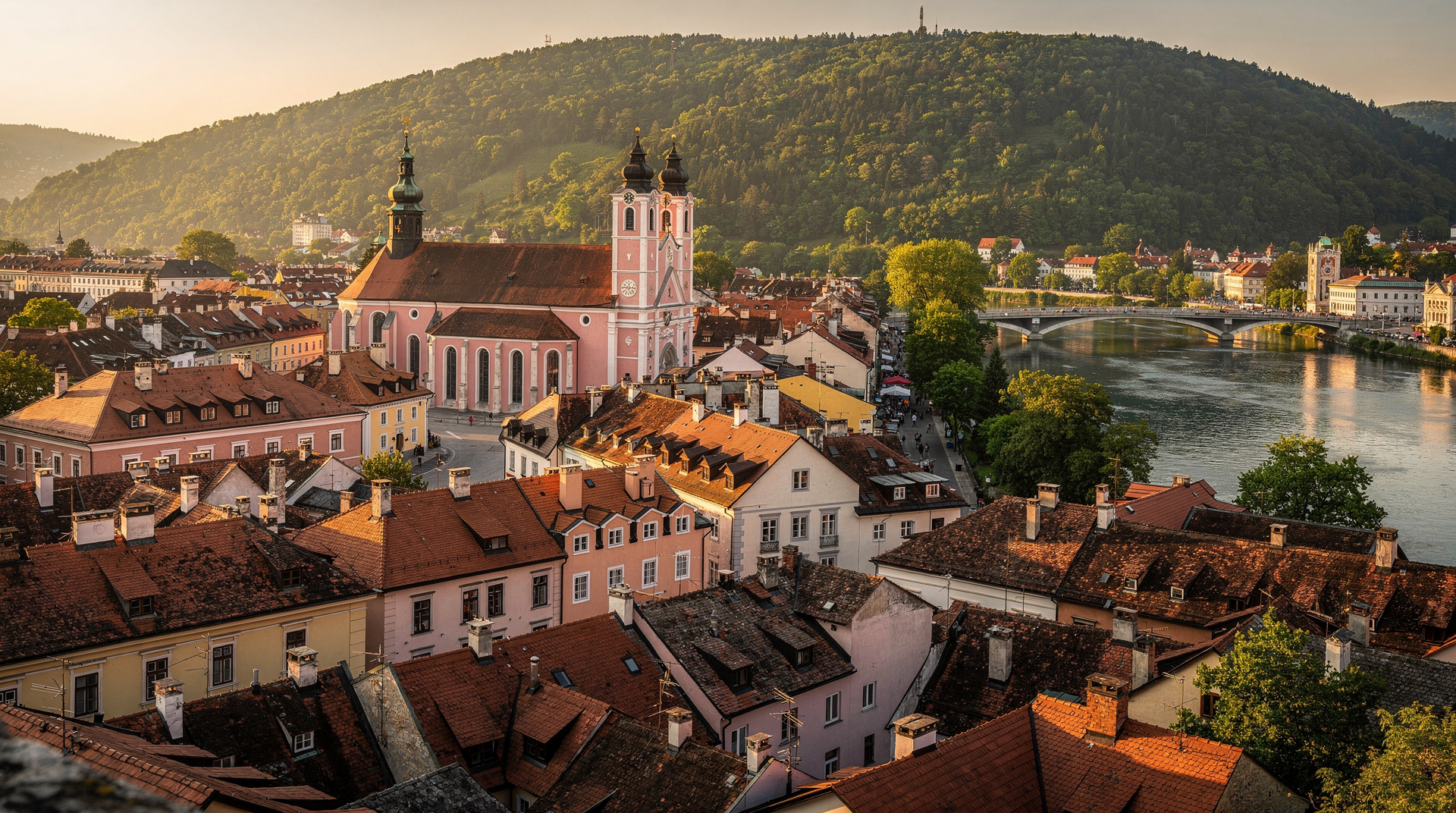
There is a specific pleasure to arriving in Ptuj for the first time. After the alpine drama of Bled, the urban sophistication of Ljubljana, or the vineyard-covered hills of the surrounding Styrian landscape, Ptuj offers something different: a genuinely old town on a human scale, where the layers of history are tangible rather than reconstructed.
| Where | Eastern Slovenia, 25 min from Maribor, 2.5h from Ljubljana |
| Cost | Castle/museum around EUR 5–7, Town Museum EUR 2–3 |
| Time needed | Half a day for the old town and castle |
| Getting there | Best combined with Maribor; car or train |
| Best time | June–October, or Kurentovanje in February (book early) |
The Romans came here first, in force. Poetovio was established on the Drava river in the first century CE and grew into one of the most important Roman towns north of the Alps — a key station on the Amber Road connecting the Baltic to the Adriatic, a military headquarters, a trading hub of 40,000 people at its peak. What remains is mostly underground, in the excellent town museum, but the street pattern of the medieval town that grew on the Roman ruins still follows the Roman grid in sections.
Ptuj is a manageable size. The old town — castle hill, main square, Roman sites, churches, riverside — can be covered on foot in a single day without rushing. It pairs well with Maribor (25 minutes by car), making a natural two-town eastern Slovenia itinerary.
If you are still deciding how Ptuj fits into a wider trip, the first-time guide to Slovenia and the advice on how many days to spend in Slovenia help place a quieter eastern stop alongside the headline sights. Travellers who like their history layered will also enjoy the Slovenian castles overview, where Ptuj sits among the country’s best fortresses.
The castle
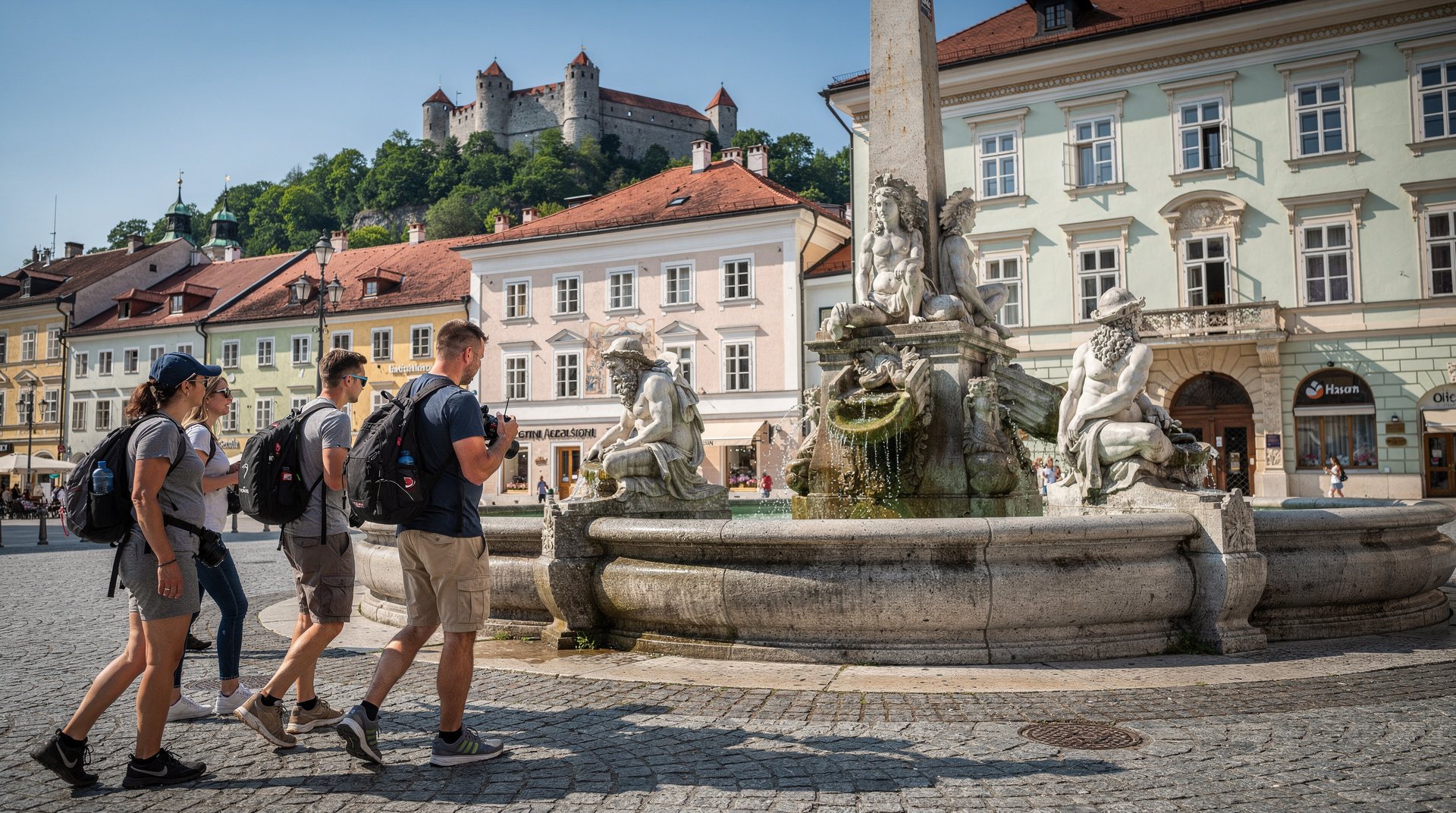
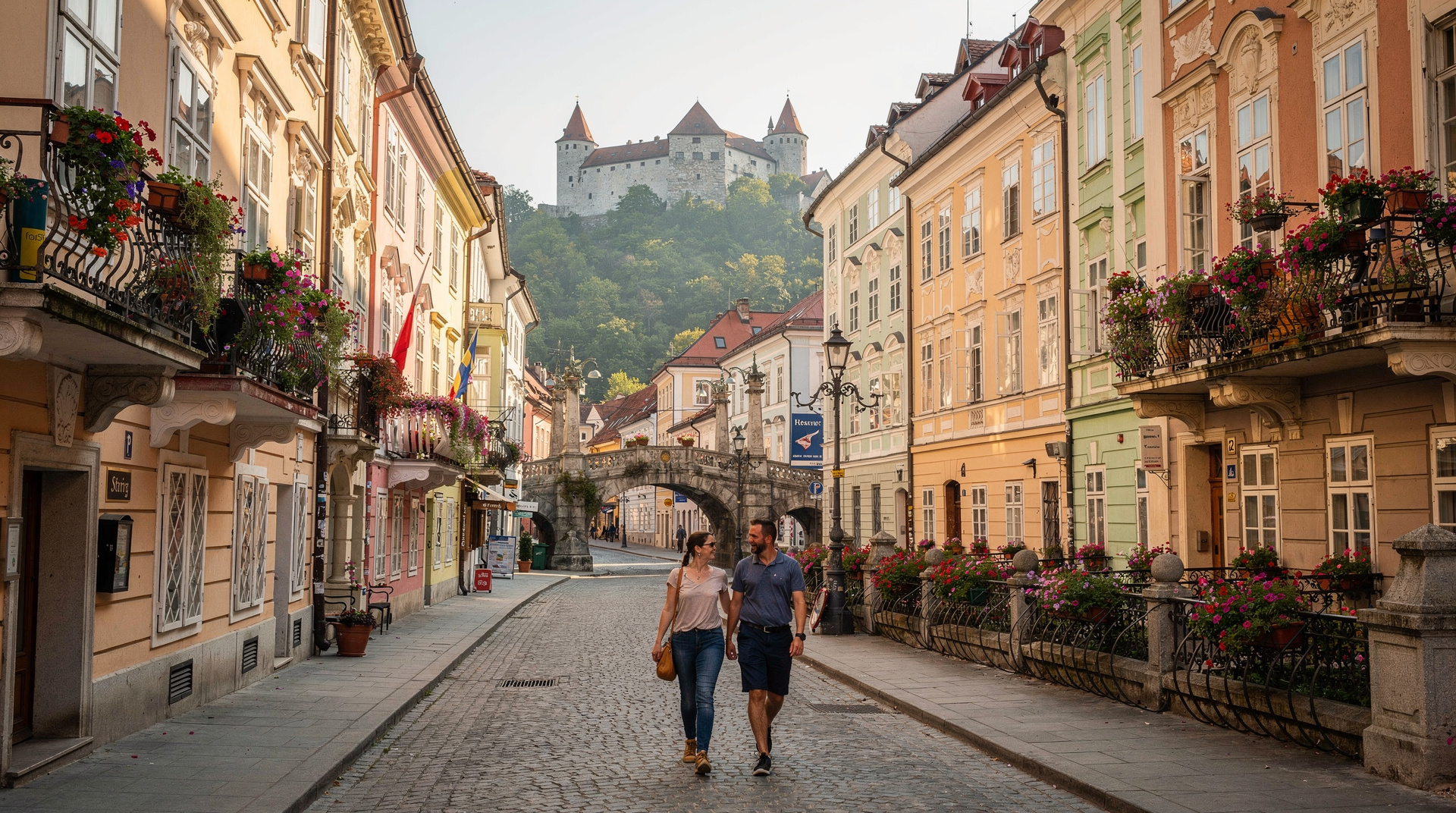
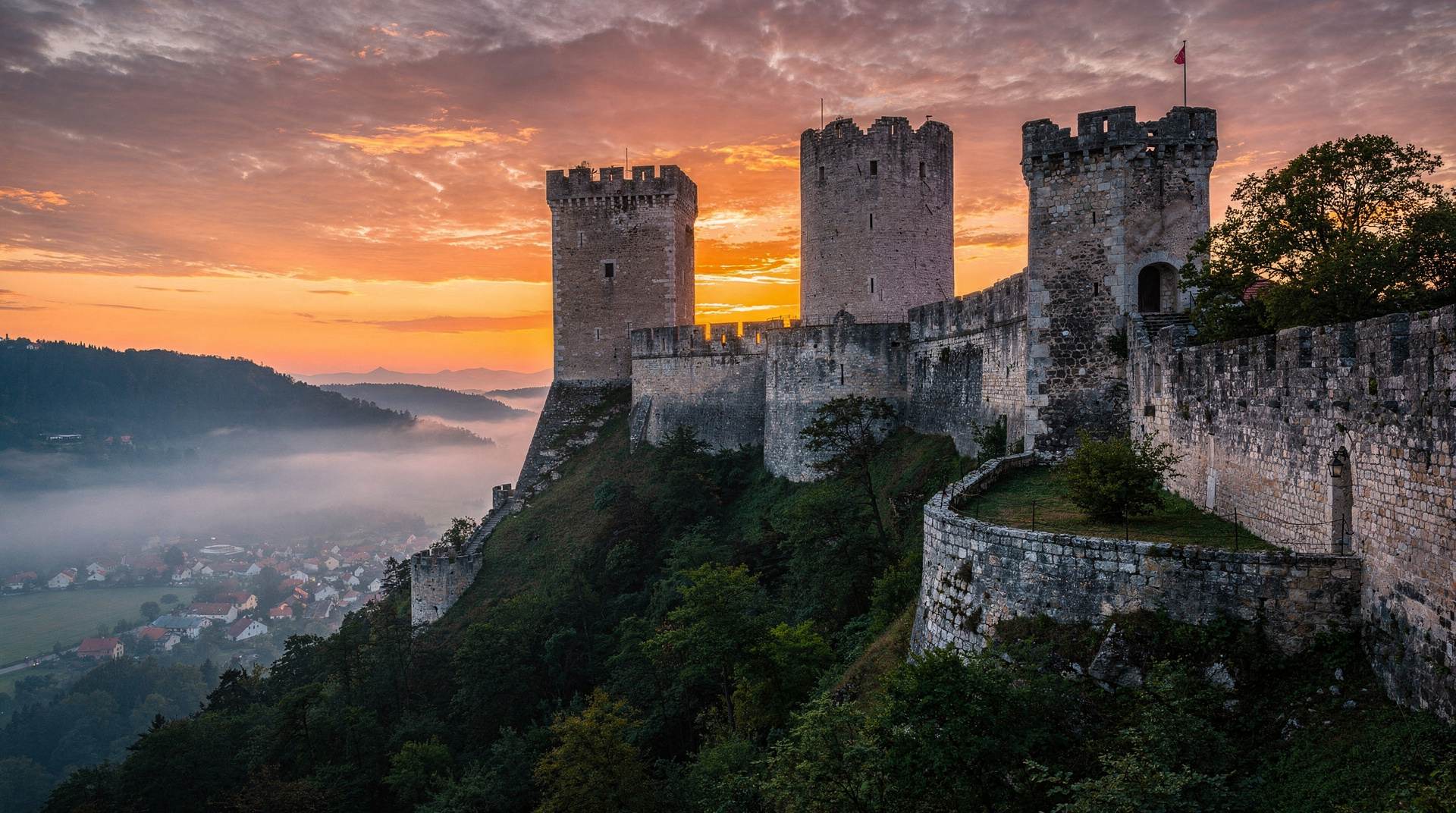
Ptuj Castle (Ptujski grad) sits on a 30-metre hill rising directly from the town, visible from the main square below. It is the defining image of Ptuj: a stacked ensemble of towers, courtyards and walls built across the medieval, Renaissance and Baroque periods on what may have been a Roman watchtower site.
The hilltop is reached in 10–15 minutes on foot via several paths from the old town — look for signs from Prešernova ulica or the main square. The approach through the castle’s lower fortifications is atmospheric in itself.
The Regional Museum of Ptuj occupies the castle interiors. The collections cover multiple floors and span two thousand years of local history. Highlights include:
Roman collection: Sculptural fragments, inscriptions, mosaics and everyday objects from Poetovio. The carved stone fragments are particularly evocative — imperial dedications, funerary reliefs, the remains of public buildings. Ptuj was the base of three consecutive Roman legions and the headquarters of the Mithraic mystery cult in this region; the museum has a significant collection of Mithraic relief sculptures.
Medieval and arms collection: Weapons, armour, heraldic objects and documents spanning the castle’s long medieval and early modern period. The armour display is one of the better-presented in Slovenia.
Musical instruments: An unexpected collection of historical keyboard, string and wind instruments, with several examples dating from the seventeenth and eighteenth centuries. The castle’s role as a noble residence brought a musical culture that is documented here.
Kurent costumes and carnival material: The ethnographic collection documents the Kurentovanje carnival tradition in detail, with original costumes across different eras. Seeing the Kurent costume up close — the sheepskin suit, the horned mask, the enormous belt of cowbells — makes it easier to understand why the festival has the effect it does. The masks are genuinely alarming.
The Ptuj city and chocolate tour combines the old town and castle with a visit to a local chocolate-making operation — an unusual combination that works well for the town’s dual character as a historic site and a living regional centre. It is particularly popular with visitors who find pure history tours exhausting. If you are also passing through the region’s other big town, a guided walk through Maribor’s old town from the medieval period to today makes a good companion to a day in Ptuj.
The old town streets
Below the castle, Ptuj’s medieval street plan is compact and well-preserved. The main square (Slovenski trg) is anchored by the sixteenth-century town tower and a Roman column (one of several Roman artefacts scattered through the town as street furniture, which is either charming or slightly disrespectful depending on your point of view).
The Church of St George (Cerkev sv. Jurija) on the main square is worth entering — a Romanesque building substantially modified in the Gothic and Baroque periods, with an interesting collection of medieval epitaphs in the nave. The Dominican Monastery on the edge of the old town (now the Ptuj Town Museum, separate from the castle museum) documents the medieval religious life of the town and has a cloister garden worth seeing.
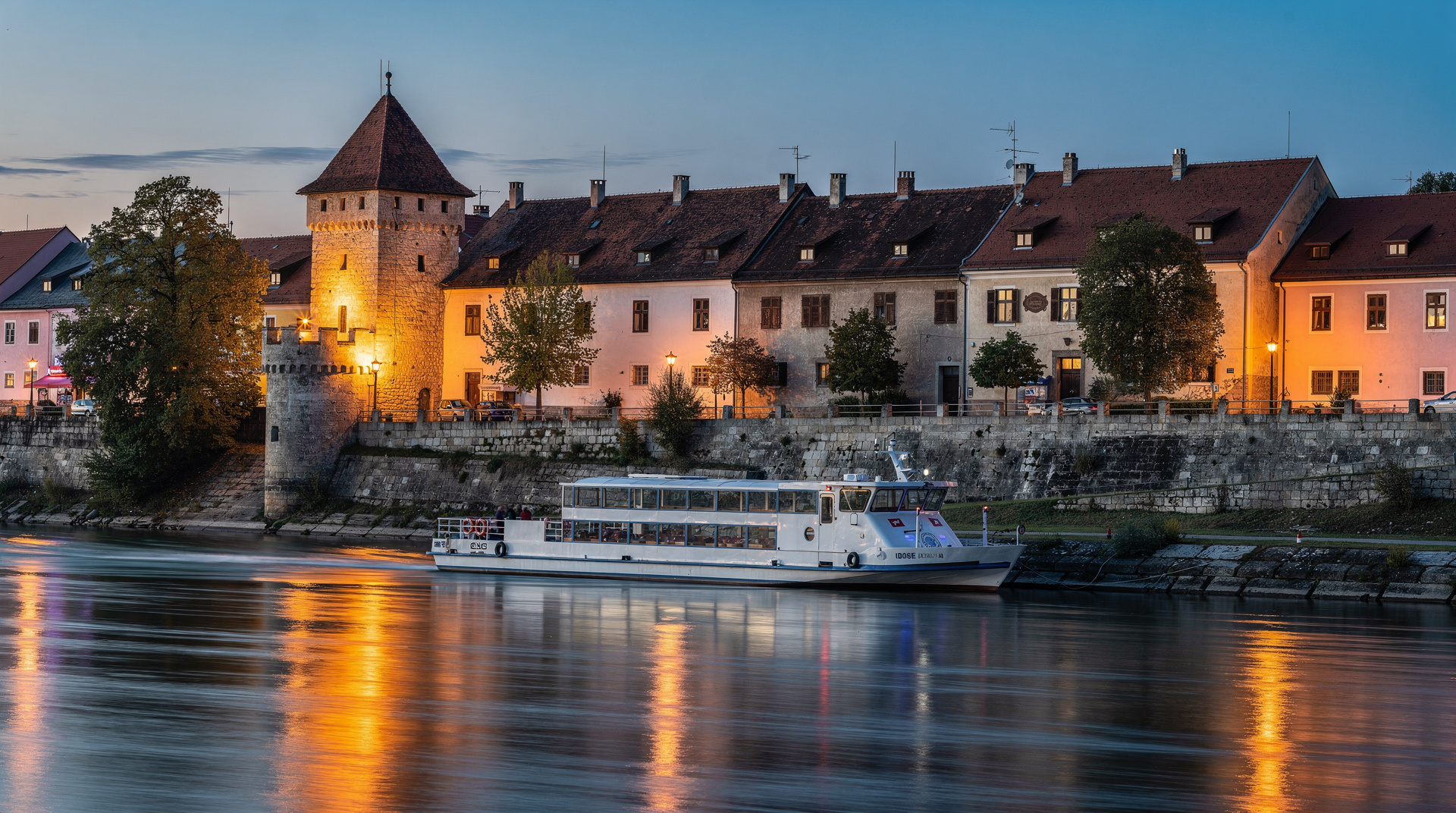
The riverside along the Drava offers a pleasant promenade. Ptuj’s riverside is quiet and undeveloped compared to Ljubljana’s, which is either restful or underwhelming depending on what you want. In summer the riverside bars and cafés are pleasant.
Kurentovanje: the carnival of karacters
Kurentovanje is one of Slovenia’s most distinctive cultural events and one of the few registered on the UNESCO list of Intangible Cultural Heritage of Humanity. It takes place annually in Ptuj in the 10 days before Ash Wednesday — in 2026 this falls in mid-February.
The Kurent itself — a figure in a towering sheepskin costume with an animal-skin mask, ribbons, a club and a belt strung with enormous iron bells — comes from the Slovenian folk tradition, where such figures drove away winter and evil spirits through noise and spectacle. In Kurentovanje, hundreds of Kurents process through the town streets while other masked figures (the ploughmen, the woodcutters, the devil, the bear-and-bear-leader duo) enact folk dramas.
The atmosphere is unlike anything in the more commercialised Central European carnivals. The costumes are genuinely threatening — the masks are unsettling in close quarters, and the sound of two hundred sets of cowbells arriving down the street is unforgettable. Locals line the streets to watch the procession; it is not primarily a tourist event.
Practical note: Hotel rooms in Ptuj (a limited supply at the best of times) book out months before Kurentovanje. If you plan to attend, book accommodation in Maribor and take the 25-minute drive, or book Ptuj accommodation as early as possible — certainly by autumn of the preceding year. Attending on a weekday during the festival’s run (rather than the main Saturday parade) gives a more atmospheric, less crowded experience.
Wine in and around Ptuj
Ptuj is the gateway to two significant wine regions: the Jeruzalem-Ormož region to the east (known for white wines from Šipon/Furmint, Riesling and Sauvignon) and the Haloze hills to the west (lighter reds and elegant whites). The Ptuj Wine Cellar (Ptujska klet) in the old town is the largest wine cellar in Slovenia, carved into the castle hill, with guided tastings of regional wines available.
The Šipon grape (the Slovenian name for Furmint, better known from Hungarian Tokay) produces wines of notable character in this climate — drier and more mineral than the Hungarian style. Tastings at the Ptuj klet cost around EUR 10–15 for a flight of regional wines.
Readers who want the bigger picture of the country’s vineyards can turn to the Slovenian wine guide and the overview of Slovenia’s wine regions, which put the eastern Styrian wines in context next to the Brda and Vipava styles.
For a broader introduction to Styrian wine culture, the wine route connecting Ptuj to Maribor and the Jeruzalem hills is an excellent half-day drive with several wineries open for visits (call ahead for smaller producers; the tourist office in Ptuj provides a current map).
Combining Ptuj with the rest of eastern Slovenia
Ptuj works best as part of a two-day eastern Slovenia itinerary. The natural combination is:
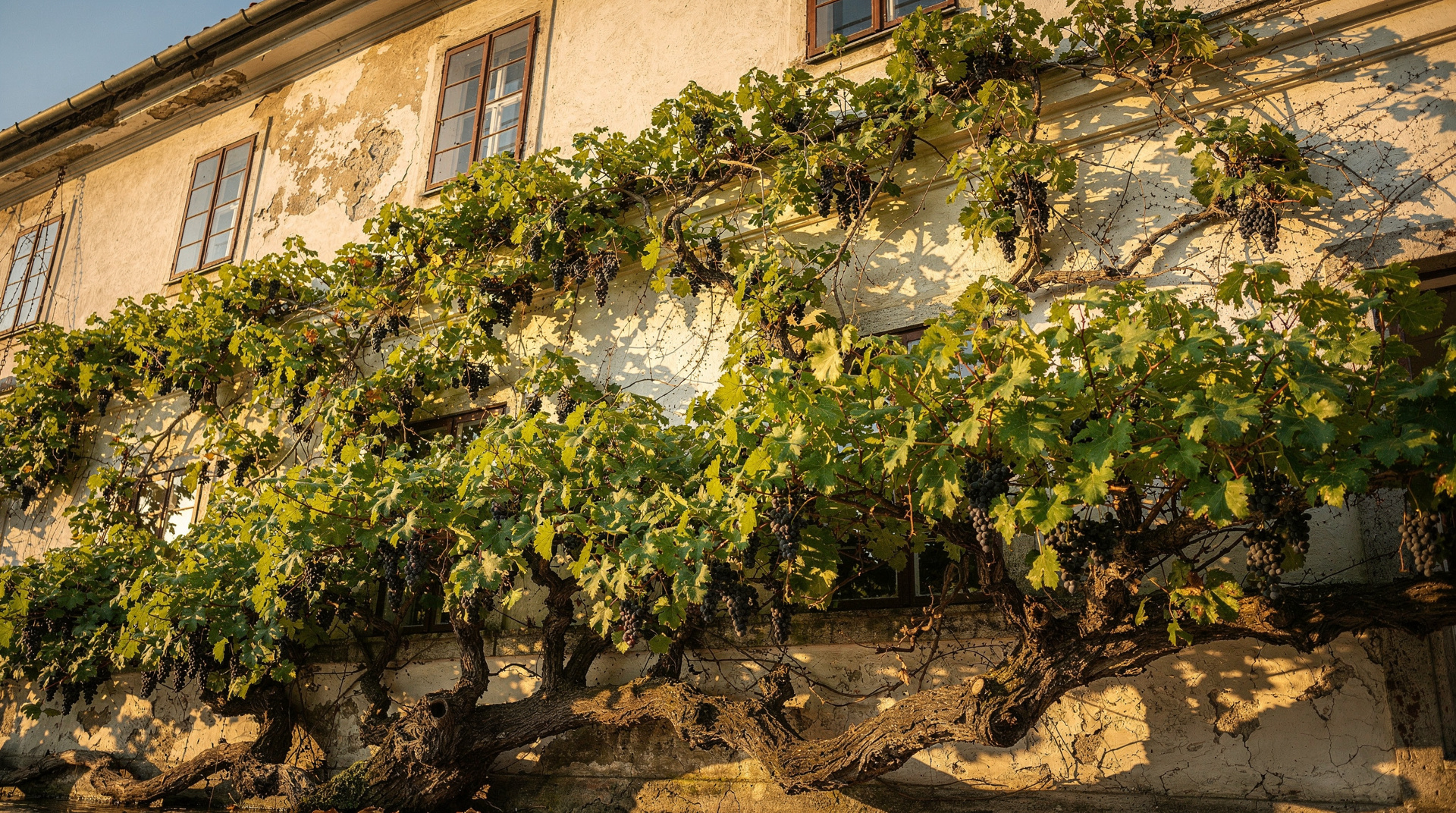
- Day 1: Maribor (old town, Lent district, the oldest vine)
- Day 2: Ptuj (castle, old town, wine cellar) plus the Jeruzalem wine hills
See the Maribor city guide for the Maribor side of this programme. Celje and its castle are a further two hours west on the motorway, making a possible three-day loop through eastern Slovenia.
For a day trip from Ljubljana, Ptuj is feasible — the train journey is 2.5 hours each way — but a rush. Better to overnight in Maribor and use Ptuj as a day extension. For the journey itself, the guides to trains in Slovenia and getting around Slovenia explain the options, and the car rental guide is worth a read if you would rather drive between the eastern towns and the wine hills.
Practical information
Entry fees: Castle/Regional Museum EUR 5–7 adults; Town Museum EUR 2–3; Ptuj Wine Cellar tasting from EUR 10.
Opening hours: Castle/museum Tuesday–Sunday approximately 09:00–17:00 (extended hours in summer). Town Museum similar hours. Wine cellar tours by appointment; walk-in tastings usually available daily.
Accommodation: Limited supply in Ptuj itself — the Mitra Hotel (in a historic building on the main square) and B&Bs in the old town lanes are the main options. Maribor has more capacity.
Parking: Free parking along the Drava riverside, paid parking near the main square.
Frequently asked questions about Ptuj
Why is Ptuj called the oldest town in Slovenia?
Ptuj has the oldest documented continuous settlement history of any town in Slovenia. Roman Poetovio was established here in the first century CE as a legionary base and later a full Roman colony — one of the most important in the eastern Alps. Archaeological evidence for pre-Roman Iron Age settlement goes back much further. No other Slovenian town can claim an equally long and documented history of continuous urban occupation.
Can you visit Ptuj as a day trip from Ljubljana?
Yes, but it is tiring. The train takes about 2.5 hours each way from Ljubljana, giving you around 3–4 hours in Ptuj. This is enough to see the castle museum and the old town at a reasonable pace. A better approach is to combine Ptuj with Maribor (25 minutes apart by car) and overnight in Maribor — this gives adequate time in both towns without the return journey pressure.
What is the best time to visit Ptuj?
Summer (June–August) and early autumn (September–October) offer the best weather and longest opening hours. Kurentovanje in February is the most unique time to visit but requires significant advance planning for accommodation. Spring (April–May) is a good combination of comfortable weather and manageable tourist numbers.
What Roman sites can I see in Ptuj?
The Regional Museum in the castle has the main Roman collection (sculptures, inscriptions, everyday objects). Several Roman artefacts are displayed outdoors in the old town streets. There is no fully preserved in-situ Roman site accessible to visitors, but the museum’s excavation materials give a clear picture of Poetovio’s scale and character. The Mithraic relief sculptures are the most distinctive objects.
Is Ptuj good for wine tourism?
Yes — it is one of the best bases for exploring eastern Slovenian wine culture. The Ptuj wine cellar offers the most accessible introduction, and the Jeruzalem hills and Haloze region provide excellent winery day trips. The Šipon white wine is particularly worth seeking out — it is unfamiliar to most international wine travellers but high in quality and keenly priced compared to equivalent western European whites.
What local food should I try in Ptuj?
Eastern Slovenian cuisine differs subtly from the Alpine dishes that dominate the rest of the country. In Ptuj, look for prekmurska gibanica (a layered pastry with poppy seed, walnuts, apples and cottage cheese — technically from the Prekmurje region but found throughout eastern Slovenia), bujta repa (a sour turnip and pork dish from the pig-slaughter tradition), and the bean and pork soups that are typical of Styrian farmhouse cooking. The wine matches: Šipon or Riesling with the lighter dishes, Blaufränkisch (Modra frankovka) with the heavier pork preparations.
Can you cycle around Ptuj?
Yes — the Drava cycling route (Dravska kolesarska pot) passes through Ptuj and follows the river east and west. The terrain around Ptuj is relatively flat compared to the rest of Slovenia, making it accessible for casual cyclists. The route east toward Ormož (22 km) passes through the Jeruzalem wine hills and is a pleasant half-day ride combining cycling and wine tasting. Bicycles can be rented from the tourist information office area or from guesthouses outside the town. Ptuj is one of the few Slovenian towns where cycling is genuinely practical for visitors without specialist equipment.
What is the Mithras cult connection in Ptuj?
Poetovio (Roman Ptuj) was one of the most significant centres of the Mithras mystery cult in the Roman Empire. Mithraism — a mystery religion popular among Roman soldiers — was widespread in the military colony. Archaeologists have found multiple Mithraic sanctuaries (mithraea) in and around Ptuj, and the Regional Museum holds a significant collection of Mithraic relief sculptures. The most notable is the large Mithras tauroctony relief (Mithras slaying the bull, the central image of the cult), several of which are displayed in the museum. This collection is of European significance — Ptuj is one of the best places outside Rome to encounter Mithraic sculpture in its archaeological context.
Top experiences
Bookable activities with verified prices and instant confirmation on GetYourGuide.