Celje Old Castle: the most impressive ruin in Slovenia
Maribor: guided old town tour, medieval to modern
Is Celje Old Castle worth visiting?
Yes — it is the most dramatically situated and impressive ruined castle in Slovenia. The three surviving towers and the panoramic view over Celje and the Savinja valley justify the visit. Combined with the Celje Regional Museum in the town below, it makes for a satisfying half-day in a city that most travellers drive past without stopping.
Celje Old Castle: the fortress that controlled half of Central Europe
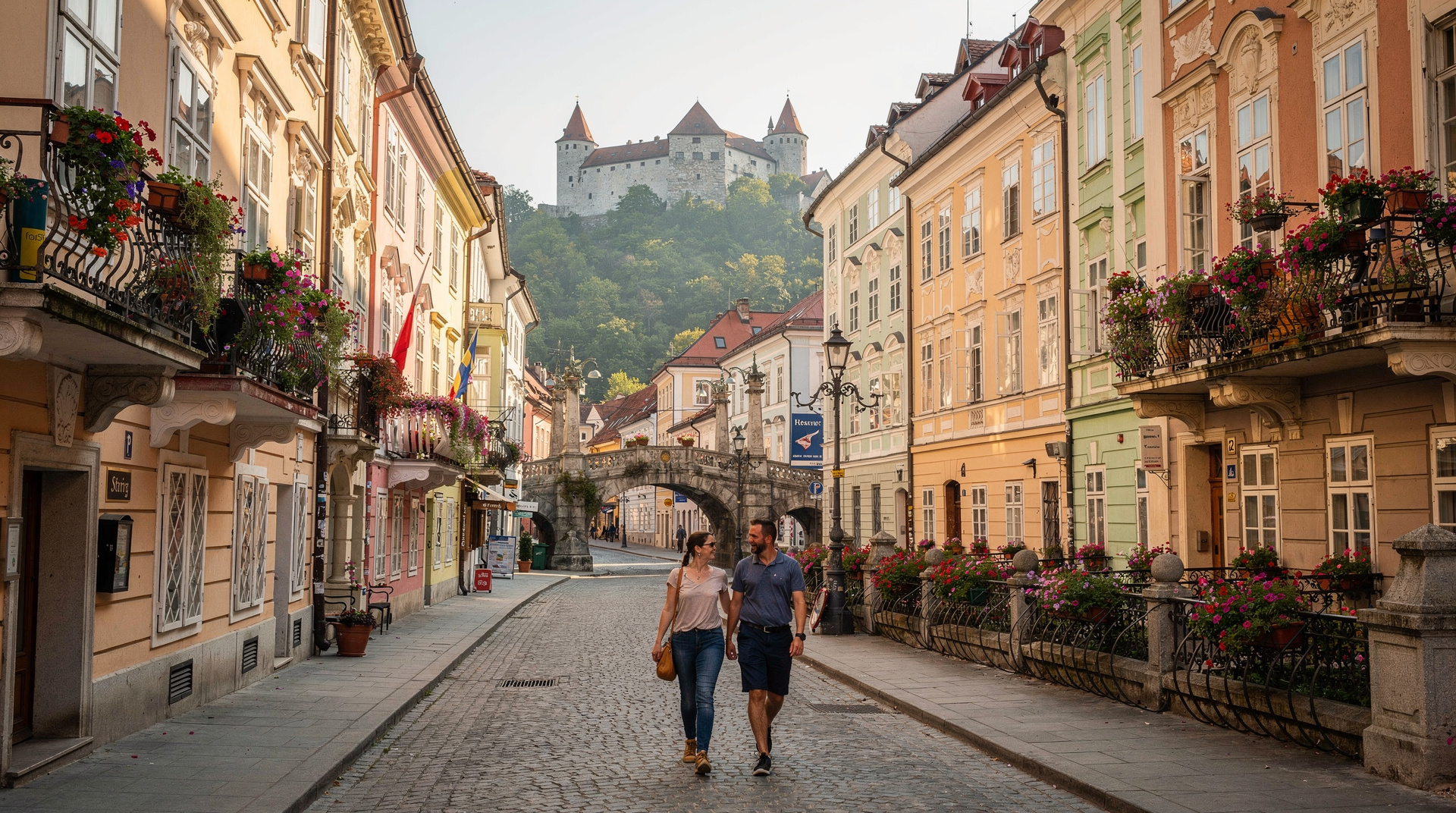
There is something bracing about Celje Old Castle. Not the manicured charm of Bled Castle perched on its lakeside cliff, nor the fully restored interiors of Ljubljana Castle — but a genuine ruin: three surviving towers rising from a hillside, walls breached and crumbling, the foundations of a medieval palace palace open to the Slovenian sky. It is the kind of place that invites imagination rather than passive reception.
Celje is Slovenia’s third city, 75 kilometres east of Ljubljana on the motorway. Most travellers pass it on the way to Maribor or Ptuj without stopping. The Old Castle — Stari grad — is the specific reason to stop, and the Celje Regional Museum in the town below makes the visit comprehensive enough to justify a half-day detour.
| Where | Hilltop above Celje, 75km east of Ljubljana |
| Cost | Around EUR 5 castle; EUR 4–5 Regional Museum |
| Time needed | 2.5–3 hours including the walk up and museum |
| Getting there | 25–35 min walk, or drive with limited parking |
| Combine with | Maribor or Ptuj on the same eastern Slovenia day |
The Counts of Celje: a brief and violent dynasty
The castle’s significance derives entirely from the people who built and inhabited it. The Counts of Celje (Celjski grofje) were a noble family who rose from modest Carinthian origins in the fourteenth century to become, by the mid-fifteenth century, one of the most powerful dynasties in the Holy Roman Empire.
At their peak under Count Ulrich II (1406–1456), the Counts controlled territories from Carinthia through Carniola and Styria into Croatia and Hungary. Ulrich was a Crusade leader, a king-maker in Bohemia and Hungary, and a rival to the Habsburgs for regional dominance. He was also, by all accounts, a man of spectacular personal violence and political ruthlessness. He was murdered in Belgrade in 1456, stabbed by Hungarian nobles in a dispute that ended the Celje male line. The Habsburgs absorbed the entire territorial inheritance.
The castle they left behind is a monument to ambition on a specific historical scale. It was among the largest fortresses in the eastern Alps at its peak — a complex of towers, outer walls, courtyards and a substantial residential palace, all demonstrating the resources available to a family that collected tolls on the Amber Road and raised armies from across three regions.
The ruins: what survives
Frederick’s Tower (Friderikov stolp) is the tallest surviving structure — three storeys of relatively intact masonry with a wooden viewing platform at the top. The climb is by wooden staircase within the tower walls, manageable for anyone reasonably agile. From the top, the view is extensive: the Savinja river valley below the castle hill, the Celje industrial plain, and on clear days the ridges of the Kamnik-Savinja Alps to the northwest.
The Maiden’s Tower (Deviški stolp) is the second intact tower, named according to a local legend involving a noble lady imprisoned here — a story that appears in various forms at Slovenian castles and should be taken as atmosphere rather than history. The tower interior is accessible but less dramatic than Frederick’s Tower.
The outer walls and courtyard retain substantial sections of masonry that allow a full circuit of the castle perimeter. The foundations of the main palace building are visible within the main courtyard — the extent of the original residential complex is larger than you might expect from a ‘ruined’ castle.
Exhibition spaces within the surviving structures present material on the Counts of Celje dynasty, the castle’s building history and the archaeological finds from ongoing excavations. The displays are in Slovenian with English summaries; they provide context that makes the ruins make sense.
Entry to the Old Castle costs approximately EUR 5 for adults.
Getting up to the castle
The preferred approach is on foot from the Stari Grad quarter of Celje below the castle hill. The walk takes 25–35 minutes and climbs through a mix of residential streets and a wooded path. The route is signposted from the town centre; look for the green castle signs from the pedestrian main street (Stanetova ulica).
For those with limited mobility or in hot weather, the access road to the castle is driveable with limited parking near the castle entrance. A tourist buggy sometimes operates from the town centre in peak summer — check at the tourist information office.
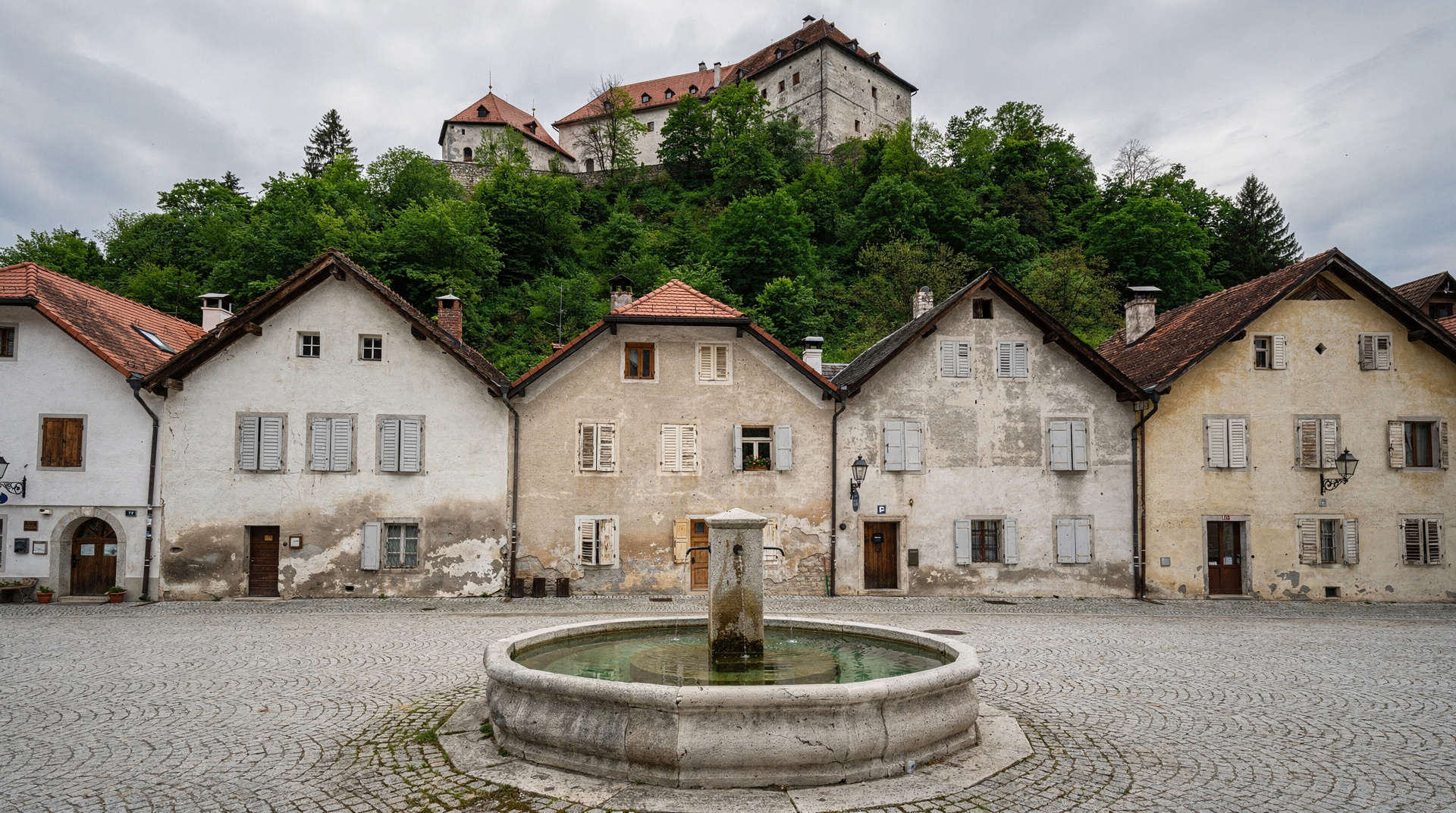
The walk down through the Stari Grad neighbourhood reveals an old residential quarter of considerable character, with Baroque and Classicist buildings that most visitors, focused on the castle above, overlook entirely.
Celje Regional Museum (Pokrajinski muzej Celje)
The most important museum in Celje is in the Knežji dvorec (Princes’ Palace) in the town centre — the medieval urban palace of the Counts of Celje, substantially rebuilt in the Baroque period and now housing the regional museum.
The permanent collection has two highlights. The Roman Celeia exhibition documents the Roman town that preceded medieval Celje — Celeia was a significant Roman administrative centre, and the archaeological material is substantial. The collection includes mosaics, sculptural fragments, everyday objects and a good overview of the town’s layout.
The Counts of Celje exhibition supplements the castle visit with detailed documentary and artistic material about the dynasty: genealogical charts, illuminated manuscripts, heraldic objects and the tools of fourteenth and fifteenth-century administration. The combination of museum plus castle gives a much fuller picture than either alone.
Allow 1.5 hours for the Regional Museum. Entry approximately EUR 4–5.
The Church of St Daniel
The main church in Celje, dating from the thirteenth century with substantial Gothic additions in the fourteenth and fifteenth centuries. The Celje Chapel (Celjska kapela), added in the early fifteenth century, contains fragments of Gothic fresco decoration — a modest example but worth seeing in the context of Celje as a centre of noble patronage in this period.
The church is open to visitors during standard hours (confirm locally, as hours are irregular).
Combining Celje with the wider eastern Slovenia circuit
Celje sits at the western end of the eastern Slovenia motorway corridor, making it a natural first or last stop on a circuit that includes Maribor and Ptuj.
From Ljubljana: 75 km east on the A1 motorway, approximately 1 hour by car or 1h15 by train. Worth combining as a full-day itinerary: Celje Old Castle and museum in the morning, drive to Maribor in the afternoon.
From Maribor: 50 km west on the A1, approximately 40 minutes. An easy day trip for Maribor-based visitors.
From Ljubljana as a standalone day trip: Feasible — the train to Celje takes 1h15, the Old Castle and museum take 3–4 hours total, and return trains are frequent. More satisfying as part of a two-day eastern Slovenia trip.
For visitors approaching Celje as part of an organised eastern Slovenia day, the guided Maribor old town tour covers the neighbouring city in similar depth, and the Ptuj city and chocolate tour pairs well if you’re continuing to Slovenia’s oldest town on the same trip.
Practical details
Opening hours: Old Castle daily in summer, approximately 09:00–20:00 (winter hours shorter; check locally). Regional Museum Tuesday–Sunday approximately 09:00–17:00.
Entry: Old Castle approximately EUR 5. Regional Museum approximately EUR 4–5. Combined ticket often available at a small discount.
Refreshments: A café at the castle entrance serves basic drinks and snacks with a terrace view. The town centre has a standard range of cafés and restaurants.
Accessibility: The castle hilltop involves significant walking on uneven surfaces; not fully accessible for wheelchairs. The Regional Museum in the Princes’ Palace is accessible.
Frequently asked questions about Celje Old Castle
Who were the Counts of Celje?
The Counts of Celje (German: Grafen von Cilli) were a Central European noble dynasty based in what is now eastern Slovenia. Rising to prominence in the fourteenth century, they became Princes of the Holy Roman Empire and controlled territories across four modern countries at their peak. The last count, Ulrich II, was murdered in Belgrade in 1456 and the dynasty ended without male heirs. Their remaining territories passed to the Habsburgs. They are a major subject of Slovenian historical memory — three golden stars on the Slovenian coat of arms derive from the Celje heraldic symbol.
Can you visit the castle interior?
Yes — the two main towers (Frederick’s Tower and the Maiden’s Tower) are accessible to visitors with appropriate footwear. The exhibition spaces within the castle buildings are open during museum hours. The outer courtyard and foundations are accessible as an outdoor site throughout opening hours.
Is there a restaurant near Celje Old Castle?
There is a café at the castle entrance. For full meals, the town centre below (15–20 minutes’ walk) has a better range. Restavracija Metropol and Gostilna Ancika are well-regarded local options.
What is the best castle in Slovenia overall?
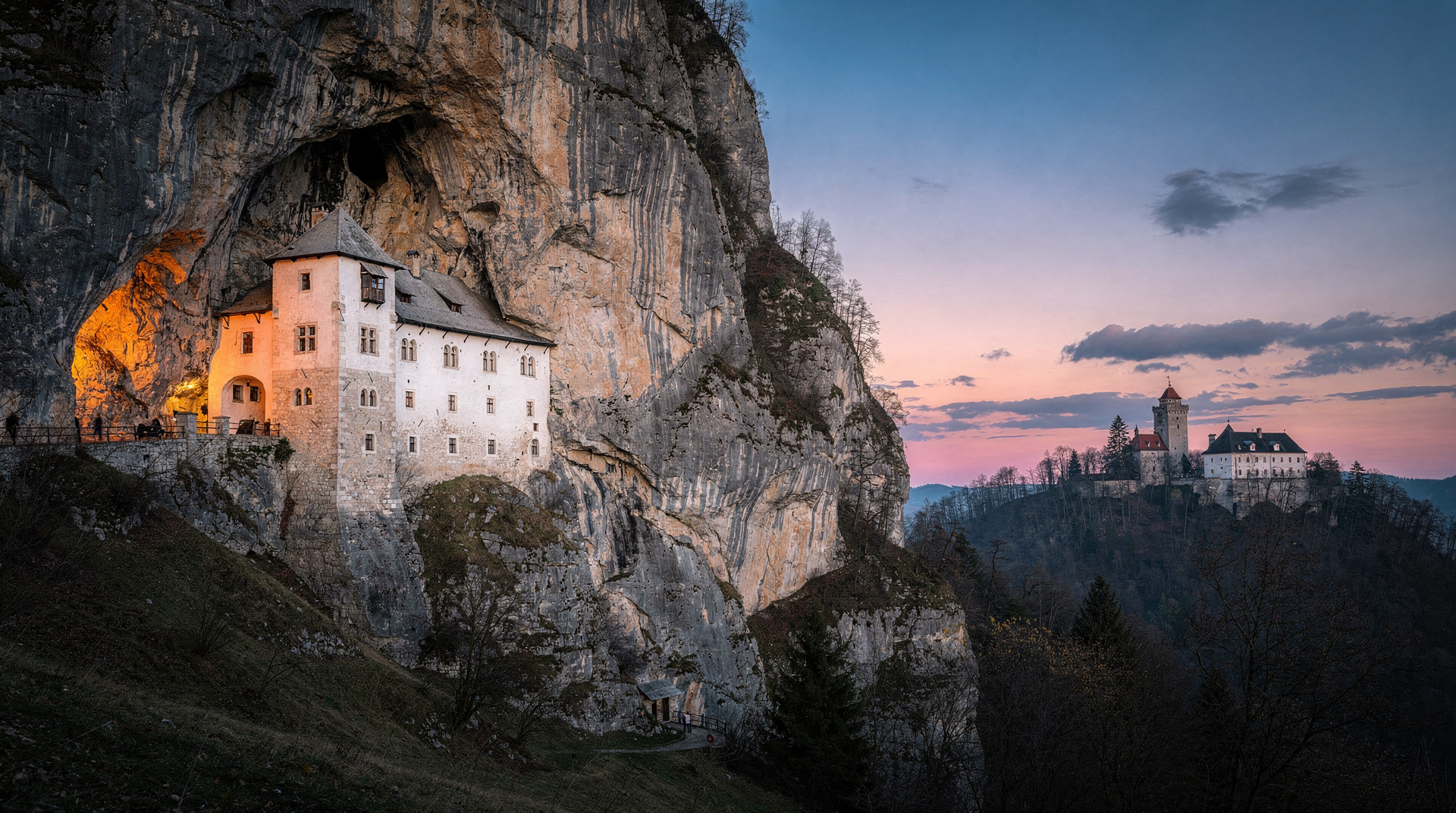
Celje Old Castle is the most dramatically ruined and historically significant. Predjama Castle (near Postojna) is the most scenically extraordinary — built into a cliff face. Ljubljana Castle is the most conveniently visited. Bled Castle is the most photographed. Borl Castle near Ptuj and Snežnik Castle in the Karst region are notable for different reasons. For pure historical drama combined with accessibility, Celje Old Castle competes strongly for the top position. See the Slovenian castles guide for a comparison.
How far is Celje from the Logar Valley?
About 70 kilometres through the Savinja valley, a beautiful drive of approximately 1 hour. The Logar Valley (Logarska dolina) — a glacially carved Alpine valley with a waterfall at its head — is a natural add-on to a Celje or Maribor visit for those with a car. It is particularly stunning in autumn.
What is worth seeing in Celje town itself besides the Old Castle?
The Celje Regional Museum in the Knežji dvorec (Princes’ Palace) is the primary indoor attraction. The Church of St Daniel with its Celje Chapel. The town’s pedestrian main street (Stanetova ulica) has a pleasant late-nineteenth-century character — it was substantially rebuilt after an 1830 fire and the Classicist townhouses give the street a coherent, unhurried feel. The Glazer Residential Gallery (Pokrajinska galerija Celje) hosts rotating art exhibitions and occupies an interesting early Modernist building. Celje also has a small but active cultural calendar — check the local tourist office website for concerts and events in the castle and theatre during summer.
How does Celje compare to Maribor as a destination?
Maribor is a larger city (100,000 people) with a more developed restaurant and bar scene, a longer riverfront, the Old Vine as a world-class singular attraction and better public transport connections from Ljubljana. Celje (50,000 people) has the stronger castle attraction in the Old Castle, more compact and manageable old town streets, and a more off-the-beaten-path feel. For a two-city eastern Slovenia trip, Maribor as the base and Celje as a half-day excursion is the natural configuration — more than the reverse. Celje standalone makes most sense as a motorway stop between Ljubljana and Maribor.
Are there guided tours of Celje Old Castle in English?
Guided tours in English are available at Celje Old Castle on request, particularly in peak season (June–September). The tourist information centre in Celje town (on Krekov trg near the Savinja bridge) can arrange tours and provide current guide availability. Individual visitors without a pre-booked guide can explore the castle freely with the exhibition material, which has good English labelling for the main historical sections.
What did the Counts of Celje look like physically?
The Celje Regional Museum includes portraits and heraldic representations of several Counts, as well as funerary monuments. The most vivid impression comes from the literary and documentary records: Ulrich II — the last Count — was described by contemporaries as physically imposing and temperamentally explosive. His murder in Belgrade in 1456 was the culmination of a years-long feud with the Hunyadi family of Hungary.
The circumstances were so dramatic that they were used as literary material by Slovenian Romantic writers in the nineteenth century, notably in Fran Levstik’s historical dramas. The emotional weight of the dynasty’s end explains why the Celje coat of arms (three golden stars on blue) survived into Slovenian national symbolism after the dynasty itself vanished.
Is there a Celje Old Castle gift shop?
A small shop operates at the castle entrance, stocking books on regional history (some in English), postcards, maps and minor souvenirs. The Regional Museum shop in the Princes’ Palace in the town centre has a somewhat wider selection. For significant purchases of locally made items — ceramics, textiles, honey — the Celje market on Saturdays or the specialist shops on the main pedestrian street are better options than the castle shop.
Photography at Celje Old Castle
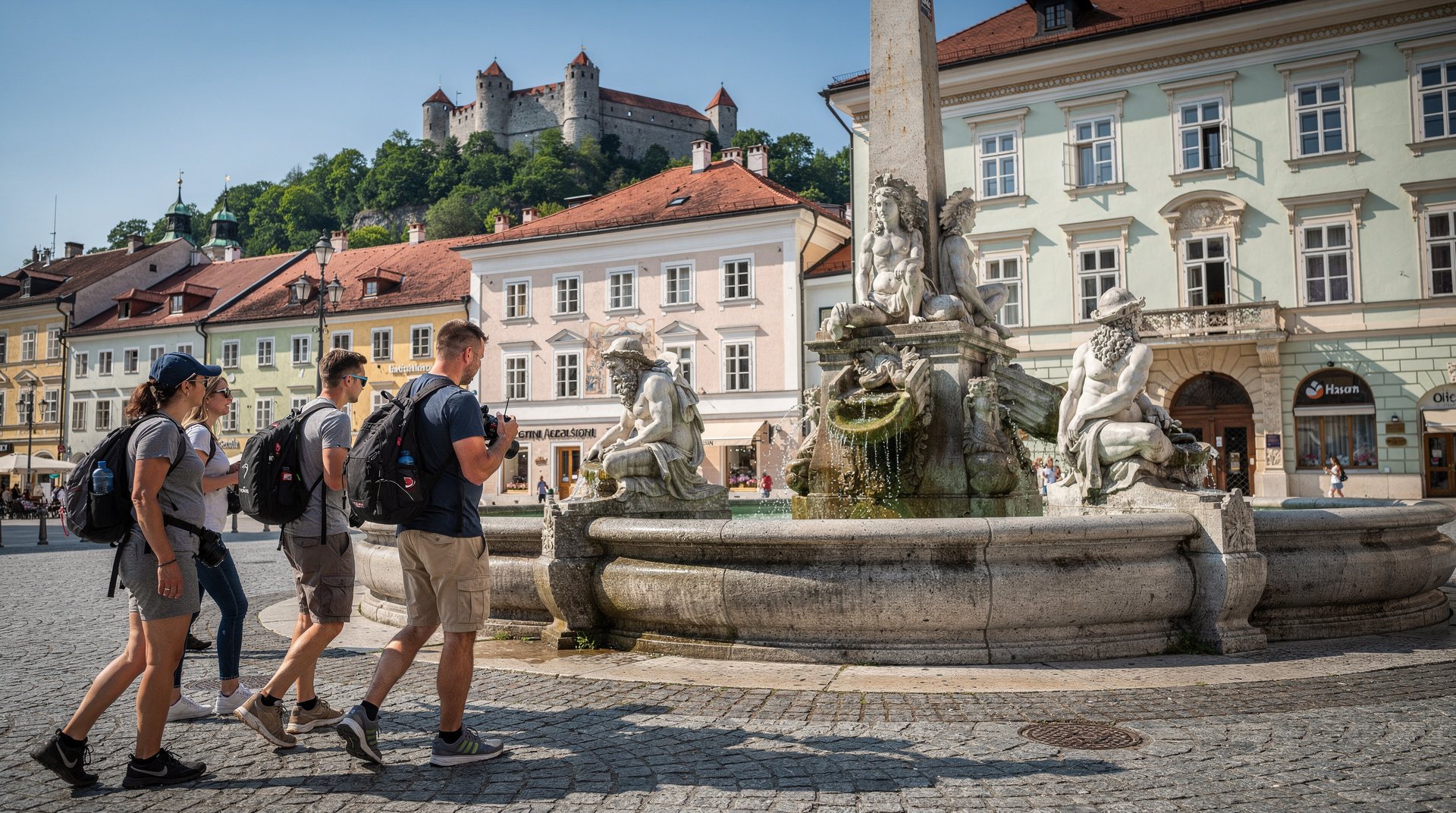
Frederick’s Tower is the best vantage point for photographing the Savinja valley and the town below — the wooden viewing platform gives an unobstructed 360-degree panorama, best in the golden light of early morning or the last two hours before sunset. The ruins themselves photograph well from the approach path, where the broken walls and towers stand out dramatically against the sky, particularly with a wide-angle lens capturing the scale of the fortress relative to the town below. On overcast days, the crumbling masonry and mist rising from the Savinja valley can produce a genuinely atmospheric, moody image that clear-weather photos can’t replicate.
Celje versus a rushed motorway stop
Some visitors treat Celje as a 20-minute photo stop from the motorway car park, glancing at the castle from below without making the climb. This significantly undersells the site — the view from below shows only the silhouette, while the real reward (the tower panorama, the interior exhibitions, the sense of scale) requires the walk up. If your schedule genuinely allows only 20–30 minutes, it’s arguably better to skip Celje entirely and give that time to Maribor or Ptuj rather than see the castle from a distance and move on.
Celje for families
Children generally enjoy the climb to the castle and the tower staircases, which have a genuine sense of adventure that more manicured castles lack. The uneven terrain and lack of railings in some sections mean supervision is needed for younger children, but there’s no entry restriction by age. The Regional Museum’s Roman Celeia exhibition, with its mosaics and everyday objects, tends to hold children’s attention better than the more document-heavy Counts of Celje displays. Budget slightly more time than the adult estimate if visiting with young children who’ll want to explore the ruins at their own pace.
A half-day itinerary for a Celje stop
For visitors slotting Celje into a longer eastern Slovenia route, a workable half-day sequence: arrive by 09:30, walk up to the castle (25–35 minutes), spend 1.5 hours exploring the towers and exhibitions, walk back down through the Stari Grad quarter (20 minutes, worth lingering in), then visit the Regional Museum in the town centre (1.5 hours) before lunch. This covers the essential Celje experience in around 4 hours, leaving the rest of the day free to continue to Maribor or return toward Ljubljana.
Celje at different times of year
Spring and autumn are the most comfortable seasons for the climb up to the castle, with mild temperatures and good visibility from Frederick’s Tower. Summer is warmer on the exposed hilltop with little shade, so an early morning or early evening visit is more comfortable than midday. Winter access is possible but the walk can be icy after frost; the access road becomes the more sensible option in poor conditions, and reduced winter hours should be checked before setting out.
Where Celje fits among Slovenia’s other castles
Celje rewards a particular kind of visitor: someone who prefers atmosphere to polish. If you have already seen the restored interiors in Ljubljana or the lakeside setting at Bled Castle, the ruin offers a pleasing contrast, because here the stonework is left to speak for itself. For a cliff-side fortress with a completely different character, Predjama Castle is the natural counterpart on the opposite side of the country.
Building a longer eastern Slovenia route
Celje works well as the opening stop of a slower trip through the east. Many travellers continue to Ptuj, the oldest town and then to the Maribor city guide for the riverfront and the wine culture. If you are planning the logistics, the guides to getting around Slovenia and trains in Slovenia explain how the rail and road links fit together, and the Slovenia highlights itinerary shows how a stop in the east can sit alongside the headline sights of the Alps and the coast.
What to bring and how to pace the visit
The hilltop is exposed and the paths are uneven, so sturdy shoes, water and a light layer are more useful than anything else you might pack. Take the climb slowly and treat the exhibition rooms as a rest stop; they give context for what you are about to see from the towers. If you are travelling with a car, the guide to renting a car in Slovenia covers the practicalities of an eastern loop, and the best time to visit Slovenia helps you choose the season that suits a hilltop ruin best.
Top experiences
Bookable activities with verified prices and instant confirmation on GetYourGuide.