Škofja Loka: the medieval town Ljubljana overshadows
Ljubljana: historic old town private walking tour
Is Škofja Loka worth visiting from Ljubljana?
Yes — Škofja Loka has one of the most authentically preserved medieval old towns in Slovenia, and at 30 minutes by bus or car from Ljubljana it is the most accessible day trip from the capital. The town square (Mestni trg), the castle hill, the historic bridge and the compact medieval street plan are all in excellent condition and receive a fraction of Bled's visitor numbers.
Škofja Loka: 800 years of Bavarian bishops and Slovenian stone
The story of Škofja Loka begins in the year 973, when the German Emperor Otto II granted the territory around this confluence of two Sora rivers to the Bishops of Freising in Bavaria. The Bishops of Freising held the town for 850 years — until Napoleon’s dissolution of church territories in 1803. That 850-year period of continuous ownership by a single institution explains a great deal about why the town looks the way it does: carefully developed, commercially prosperous, architecturally consistent across the centuries, and not destroyed by warfare or dynastic turbulence that reshaped most comparable Central European towns.
The result is one of Slovenia’s most authentically preserved medieval and early modern town centres. Not the managed prettiness of a tourist village, but the working fabric of a historic market town that has been continuously inhabited since the Middle Ages and that has, largely by good fortune, escaped the fires, earthquakes and demolitions that rewrote so many comparable Central European townscapes.
Škofja Loka is 25 kilometres northwest of Ljubljana. In 30 minutes by bus, you can leave the capital and arrive in a genuinely medieval environment. That proximity is the most underexploited day-trip opportunity in the Ljubljana region.
| Where | 25 km northwest of Ljubljana |
| Cost | Free to walk the town; castle museum around EUR 4–5 |
| Time needed | 2–3 hours, half a day with the castle hill and lunch |
| Getting there | Bus (30–40 min, ~EUR 3) or car (~30 min) |
| Best time | Any season; Saturday mornings for the local market |
The old town: reading the layers
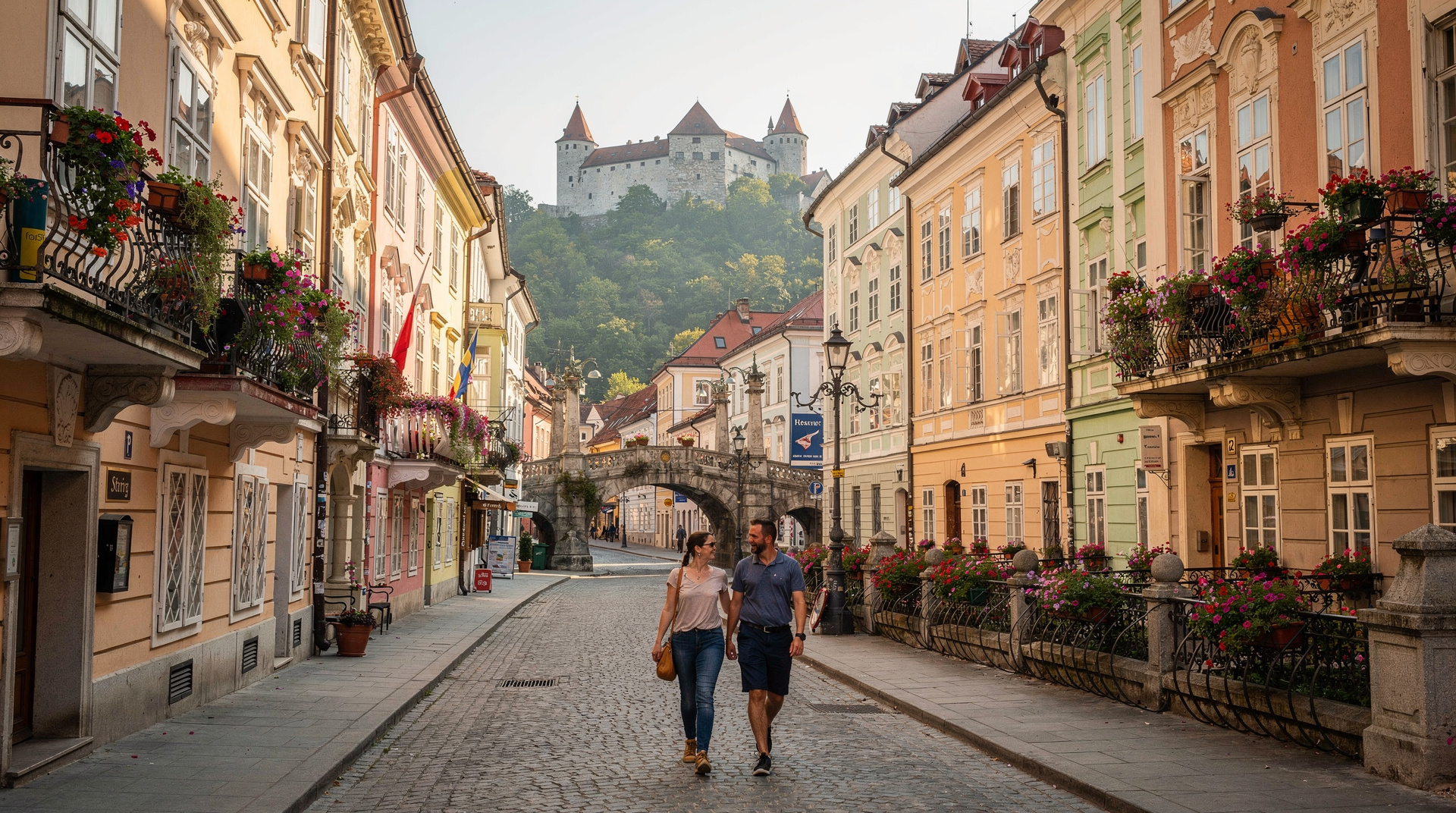
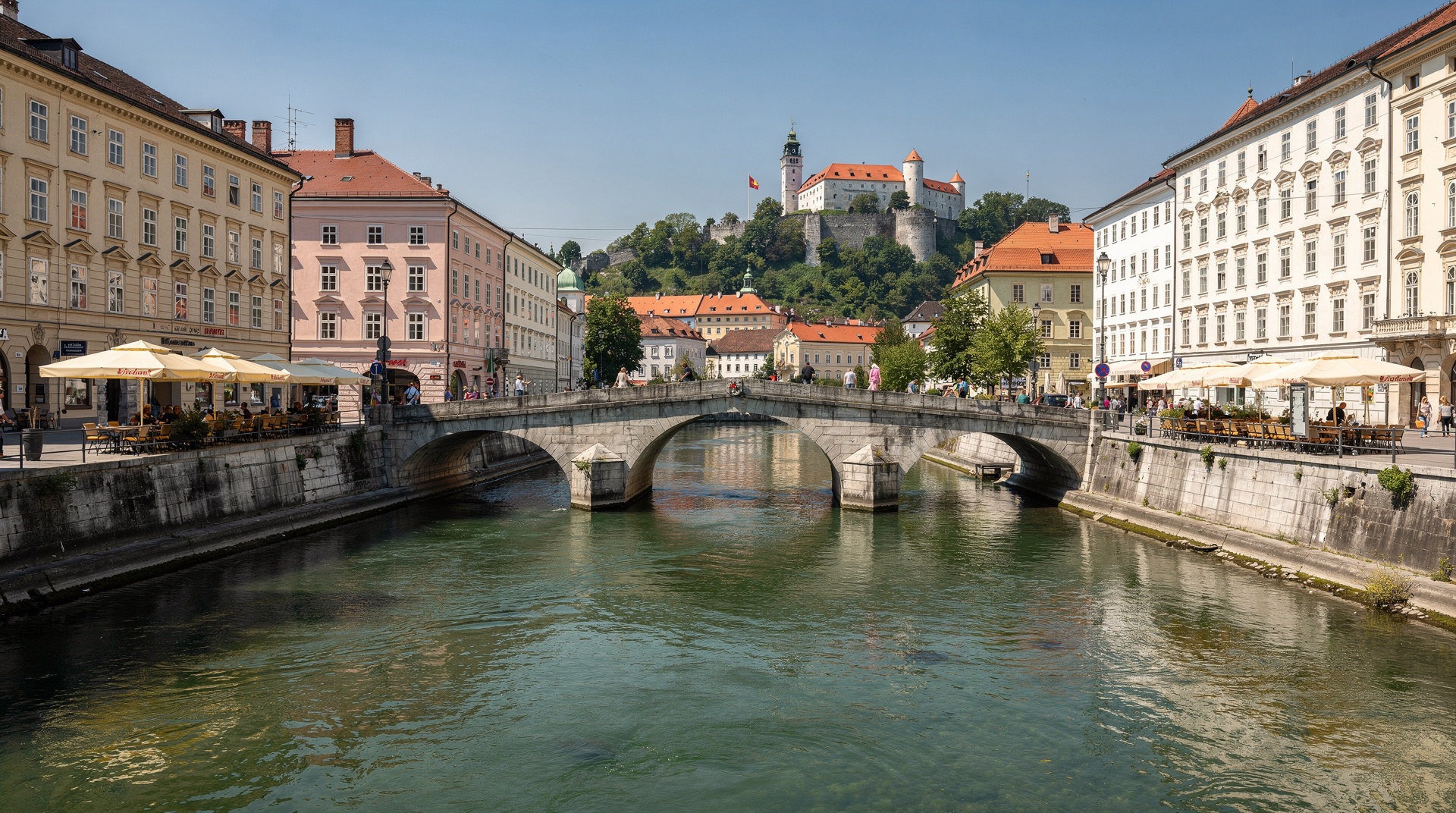
The old town of Škofja Loka clusters on a ridge between the Selška Sora and Poljanska Sora rivers, with the castle hill rising at the western end and the stone bridge crossing at the east. The main street sequence runs from the bridge through the old town to the castle foot: Spodnji trg (Lower Square), Cankarjev trg and then up to Mestni trg (Town Square).
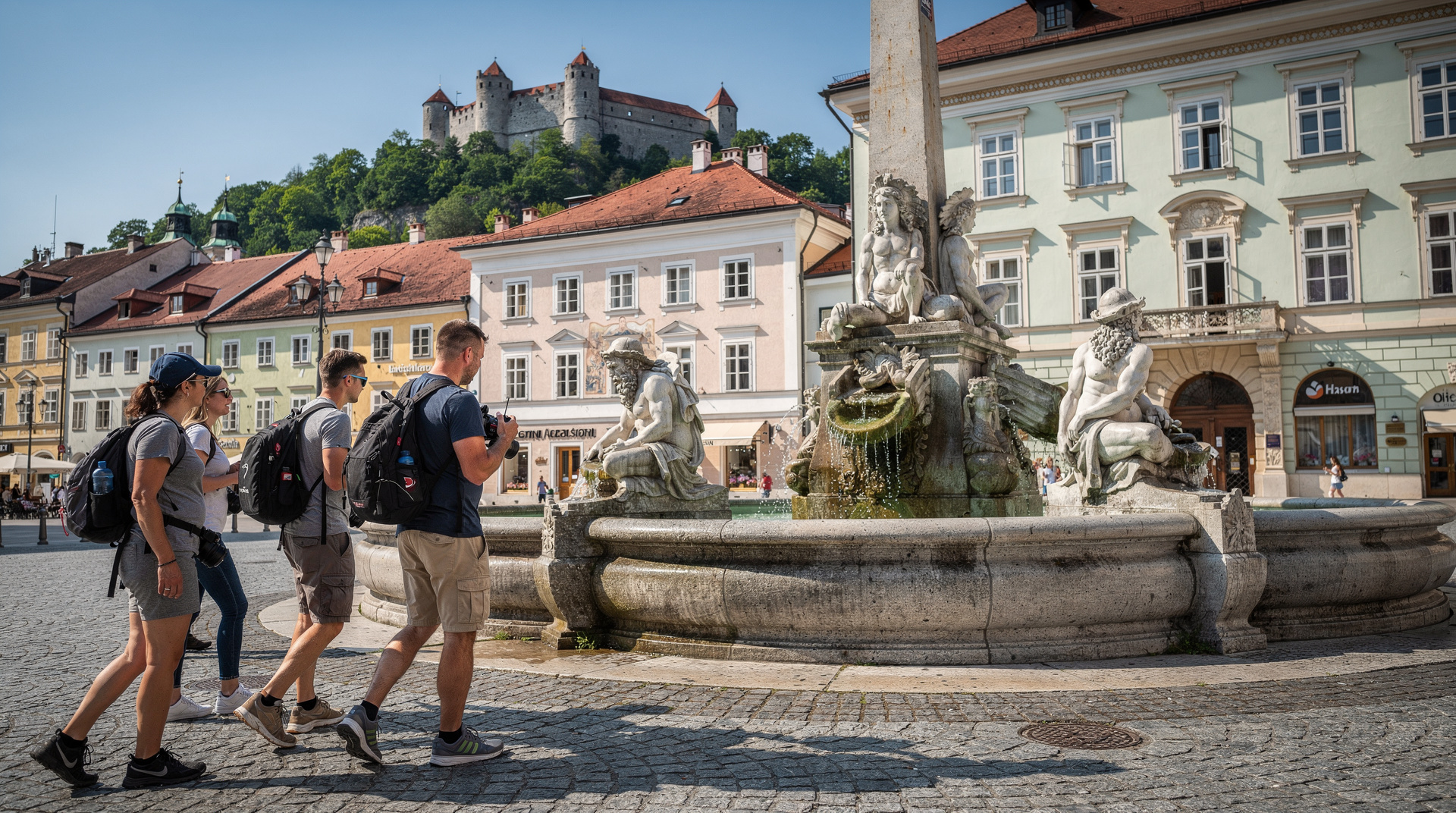
Mestni trg (Town Square) is the centrepiece: an elongated medieval square lined with Baroque façades on thirteenth and fourteenth-century foundations. The Baroque remodelling happened mostly in the seventeenth and eighteenth centuries after a 1511 earthquake that damaged much of the town, but the medieval street widths, plot lines and building depths are intact underneath the later facades. The effect — a long, sloping square of ochre and russet buildings with arcaded ground floors — is one of the most satisfying historic townscapes in the country.
The stone fountain on Mestni trg dates from 1514. The plague column on the square was erected after the 1680 plague. These fixed points in the square give a sense of the long durée of the town’s civic life.
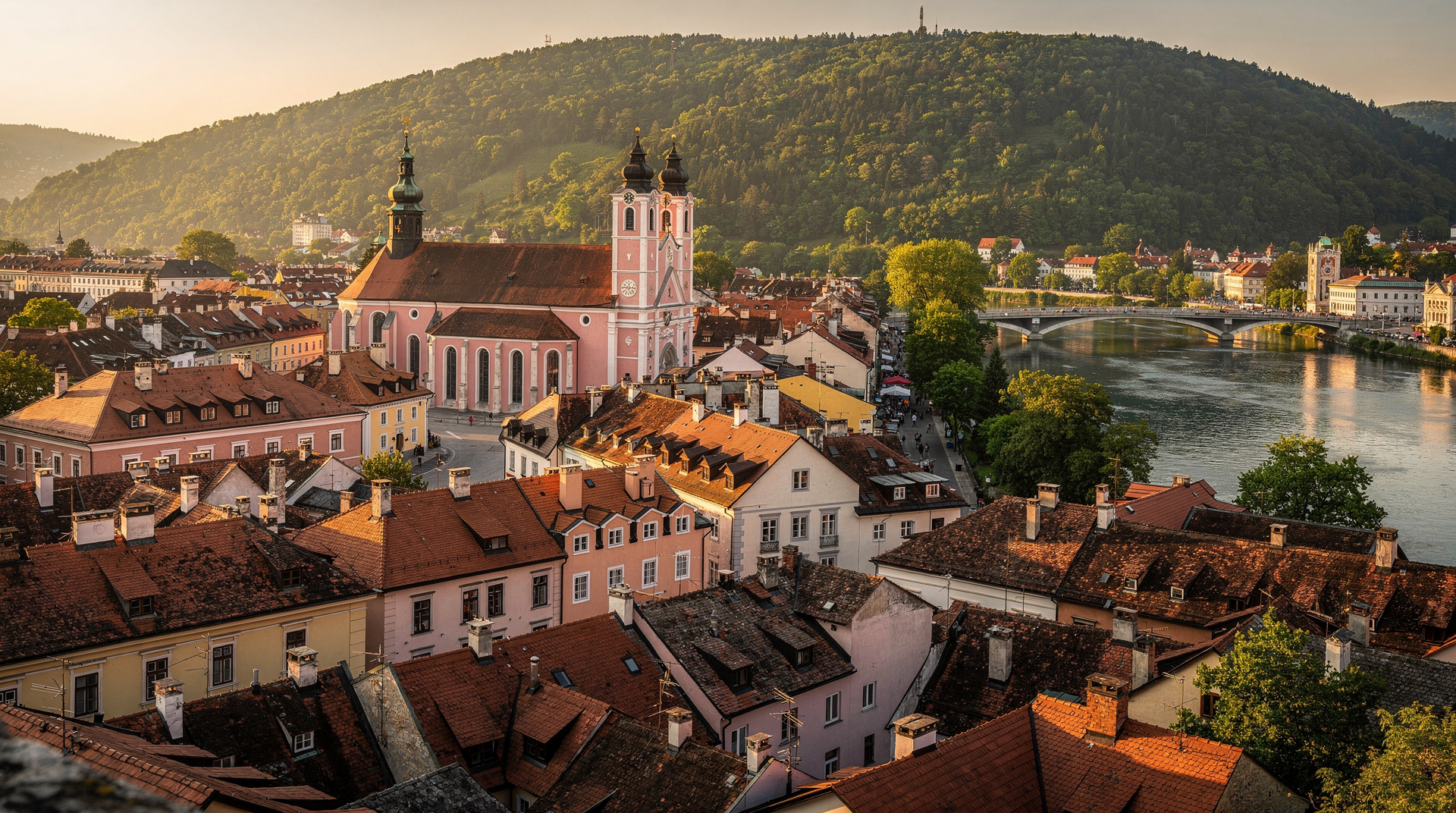
The stone bridge (Stari most) at the eastern end of the old town was built in the sixteenth century and is one of the oldest surviving stone bridges in Slovenia. Crossing it gives one of the best views of the old town’s approach: the castle on the hill above, the Capuchin monastery and church on the opposite bank, the Selška Sora running below.
The Capuchin Monastery on the eastern bank dates from the seventeenth century and is still an active monastery. The church (open to visitors during non-service hours) contains a Black Madonna venerated locally. The adjacent Capuchin bridge, a covered wooden bridge, is a picturesque and unusual structure dating from 1890.
Loka Castle and the Loška Museum
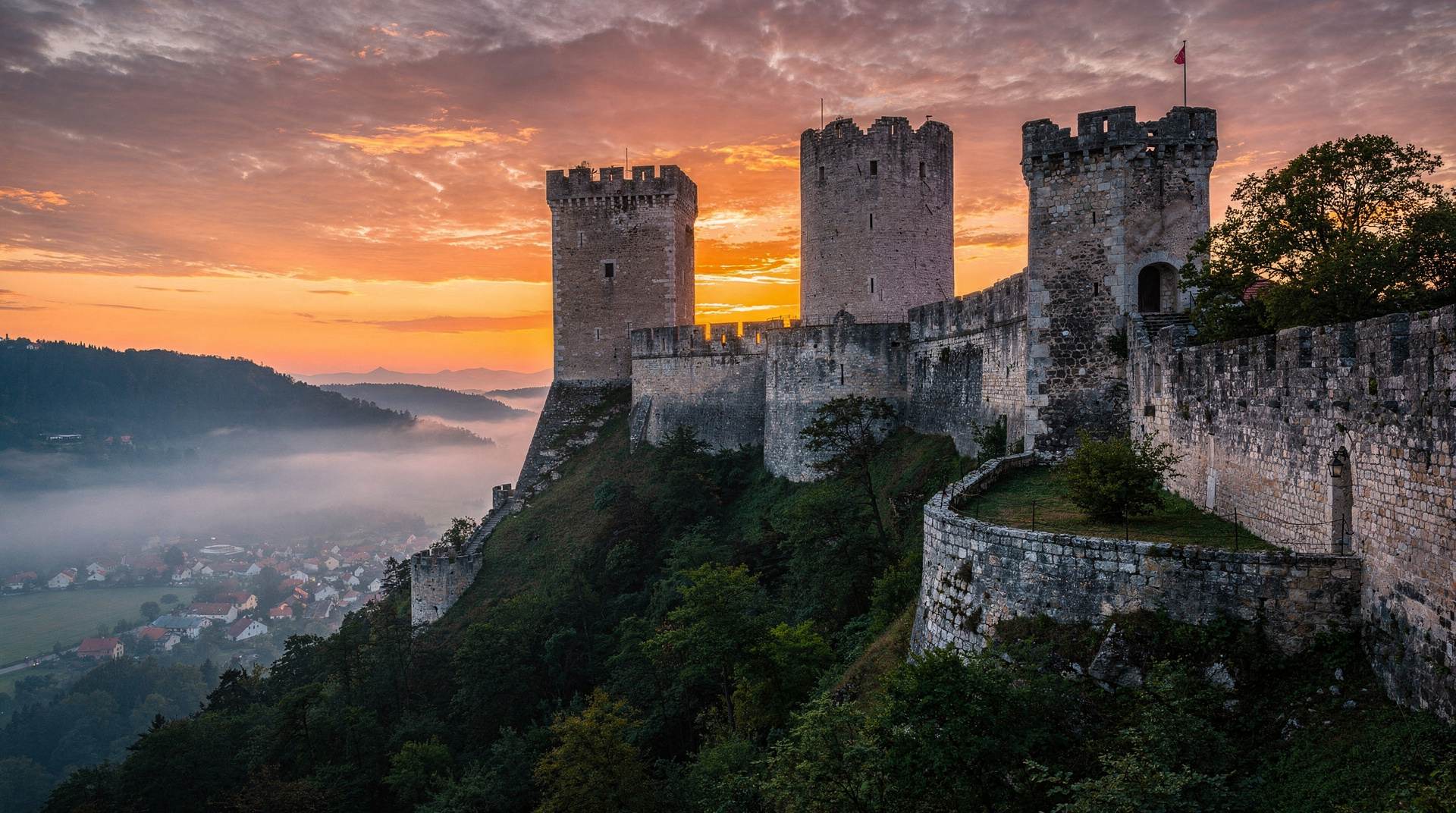
Loka Castle sits on the hill at the western end of the old town — a 10-minute climb from Mestni trg on a marked path. The castle complex is substantial: a main tower, residential wings, courtyard walls and outbuildings built and modified across the medieval and early modern periods.
The Loška Museum occupies the castle and covers the history of Škofja Loka and the surrounding region. The archaeological collection has prehistoric and Roman material from the wider area. The medieval section covers the Bishops of Freising period in detail, with documentary and artistic material. There are also rooms dedicated to folk crafts, furniture and the history of the surrounding Poljanska and Selška valleys.
Entry costs approximately EUR 4–5. The castle terrace gives a good view of the old town rooftops and the river confluence below.
The Passion Play heritage
The Škofja Loka Passion Play is staged every six years (the next performance is 2027) and transforms the entire old town into a vast theatrical space. Hundreds of costumed participants perform the fourteen stations of the Cross and associated biblical scenes, processing through the medieval streets at night with torchlight and live music.
The text — written in old Slovenian by a Capuchin friar around 1721 — is the oldest preserved theatrical text in the Slovenian language. It was inscribed on UNESCO’s Intangible Cultural Heritage list in 2016. On performance weekends, the audience reaches tens of thousands over multiple evenings; tickets sell out many months in advance.
The play is mentioned here not merely as historical information but because Škofja Loka’s character as a town — its strong Catholic identity, its Capuchin presence, its preserved medieval spaces — is only fully comprehensible in relation to this tradition. The architecture and the ritual are in dialogue.
Walking the streets: the details worth noticing
Most visitors follow the obvious route — bridge to Town Square to castle and back — without exploring the side streets. A few minutes of deviation reveals:
The lanes above Mestni trg: the residential streets climbing the castle hill above the main square have well-preserved eighteenth and nineteenth-century buildings, quiet and largely unvisited. The view back down to the old town from these streets is better than the standard tourist angle.
Spodnji trg: the lower square east of the Town Hall is less visually striking than Mestni trg but contains some of the oldest surviving building fabric in the town — portions of medieval stone construction visible in the lower courses of several buildings.
The Church of St James on the main town square: the interior has late Gothic frescoes in the choir and a collection of Baroque altarpieces. Entry free during non-service hours.
The surrounding landscape: two river valleys
The setting of Škofja Loka — between two river valleys, at the foot of the hills separating the Ljubljana Basin from the pre-Alpine zone — makes it a natural access point for the Poljanska and Selška valleys running west and northwest from the town.
Both valleys have a character quite distinct from the Julian Alps further north: softer hills, mixed farming, gostilne in villages not yet adapted to mass tourism. The drive (or cycle) up either valley to the small towns of Železniki (Selška) or Polhov Gradec (Poljanska) reveals a Slovenian landscape that has changed slowly over the past century and that gets very few international visitors.
Combining Škofja Loka with Ljubljana
The most natural combination is Škofja Loka as a morning or afternoon excursion from Ljubljana, taking the bus (30–40 minutes, EUR 3) and returning the same day. The town itself warrants 2–3 hours. Adding a walk up the castle hill and a coffee on Mestni trg makes for a relaxed half-day.
For visitors based in Ljubljana for several days, Škofja Loka can be combined with Kamnik (accessible from Ljubljana by bus in the opposite direction, 45 minutes northeast) for a two-town day trip — both medieval, both on bus routes, both offering a different character from Ljubljana.
A private walking tour of Ljubljana can be a good orientation for first-time visitors before venturing to the surrounding region — understanding Ljubljana’s medieval and Baroque development helps read Škofja Loka and Kamnik more clearly. If you would rather spend that orientation time looking at fortifications, a guided walk up to the hilltop castle in the capital gives a useful medieval comparison to carry with you.
Practical information
Getting there by bus: Departures from Ljubljana main bus station approximately every 20–30 minutes on weekdays. Journey time 30–40 minutes. Fare approximately EUR 3 one-way.
Getting there by car: Take the A2 motorway northwest from Ljubljana toward Kranjska Gora; exit at the Škofja Loka slip road (approximately 25 km). Parking is available in the new town below the medieval centre — a 10-minute walk to Mestni trg.
Opening hours: Loška Museum (castle) Tuesday–Sunday approximately 10:00–18:00 (shorter hours in winter). Churches open during standard hours — confirm locally.
Accessibility: The main square and lower old town are accessible. The castle climb is on cobblestones and uneven surfaces; not suitable for wheelchairs without assistance.
Eating: Gostilna Rožič on Mestni trg is a traditional restaurant with reliable Slovenian food at reasonable prices. Several cafés on and around the main square.
The Škofja Loka bridges and river life
Beyond the famous stone bridge, Škofja Loka’s relationship with its two rivers is worth a closer look than most day-trippers give it. The Selška Sora and Poljanska Sora meet at the eastern edge of the old town, and the town developed specifically at this confluence for practical medieval reasons: the two rivers provided both defensive advantage (a natural moat on two sides) and the water power that ran the town’s historic mills and tanneries. Several restored millraces are still visible along the Poljanska Sora bank below the castle hill, a reminder that the town’s medieval prosperity was built on more than administrative convenience — it was a working industrial centre for the surrounding agricultural valleys.
The riverside path below the old town, running along the Poljanska Sora from the stone bridge toward the edge of town, is a quiet 20–30 minute walk that most visitors skip entirely in favour of the square and castle. It gives a different, lower-angle view of the old town’s defensive walls and back façades, and is a pleasant way to let a visit breathe if you have more than the standard 2–3 hours.
Craft and market traditions
Škofja Loka’s Saturday market on Spodnji trg has a specific local character worth understanding before visiting. Unlike the curated artisan markets aimed at tourists in some other Slovenian towns, this is primarily a working produce market for local residents — seasonal vegetables, regional cheeses, honey from the surrounding hills, and household goods. Visitors are welcome and the vendors are generally happy to explain their produce, but the market is not designed around tourist purchases the way, for example, Ljubljana’s central market increasingly is. This is part of its appeal: a genuine slice of small-town Slovenian commerce rather than a performance of one.
The town’s association with traditional crafts extends to the annual Škofja Loka Craft Fair, typically held in early autumn, where regional woodworkers, potters and textile makers set up stalls around the old town. It is a modest event by international craft-fair standards but a good opportunity to buy something genuinely locally made rather than imported souvenir-shop stock, if your visit happens to coincide with it.
Škofja Loka versus Kamnik: the other under-visited medieval town
Travellers with a couple of extra days sometimes ask whether to prioritise Škofja Loka or Kamnik — the two most accessible medieval towns near Ljubljana that are not Bled or Postojna. Škofja Loka has the stronger old-town ensemble and the castle-hill views; Kamnik has a slightly wilder edge with easy access to Velika Planina by cable car. Neither excludes the other — both are reachable from Ljubljana in under 45 minutes by bus, and a determined visitor with a car could realistically combine the two in a single long day, though 2–3 hours per town is a rushed pace. For most, doing one properly on a relaxed half-day and the other on a separate visit is the better plan.
Fitting Škofja Loka into a wider trip
Škofja Loka works best as one piece of a longer plan rather than a stand-alone headline. If you are building an itinerary around the capital, the long weekend in Ljubljana leaves room for a half-day out of town, and our overview of day trips from Ljubljana and the wider list of best day trips in Slovenia shows how the town compares with the other options.
It also helps to see the capital first. The Ljubljana old town guide and the Ljubljana castle guide describe a different kind of historic centre, and the contrast makes Škofja Loka’s quieter, more working-town character easier to appreciate. Anyone who enjoys castle hill views will find it a natural companion to a visit here.
For logistics, the notes on getting around Slovenia and public transport in Slovenia explain how buses and trains fit together, which matters if you are travelling without a car. Travellers who like the Kamnik side of the equation can read more about Velika Planina, reached from Kamnik.
Eating and walking after the old town
A visit is more satisfying with a proper meal. The guide to traditional gostilna dining explains what to expect from a family-run inn, and the piece on potica and Slovenian desserts is a good primer before you order something sweet at a café on the square. If the town leaves you wanting more fresh air, the best hikes in Slovenia include plenty of ideas for longer days on foot in the hills beyond.
Frequently asked questions about Škofja Loka
Why does Škofja Loka look so well-preserved compared to other Slovenian towns?
The 850-year ownership by the Bishops of Freising gave the town an unusual stability. Bishops had less reason to rebuild grandly to demonstrate military or dynastic ambition, and the town’s commercial prosperity under their patronage was steady rather than dramatic. The absence of major battles fought directly in the town, combined with the relatively minor role of Škofja Loka in subsequent Austrian imperial history, meant less destruction and reconstruction. The 1511 earthquake damaged the town but the rebuilding followed the existing street plan.
Can you see the Passion Play every year?
No — the Škofja Loka Passion Play is performed only every six years. The next performance is scheduled for 2027. Outside performance years, the play’s history and costume collection are documented at the Loška Museum in the castle.
Is there a market in Škofja Loka?
A weekly market (primarily food and local produce) is held in the lower square (Spodnji trg) on Saturdays. It is a genuine local market rather than a tourist market and is a pleasant addition to a Saturday morning visit.
How far is Škofja Loka from Lake Bled?
About 35 kilometres northwest of Škofja Loka by road (approximately 35–40 minutes by car). Combining both in a single day is feasible with a car: morning in Škofja Loka, drive through the hills to Bled for the afternoon. Without a car, the connection requires returning to Ljubljana first and then taking the Bled bus, making it impractical as a combined day trip.
Are there hiking trails around Škofja Loka?
Yes — the Škofja Loka Hills (Škofjeloško hribovje) surrounding the town are a popular hiking area for Ljubljana residents. Luša, Rašica and the Lubnik hill above the town (a 3-hour return walk) are the most accessible routes. The tourist office in Škofja Loka provides hiking maps.
What local food is worth trying in Škofja Loka?
The Poljanska valley to the west of Škofja Loka has a strong tradition of dairy farming; the local cream and butter go into the regional variant of štruklji (rolled dumplings, both sweet and savoury) that appears on menus throughout the area. The trout farms along the Sora river system supply fresh fish to local gostilne — Sora trout in season is notably good. Potica (a rolled nut cake — Slovenia’s national celebration pastry) is made with local walnuts from the valley farms and is found at the bakeries on the main square.
Is Škofja Loka suitable for a cycling day trip from Ljubljana?
Possible but not ideal for casual cyclists. The route from Ljubljana to Škofja Loka involves moderately hilly terrain (the Polhov Gradec hills between the two towns) and is approximately 25 km one-way. The dedicated cycling path from Ljubljana follows the Sava river valley before turning northwest — the Škofja Loka Tourist Board maintains a cycling map. For most visitors the bus (30 minutes, EUR 3, every 20–30 minutes on weekdays) is the practical option. Cyclists who bring or rent bikes locally can use the town as a base for the gentler valley cycling routes rather than the Ljubljana–Škofja Loka approach.
What is the Bishops of Freising connection to Slovenia?
The Freising Bishops’ control of Škofja Loka (from 973 to 1803) is one of the more unusual episodes in Slovenian history. The Bishops of Freising — a Bavarian ecclesiastical institution near present-day Munich — were among the largest landowners in the eastern Alpine region for nearly a millennium. Their archives contain the Freising Manuscripts (Brižinski spomeniki), the oldest known texts in the Slovenian language (and the first texts in a Slavic language using the Latin alphabet), dating from approximately 970–1000 CE.
These manuscripts are now in Munich but are deeply significant to Slovenian cultural identity — a facsimile edition is available at the Loška Museum. The linguistic and administrative connection between Bavaria and what is now Slovenia over this period is one of the distinctive features of Slovenian historical development compared to other South Slavic peoples.
Top experiences
Bookable activities with verified prices and instant confirmation on GetYourGuide.