Maribor city guide: Slovenia's second city without the tourist clichés
Maribor: guided old town tour, medieval to modern
Is Maribor worth visiting?
Yes — Maribor is Slovenia's most underrated destination. The old town is compact and atmospheric, the riverside Lent district is one of Central Europe's more charming urban waterfronts, and the city has genuine local life rather than a tourist infrastructure built around a single attraction. It works well as a base for Ptuj (25 minutes), the Jeruzalem wine hills and the Pohorje ski and hiking area.
Maribor: how Slovenia’s second city actually feels
Most international visitors to Slovenia drive past Maribor on the way to Ljubljana or cut across to the Austrian border without stopping. This is understandable — Maribor lacks the alpine drama of Bled, the compact charm of Ljubljana’s old town, or the headline attraction of Postojna. It is simply a real city, with a historic centre, a river, a wine culture and a population of 100,000 people living their ordinary lives.
That is precisely why it is worth visiting. Maribor offers the experience of a genuine Slovenian urban environment — not a reconstructed castle, not a tourist village, not a theme-park cave — but a city where people actually live, where the cafés serve locals before they serve visitors, and where the history is present in the fabric of daily life rather than cordoned off behind ticket barriers.
It is also, despite the lack of international profile, a genuinely interesting place. The Lent riverfront is one of Central Europe’s more beautiful urban waterfronts. The Old Vine is a genuine wonder. The wine is excellent. The city has earned its place on a thoughtfully planned Slovenian itinerary.
| Where | Eastern Slovenia, 130 km / around 1h15 from Ljubljana |
| Cost | Museum entry around EUR 5; most sights EUR 3–5 or free |
| Time needed | 1 full day minimum, 2 nights ideal with Pohorje or Ptuj |
| Getting there | Train (1h45–2h) or car via the A1 motorway |
| Best time | May–June or September–October (harvest season) |
Orientation: the three zones
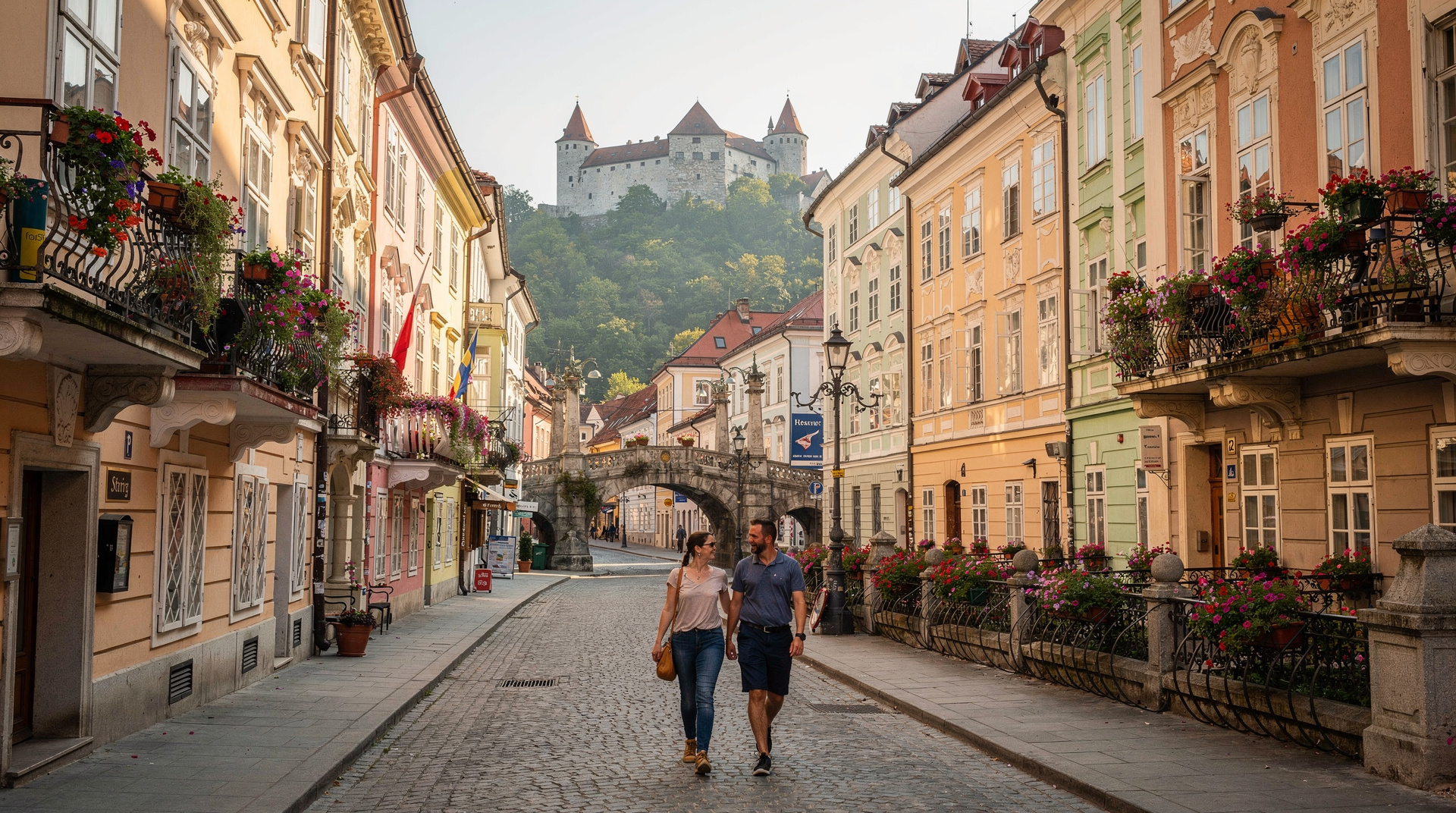
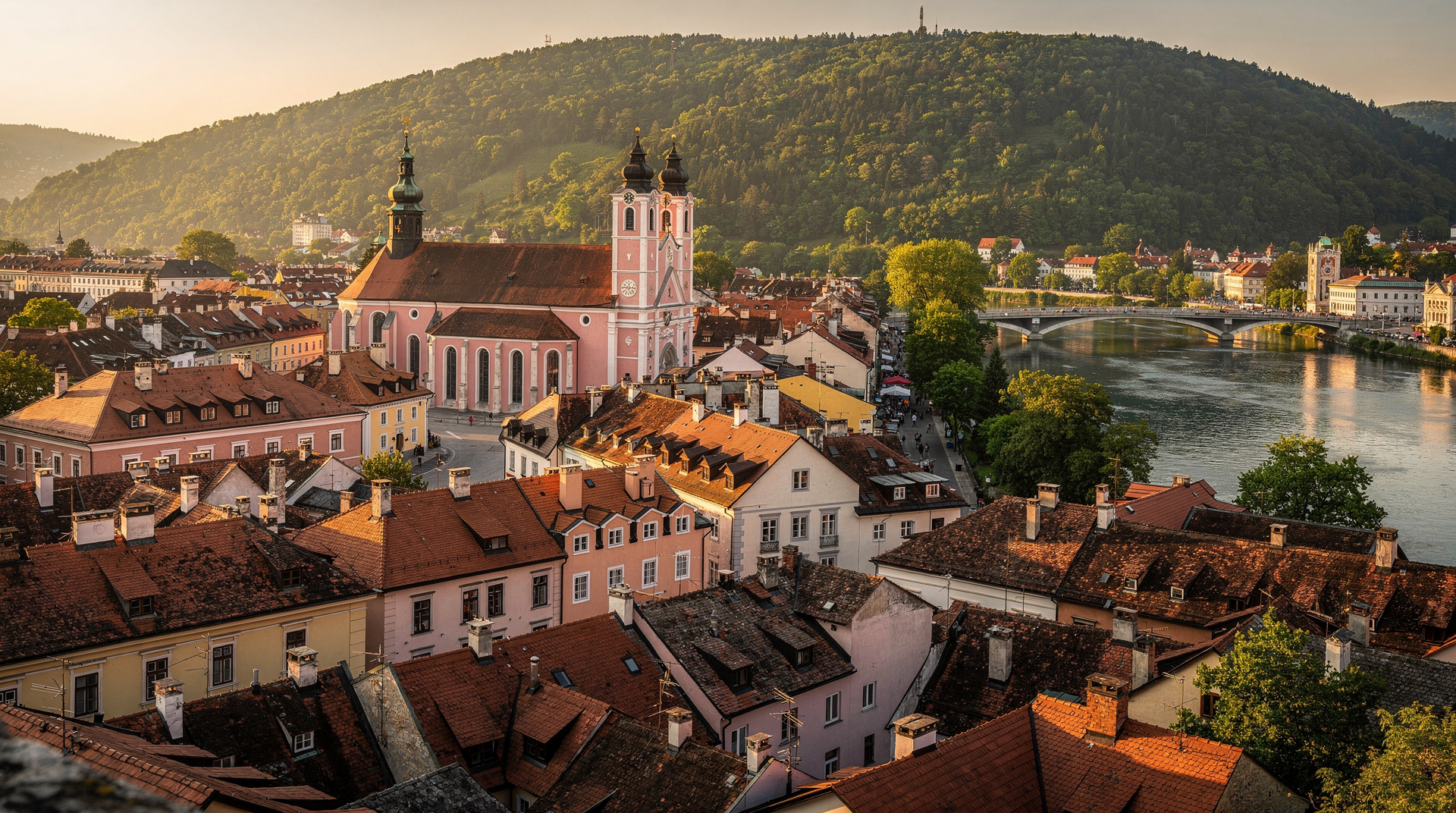
The old town (Staro mestno jedro) clusters around the main square (Grajski trg) and the castle, extending north and south from there. This is where the Maribor Regional Museum, the cathedral, the main shopping streets and most of the café culture are concentrated. The architecture is mostly Baroque and nineteenth-century — there was no equivalent of Ljubljana’s Plečnik intervention here, but there is a coherent townscape of considerable quality.
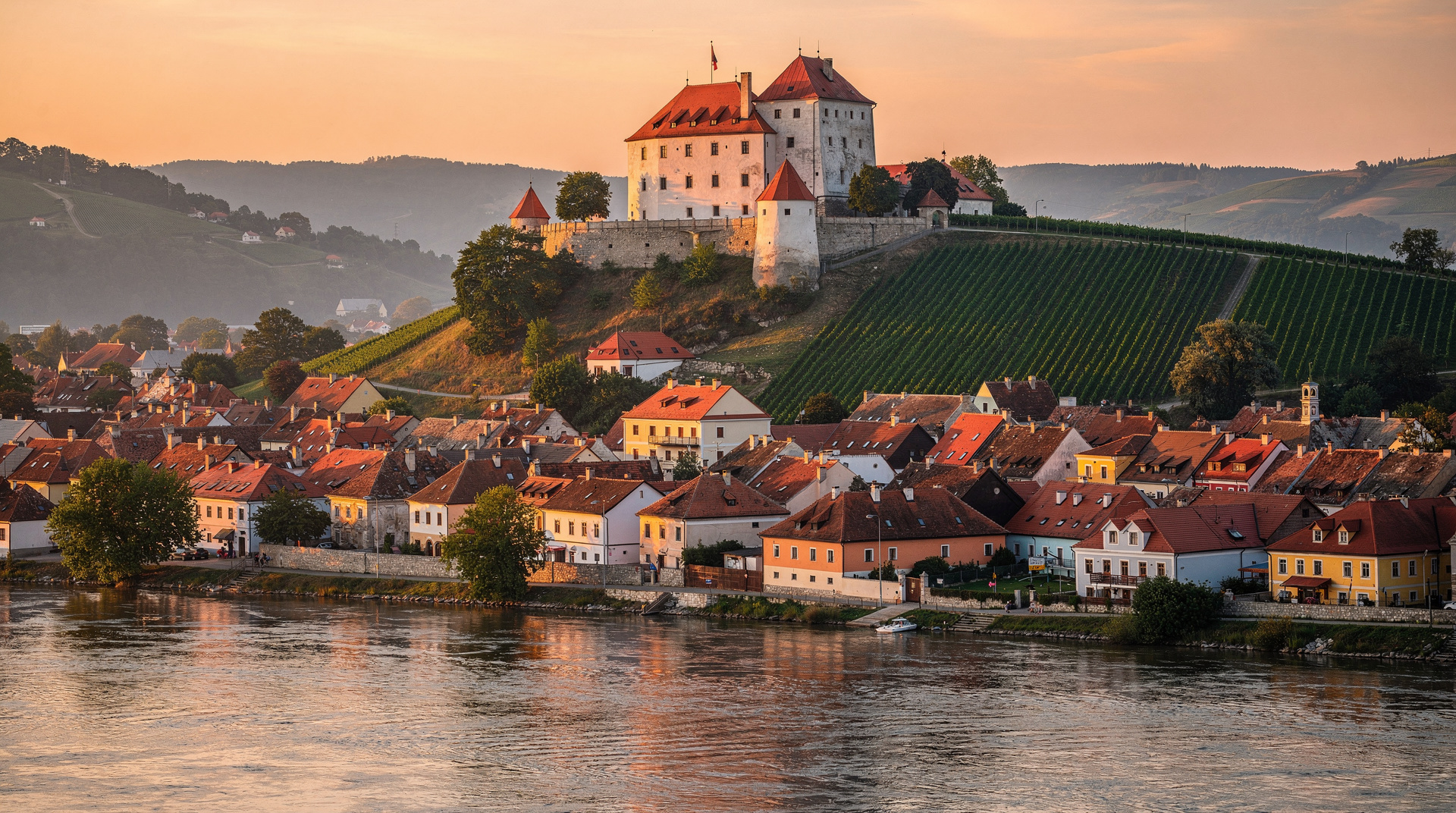
The Lent district runs along the Drava riverfront, west of the old town. This is the medieval waterfront — warehouses, towers, the Water Tower (Vodni stolp, now a wine venue) and the Old Vine stretch along Koroška cesta and Vojašniška ulica. In summer the riverside is lined with café tables and the whole stretch comes alive; in winter it is more atmospheric than lively, but the Water Tower and Old Vine are worth visiting year-round.
Pohorje rises immediately southwest of the city, accessible by cable car from Zrkovska cesta — a 15-minute drive from the city centre. The Pohorje plateau at roughly 1,000 metres above sea level has ski runs, hiking trails, mountain restaurants and blueberry-picking meadows. It is a genuinely good reason to stay two nights in Maribor rather than one.
The Old Vine (Stara trta)
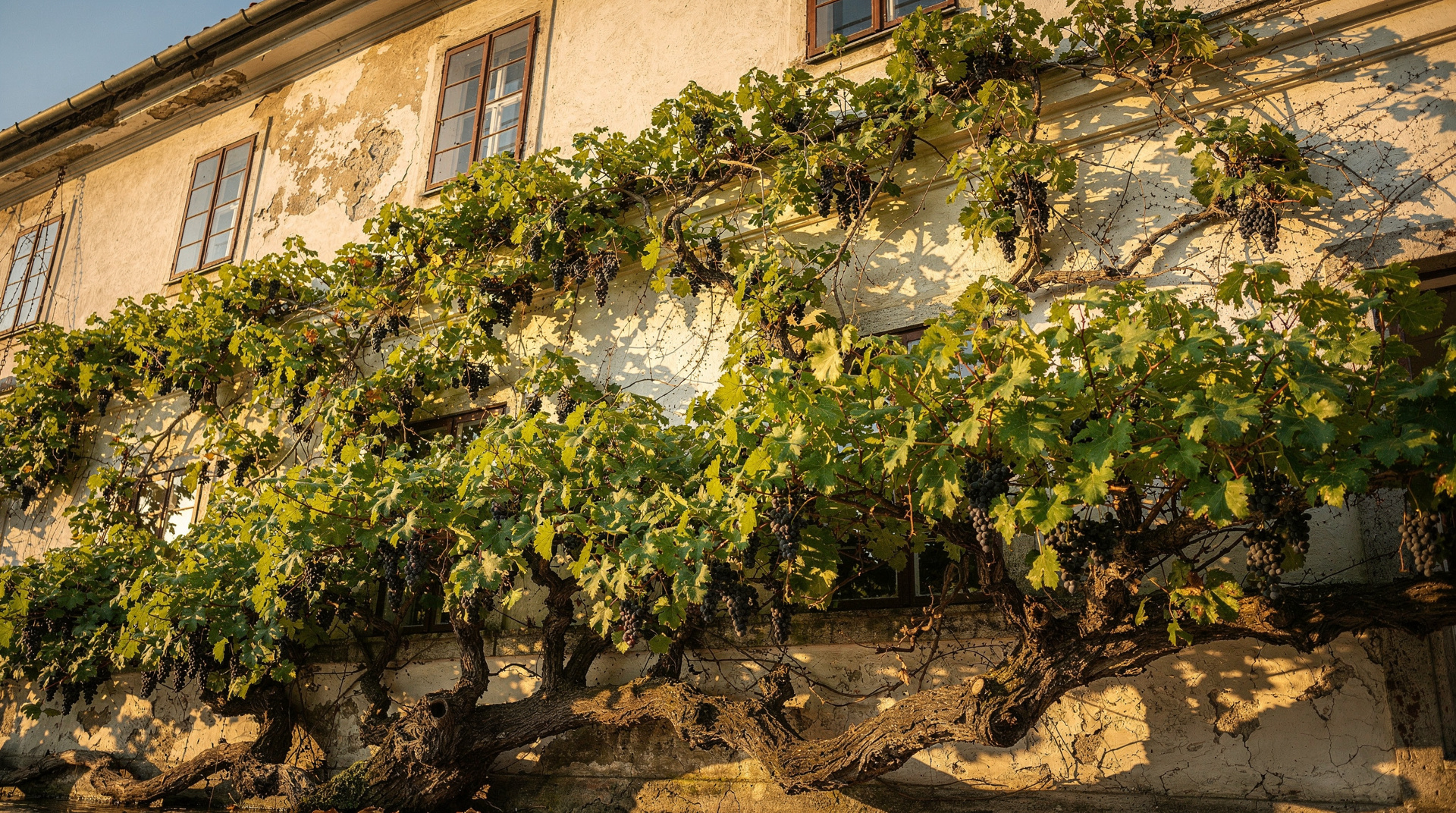
The oldest productive grapevine in the world — documented as planted in the mid-sixteenth century, more than 450 years old — grows on the facade of the Old Vine House (Stara trta hiša) at Vojašniška ulica 8, directly on the Lent riverfront. It produces around 55 kilograms of grapes each year, which are vinified into approximately 100 half-litre bottles of Modra kavčina wine, distributed as ceremonial gifts to distinguished visitors and dignitaries.
The Old Vine House is free to enter — it is a visitor centre and wine shop, not a gated attraction. You can see the vine itself from the street at any time. Inside, a display covers the vine’s history and the annual harvest, and the wine shop sells local Maribor and Štajerska wines. The wine from the Old Vine itself is available in very small quantities, priced at approximately EUR 25–30 per half-litre bottle, and sells out quickly.
Visiting the vine takes 20 minutes. It is obligatory. Nothing quite prepares you for the sight of a plant that was growing when Shakespeare was alive and is still producing fruit.
For the full story of the vine and its place in Slovenian viticulture, see the Maribor oldest vine guide.
The Maribor Regional Museum (Pokrajinski muzej Maribor)
The Regional Museum occupies the Maribor Castle — a Renaissance and Baroque palace (not a fortified castle; despite the name, it is an urban palace) on Grajski trg. The collections cover regional history from prehistoric times through the Roman, medieval, Habsburg and modern periods.
The museum is above average for a provincial Slovenian institution. The archaeological collection has good material from the wider Drava valley region. The medieval and early modern rooms are well presented. The applied arts collection — furniture, ceramics, silver — gives a sense of how Maribor’s bourgeois merchant and administrative class lived in the seventeenth through nineteenth centuries.
Allow 1.5 hours. Entry around EUR 5.
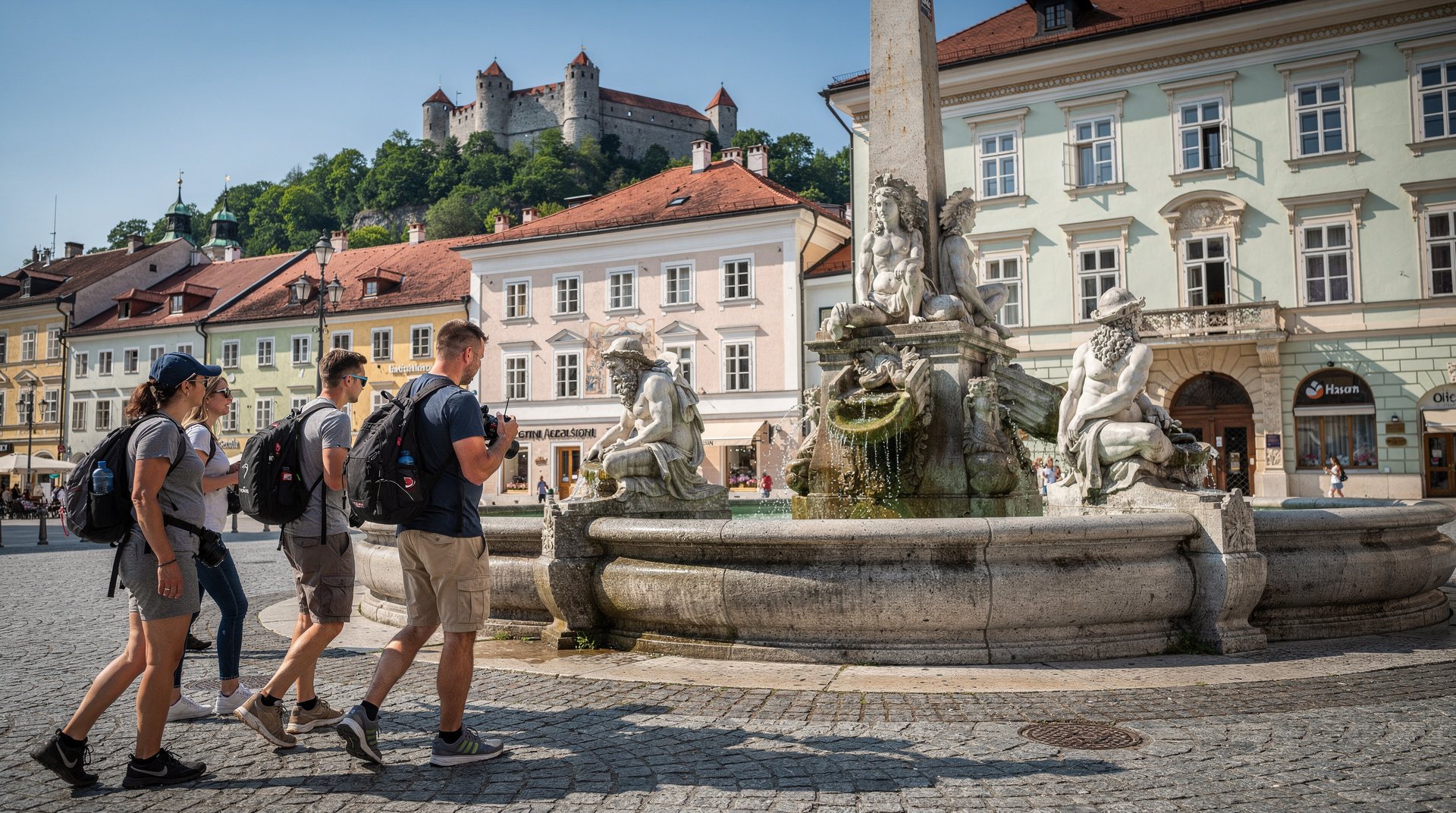
A guided walking tour of Maribor’s old town provides the clearest orientation to a city that lacks obvious first-visit signposting — the old town streets require context to interpret, and a good guide makes the difference between a pleasant walk and an informed one.
The Cathedral of St John the Baptist
Maribor’s main cathedral, on Slomškov trg, is a Romanesque building substantially modified in the Gothic period, with a Baroque tower added in the eighteenth century. The interior is quieter and more restrained than Ljubljana’s Baroque churches — the Romanesque nave survives in the choir area, and there are good Gothic stone carvings on the southern doorway. Entry is free.
The adjacent diocesan palace and the bishop’s garden are occasionally open for tours — check with the tourist office.
The Lent Festival
The Lent International Festival in late June (usually the last week of June and first days of July) is Maribor’s defining cultural event — a two-week open-air festival of music, theatre and dance along the entire riverside, drawing 300,000 visitors over its duration. The Drava riverfront from the Water Tower to the Judgment Tower is lined with stages, food stalls and café pop-ups.
If visiting during the Lent Festival, book accommodation months in advance. The city is genuinely pleasant during this period — it has the atmosphere of a city using its streets well — but hotels fill completely.
The Water Tower (Vodni stolp) and the Lent wine bars
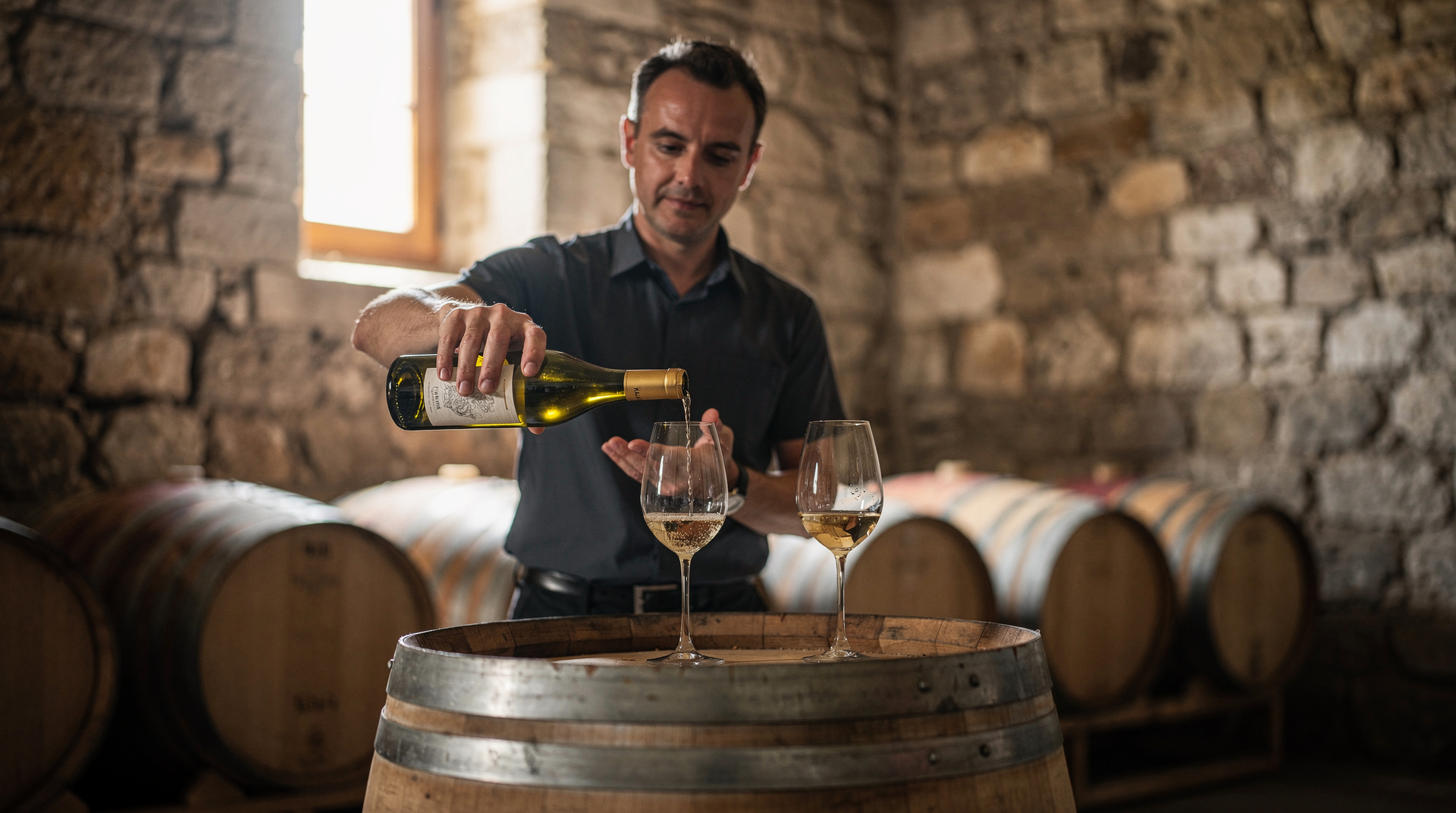
The Water Tower at the western end of the Lent district is a sixteenth-century defensive tower converted into a wine venue. Wine tastings of regional Štajerska wines take place here throughout the year, and the tower interior is worth seeing for the medieval architecture alone. Tastings cost approximately EUR 8–12.
The collection of riverside wine bars and restaurants along Vojašniška ulica are the evening destination in Maribor. Most serve local wines by the glass alongside food. Prices are noticeably lower than Ljubljana for equivalent quality.
If you would rather have the local wines explained than pick blindly from a menu, a city walk that ends with a wine tasting combines the sightseeing and the glass in one outing.
The Judgment Tower and the Synagogue
The Judgment Tower (Sodni stolp) at the eastern end of the Lent waterfront is the best-preserved of Maribor’s medieval defensive towers, dating from the late fifteenth century. It is open to visitors with a small entry fee and the climb to the top gives good views along the Drava.
A short walk from the Judgment Tower, the medieval synagogue of Maribor is one of the oldest surviving synagogues in Central Europe, dating from the late fourteenth or early fifteenth century. The Jewish community of Maribor was expelled in 1497 under Habsburg decree; the synagogue became a church and then a warehouse before being restored as a cultural heritage site. It now functions as a museum and event venue. Entry EUR 3–5.
Food and wine bars beyond the obvious
Beyond the Water Tower tastings, Maribor’s food culture is one of the city’s genuine strengths and consistently undervalued by visitors who treat it as a stopover. Gostilna Maister and Restavracija 7 in the old town both pair Štajerska regional wines with a modern take on traditional Slovenian cooking, at prices noticeably below Ljubljana equivalents for comparable quality.
For a more casual evening, the wine bars along Vojašniška ulica pour Šipon, Riesling and Sauvignon Blanc by the glass from small local producers you won’t easily find bottled outside the region — asking the bartender for a recommendation usually yields something better than the house default. If you’re building a wider Slovenian wine itinerary, this is a useful, lower-key counterpoint to the more organised tastings around Goriška Brda and the Vipava Valley in the west of the country.
Pohorje: the mountain above the city
The Pohorje massif begins where the city suburbs end. The cable car from Zrkovska cesta takes eight minutes to reach the lower Pohorje station at about 770 metres; buses connect the cable car station to the city centre. From here, trails lead through spruce and beech forest to the Black Lake (Črno jezero — a peat bog lake, surprisingly atmospheric), the Lovrenc lakes nature reserve, and several mountain restaurants serving Pohorje specialities (the blueberry strudel is the local contribution to Slovenian pastry culture).
In winter, Pohorje has a modest ski area (the Areh ski centre) with runs suitable for beginners and intermediate skiers. It is not in the same category as Kranjska Gora, but the proximity to Maribor (accessible without a car) gives it a loyal local following.
Combining Maribor with the wider region
Maribor works best as a two-night base for exploring eastern Slovenia:
- Ptuj (25 minutes by car) deserves a full day — the castle, old town and wine cellar.
- The Jeruzalem wine hills (45 minutes) are a half-day wine touring route with exceptional views.
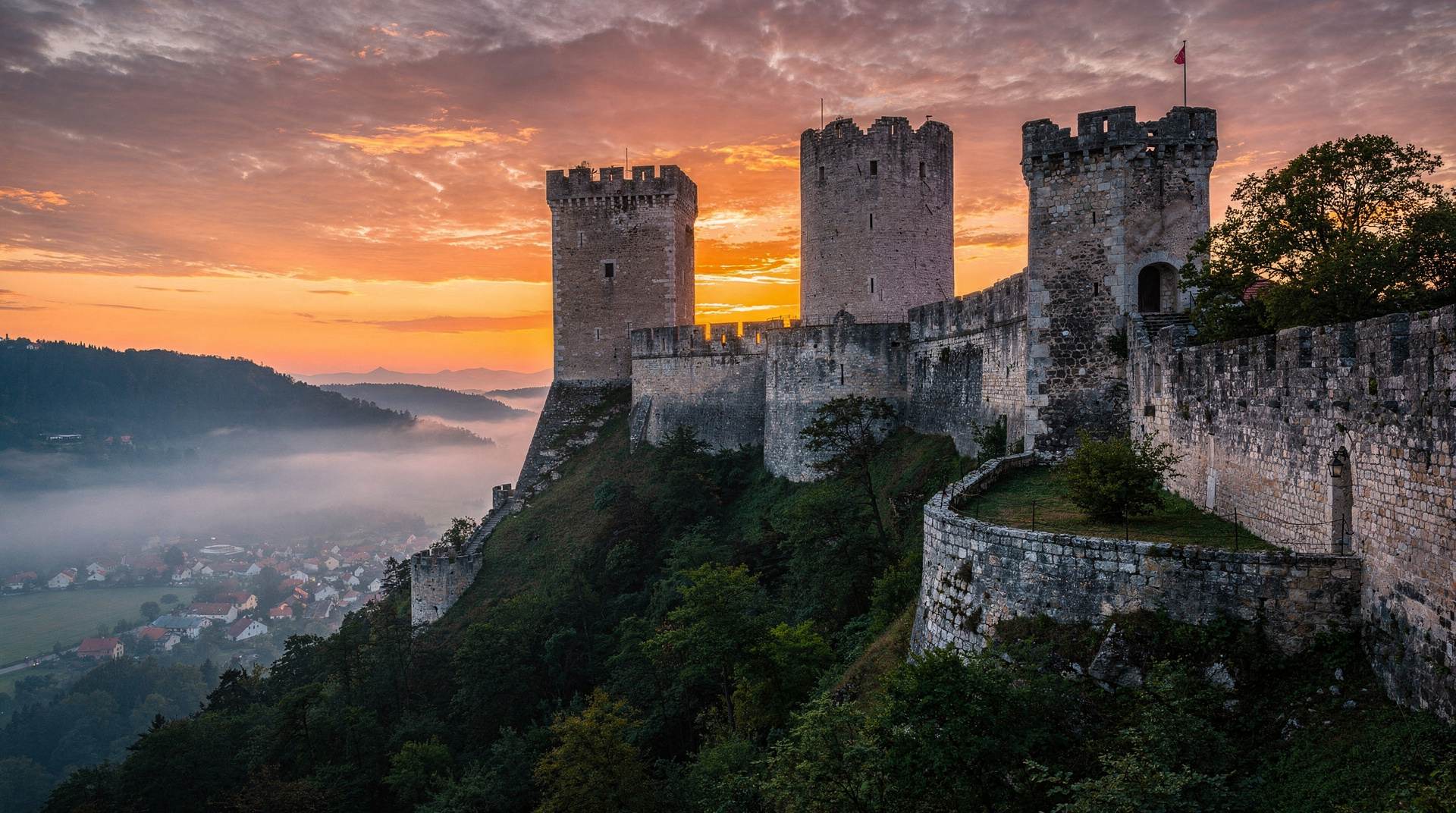
- Celje (50 minutes west on the motorway) has the most impressive ruined castle in Slovenia.
- The Logar Valley (1h30) gives access to the Kamnik-Savinja Alps and the waterfall at Rinka.
For a structured two-day eastern Slovenia itinerary combining Maribor and Ptuj, the Maribor old town guided tour provides the best anchor for day one, with Ptuj as day two.
Practical information
Getting there: Trains from Ljubljana to Maribor take 1h45–2h (around EUR 10–14 one-way). By car, 130 km on the A1 motorway (approximately 1h15, e-vignette required).
Accommodation: Maribor has a reasonable range, from budget hostels in the old town to mid-range hotels. The Hotel Orel on Volkmerjev prehod and the City Hotel Maribor on Ulica heroja Staneta are well-located options.
Getting around: The old town and Lent district are walkable. The cable car to Pohorje requires reaching Zrkovska cesta (20-minute city bus ride or 15-minute taxi from the centre).
Tourist information: The Maribor Tourist Information Centre at Partizanska cesta 6a is well-stocked with maps, event guides and wine region materials.
Maribor vs. Ptuj vs. Celje: which eastern Slovenia base
Visitors planning eastern Slovenia often ask which town to base themselves in. The honest comparison:
| Maribor | Ptuj | Celje | |
|---|---|---|---|
| Character | Real second city, riverside, wine bars | Slovenia’s oldest town, compact old town | Impressive ruined castle, smaller town |
| Best for | 2-night base, Pohorje access | Half-day to full-day trip | Half-day trip |
| Nightlife/dining | Best of the three | Quiet, limited options | Limited |
| Distance from Ljubljana | 130 km / 1h15 | 140 km / 1h20 | 80 km / 50 min |
Maribor is the only one of the three with enough going on to justify staying overnight rather than visiting as a day trip; Ptuj and Celje both work better as excursions from Maribor or Ljubljana.
A one-day Maribor walking route
For visitors with a single day, a sensible order: start at the Old Vine House on Vojašniška ulica (20 minutes), walk the Lent riverfront west to east taking in the Water Tower and Judgment Tower (45 minutes), climb into the old town for the cathedral and Grajski trg (30 minutes), then the Regional Museum in the castle (1.5 hours).
Finish with an early dinner at one of the Vojašniška ulica wine bars before catching an evening train back to Ljubljana, or extend into a second day with the Pohorje cable car. This route covers everything in this guide’s practical section in around 4–5 hours of actual walking and sightseeing time, leaving room for a relaxed lunch. Visitors arriving by train can leave luggage at the station’s left-luggage counter for the day, since none of the walking route requires backtracking there until the return journey.
For those extending the trip, see the Ptuj oldest town guide and the Celje old castle guide for the two strongest half-day additions, or the Slovenian wine guide for how the Štajerska whites fit into the country’s wider wine regions.
Fitting Maribor into a wider Slovenia trip
Maribor sits at the opposite end of the country from the Julian Alps and the coast, which is exactly why it balances an itinerary well. If your first days are spent among the crowds at Lake Bled or in the capital, the eastern side of the country feels calmer and slower. The first time in Slovenia guide helps you decide how much of the country to try to cover, and how many days in Slovenia is useful if you are weighing an extra night in the east against another night in the mountains.
Travellers who like their routes planned will find that Maribor slots in naturally at either end of a loop. The Slovenia highlights in 5 days route is the quick version, while the slow travel gastro itinerary gives the east and its wine culture the time it deserves. For something off the standard circuit, the hidden gems itinerary fits the spirit of a city like this one.
Getting there and around without a car
Maribor is one of the easier Slovenian cities to reach without driving. The trains in Slovenia guide explains how the rail network works, and public transport in Slovenia covers buses for the places the trains do not reach. If you do prefer a car for the wine hills and Pohorje, read car rental in Slovenia and driving in Slovenia and the vignette before you book, so nothing surprises you at the motorway. For the broader picture, getting around Slovenia compares all the options side by side, and the Slovenia in 5 days without a car route shows how far public transport can take you.
Eating and drinking like a local
The best way to enjoy Maribor is slowly, with a glass in hand. If the traditional cooking appeals, gostilna traditional dining explains what to expect from a Slovenian inn and how to order, and Slovenian food you must try is a good checklist to carry into the old town restaurants. For the sweet end of the meal, see potica and Slovenian desserts. Anyone who gets hooked on the Štajerska whites can follow up with the wine regions of Slovenia guide and, for a western counterpoint, the Vipava Valley wine guide.
Choosing the right season and budget
Because the city changes with the calendar, it helps to read Slovenia in autumn if you are tempted by the harvest, or Slovenia in summer if the riverside terraces are the draw. Slovenia in winter is the place to look if Pohorje and the Christmas atmosphere appeal. For money matters, is Slovenia expensive and the Slovenia trip budget guide put the lower prices of the east in context. If you are travelling on your own, solo travel in Slovenia covers what to expect, and where to stay in Slovenia helps you compare bases across the country.
Frequently asked questions about Maribor
Is Maribor better than Ljubljana for tourists?
They offer different things. Ljubljana is more polished, with a more developed tourism infrastructure and more concentrated sights within the old town. Maribor is more authentic — a real city that happens to be interesting — with a stronger wine culture and a better riverside. For those who find Ljubljana slightly too perfect, Maribor is the antidote.
What is Maribor famous for internationally?
The Old Vine (Stara trta) — documented as the oldest productive grapevine in the world — is the only Maribor attraction with genuine international name recognition outside specialist circles. The Lent Festival is known among European world music and theatre circles. The city’s football club, NK Maribor, has played Champions League football and has a following in European football communities.
Is Maribor safe for tourists?
Yes — Maribor is a safe Central European city. Standard precautions apply: be aware of your belongings in crowded areas. The old town and Lent district are well-lit and populated in the evenings throughout summer.
How many days do you need in Maribor?
One full day covers the old town, Lent district and Old Vine comfortably. Two days allows you to add Pohorje or a half-day wine route. Two nights in Maribor with a day trip to Ptuj is the optimal configuration for most visitors.
What is the best time to visit Maribor?
Late spring (May–June) and early autumn (September–October) are optimal — good weather, manageable crowds and the wine harvest period (late September–October) adds a particular character. The Lent Festival in late June is the standout annual event. December has a modest Christmas market and the cable car to Pohorje gives access to early season snow activities.
What is the Old Vine harvest event in Maribor?
The Old Vine harvest (trgatev stare trte) takes place in late September or early October each year, when the Modra kavčina grapes on the 450-year-old vine are ceremonially harvested. The event draws a small crowd of invited guests and local dignitaries, and the wine produced — approximately 100 half-litre bottles — is distributed as a diplomatic gift rather than sold commercially. The event is modest by festival standards but deeply symbolic for the city. The harvest date varies by year; check the Maribor tourist office website for the current year’s event. Outside the harvest event, the Old Vine House is open to visitors year-round and always has several Styrian regional wines available for tasting and purchase.
Is Maribor good for a honeymoon or romantic trip?
More so than most visitors expect. The Lent riverside at dusk, wine tasting in the Water Tower, a dinner at one of the better restaurants in the old town (Restavracija 7 or Gostilna Maister), and the cable car up to Pohorje for a sunset view combine into a genuinely romantic programme. Prices are considerably lower than equivalent experiences in Ljubljana or western European cities. The Maribor wine culture — with its emphasis on sitting and tasting rather than rushing through — suits a relaxed romantic pace well.
Top experiences
Bookable activities with verified prices and instant confirmation on GetYourGuide.