UNESCO sites in Slovenia: what is inscribed and why it matters
Ljubljana: UNESCO cultural heritage tour
What UNESCO World Heritage sites does Slovenia have?
Slovenia has four UNESCO inscriptions: Škocjan Caves (natural, 1986), the prehistoric pile-dwelling sites on the Ljubljana marshland (2011, shared with six other countries), the Works of Jože Plečnik in Ljubljana (cultural, 2021) and the Škofja Loka Passion Play (intangible, 2016). Postojna Cave — the more famous cave system — is NOT UNESCO Heritage. Škocjan is.
UNESCO inscriptions in Slovenia: what they are and what they tell you about the country
UNESCO World Heritage status is awarded sparingly and for specific reasons. Understanding why a particular place or practice was inscribed helps you visit it differently — with a sense of what makes it exceptional rather than just a box on a tourist checklist.
| Inscription | Type | Year | Where |
|---|---|---|---|
| Škocjan Caves | Natural | 1986 | Near Divača, 1h15 from Ljubljana |
| Pile-dwelling settlements | Cultural (transnational) | 2011 | Ljubljana marshland (Ig) |
| Works of Jože Plečnik | Cultural | 2021 | Ljubljana city centre |
| Škofja Loka Passion Play | Intangible | 2016 | Škofja Loka, 30 min from Ljubljana |
Slovenia has four inscriptions: three cover physical places and one covers a living cultural practice. Together they illuminate something about the country’s particular character: extraordinary geology, deep pre-Slavic prehistory, a unique twentieth-century architectural legacy, and a religious folk tradition that has survived 400 years in a single town.
1. Škocjan Caves (1986)
The oldest and most internationally recognised of Slovenia’s UNESCO inscriptions, Škocjan Caves were among the first natural sites in the former Yugoslavia to receive World Heritage status.
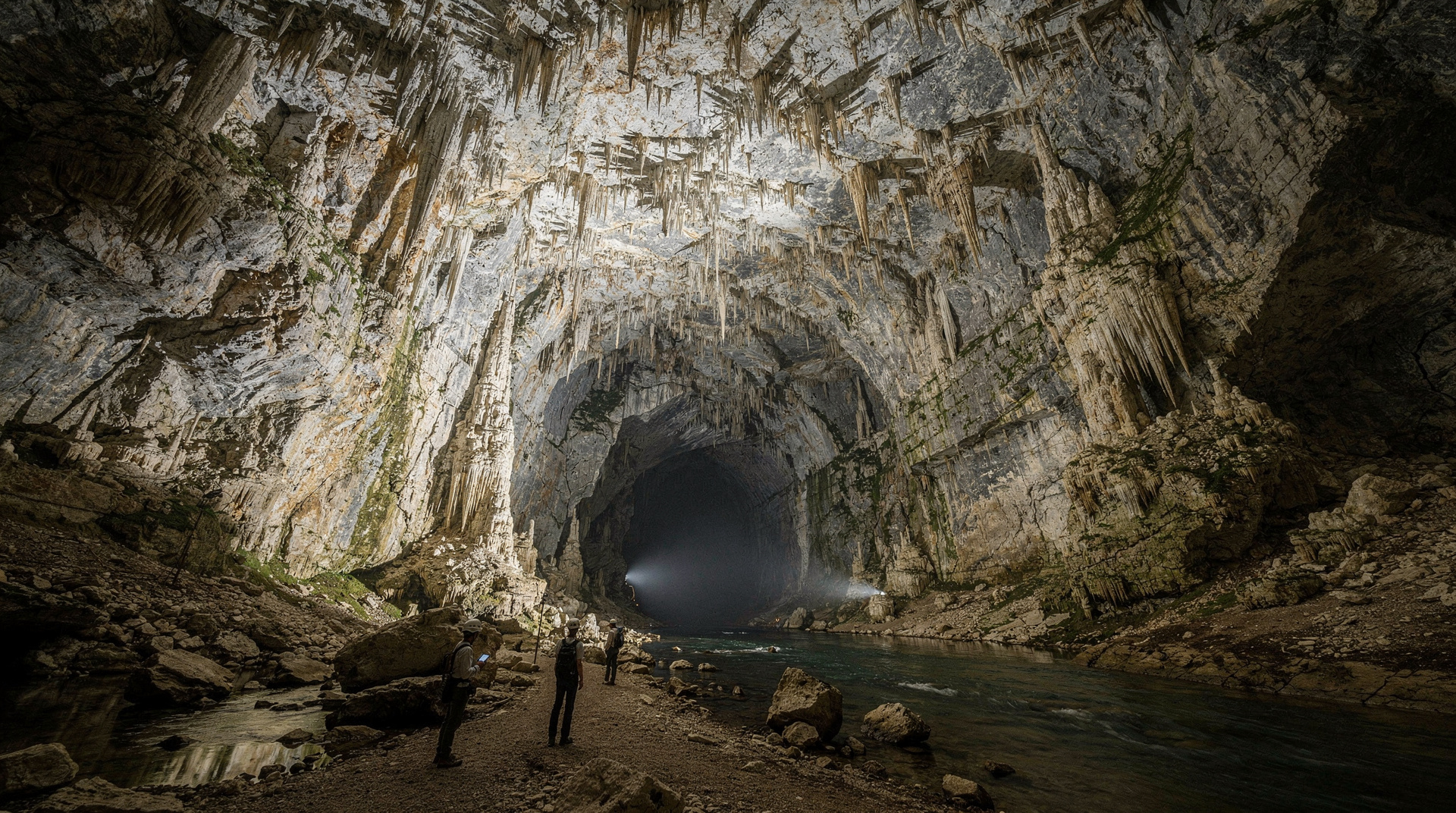
The inscribed area protects an underground karst system in the Classical Karst region near Divača, centred on the underground gorge of the Reka river. Over millions of years, the Reka has carved a canyon through the limestone that runs for kilometres underground — in places 150 metres deep from ceiling to river below. The Silent Cave section (Tiha jama) contains some of the largest speleothem formations in Europe. The inhabited section of the cave system was used in the Bronze Age; archaeological finds from Škocjan are among the oldest documented cave occupation sites in Slovenia.
What makes Škocjan exceptional — and the reason it was inscribed rather than the more famous Postojna — is the combination of geological significance, hydrological importance (the Reka disappears underground here and reappears at the Timavo springs near Trieste, 44 km away), biological diversity in the underground ecosystem, and the sheer scale of the underground landscape. The Martel Chamber is one of the largest underground chambers known, anywhere on earth.
The visit is conducted on guided tours only, lasting approximately 1h45 and covering 5.5 km on foot including the crossing of a suspended bridge 47 metres above the river at the narrowest point of the underground gorge. This moment alone makes the visit extraordinary.
Practical details: Škocjan Caves is 10 kilometres north of Divača (1h15 from Ljubljana by car, or accessible from the Divača train station by taxi). Guided tours run several times daily. Book online in advance for summer visits — peak season tours fill up. Entry EUR 18 for adults. See the Škocjan Caves guide for the full visit.
2. Prehistoric pile-dwelling settlements (2011)
This is the least-known of Slovenia’s UNESCO inscriptions and the most surprising. The ‘Prehistoric pile-dwelling settlements of the Circum-Alpine Region’ is a transnational inscription covering 111 sites across six countries (Switzerland, Austria, France, Germany, Italy and Slovenia), all representing Bronze Age and earlier lakeside and marshland settlements built on wooden piles.
The Slovenian component is the Ig pile-dwelling site on the Ljubljana marshland (Ljubljansko barje), a wetland plain south of Ljubljana. The pile-dwelling settlements here date from approximately 3500–1800 BCE and represent a dense concentration of Bronze Age habitation sites preserved in the anaerobic peat. Archaeological excavations have recovered extraordinarily well-preserved organic material: wooden planks, tools, textiles and the wheel.
The Ljubljana wheel — found at the Ig site in 2002, dating to approximately 3200 BCE — is the oldest known wooden wheel with a surviving original axle. It is preserved at the Ljubljana City Museum and is the physical centrepiece of the World Heritage claim. The wheel is not large (it is about 72 cm in diameter) and its significance lies in what it represents: the wheel-and-axle combination is the specific innovation. Most other early wheels were solid discs attached to rotating axles. This one is the oldest confirmed example of a rotating axle passing through a fixed wheel hub.
A UNESCO heritage tour of Ljubljana can include both the Plečnik works and a focus on the prehistoric material in the City Museum, giving context to both inscriptions from a single Ljubljana base.
Practical details: The actual Ig pile-dwelling sites are on the Ljubljana Marshland, 15 km south of Ljubljana. There is limited visitor infrastructure at the sites themselves. The Ljubljana City Museum on Gosposka ulica has the main collection and exhibition. The Barje cycling routes around the marshland offer a way to see the landscape in which the pile-dwellings were built.
3. Works of Jože Plečnik in Ljubljana (2021)
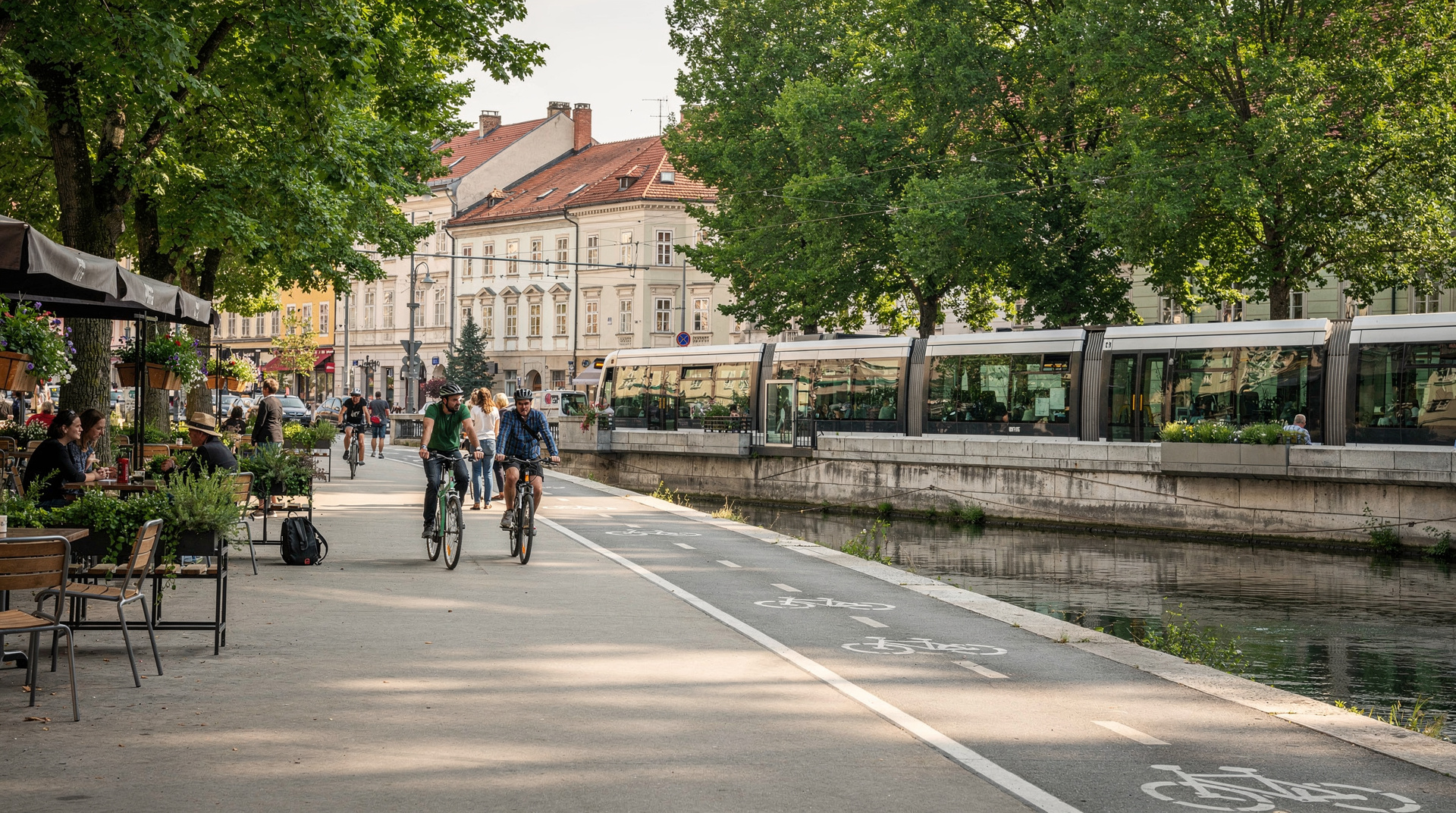
The most recently inscribed site and the one that has most changed Ljubljana’s international profile. The inscription covers a network of works across the city — not a single building but a portfolio of public interventions: bridges, markets, parks, civic buildings, lamp posts, fountains, pavements and cemetery gates, all designed by Jože Plečnik between approximately 1921 and his death in 1957.
The UNESCO criterion was ‘human centred urban design’ — a recognition that Plečnik’s contribution was not merely architectural but urban in the deepest sense. He improved the city as a place to live and move through, creating spaces that serve daily functions while achieving a coherent aesthetic identity. The market still markets. The bridges still bridge. The parks still park.
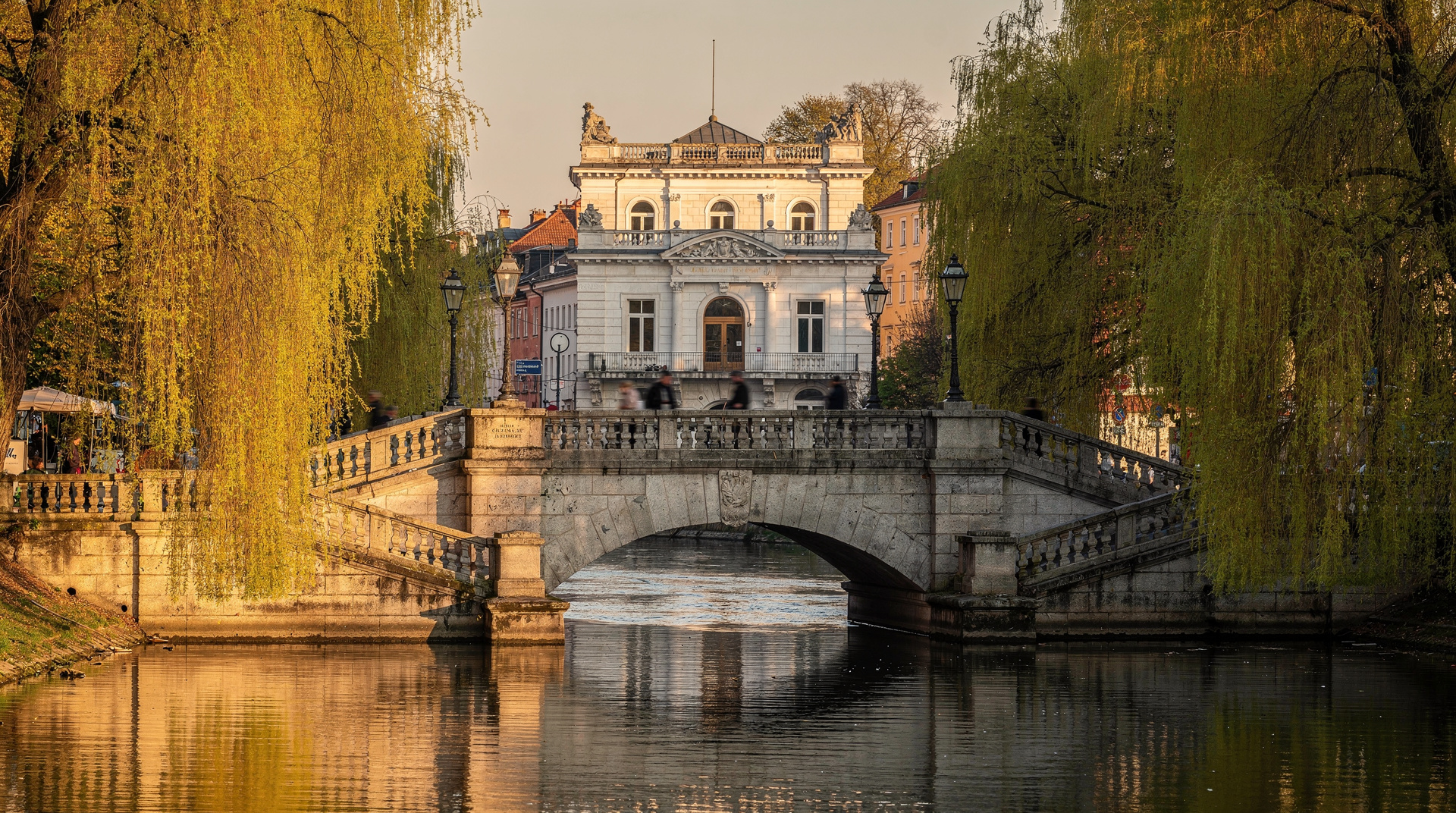
The inscription covers 25 protected works in and around the city centre, including Triple Bridge, the Central Market colonnade, Cobblers’ Bridge, Congress Square, the National and University Library, the Žale Cemetery entrance and the Plečnik House museum.
For the full story of Plečnik’s work and the walking tour that covers the main inscribed works, see the Plečnik architecture guide.
Practical details: All the inscribed outdoor works are freely accessible year-round. The Plečnik House museum (EUR 6) requires advance booking. The National Library interior is accessible during library opening hours. A Ljubljana Tourist Board map of all inscribed sites is available free from the tourist information office.
4. Škofja Loka Passion Play (Intangible Cultural Heritage, 2016)
The only Slovenian inscription on the UNESCO Representative List of the Intangible Cultural Heritage of Humanity, the Škofja Loka Passion Play is a processional performance of the Passion of Christ staged in Škofja Loka every six years.
The text — written by Capuchin friar Romuald Marusič around 1721 in old Slovenian — is the oldest preserved theatrical text in the Slovenian language. The performance involves hundreds of costumed participants processing through the medieval old town at night, enacting the fourteen stations of the Cross and associated scenes.
What distinguished the play for UNESCO was the combination of factors: the antiquity and linguistic significance of the text, the continuity of the community practice across four centuries, the way the performance is inseparable from the specific spatial character of the Škofja Loka old town, and the community ownership of the tradition — the play is mounted, costumed and performed entirely by local volunteers.
The next performance is scheduled for 2027. Between performances, the play’s history and materials are presented at the Loška Museum in the castle.
Practical details: The performance takes place over several evenings in Škofja Loka, 30 minutes from Ljubljana. Tickets for 2027 performances will be available through the Škofja Loka tourist office approximately 6–12 months before the event. Demand is high; plan well ahead.
What UNESCO status means in practice
For Škocjan Caves, UNESCO status has not changed the visitor experience significantly — the site was already excellent and protected. The inscription has influenced the conservation standards and the international profile.
For Plečnik’s Ljubljana, the 2021 inscription has had a noticeable effect on international visitor patterns — more architecture-focused travellers now include Ljubljana specifically for the Plečnik legacy, and the city has invested in better interpretation of the inscribed works.
For the pile-dwelling sites, UNESCO status has supported better funding for archaeological conservation and the museum presentations, but the sites themselves remain understated visitor destinations compared to Škocjan or Plečnik’s Ljubljana.
The Passion Play inscription has reinforced the six-yearly event as a nationally significant cultural occasion and supported the community organisation behind it.
Combining UNESCO sites in a Slovenia itinerary
A UNESCO-focused two-day itinerary from Ljubljana:
Day 1 — Ljubljana: Plečnik landmarks (Triple Bridge, market colonnade, National Library), Ljubljana City Museum (pile-dwelling collection, the wheel), evening on the riverside.
Day 2 — Škocjan and the Karst: Drive or train to Divača (1h15), morning guided tour of Škocjan Caves, afternoon at Lipica stud farm (another Karst region highlight, 10 km from Škocjan).
For those extending further: Škofja Loka (30 minutes from Ljubljana) adds the Passion Play heritage context, easily combined as a half-day extension to the Ljubljana day.
See the UNESCO heritage tour of Ljubljana and the Škocjan Caves guide for detailed visit planning.
A three-day version for a more relaxed pace: spread the same four inscriptions over three days rather than two, adding a full free morning in Ljubljana before the Plečnik-focused afternoon, and treating Škocjan as a dedicated half-day rather than squeezing it alongside Lipica. This is the version to choose if you are travelling with children or simply prefer not to be checking a schedule against a train timetable. The extra day also leaves room for weather contingency — Škocjan’s guided tours occasionally adjust timings around heavy rain, since surface water affects the underground river level.
Where the inscriptions fit into a wider trip
The four inscriptions are a useful backbone for a trip, but they rarely fill it on their own. Most visitors will want to pair them with the places around them, and the order matters less than the pace you choose.
Ljubljana is the natural base for three of the four. If you have a single day in the capital, the Ljubljana in one day guide shows how to fit the Plečnik works into a wider walk, and the Ljubljana old town guide covers the streets and riverbank that Plečnik shaped. The Ljubljana destination page gathers everything else the city offers around the heritage sites, and the Central Market guide is worth reading before you stand under the colonnade, because the market is a working part of the inscription rather than a backdrop.
For the Karst side, Škocjan sits in a region that is easy to combine with other underground and countryside stops. The Škocjan Caves destination page is the quickest orientation, and the Postojna vs Škocjan comparison helps if you are deciding how to split time between the two cave systems — one inscribed, one not. The Lipica lipizzaner horses guide explains the afternoon stop suggested above.
If you are building the UNESCO sites into a longer route, the Slovenia highlights in 5 days itinerary and the Ljubljana long weekend plan both pass through most of the places mentioned here, and the Škofja Loka medieval town guide gives the old-town context for the Passion Play. For overall pacing and logistics, the how many days in Slovenia guide is a sensible companion to this page.
Frequently asked questions about UNESCO sites in Slovenia
Is Postojna Cave a UNESCO site?
No. Postojna Cave is not on the UNESCO World Heritage List. Škocjan Caves (near Divača, about 40 km southwest of Postojna) is the UNESCO-inscribed cave system in Slovenia, recognised for its geological and natural significance. This is a distinction worth knowing: Škocjan is scientifically and aesthetically more extraordinary, but Postojna receives far more visitors because of superior marketing and infrastructure.
Where exactly is the oldest wheel in the world?
The world’s oldest wheel with an original axle (approximately 5,200 years old, found at the Ig pile-dwelling site in 2002) is displayed at the Ljubljana City Museum at Gosposka ulica 15 in central Ljubljana. Entry to the museum costs EUR 6. The wheel is in a climate-controlled case in the permanent ‘Faces of Ljubljana’ exhibition.
Can you visit all four UNESCO sites in one trip to Slovenia?
Yes — all four are within 2 hours of Ljubljana by car. Škocjan Caves (1h15 by car), Ljubljana’s Plečnik works (in the city centre), the pile-dwelling material (at the Ljubljana City Museum in the city centre) and Škofja Loka (30 minutes by bus). A well-planned four-day Slovenia trip could engage with all four inscriptions substantially.
Is Triglav National Park a UNESCO site?
Triglav National Park is not on the World Heritage List, though it has been proposed and assessed in the past. It is protected under Slovenian national law and is a wetland reserve under the Ramsar Convention, but it lacks UNESCO World Heritage status. The Julian Alps and the park’s landscapes are among the most significant unprotected alpine environments in Europe — a gap in the World Heritage list rather than a reflection of the park’s quality.
What is the UNESCO criterion for the Plečnik inscription?
The Works of Jože Plečnik in Ljubljana were inscribed under Cultural Criterion (iv): ‘an outstanding example of a type of building, architectural or technological ensemble or landscape which illustrates significant stage(s) in human history.’ The specific framing emphasised the concept of ‘human centred urban design’ — the works were valued for their integration of architectural quality with the needs of the city’s residents, as a model for how architects can engage with existing urban fabric rather than replacing it.
Are there any other UNESCO inscriptions in countries bordering Slovenia?
Yes — Slovenia’s neighbours are well represented on the World Heritage List. Austria has numerous inscriptions including the Hallstatt-Dachstein area and the Wachau valley. Italy has an extraordinary density of inscriptions including Venice, the Dolomites (visible from the Slovenian border on clear days) and many others. Croatia has the Plitvice Lakes (2.5 hours from Ljubljana). Hungary has Budapest and the Tokaj wine region. These provide useful context: Slovenia’s four inscriptions are modest in number but significant in quality — Škocjan and the Plečnik works are among the more distinctive inscriptions in the region rather than routine additions to a national list.
What is the most undervisited UNESCO site in Slovenia?
The prehistoric pile-dwelling sites on the Ljubljana marshland — the Slovenian component of the transnational 2011 inscription — is almost entirely unknown to international visitors. The actual site near Ig is not developed for visitors, and most people engage with the heritage only through the Ljubljana City Museum. By contrast, the world’s oldest wheel (the headline object from this inscription) is displayed at the City Museum and is freely viewable for EUR 6 museum entry. It is one of the most significant prehistoric artefacts in Central Europe and draws a fraction of the visitors that comparable objects in Vienna or Budapest receive.
Booking Škocjan and planning around the timed entry
Škocjan is the one inscription on this list where planning failure genuinely costs you the visit. Because entry is guided-tour-only with timed slots, arriving without a booking in July or August can mean waiting hours for the next available spot, or being turned away entirely on the busiest days. The tours run at fixed departure times through the day — typically every hour or so in peak season, less frequently in shoulder months — and each slot has a capacity cap for safety reasons inside the narrow underground passages.
Booking window: online booking opens several months ahead and is the reliable route in June–September. Walk-up tickets are still sold at the visitor centre but only for the same day’s remaining capacity — arrive by mid-morning if you haven’t booked. What to bring: sturdy shoes (the underground path can be damp and uneven), a light jacket (the cave interior sits at a constant 8–10°C year-round regardless of the surface temperature), and a camera, though photography without flash is the norm to protect the fragile ecosystem.
Shoulder-season advantage: April–May and September–October give you the same 1h45 guided tour with far shorter queues at the visitor centre and a meaningfully better chance of a same-day walk-up slot if your schedule changes at the last minute. The suspended bridge crossing and the Martel Chamber look identical regardless of season — the cave’s underground climate barely shifts with the surface weather — so there is little visual reason to insist on a summer visit specifically.
Škocjan Caves and Piran day trip from LjubljanaThe pile-dwelling wheel and the Ljubljana City Museum in context
The Ljubljana City Museum’s presentation of the pile-dwelling material rewards a slightly longer visit than the wheel alone. Beyond the famous axle-and-wheel find, the museum’s Roman-era Ljubljana (Emona) foundations are visible in situ beneath the building — a rare chance to stand inside an archaeological excavation rather than view it through glass. Combining the pile-dwelling collection with the Emona foundations gives a continuous thread of Ljubljana’s settlement history, from the Bronze Age marshland community through the Roman colony to the Plečnik-era city above.
Ljubljana UNESCO heritage tour, Plečnik works and City MuseumTop experiences
Bookable activities with verified prices and instant confirmation on GetYourGuide.