Ljubljana Food Tour with 10 Tastings Review
Ljubljana: guided food tour with 10 local tastings
Ljubljana food tour: a serious eater’s review
Food tours can go two ways: a choreographed walk between tourist-facing venues with small portions of things the guide has negotiated a commission on, or a genuine guided introduction to a city’s food culture, led by someone who eats here every week. Ljubljana’s best food tours are clearly the latter, and the 10-tasting format reviewed here is among the most content-dense options in Central Europe.
This review is for people who approach food travel seriously — not as a backdrop to sightseeing, but as the primary lens through which you understand a place.
| Where | Ljubljana old town and Central Market |
| Cost | Around €55–75/person for 10 tastings |
| Time needed | 3–3.5 hours |
| Getting there | Meet at Triple Bridge or Prešernov trg |
| Best time | Weekday mornings, 9–10am |
What you actually eat (and drink)
Ten tastings sounds like a lot. It is a lot. A representative lineup on the 10-tasting tour:
- Slovenian honey — Slovenia has Europe’s highest density of beekeepers per capita and produces extraordinary mono-floral honeys (linden, chestnut, fir honeydew). The guide typically includes a honey producer’s product with context on the Carniolan bee.
- Pumpkin seed oil — The signature flavour of eastern Slovenia and neighbouring Styria. Dark green, intense, best drizzled on bread or salad. Nothing else tastes like it.
- Local bread — Usually sourdough or buckwheat-based, served as a vehicle for the oil and honey tastings.
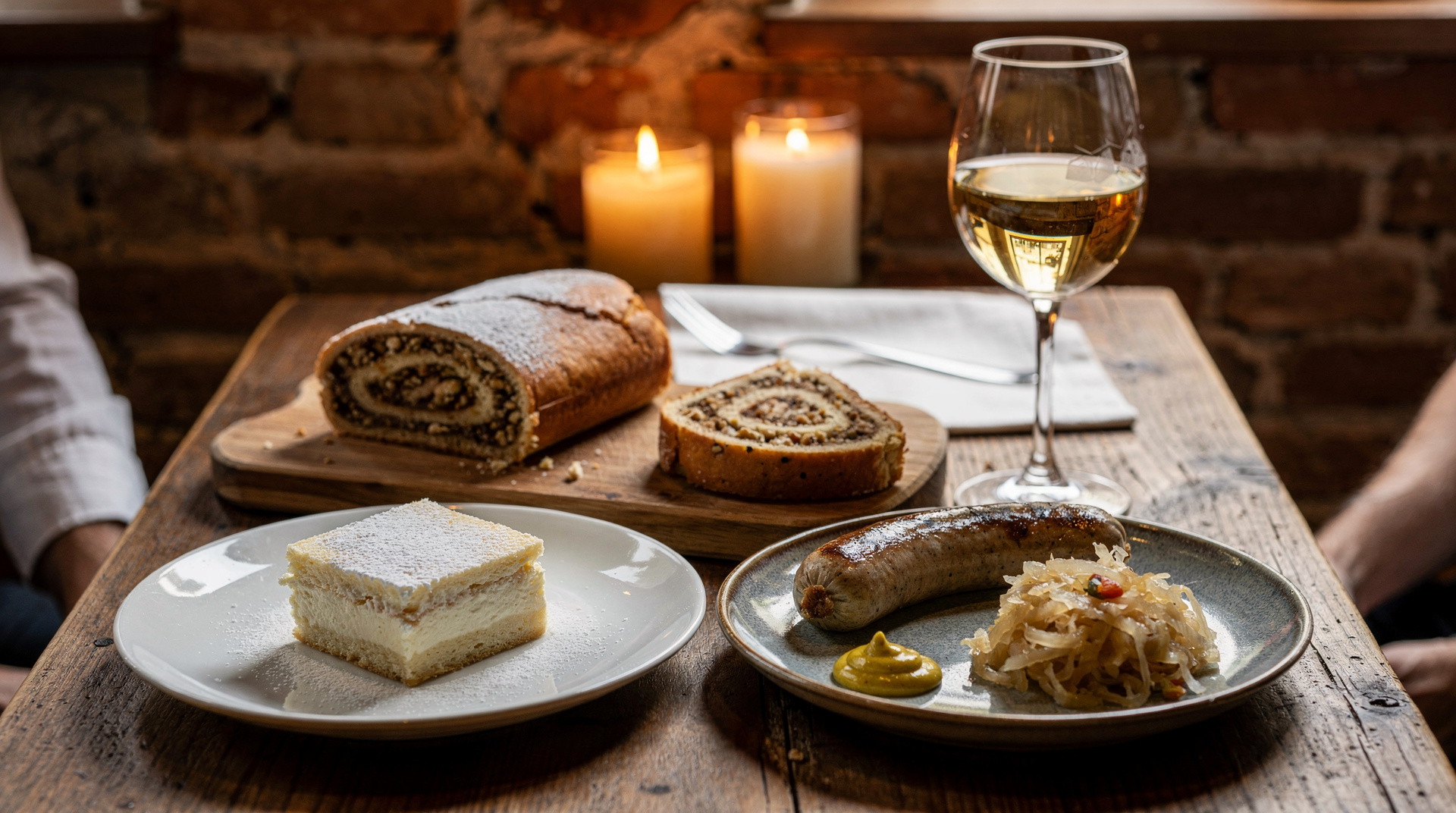
- Kranjska klobasa — The Carniolan sausage, a protected designation of origin product since 2015. Made from pork, bacon, and garlic, smoked and typically served with sauerkraut and mustard.
- Slovenian cheese — Usually a local mountain cheese (tolminc from the Soča Valley or a Nanos plateau variety) with cold cuts.
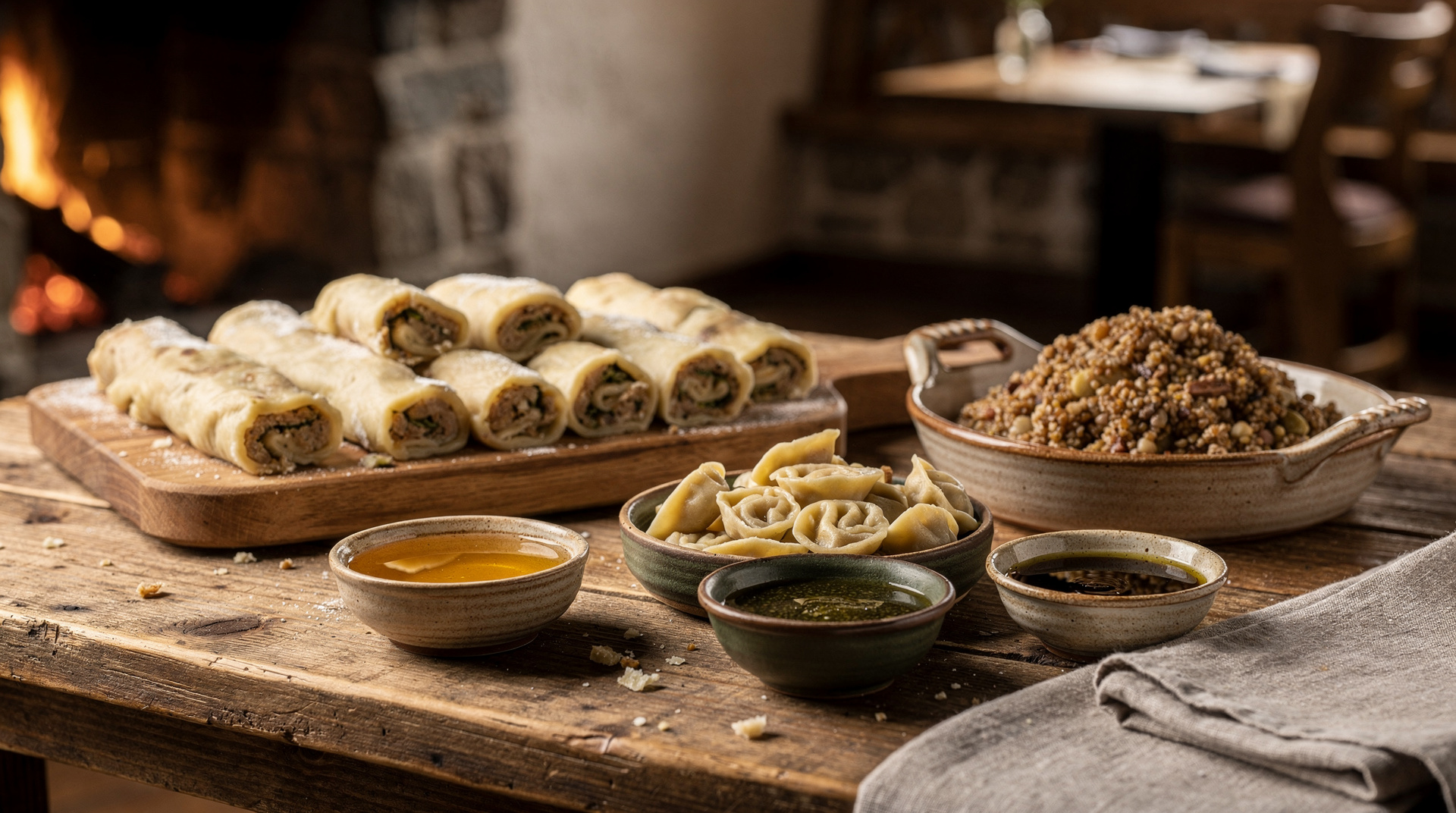
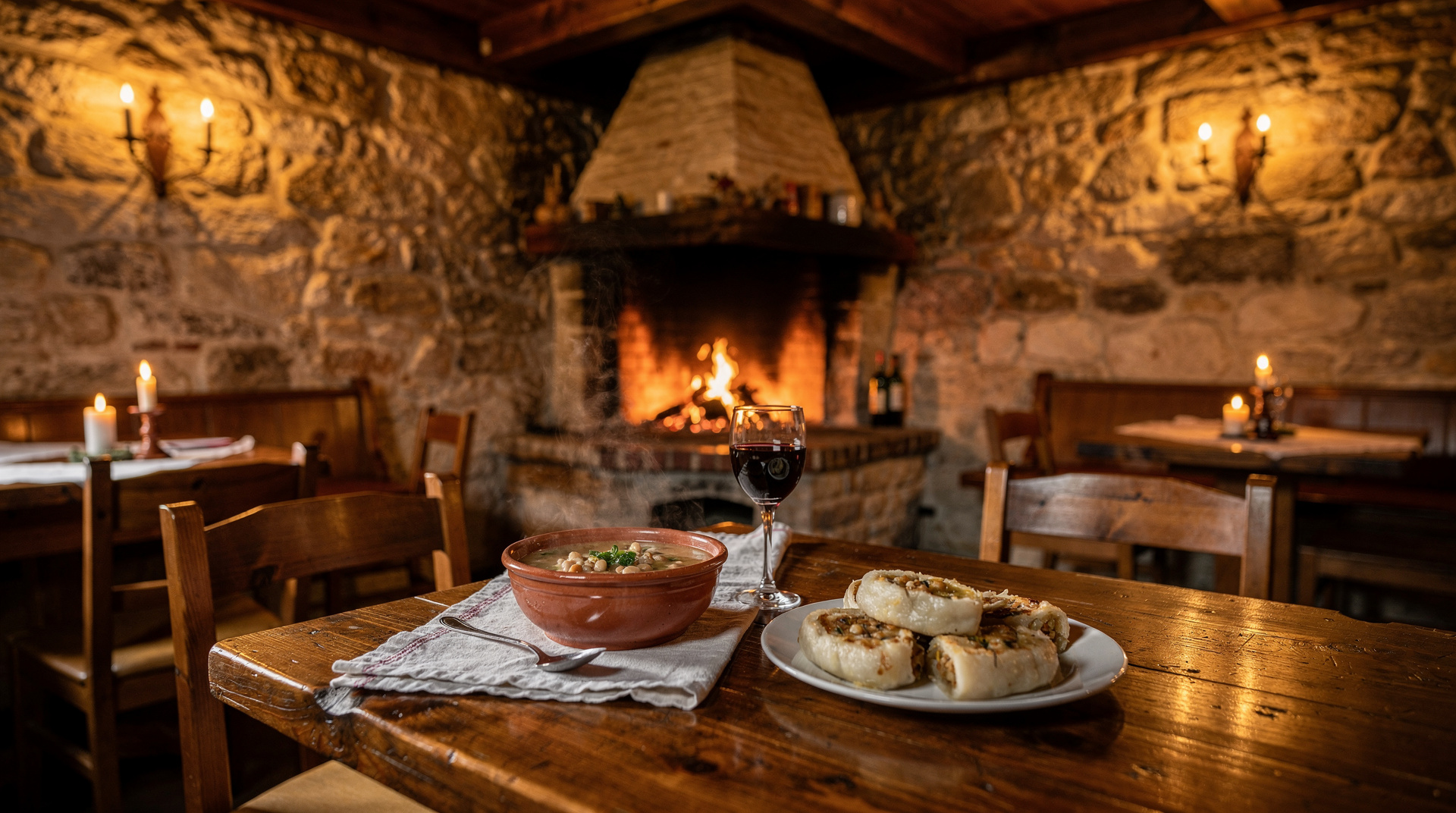
- Štruklji — Rolled dumplings, either savoury (tarragon) or sweet (walnut or cottage cheese). One of the most distinctly Slovenian foods on the tour.
- Potica — The rolled nut cake that every Slovenian grandmother makes differently. The walnut version is the classic; the tour sometimes includes a side-by-side comparison with a poppy seed variant.
- Local wine — A glass of Rebula (white, from Goriška Brda), Teran (red, karst), or a sparkling Brut from the Brda region. The wine included varies seasonally.
- Craft element — Recent tours have added a local craft beer or a specialty chocolate product.
- Žganje (schnapps) — A digestif made from Williams pear, plum, or quince. More refined than the firewater reputation suggests.
The routing through Ljubljana’s old town, the covered Plečnik market, and the adjacent food halls means you see the city’s food geography as you eat your way through it.
The 3-hour variant vs the 10-tasting tour
Two shorter alternatives in the comparison table — the 3-hour food tour and the traditional flavours tour — cost approximately €10–20 less and cover fewer venues and tastings. The comparison is straightforward:
The 3-hour food tour covers 6–7 stops with slightly smaller portions. It works if you have a meal planned immediately after and want food tour as appetiser rather than experience. It also suits groups with a shorter attention span for guided content.
The traditional flavours tour emphasises the cultural narrative over sheer quantity — more time at each stop, more context, fewer total tastings. It is the better choice if you’re a single traveller or couple who wants depth over breadth.
The 10-tasting tour is the right choice if food is your primary interest in Ljubljana, if you have not eaten well elsewhere that day, and if you want to cover as much of the Slovenian food canon as possible in one outing.
Pricing and value
| Tour | Approx. price | Stops/tastings |
|---|---|---|
| 10-tasting food tour (this tour) | €55–75/person | 8–10 venues, 10 tastings |
| 3-hour food tour | €40–55/person | 6–7 stops, smaller portions |
| Traditional flavours tour | €45–60/person | Fewer stops, more cultural depth per stop |
Compare this to a sit-down dinner at a mid-range Ljubljana restaurant: main courses run €15–22, a glass of local wine €5–8, meaning a decent dinner for two costs €60–80 anyway. The food tour covers more ground, more variety, and provides context that a restaurant experience cannot.
The honest caveat: if you’re a budget traveller, Ljubljana’s Central Market at Vodnikov trg lets you taste pumpkin seed oil on bread for €2, a sausage for €3, and honey samples freely at vendor stalls. The food tour provides far more, but self-guided market exploration has its own merit.
What makes Ljubljana’s food culture interesting
Slovenian cuisine sits at a genuinely unusual crossroads. The northern alpine traditions (smoked meats, dairy, potato-based dishes, fermented vegetables) meet Mediterranean influences from the coast (olive oil, wine, seafood), karst elements (prosciutto-style pršut, Teran wine, truffles), and Balkan flavours from the south (grilled meats, bean dishes). The result is a cuisine that is coherent but varied — not reducible to a single signature dish.
Ljubljana itself has developed beyond its traditional gostilna base. There is a cluster of wine bars along the Ljubljanica River (Petkovškovo nabrežje) that serve exceptional Slovenian wines by the glass, several serious natural wine shops, and a number of chefs who trained abroad and returned to work with Slovenian producers. The food tour connects you to the foundational layer; the Ljubljana food tour guide covers how to build an evening around what you’ve discovered.
Practical details
Tours depart from a central Ljubljana meeting point (usually near the Triple Bridge or Prešernov trg). The walk covers 3–4 km on flat ground through the old town — accessible for most visitors. Groups are typically 8–12 people; private versions are available for an additional fee and worth it for groups of four or more.
Morning tours (9–10 am) access the Central Market at full capacity. The market runs Monday–Saturday; Sunday tours substitute the market portion with additional restaurant stops.
Dietary restrictions: inform the operator at booking. Most tours can accommodate vegetarian or dairy-free participants with advance notice. The tour is not easily adapted for vegans (many core items are animal products) but operators will try.
What to do before and after
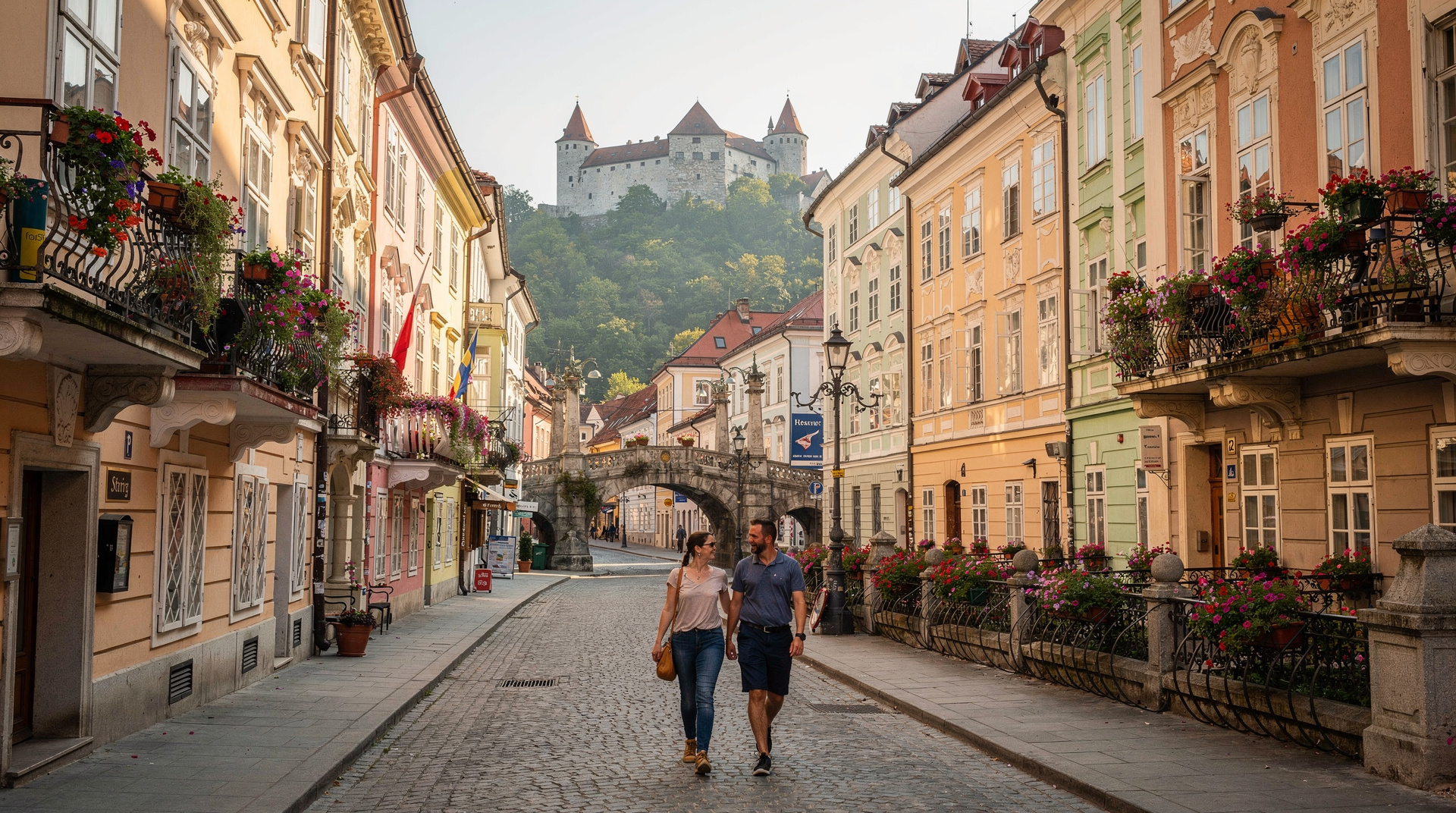
Before the food tour, see Ljubljana’s old town — the food tour itself covers most of the architectural highlights, but a short walk across the Dragon Bridge and up to Ljubljana Castle (or at least its base) gives context for the city’s layout. The Ljubljana old town guide covers this well.
After the food tour, most participants skip or delay dinner. The evening window is good for:
- A wine bar on the river (Movia, Divino, or Strelec in the castle for splurging)
- A craft beer walk along Trubarjeva
- Simply sitting at a riverside café and watching the pedestrian bridge traffic
For a full day in Ljubljana, read the things to do in Ljubljana guide.
The Ljubljana 10-tasting food tour is one of the best introductions to Slovenian food culture available, and it doubles as an excellent Ljubljana walking tour. At €55–75 per person, it represents real value for what it delivers — you leave with a working understanding of Slovenian ingredients, producers, and food traditions that will inform every meal you eat for the rest of the trip.
For food-focused travellers, this should be the first thing you book in Ljubljana. For everyone else, it belongs in the first half of your Ljubljana visit to build a reference framework before you eat out independently.
The Slovenian food guide and gostilna dining guide are the natural next reads.
Ljubljana’s Central Market: where to go independently
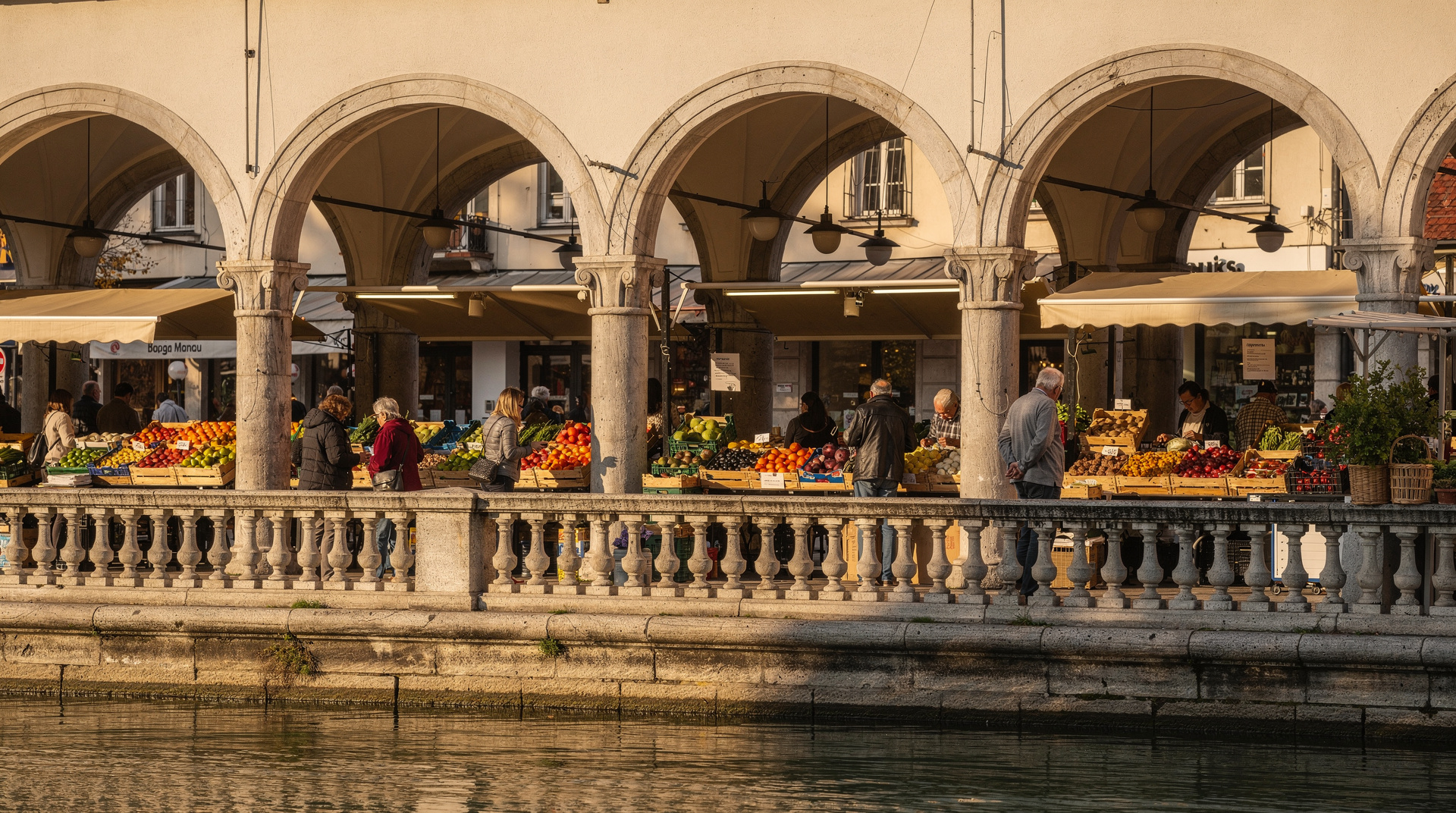
The Central Market (Osrednja tržnica) designed by Jože Plečnik occupies the stretch of the Ljubljanica embankment between the Triple Bridge and the Dragon Bridge. The covered market hall contains butchers, fishmongers, dairy sellers, and delicatessen stalls; the open-air section along the embankment is fruit, vegetables, flowers, herbs, and seasonal produce.
Key stalls to know:
-
Honey vendors: Beekeeping is Slovenia’s most culturally embedded artisan food tradition. Look for the Carniolan bee branding (the native subspecies, protected designation). Taste before buying — the acacia, linden, and chestnut honeys are all distinctive.
-
Cheese stalls: Tolminc (PDO, from the Soča Valley), Nanos (karst-plateau hard cheese), and fresh cottage cheese (skuta) are the ones to try.
-
Seasonal mushrooms (autumn): Boletus, chanterelles, and horn-of-plenty mushrooms arrive from the forests of the Pokljuka plateau in September–October. The selection is exceptional.
-
Kraška pršut: Karst prosciutto, slower-cured and drier than Italian, with a distinct mineral character from the karst air. Available at specialist stalls.
The market is open Monday–Friday 6 am–6 pm, Saturday 6 am–4 pm. Closed Sundays. See the Ljubljana Central Market guide for a full stall-by-stall guide.
Slovenian wine to try in Ljubljana
Wine bars have proliferated along the Ljubljanica River embankments in recent years. Several specialise in Slovenian natural wines and are excellent for an evening glass after the food tour:
- Movia wine bar (by the Triple Bridge): focuses on the Movia estate from Goriška Brda, one of Slovenia’s most respected producers
- Vinska Fontana (Mestni trg): broader Slovenian wine list, knowledgeable staff, good by-the-glass range
- Wine & Dine (Stari trg): natural wine focus, imports alongside Slovenian producers
The food tour guide will typically mention several of these. See the Slovenian wine guide for background on the main regions and varieties before you taste.
Ljubljana food tour for families
The 10-tasting tour works well for families with children over 10. Younger children may find the 3-hour format challenging. For families, the 3-hour food tour is the better fit — fewer stops, more pace flexibility, and the portions work better for smaller appetites.
Child-friendly elements: the honey tasting always delights, the sausage stop is usually a hit, and the cream cake or pastry element is universally popular. The market section is genuinely interesting for children old enough to engage with it.
See the Ljubljana with kids guide for a full family-focused itinerary.
What sets Slovenian producers apart
One of the underrated strengths of the 10-tasting tour is that many of the ingredients come from small-scale producers rather than mass-market suppliers. Slovenia’s beekeeping culture in particular is protected and celebrated at a national level — beekeeping is taught in schools, the native Carniolan bee is a source of genuine national pride, and small producers sell direct at markets rather than through supermarket chains. The honey tasting on the tour typically comes from exactly this kind of small operation, and a good guide will name the producer and explain the flower source behind each variety.
The same is true of the pumpkin seed oil, which is almost always cold-pressed by small mills in the Prekmurje and Styria regions using traditional methods that have barely changed in a century. Tasting the “real” version on the tour is a useful benchmark — the mass-produced supermarket version is a paler, thinner product that most Slovenians consider inferior. Once you’ve tasted the artisanal version, you’ll know what to look for on labels for the rest of your trip.
How the tour compares to organising food experiences yourself
A determined independent traveller can replicate perhaps 60–70% of the food tour experience by visiting the Central Market with a shopping list, sampling from vendor stalls, and booking a table at a well-reviewed gostilna for dinner. What is harder to replicate without local knowledge: knowing which vendors offer the best quality versus the most tourist-friendly presentation, understanding the seasonal calendar of what is genuinely fresh versus imported, and accessing smaller specialty shops that do not advertise or have an online presence.
The food tour compresses weeks of local food knowledge into a single afternoon, which is the core of its value proposition. For visitors with more time and genuine curiosity, doing both — the tour early in the trip, then independent exploration later using what you learned — produces the best overall food experience in Ljubljana.
Compare top tours
Frequently asked questions about Ljubljana Food Tour with 10 Tastings Review
What do you eat on the Ljubljana food tour?
Typically 10 tastings spread across 8–10 venues: Slovenian honey, pumpkin seed oil on bread, potica (walnut roll), local cheese, cured meats, kranjska klobasa (Carniolan sausage), štruklji (rolled dumplings), kremna rezina equivalent, local wine, and schnapps (žganje). The exact lineup varies by guide and season.How long does the Ljubljana food tour last?
Most 10-tasting tours run 3–3.5 hours walking distance of 3–4 km through the old town and market area. The pace is gentle with stops at markets, local delis, traditional restaurants, and specialty food shops.Will I be full after the food tour?
Most participants leave pleasantly full rather than stuffed. The 10 tastings are substantial enough that many people skip or delay dinner. It is not a replacement for a sit-down meal but a very thorough introduction to Slovenian food culture.Is Ljubljana's food scene worth exploring?
Yes. Slovenian cuisine is a genuinely interesting crossroads of Central European, Mediterranean, and Balkan influences. The Central Market (Plečnik's 1940s covered market) is excellent, and Ljubljana has developed a strong restaurant scene that extends well beyond tourist gostilnas.What is the best time to do a Ljubljana food tour?
Morning tours (9–10 am) typically include the Central Market at its freshest. The market is closed Sundays — tours on Sundays adjust the itinerary. Weekday mornings are ideal for full market access.Should I book the food tour for the first or last day of my Slovenia trip?
The first day, if possible. Doing the food tour early gives you a working map of Slovenian ingredients, producers and dishes that makes every subsequent meal in Ljubljana and beyond more informed — you'll recognise what you're eating at gostilnas and markets across the country for the rest of the trip.Are drinks included in the price of the food tour?
Yes, on the 10-tasting tour the wine and schnapps tastings are included in the listed price. Additional drinks beyond the included tastings (extra glasses, coffee) are usually paid separately at each stop if you want more.