Škocjan Caves Tour from Ljubljana Review
Škocjan Caves day tour from Ljubljana
Škocjan Caves: the honest case for visiting the less-famous cave
Slovenia has a problem most countries would envy: it has two extraordinary cave systems within 40 km of each other, and most visitors only go to one. Postojna gets 600,000 visitors a year at its peak. Škocjan, just 38 km away, gets roughly one-tenth of that — and is the one inscribed on the UNESCO World Heritage List.
This review makes the case for Škocjan, covers the tour options from Ljubljana, and helps you decide whether the half-day or full-day format suits your itinerary.
| Where | Škocjan Caves, Karst region, 80 km from Ljubljana |
| Cost | Around €40–70/person depending on format |
| Time needed | Half-day (~5 hours) or full-day (~9 hours) |
| Getting there | Included transport, or train to Divača + 3 km walk |
| Best time | Weekdays, book 1+ week ahead in summer |
What makes Škocjan different
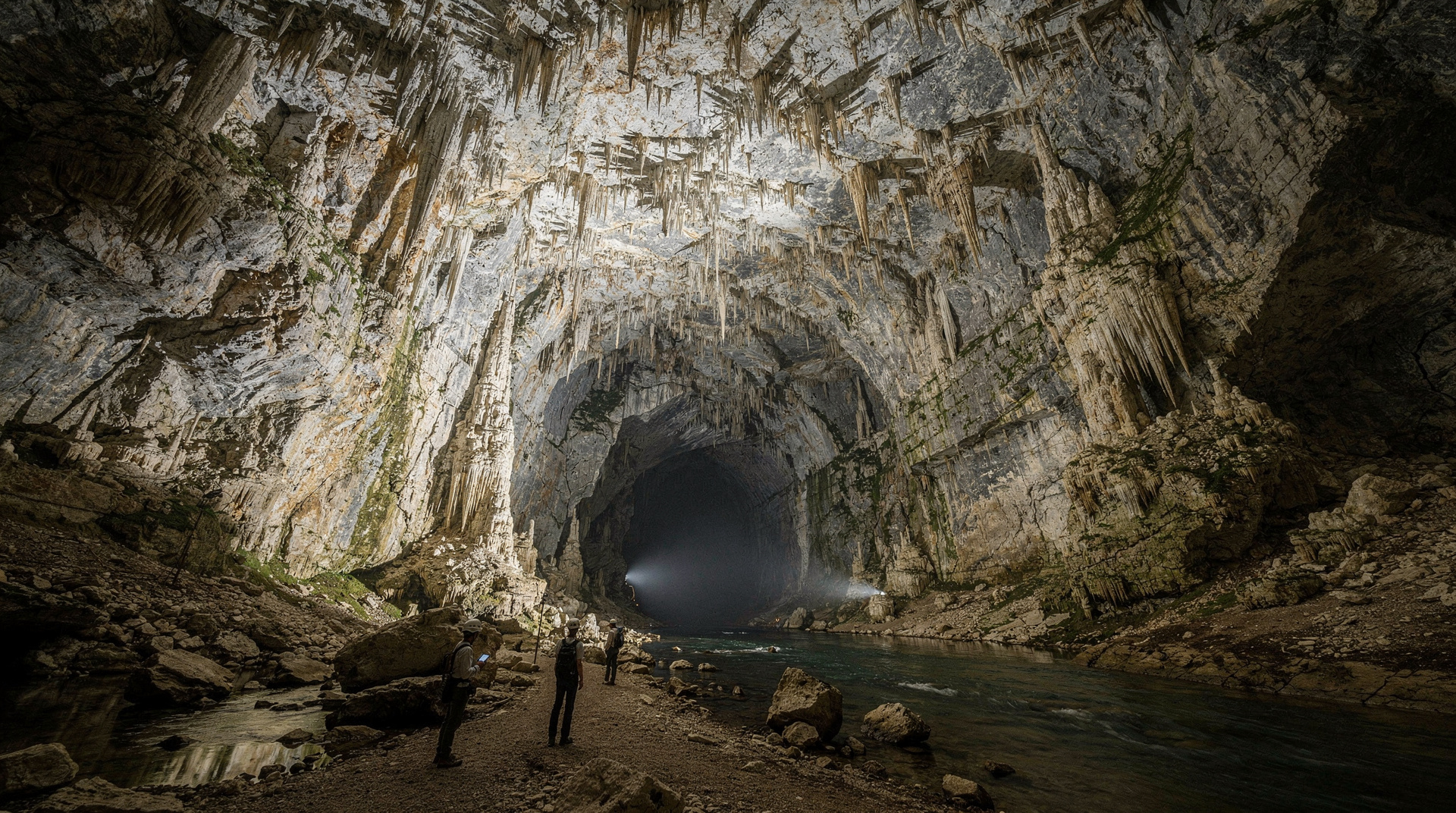
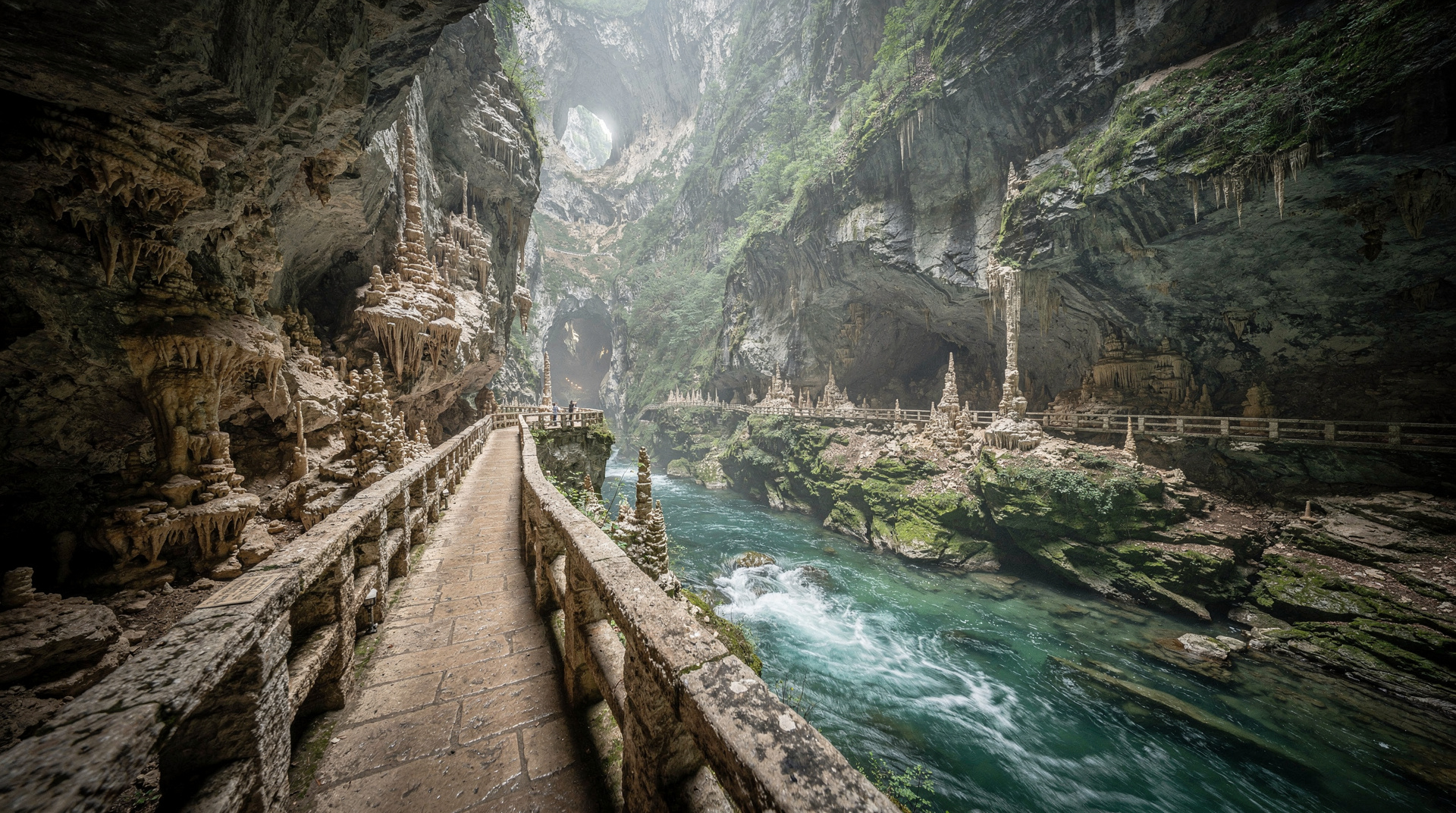
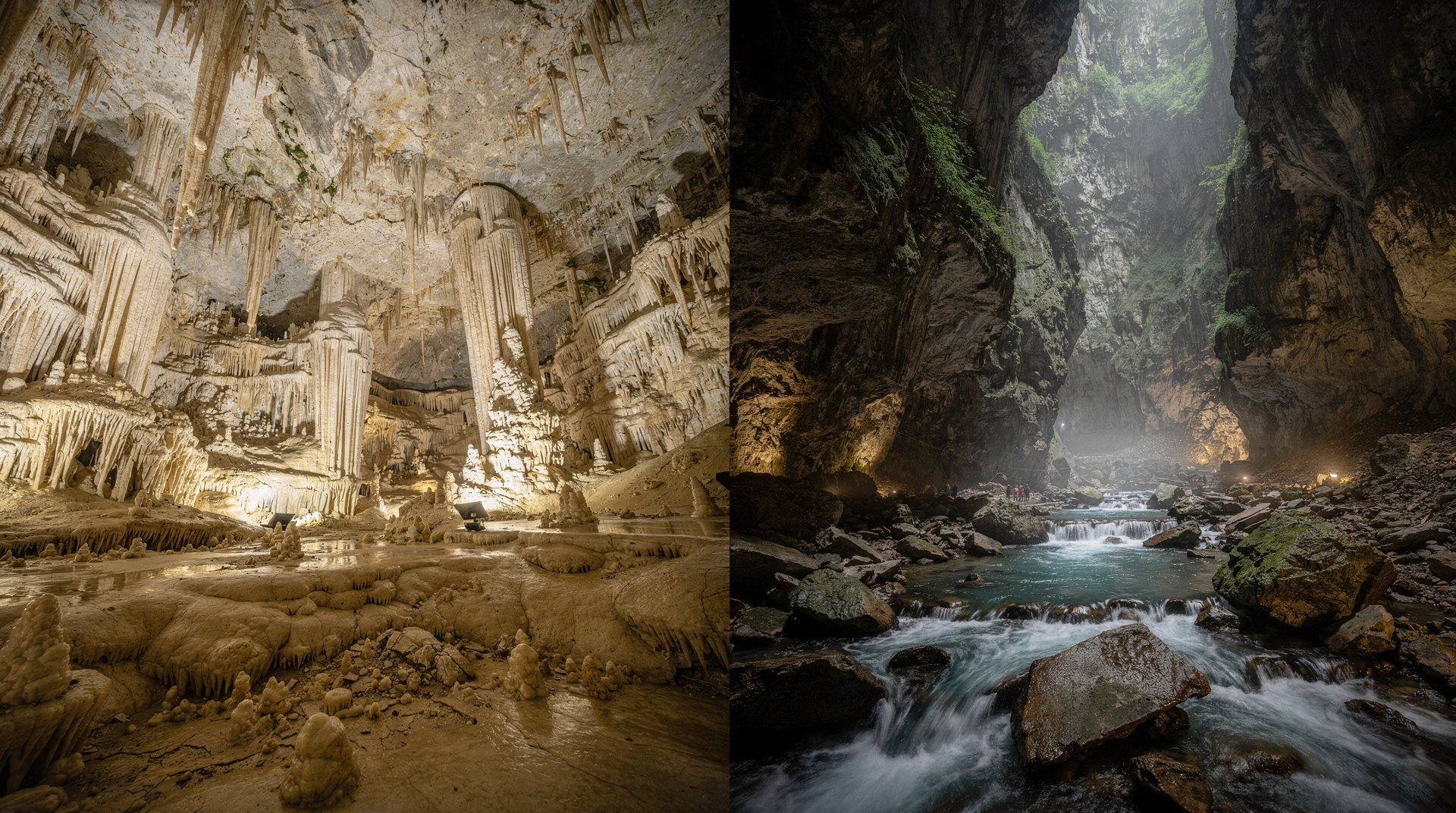
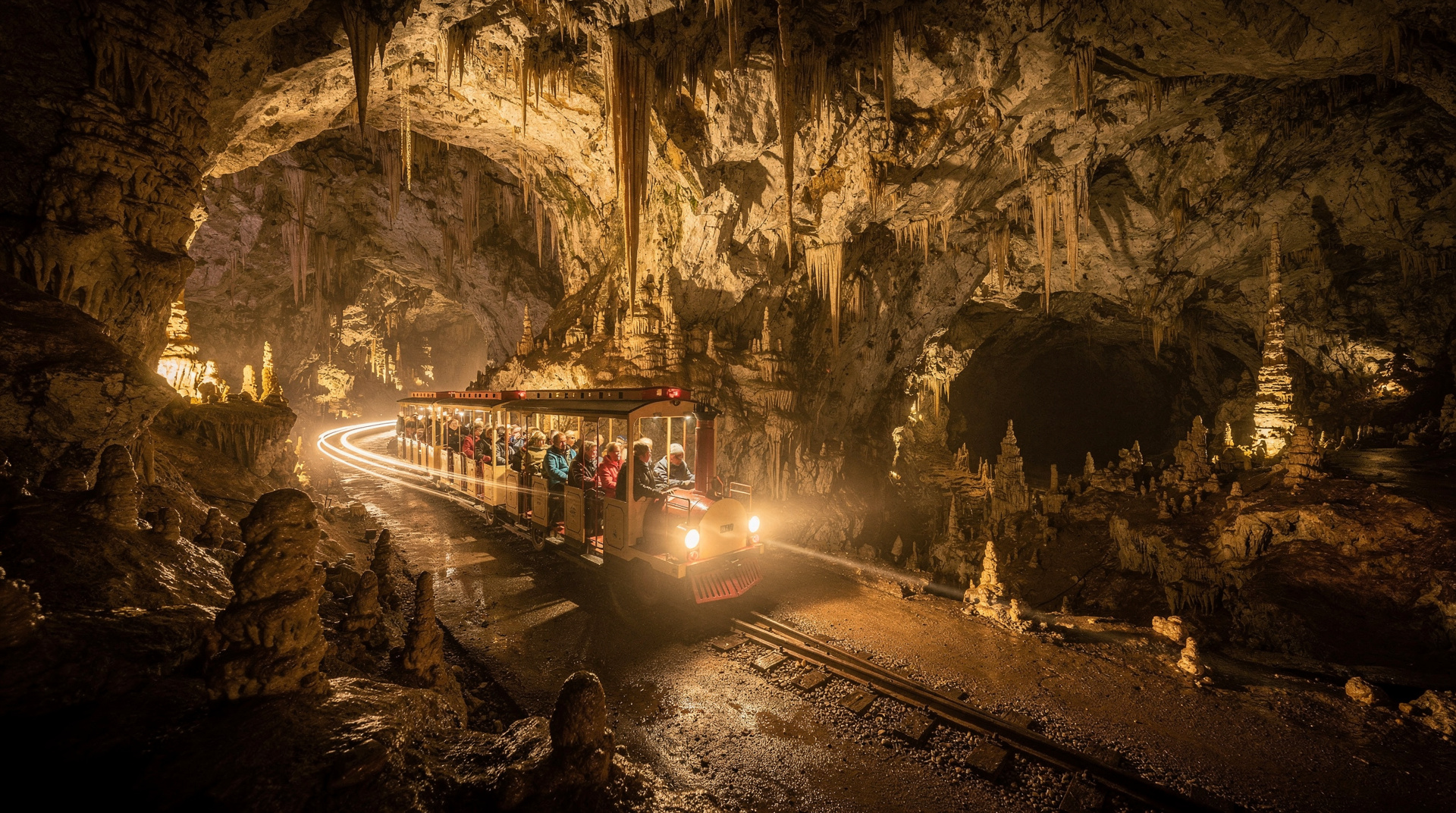
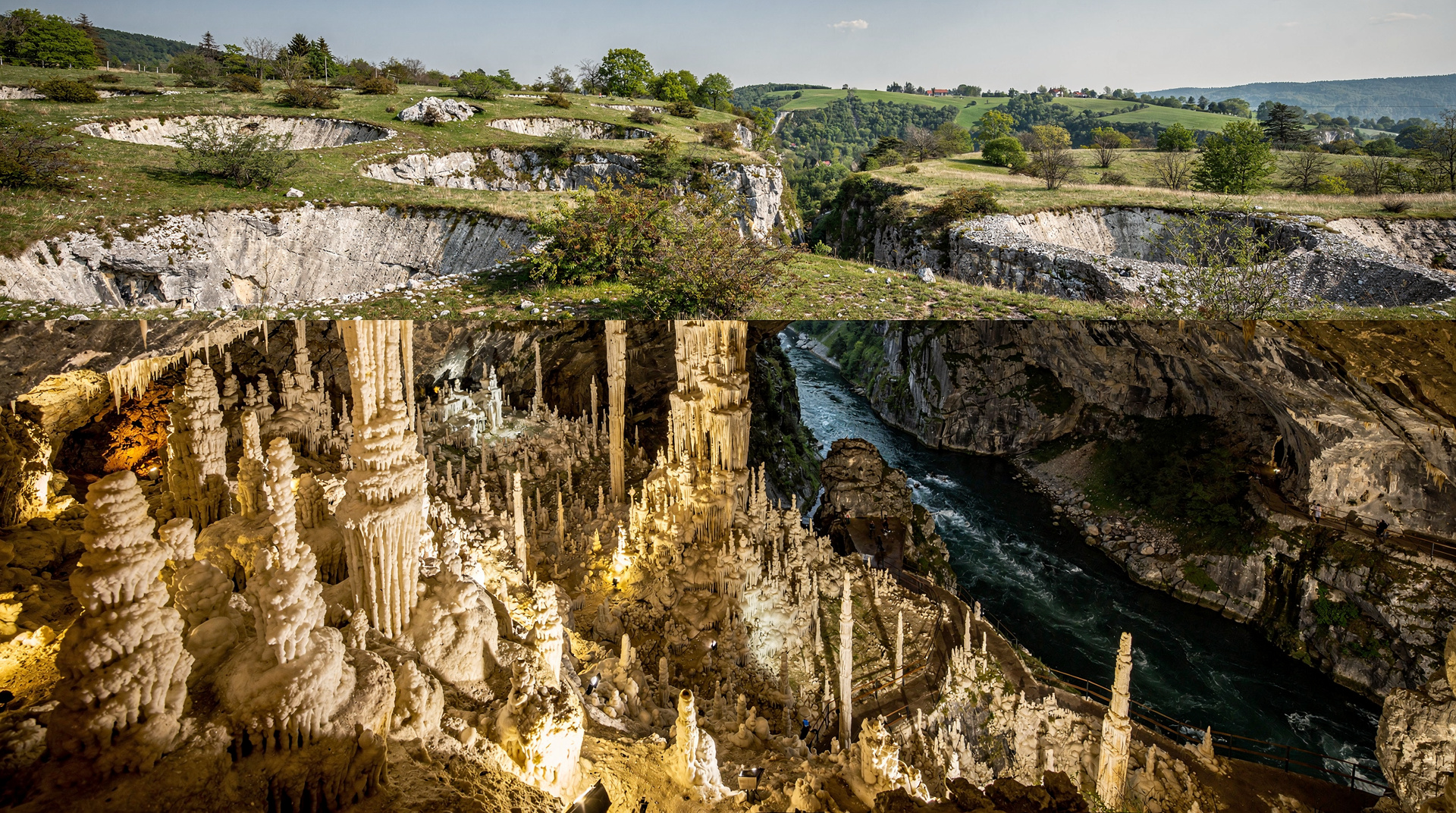
The difference between Postojna and Škocjan is roughly the difference between a spectacular museum and a genuine underground wilderness. Postojna’s decorated caves — the stalactites, stalagmites, and spaghetti formations — are undeniably beautiful and are best seen on an electric train through illuminated chambers. Škocjan’s underground canyon is something else: the Reka River carved a gorge up to 120 metres high beneath the karst plateau, and you cross it on a narrow bridge with the river running below your feet.
The tour at Škocjan is guided-only and takes you through the natural entrance (a collapse doline), across the river, through the Silent Cave (formations), across the famous Hanke Bridge over the roaring underground Reka, and out through a second tunnel cut into the cliff. It is physically more demanding than Postojna — more steps, more uneven ground, more vertical change — but the sensory experience is proportionally more intense.
Groups at Škocjan are limited in size, which means the atmosphere never approaches the theme-park density you can encounter at Postojna on a July Saturday.
What the day tour from Ljubljana covers
The full-day tour from Ljubljana is the straightforward option for visitors without a car. It departs Ljubljana in the morning, reaches Škocjan for the cave tour (2.5–3 hours for the guided visit), adds time at the surface to explore the two collapse dolines and the natural bridge, and returns to Ljubljana in the late afternoon.
Typically included:
- Return transport from Ljubljana
- Cave entrance ticket
- Licensed guide throughout
- Surface exploration time (the dolines and landscape above the caves are significant in their own right)
Not included:
- Meals (bring your own or use the small restaurant near the entrance)
- Optional Botanical Garden walk (30 minutes, adds a pleasant loop if weather is good)
The half-day option
The half-day version is specifically worth considering if you want to combine Škocjan with another destination in the same day. The caves themselves need only 2–3 hours on-site; the drive from Ljubljana is about 1 hour. A half-day tour returning you to Ljubljana by early afternoon frees up time for:
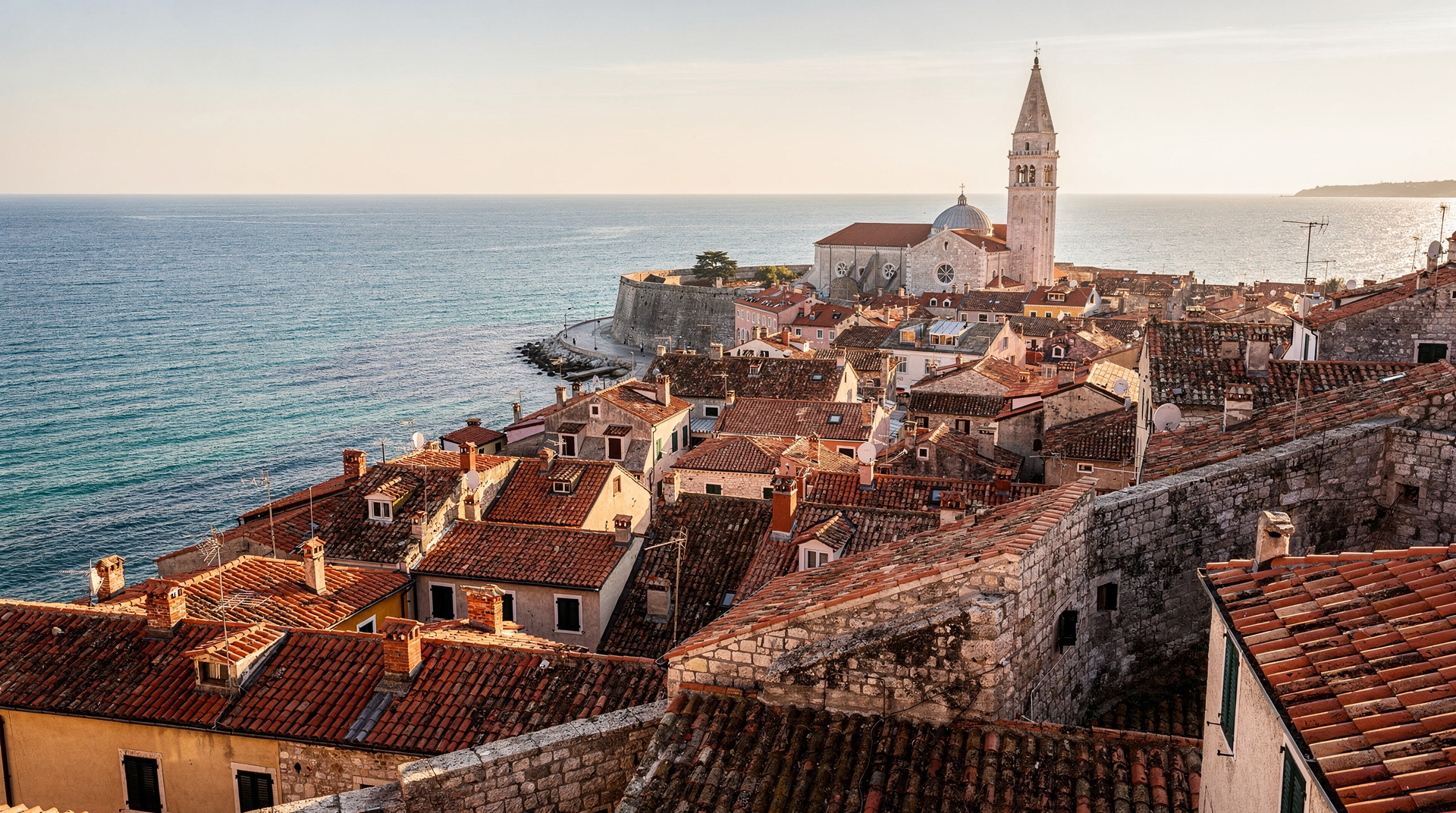
- The Slovenian coast (Piran is 35 minutes from Škocjan — see the Piran day trip guide)
- Lipica Stud Farm, 10 minutes from Škocjan, for afternoon Lipizzaner horse performances
- Postojna Cave for comparison, though doing both in one day is a long day
The Škocjan + Piran full-day combination
One of the smartest itineraries in the karst region combines Škocjan Caves in the morning with Piran on the Adriatic coast in the afternoon. The tour in the comparison table does exactly this. The logic is sound: both are in the western karst belt, Piran is 35 km from Škocjan, and the afternoon light on Piran’s Venetian architecture is genuinely excellent.
For context on what Piran offers alongside a cave day, read the Piran travel guide.
Pricing context
| Option | Approx. price |
|---|---|
| Škocjan Cave entrance alone | €18/adult (children 6–17 €9, under 6 free, seniors/students €14) |
| Half-day guided tour from Ljubljana | €40–55/person |
| Full-day tour from Ljubljana | €55–70/person |
| Škocjan + Piran full-day combination | €65–80/person |
These prices compare favourably with Postojna (entrance €34.90, tours starting at €55). The total experience at Škocjan is often cheaper and, for many visitors, more memorable.
Who should book each option
Half-day from Ljubljana: Best for travellers combining Škocjan with another afternoon destination (Piran, Lipica, or coastal towns). Efficient, sufficient time underground.
Full-day from Ljubljana: Best for those who want to take the karst landscape at a proper pace — the surface area above Škocjan, including the natural stone bridge and the dolines, deserves more than a hurried glance.
Škocjan + Piran combination: Best single-day value in the karst region. Two UNESCO-grade experiences in one day without feeling rushed.
Getting to Škocjan independently
Drivers: exit at Divača from the Ljubljana–Koper motorway, then 3 km to the caves. The road is signed. Parking is free.
By public transport: trains run from Ljubljana to Divača (about 1 hour, €5–7) and to Koper and Piran. From Divača to the caves is a 3 km walk along a marked path through the karst meadows (pleasant in good weather) or a short taxi ride. The walk takes approximately 45 minutes.
Note that the motorway e-vignette is required for the Ljubljana–Koper motorway — often missed by visitors unfamiliar with the Slovenian system.
Seasonal notes and what to know
Škocjan is open year-round, but tour frequencies reduce in winter (November–March). In summer, tour slots fill quickly — book at least a week ahead. The cave temperature is 10–12°C year-round, colder than outside in summer and warmer in winter. Wear layers.
Photography inside the cave is permitted at most points without flash. The underground Hanke Bridge section is deliberately kept moody and somewhat dramatic — phones with low-light modes capture it reasonably well.
The surface trail above the caves is wheelchair-unfriendly; the cave interior itself involves many steps and is not accessible for visitors with severe mobility limitations.
Comparing Škocjan and Postojna: a quick verdict
Read the Postojna vs Škocjan caves comparison for a full breakdown. The short version:
- Go to Postojna if you have children under 10, if you want the electric train spectacle, or if you’re on a very tight schedule
- Go to Škocjan if you want UNESCO credentials, fewer crowds, a more dramatic underground landscape, and a more authentic natural experience
- Go to both if you have two days and want to understand why the karst plateau is genuinely one of Europe’s most remarkable geological environments
For an overview of all Slovenian cave options, the Slovenia caves overview guide covers everything from Postojna and Škocjan to Križna Jama and the lesser-known options.
The karst landscape above the caves
The surface area at Škocjan is as impressive as the underground in a different register. The two collapse dolines — Mala and Velika Dolina — are holes in the plateau where the cave roof has fallen in, each over 100 m deep, with the underground river visible at the bottom of the larger one. Standing at the rim of Velika Dolina and looking straight down at the Reka River far below is one of the most vertiginous moments in Slovenian travel.
The surface path also passes a natural stone arch (one of the largest in Europe), views of the Karst plateau, and the karst meadows that are among the most biologically diverse grasslands in the continent. Orchids bloom here in May–June in extraordinary variety.
Lipica Stud Farm: the logical add-on
Lipica, 10 km west of Škocjan, is the ancestral home of the Lipizzaner horse — the white classical dressage horses associated with the Spanish Riding School in Vienna. The stud farm has operated continuously since 1580, making it one of the oldest in the world.
The guided tour covers the stables, horse history, and a walk through the karst meadows where the horses graze. Performance shows (the full classical dressage performance) run on specific dates and should be booked ahead. The stud farm is a perfect half-day addition to a Škocjan morning.
See the Lipica day trip guide for performance schedules and logistics.
Accommodation near Škocjan
The karst plateau around Škocjan and Lipica has limited accommodation but growing agritourism options. The village of Lipica itself has hotel facilities. For a longer karst stay, the town of Sežana (10 km) or Koper (30 km) have better infrastructure.
Most visitors approach Škocjan as a day trip from Ljubljana (1 hour by car), from the coast (Koper is 30 minutes away), or as part of a karst circuit combining Postojna, Škocjan, Lipica, and Piran over two days.
Honest advice: Škocjan is genuinely better than its tourist infrastructure suggests
The cave entrance complex is modest — a parking lot, a ticket office, a basic café, and some information panels. Nothing like Postojna’s resort complex. First-time visitors sometimes feel underwhelmed on arrival and then astonished underground. Manage expectations in the right direction: the infrastructure is plain, the experience is extraordinary.
The Škocjan caves guide covers the cave system’s ecology and geology in detail, including the bat colony, the underground river fish, and the cave pearls found in the Silent Cave section.
The Škocjan Caves tour from Ljubljana is the smarter cave choice for most adult travellers. It costs less than Postojna, delivers a more dramatic underground experience, and involves no Disneyland-scale queuing. The combination tour that adds Piran in the same afternoon is one of the best value full-day experiences in all of Slovenia.
Book the tour if you lack a car or want a guide. Drive independently if you’re comfortable navigating the Divača–Škocjan road and want flexibility on timing. Either way, do not leave Slovenia without seeing Škocjan.
For complete Slovenian cave comparison including Križna Jama, read the Postojna vs Škocjan caves guide — it covers every meaningful difference between the main cave systems.
Why UNESCO status matters here
Škocjan’s UNESCO World Heritage inscription (1986) was granted specifically for the combination of the underground canyon, the collapse dolines, and the surface karst landscape as a unified geological and ecological system, rather than for any single feature. This distinguishes it from Postojna, which is a remarkable show cave but does not carry the same designation. The UNESCO status also means stricter visitor caps and environmental protections apply — part of why groups stay small and why photography restrictions exist at certain points.
For visitors who care about visiting genuinely protected, ecologically significant sites rather than purely commercial show caves, this distinction is meaningful. The site management at Škocjan actively balances tourism revenue against conservation in a way that is visible on the ground — the modest infrastructure, the capped daily visitor numbers, and the absence of a large gift-shop-and-restaurant complex all reflect this priority.
Combining Škocjan with a wider Karst region visit
Serious travellers with two or more days in the Karst region often build an itinerary around Škocjan, Postojna, Lipica, and the coast rather than choosing just one cave. A logical two-day structure: day one covers Škocjan in the morning and the Lipica Stud Farm in the afternoon; day two covers Postojna Cave and Predjama Castle, finishing with a late-afternoon drive to the coast for dinner in Izola or Piran.
This structure avoids the common mistake of trying to cram Postojna, Škocjan, and Piran into a single exhausting day. Each site benefits from being seen at its own pace, and the karst region’s compact geography (nothing here is more than 40 minutes apart by car) makes a relaxed two-day circuit entirely realistic even without an early start each morning.
Compare top tours
Frequently asked questions about Škocjan Caves Tour from Ljubljana Review
How does Škocjan compare to Postojna Cave?
Škocjan is UNESCO World Heritage and considered geologically more significant. The underground canyon (Reka River gorge, up to 120 metres high) is arguably more dramatic than Postojna's formations. Crowds are far smaller, the tour feels more immersive, and tickets cost slightly less. Postojna has more formations and the electric train; Škocjan has the bigger wow moment.How long does the Škocjan Caves tour take?
The underground tour runs approximately 1.5–2 hours. With a guide from Ljubljana, the full day is 8–9 hours including transport. The half-day version returns you to Ljubljana by early afternoon.Can I visit Škocjan Caves without a tour?
Yes. Škocjan is reachable by car (80 km from Ljubljana, about 1 hour). There is limited public transport (train to Divača, then a 3 km walk or taxi to the caves). A guided tour simplifies logistics considerably, especially if combining with Piran on the same day.What should I wear to Škocjan Caves?
The cave temperature is 10–12°C year-round and the walking surface is uneven. Bring a warm layer, comfortable walking shoes with grip (not flip-flops), and expect to walk up to 3 km inside the cave system.Is Škocjan Caves good for children?
Yes, for children aged 5 and above with good walking ability. The bridges over the underground gorge are impressive and non-threatening. Younger children may find the 1.5-hour guided pace challenging.Do I need to book Škocjan Caves tickets in advance?
Strongly recommended in summer. The cave operates on guided entry slots with capped group sizes to protect the site, and slots sell out on July and August weekends. Outside peak season, booking a day or two ahead is usually sufficient.Can I photograph inside Škocjan Caves?
Yes, photography without flash is permitted at most points, including on the dramatic Hanke Bridge crossing. Flash photography is restricted in places to protect the cave ecosystem and because it disrupts the deliberately moody lighting design.