Bled Island Pletna Boat Experience Review
Lake Bled: pletna boat to Bled Island with dessert
The Bled Island pletna experience: worth it or tourist trap?
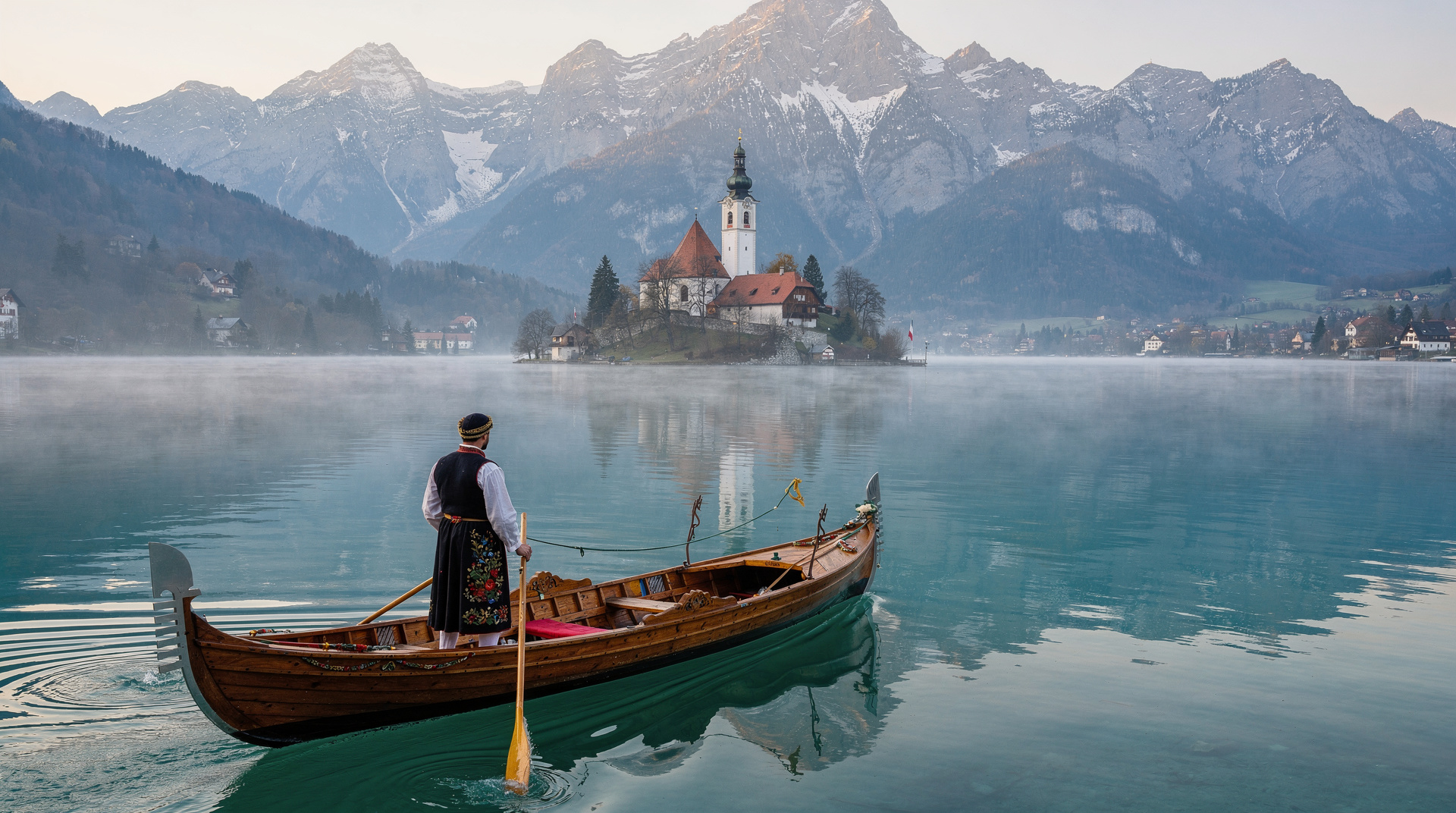
Lake Bled’s island church is one of the most photographed sights in Central Europe. The pletna ride — a flat-bottomed wooden gondola rowed standing up by a hereditary gondolier — is the only way to reach it without swimming. Every Slovenia travel article mentions the pletna. The honest question is whether the experience justifies its cost and the crowds, or whether you would be better off admiring the island from the shore.
This review gives you both sides.
| Where | Lake Bled, central boarding landing near the castle-side shore |
| Cost | Walk-up fare confirmed at the quay (bled.si); around €35–45 with guide and dessert |
| Time needed | 1.5–2 hours for the guided version |
| Getting there | 6 km lake path or a short walk from Bled village |
| Best time | Before 9am or after 5pm to avoid the queue |
What the tour includes
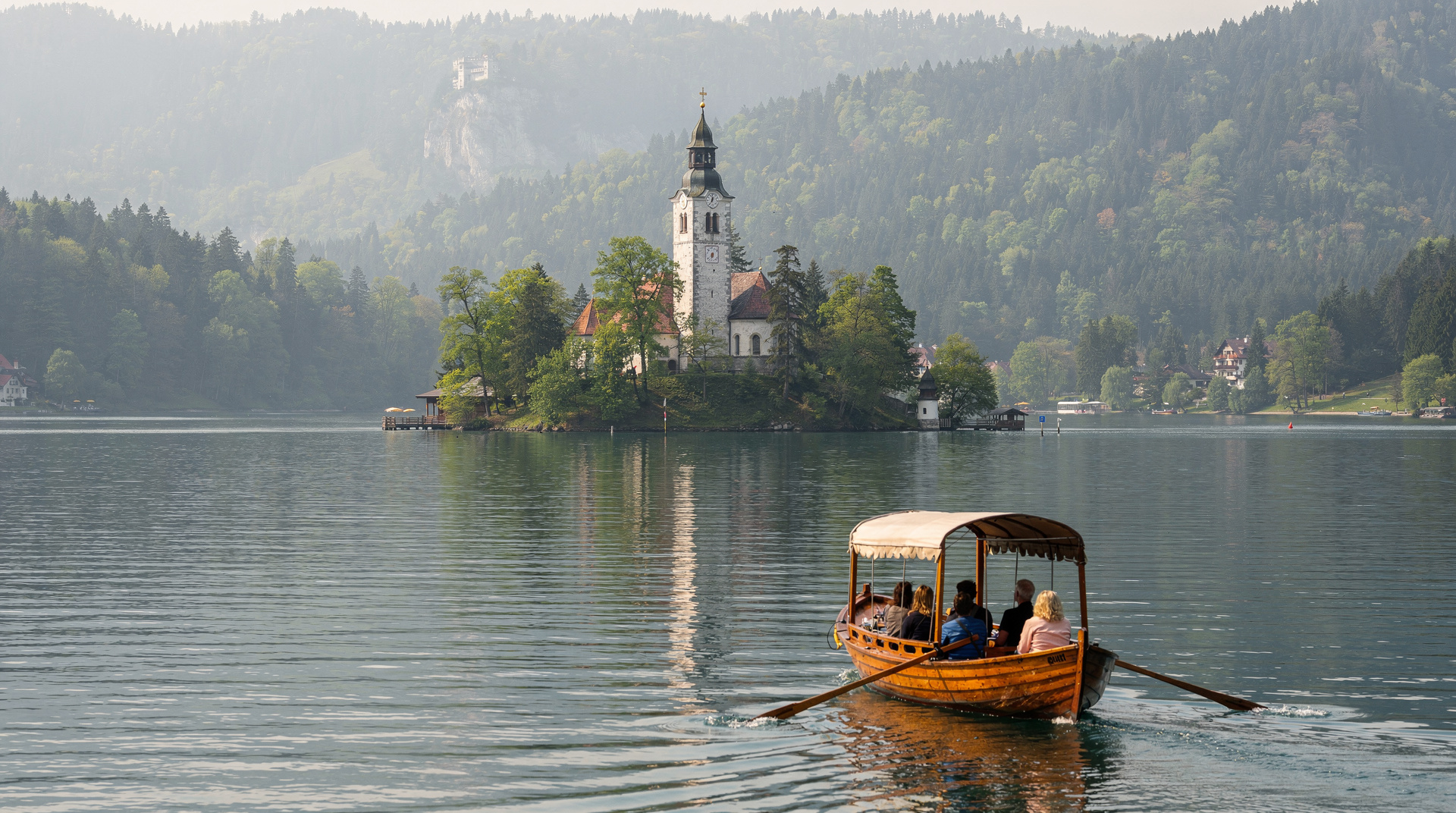
The pletna experience with dessert and guide is a self-contained half-activity: you board a pletna boat at the main landing stage, row for 15 minutes to the island, spend 30–40 minutes exploring it with a guide, ring the wishing bell in the Church of the Assumption, and return across the lake. A Bled cream cake (kremna rezina) is served either on the island terrace or back at a lakeside café.
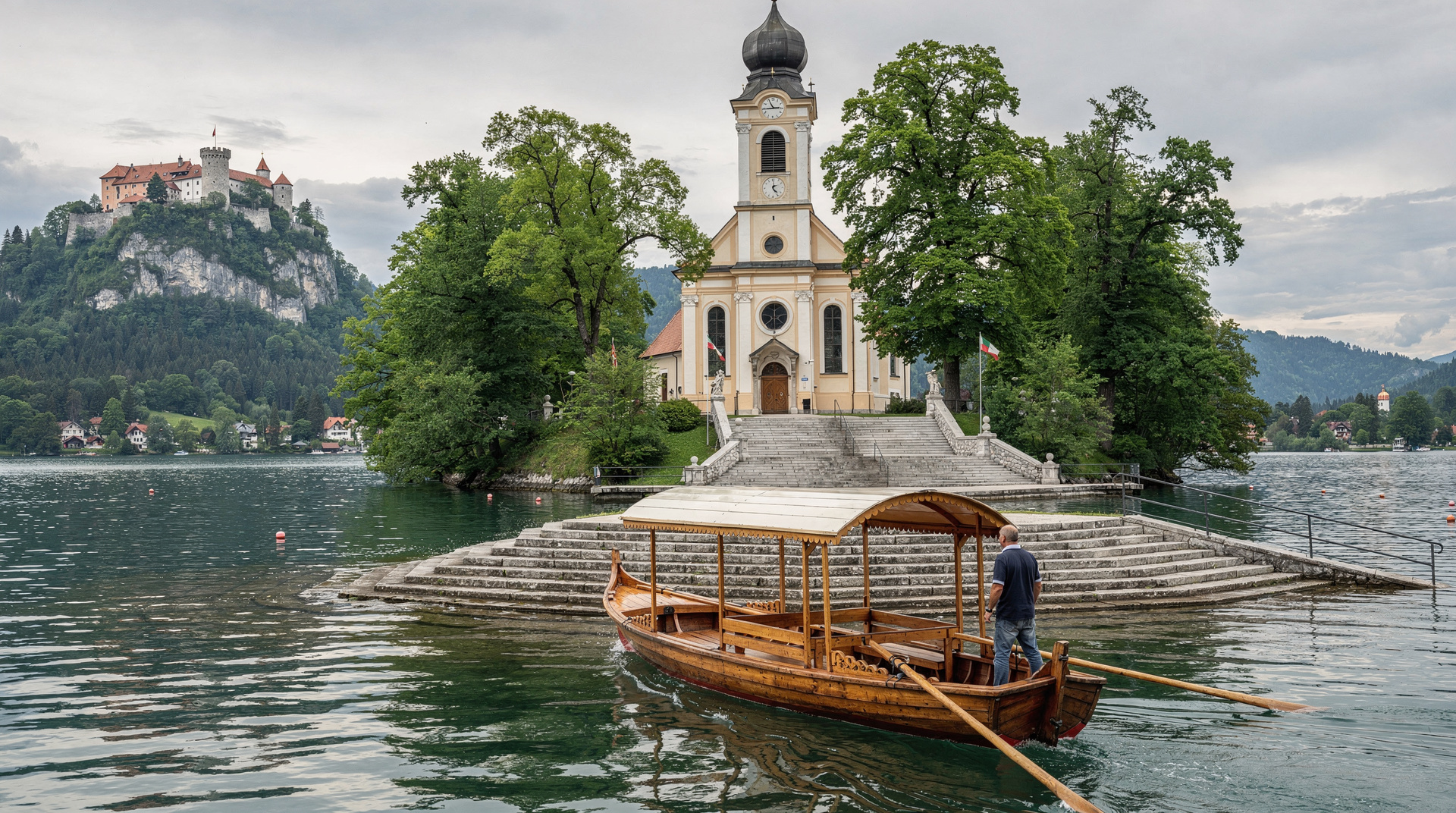
The Church of the Assumption: Small, baroque, 99 steps up from the island landing. The interior has been renovated multiple times; the 2019 restoration is clean and bright. The bell tower contains the wishing bell — a tradition holds that if you ring it three times and make a wish, it will come true. The rope queue at peak season runs 10–15 minutes.
The gondoliers: These are real working craftspeople maintaining a centuries-old tradition. The boats are heavy and the standing-row technique is physically demanding. A good guide will explain the hereditary licensing system — each boat corresponds to a specific family licence that has passed through generations, with the last new licence issued in the mid-20th century.
The Bled cream cake: The kremna rezina is Ljubljana’s claim to fame in pastry terms, but the version served at the Bled Park Hotel café beside the lake (often included or pointed to by guides) is the most famous in the country. It is a vanilla-and-cream layer cake with a flaky pastry base. It is excellent.
The honest case against the pletna ride
Here is the tourist-trap argument, stated clearly:
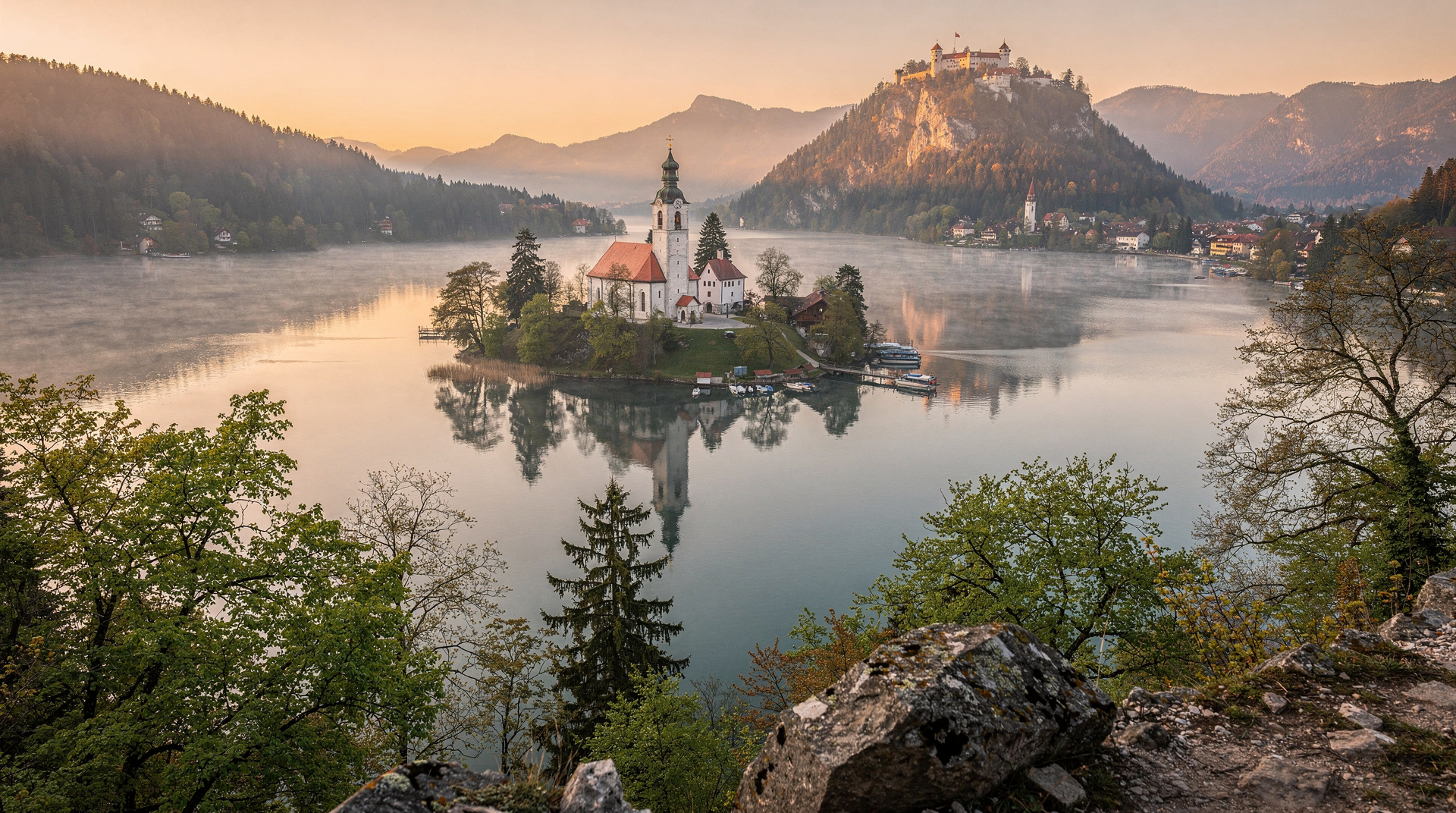
The most iconic view of Lake Bled — the one in every photograph, the castle above, the Alps behind, the island centred — requires you to be on the shore looking at the island. Once you’re on the island, that view disappears. What you see from the island is the lake, the ring of mountains, and the other people on the landing stage. It is beautiful. It is not the shot you came for.
The pletna ride itself takes 15 minutes each way over a short distance. The walk-up fare (confirm it at the Bled quay or with the Bled tourist office, bled.si) is high relative to the physical journey involved. For visitors on a tight budget who have already seen the lake from Ojstrica viewpoint, the extra cost may not add proportional value.
Alternatives for the budget-conscious:
- Hire a rowing boat: Available for rent at the lake shore (check current rates with the Bled tourist office). You can row yourself to the island (or simply enjoy the lake) at a fraction of the guided tour cost.
- SUP paddleboarding: Renting a paddleboard lets you reach the island under your own power. See the SUP at Lake Bled guide.
- Focus on the view from shore: The Ojstrica viewpoint (15-minute uphill climb from the lake path on the southwest shore) gives you the classic photograph for free. The Mala Osojnica viewpoint above it gives you a higher angle.
The honest case for the pletna ride
Against that, the pletna ride has a quality that photographs cannot capture: the experience of being rowed slowly across an alpine lake in a wooden boat towards a tiny island church, in near-silence except for the water, is genuinely pleasant. It is slow, unhurried, and analogue in a world of fast everything.
The guide on the island version adds context that transforms the church visit from a brief look around to an understanding of why the island was considered sacred before Christianity arrived, how the Habsburg nobility used it as a private chapel, and why the bell-ringing tradition persisted through socialist Yugoslavia.
The cream cake at the end is not optional — this is Bled, it must be done at least once.
Who benefits most from the guided pletna experience:
- First-time visitors to Slovenia who want the full classic Bled experience
- Couples and honeymooners for whom the slow-boat romance matters
- Visitors with children who will remember the boat ride vividly
- Anyone who wants the guide’s historical narrative rather than a bare landing
Private pletna from Ljubljana
The comparison table includes a premium option: private pletna from Ljubljana, which combines a private vehicle transfer from Ljubljana to Bled with the pletna experience included. At approximately €120–160 for two people, this is significantly more expensive but delivers a fundamentally different experience: your own guide, no group, flexible timing, and the pletna pre-arranged without any walk-up queue.
For a day trip from Ljubljana where Bled Island is the primary goal, this is the premium way to do it. The private pletna tour review is covered in the Lake Bled day tour page.
Pricing summary
| Option | Approx. price | What you get |
|---|---|---|
| Pletna ride only (walk-up) | confirm at the quay (bled.si) | Return row, no guide, no dessert |
| Pletna with guide and dessert (this tour) | around €35–45/person | Guide on the island, cream cake, pre-booked boat |
| Private pletna from Ljubljana | around €120–160 for two | Private vehicle, own guide, flexible timing |
| Rowing boat self-hire | around €15–20/hour | No guide, row yourself, cheapest way onto the water |
When to go
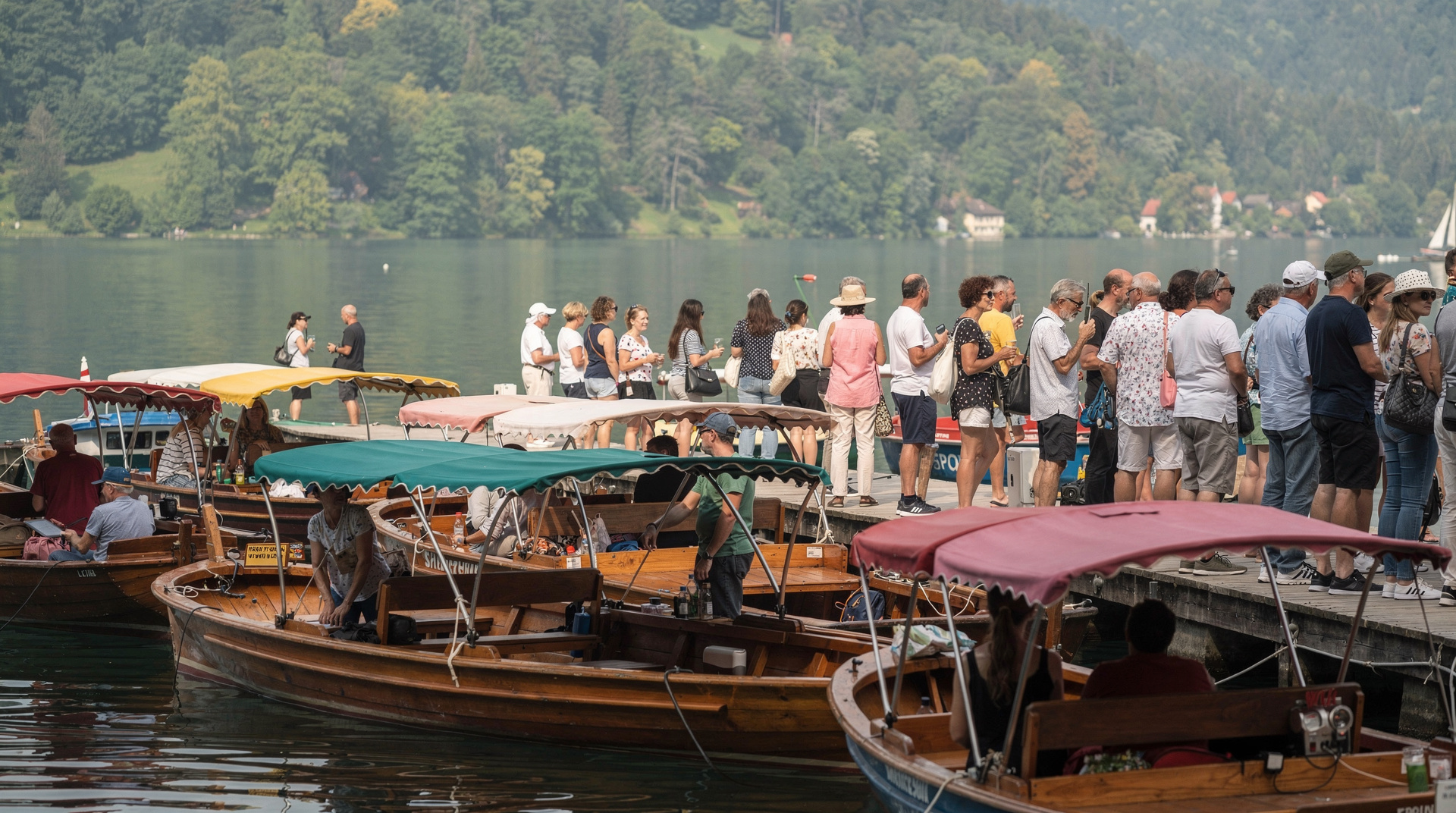
Avoid arriving between 10 am and 3 pm on any summer weekend — the queue for the pletna walk-up is significant, and the island is crowded enough to feel claustrophobic. The guided tour format pre-books a boat, which helps.
Early morning (before 9 am) or late afternoon (after 5 pm) are the sweet spots for a less-crowded experience. The light in the evening is particularly beautiful on the church facade.
For detailed timing strategies, read the how to visit Bled Island guide and the avoiding crowds at Bled guide.
The honest summary: do not let anyone persuade you that you’ve seen Lake Bled if you’ve only been on the island. The iconic view is from the shore, specifically from Ojstrica. The island is a complement to that view, not a replacement for it.
For a complete picture of everything Lake Bled offers and how to prioritise your time, start with the Lake Bled complete guide.
The pletna tradition: what makes it genuinely interesting
The pletna gondoliers are not simply boat operators. The right to operate a pletna boat is a hereditary privilege that has passed through certain Bled families since at least the 17th century, when the local bishop granted the rights to specific lakeside villages. Each boat corresponds to a licence held by a named family; no new licences have been issued in living memory.
The boats themselves are custom-built wooden flat-bottoms, similar in design to the traditional Venetian gondola but adapted for lake rather than canal use. They weigh over 200 kg and are rowed standing at the stern using a single broad-bladed oar. It takes strength and skill — the gondoliers develop characteristic upper-body physiques and typically pass the trade to their children from a young age.
A good guide on the pletna tour will tell you whose family this particular boat belongs to, how many generations it has operated in, and the specific design differences between family boats that locals recognise at a glance.
The Church of the Assumption: what you see on the island
The island has been a sacred site since before Christianity — Slavic pagan rituals were conducted here before the first Christian chapel was built in the 9th century. The current Church of the Assumption dates to 1698 in its baroque form, though built over Romanesque and Gothic predecessors.
Interior highlights:
- The 15th-century Gothic statue of the Virgin Mary, venerated for centuries
- A baroque ceiling fresco
- The wishing bell — bronze, cast in 1534, inscribed in Latin. The rope is the original wooden pull mechanism. Three rings for a wish is the tradition; the number of rings historically corresponded to different categories of prayer.
The island also has a small gift shop and a café terrace (seasonal). The café is overpriced for what it serves — coffee and cakes at triple the village rate — but the terrace view from the island back toward the castle is the one genuinely good view that you cannot get from the shore.
After the pletna: what to do with the afternoon
The pletna experience typically takes 1.5–2 hours. Suggestions for the remainder of the day:
- Lake circuit walk (6 km, flat): The path around the lake is one of the most pleasant flat walks in the Julian Alps. Start after the pletna and complete the circuit before lunch. See the Lake Bled complete guide for the recommended direction and what to look for.
- Vintage points: Ojstrica (20 min up from the southwest shore) for the classic photograph. Free, worth every minute.
- Swimming at Bled: The lake temperature reaches 24°C in July–August. There are official swimming areas at Grajsko kopališče (beach near the castle) and the Mlino area. Water quality is consistently good.
- Kayak or SUP rental: On the water, the scale of the lake becomes apparent. The SUP at Lake Bled guide covers rental options and the best routes.
Is the pletna overpriced? A fair answer
The walk-up rate for a 30-minute return row (confirm the current fare at the quay or at bled.si) is objectively expensive relative to the physical service delivered. It is not overpriced relative to the cultural experience, the rarity of the tradition, and the setting. The fair comparison is not “is this cheap?” but “will I remember this in ten years?” — and for most visitors, the answer is yes.
The guided version with dessert adds real value (guide context, organised format, cream cake). Whether that addition is worth it depends entirely on how you engage with historical narrative. If you read the church signage carefully and find your own context, save the money. If you want someone to bring the history alive, the guide earns their fee here more than almost anywhere else in Slovenia.
For a complete Lake Bled budget breakdown including pletna, castle, and kremna rezina costs, see the is Slovenia expensive guide which covers the full pricing reality across all major visitor categories.
Photographing the pletna and the island
The pletna ride itself photographs well from both directions. From the boat, the gondolier’s rowing stance against the water makes a strong foreground subject, and the approach to the island gives you a rising view of the church tower that most visitors never capture because they are looking at their phones rather than ahead. From the island looking back, the best angle is from the café terrace on the north side, which frames the castle on its cliff above the lake — this is the one shot that genuinely requires being on the island rather than the shore.
Morning light (before 9am) is softer and reduces the glare off the water that plagues midday photos. Evening light after 5pm turns the church facade a warm gold that photographs better than the flat midday version most people bring home. If photography matters to you, weight your visit toward these windows rather than the crowded midday slot, and consider combining the pletna with a walk up to Ojstrica either before or after for the complete set of Bled images.
How the gondolier families keep the tradition alive
Slovenia’s pletna gondolier system is one of the few working hereditary trade guilds left in Europe. The licence to operate a specific boat is passed down within roughly 20 families, some of whom trace their connection to the lake back multiple centuries. New licences are essentially never issued; a family without an heir willing to take up rowing risks losing its right altogether, which has led to a handful of licences lapsing over the decades.
Training starts young — sons and daughters of gondolier families often begin learning the standing-row technique as teenagers, first on calm mornings before the crowds arrive, gradually taking on paying passengers as they build strength and confidence. The physical demands are real: a full day of ferrying tourists back and forth in a 200 kg boat, rowed standing with a single oar, is a serious workout repeated dozens of times between April and October. Off-season, many gondoliers work other jobs around Bled, returning to the oar each spring.
This context is exactly what a good guide adds to the pletna experience — the difference between watching someone row a boat and understanding that you are watching a living guild practice a skill their family has protected for generations. It is one of the strongest arguments for taking the guided version at least once, even if you plan to hire your own rowing boat on a return visit.
Compare top tours
Frequently asked questions about Bled Island Pletna Boat Experience Review
What is a pletna boat?
A pletna is a flat-bottomed wooden gondola unique to Lake Bled, rowed standing up by a gondolier using a single large oar. The design has not changed significantly since the 19th century. Gondolier families hold hereditary rights to operate them, with ownership passing through generations.What does the pletna ride include?
The reviewed tour includes the return pletna boat ride to Bled Island (15 minutes each way), 30 minutes on the island with a guide explaining the Church of the Assumption, time to ring the church bell (said to grant wishes), and a Bled cream cake dessert on the island.Is the pletna ride worth the fare?
Depends on expectations. The pletna is a genuinely beautiful experience and the island setting is lovely. The honest caveat: from the island, you cannot see the famous view of the island from the shore. The most iconic Lake Bled view requires standing on the shore looking at the island, not standing on the island looking out.How long does the pletna experience take?
The full experience with guide and dessert runs 1.5–2 hours: 15 min rowing to the island, 30–40 min on the island, 15 min rowing back, plus time for dessert and meeting/dispersal.How many pletna boats are there?
Approximately 20 pletna boats operate on Lake Bled, all owned by hereditary families. During peak season (July–August) there can be queues of 20–30 minutes at the main boarding point. The tour format pre-books a boat, avoiding the walk-up queue.Can I book the pletna ride online in advance?
Yes, and it is worth doing in July and August. Booking the guided pletna-with-dessert format ahead of time secures a boat slot and skips the walk-up queue, which can run 20–30 minutes at peak times. Walk-up pletna tickets are also available at the landing stage, but there is no guarantee of a short wait during summer weekends.Is the pletna ride wheelchair or mobility accessible?
Partially. The pletna boat itself requires stepping down into a low, unstable boat, which is difficult for wheelchair users and challenging for visitors with limited mobility. The island then has 99 steps up to the church with no lift alternative. Visitors with mobility restrictions are better served by viewing the island from the accessible lakeside path instead.