Piran & Slovenian Coast Panoramic Tour Review
From Koper: Piran and panoramic Slovenian coast tour
Piran and the Slovenian coast: why it deserves more than a half-day
Most visitors to Slovenia treat the coast as an add-on — a half-day detour before flying home from Ljubljana. That is understandable given how compact the country is and how dramatic the alpine interior is. It is also slightly wrong. Piran, in particular, is one of the most beautiful small towns on the entire northern Adriatic coast, and the 47 km of Slovenian coastline contains enough character in Koper, Izola, and the Sečovlje salt pans to justify a full day.
This review covers the panoramic coastal tour from Koper, which circuits the key towns efficiently, and compares it to the food-and-culture variant and the bus-based alternative.
| Where | Koper, Izola, Piran on the Slovenian Adriatic |
| Cost | Around €40–55/person |
| Time needed | Full day, 6–7 hours on the coast |
| Getting there | Included transport, or bus from Ljubljana (~2 hours) |
| Best time | May–June and September for fewer crowds |
The Slovenian coast in brief
Slovenia’s coastline is historically Venetian — these towns were part of the Republic of Venice for 500 years, and the architecture, the piazzas, and even the pastry culture (fritule, crostoli) reflect that. After Napoleon, then Austria, then Yugoslavia, the towns emerged into independence with medieval fabric largely intact and a food culture that bridges Central Europe and the Mediterranean.
The three main towns:
- Koper: The largest and most working-class of the three. Less obviously beautiful than Piran but authentically lived-in — residents actually use Tito Square rather than posing in it for photos. The covered Muda Gate and Loggia are worth an hour.
- Izola: A fishing town that is gentrifying slowly without losing its soul. Good seafood restaurants, a small marina, and minimal tourist infrastructure.
The most honest of the three for a meal.
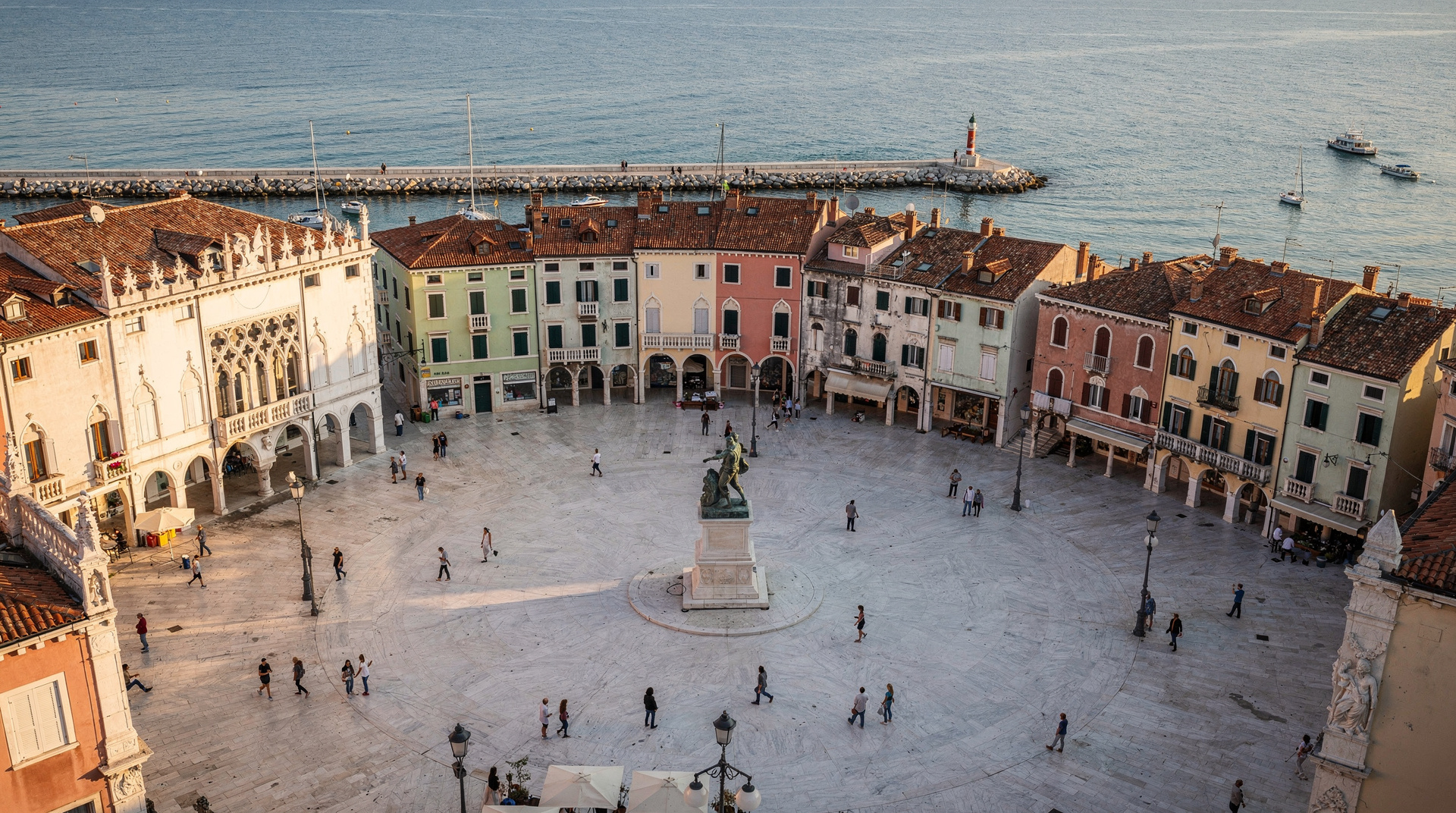
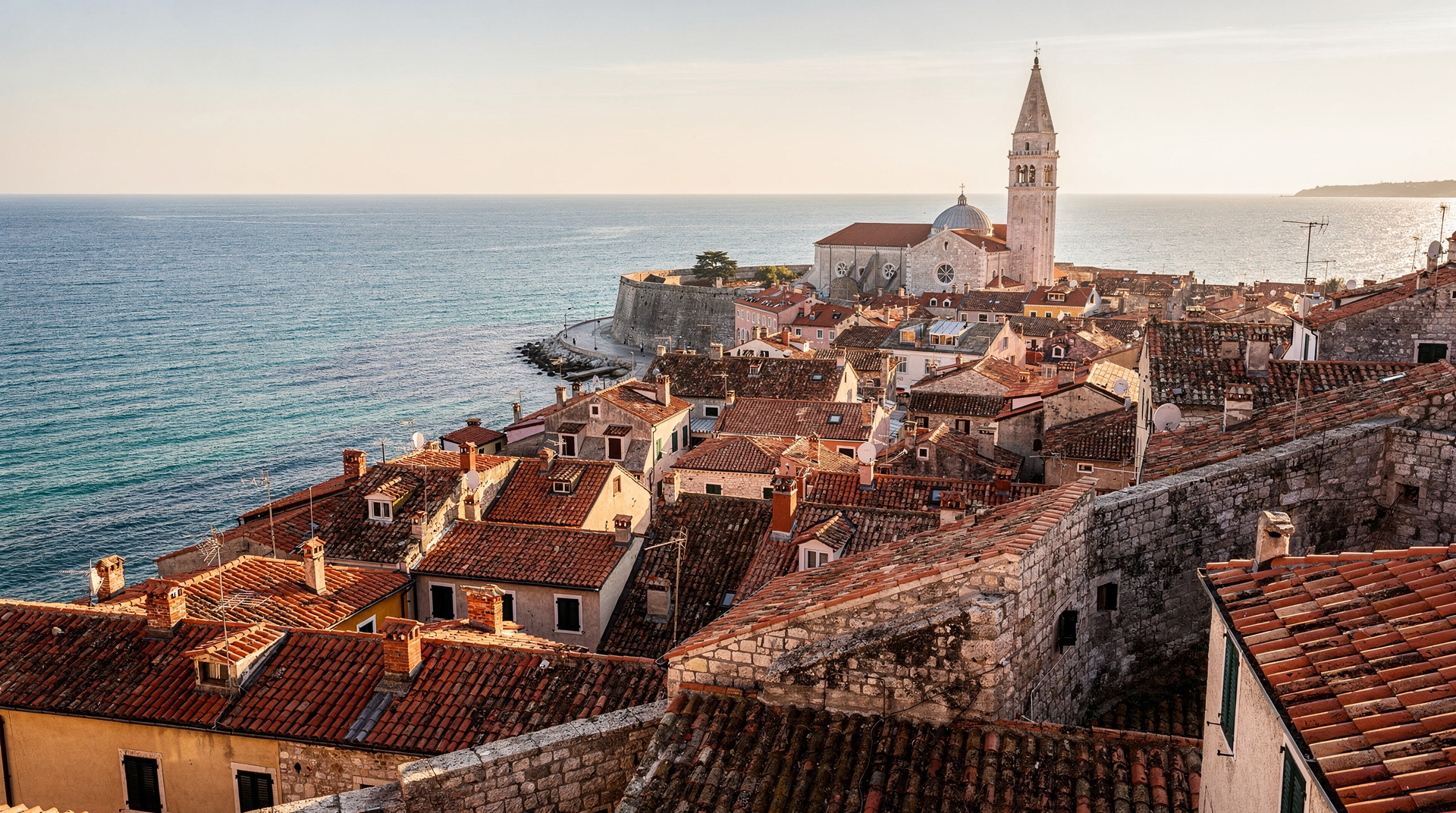
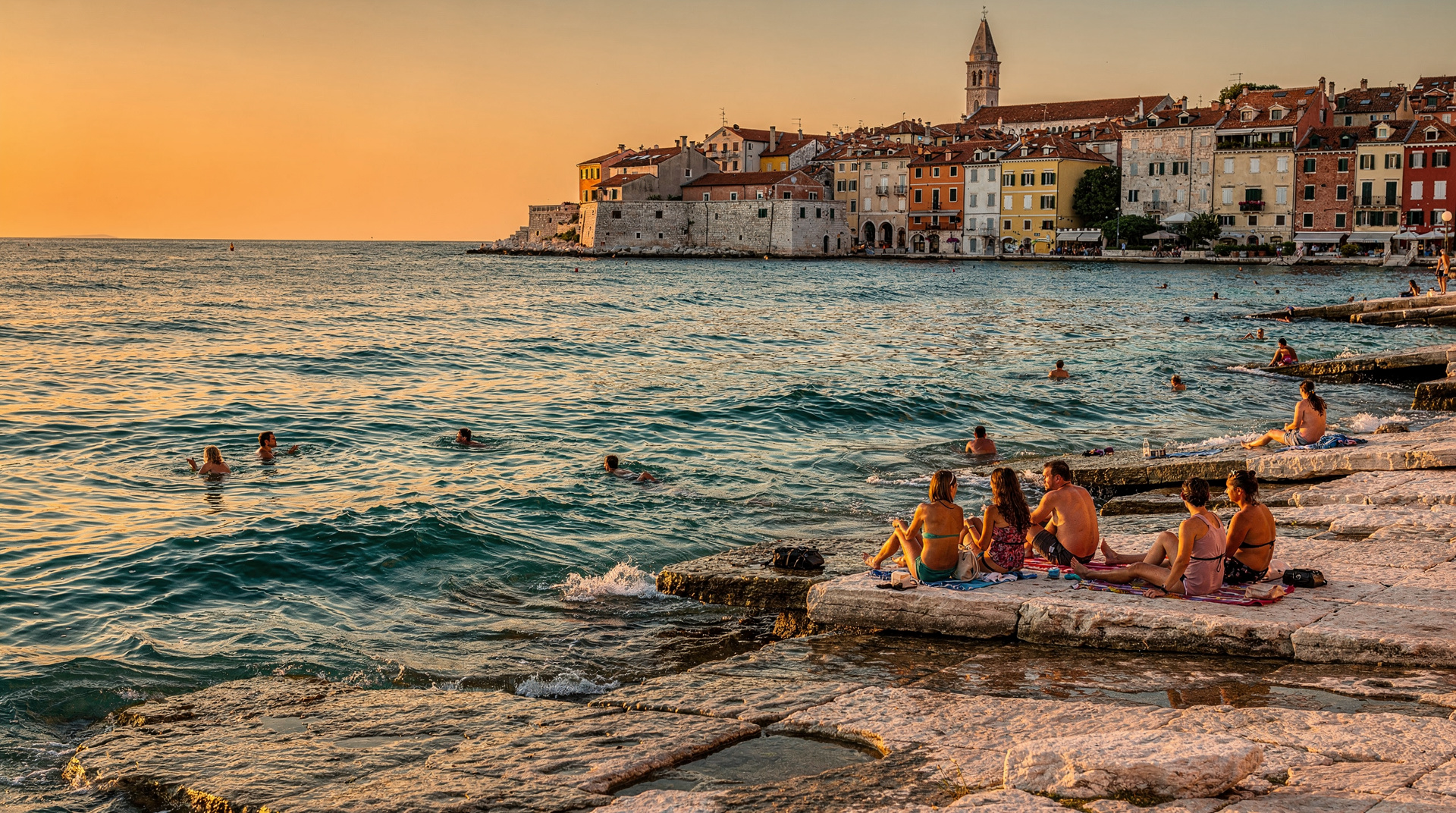
- Piran: The showstopper. A dense medieval town on a narrow peninsula, Venetian-walled, car-free in the core, with Tartini Square (named after the composer Giuseppe Tartini, born here in 1692) as its centrepiece. The church tower climb gives views of the terracotta roofline, the sea on three sides, and on clear days the Venetian lagoon in the distance.
What the panoramic coastal tour covers
The panoramic tour from Koper circuits all three towns with a guide providing historical and cultural context at each stop. A representative itinerary:
Koper (30–45 minutes): Walking tour of Tito Square, the Cathedral of the Assumption, and the medieval loggia. The guide covers the Venetian period, the Austro-Hungarian transition, and why Koper is the only Slovenian port with working commercial docks.
Izola (30 minutes): A brief stop for context and photos at the fishing harbour. The guide typically points out the remains of the medieval walls and the difference between Izola’s working-town character and Piran’s museum-town feel.
Piran (1.5–2 hours): The main event. Tartini Square walking tour, the sea walls and old town circuit, the Church of St George and its tower (climb for €1–2), and free time for a coffee on the waterfront. Some guides include the Sečovlje salt pans or the Strunjan Nature Reserve on a variant route.
What’s included:
- Guide throughout
- Transport between towns
- Entrance fees where applicable (church tower is typically pay-your-own)
What’s not included:
- Meals (Izola has excellent seafood restaurants; budget €20–30 for a proper fish lunch)
- Portorož beach time (if you want to swim, add the afternoon independently)
The land-and-sea riviera tastings tour
The food-and-culture variant extends the coastal circuit with stops at producers — typically olive oil tasting at an Istrian olive producer (Slovenian Istria produces some excellent extra-virgin oil), local wine at a Karst winery, and seafood tastings in Piran. For serious food travellers, this is the more interesting product.
At approximately €75–90 per person versus €40–55 for the standard panoramic tour, the premium reflects the producer access and tastings. The olive oil guide covers Slovenian Istrian olive culture in more detail.
The bus-with-food option from Koper
The Koper-based bus tour (koper-riviera-bus-food in the comparison table) is a cheaper variant that uses public-route buses between coastal towns with guide accompaniment rather than a private vehicle. At approximately €30–45 per person, it works for solo travellers or small groups on a budget. The trade-off: less flexibility on timing and smaller group dynamics can be more variable.
Pricing context
| Option | Approx. price | Notes |
|---|---|---|
| Panoramic coastal tour from Koper (this tour) | €40–55/person | Koper, Izola, Piran with a guide |
| Land-and-sea riviera tastings | €75–90/person | Adds olive oil, wine and seafood tastings |
| Koper riviera bus-food tour | €30–45/person | Public-route buses, cheaper, less flexible |
| Independent bus from Ljubljana | ~€12 return | Free to walk around Piran once there |
The honest calculation: the independent bus option gets you to Piran for €12 round-trip and the town is free to explore. The guided tour adds route optimisation, historical context, and transport between the coastal towns (which are inconveniently linked by public bus). If you have a car, drive yourself and save the tour cost for a good seafood lunch.
Getting to the Slovenian coast independently
From Ljubljana: Direct buses to Piran run 4–5 times daily (2 hours, approximately €10–12 return). The journey via Postojna is slightly faster by car. There is also a bus to Koper and a train to Koper (2 hours, cheaper but requires walking to the old town).
By car: The Ljubljana–Koper motorway takes about 90 minutes. Note the e-vignette requirement for Slovenian motorways — see the driving in Slovenia guide. Parking in Piran old town requires leaving the car at the entry car park (€5–8/day) and walking in.
Combining with other destinations: The coast sits in the same day-trip corridor as Škocjan Caves and Postojna. Ljubljana–Škocjan–Piran is a logical full-day circuit. See the best day trips from Ljubljana for suggested combinations.
Seasonal notes
July–August: Hot and busy. Piran’s Tartini Square and waterfront fill up by 10 am; parking at the car park is tight from 9 am. Restaurants are busy at lunch, though table availability is generally fine.
May–June and September: The ideal window. Warm enough for seafood on a terrace, cool enough for walking without discomfort, and the light quality is excellent.
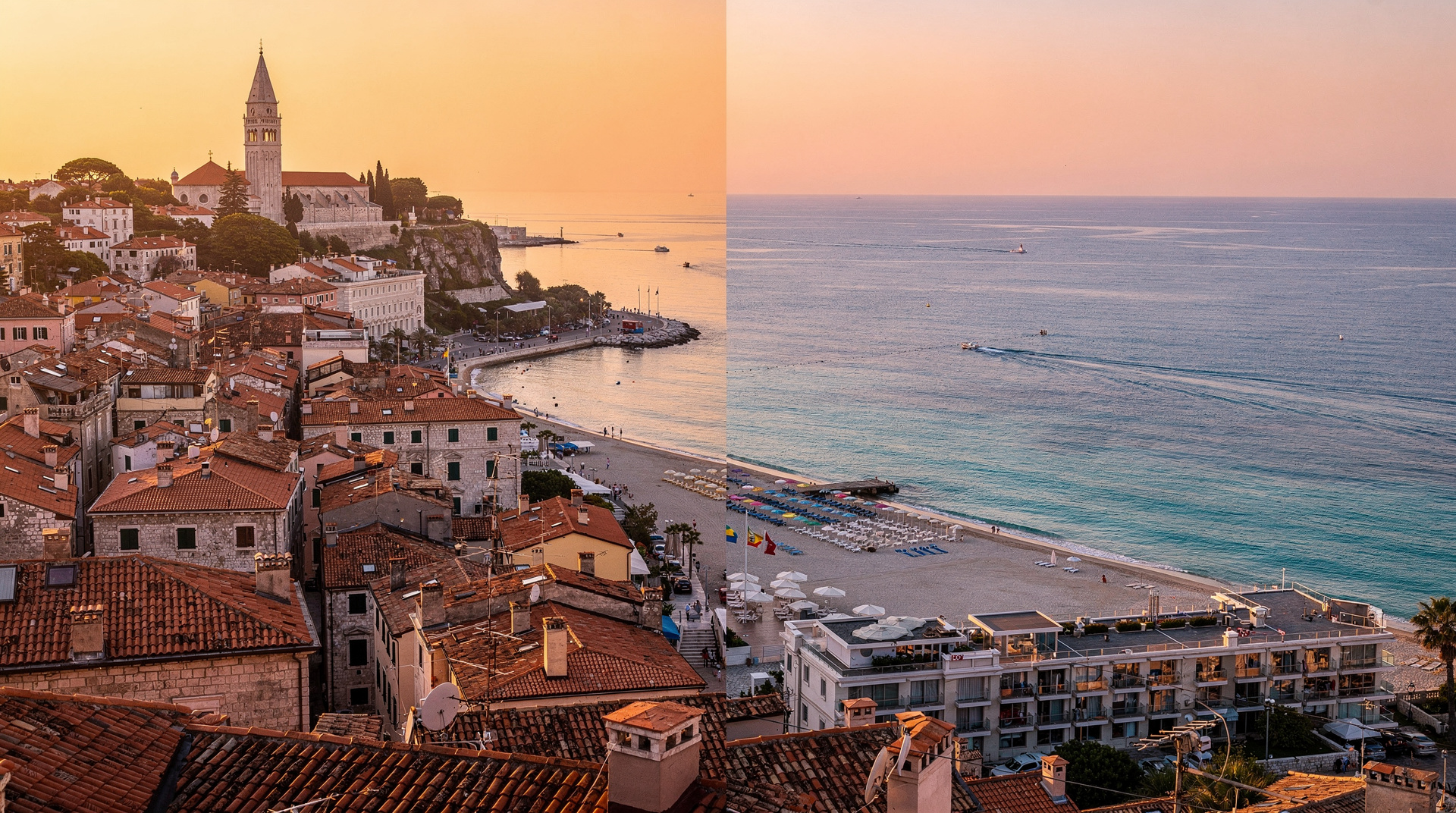
Winter: Piran is beautiful in winter — the stone glows in low light and the town is almost empty. Most tourist restaurants close, but several year-round gostilnas serve excellent simple food.
What to do in Piran beyond the tour
With additional time in Piran:
- Sea walls walk: The medieval walls circle the peninsula with sea views on both sides. Free.
- Tartinijeva hiša (Tartini’s birthplace): Small museum, worth 30 minutes.
- Piran Cathedral and tower climb: €1–2, best view in town.
- Seawater and swimming: The main pebble beach is at Piran Fiesa (15-minute walk), quieter than Portorož. The water is clean.
- Portorož: 3 km along the bay from Piran, a full resort town with sand beaches. Less charming than Piran but more practical for a beach day.
For a full picture, read the Piran travel guide and the Piran vs Portorož comparison.
Sečovlje salt pans: the hidden highlight
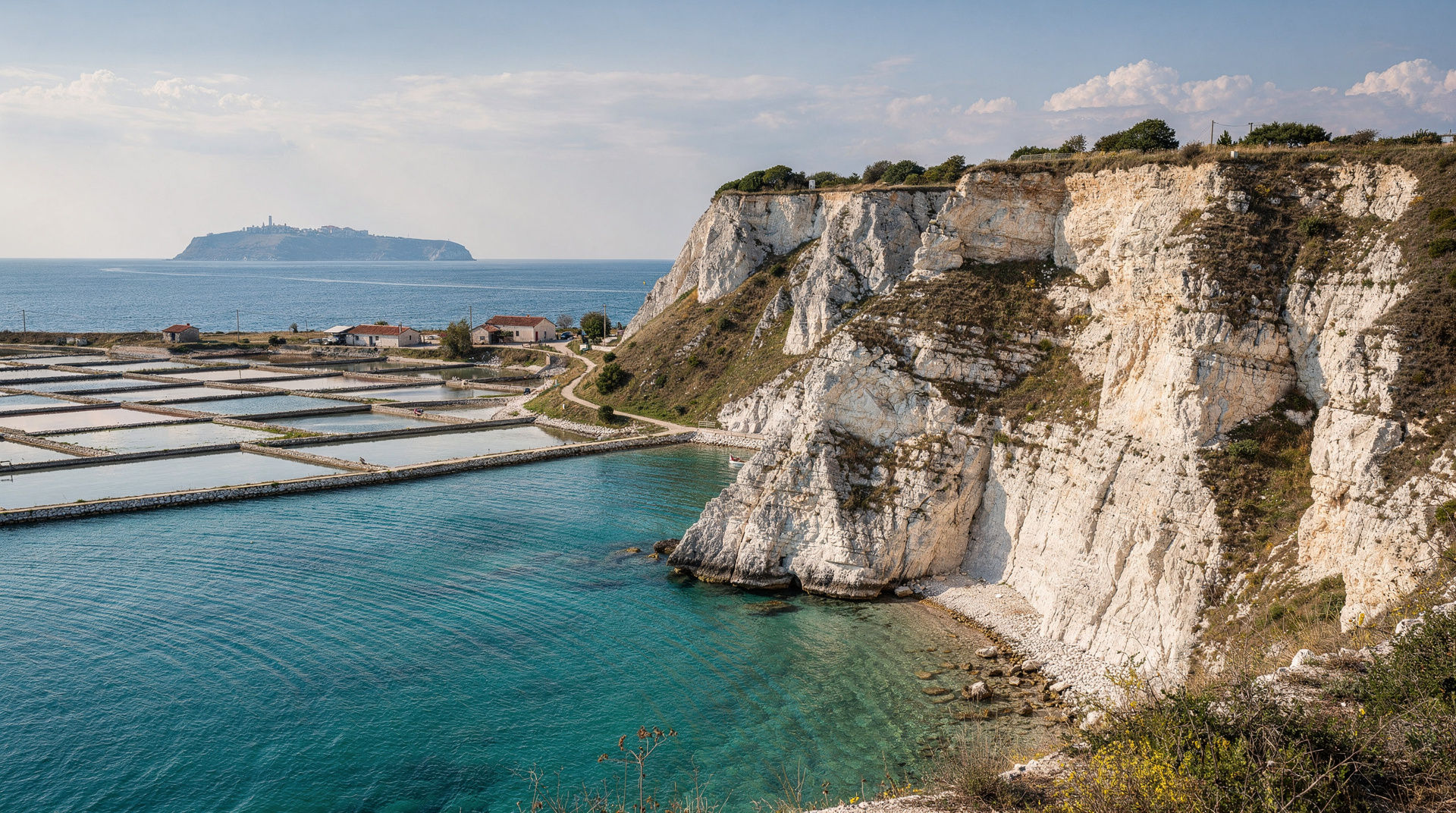
The Sečovlje salt pans, 5 km south of Piran at the Slovenian-Croatian border, are one of the most unexpected nature reserves in the country. The medieval salt-making tradition — using windmills and stone-lined evaporation pans — has continued on this site since the 13th century. The salt is harvested by hand using wooden tools; the product (Piranske soline fleur de sel) is among the most sought-after finishing salts in Slovenia.
The Sečovlje Salina Nature Park has a museum of salt-making and walking paths through the pans. In May, the pans attract hundreds of migratory birds — flamingos have been spotted here in recent years. Some tour variants include a salt pan stop and tasting; it is worth requesting this if available.
See the Slovenian coast guide for the full coastal itinerary including the salt pans.
Seafood on the Slovenian coast
Slovenian Istrian seafood is excellent and underappreciated. The fishing tradition in Izola and Piran is genuine (not decorative) and the catch lands direct into local restaurants. Key dishes:
- Buzara: Mussels or clams cooked in white wine, garlic, and olive oil. Simple, definitive.
- Brancin (sea bass) or orada (gilt-head bream): Grilled whole over charcoal, dressed with oil and lemon. Standard but superb when the fish is the same-day catch.
- Sardinke (sardines): Best in summer, grilled on an open charcoal grill on the harbourfront. Inexpensive and delicious.
- Scampi in Izola style: Fresh-water scampi from the Adriatic, sautéed with local wine — a staple of the better Izola restaurants.
Budget €25–35 for a proper seafood lunch with a glass of local Malvazija wine.
The Istrian interior: olive oil and wine country
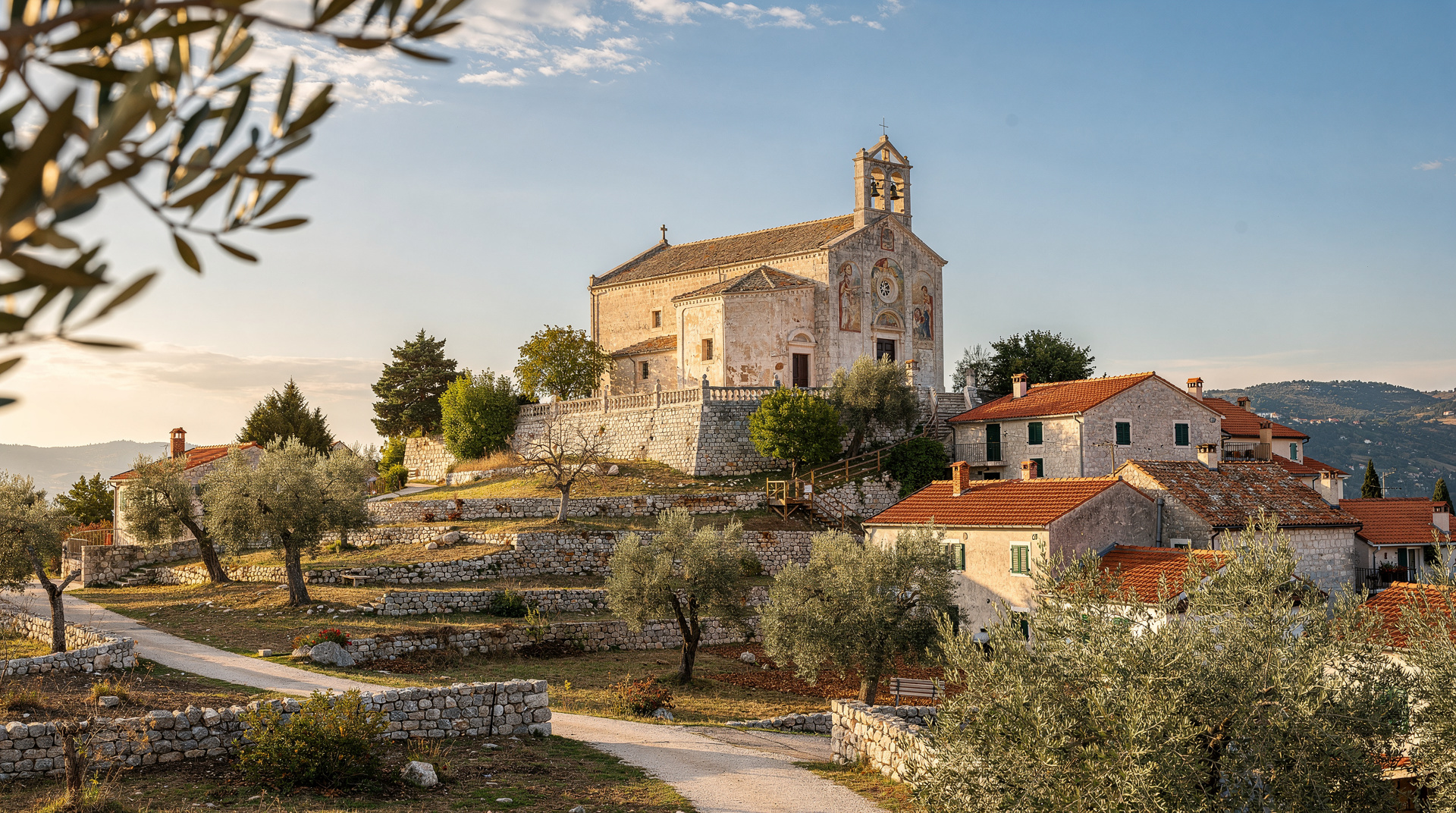
Behind the coastal towns, the Slovenian Istria hills contain olive groves (some of the northernmost in the world), vineyards, and truffle-hunting territory. The Slovenian Istria guide covers the interior towns of Marezige and Gažon where truffle-hunting is organised.
The olive oil of Slovenian Istria has European PDO status. The harvest (November–December) is when the oil is at its freshest, but producers sell year-round from their farm gates. Several tour variants include an Istrian farm visit — worth adding if you care about olive oil provenance.
The panoramic Slovenian coast tour is the right call for visitors without a car, those combining the coast with other sites on a day trip, or anyone who values guide context for Venetian history they would otherwise miss. The food-and-culture variant earns its premium for serious eaters.
If you have a car and are comfortable navigating independently, drive yourself — the freedom to linger in Izola for a two-hour fish lunch is worth more than the tour. But either way, go to Piran. It is genuinely one of the most beautiful small towns in this part of Europe, and most visitors spend far too little time there.
For honest context on what Portorož adds (and when to skip it), see the Piran vs Portorož guide. For the full coastal picture, the Slovenian Istria guide is the most thorough reference.
Photographing Piran and the coast towns
Piran rewards patience with a camera more than almost anywhere else in Slovenia. The Church of St George’s tower climb (€1–2) gives the single best overview shot — the terracotta rooftops, the peninsula shape, and the sea on three sides in one frame. At street level, the narrow lanes between Tartini Square and the harbour catch beautiful raking light in the late afternoon, when the Venetian stone glows gold rather than the flat white of midday sun.
Koper’s old town is less photogenic overall but the Loggia and the Praetorian Palace on Tito Square are worth 15 minutes with a camera, particularly in the soft light of early morning before the square fills with locals going about daily business. Izola’s harbour, with working fishing boats rather than yachts, offers the most authentic maritime shots of the three towns — arrive before 9am to catch the boats still unloading the morning catch.
The coast in winter: an underrated option
Most visitors write off the Slovenian coast outside May–October, but winter has its own appeal for those who don’t need beach weather. Piran in December and January is close to empty of tourists, many restaurants that serve only locals stay open, and the low winter light on the pale Venetian stone produces some of the best photography conditions of the year. Temperatures hover around 8–12°C during the day — cold enough for a coat, not cold enough to make walking unpleasant.
The trade-off: seasonal restaurants and the tourist office’s extended hours close down, the Sečovlje salt pans are less visually dramatic without the summer bird migrations, and swimming is obviously off the table. For travellers who prioritise quiet, authentic atmosphere over swimming and beach time, a winter coastal day trip is a genuinely underrated addition to a Slovenia itinerary built around Ljubljana’s Christmas markets or a winter visit to the Julian Alps.
Compare top tours
Frequently asked questions about Piran & Slovenian Coast Panoramic Tour Review
What does the panoramic Slovenian coast tour cover?
The tour covers Koper (Venice-influenced medieval old town), Izola (fishing town, authentic and less touristed), and Piran (the most beautiful medieval town on the Slovenian coast). Some variants add the Sečovlje salt pans.Is the Slovenian coast worth visiting?
Yes — Piran in particular is one of the most beautiful medieval towns in the northern Adriatic. At 47 km, Slovenia's coast is short but punches well above its weight. It is less crowded and cheaper than comparable Croatian or Italian coast towns.How far is Piran from Ljubljana?
Approximately 120 km (90 minutes by car via the motorway). Direct buses run from Ljubljana to Piran (2 hours, €10–12 return). The coast is also easily combined with Postojna or Škocjan caves on the same day.What is Piran like?
Piran is a compact Venetian-influenced walled town on a small peninsula. The old town is car-free. Key sights: Tartini Square (one of the most beautiful Venetian-style squares outside Venice), the Church of St George with panoramic views, the sea walls, and the old salt pans nearby.When is the best time to visit the Slovenian coast?
May–June and September–October for pleasant temperatures without peak summer crowds. July–August is hot (30°C+) and busy, particularly in Piran. Winter is quiet, many seasonal restaurants close, but the light on the Venetian stone is exceptional.Can I swim on the Slovenian coast day tour?
The standard panoramic tour is town-focused and does not build in swimming time, though the free time in Piran can be used for a quick dip at Fiesa beach if you bring a swimsuit. If beach time is a priority, plan an independent afternoon at Portorož afterward or choose a variant with more free time.Is Koper worth visiting on its own?
Koper works better as part of a coastal circuit than as a standalone destination — its old town core (Tito Square, the Cathedral, the Loggia) takes under an hour to see properly, and it is less immediately charming than Piran. Combining it with Izola and Piran, as the panoramic tour does, is the better use of a day.