Slovenia's wine harvest: visiting Goriška Brda and Vipava in September
The harvest as a reason to go
Most travel to Slovenia is structured around the mountains, the lakes, the caves. The wine regions — Goriška Brda and the Vipava Valley — sit at the western edge of the country and receive a fraction of the visitor numbers that descend on Bled and Postojna.
In September and October, this changes somewhat. The harvest draws Slovenians from across the country, and a growing number of wine-literate foreign visitors who have started to map the eastern edge of the Italian-Slovenian wine belt that runs from Friuli to the Slovenian coast.
What they find: serious wines at pre-discovery prices, a landscape that changes week by week through the harvest, and an agricultural culture that has not yet learned to perform itself for tourists.
| Where | Goriška Brda and Vipava Valley, western Slovenia |
| When | Mid-September to mid-October |
| Getting there | Car essential, around 1h20 from Ljubljana |
| Cost | Around €14-18/bottle at the winery, tastings €10-20 |
| Booking | Contact wineries ahead during harvest — walk-ins limited |
The geography and the wines
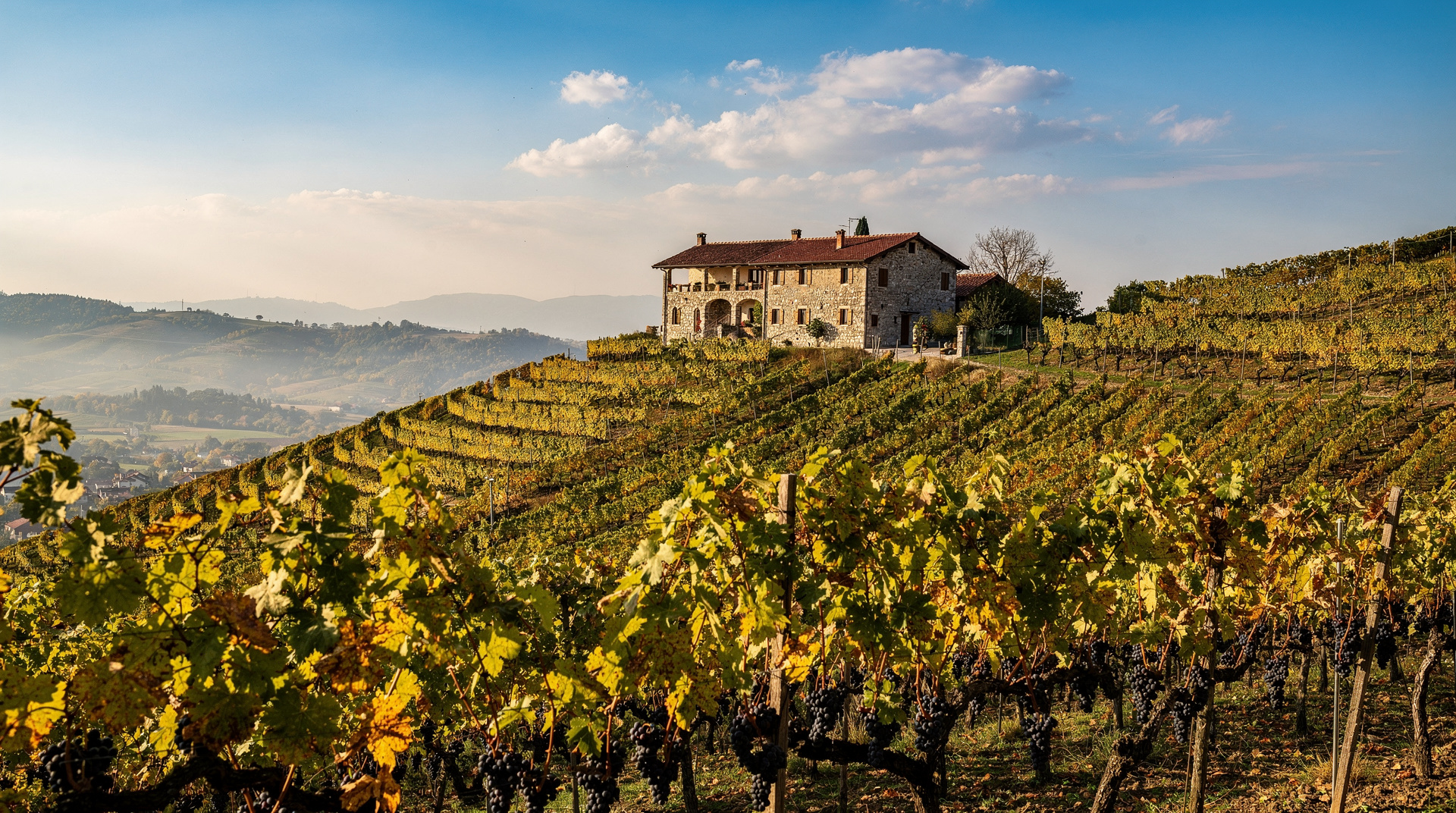
Goriška Brda sits on the southwestern edge of Slovenia, separated from Italy’s Collio DOC by a border that divides the same soils, the same climate and in many cases the same grape varieties. The rolling hills of the Brda — terraced vineyards on low rounded hills, medieval villages at their crests — produce wines of genuine complexity.
The principal varieties are Rebula (Ribolla Gialla in Italy, the signature white of the region, oxidative, mineral, with a long ageing potential), Malvazija (the lighter, fresher everyday white), Beli Pinot (Pinot Blanc), and — increasingly — orange wines made by extended skin contact that have attracted international attention. Reds include Merlot and Cabernet, though these are less interesting than the indigenous whites.
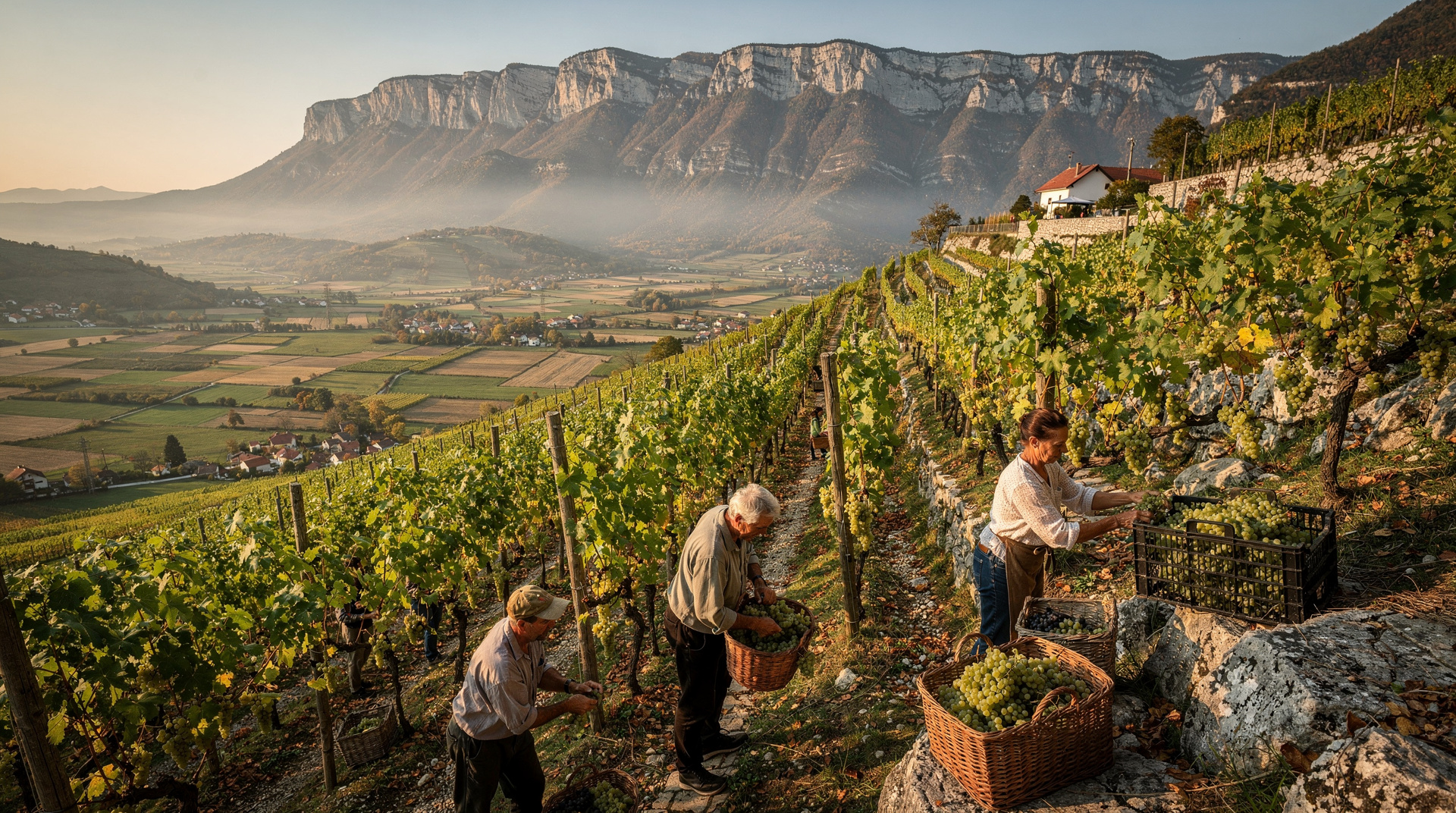
Vipava Valley sits immediately to the east of Brda, separated by the Vipavska Brda hills. The valley runs southeast-northwest and is regularly visited by the bora — the cold karstic wind that originates on the Adriatic and accelerates through the valley gap. The bora dries the skins of the grapes and concentrates the flavour; wines from the Vipava tend toward higher acidity and more aromatic intensity than Brda.
The Vipava speciality: indigenous varieties that exist virtually nowhere else — Zelen (green) and Pinela, both light, aromatic whites with a dedicated following among natural wine enthusiasts.
The harvest calendar
The harvest window runs from approximately mid-September through mid-October, depending on variety and vintage conditions. In a warm year, some early-ripening whites begin in early September. In a cool year, some reds extend into November.
Rebula is typically harvested in late September to early October. The late-harvest selections (dried-grape Rebula for sweet wines) extend into November in some years.
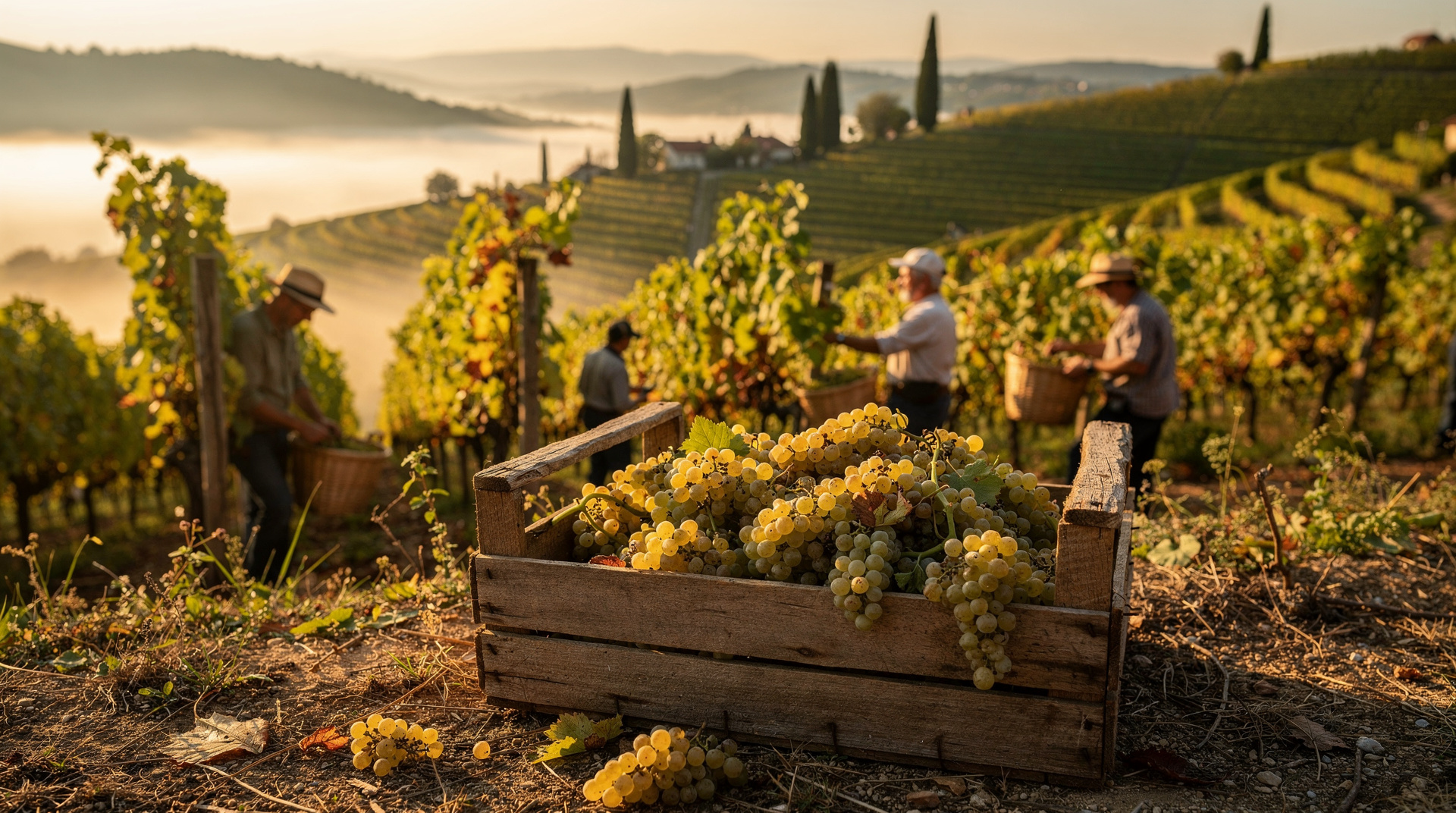
The fermentation activity — the smell of new wine in the air, the noise of the presses, the constant movement of tractors on narrow vineyard roads — is most concentrated in the first two weeks of October.
Visiting wineries during harvest
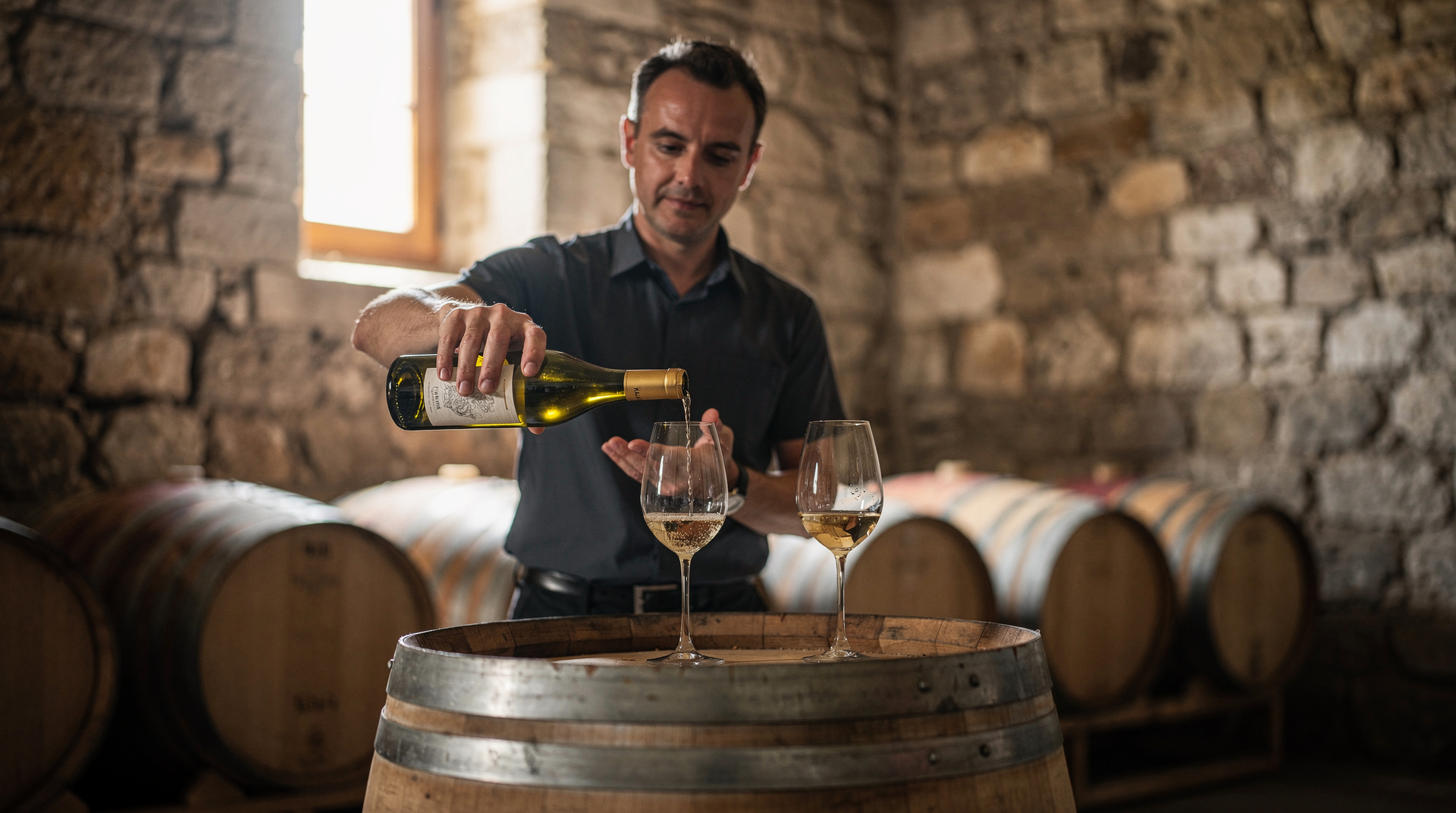
The harvest is the best time to visit Slovenian wineries because the winemakers are physically present, engaged in the work, and often willing to show you what is happening rather than conducting a standard tasting.
A note on logistics: during harvest, most wineries are not set up for unannounced visits. Contact by email or telephone in advance is strongly recommended. The wineries that welcome visitors most consistently:
Edi Simčič (Ceglo, Brda): one of Slovenia’s most respected producers; Rebula and Merlot of serious quality. Tastings by appointment.
Marjan Simčič (Ceglo, Brda): a different Simčič family, equally respected. The Opoka single-vineyard Rebula is among the country’s best whites.
Kmetija Stekar (Šlovrenc, Brda): family estate producing excellent Jakot (Tocai Friulano) and orange wines; welcoming to visitors.
Batič (Šempas, Vipava): one of the longest-standing biodynamic producers in Slovenia; Zelen and Pinela at high quality.
Burja (Planina pri Ajdovščini, Vipava): smaller estate focusing on indigenous varieties; the Burja red is consistently impressive.
The Goriška Brda wine guide and Vipava Valley wine guide have more specific recommendations.
The villages during harvest
Smartno in Brda, on a normal autumn weekend, is a quiet village of 100 people with two restaurants and a view. During the harvest, it fills with Slovenian families who come for the weekend: for the chestnuts (sold roasted by the bag at village markets), for the new wine (mladoletnik — “young wine” — sold for €2-3 a glass at every farmhouse with a sign in the window), and for the festival atmosphere that doesn’t involve tour buses.
The Brda Traditional Festival in late September is a regional harvest festival with tastings, music and village walks. The dates move slightly each year; check the local municipality website.
The village of Dobrovo, with its Renaissance castle (now housing the local wine cooperative’s tasting rooms), hosts open winery events through the harvest period. You can taste 30-40 producers under one roof.
Food during harvest
The harvest table in Brda and Vipava is autumn-specific and excellent. The dishes that appear in October: pumpkin goulash, wild mushroom polenta, the first chestnuts, roasted lamb from the Karst plateau. The gostilne in the valley towns extend their seasonal menus through October.
The jota — a thick soup of sauerkraut, potatoes and dried beans — is the Slovenian comfort dish that appears with the first cold weather, typically October. Every gostilna has its own version; ask for it.
Getting to the wine regions
From Ljubljana: 1h20 to Dobrovo in Brda by car, via the motorway to Razdrto and then west toward Nova Gorica. The Vipava Valley is directly on the Ljubljana-Nova Gorica road: exit at Ajdovščina.
From the Soča Valley: Brda is 30 minutes south of Tolmin via Nova Gorica.
From Italy: Gorizia is 15 minutes from Dobrovo; both Gorizia and the parallel Slovenian city Nova Gorica are at the heart of the cross-border wine region.
There is no practical public transport for visiting multiple wineries. A car is essential, which means a designated non-drinking driver or a multi-day stay based in a single location. For visitors who would rather not deal with driving-and-tasting logistics themselves, a guided day trip from Ljubljana with a driver removes the problem entirely.
Vipava Valley wine tasting express day trip from LjubljanaThe honest pitch
The wine regions of western Slovenia — undervisited, underpriced, under-written-about in English — offer an October experience that has more in common with the wine harvest in Burgundy or Alsace than with the standard Slovenian tourist circuit. The wines are serious, the landscape is beautiful, and the harvest atmosphere is entirely genuine.
Come with a list of wineries, a few days spare, and no fixed itinerary. The best discoveries in Brda are the ones where you follow a track off the main road because the vineyard looks interesting.
The new wine making in 2025-2026
The natural wine movement has been transformative for Goriška Brda and the Vipava Valley in the last decade. Winemakers who were producing conventional varietal wines in the 1990s and 2000s have shifted toward orange wines (extended skin contact), low-sulphite production, and indigenous variety revival.
The result is a regional wine culture that is simultaneously traditional (the varieties grown here have been grown here for centuries) and forward-looking (the winemaking techniques are being reinvented). The same Rebula grape that produces the traditional light white in a conventional style produces a deep amber orange wine in a skin-contact approach — two entirely different wines from identical raw material.
For the visitor: tasting the same producer’s conventional and orange-wine versions of the same variety is one of the more instructive wine education experiences available anywhere in Europe.
Truffle season overlap
The autumn harvest in western Slovenia overlaps with the white truffle season in the Istrian hills immediately to the south. The Slovenian part of Istria — accessible from Piran or Koper — produces black and white truffles through October and November.
The truffle hunting guide covers the Istrian truffle season in detail. For the visitor timing their trip around the Brda harvest: a two-day extension to the coast and Istrian hills adds the truffle dimension to what is already an autumn food trip of considerable depth.
The combination of harvest in Brda (wine, olive oil, chestnuts), truffle season in Istria, and the mushroom season throughout the whole of western Slovenia in September-October produces a three-week window that is the best food tourism period in the country.
The orange wine question
Slovenia’s orange wines have found international audiences in specialist wine bars in London, Paris and New York. The country is producing some of the most discussed skin-contact wines in Europe, and Brda and Vipava winemakers are increasingly well-known in the natural wine community.
What this means for visitors: the wines at the wineries cost substantially less than they do in the export markets. A bottle of Movia Lunar (one of the benchmark Slovenian orange wines, made from Ribolla Gialla) retails for €30-40 in a London wine shop. At the winery it sells for €14-18.
The Slovenian wine guide covers the full picture of the country’s wine regions and styles. For the harvest-specific experience, come in September or October and plan the winery visits as the core of the trip rather than as sidebars to the mountain and lake circuit.
Practical harvest itinerary
A four-day harvest itinerary based in Goriška Brda:
Day 1: arrive in Dobrovo. Visit the cooperative tasting room at the castle for an overview of the region. Dinner at a local konoba with seasonal vegetables and prosciutto.
Day 2: morning at two estate wineries (Edi Simčič and Marjan Simčič are both in Ceglo, 3 km apart). Afternoon: walk the ridge road from Smartno to Vipolže for the vine-leaf colour. Evening: new wine (mladoletnik) at a village house.
Day 3: drive to the Vipava Valley (30 min). Morning at Batič winery. Afternoon: the Vipava Valley wine bar in Ajdovščina for the local co-operative overview. Drive south toward Trieste or the coast.
Day 4: Piran for the sea, the Sečovlje salt pans for the salt harvest (if still in season), return to Ljubljana or fly from Trieste.
The getting around Slovenia guide covers the logistics between the wine country, the coast, and the capital.
What to book ahead and what to leave open
The one part of a harvest trip worth locking down in advance is winery appointments, since the estates with the best reputations (Edi Simčič, Marjan Simčič, Batič) genuinely cannot accommodate walk-ins during the busiest harvest weeks — the winemakers are in the vineyard or the press house, not the tasting room. Everything else — which village to wander, which gostilna to eat at, whether to add the truffle or coast extension — is better left loose. If you would rather not arrange individual estates yourself, a guided walk through the Brda vineyards with a tasting is an easy thing to book ahead while keeping the rest of the days open. The harvest calendar shifts by a week or two each year depending on the vintage, so a rigid day-by-day plan booked months ahead risks arriving either before or after the most interesting activity.
A realistic minimum is three nights based in or near Goriška Brda, which allows two full winery days plus the Vipava Valley extension without rushing any of it. Fewer than three nights turns the trip into wine tourism as a checklist rather than the slower, harvest-paced experience that makes the region worthwhile in the first place.
Comparing Brda and Vipava for a shorter visit
If time only allows one of the two regions rather than both, the choice comes down to what you want from the wine itself. Goriška Brda suits visitors who want the more polished, internationally recognised wines (Rebula, the Simčič estates) and a landscape of rolling terraced hills that photographs beautifully. The Vipava Valley suits visitors specifically curious about indigenous varieties found almost nowhere else (Zelen, Pinela) and a rawer, windier, less-visited landscape shaped by the bora. Neither is objectively better; Brda is the safer first choice for a wine novice, Vipava rewards a visitor who already has some interest in natural and indigenous wine.
Folding the harvest into a wider trip
A harvest visit does not have to be a standalone trip. The wine country sits between the capital and the coast, so it fits naturally into a longer route. The slow travel and gastronomy itinerary is built around exactly this kind of food-led pacing, and the coast and mountains itinerary shows how to link the west of the country with the Alps.
If the trip starts in Ljubljana, the Ljubljana central market is a good place to taste the season before heading west, and the Slovenian food guide explains the dishes you will meet at harvest-time tables. For travellers wondering about timing in general, the autumn guide and the best time to visit page put the harvest window in context with weather and crowds.
Wine travellers who also like the outdoors can pair the vineyards with the Soča Valley, which is close enough to combine. Anyone planning the drive between regions should read the car rental guide and the driving and vignette guide first. For a wider seasonal read, the blog post on autumn colours in Slovenia shows what the landscape looks like once the leaves turn, and the off-season travel article covers what changes once the harvest crowds thin out.
Top experiences
Bookable activities with verified prices and instant confirmation on GetYourGuide.