Lipica and the Lipizzaner horses: the original stud farm
From Ljubljana: Lipica stud farm and coastal Piran
What is Lipica famous for?
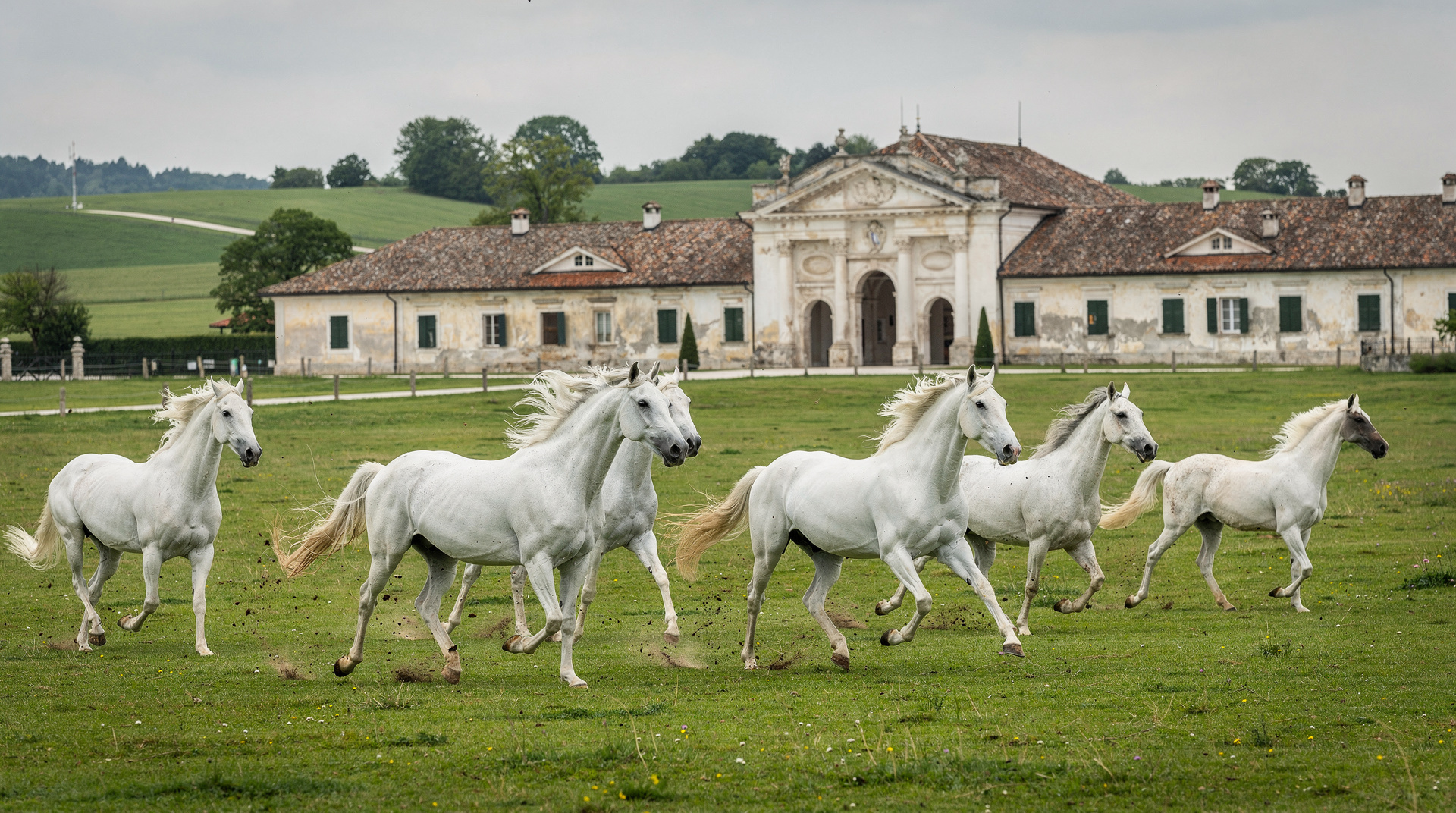
Lipica is the original stud farm of the Lipizzaner horse — the white horses of the Spanish Riding School in Vienna. The Kobilarna Lipica has been breeding Lipizzaners continuously since 1580, making it one of the oldest horse-breeding operations in the world. Visitors can watch training sessions, attend the Classic Riding Show and tour the stud farm stables and grounds.
Lipica: where the white horses of Vienna come from
The Spanish Riding School in Vienna is one of the most visited institutions in Central Europe, watched by millions of people each year who observe its white horses performing movements of extraordinary precision and power. Very few of those visitors know that those horses come from a small stud farm on a limestone plateau in southwestern Slovenia.
Lipica — 7 kilometres from the Divača rail junction, surrounded by karst forest — has been breeding Lipizzaner horses since 1580. The Habsburg Archduke Charles II of Inner Austria established the stud on this site specifically, importing Spanish, Italian and Barb horses to develop a riding school horse for the imperial court. For four and a half centuries, with interruptions during wartime and political upheavals, the horses have been bred here on the same ground.
The stud farm today (Kobilarna Lipica) is a Slovenian public institution, one of five remaining official Lipizzaner stud farms in the successor states of the Habsburg Empire. It is also a cultural site of the first order — part of a living horse-breeding tradition that has shaped equestrian culture across Europe for 430 years.
| Where | Sežana municipality, 100 km southwest of Ljubljana |
| Founded | 1580, by Archduke Charles II of Inner Austria |
| Basic visit | From EUR 16 (guided visit of the stud farm) |
| With Classic Riding Show | From EUR 25 (visit included) |
| Time needed | The guided visit lasts about 60 minutes; allow more with the show or training |
| Best time | May–June for foals and the flowering karst landscape |
The Lipizzaner: history in brief
The breed name comes from Lipica (Lipizza in Italian, Lippiza in German). The founding bloodstock combined Spanish Andalusian horses — prized for their collection and elevated movement — with Italian (Neapolitan), Arab and local Karst horse lines. The Karst horses contributed hardiness; the Spanish and Italian lines contributed the elegance and trainability required for haute école dressage.
The breed was nearly exterminated three times: during the Napoleonic Wars (the mares were evacuated deep into Croatia and Slovakia), during World War I (evacuated to Bohemia and Hungary), and most dramatically in World War II (General George Patton’s US Army rescued the horses from German custody in 1945 in what became known as Operation Cowboy — a story well enough known to have been made into a Walt Disney film in 1963).
Today the Lipizzaner is bred at six stud farms: Lipica (Slovenia), Piber (Austria, which supplies the Spanish Riding School), Đakovo (Croatia), Szilvásvárad (Hungary), Kladruby nad Labem (Czech Republic) and Topol’čianky (Slovakia). All these farms, plus the Spanish Riding School and the Lipica stud farm, are inscribed on UNESCO’s tentative list for a transnational World Heritage nomination — still pending as of 2026 but advancing.
The Lipizzaner Heritage organisation coordinates the breed management and has been recognised by the Council of Europe as a pan-European cultural heritage project.
What to see at Lipica
The stud farm buildings: The original seventeenth-century stud buildings have been expanded and modified over the centuries but retain their core character — low limestone buildings around a series of courtyards, the horses visible in their stalls, the architectural vocabulary of a working agricultural estate rather than a tourist installation. This is genuinely unusual among horse attractions, which tend to over-design for visitors. Lipica still looks like a place where horses are bred and trained, not a theme park.
The paddocks and young horse programme: The farm’s fields hold mares with foals, young horses in various stages of training, and the breeding stallions. A visit in spring (May–June) offers the best chance of seeing young foals — born dark and gradually whitening. The sight of a paddock full of dark foals with a few adult white horses is one of the more visually surprising moments at Lipica, given the expectation of white horses everywhere.
Official training: The riding school’s official training sessions are open to visitors (from EUR 22, stud farm visit included); check the official Lipica stud farm website for current times. This is a working session rather than a performance — you see exercises, corrections, transitions — and it gives a better sense of the actual training relationship between horse and rider than the polished performance show.
The Classic Riding Show: The signature visitor event — a performance in the indoor riding hall (starting at 15:00) with multiple pairs performing classical dressage movements and the airs above the ground. Horses and riders are presented in period dress. The capriole (a levitated kick) and the levade (raised hindquarters balanced) are the crowd highlights. Tickets start from EUR 25, stud farm visit included; check the official Lipica stud farm website for the exact show days. Worth it.
The visitor exhibition: A well-presented permanent exhibition on the breed’s history, the stud farm’s relationship with the Spanish Riding School and the wider Lipizzaner heritage network. Better than average for a stable attraction.
Carriage rides: Horse-drawn carriage rides around the farm grounds are available daily from 11:00 to 15:00 (from EUR 35). Good for families or for experiencing the landscape and the farm atmosphere without walking.
The Karst landscape around Lipica
The stud farm sits on the Classical Karst plateau — the limestone terrain that gave the word ‘karst’ to geology. The landscape is distinctive: rocky, forested with Mediterranean oak and black pine, dotted with sinkholes and limestone outcrops, with a quality of light that differs from the Alpine zones to the north.
The farm grounds themselves extend into the forested karst, with paths for walking and horse trekking among the trees. In spring the karst forest floor has a brief flowering season that is worth seeing.
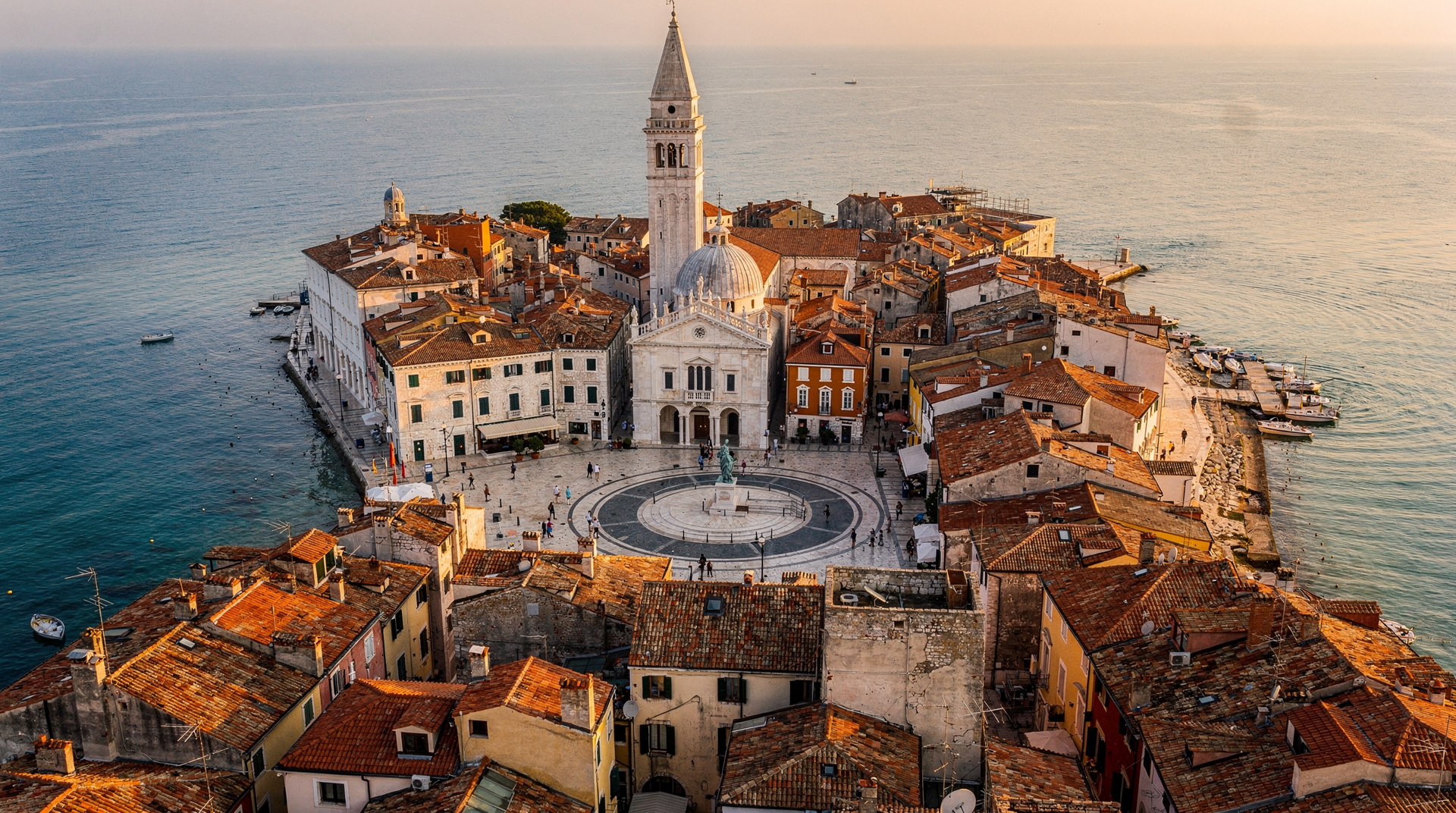
The Lipica and Piran full-day tour combines the stud farm with the coastal town of Piran on the Adriatic — two very different experiences that together give a sense of the remarkable geographical and cultural range compressed into the southwestern corner of Slovenia. The Karst plateau and the Venetian-influenced coast are less than 45 kilometres apart.
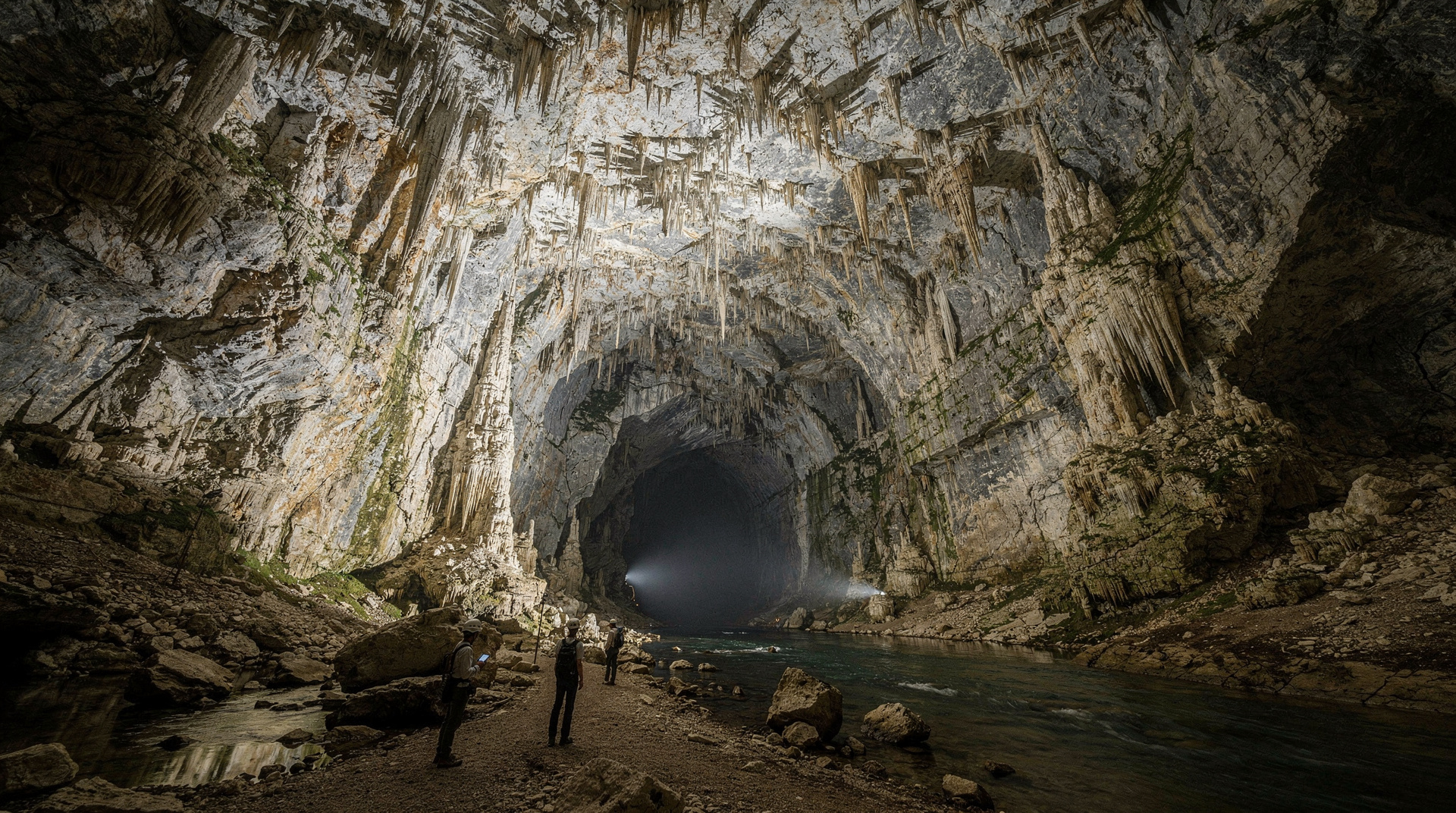
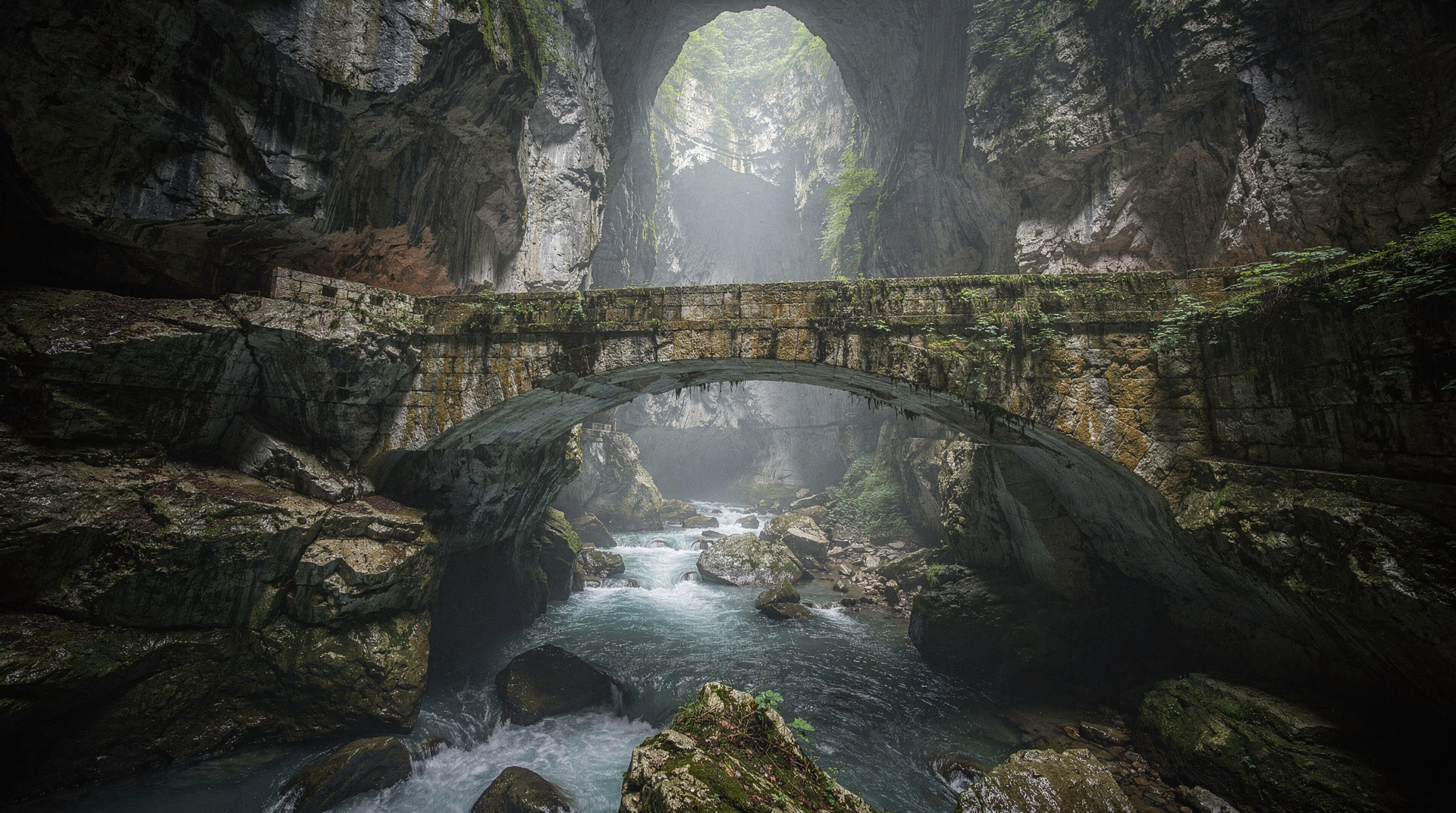
If you would rather not drive the Karst roads yourself, a private tour that pairs the stud farm with the Škocjan Caves lets you set the pace at the stables and spend the rest of the day underground without worrying about parking or timing.
Combining Lipica with nearby attractions
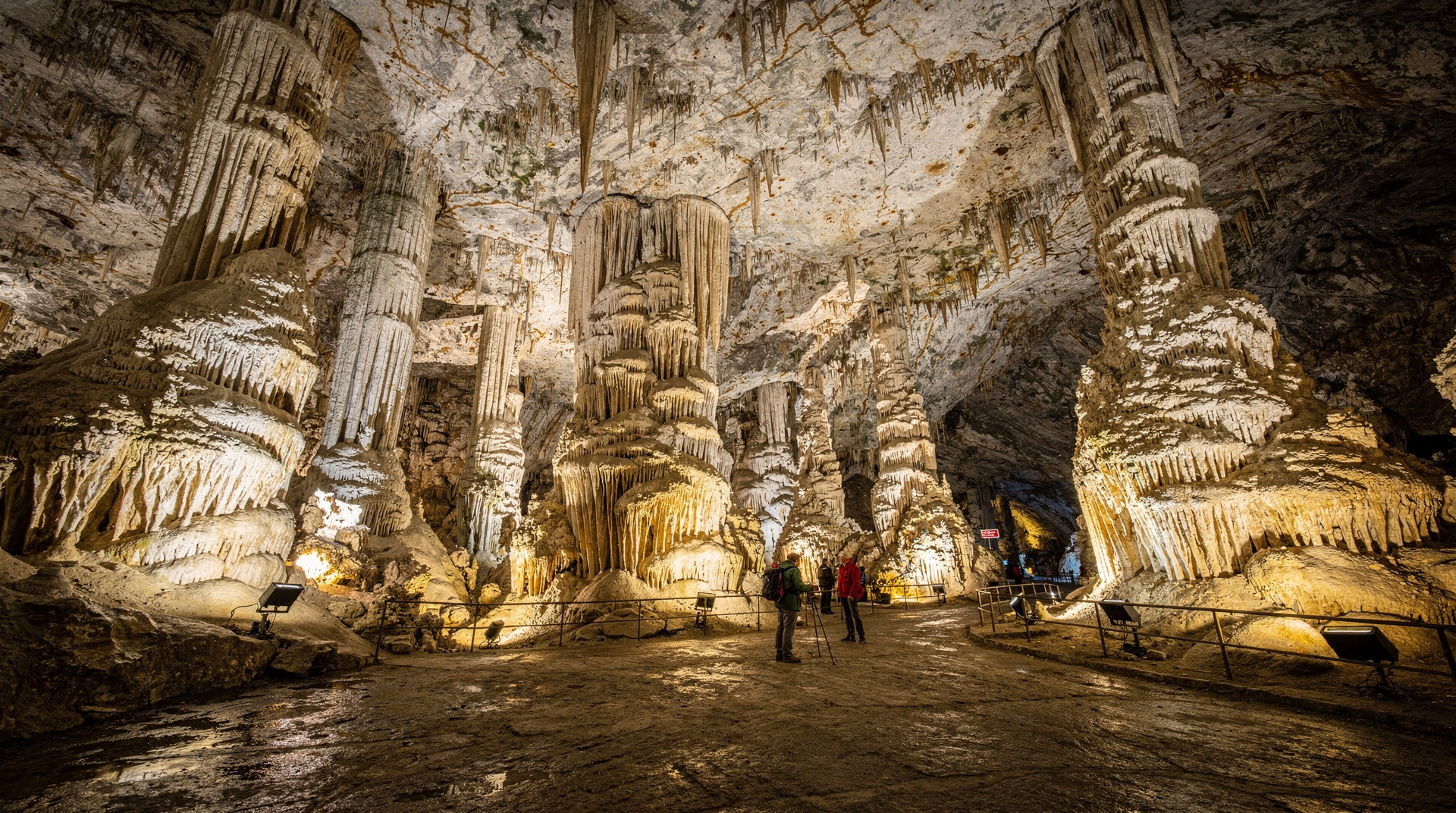
Škocjan Caves (10 km from Lipica) is the natural combination — a morning at Škocjan on a guided underground tour, lunch in Divača or Lipica, afternoon at the stud farm. This is one of the best day trips available from Ljubljana if you have a car: two UNESCO-quality sites in a morning and afternoon. See the Škocjan Caves guide for the underground visit.
Postojna Cave (20 km east) is the commercial alternative to Škocjan — larger visitor infrastructure, a train through the cave, the famous cave olm (Proteus anguinus). See the Postojna vs Škocjan comparison guide for an honest comparison.
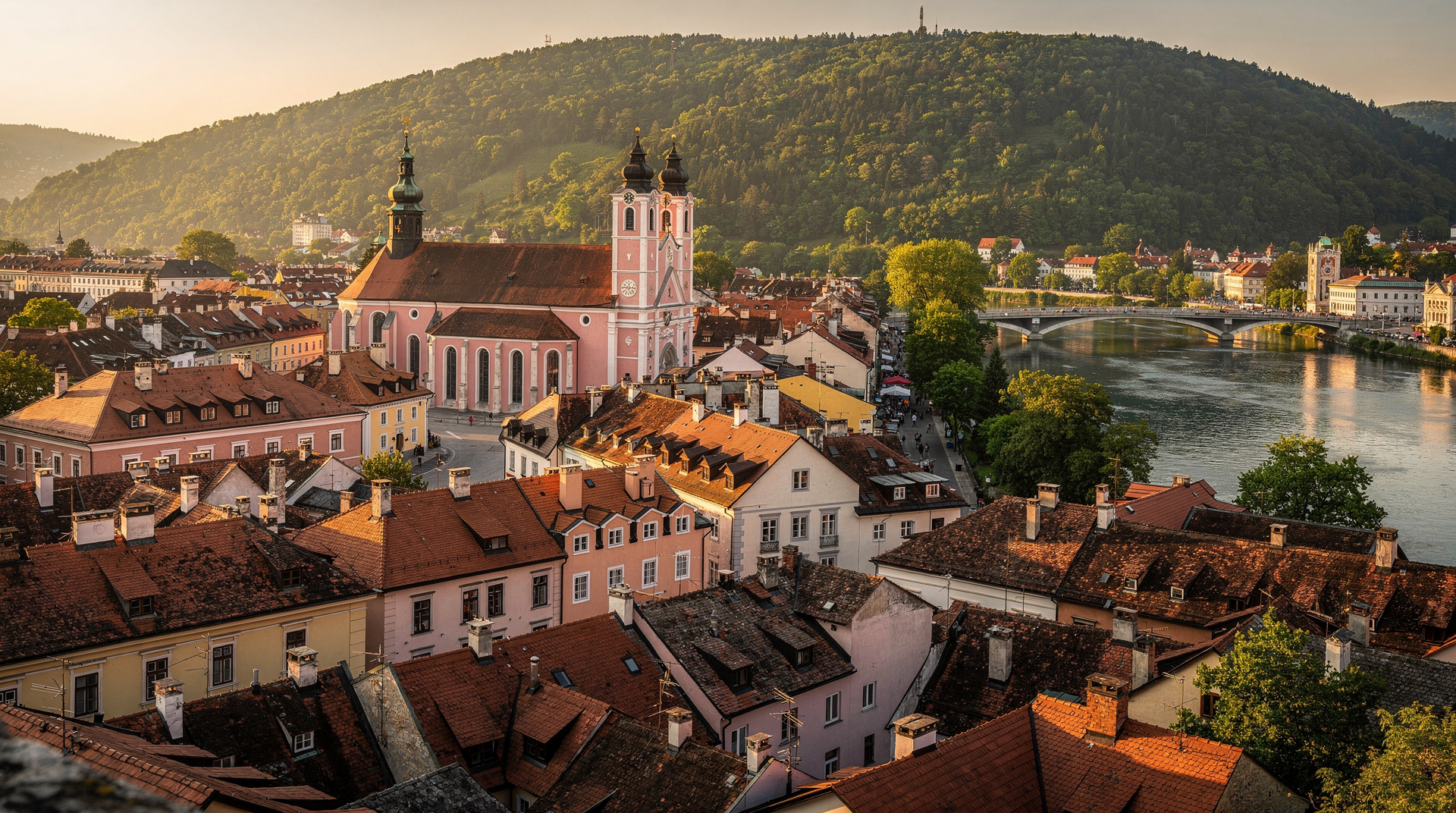
Piran (30 km south) adds a coastal half-day to a Karst circuit. The medieval Venetian-influenced town is Slovenia’s most charming coastal destination and a strong contrast to the inland limestone landscape. See the Piran walking guide for visitor information.
From Ljubljana: The drive to Lipica takes approximately 1 hour (100 km on the A1 motorway to Divača, then 10 minutes on minor roads). Public transport requires a train or bus to Divača and then a taxi.
Fitting Lipica into a wider trip
Lipica works best as one stop in a southwestern loop rather than a standalone outing. If you are building a longer route, the Ljubljana and caves itinerary over four days places the stud farm alongside the underground sites, and the coast and mountains itinerary shows how the Karst fits between the Adriatic and the Alps.
For a shorter, more focused plan, the separate Lipica day trip guide sets out the day hour by hour. Travellers who prefer to see several underground sites can also read the overview of Slovenia’s caves to decide how much time to give the caves versus the horses.
Because you will probably be driving, it helps to read about renting a car in Slovenia and the motorway vignette rules before you set off. Those without a car should look at getting around Slovenia and the Ljubljana day trips guide for realistic options.
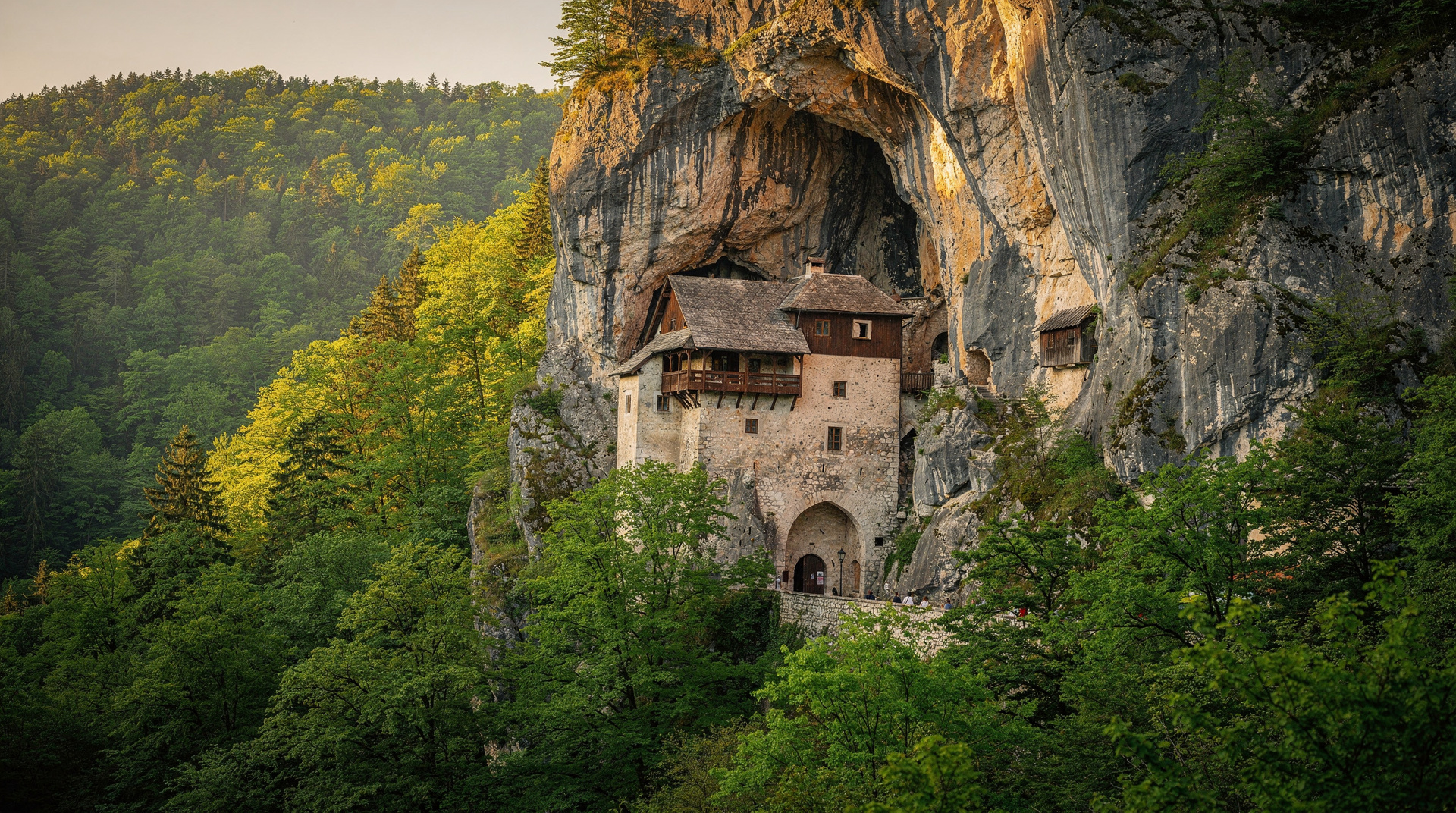
If the stud farm leaves you wanting more of the region’s heritage, the guide to Slovenian castles and the Predjama Castle destination page are natural next steps, and Slovenia in spring explains why May and June suit this part of the country so well.
Honest advice
Most visitors come for the Classic Riding Show and are satisfied. The show is genuinely impressive — the airs above the ground are difficult to perform well and the Lipica horses do them well.
What many visitors miss is the working character of the stud — the official training, the paddocks with foals, the non-performed life of the horses. If you have the flexibility to arrive early rather than just for a show, the combination of training observation and the Classic Riding Show gives a much fuller picture.
The grounds and the karst landscape are pleasant for walking. The guided visit lasts about 60 minutes, so allow more time if you add the training or the show. A short visit focused only on the show and the basic stable tour is feasible but leaves the best parts unvisited.
Practical information
Location: Lipica 5, 6210 Sežana, Slovenia. GPS coordinates work well for navigation.
Opening hours: The stud farm is open daily from 09:00 to 17:00. Guided visits start at 10:00, 12:00, 14:00 and 16:00 and last about 60 minutes (you can also visit on your own with the stud farm’s official app). The riding school show starts at 15:00; check the official Lipica stud farm website for the exact show days.
Tickets: Prices start from EUR 16 for the stud farm visit, EUR 22 with the official training, EUR 25 with the riding school show (or the Lipizzaner horse encounter), all with the visit included. Carriage rides start from EUR 35, trail rides from EUR 90 and dressage lessons from EUR 50. Family and child rates are not published; see the official Lipica stud farm website. Book shows online in advance in peak season.
Accommodation: Lipica has a hotel on the stud farm grounds (Hotel Maestoso) — an unusual experience of staying literally at the stud farm. Mid-range pricing, functional comfort. Piran (30 minutes) has more character for overnight stays.
Getting there without a car: Train or bus to Divača, then taxi for the 7 km (ask the fare before you set off). Organised tours from Ljubljana are available and practical for visitors without transport.
Lipica compared with other UNESCO-linked heritage sites in the Karst
Visitors combining Lipica with the wider Karst region are often surprised by how much heritage sits within a small area. Škocjan Caves, 10 km away, is a UNESCO World Heritage Site in its own right for its underground canyon and river system. Lipica is not yet formally inscribed but sits on the tentative list as part of the transnational Lipizzaner heritage nomination alongside the Spanish Riding School in Vienna and five sister stud farms across former Habsburg territories.
This concentration of heritage sites — equestrian, geological and architectural — within a 20 km radius is one of the more distinctive features of southwestern Slovenia, and it rewards travellers willing to spend a full day moving between the stud farm, the caves and the small Karst villages rather than rushing through on a single-stop itinerary.
The transnational Lipizzaner heritage network
Lipica’s role extends beyond its own gates. The six stud farms that maintain the Lipizzaner bloodline today — Lipica, Piber (Austria), Đakovo (Croatia), Szilvásvárad (Hungary), Kladruby nad Labem (Czech Republic) and Topoľčianky (Slovakia) — coordinate breeding decisions and occasionally exchange bloodstock to maintain genetic diversity across the network. Visitors with a deeper interest in the breed sometimes plan trips that take in two or more of these farms; Lipica, as the founding site, is generally considered the essential starting point.
The pending UNESCO nomination, if successful, would formally recognise this network as a shared piece of European cultural heritage — a rare case of a living agricultural tradition rather than a fixed monument receiving that status.
Combining with Vienna: travellers who visit Lipica and later see the Spanish Riding School’s performances in Vienna consistently report a deeper appreciation of both — Lipica supplies the origin story and the rural, working context; Vienna supplies the polish and grandeur of the finished performance tradition.
Frequently asked questions about Lipica and the Lipizzaner horses
Are the Lipizzaner horses always white?
No — foals are born dark (bay, grey or black) and gradually lighten over several years to the characteristic white or light grey coat that adults display. The full white coat usually develops between age 7 and 10. Occasional horses remain dark grey throughout their lives; these are not excluded from the programme but are rarer at public performances. The dark foals at Lipica are an entertaining surprise for visitors expecting white horses everywhere.
How does Lipica relate to the Spanish Riding School in Vienna?
The Spanish Riding School in Vienna is supplied with horses from the Piber stud farm in Austria (not directly from Lipica today), but Lipica is the historical origin of the breed and of the training tradition. The two institutions maintain a formal relationship and share the Lipizzaner heritage. Foals from Lipica may be sold to or exchanged with other stud farms in the Lipizzaner heritage network, which includes Vienna as its most prestigious member.
Can children ride Lipizzaner horses at Lipica?
Horse riding and riding lessons are available at Lipica for visitors, but children’s programming varies seasonally — check the Lipica website or contact the stud farm directly. Pony rides for very young children may be available on certain days. Carriage rides are suitable for all ages and are a good option for families with young children.
Is the Lipica visit suitable for people who are not horse enthusiasts?
Yes — the setting, the karst landscape, the historical architecture and the visual drama of the performance are accessible and interesting for visitors without specific horse knowledge. The combination with Škocjan Caves (10 km) makes a full day of genuinely varied experiences. Non-horse visitors typically enjoy the Classic Riding Show as an unexpected highlight rather than a specialist interest.
What is the best time of year to visit Lipica?
Spring (April–June) for the foals and the flowering karst landscape. May and June offer the best combination of foals in the paddocks (born in spring), full Classic Riding Show schedule and mild weather. Summer (July–August) is the peak tourist season with shows most frequently scheduled. Autumn (September–October) has fewer crowds and the landscape is beautiful. Winter: the show schedule reduces but the stud farm is still operational and visits are possible.
| Element | Lipica | Vienna Spanish Riding School |
|---|---|---|
| Role | Founding stud farm, breeding | Training and performance venue |
| Horses seen | Foals, breeding stock, some performers | Fully trained performing stallions only |
| Setting | Rural karst estate | Historic city-centre riding hall |
| Cost | Lower | Significantly higher for premium shows |
| Best for | Breed history, foals, rural atmosphere | Peak performance polish, grandeur |
Top experiences
Bookable activities with verified prices and instant confirmation on GetYourGuide.