Slovenia in winter: skiing, Christmas markets, and the quiet season
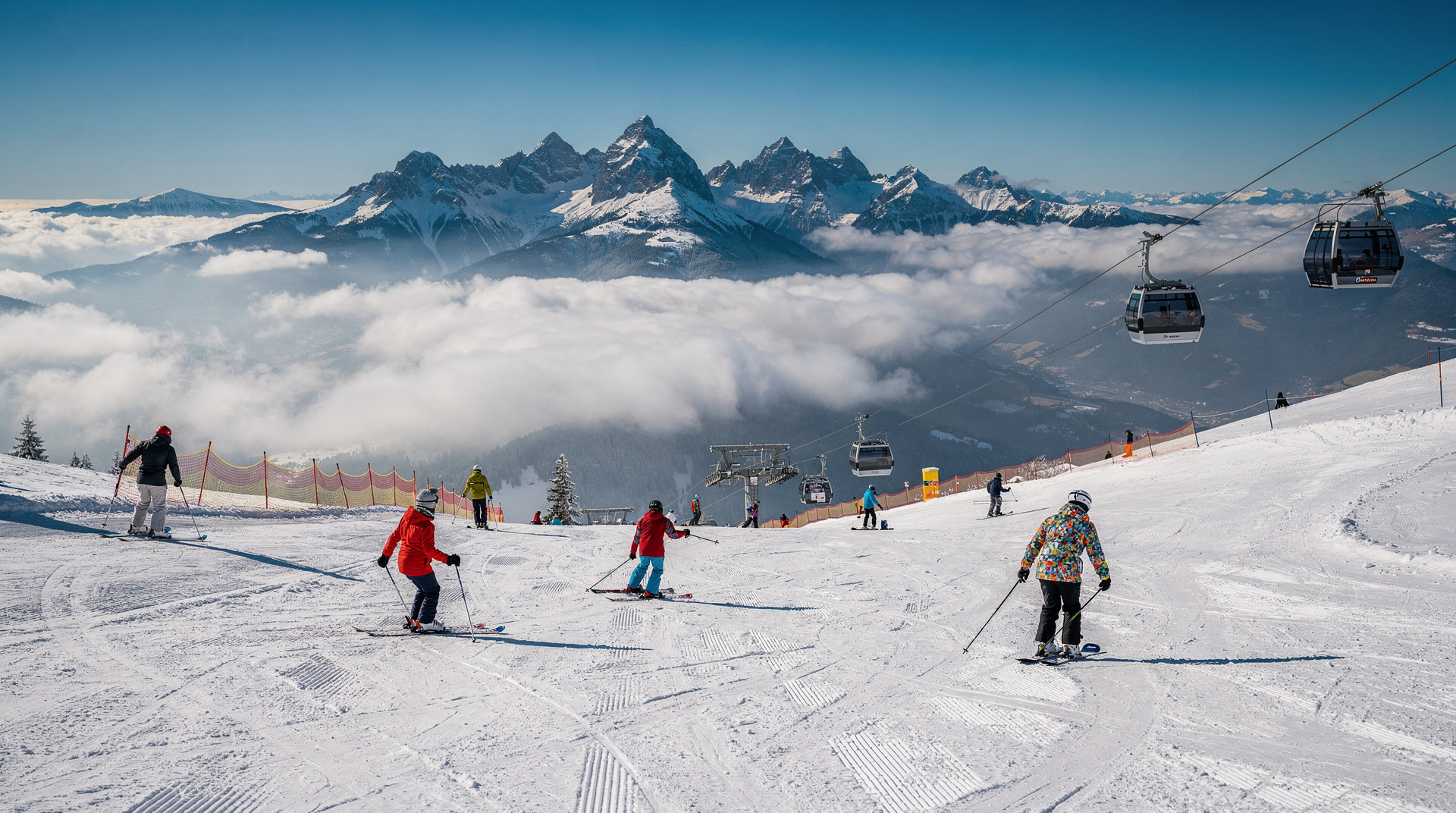
Vogel Ski Center: day skiing with instructor from Bled
Is Slovenia worth visiting in winter?
Yes, for the right traveller. Ljubljana's Christmas market in December is one of Central Europe's best. Skiing at Kranjska Gora and Vogel runs December–March. Postojna Cave is spectacular with no queues. The main limitations: Vintgar Gorge is closed, the Vršič Pass is closed, and many rural services shut down October–April.
Winter in Slovenia: the honest picture
Winter is the most divisive season for Slovenia travel. The majority of visitors — those who come for Lake Bled’s lakeside walks, the Soča Valley’s rivers, the coastal Piran seafood scene, and the Julian Alps summer hiking — will find winter a genuine limitation. Vintgar Gorge is closed. The Vršič Pass is closed. The Soča adventure operators are mostly dormant. Many seasonal restaurants and guesthouses are shut from October through April.
But for a specific kind of traveller, winter is the right season:
- Skiers who want Alpine slopes without Austrian prices and Austrian queues
- Christmas enthusiasts who want one of Central Europe’s best Christmas markets
- Cave visitors who want Postojna Cave without any queues
- Budget-conscious travellers who accept the limitations in exchange for accommodation prices that are 40–60% below summer
- City break travellers for whom Ljubljana is the primary destination
For these visitors, winter in Slovenia delivers well.
| Best for | Skiers, Christmas market fans, cave visitors, budget travellers |
| Avoid if | Your priority is Vintgar Gorge, the Vršič Pass, or river sports |
| Ski season | Early/mid-December to late March, snow permitting |
| Christmas market | Late November–December 30, Ljubljana |
| Accommodation | 40–60% below summer prices outside ski resorts |
November: the grey transition
Average temperatures (Ljubljana): Highs 7–10°C, lows 2–5°C. Rain and grey skies are frequent. First frost possible. The ski season has not yet begun (Kranjska Gora typically opens in early to mid-December when snow cover is sufficient).
November is the quietest month in the Slovenian tourist calendar. The autumn colour season has ended; the Christmas market has not yet opened; the ski season has not begun. This makes it the cheapest month to visit — accommodation at Bled, Piran, and Ljubljana is at annual price lows.
What works in November:
- Ljubljana city culture: the restaurant scene, café culture, and museums operate fully and with a local rather than tourist orientation
- Postojna Cave and Predjama Castle: completely uncrowded, easy and relaxed visits
- Škocjan Caves: same quiet conditions; the underground canyon at Škocjan is genuinely magnificent and is not compromised by weather
- Piran in late autumn: the old town is quiet and beautiful; the seafood restaurants are excellent and uncrowded
What to avoid planning around November: Any outdoor activity that was the reason you considered spring or summer. The Julian Alps are grey and cold; the Soča Valley is dormant; Bled’s lakeside walk is pleasant but the services are closed.
December: Ljubljana’s finest month
December is when Ljubljana makes its strongest claim as a winter destination. The Christmas market (usually beginning in late November and running through December 30) transforms the city centre: Kongresni trg, the river promenades, and the old town squares are lit with decorations that the city takes seriously. The market is not purely commercial — local craft stalls, regional food vendors (honey, truffles, dried mushrooms, local wine), and live music create something that resembles a genuine Central European winter festival rather than a pop-up retail event.
The Ljubljana Christmas Market in practical terms:
- Location: primarily Kongresni trg, Prešeren Square, and along the Ljubljanica riverfront
- Running dates: approximately late November through December 30 (check the official Ljubljana Tourism calendar for exact dates)
- Cost: free to enter; drink and food at market prices (mulled wine ~€4, food stalls €5–12)
- Crowds: weekends, particularly the 2–3 December weekends before Christmas, are busy. Weekday mornings and afternoons are relaxed.
Ski season opening: Kranjska Gora typically opens in early to mid-December, snow permitting. Vogel (above Bohinj) opens when sufficient snowpack has built up — sometimes earlier than Kranjska Gora due to its higher altitude. The opening dates vary by year with snowfall; check the resort websites (rtk.si for Kranjska Gora, vogel.si for Vogel) as you approach December.
Christmas Day and New Year in Slovenia: Christmas (December 25–26) and New Year (December 31–January 1) are national holidays when many restaurants and shops close. Ljubljana has good options for Christmas Day dining (book ahead) and a fireworks display at New Year on Prešeren Square that draws large crowds. Booking New Year’s Eve accommodation in Ljubljana well ahead is essential — the city fills.
January and February: the quiet season
Average temperatures (Ljubljana): January is the coldest month (highs 3–5°C, lows -1 to 2°C). February is marginally warmer. Both months bring fog in the Ljubljana basin — sometimes persistent, clearing by afternoon. Mountain areas are cold with reliable snow.
January and February in Slovenia are quiet. The Christmas market has closed; the ski season is at its most active (the best natural snow cover typically arrives in January at altitude); Postojna Cave is completely uncrowded. Accommodation prices are the lowest of the year outside the ski resorts, where January–February is the peak.
Skiing in January–February: This is the heart of the ski season. Natural snowfall at Kranjska Gora and Vogel is at its most reliable. Both resorts are considerably smaller than their Austrian counterparts (Kranjska Gora has 20km of marked pistes; Vogel has 22km) but the advantage is price (lift passes 30–40% cheaper than comparable Austrian resorts) and queue length (essentially none on weekdays).
The Vogel ski area above Bohinj has the most spectacular setting — the cable car from Ribčev Laz rises to 1,540m with a view over the entire Bohinj valley and the Julian Alps that is extraordinary in clear winter conditions. For a single day of skiing with an instructor, Vogel from Bled is a classic option:
The Planica Valley and ski jumping: The Planica Valley near Kranjska Gora hosts the Ski Flying World Championships annually (typically late March). This is worth knowing for planning: the event draws 100,000+ visitors over the competition weekend, which causes accommodation in the area to be fully booked months ahead. Avoid the event weekend unless you are attending; plan around it otherwise.
What to do in winter
Skiing
The three main ski resorts, honestly compared:
Kranjska Gora (850–1,215m): The most popular resort with Slovenian and Austrian/Italian day-trippers. Twenty kilometres of pistes; good beginner and intermediate terrain; a long bobsleigh run adds non-ski appeal. The village has reasonable apres-ski options. The resort is small by Alpine standards — if you have skied extensively in Austria or Switzerland, manage expectations on variety. If you want a good-value, pleasant, uncrowded Alpine ski experience, Kranjska Gora delivers.
Vogel (570–1,800m): Above Bohinj via cable car; the most scenic resort in Slovenia. The views from the top — the entire Bohinj valley, the Triglav massif, the Julian Alps in all directions — are extraordinary in clear weather. Twenty-two kilometres of pistes over a wider altitude range than Kranjska Gora. Suitable for intermediate skiers; some challenging runs near the top. The cable car ride is itself a reason to visit even on a non-ski day.
Krvavec (1,450–1,971m; lift base 1,450m): Thirty minutes from Ljubljana. The most accessible resort for a day trip from the capital (no long mountain drive). Good intermediate and expert terrain; the highest resort in Slovenia. Often missed by foreign visitors who default to Kranjska Gora — worth knowing about for city-based travellers.
Rental: Ski hire at all three resorts costs €25–40/day. Helmet hire is included at most counters. Bring your own gloves; hire gloves are often poor quality.
Krvavec in more detail
For visitors staying in Ljubljana without a hire car committed to a resort stay, Krvavec deserves more attention than it usually gets. The full breakdown of lifts, terrain and access is in the Krvavec skiing guide, but the short version: a shuttle or short taxi ride from the ring road gets you to the base lift, and the mountain’s height means it holds snow when lower resorts are patchy. It also works well as a non-ski day out — the summit views over the Kamnik–Savinja Alps are worth the cable car fare alone.
Families with young children who want a gentler introduction to snow than a full ski day should also consider a winter evening at Krvavec: sledding runs stay open after the lifts close, floodlit and considerably calmer than a daytime ski slope.
Krvavec night sledding experienceComparing Slovenia’s winter to Austria’s
Visitors weighing Slovenia against a more established Alpine winter destination should read the Slovenia vs Austria guide before booking. The short version for winter specifically: Austrian resorts have more terrain, longer lift networks and a deeper après-ski culture, but Slovenia’s three resorts run 30–40% cheaper with far shorter lift queues, and Ljubljana’s Christmas market holds its own against Vienna’s or Salzburg’s on atmosphere even if it is smaller in scale.
Ljubljana in winter
The city is at its most local and least tourist-dense in January–February. The restaurant scene is fully active; the café culture is the warmest and most convivial. A few specific winter recommendations:
- Hot wine (kuhano vino): Available at most cafés and gostilne; slightly different from Austrian Glühwein (usually local red wine with cloves, cinnamon, and a slice of orange). A fundamental pleasure of the season.
- Bookshops and galleries: Ljubljana has a strong independent bookshop culture (Knjigarna Konzorcij, Knjigarna Behemot) and gallery scene that rewards a winter afternoon.
- Metelkova: The arts complex is at its most active programme-wise in winter, when the outdoor festivals have ended and the focus returns to indoor performance.
Caves
Postojna Cave and Škocjan Caves operate year-round and are at their best in winter for visitor experience — no queues, small groups, and the cave’s 10°C temperature feels welcoming rather than cold. If you have been putting off a cave visit because of summer queue warnings, winter is the window. Book online to confirm a tour time; walk-up is usually possible but online booking guarantees a spot.
Piran in winter
Piran in January is perhaps the most atmospheric small-town European winter break that nobody talks about. The Venetian old town is genuinely beautiful in low winter light; the seafood restaurants serving local adriatic catch are excellent and uncrowded; the accommodation prices are the lowest of the year; the town belongs to its 4,000 permanent residents rather than to tourists. The coast is mild (8–13°C) compared to the inland cold. Bring a warm jacket and accept that beach swimming is not on the winter agenda; everything else in Piran works.
Winter practical notes
Driving: Slovenian law requires snow tyres (or summer tyres plus snow chains in the boot) from November 15 to March 15. Most rental cars are already fitted with winter tyres during this period; confirm at pickup. Mountain roads require extra care and appropriate speed — the cobbled Vršič Pass is closed, but other mountain approaches can be icy. Drive slowly, especially on descents.
Fog in Ljubljana: The Ljubljana basin is prone to persistent low fog (megla) in winter, sometimes lasting several days. The fog tends to clear above 500m, so Kranjska Gora and Vogel can be in brilliant sunshine while Ljubljana is grey. If the forecast shows persistent fog, a mountain day trip may be more rewarding than a city day.
Mountain huts: Most are closed November–May. Do not plan backcountry routes assuming hut support in winter.
Layered dressing: Ljubljana pavements are icy December–February; wear boots with grip. Mountain hiking requires full winter kit above 1,000m.
See the Slovenia packing guide for the full winter packing list.
Winter food culture
Slovenian winter food is the kitchen at its most confident. The hearty, slow-cooked traditions of the gostilna come into their own when the mountains are white outside.
Dishes specific to winter:
-
Jota at its seasonal best: the bean, sauerkraut, smoked pork, and potato stew that defines Karst winter cooking. The version at gostilne near Postojna and the coast is richer and more complex than the urban Ljubljana interpretations.
-
Bograč: a multi-meat goulash from the Prekmurje region (northeast Slovenia) — pork, beef, wild boar, venison, and sometimes horse in a paprika-rich stew. Winter warming at its most unambiguous.
-
Ajdova kaša z mlekom: buckwheat porridge with cold milk — a farm breakfast that has become fashionable in Ljubljana café culture; warming and genuinely good.
-
Suha roba: dried and smoked goods (ham, sausage, dried pork belly) hung from kitchen rafters in traditional farmhouses. Winter is when these are at their best; the Christmas and New Year markets sell them in significant quantities.
-
Kuhano vino: Slovenian mulled wine. Not quite the same as Austrian Glühwein — the base wine is often a local red, the spice balance is slightly different, and it is generally less sweet. Available everywhere from the Christmas market stalls in December to gostilne bar counters through February.
Seasonal sweets:
- Krof (Krapfen / doughnut): Slovenian carnival doughnuts reach peak quality and availability in February during the Pust/Shrovetide period. The best are made fresh at local bakeries rather than at supermarkets; look for fried rather than baked versions.
- Potica: Slovenia’s national pastry reaches its highest consumption in the Christmas–New Year period; walnut potica in particular is made at home across the country in December.
Winter budget advantages
Winter is when Slovenia’s accommodation costs are at their lowest outside of ski resort areas. The practical numbers:
- Bled in January: double room at a well-reviewed guesthouse from €55–80 (vs €140–200 in August)
- Piran in January: excellent apartments in the old town for €50–80 per night (vs €120–160 in summer)
- Ljubljana year-round: more stable pricing, but winter sees promotional rates at most hotels
- Ski resorts (Kranjska Gora, Vogel): prices do not drop in winter — this is their peak season
For budget travellers with flexibility, January and February in Ljubljana combined with day trips to Postojna Cave (no queue, effectively walk-up) and a day skiing at Vogel offers extraordinary value relative to the summer equivalent.
Day trips from Ljubljana in winter
Postojna Cave (45 minutes): The definitive winter day trip. No queue, small groups, cave temperature 10°C (warm compared to outside). Combine with Predjama Castle for a full day. Both open year-round.
Škocjan Caves (1h20): The more spectacular cave system for those who have already done Postojna, or for those who want fewer crowds. The underground canyon at Škocjan has no equivalent in Europe. Open year-round; no queues in winter.
Krvavec ski day (30 minutes): The closest ski resort to Ljubljana, 30 minutes from the ring road. A day’s skiing without the mountain drive that Kranjska Gora requires. Lifts, hire, and a good mountain view without the commitment of a resort stay.
Ptuj (1h20 by motorway): The oldest continuously settled town in Slovenia, at its most atmospheric in February when the Kurentovanje carnival takes place. The Kurent figure — covered in fur and carrying a chain of cowbells — is one of the most distinctive folk traditions in Slovenia and genuinely worth the trip.
Winter and the honest-planner angle
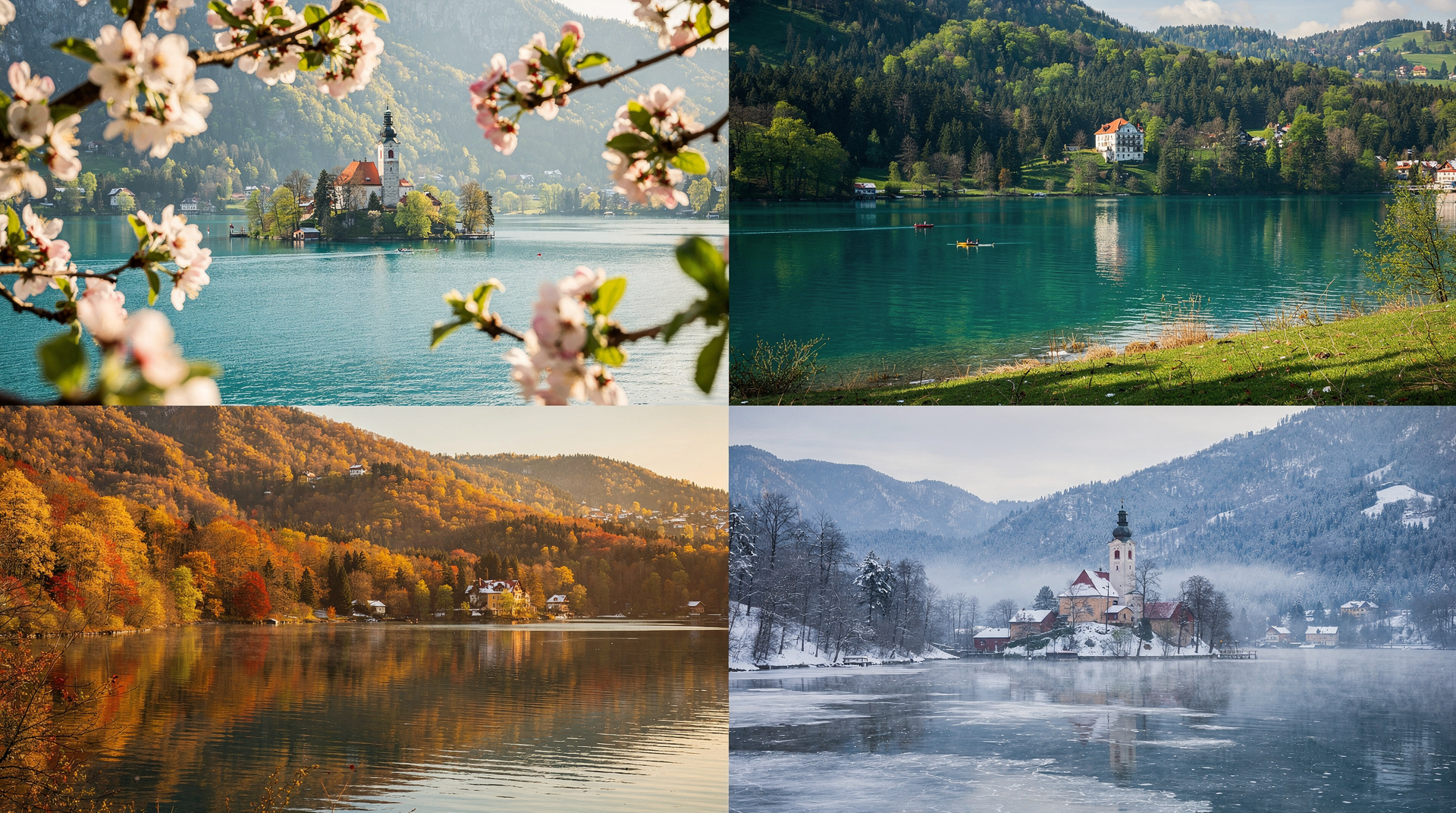
Winter is when the tourist marketing and the actual experience diverge most in Slovenia. The marketing presents a snow-globe image of Lake Bled in winter frost and the Christmas market lights — both real and genuinely beautiful. The honest complement: most of what makes Slovenia compelling in summer (the hikes, the rivers, the mountain passes, the outdoor café culture) is absent or reduced.
The travellers who enjoy Slovenia most in winter are those who choose it specifically for winter’s qualities — the ski slopes, the quiet cities, the cave visits without crowds, the winter food culture — rather than those who arrive expecting a thinly populated version of summer.
If you have flexibility and summer or autumn is possible, those seasons offer more. If winter is your window, Slovenia is still worth coming to: the Christmas market in Ljubljana is among the best in Europe, the caves are spectacular, and the ski terrain is good value. Just pack for the cold and accept the trade-offs with equanimity.
The Christmas market in detail
Ljubljana’s Advent and Christmas market (Stari Ljubljana se oblači v Advent — Old Ljubljana Dresses for Advent) runs from late November through December 30. It is not a single market but a collection of themed areas across the city:
Kongresni trg (Congress Square): The main square becomes a focal point of the market with a large decorated fir tree, outdoor skating rink (small but popular), and a concentration of food and craft vendors.
Gallusovo nabrežje (Gallus Embankment): The riverside walkway along the Ljubljanica is decorated with lights that create the most photographed element of the market season — the river reflections of the lit trees at night.
Prešernov trg (Prešeren Square): The city’s central square has vendors and seasonal café service. The Triple Bridge lit at night over the market crowd is the cover-photograph image of Ljubljana in December.
What to buy: Local honey (med) in various varieties (acacia, chestnut, forest); dried mushrooms and truffle products from the Karst; local wines in gift packaging; Slovenian schnapps (žganje) in ceramic bottles; hand-made ceramics and textiles; the very good Christmas patica (layered walnut pastry) from bakery vendors.
The market’s quality-to-tourist-cost ratio is generally good — prices are higher than a normal market day but reasonable relative to equivalent Christmas markets in Vienna or Prague.
A sample 7-day winter itinerary
For travellers who want a structured plan rather than a season overview, a full day-by-day route exists: the winter Slovenia 7-day itinerary builds around Ljubljana’s Christmas market, a ski day at Vogel or Kranjska Gora, and an uncrowded Postojna Cave visit, with realistic driving times between each stop. It is worth reading even if you plan to freestyle the trip, since it flags which days need advance booking (New Year in Ljubljana, weekend ski days) and which can be decided on arrival.
For a different kind of winter day away from the snow, Ptuj in February during Kurentovanje is one of the more distinctive detours available from Ljubljana and pairs well with a Maribor stopover for those extending east.
Winter budget context
Winter’s accommodation savings are real but attractions and transport costs stay roughly flat year-round, so a winter trip is cheaper overall rather than cheap outright. The full seasonal cost comparison, including how much a week in Ljubljana plus a ski day actually totals, is in the Slovenia trip budget guide.
Related guides
- Best time to visit Slovenia — the full seasonal comparison
- Slovenia in autumn — the season before
- Slovenia in spring — the season after
- Slovenia weather month by month — monthly climate data
- Slovenia packing guide — what to bring in winter
- Slovenia travel guide — the complete planning reference
Frequently asked questions about Slovenia in winter
What is skiing like in Slovenia?
Slovenia has three main ski resorts: Kranjska Gora (the largest, good for families and intermediates, 20km of pistes), Vogel above Bohinj (the most scenic, with a cable car from the lake and extraordinary Julian Alps views), and Krvavec (30 minutes from Ljubljana, the most accessible for a day trip). All three are smaller than Austrian counterparts but considerably cheaper and with far shorter queues.Is Ljubljana worth visiting in winter?
Yes. Ljubljana's December Christmas market is consistently rated among the best in Central Europe — the Kongresni trg illuminations, the mulled wine stalls, the craft vendors, and the general city-wide decoration make it a destination in its own right. January and February are the quietest months, with no school holidays, but the city's café and restaurant scene is fully operational and accommodation prices are the lowest of the year.What is closed in Slovenia in winter?
Vintgar Gorge (closed November–April). Vršič Pass road (closed November–May). Most seasonal restaurants and tour operators at Bled and Bohinj. Soča Valley adventure sports operators (November–March). Many mountain huts. However, Postojna Cave, Predjama Castle, Škocjan Caves, Ljubljana's museums, and Piran's old town all remain open.How cold does Slovenia get in winter?
Ljubljana in December–February averages 2–8°C in daytime, dropping below freezing at night. Frost and occasional snow (1–3 snow days per year in Ljubljana; more in mountain areas). Kranjska Gora and the mountain resorts average significantly colder, with reliable snowfall from December. The coast at Piran averages 8–13°C in winter — the warmest part of the country.Is Postojna Cave good in winter?
Winter is arguably the best time to visit Postojna Cave for those who dislike crowds. The cave's constant 10°C feels warm relative to the cold outside. Tour groups are small. The cave train and guided walk proceed on the same schedule as summer. There are no July–August queues; booking online is still advisable but walk-up tickets are usually available.Is Krvavec a good winter day trip from Ljubljana?
Yes, and it is the resort most foreign visitors overlook. Krvavec is 30 minutes from the capital with no long mountain drive, and it is the highest of the three main resorts, which means more reliable snow early and late in the season. It suits anyone based in Ljubljana who wants a ski day without committing to a resort stay.How does a Slovenian winter compare with an Austrian one?
Slovenia's ski resorts are smaller than Austria's but noticeably cheaper and far less crowded, while Ljubljana's Christmas market rivals Vienna's or Salzburg's for charm if not for scale. If pure terrain and après-ski matter most, Austria has the edge; if value and quiet slopes matter more, Slovenia wins. See the full comparison for more detail.
Top experiences
Bookable activities with verified prices and instant confirmation on GetYourGuide.