Slovenia vs its neighbours: honest comparisons for the undecided traveller
The question that arrives in every travel forum
“Should I do Slovenia or Croatia?” “Slovenia or Austria?” “Add Slovenia to Italy, yes or no?”
These questions come up constantly because Slovenia sits at a geographical and cultural crossroads — it borders Italy, Austria, Hungary and Croatia, shares histories with all of them, and is smaller than any of them. The natural comparison is inevitable.
The honest answer varies by what you want. This article works through the main comparisons.
| Compared to | Slovenia wins on | They win on |
|---|---|---|
| Croatia | Mountains, quiet, year-round | Beaches, islands, name recognition |
| Austria | Price, authenticity, Soča Valley | Ski scale, Vienna’s museums |
| Italy (north) | Price, Soča Valley, quieter trails | Food culture, art heritage |
| Hungary | Mountains, coast access | Budapest architecture, thermal scale |
Slovenia vs Croatia
The most common comparison, and the most useful one because the two countries are often considered together for the same trip.
Slovenia wins on: mountains and Alpine landscapes, inland nature, cave systems, wine quality, compact driving distances, year-round appeal.
Croatia wins on: coastline length (Dalmatia’s 1,700 km of islands versus Slovenia’s 46 km of coast), beach quality, island-hopping, summer nightlife, name recognition and therefore easier logistics.
Price: broadly similar, though Croatia’s peak-summer coastal prices have risen sharply in the past five years. The Croatian coast in July and August is significantly more expensive than Slovenia; in shoulder season the gap narrows.
Crowds: the Croatian coast in summer is among the most visited coastlines in Europe. Slovenia has a crowd problem at Bled in July and August, but nothing on the scale of Dubrovnik or Split in peak season.
If you are choosing one for a first trip: Croatia for beaches and islands; Slovenia for mountains, food and a quieter experience.
If you have two weeks: include both. Ljubljana to Dubrovnik by bus or train is a long day; Ljubljana to Split is 5h by car. The Slovenia vs Croatia guide lays out the detailed comparison.
Slovenia vs Austria
Both countries occupy the Eastern Alps. Both have excellent outdoor infrastructure. Both use the euro. The difference is scale, price and cultural register.
Austria wins on: scale of ski resorts (Tyrol’s glaciers versus Kranjska Gora’s 20 km of pistes), Vienna’s museums, Salzburg’s music, established luxury hospitality, wider English-language information for tourists.
Slovenia wins on: price (broadly 20-30% cheaper than Austria across accommodation, food, activities), natural authenticity (less packaged, less infrastructure), the Soča Valley (no Austrian equivalent), coastline access, less-visited quality.
If you are a skier: Austria for big resorts; Slovenia for a quieter, cheaper experience on shorter runs. The skiing in Slovenia guide is honest about the gap.
If you are a hiker: both are outstanding. The Julian Alps are less crowded than the Austrian Alps at equivalent elevations.
If you want culture: Vienna is one of the world’s great museum cities; Ljubljana is charming but not in that category. For a cultural city break, Vienna is the better choice.
The Slovenia vs Austria guide has the full breakdown.
Slovenia vs Italy (northern)
The northern Italian comparison applies mainly to visitors considering the Italian Alps (Dolomites), the Veneto and Friuli regions as alternatives or complements.
Italy wins on: food culture (the Dolomites, Friuli, and the Veneto are among Europe’s finest food regions), wine depth, art heritage, coastline quality (Liguria, the Veneto coast).
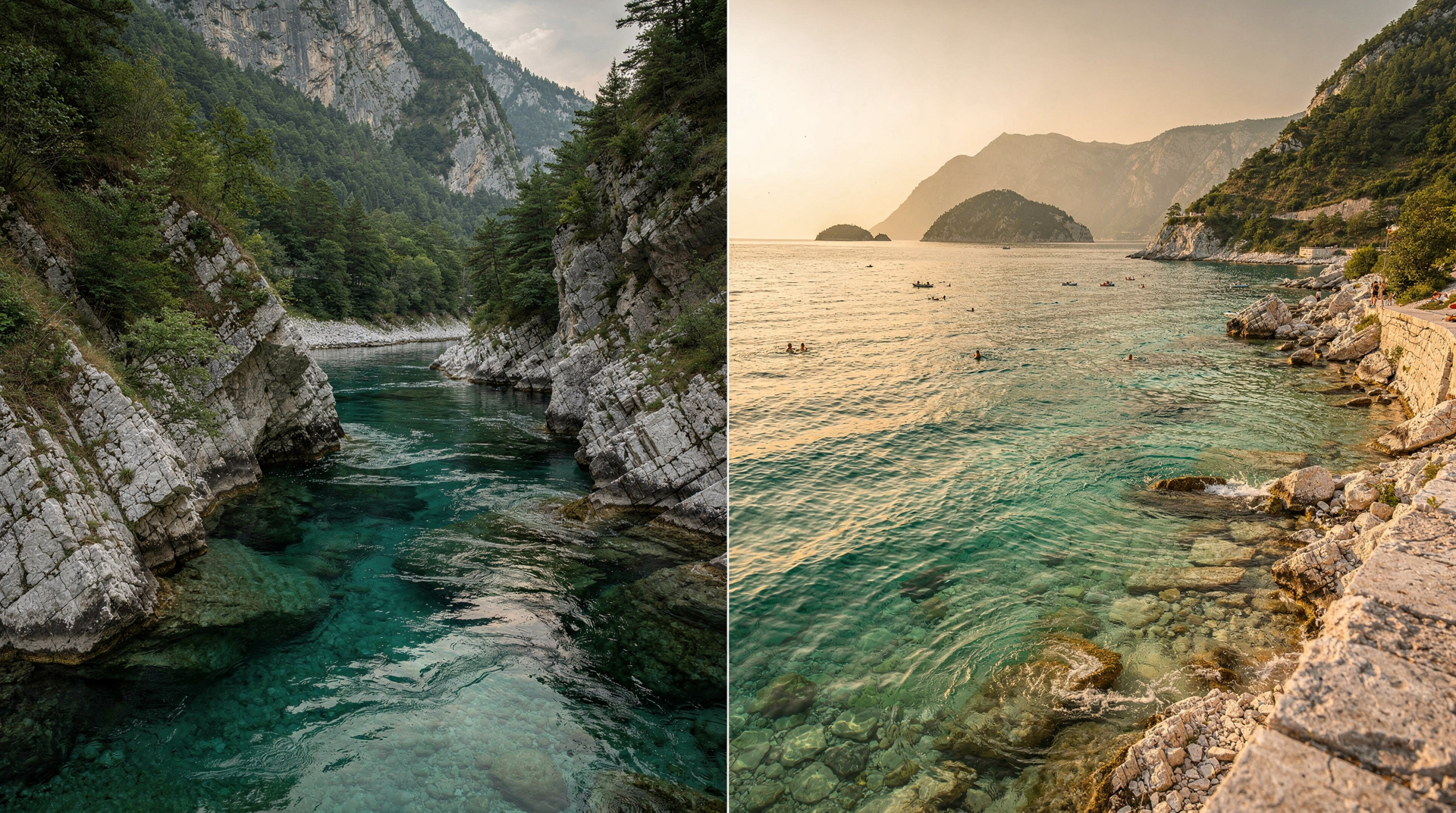
Slovenia wins on: price (significantly cheaper than equivalent Italian destinations), the Soča Valley and its turquoise river (no Italian equivalent, though the Brenta river offers something adjacent), less-crowded mountain hiking, the cave systems.
The combination argument: Slovenia and the Italian Friuli or Veneto regions work well together. Trieste is 1h from Ljubljana and offers the best of the Habsburg-Italian coastal city in a day trip. Venice is 3h from Ljubljana and works as a two-day extension.
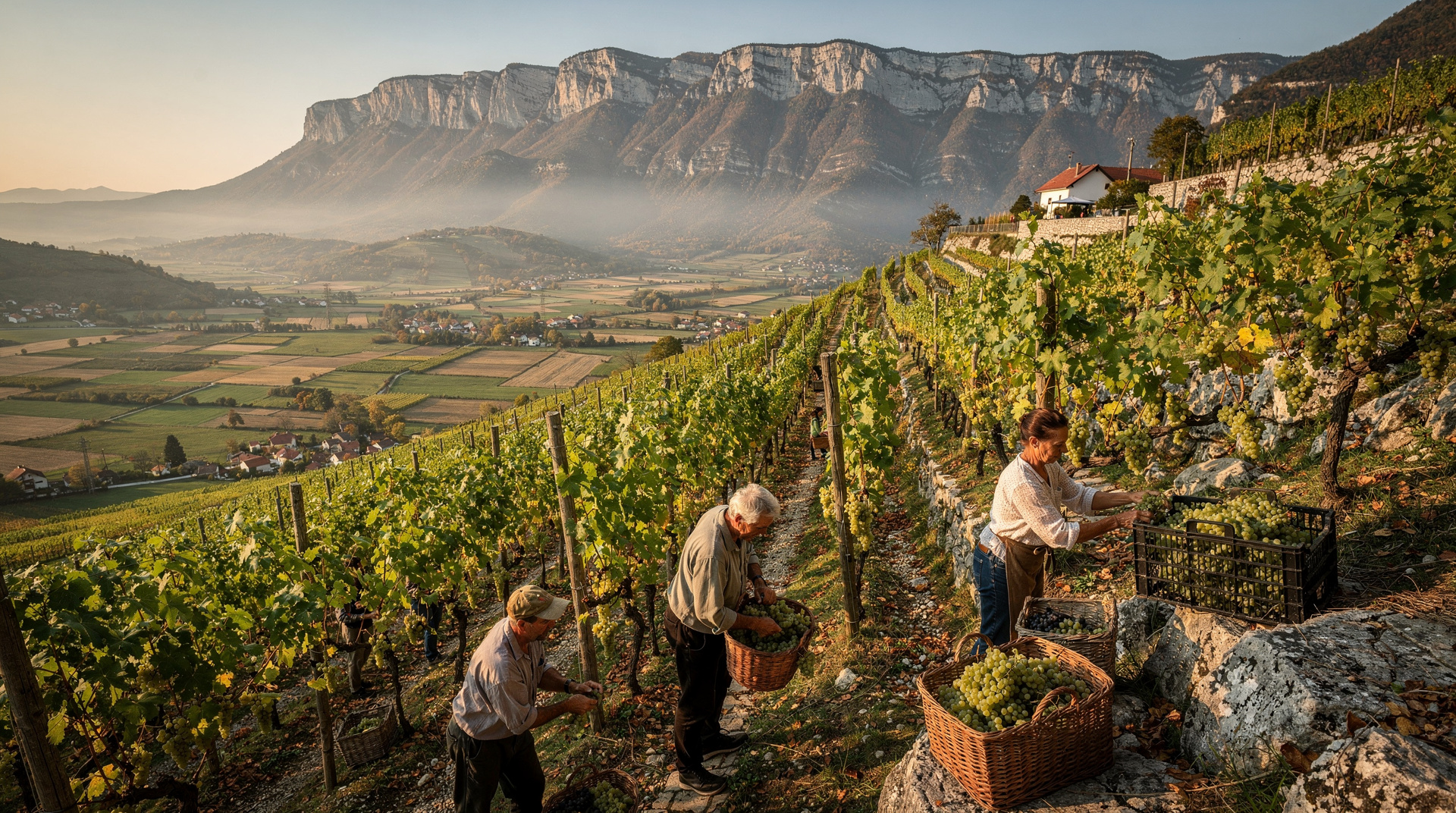
The border between Slovenia and Italy is open (both Schengen), and the wine culture of Goriška Brda is identical to Italy’s Collio DOC across the border — same varietals, same soils, half the price.
Slovenia vs Hungary
A less common comparison but relevant for visitors considering the region.
Hungary wins on: Budapest’s architecture and café culture (among the finest in Central Europe), thermal bath culture and scale, the Danube and the Great Plain, easier rail connections to western Europe.
Slovenia wins on: mountains and nature, the Adriatic access, compactness, outdoor activities.
The combination: Budapest and Ljubljana work well as a multi-city trip — both are manageable by train (one change in Vienna, around 6h), or by bus (direct services). The two capitals are different enough that comparison is less useful than combination.
Adding Slovenia to an existing trip
If you have 2-3 spare days during a larger Central European trip, Ljubljana works as a standalone stop. The city fills two days comfortably with its architecture, markets and café culture.
From Ljubljana, Lake Bled is an easy day trip (1h by bus). The Soča Valley requires a car and two days for justice. The cave system (Postojna, Predjama) is a single day from Ljubljana, and without a car the simplest way to see both is a guided tour of the cave and the castle from Ljubljana.
The honest summary
Choose Slovenia when:
- Mountains, rivers and nature are the primary draw
- You want authentic rather than packaged tourism
- Budget matters and you want more for your money
- You are returning to the region and have already done the main circuit elsewhere
Consider alternatives when:
- Beaches are the primary draw (Croatia wins)
- Major cultural institutions are the priority (Vienna, Florence, Prague win)
- You want large-scale ski resorts (Austria and Italy win)
- You need extensive English-language tourist infrastructure
Slovenia is not a compromise destination. It is a specific destination with specific strengths. Knowing which strengths matter to you determines whether it belongs on your list.
The practical multi-country itineraries
For travellers who have 2-3 weeks and want to see multiple countries, here are the combinations that work logistically and experientially:
Slovenia + Croatia (2 weeks): the classic regional combination. Spend days 1-4 in Ljubljana and Bled, days 5-7 in the Soča Valley, days 8-14 on the Croatian Dalmatian coast (Split, Hvar, Dubrovnik). The connection from Ljubljana to Split by bus takes around 5h; budget flights also serve the Dalmatian cities from Ljubljana Airport.
Slovenia + Austria (2 weeks): Vienna for days 1-3 (train from Ljubljana takes 6h direct), then travel to Ljubljana, Bled and the mountains. This works best if culture is as important as nature — Vienna’s museums justify the detour in a way that nothing equivalent in Slovenia can match. The train connection between Ljubljana and Vienna is one of the most pleasant rail routes in Central Europe.
Slovenia + northern Italy (10 days): Ljubljana 2 nights, Bled 2 nights, Soča Valley 2 nights, then cross to Trieste (1h) and continue to Venice or the Dolomites. The Soča-to-Trieste crossing — through the same Karst landscape that connected these cultures for centuries — is one of the more interesting geographical transitions in Central European travel.
Slovenia as the main event (10-14 days): this is the option most visitors underestimate. Spending 10-14 days exclusively in Slovenia — covering all eight regions, including eastern Slovenia and the thermal spa country — produces a more complete picture of the country than any multi-destination combination. The Slovenia road trip diary covers a 10-day circuit.
The language and cultural dimension
Slovenia’s Central European cultural identity complicates simple comparisons. The country was part of the Habsburg Empire for centuries, which gives it a café culture and architectural tradition closer to Vienna than to Zagreb. The Socialist Yugoslav period (1945-1991) gave it political and cultural distance from the West that has mostly dissolved but left traces in the architecture and urban planning of cities like Nova Gorica and Velenje.
The result is a culture that is neither Eastern nor Western European in a simple sense but specifically itself: Central European in its seriousness, Mediterranean in its relationship with food and café life, Alpine in its relationship with mountains and outdoor activity. This specific combination is not easily found elsewhere.
The Ljubljana vs Zagreb comparison explores the capital city dimension; the broader Slovenia travel guide gives the cultural context that shapes the visitor experience.
The practical comparison: what you spend and what you get
A week of comparable travel quality in each neighbouring country (mid-range, solo):
Slovenia: approximately €700-900 total (accommodation, food, transport, entrance fees). High landscape quality, good food, limited luxury infrastructure.
Croatia (Dalmatia, July): approximately €900-1,200 for comparable quality in high season. Better beaches and coastline, higher peak prices, more established luxury sector.
Austria (Salzkammergut): approximately €900-1,100. Better hotel quality at the luxury end, similar landscape, more infrastructure for packaged tourism.
Northern Italy (South Tyrol): approximately €1,000-1,400. Superior food and wine culture at the high end, more tourists, significantly more expensive accommodation.
Slovenia delivers the best value per unit of landscape quality of any of its neighbours. The gap between what you spend and what you experience is wider here than in any of the alternatives.
The honest comparison on one specific question: where to take children
If you have a week with children aged 6-14 and a budget for one destination:
Slovenia offers: the Postojna Cave miniature train, Lipica Lipizzaner horses, Lake Bohinj swimming and gondola, river rafting on the Soča, and consistently safe, manageable travel. Budget: approximately €1,200-1,500 for a family of four for the week.
Croatia offers: sea swimming and beach, island-hopping by ferry, Plitvice Lakes National Park. Budget: approximately €1,400-1,800 for a family of four in peak season.
Austria offers: the Salzkammergut lakes, Innsbruck, excellent ski infrastructure in winter, zoo and natural history museum in Vienna. Budget: approximately €1,400-1,800.
For families prioritising outdoor experience over beach time, Slovenia is the best-value option with the widest range of activities. For pure beach holidays, Croatia wins. For cultural and urban experiences, Vienna is unmatched.
The Slovenia for families guide and the Slovenia with kids diary make the full case for the family category.
For families who want a single, low-effort day that showcases the country’s outdoor appeal to children, a guided cave-and-castle day trip from Ljubljana packages the highlights without requiring you to plan logistics yourself.
Postojna Cave and Predjama Castle day trip from LjubljanaThe “which one first” question for repeat regional visitors
For travellers who have already done one or two of these countries and are deciding what comes next, the calculation is different from a true first-timer’s. If you have done Croatia’s coast and want the inland Balkan-Alpine contrast, Slovenia is the natural next stop — it delivers a genuinely different landscape (mountains and rivers rather than islands) within a short flight or drive of the Croatian coast. If you have done Austria’s big ski resorts and want something quieter and cheaper without giving up Alpine scenery, Slovenia again fits well. If you have done northern Italy’s Dolomites and loved the mountains but found the crowds and prices wearing, the Julian Alps offer a genuinely comparable landscape without either problem.
The one combination that repeat visitors consistently undervalue is Slovenia paired with a slower, single-country approach rather than a multi-country dash. Visitors who return specifically to Slovenia after a first regional trip tend to report that the second visit — spent entirely within the country, at a slower pace — is the more memorable one.
A note on visa and entry logistics across these countries
All five countries discussed here (Slovenia, Croatia, Austria, Italy, Hungary) are Schengen members, which simplifies border crossings for most nationalities to a formality rather than a checkpoint. Non-EU visitors should still check current entry requirements before a multi-country trip, since Schengen’s 90-days-in-180-days rule applies across all of them combined, not per country. The getting to Slovenia guide covers the current entry requirements in detail.
Turning the comparison into a plan
Once you know which neighbour you are weighing Slovenia against, the next step is to test the choice against a real trip. The how many days in Slovenia guide helps you decide whether the country deserves a few days or the whole holiday, and the best time to visit Slovenia shows how the seasons change the comparison. Beach weather favours the coast, while shoulder seasons favour the mountains and lakes, so the “winner” against Croatia or Austria can shift depending on the month you travel.
If cost is the deciding factor, read is Slovenia expensive and the Slovenia trip budget before you commit, then set them beside the figures above. For the practical side, the getting around Slovenia guide and the car rental guide explain how much freedom a car adds, which matters most if you plan to combine Slovenia with a neighbour. Anyone who drives across the border should also read about the vignette.
Travellers who like their choices ready-made can start from a finished route rather than a blank page. The Slovenia highlights in 5 days itinerary suits a short trip, the Slovenia and Croatia in 10 days route shows the classic pairing in practice, and the coast and mountains in 7 days plan answers the beach-versus-Alps question inside one country. For a first visit, the first time in Slovenia guide and the where to stay in Slovenia guide cover the basics that no comparison article can.
Finally, if you suspect the hype around any destination is inflated, the Slovenia tourist traps guide and the common mistakes guide apply the same honest approach to Slovenia itself. Comparing countries only works if you are equally critical of all of them, your own shortlist included.
Top experiences
Bookable activities with verified prices and instant confirmation on GetYourGuide.