Slovenia road trip diary: ten days from Ljubljana to the coast
Why drive Slovenia
Slovenia is small enough that a road trip is almost redundant — you could do it by bus and train with modest inconvenience. But the car unlocks two things that public transport cannot: the ability to arrive at viewpoints at 6am before the crowds, and access to the rural gostilne where Slovenians actually eat rather than the tourist restaurants that cluster around the main sites.
This diary covers ten days, departing and returning to Ljubljana. It includes every major region: the Julian Alps, the Soča Valley, the Karst, the coast, the wine country and eastern Slovenia. It is a substantial trip and requires a certain appetite for driving; the daily distances are modest (rarely over 150 km) but the mountain roads demand attention.
One essential before you start: the motorway vignette. Slovenia requires an e-vignette for all motorway driving; a week costs around €16. The fine for driving without one is €300-800. Buy it before you leave the airport car park.
| Duration | 10 days, Ljubljana loop |
| Distance | Around 1,000-1,200 km total |
| Daily driving | Rarely over 150 km, but mountain roads are slow |
| Cost estimate | Around €80-100/person/day, all-in |
| Best months | Late May-June or September for fewer crowds |
| Car needed | Yes, plus e-vignette (around €16/week) |
Day 1: Ljubljana
Arrive at Ljubljana Airport (LJU, 27 km north), pick up the car, drive to the city centre. Check in, walk to the old town for the evening.
The Ljubljana old town on a first evening: walk from the Triple Bridge to the Dragon Bridge along both sides of the Ljubljanica. Stop for a glass of wine at one of the riverside bars. The wine list at most old town bars skews toward Slovenian labels; ask specifically for Rebula (white, mineral, from Goriška Brda) or Teran (red, tannic, from the Karst).
Dinner: Gostilna As, or for something less formal, Falafelarna on Trubarjeva Street. Budget around €25-35 per person for a proper dinner with wine.
Day 2: Ljubljana deep dive
One full day in the city. Morning: Plečnik architecture walk (the covered market, the Triple Bridge, the library). Afternoon: Castle hill (take the funicular, skip the entry fee of around €17 if history is not your priority, walk the free ramparts). Evening: the Metelkova alternative culture district or a jazz bar in the old town.
The Ljubljana food tour guide covers where to eat across price ranges. The central market opens every morning except Sunday — arrive before 10am.
If cooking and market visits are not your thing but you still want a structured introduction to the food scene without doing the research yourself, a guided evening tasting takes the guesswork out of a single evening.
Ljubljana food tour with 10 tastingsDay 3: Ljubljana to Lake Bled via Radovljica
Drive north (1h15). Stop in Radovljica — a medieval town 7 km from Bled that most visitors drive past. The old town square is excellent Baroque, and the Lectar Inn, which has been a gingerbread bakery since the 14th century, sells the most authentic traditional sweets in the region.
Arrive at Lake Bled by mid-afternoon. Walk the south shore circumference (2 km from car park to Ojstrica). Climb to Ojstrica viewpoint. Stay overnight — the lake in the early morning, without day-trippers, is the experience.
Book accommodation on the north shore for the castle view at breakfast.
Day 4: Bohinj and the start of the mountains
Drive from Bled to Lake Bohinj (30 min). Take the gondola to Vogel for the mountain view, or walk the valley floor to the Savica Waterfall (2h return). Bohinj is larger, quieter, and inside Triglav National Park — all the mountain-lake atmosphere of Bled with none of the crowds.
Afternoon: continue to Kranjska Gora (50 min from Bohinj via the back road). The town is the gateway to the Vršič Pass and has several excellent restaurants. Dinner at Gostilna Pr’ Jamo for local game dishes.
Day 5: Vršič Pass and the Soča Valley
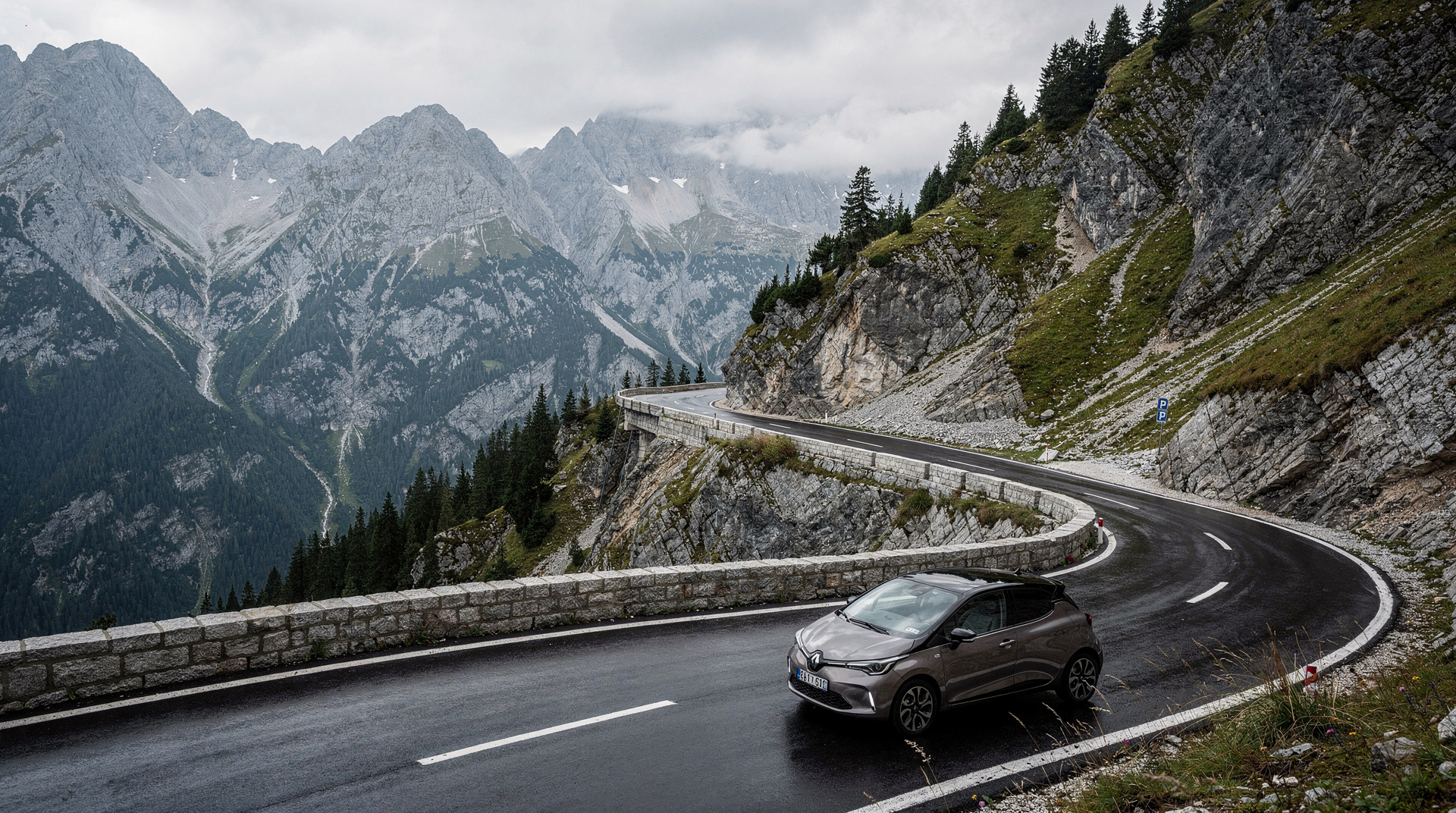
Early start. Drive the Vršič Pass — 50 hairpin bends, views of the Julian Alps in three directions. Stop at the Russian Chapel (hairpin 8 on the descent, built by prisoners of war who died in the 1916 avalanche). Descend into Trenta valley.
Drive downstream through the Soča Valley to Bovec. If you have booked in advance: afternoon rafting on the Soča. If not: walk the gorge path from the Boka Waterfall trailhead (2h return from Bovec).
Stay overnight in Bovec or at a farmhouse in the valley. The Pristava Lepena eco-camp near Soča village is excellent but books out well in advance.
Rafting on the Soča is weather- and water-level-dependent, and self-organising it on the day sometimes means waiting for a slot or missing out entirely in high season. Booking a whitewater run in advance removes that uncertainty.
Soča River whitewater rafting from BovecIf you would rather stay dry and simply see the river close up, the flat sections near Bovec and Kobarid are calm enough for kayaking without rapids experience — worth asking at any of the rental huts along the main road.
Day 6: Kobarid and the WWI landscape
Drive south to Kobarid (21 km). Spend the morning at the Kobarid Museum — this is the most important stop on the trip for anyone with an interest in 20th-century history. Allow 2 hours.
Walk the Kobarid Historical Trail (5 km loop): Napoleon Bridge, Italian Charnel House, Soča gorge. The bridge section above the gorge with the turquoise river directly below is the finest 10 minutes of walking on this entire trip.
Afternoon: drive to the Tolmin Gorges (30 min south) if time allows. Otherwise, continue toward the coast via Idrija and the mercury mines (UNESCO heritage, skip-able but interesting).
Day 7: Slovenian coast — Piran
Drive from the Soča Valley to Piran (approximately 2h via Koper). Arrive by midday.
Piran is the Slovenian coast at its most concentrated: five centuries of Venetian rule in a medieval town on an Adriatic peninsula. Walk to the top of the campanile (200 steps, €1, view of the entire old town and the sea in both directions). Lunch at the fish market restaurant near the harbour.
Afternoon: walk the sea walls. Evening: dinner on the main piazza, where the restaurants are tourist-priced but the location is unrepeatable. Budget €35-45 per person.
Stay overnight in Piran rather than Portorož. The resort town is fine but characterless; the old town is worth the premium for a night.
Day 8: Karst and Postojna
Drive from Piran to Postojna Cave via Lipica (1h30 total). Stop at Lipica for an hour — the Lipizzaner horse stud was established here in 1580 and still operates. Morning performances run at set times; the stud itself is walkable outside performance times.
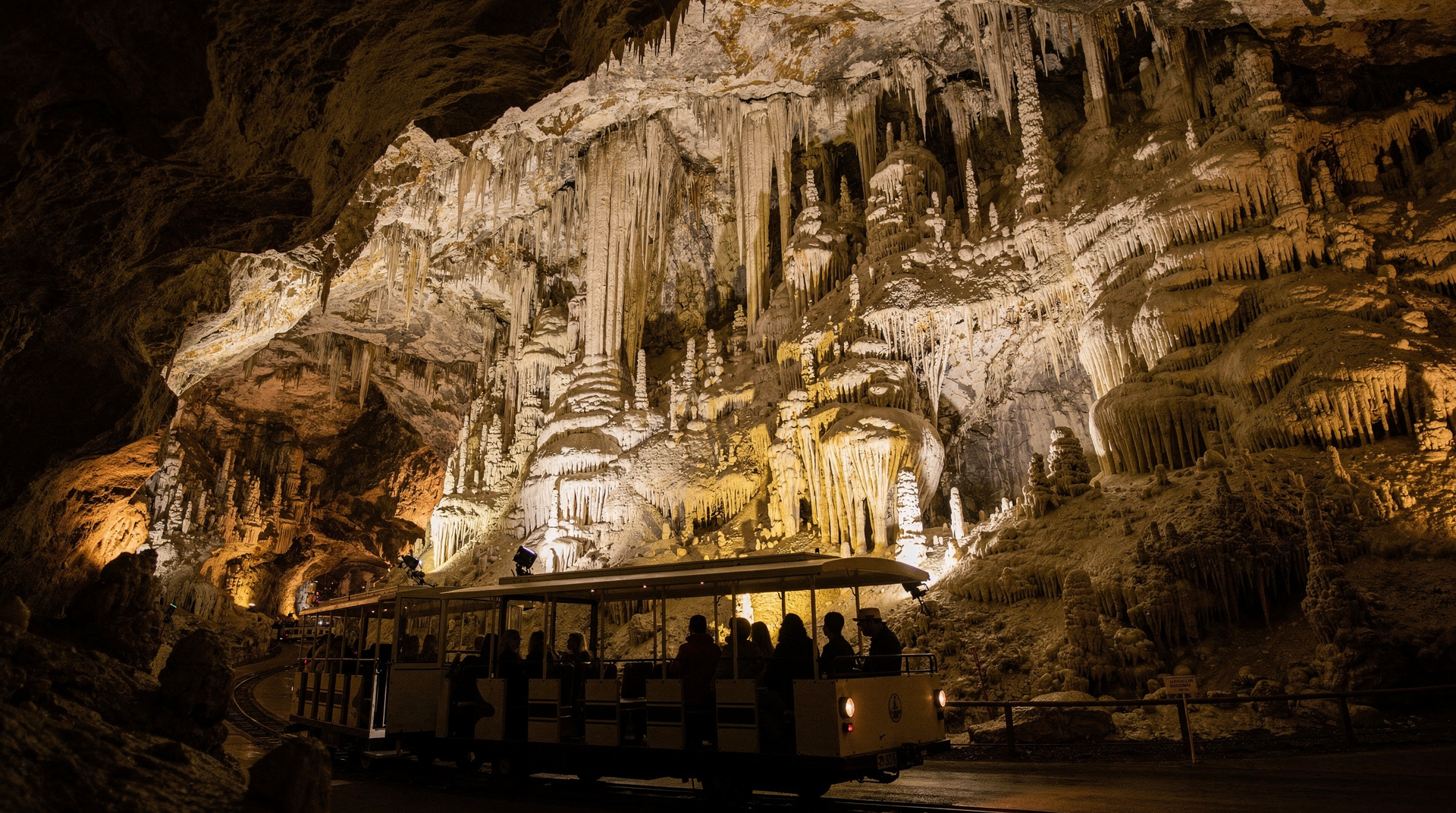
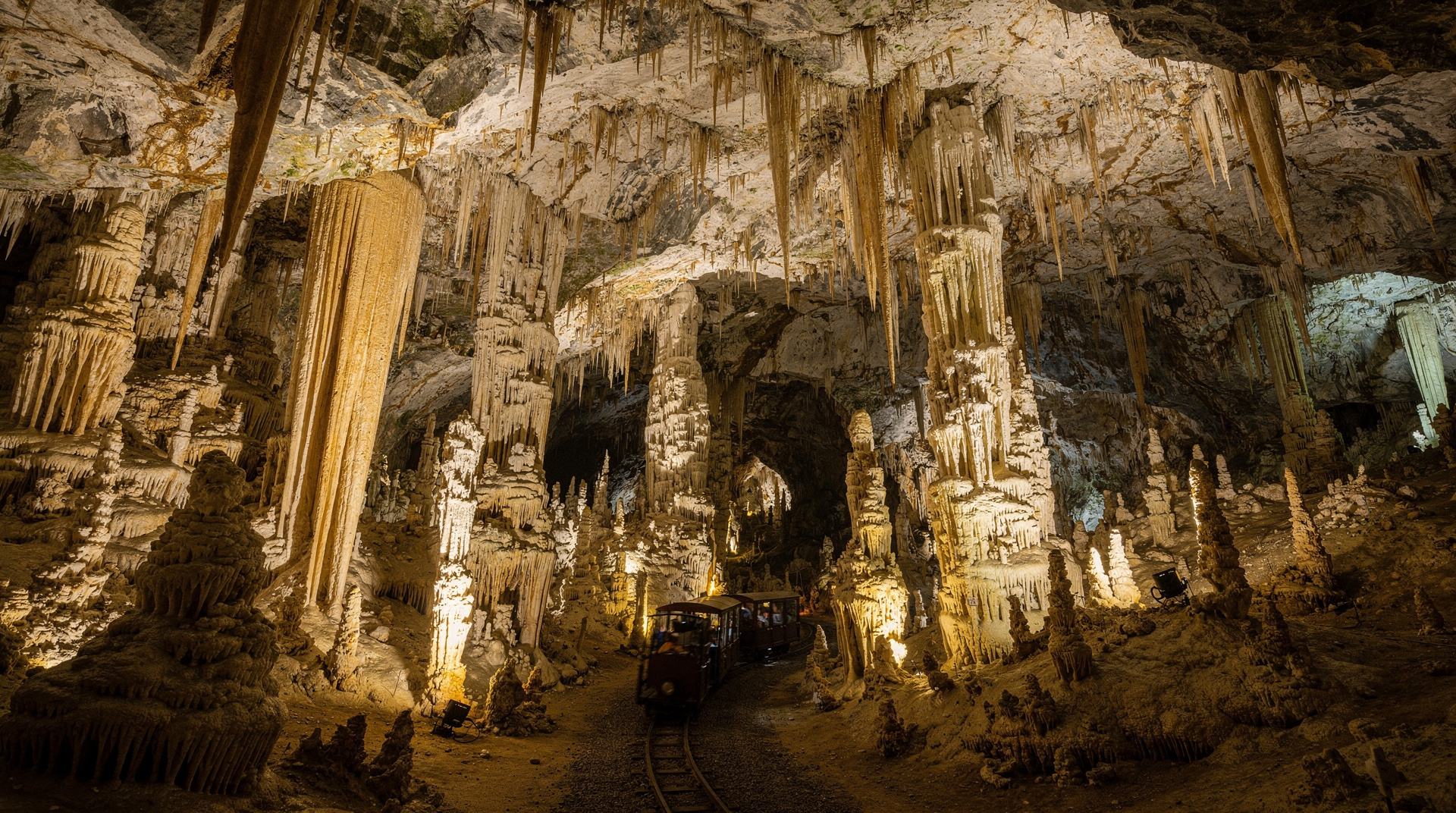
Postojna Cave: the tourist train, the chambers, the proteus. It is commercial, crowded in season, and also genuinely extraordinary. Book in advance for summer visits. Allow 2 hours for the tour.
Predjama Castle is 9 km from Postojna: a 16th-century castle built into a cave mouth in a cliff face. The combination of natural and human construction is unlike anything else in the country. Allow 1h30.
Day 9: wine country — Goriška Brda
Drive west from Postojna toward Goriška Brda (1h30). This is the Slovenian wine country that borders Italy’s Collio zone — the same soils, the same varieties, half the price.
The village of Dobrovo has a Renaissance castle now housing the wine cooperative’s tasting room. Smartno — a walled medieval village above the vineyards — is excellent for an hour’s wander. Most of the wineries in the area accept tastings without appointment outside harvest season.
Stay overnight in Brda or return to Ljubljana via Vipava Valley. The Vipava Valley on the return adds 30 minutes to the drive and passes through the valley that makes some of Slovenia’s most interesting whites (Zelen, Pinela, Malvazija).
Day 10: back to Ljubljana
Morning at your own pace — a final walk in Brda, a last coffee in the Vipava Valley, or a stop in Nova Gorica (a rare planned city on the Italian border, interesting for a single hour). Return to Ljubljana by midday for early afternoon flights or by evening for next-day departures.
The route at a glance
For planning purposes, here is the ten days compressed into a single reference table:
| Day | Base | Highlight |
|---|---|---|
| 1 | Ljubljana | Old town evening walk |
| 2 | Ljubljana | Castle, Plečnik walk, food |
| 3 | Bled | Radovljica stop, lake sunset |
| 4 | Kranjska Gora | Bohinj, Vogel gondola |
| 5 | Bovec | Vršič Pass, Soča Valley |
| 6 | Bovec/Kobarid | Kobarid Museum, WWI trail |
| 7 | Piran | Adriatic coast, campanile |
| 8 | Postojna area | Lipica, Postojna Cave, Predjama |
| 9 | Goriška Brda | Wine country, Smartno |
| 10 | Ljubljana | Vipava Valley return |
What we would do differently
Eastern Slovenia — Maribor, Ptuj, Celje and the thermal spa region — is entirely absent from this route. A 10-day trip cannot cover everything. If you are returning, or if your interests run more toward culture and wine than mountains and caves, a separate eastern circuit built around the Maribor city guide and Ptuj oldest town guide would be worthwhile.
A car for an eastern Slovenia circuit
A second trip built around Maribor, Ptuj and Celje is a different kind of drive from the mountains and caves of this route. The thermal spa region and the wine-minded stops between those towns suit a loose schedule, so a car you can keep for the whole circuit gives you room to linger instead of watching the clock.
Decide early whether the circuit starts and ends at the same place, since that settles where you collect and return the car. Check the fuel policy, the mileage terms and what the excess is before you pay, and note the pick-up hours so a late arrival does not cost you a day. For a culture and wine itinerary, you can look at Localrent options for the Maribor circuit.
Practical notes
Car rental in Ljubljana costs from €35/day for a small car. A full week including motorway vignette and insurance runs around €350-450 from reputable operators at the airport. See the car rental Slovenia guide for current operators.
Petrol is available throughout the country; the mountain roads in the Julian Alps have fewer stations, so fill up in Bovec or Kranjska Gora before heading over the Vršič. The driving Slovenia guide covers the vignette, speed limits and practical driving notes.
Accommodation along this route ranges from private rooms in farmhouses (€40-60/night) to mid-range hotels (€90-130). Budget €80-100/person/day for comfortable travel including accommodation, meals and entrance fees.
What to pack in the boot
Slovenian driving involves mountain roads, possible rain, and the occasional off-road parking situation. A few practical items that earn their place:
Windscreen sun shield: essential in July and August when midday temperatures make parked cars extremely hot.
Reusable water bottles: the tap water is excellent throughout the country; use it.
Cash: €50-100 in small bills for mountain huts, parking, local farm stands and village cafés that prefer cash. Most towns have ATMs but remote areas do not.
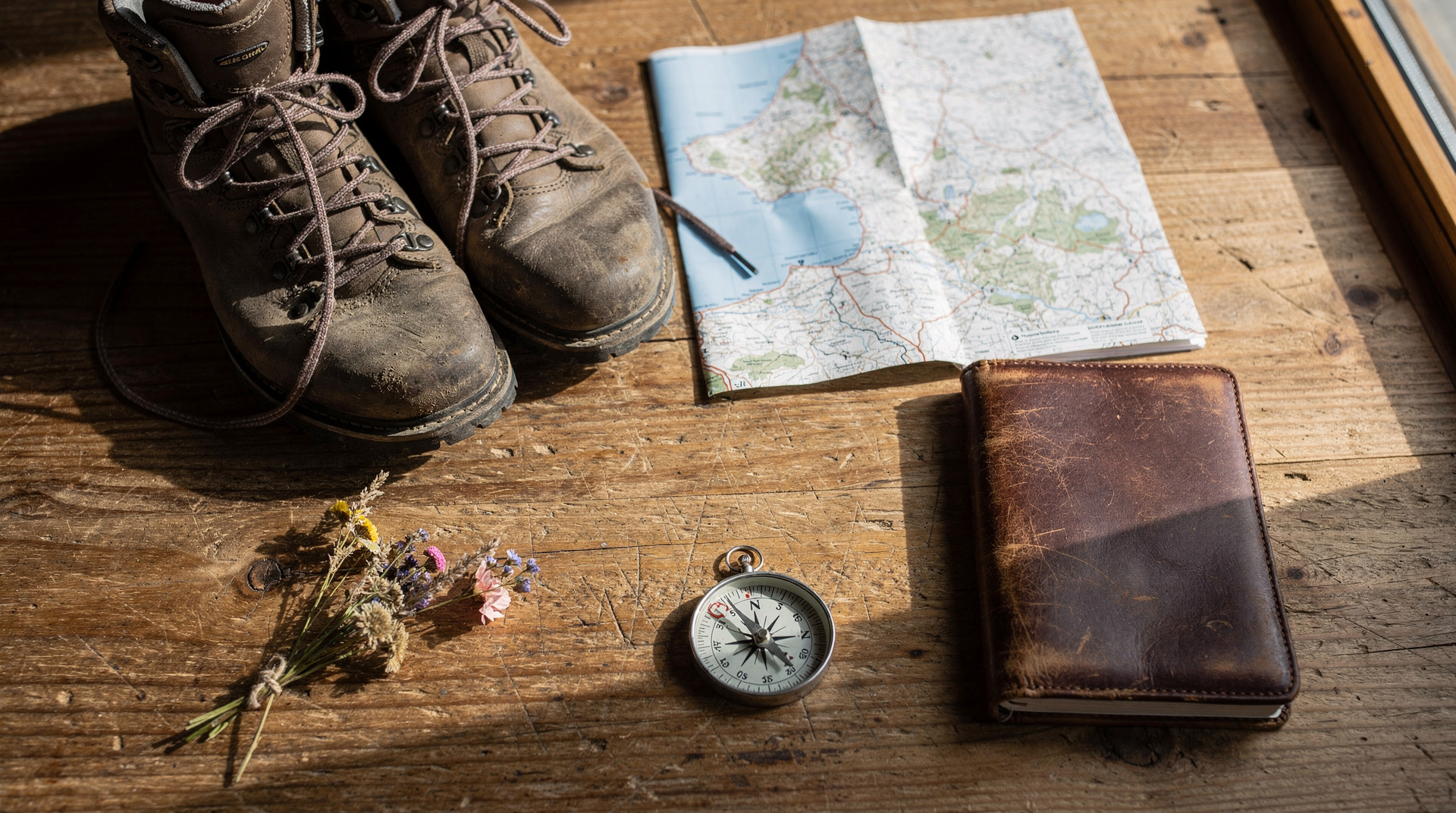
A physical map or offline download: mobile data is inconsistent in some mountain valleys. Google Maps offline download for the Julian Alps region is recommended before heading over the Vršič.
An insulating layer: even in August, the Julian Alps produce afternoon temperature drops. A light down jacket in the boot is used more often than most summer visitors expect.
The road trip as a way of seeing the country
There is a specific argument for the road trip format in Slovenia that goes beyond convenience. The country’s dramatic landscape changes — from the Alpine Julian Alps to the Mediterranean coast, from the Karst plateau to the Pannonian plain — are best understood by driving through them. The transition from the limestone gorges of the Soča Valley to the terracotta rooftops of Piran to the flat vine-covered hills of Goriška Brda becomes a coherent narrative of geography and human settlement when you travel it at road speed rather than flying between the highlights.
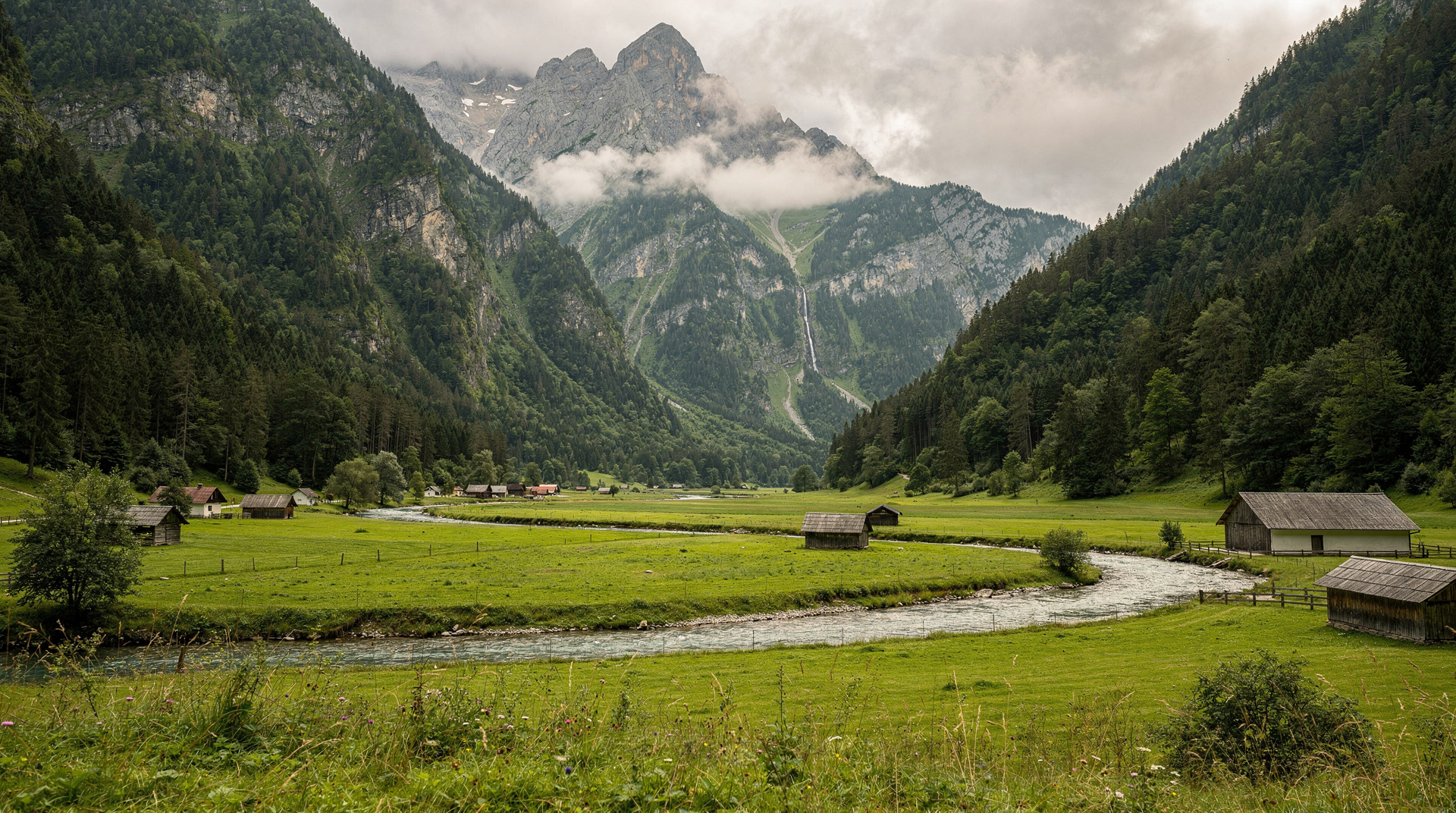
The view from the car window in Slovenia is often as good as the view from the viewpoints. The drive along the Soča Valley floor from Trenta to Bovec, with the turquoise river visible below the road for 30 km, is itself a sustained visual experience. The descent from the Vršič Pass into the Trenta valley, with the mountains dropping away on three sides, is among the most dramatic 15 minutes of driving in Central Europe.
The detours worth taking
Three detours that most road trip itineraries skip and should not:
Idrija: 45 minutes south of the Ljubljana-Bovec route. The mercury mine UNESCO heritage and the žlikrof pasta are worth the detour for a half-day.
Škofia Loka: 30 minutes northwest of Ljubljana. The medieval old town square is among the finest in Slovenia and receives a fraction of Bled’s visitors. A 40-minute stop.
Štanjel: on the Karst plateau between Postojna and Nova Gorica. A hilltop village of grey limestone with a Renaissance castle, a botanical garden, and complete absence of tour buses. 30 minutes off the main road.
All three are described in the hidden villages guide. The driving Slovenia guide covers the roads to and between them.
The eating rhythm on the road
One of the pleasures of a Slovenian road trip is the gostilna discovery: the local restaurant that appears on a village street that has no TripAdvisor listing and no tourist menu, that serves the dnevno kosilo (daily lunch menu) for €10, and that is full at noon with people from the village.
The rule that works: eat lunch at whatever gostilna is busy and local-looking, eat dinner in town where you are spending the night, and eat breakfast at your accommodation (most farmhouses and guesthouses include it).
The gostilna traditional dining guide has the vocabulary for navigating this format and the specific signals that identify a genuinely local establishment.
Where this route can flex
Not everyone has ten days, and not everyone wants to drive the whole loop. A few honest adjustments, based on what we would actually change if repeating the trip with different constraints.
Short on time (7 days): drop the Goriška Brda wine day and the Idrija/Škofja Loka/Štanjel detours. You lose the wine country but keep the Alps, Soča Valley, coast and caves, which is the core of what makes Slovenia distinctive. The how many days in Slovenia guide has a fuller breakdown of trade-offs by trip length.
No interest in driving mountain passes: the Vršič Pass on Day 5 is genuinely demanding — narrow, no barriers on some hairpins, and slow going in a rental car you do not know well. It can be skipped entirely by routing from Bled to Bovec via Tolmin on the valley road, adding about 40 minutes but removing all the hairpin driving. See the Vršič Pass driving guide for what the pass actually involves before deciding.
Travelling without a car at all: a version of this trip is possible by bus and train between Ljubljana, Bled and the coast, though the Soča Valley and eastern detours become much harder without a car. The getting around Slovenia guide covers public transport options in detail.
Was ten days the right length
Ten days is enough to see every major region without feeling rushed on any single day, but it is not enough to properly explore any one of them. We left Goriška Brda wanting three more days of slow wine-tasting, and left the Soča Valley wanting to come back purely for hiking without a fixed departure the next morning. If this is a first trip and you are choosing between breadth and depth, breadth wins for a first visit — you will know on the drive home which region you want to return to for a slower, dedicated trip.
Top experiences
Bookable activities with verified prices and instant confirmation on GetYourGuide.