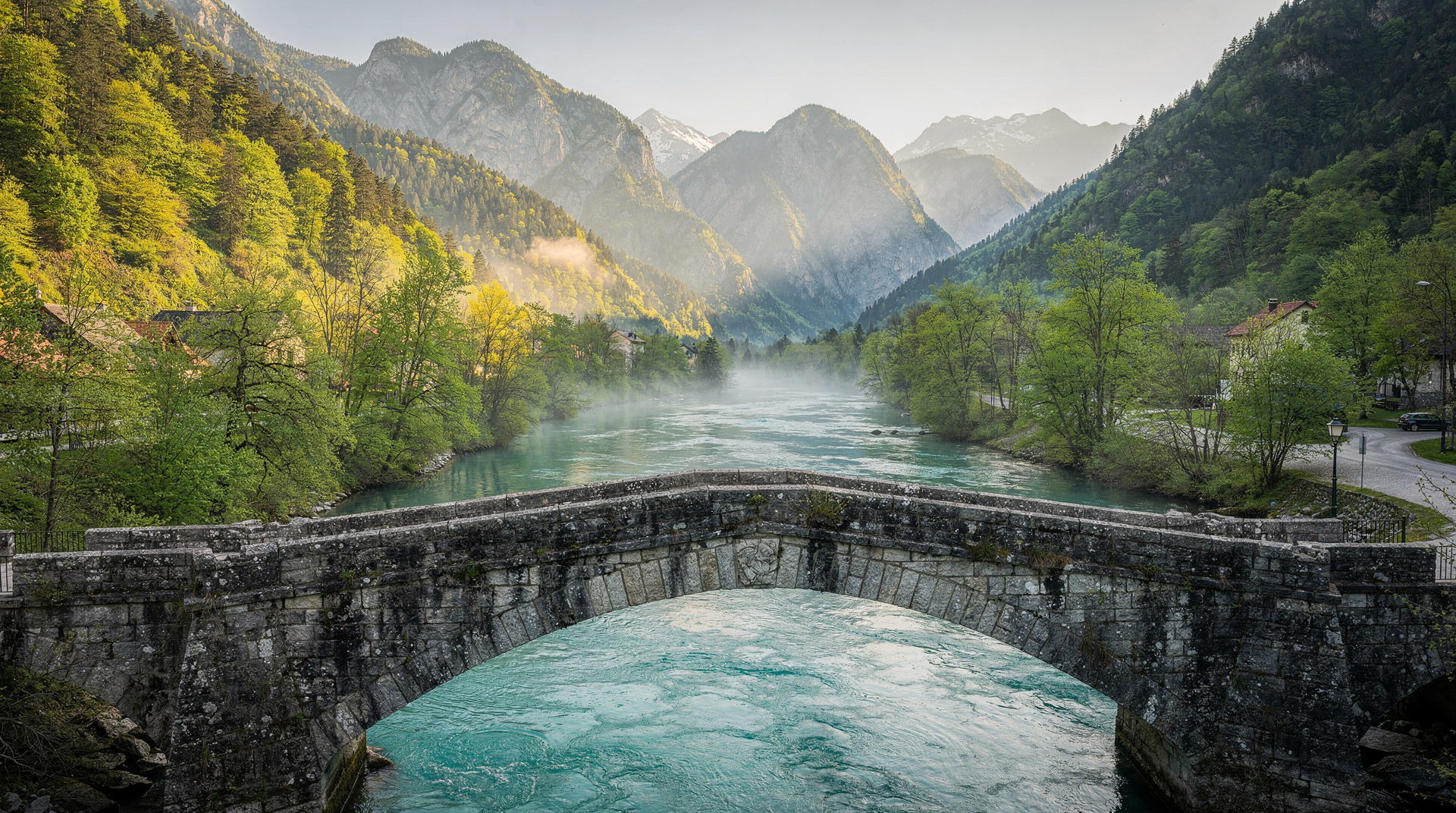
The emerald river: a story about the Soča
| Where | Julian Alps, Triglav National Park to the Italian border |
| Colour cause | Mie scattering of light by dissolved limestone minerals |
| Best colour viewing | Late summer, low water, 10am or 4pm light |
| Length | 138 km in Slovenia before becoming the Isonzo in Italy |
| Best access towns | Bovec, Kobarid, Tolmin, Trenta |
The first time you see it
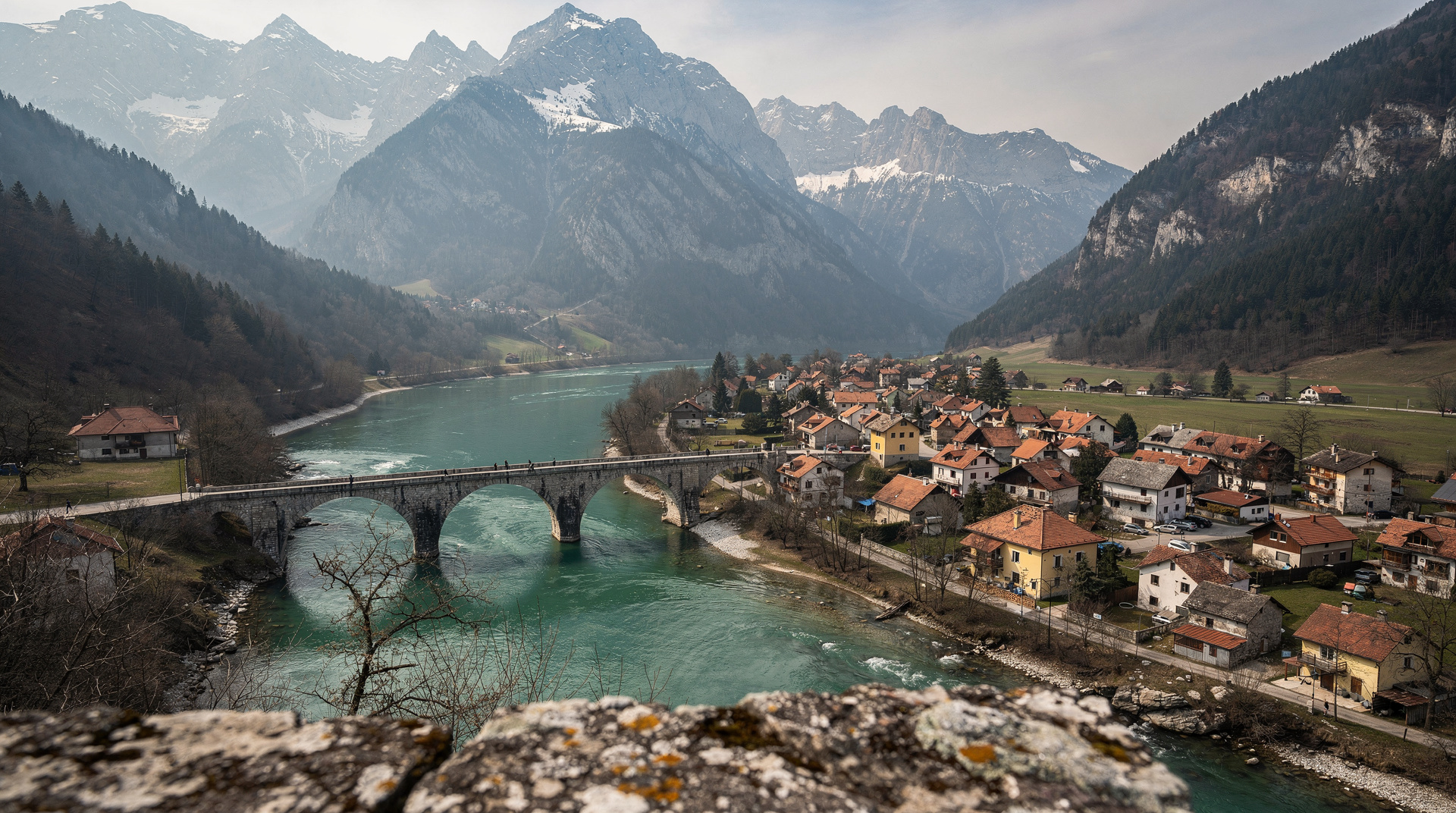
There is a bridge on the road between Tolmin and Kobarid from which you can look down into the Soča gorge below. The first time you stop here — and you will stop, because the colour compels it — you stand on the barrier rail and look at the water running 40 metres below and you think: that is not real.
It is real. The colour is produced by something specific and explicable, and understanding it does not diminish it. If anything, knowing why the water is this colour makes it more strange.
Why the Soča is that colour
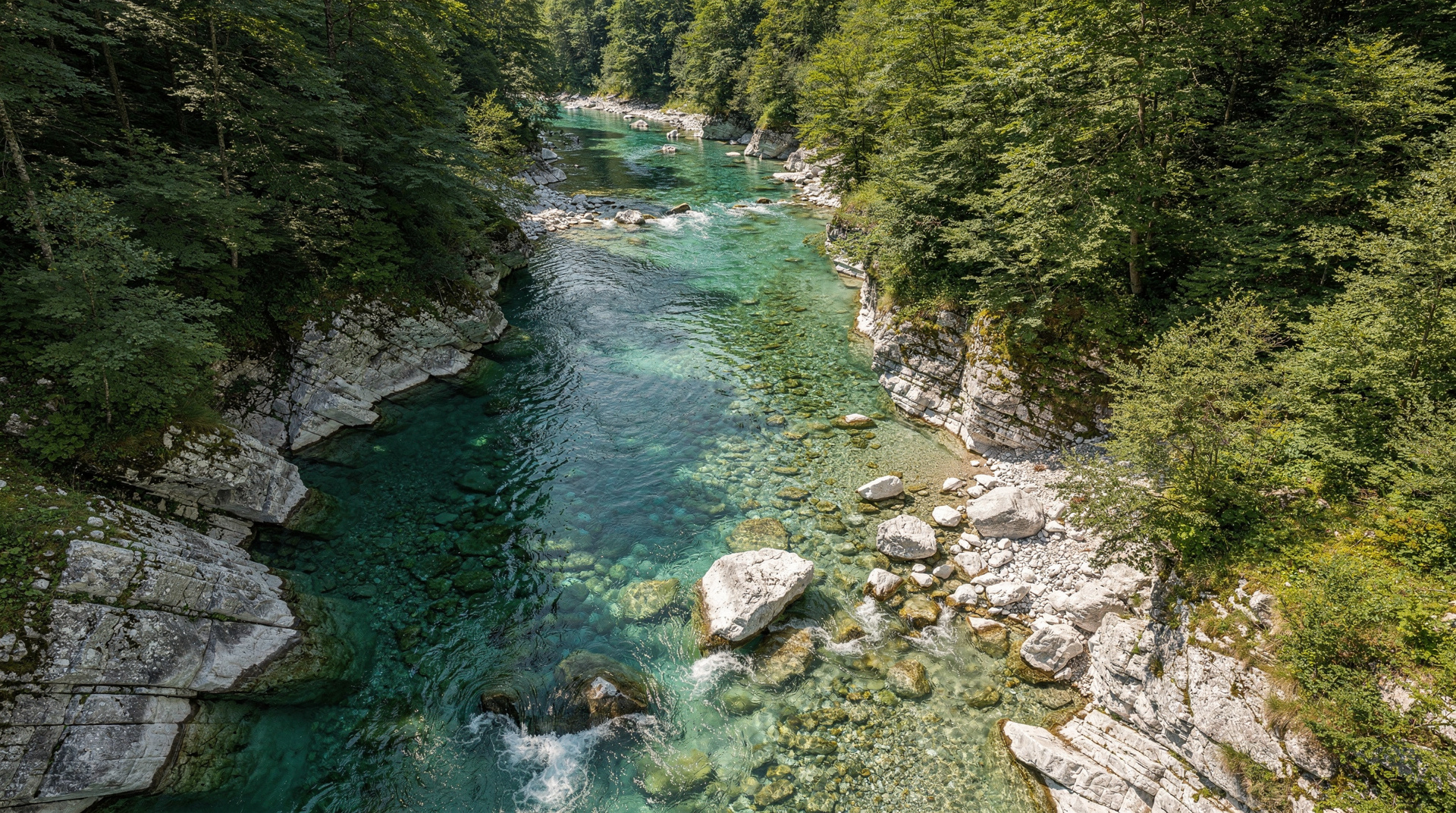
The Soča runs through limestone geology. As it flows, the water dissolves calcium carbonate from the rock; the dissolved minerals stay in suspension in the water column. These suspended particles scatter blue light differently from other wavelengths — the technical term is Mie scattering — producing the specific turquoise that is characteristic of glacially-fed or limestone-rich rivers.
The effect is most pronounced when the water is clear (after periods of lower flow, in late summer) and when sunlight hits the water at an angle rather than directly overhead. Midday in summer washes out the colour; morning and afternoon light — particularly at 10am and 4pm — saturates it.
The Soča is fed by springs deep inside the limestone massif of the Triglav National Park, where the rock has been filtering and mineralising the water for centuries. It emerges in the Trenta valley as a cold (6-8°C at source), clear, mineral-rich river and runs through a series of canyons before reaching its full volume in the valley below Bovec.
The valley it created
The Soča Valley is the result of the river’s work over millions of years on the limestone of the Julian Alps. Where the limestone is soft, the river has cut gorges — the Soča Gorge near Trenta, the Napoleon Bridge gorge at Kobarid, the various tributary gorges that feed the main flow. Where harder rock forms natural dams, the river spreads across gravel beds and produces the wide, shallow sections where you can see the riverbed clearly from 10 metres above.
The valley below Bovec runs roughly northwest-southeast for 70 km before crossing into Italy at Gorizia, where the river becomes the Isonzo and runs across the Friulian plain to the Adriatic. The Italian section is wider, slower and green-brown — the limestone filtering effect attenuates as the river deepens and the suspended particles dilute. The colour change at the Italian border is visible.
A river with a particular history
The Soča Valley became the Isonzo Front in 1915, when Italian forces crossed the border hoping to push northeast toward Vienna and Austria-Hungary deployed its forces to hold the mountains above. Twelve battles were fought along this river between 1915 and 1917. The total casualties exceeded 300,000 dead.
The scale of the disaster was in inverse proportion to the territorial gains. After twelve battles and two years of fighting, the front had moved less than 20 km. The landscape was largely unchanged. The river continued to run turquoise through the gorges where men had died in the thousands.
Ernest Hemingway served as an American Red Cross ambulance driver on the Isonzo Front in 1917. He was wounded at Fossalta, north of the main front. His experience of the river — and of the catastrophic Austrian breakthrough at Caporetto (now Kobarid) in October 1917 — formed the core of A Farewell to Arms, which he published in 1929. In the novel, the river runs through the background of every outdoor scene; the retreat across the Tagliamento is one of the great set-pieces of 20th-century fiction.
The Kobarid Museum, which received the Council of Europe Museum Prize in 1993, documents the Isonzo Front with unusual restraint. The walk from the museum to the Napoleon Bridge — 15 minutes through the gorge above the river — takes you through a landscape where the evidence of the war (concrete bunkers, ammunition caches, gravesites) is still physically present. The river below is unchanged.
The river as an ecosystem
The Soča is one of the last significant wild rivers in central Europe. Its flow regime — seasonal variation driven by snowmelt rather than human management — has not been substantially modified by dams or diversion. The entire valley within Slovenia sits inside Triglav National Park, which protects the river from commercial extraction.
The wild Marble trout (Salmo marmoratus) is endemic to the Soča system — found nowhere else in the world. The fish, which grows to over a metre in length, was almost lost to extinction in the mid-20th century through hybridisation with introduced brown trout. A long-term programme to restore the pure population has been partially successful; wild Marble trout are present in the upper valley above Bovec, and the strict fly-fishing regulations (catch-and-release, with seasonal closures) reflect the fragility of the recovery.
The Soča eagle owl nests in the limestone cliffs of the gorge sections. The black-headed gull winters at the river mouth near Gorizia. The otter, once extinct in Slovenia, has returned to the upper valley. The birdwatching and wildlife watching guides at Triglav National Park cover these in detail.
The Soča compared to Slovenia’s other rivers
| River | Colour | Character |
|---|---|---|
| Soča | Vivid turquoise | Fast, limestone-fed, glacial cold |
| Sava (Bled/Bohinj outflow) | Clear green-blue | Calmer, wider, more swimmable |
| Krka (near Novo Mesto) | Green, tufa-formed | Gentle, waterfalls and travertine pools |
| Mura (eastern Slovenia) | Brown-green | Wild, unregulated lowland river, biosphere reserve |
The Soča’s colour is the most distinctive of the four, and the one most frequently mistaken for an edited photograph before visitors see it in person.
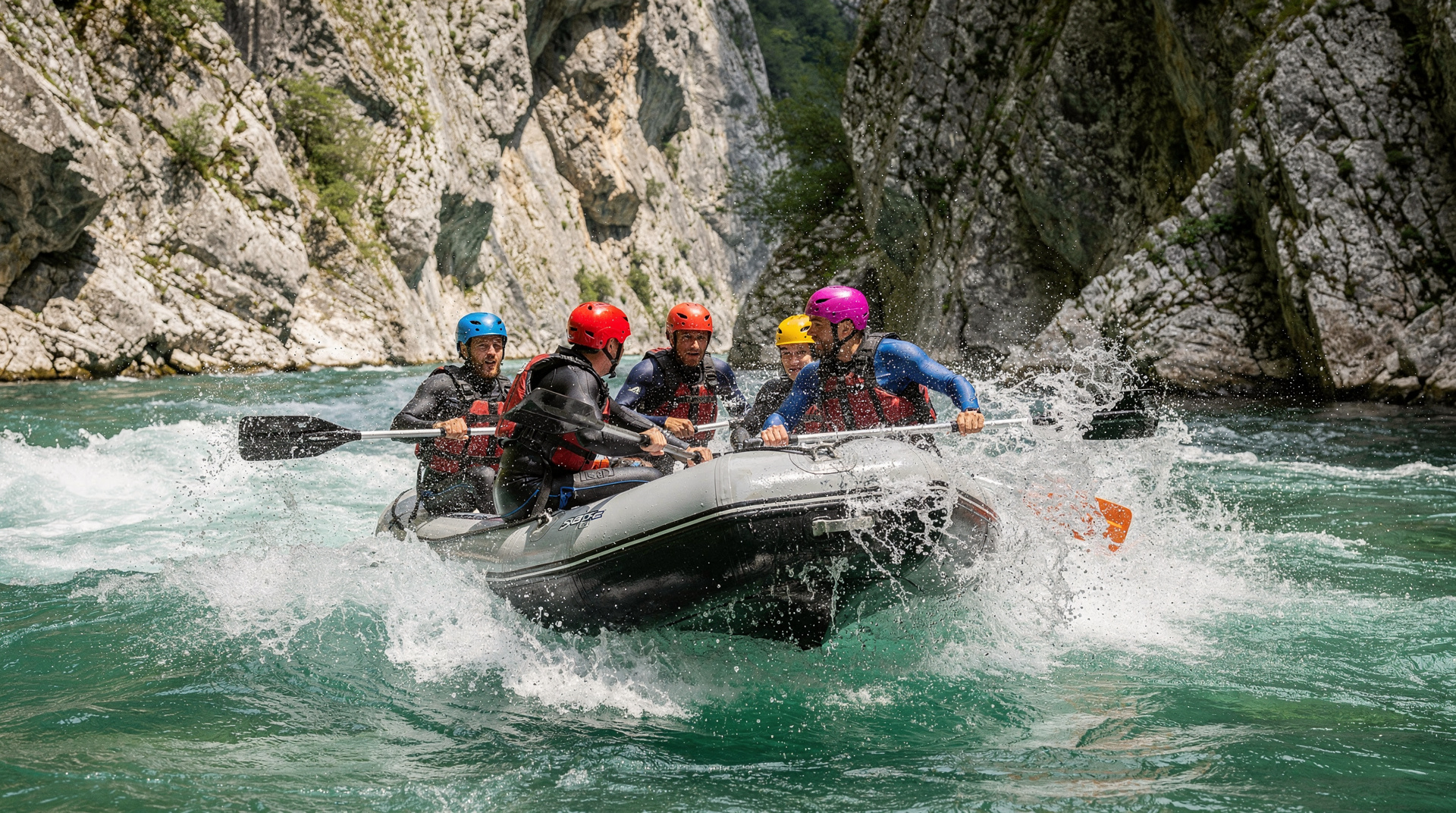
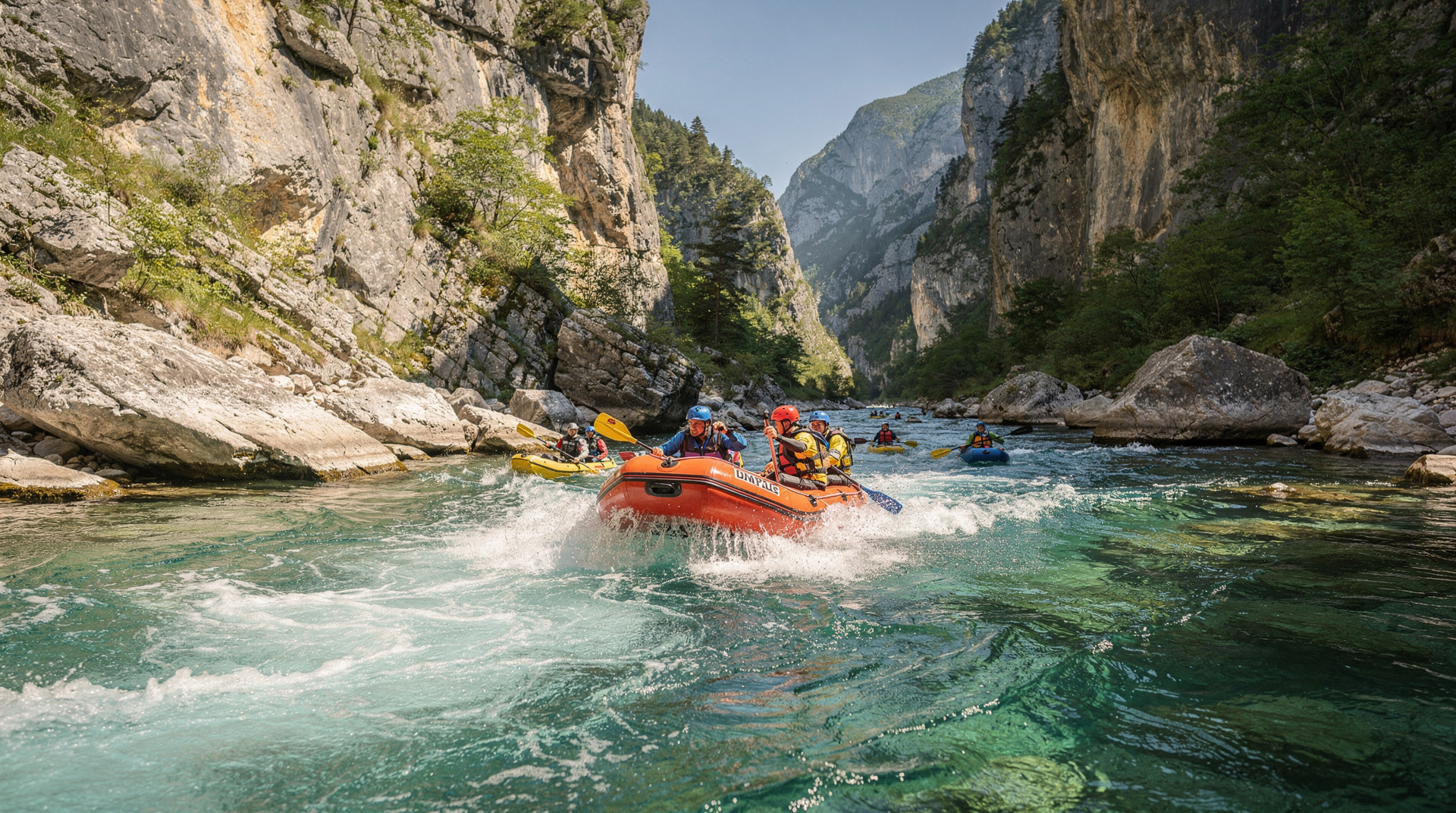
For a first-hand look at the water itself rather than from a bridge, the gorge snorkelling experience or a guided rafting trip put you directly in the current the geology above describes:
Soča Gorge snorkelling experience Soča River premium rafting with photosThe sports economy
The modern Soča Valley sustains an outdoor sports economy around the river. Whitewater kayaking, rafting, canyoning, fly-fishing, snorkelling — the river guide for water sports and the Soča rafting guide cover what is available and at what level.
The kayaking community considers the Soča among the finest whitewater rivers in Europe for its combination of technical difficulty, water clarity and scenery. International kayaking competition has been held in the gorge sections above Bovec since the 1980s.
The snorkelling on the Soča gorge is a specific and unusual experience — entering the turquoise water at low flow and looking up at the limestone walls from below, with the light filtering through the water at that specific frequency that produces the colour from above.
The river through the seasons
Winter (December-March): the water is at its clearest and calmest, though air temperatures make swimming and rafting off the table for most visitors. The valley is quiet, the Vršič Pass is closed, and the Julian Alps above carry heavy snow — a completely different register from the summer sports economy.
Spring (April-May): snowmelt begins feeding the river toward its full volume; by late May the current is fast and the colour is at its most saturated, though slightly less clear than late summer due to increased sediment.
Summer (June-August): peak sports season. The river is busiest with rafters, kayakers and swimmers; water temperature reaches 15-18°C. This is also when the colour is most photographed, though midday light washes it out.
Autumn (September-October): the professional’s choice. Water remains swimmable into early October, the crowds thin dramatically, and the forested valley walls turn colour around the still-turquoise river — the combination described in the autumn colours guide.
An honest note on visiting
The Soča Valley rewards patience. The road stops and the roadside viewpoints give you a version of the river. The two hours you spend on a raft, or swimming in the gravel-beach section near the Napoleon Bridge, or walking the Soča Trail at water level — these give you a different thing.
The river is cold year-round. The gorge sections are not swimming water; the wide gravel sections are. The distinction between rafting-grade water and swimming-grade water requires local knowledge — ask your accommodation or a local operator before entering unfamiliar sections.
The Soča Valley day trip guide and the Bovec adventure guide are the practical starting points. The valley repays more time than most visitors give it.
The source of the Soča
The Soča rises inside Triglav National Park at approximately 1170 metres altitude in the Trenta valley. The spring — a pool of glacially cold water emerging from the limestone in a small cave chamber — is accessible via a marked trail from the Trenta valley floor. The hike from the nearest car park takes about 45 minutes return.
The source pool is 3 metres across and perfectly circular, with the turquoise colour already fully formed at emergence. It is an unusual experience: standing at the beginning of a river that you have been following downstream for three days, seeing it arrive from nowhere into a small stone hollow, cold and impossibly coloured and already fully itself.
The source is at its most dramatic in May and June when snowmelt is feeding the springs at maximum rate. In August, the flow is lower and the colour slightly deeper — the less turbulent conditions allow the limestone particles to settle into the characteristic concentration that produces the turquoise at its most vivid.
The Soča in literature
The Soča has a literary presence beyond Hemingway. The Slovenian poet Simon Gregorčič wrote his best-known poem “Soči” (To the Soča) in 1882, addressing the river directly in an act of personification that has become part of the national cultural consciousness. The poem’s line “Mati Soča” (Mother Soča) is quoted in the Kobarid Museum and printed on the walls of the valley’s tourist infrastructure.
The 20th-century Slovenian writer Florjan Lipuš, who survived the concentration camp system as a child, wrote extensively about the landscape of the lower valley (the Collio, the border country). His novels are available in German and French translation; they offer access to the landscape’s human scale that the outdoor tourism industry cannot.
The Italian continuation
The Soča crosses into Italy at the village of Robič, near Kobarid, and runs southwest through Cividale del Friuli to the Adriatic at Gorizia. In Italy it is called the Isonzo. The Italian section is accessible as a day trip from the Slovenian valley and offers a different perspective on the same river: wider, slower, green rather than turquoise (the limestone mineralisation effects diminish in the deeper water).
The town of Cividale del Friuli — UNESCO World Heritage for its Lombard heritage — sits on the river 30 km southwest of the border. The combination of a visit to Kobarid in Slovenia and Cividale in Italy in the same day is possible and historically coherent: both towns were shaped by the same empires and the same wars.
The Trieste from Slovenia guide and the Venice from Slovenia guide cover the Italian extensions of a Soča Valley trip.
Why the river keeps bringing people back
Something about the Soča creates return visitors in a way that other natural sites do not. Partly it is the colour, which is not entirely believable and therefore keeps needing to be confirmed. Partly it is the combination of landscape and history — the beauty and the catastrophe sitting in the same frame.
But partly it is something harder to articulate: the sense that the river is doing something, that it is in active process rather than static display. The mountains are scenery. The Soča is a thing that is happening — cold, fast, purposeful — and the people who paddle it and swim in it and wade it with fly rods are participating in rather than observing.
The best articulation of this quality is walking the Soča Trail at river level for a full day. The river stays in earshot and sight. The scale of what it has made — the gorges, the gravel plains, the limestone cliffs — becomes comprehensible in a way that stopping at roadside viewpoints cannot produce.
Top experiences
Bookable activities with verified prices and instant confirmation on GetYourGuide.