Ljubljana, European Green Capital: what the award actually means on the ground
The award versus the reality
When a city wins the European Green Capital award, scepticism is warranted. The award tends to reward ambition and policy documents as much as outcomes. Brussels won it in 2015; nobody walked away convinced that Brussels had solved its traffic problem.
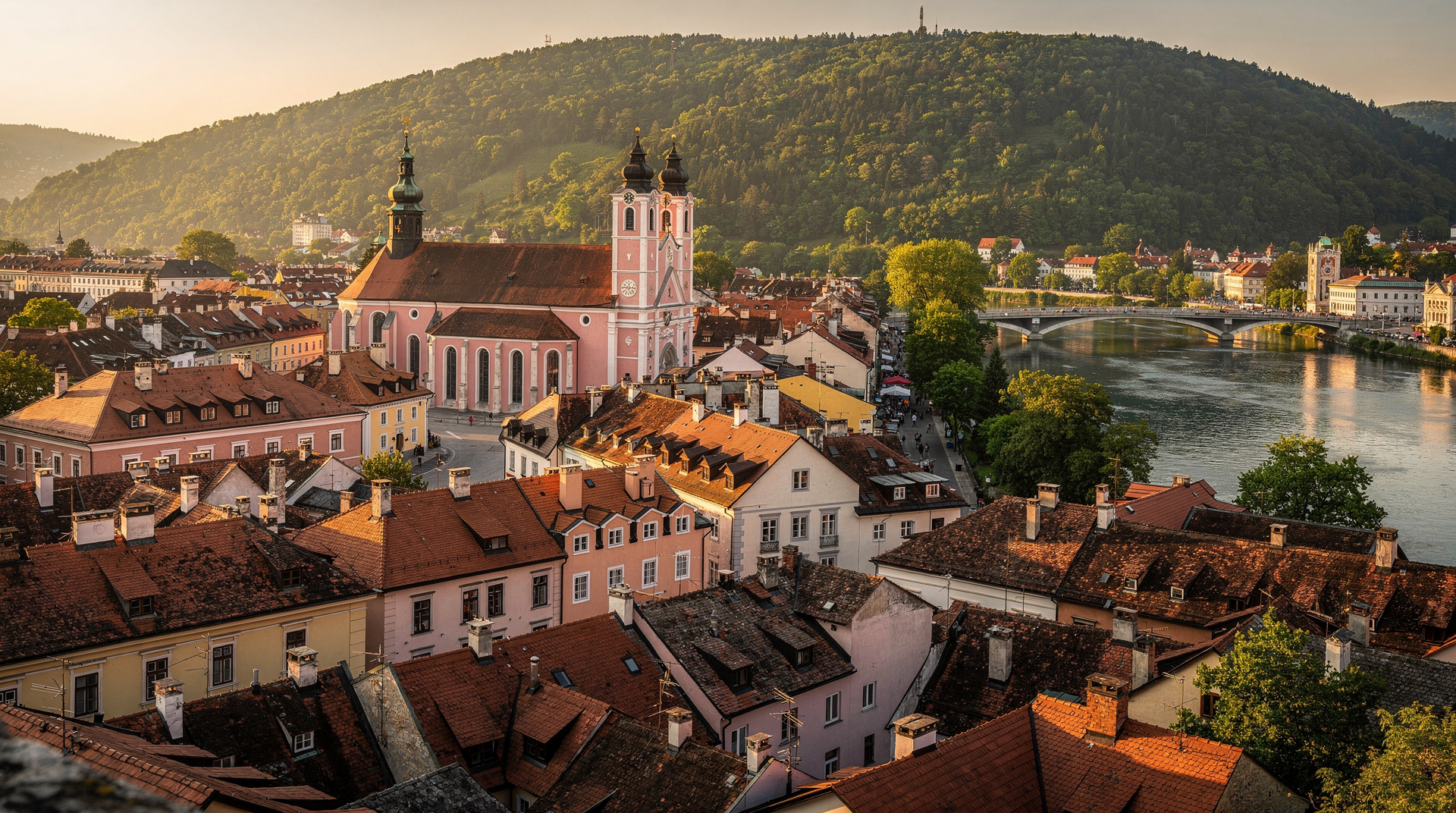
Ljubljana won in 2016, and the award here reflects something more concrete than most. This is a city that closed its medieval core to private cars not for award season but permanently, in 2007 — nine years before the prize. The result is not a pedestrianised theme park but a working city centre where residents do their shopping, pick up children from school, and move to work without a car.
What closed-to-cars actually looks like
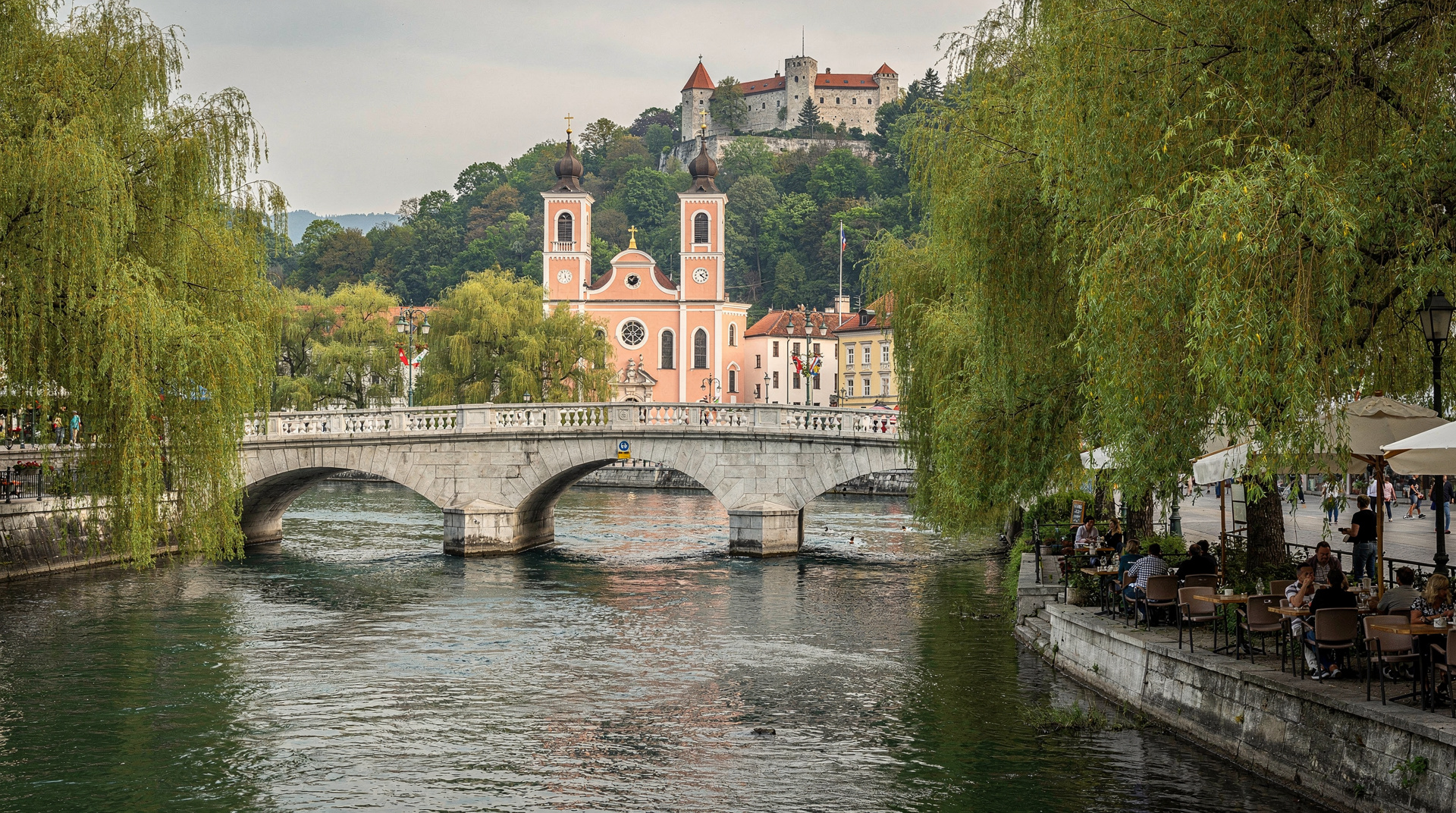
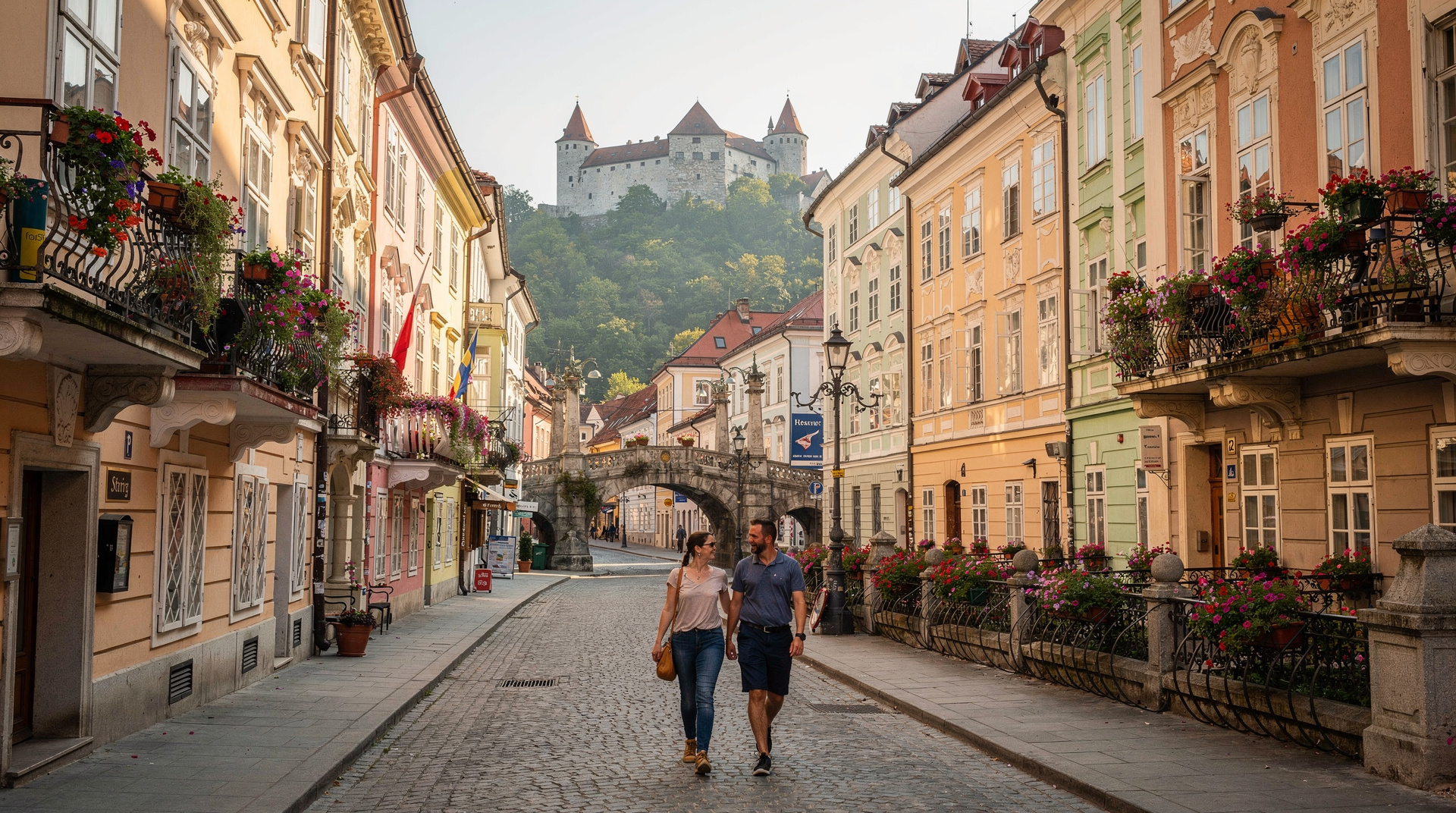
The area between the Triple Bridge and the main market is perhaps 600 metres across. Within it, the streets belong to pedestrians, cyclists and the electric tourist train. The effect is immediate: you hear birds. You hear the Ljubljanica River, which borders the old town on the west. You hear café conversation without traffic noise underneath it.
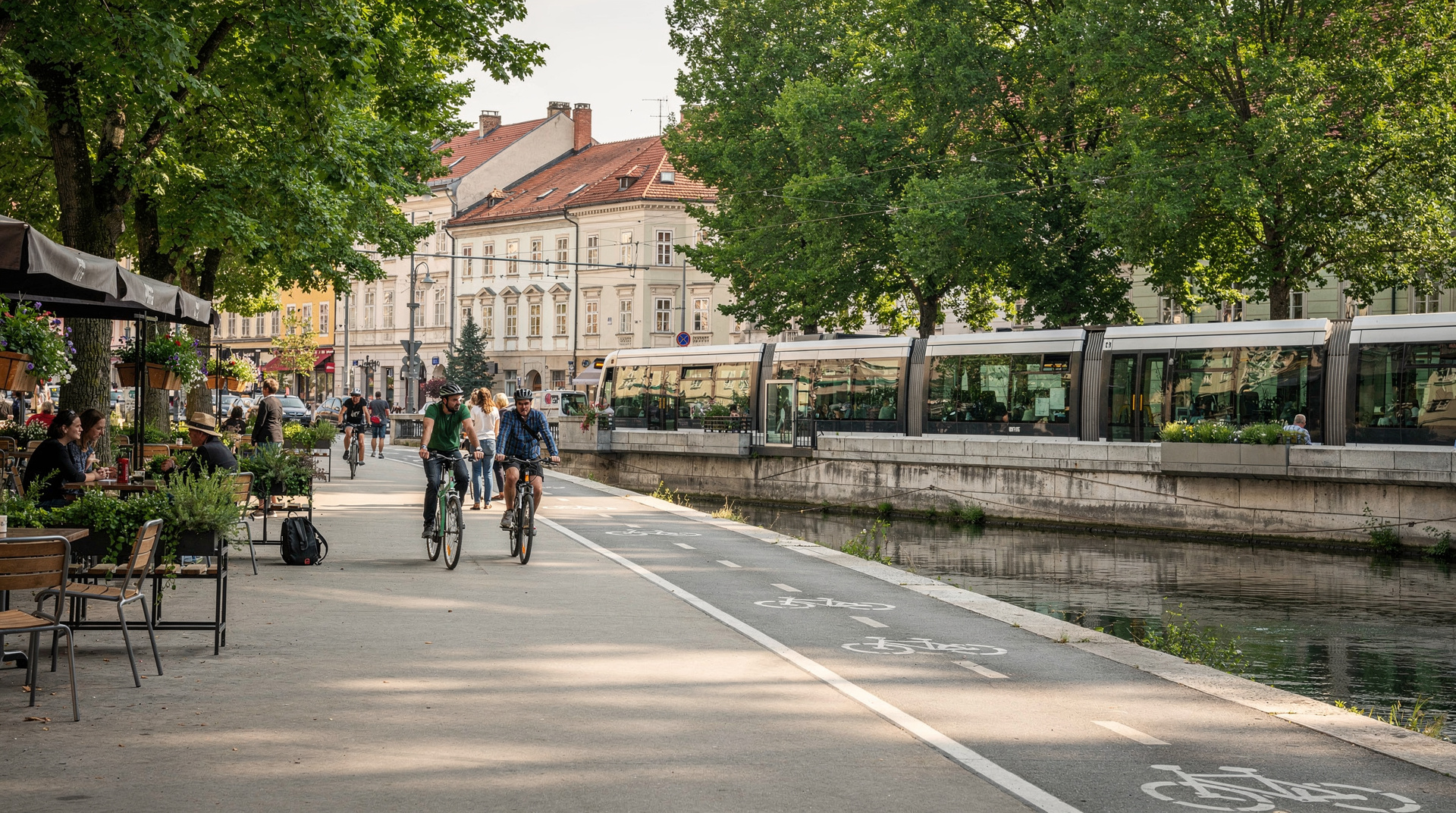
On the riverside, the restaurants extend their terraces to within two metres of the water. Families cycle along the embankment. A fisherman sat casting a line from the stone bank at 11am on a Tuesday while tour groups passed behind him, and neither group seemed surprised by the other.
This is Ljubljana’s daily texture — unhurried, mixed-use, genuinely residential in a way that few European city centres remain.
| Car-free since | 2007 (award came nine years later, in 2016) |
| Cycle network | Around 470 km of paths |
| Bike share | Bicikelj, first hour free |
| Green space | Exceeds Vienna and Amsterdam per resident |
| Minimum stay | 2 nights to feel the pace properly |
The market and food culture
The Plečnik-designed central market runs along the river from the Triple Bridge to the Dragon Bridge. Open air stalls on the embankment sell vegetables, fruit, wild mushrooms, dried flowers and honey every morning except Sunday. The covered hall behind sells meat, dairy and dry goods.
Ljubljana has around 600 beekeepers within the city boundary. Bees are legally protected in Slovenia, and beekeeping is a national tradition with origins in the 18th century — the AŽ hive was invented by Slovenian beekeeper Anton Janša, who taught apiculture to the Habsburg court. The honey sold at the market is local and genuine; the jar you buy at the tourist shop near the castle is probably not.
The food market is also where you encounter Slovenian coffee culture. Ljubljana’s café scene has been heavily influenced by the proximity to Italy — the country is 50 km from Trieste, the city that invented the modern espresso bar. Coffee is taken standing or sitting at the bar, not in takeaway cups, and the quality is uniformly good.
The cycling infrastructure
Ljubljana invested heavily in cycling infrastructure following the pedestrianisation of the old town. The city now has around 470 km of cycle paths, and the Bicikelj bike-share scheme — with around 36 stations across the city — is functional and cheap: the first hour is free.
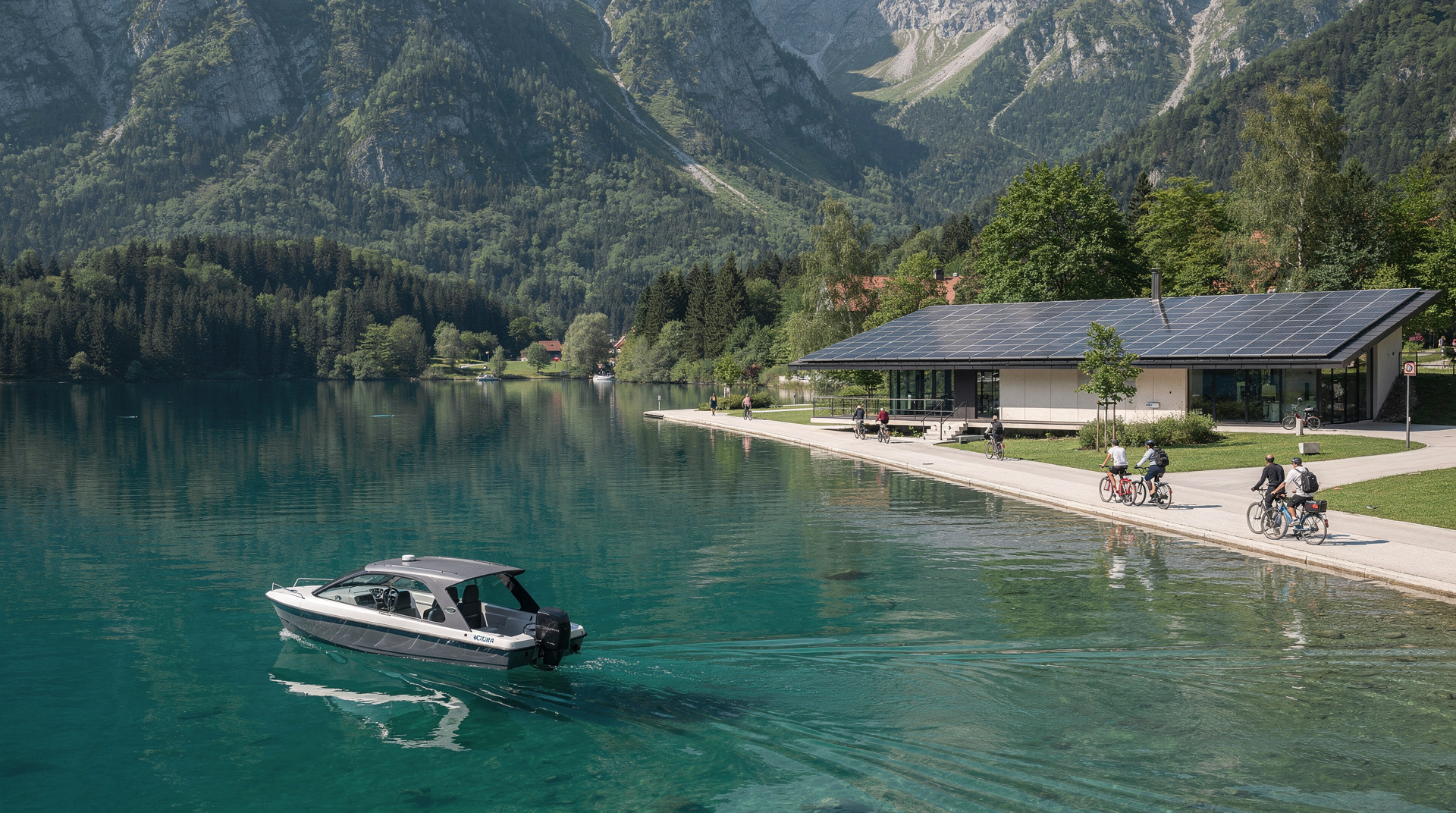
The cycle path along the Ljubljanica toward Tivoli Park is popular with locals in the evening: a 4 km route along the water, flat, lit after dark, running past the outdoor swimming area at Špica. In summer, the banks at Špica fill with Ljubljančani swimming in the river — another detail that the European Green Capital award reflects rather than invents.
Tivoli Park and the city’s green lungs
Tivoli Park is a 510-hectare park beginning five minutes’ walk from the main shopping street. The formal avenue at the entrance — a broad promenade with low hedges and a fountain, designed by Plečnik — gives way quickly to meadows, sports courts, paths through old growth trees, and eventually a forest that extends into the hills above the city.
The Rožnik Hill section of the park offers a 45-minute walk to a hilltop from which you can see the Ljubljana Basin and the Alps beyond. There is a small inn at the top serving traditional food; the terrace is the best free viewpoint in the city.
The Plečnik factor
Jože Plečnik was Ljubljana’s municipal architect from 1921 to 1957. In that time he redesigned the central market, the Triple Bridge, the city library, the cemetery, the football stadium, the covered market, the main city park, a dozen smaller interventions, and roughly 50 buildings across the city. His architectural language is classical in structure and ornamental in detail — archways, colonnades, lamp posts, cobbled surfaces — but always in service of human scale and use.
The result is a city that moves on foot naturally, because the spaces were designed for pedestrians. Walking through the old town with the Plečnik architecture guide in hand is not an exercise in architectural tourism; it is an explanation of why the city feels the way it does.
The waste management reality
Ljubljana committed to recycling 68% of its waste by 2020 and achieved it. The city’s door-to-door organic waste collection, combined with a network of recycling centres, reduced landfill from 100,000 tonnes per year to under 17,000 tonnes in a decade.
For visitors: the multi-bin system in public spaces (yellow for plastic, blue for paper, brown for organic) is consistent across the city and easy to use. The tap water in Ljubljana is excellent — bring a refillable bottle and use it.
Where sustainability meets honesty
A note on what Ljubljana does not do well: the tourist industry still generates significant plastic waste, particularly around the major sites. The central restaurant strip on the river embankment is perfectly pleasant but overpriced for what it offers — the restaurants two streets behind it are where locals actually eat. Our Ljubljana food tour guide points toward the neighbourhood restaurants that do not depend on tourist footfall to fill seats.
The Ljubljana Castle, while dramatically positioned, is not worth the entry fee unless you have a specific interest in the medieval history. The view from the free ramparts is the same as the view from the ticket-holders’ terrace. Take the funicular up and walk out freely.
Practical details for green visitors
The Ljubljana Airport bus runs to the city centre for €4 and connects directly to the central bus station. From there, the old town is a 10-minute walk.
Electric hire cars are available from the central location; a day-rate for city and short regional excursions runs to €40-60. The Bicikelj bike share is adequate for the city and surrounding riverside paths.
For regional travel, the train network connects Ljubljana to Bled, Koper and Maribor with reasonable frequency. The public transport guide has current timetables and fare information.
Seeing the green city on foot or by boat
A guided walk is the fastest way to understand why the car-free core works as well as it does — a local guide connects the Plečnik architecture, the market rhythm and the river geography in a way that a self-guided wander often misses on a short visit.
Ljubljana old town private walking tourThe river itself is worth seeing from the water, not just the bank. A short cruise along the Ljubljanica passes beneath the Triple Bridge and the Dragon Bridge and gives a sense of how tightly the car-free zone and the waterway are integrated — something that is harder to appreciate from a single vantage point on land.
Ljubljana walking tour with river cruiseFor a slower, greener way to cover more ground, an e-bike route links the old town to Tivoli Park and the Šiška district without the effort of a standard bicycle — useful for visitors who want to see the neighbourhood dimension of the city without a full day of walking. The things to do in Ljubljana guide and the Ljubljana walking tours guide cover the self-guided versions of both routes.
Green Ljubljana beyond the city limits
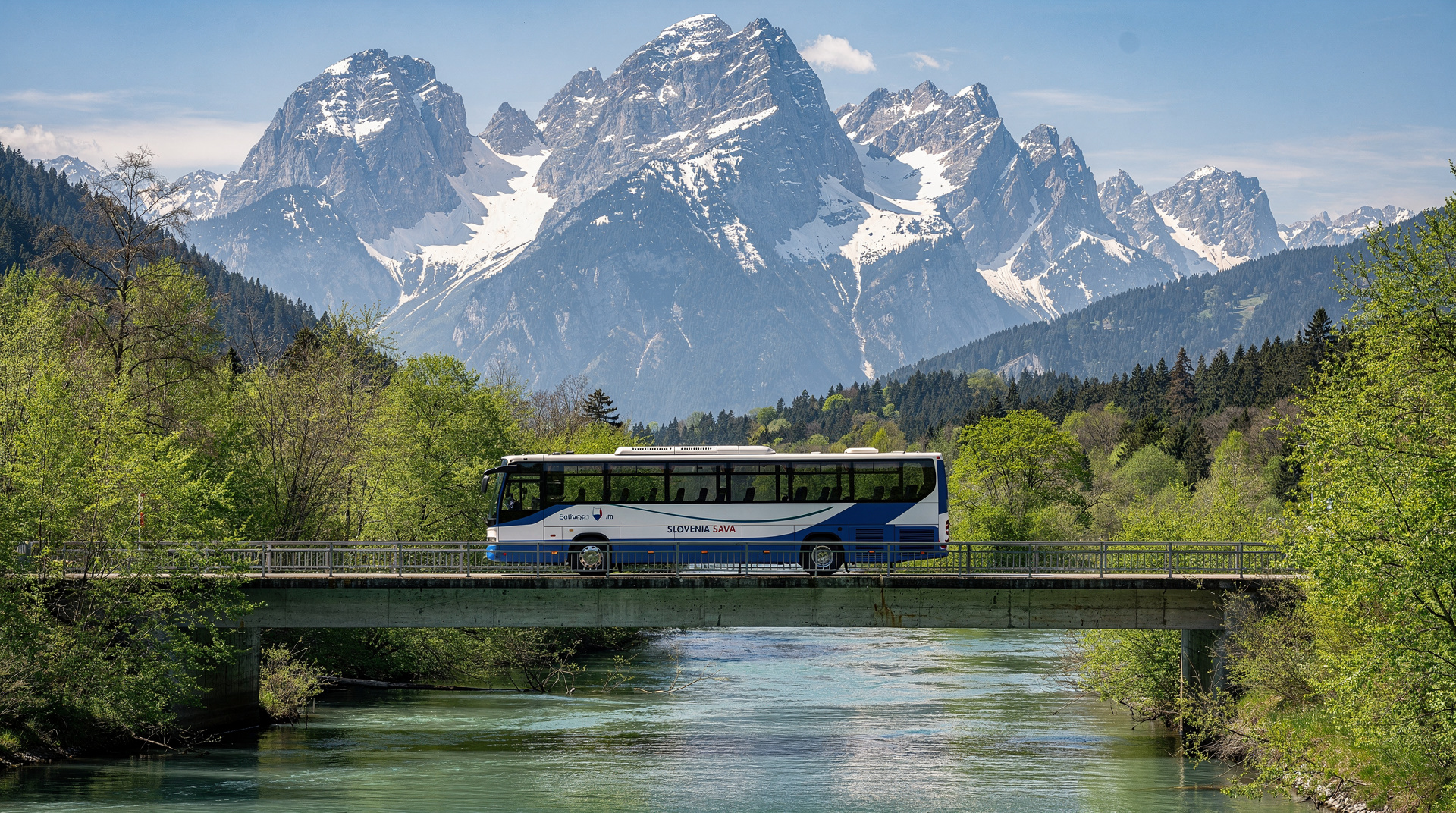
The car-free philosophy extends outward, in a more modest form, to how well Ljubljana connects to the rest of the country by train and bus rather than by car. The trains in Slovenia guide and public transport guide already cover the logistics; worth adding here is that a surprising share of Slovenia’s best day trips are entirely reachable without a rental car from Ljubljana’s central station, which keeps a low-car visit possible beyond the city itself.
The day trips from Ljubljana guide lists the specific routes that work well by public transport, and the getting around Slovenia guide is the wider planning reference.
What the award means for a visitor
The practical upshot of Ljubljana’s green credentials is this: the city is cleaner than most, calmer than most, and more pleasant to walk through than most. The infrastructure rewards visitors who travel without a car, who want to eat well without spending extravagantly, and who are interested in a city that has thought about how people live in it.
That is not an abstract achievement. For a two-night city break, it is the difference between a pleasant stay and a genuinely enjoyable one.
The Ljubljana old town guide covers the practical walking routes. The things to do in Ljubljana guide covers the full range of options from museums to day trips. Allow two nights as a minimum; three lets you breathe.
The neighbourhood dimension
The Šiška district, northwest of the old town, has developed as Ljubljana’s design and creative quarter. The Šiška Cultural Centre (a converted cinema) anchors a neighbourhood that has craft coffee shops, independent bookshops, neighbourhood restaurants that are not on any tourist circuit, and a Saturday farmers’ market that draws producers from the surrounding region.
The Bežigrad neighbourhood to the north contains the Sports Park Tivoli, a legacy of the 1970 Skiing World Championships, and the residential Ljubljana that most visitors never see: well-maintained apartment blocks from the 1960s and 1970s, cooperative gardens, sports facilities, neighbourhood parks. The cycling path that connects Bežigrad to the old town is used by thousands of residents daily.
For a visitor interested in how a city actually works rather than in its tourist attractions, a half-day in Šiška or a long walk through Bežigrad offers a more complete picture of Ljubljana than the castle-to-market tourist circuit.
Ljubljana and the river
The Ljubljanica River is the organizational spine of the city. The old town sits on the eastern bank; the market runs along the western bank; the river itself connects the two as a linear park that continues beyond the tourist zone into residential neighbourhoods in both directions.
Upstream from the old town, the river becomes the Grubar Canal — a 18th-century engineering project designed to protect the city from flooding. The canal path leads in 20 minutes to the Ljubljana Zoo in Tivoli Park, passing through residential Ljubljana with its community gardens and weekend fishermen.
Downstream, the river passes through the Špica neighbourhood — a flat promontory at the confluence of two streams that has been developed as an outdoor recreation area with a river swimming access point, popular with Ljubljana residents from May through September. The swimming area is supervised and monitored for water quality; it passes EU bathing water standards.
The green city in the European context
Ljubljana’s per-capita carbon footprint is lower than the EU average. Its car ownership rate has declined since the pedestrianisation policies. Its public green space per resident exceeds both Vienna and Amsterdam. These are statistics; what they translate to in experience is a city that moves at a comfortable human speed and where the infrastructure seems designed for the people who live in it rather than for the cars that might want to pass through.
This is more unusual than it sounds. The pedestrianisation of a city centre without the city dying commercially — as happened in several 1980s UK pedestrianisation schemes — requires a specific combination of population density, public transport quality, and cultural willingness to walk. Ljubljana has all three, partly by accident (the scale of the city makes walking natural) and partly by deliberate policy.
For the visitor: this infrastructure produces a city experience that is genuinely different from most European capitals, and the difference is pleasant in ways that are difficult to articulate and easy to notice.
The sustainable travel guide covers what Ljubljana’s green credentials mean for visitors making specific choices. The Ljubljana nightlife guide and Ljubljana museums guide cover the evening and cultural dimensions.
Top experiences
Bookable activities with verified prices and instant confirmation on GetYourGuide.