Sustainable travel in Slovenia: what it means in practice
The green label and what it hides
Slovenia has become good at the sustainable tourism pitch. Ljubljana was European Green Capital 2016. The country markets itself as “green” across its entire tourism promotion. Some of it is genuine; some of it is branding.
This article tries to separate the two.
| Genuinely strong | National park management, Ljubljana cycling/waste |
| Weakest point | Car-dependence outside cities |
| Easiest fix as a visitor | Travel May-June or Sept-Oct, use tap water |
| Best low-impact base | Bohinj over Bled |
| Look for | Slovenia Green label (bronze/silver/platinum) |
What Slovenia does well
The national park: Triglav National Park covers 880 km² and is managed with real environmental seriousness. Hunting is prohibited. A strict system of zones controls access and commercial activity. The hiking trail network is maintained by voluntary conservation corps. The wilderness genuinely feels like wilderness because the management framework prevents it from becoming a theme park.
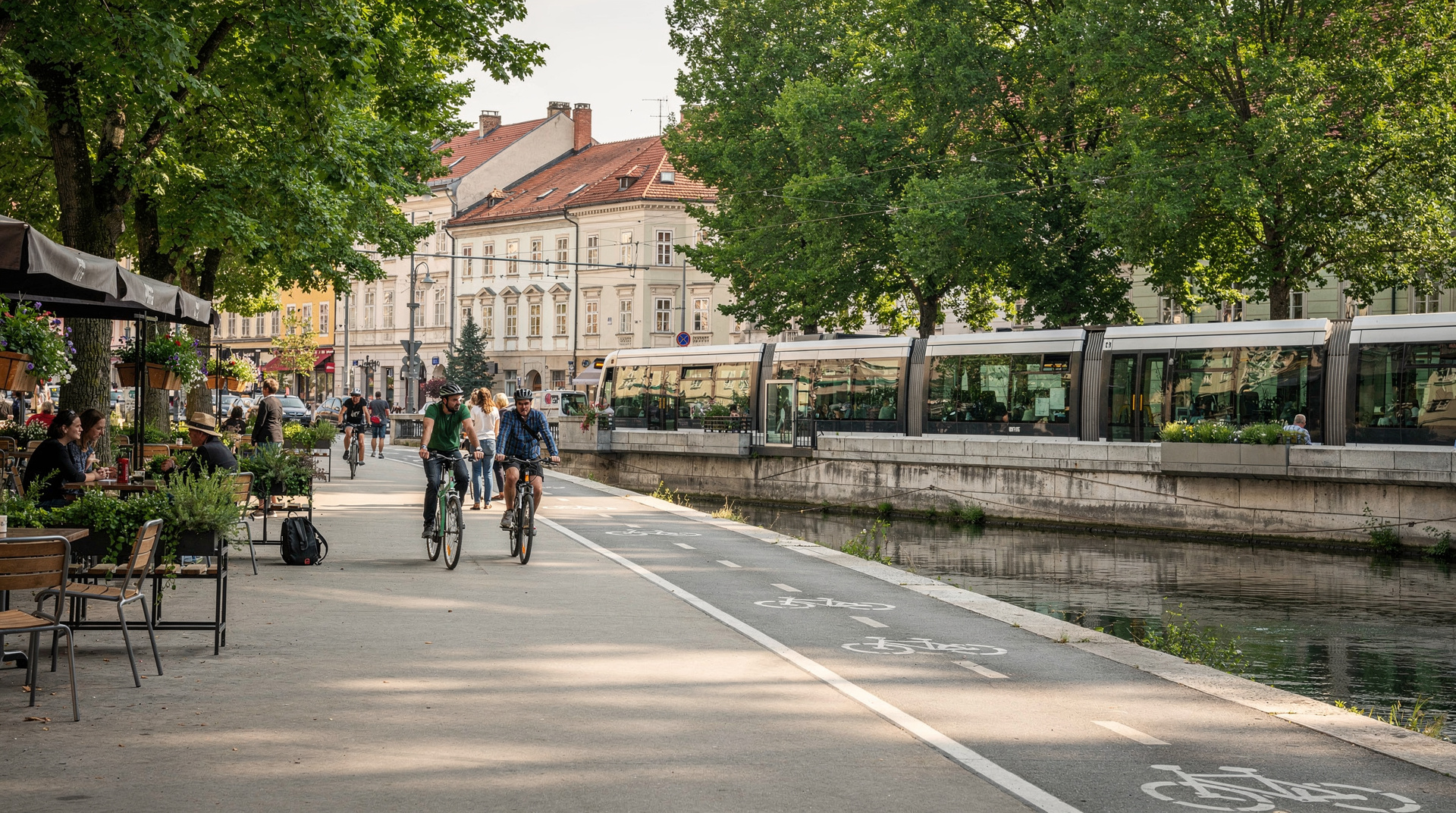
Ljubljana’s urban environment: the pedestrianised old town, the cycling infrastructure, the waste separation system, the clean river — these are structural decisions that produce measurable outcomes. The city’s organic waste collection achieves 70%+ diversion from landfill. The Ljubljanica is clean enough to swim in.
The farming culture: organic and traditional farming practices are more widespread in rural Slovenia than in most western European countries, partly from economics (small farms, limited scale) and partly from cultural continuity. The gostilna culture — seasonal menus, local ingredients, no food miles — is a genuine feature of rural eating.
The tourism authority (SPIRIT Slovenia) has implemented the Slovenia Green scheme: accommodation, agencies, destinations and experiences are evaluated against environmental criteria. Not every green label is earned equally, but the framework has more substance than most.
What Slovenia does less well
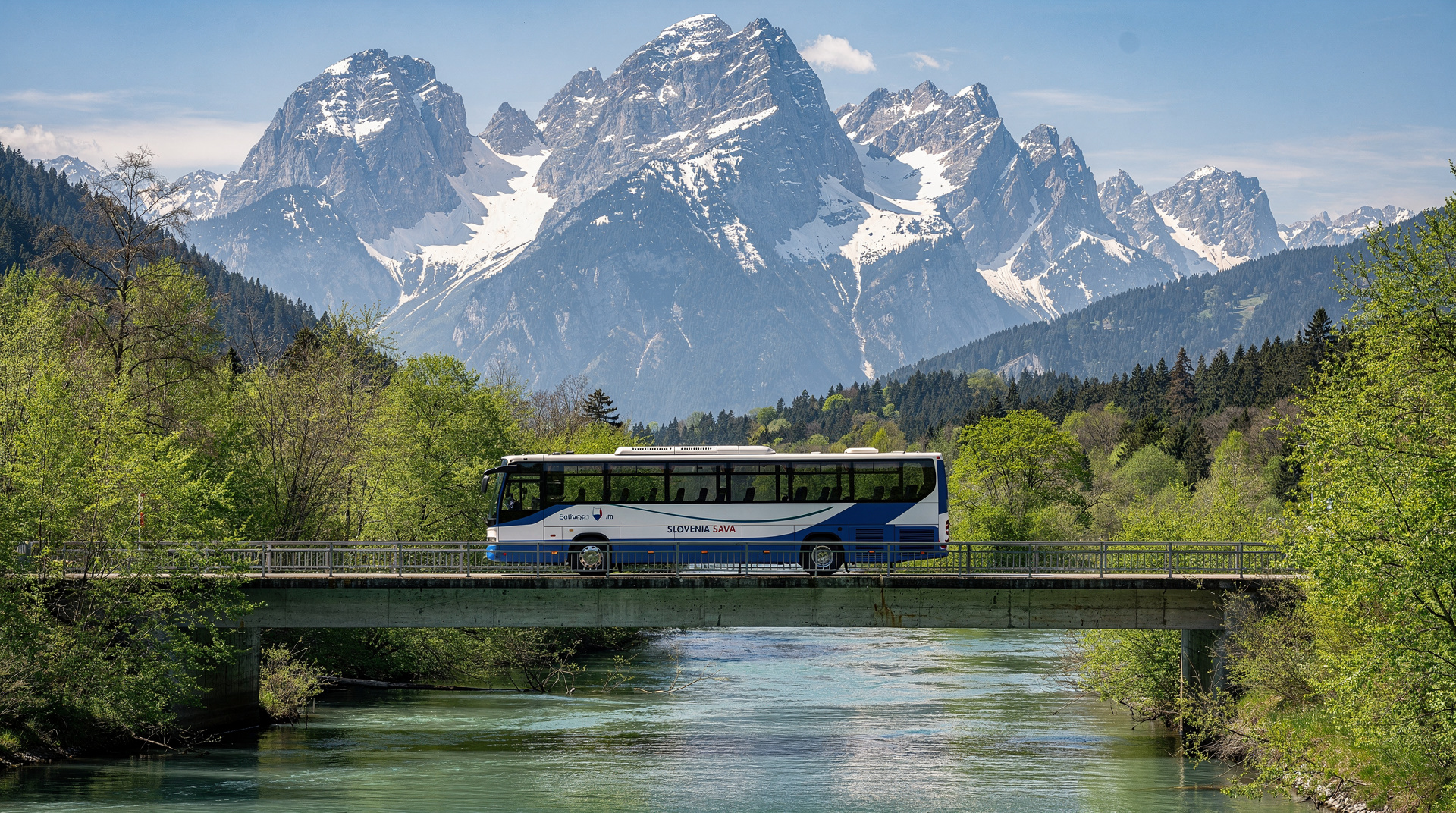
The private car problem: Slovenia has almost no practical alternative to driving for most of its interesting destinations. The Soča Valley is reachable by a single daily bus; the Goriška Brda wine region has no meaningful public transport; most of the Julian Alps villages are car-dependent. The result is that environmentally-conscious visitors who want to avoid a rental car face a significantly limited Slovenia.
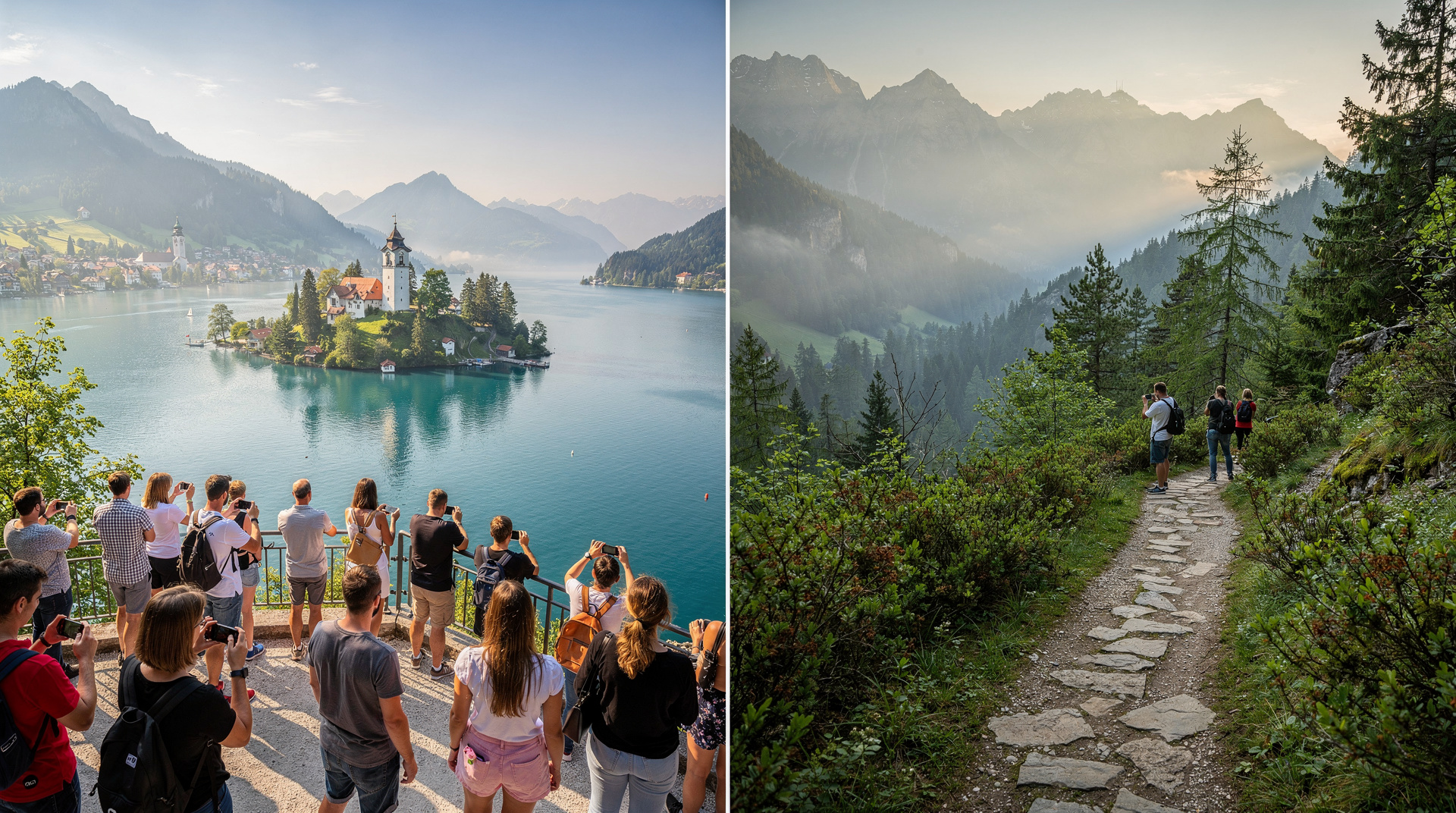
Overtourism at key sites: the environmental pressure on Lake Bled and Vintgar Gorge in July and August is real. The footfall on the Bled circumference path in peak season is causing visible erosion at several points. The car park overflow at Bled fills a meadow that was not built for parking. These are solvable problems with visitor management; they have not been fully solved.
Single-use plastic: despite the recycling infrastructure, single-use plastic in the tourist economy has not been eliminated. Takeaway food near major sites, tourist shops, and the commercial tourism operations around Postojna use significantly more packaging than the domestic food culture.
How to travel in Slovenia more responsibly
Use public transport where it works: the Ljubljana-Bled bus (€7, 1h15) is genuinely good. The Ljubljana-Koper train via Divača covers the capital-to-coast corridor. The public transport guide and trains guide cover what is feasible.
Stay longer in fewer places: the environmental cost of a week-long trip is similar whether you visit three regions or six. Staying longer in one place — really getting to know Bohinj rather than driving past it — reduces transport footprint and supports local economies more deeply.
Choose accommodation with the Slovenia Green label (check Slovenia.info for the certified list). Eco-certified farmhouses in the countryside are among the most sustainable accommodation options in the country.
Eat at gostilne rather than tourist restaurants near major sites: the gostilne typically source more locally, waste less, and support the rural food economy more directly. The gostilna guide is the starting point.
Visit Bohinj instead of (or as well as) Bled: Lake Bohinj sits inside a national park, receives a fraction of Bled’s visitors, and has a visitor management system designed for lower-impact tourism. The experience is equally beautiful; the environmental cost is lower.
Go in May-June or September-October: spreading visitor load across the season reduces peak-pressure on overtouristed sites. This is the most concrete action a visitor can take.
Hike on marked trails: the Triglav National Park trail system is specifically designed to concentrate foot traffic on routes that can absorb it. Off-trail hiking in the national park is discouraged and in some zones prohibited.
Carbon considerations
The dominant carbon cost of any trip to Slovenia is the flight. Once there, a rental car adds approximately 3-4 kg CO₂ per 100 km driven. Bus travel between cities adds 10-20x less per passenger km.
For visitors flying from northern Europe (2h30-3h flight, typically 250-350 kg CO₂ per person return), the in-country choices are relatively minor contributors compared to the air travel. For visitors driving from Germany, Austria or Italy, the calculation changes.
The Ljubljana train connection from Vienna (direct, 6h, under 25 kg CO₂ per passenger) is the lowest-carbon way to reach Slovenia from central Europe.
The honest context
Slovenia is a genuinely cleaner, better-managed country than most of its neighbours from an environmental standpoint. The national park is real. The cycling culture in Ljubljana is real. The food sourcing in rural gostilne is real.
The green marketing occasionally outpaces the reality. The overtourism debate is where these tensions are most visible. The honest position is this: Slovenia offers infrastructure for more sustainable travel choices than most European destinations, but making those choices requires some deliberate planning — particularly around transport.
The Triglav National Park guide covers the park’s visitor management rules. The getting around Slovenia guide covers the full transport options. For accommodation, the where to stay guide includes eco-certified options.
Specific sustainable travel choices by region
Julian Alps and Lake Bled: the most important individual choice is timing. Visiting Bled in October rather than August reduces your direct contribution to the peak-season pressure. Walking or cycling from the village rather than driving to the lakefront makes a concrete difference to parking congestion. Using the bus from Ljubljana (€7, 1h15) removes one car from the lake road.
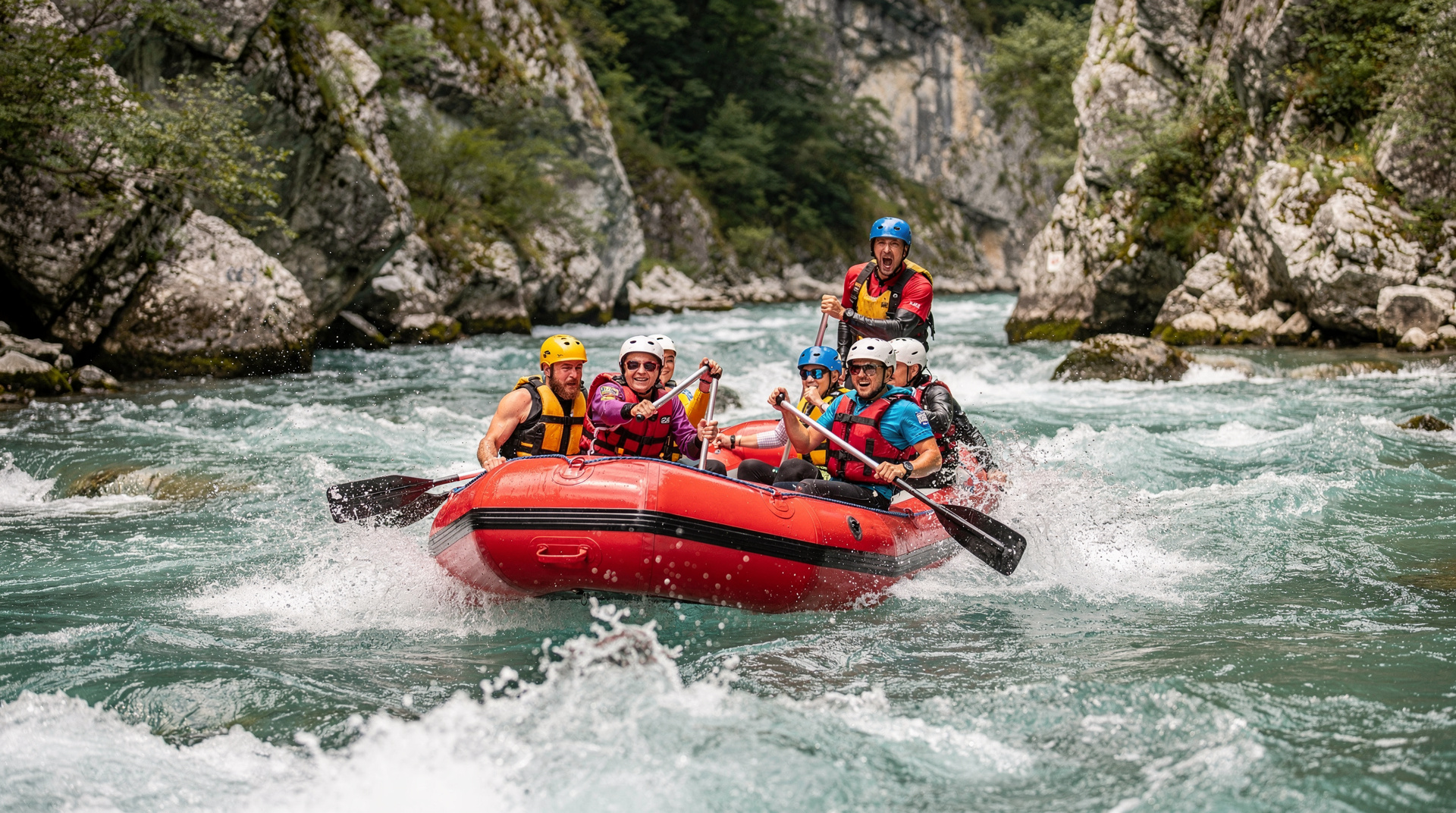
The Soča Valley: the local economy of Bovec and Kobarid is disproportionately dependent on outdoor tourism. Choosing local operators (rather than Ljubljana-based agencies bussing clients in) keeps spending in the valley. Staying overnight in the valley rather than day-tripping from Ljubljana supports local accommodation, which accounts for a significant share of valley income.
Wine country (Goriška Brda, Vipava Valley): buying wine directly from the winery rather than from a supermarket in Ljubljana keeps a higher proportion of the revenue with the producer. Both regions have cooperative-level tasting facilities where buying a mixed case is straightforward.
Ljubljana: the city’s sustainable credentials are most meaningful for longer stays. Using the Bicikelj bike-share system for daily commuting within the city, shopping at the central market rather than supermarkets, and choosing restaurants that name their suppliers — these are habits that produce different relationships with a city than tourist-circuit consumption.
The wildlife dimension
Slovenia’s wildlife is a concrete beneficiary of sustainable tourism choices. The brown bear population in the Kočevje forests is the largest in central Europe; the lynx and wolf have been reintroduced successfully after being extirpated in the 20th century. The brown bears Slovenia guide and the Triglav park wildlife guide cover the wildlife-watching options.
Organised wildlife-watching tours in the Kočevje region use local guides whose income depends on the bears continuing to exist in the forest. The €80-100 per person for a bear-watching evening is a direct payment for conservation — the local communities that coexist with the bears need a financial reason to accept them.
Responsible wildlife tourism: do not approach bears, wolves or lynx; do not attempt to photograph them at proximity; follow the guidelines of the tour operator. The specific protocols are in the brown bears guide.
Beekeeping and traditional practices
Slovenia’s beekeeping tradition — the country has approximately 10,000 registered beekeepers, proportionally one of the highest ratios in Europe — is a genuine cultural and ecological asset. Honey bee populations in Western Europe have declined significantly; Slovenia’s relatively intact rural landscape and the cultural importance of beekeeping have maintained healthier populations.
Buying Slovenian honey at the Ljubljana market or from a rural producer supports this tradition directly. The AŽ hive, invented by Slovenian beekeeper Anton Janša in the 18th century, remains the dominant hive type in Slovenia — a cultural-technical continuity that the beekeeping museum in Radovljica documents beautifully.
The beekeeping Slovenia guide covers the cultural history and the honey-buying context in detail. A short guided beekeeping experience is a low-impact, income-direct way to support the tradition on a visit to Ljubljana.
Ljubljana all about bees beekeeping experienceThe water dimension
Slovenia has been called the “blue heart of Europe” — not a formal designation but a reflection of the extraordinary density and quality of its freshwater resources. The rivers (Soča, Sava, Drava, Kolpa, Mura) run clean and cold through landscapes that have not been substantially altered by industrial agriculture.
The tap water throughout the country is of drinking-water quality from the source. This is partly geology (the limestone aquifers provide natural filtration) and partly good environmental management (industrial pollution of groundwater is strictly regulated). Using tap water rather than bottled water is an easy, costless sustainable choice with no quality compromise.
The Soča River and the upper Sava, in particular, are subject to active water quality monitoring. The fishing and swimming use of both rivers is contingent on their staying clean; the communities along them have direct economic interests in their quality.
Sustainable accommodation: what to look for
The Slovenia Green label covers accommodation at three levels: bronze (basic sustainability measures), silver (intermediate), and platinum (comprehensive). The platinum-level properties include:
- Pristava Lepena eco-resort (Soča Valley): wood-heated cabins, organic farm, zero single-use plastic, located inside Triglav National Park.
- Herbal glamping Nebesa (Goriška Brda): glamping with organic garden, solar heating, greywater recycling.
- Eko hostel Tresor (Ljubljana): the city’s first eco-certified hostel with energy management and local food sourcing.
The full certified list is at slovenia.info/en/plan-your-trip/accommodation — the green certification filter is available in the accommodation search.
The local economy argument
Sustainable tourism is partly environmental and partly economic. The economic dimension: how much of your spending stays in the local community?
A small-group activity run by a local beekeeper, such as a hands-on introduction to beekeeping from Ljubljana, is a good example of spending that goes straight to the person who runs it.
A rough hierarchy, from most to least locally retained:
- Farmhouse accommodation (touristic farmhouses retain close to 100% locally)
- Local gostilne for food (independently owned, local staff, local ingredients)
- Local tour operators for activities
- Chain hotels, international platforms (retain significantly less locally)
- All-inclusive packages booked through international tour operators (minimum local retention)
Most of the things that make Slovenia interesting to visit are in categories 1-3. The choices that produce the best travel experience also tend to produce the most locally retained economic benefit. This alignment is not universal in sustainable tourism — in Slovenia it largely holds.
The gostilna guide, the where to stay guide and the activity guides across the site recommend local operators by default.
A practical checklist for a genuinely lower-impact trip
Rather than a single sweeping change, sustainable travel in Slovenia is mostly a series of small, specific choices stacked together:
- Travel in May-June or September-October rather than July-August, spreading demand away from the peak.
- Use the Ljubljana-Bled bus or the Divača train line for the corridors where public transport genuinely works, and rent a car only for the regions (Soča Valley, wine country) that require it.
- Choose Bohinj over Bled for at least one overnight, since its visitor management is built for lower footfall.
- Drink tap water instead of buying bottled water — the quality is equivalent throughout the country.
- Book accommodation and activities with a visible Slovenia Green label or a named local operator rather than an anonymous international platform.
- Eat at gostilne that name their local suppliers rather than tourist-menu restaurants clustered at the main sites.
Where the honest limits are
It would be dishonest to present Slovenia as a solved problem. The car-dependence issue in particular is structural, not a matter of visitor willpower — the Soča Valley and Goriška Brda genuinely lack a viable public transport alternative for most itineraries, and no amount of visitor good intention changes that until the infrastructure does. Overtourism at Bled in August is a capacity problem that individual choices only partially offset; the meaningful lever there is systemic (parking caps, timed entry, seasonal pricing), and Slovenia has moved on some of these but not all.
The honest recommendation is to treat the checklist above as harm reduction, not a claim of a zero-impact trip. Combined with the country’s genuinely strong national park management and urban planning in Ljubljana, it produces a trip that is measurably lighter than the equivalent in many comparable destinations — without pretending the country has fully solved its own tensions.
Planning a slower, lighter itinerary
The easiest way to turn the checklist into a real trip is to choose an itinerary built around fewer moves. The Slovenia 5 days without a car route shows how far public transport can take you, and the Ljubljana and Bled in 3 days plan keeps transfers to a minimum. For a longer stay, the slow travel and gastronomy itinerary is the closest match to the spirit of this article: unhurried, food-focused and rooted in a few places.
If you do need wheels, the car rental guide and the vignette guide explain what to arrange in advance, so that one shared car replaces several separate transfers. Travelling as a group in a single vehicle is generally lighter than splitting up.
Choosing quieter places and seasons
Sustainable choices and enjoyable choices often overlap. The guide to avoiding crowds at Bled and the overtourism and crowds guide show where and when pressure builds. The best time to visit Slovenia guide helps you pick a shoulder-season window, while the Slovenia in autumn and Slovenia in spring pages describe what each of those seasons feels like on the ground. For a different angle on the same idea, read the off-season travel story.
For nature-focused days, the national parks overview and the Bohinj lake guide are good starting points, and the Logar Valley is another quieter alpine setting worth considering. The hidden villages story is a useful companion if you want to spread your visit beyond the famous names.
Top experiences
Bookable activities with verified prices and instant confirmation on GetYourGuide.