Discovering the Soča Valley: Slovenia's best-kept open secret
| Where | Julian Alps, 2-2.5hrs from Ljubljana |
| Base towns | Bovec, Kobarid, Tolmin |
| Cost | Rafting/kayaking from around €40-50; paragliding €80-100 |
| Best time | May-June (full river) or September (quieter, warm) |
| Getting there | Car recommended; via Vršič Pass (May-Nov) or Tolmin road (year-round) |
The river that changes everything
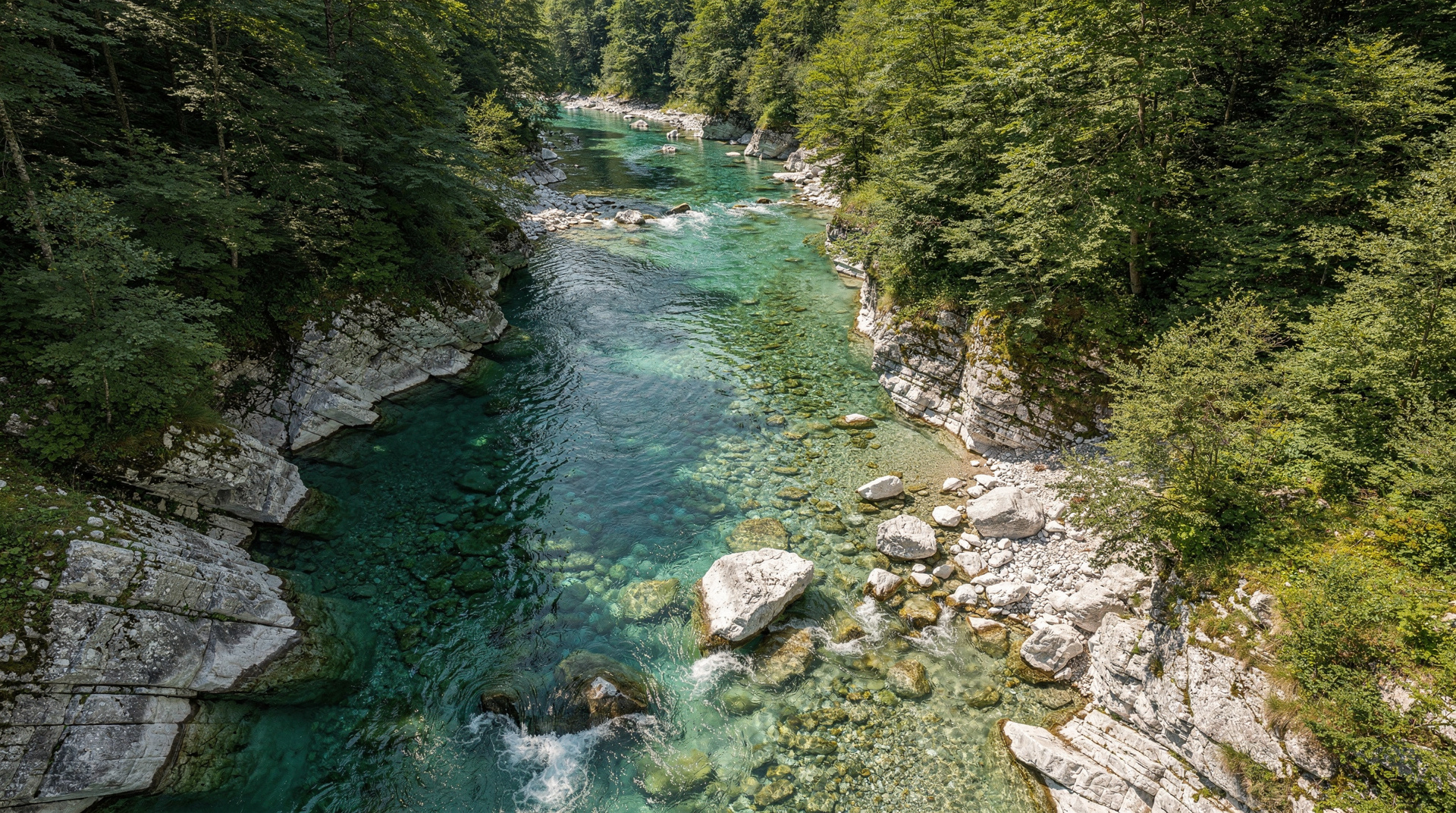
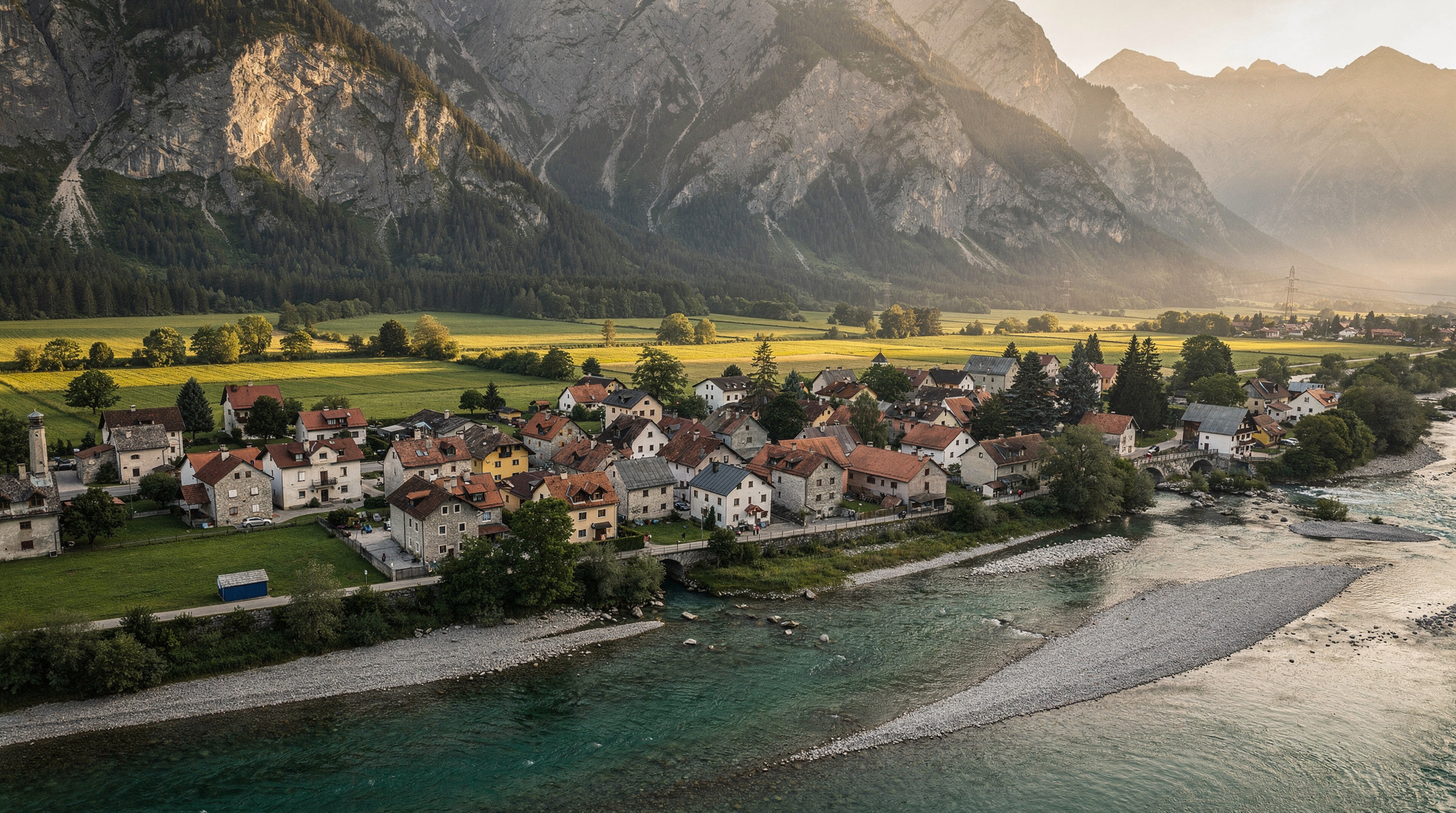
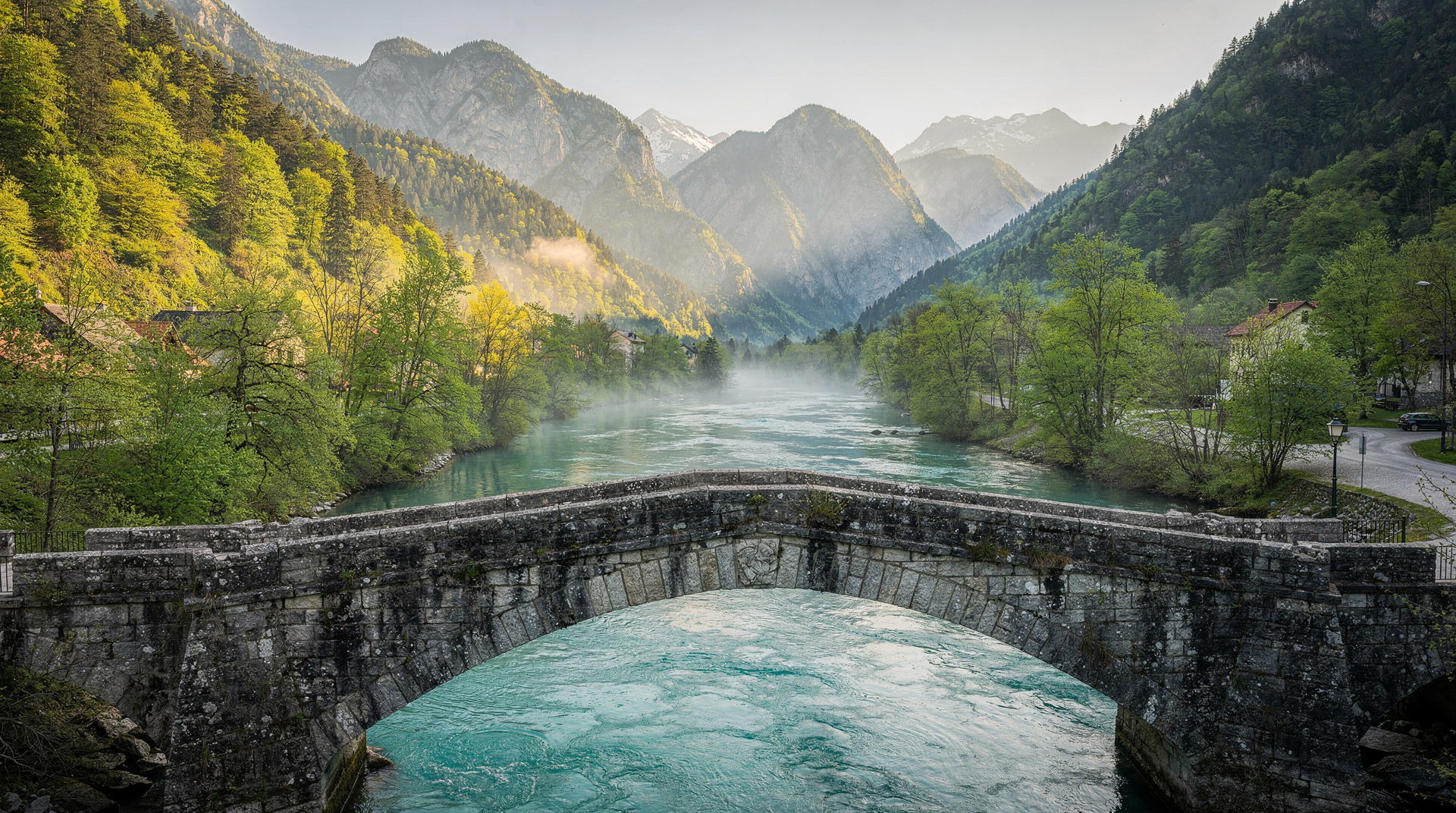
There is a specific moment on the approach to the Soča Valley when the road crosses a bridge and you look down into the gorge below. The water is turquoise — not the polite, hazy aquamarine of the Adriatic or the dark green of an Alpine forest lake, but a vivid, almost implausible turquoise, the colour of glacial minerals dissolved in cold limestone springs over thousands of years.
Most people stop. Not because there is a viewpoint or a sign, but because you cannot simply drive past and file it away.
The Soča Valley is Slovenia’s least-visited major region among foreign tourists and its most visited among Slovenians. That asymmetry is significant. When locals choose the Soča for their own holidays — over Bled, over the coast, over the mountains — it says something about what the valley actually offers.
The river itself
The Soča rises inside Triglav National Park in the Julian Alps and runs 138 km southwest into Italy, where it becomes the Isonzo. For most of its Slovenian course it runs through limestone gorges, and the colour is consistent from source to the Italian border.
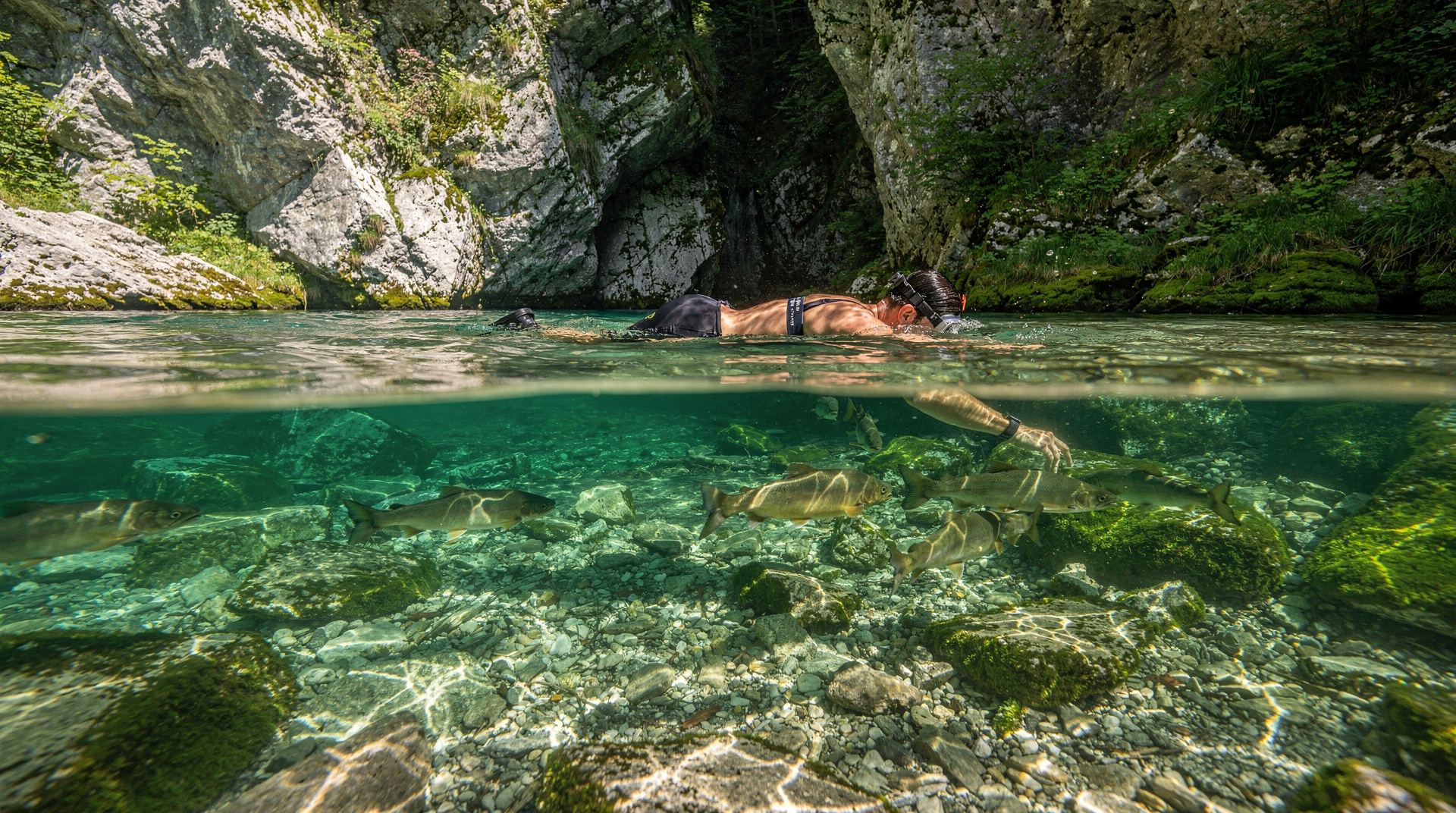
The water temperature in summer reaches around 15-18°C at the lower sections — cold enough to be refreshing, not cold enough to be dangerous for adults in wetsuits. The clarity is extraordinary: in the shallow sections above Bovec you can see individual pebbles on the riverbed from a bridge 10 metres above.
Swimming is possible at several points along the valley, including a well-known gravel beach near the Napoleon Bridge below Kobarid. The current in the gorge sections is significant — treat it with respect.
Bovec: the adventure capital
Bovec is a small town of around 3,000 people that functions as the headquarters of an outdoor sports economy. Every shop on the main street sells a service: kayaking, rafting, canyoning, paragliding, via ferrata, mountain biking. The quality of operators ranges widely; our Bovec adventure guide has recommendations.
The Soča River rafting section from Bovec is appropriate for beginners and offers a close encounter with the gorge walls and the turquoise water. Half-day trips start around €40-50 per person. The more technical canyoning routes access smaller side gorges with jumps and natural water slides.
For non-swimmers or those wanting to see the gorge without getting wet, the Soča Trail follows the river on foot for most of its length through the national park. The section from the source to Trenta is wild and remote; the lower sections near Bovec are more accessible.
Paragliding above Bovec offers a perspective on the valley that cannot be replicated from the ground — the river running through its gorges looks from above like a green thread stitched through grey and white rock. Tandem flights run from around €80-100.
Soča River whitewater rafting from BovecThe Vršič Pass: entry from the north
The Vršič Pass is the most dramatic approach to the valley: a 1611-metre mountain road with 50 numbered hairpin turns, built by Austro-Hungarian forces using Russian prisoners of war during the First World War. The Russian Chapel near the top of the pass commemorates the 400 workers killed by an avalanche in March 1916.
The Vršič Pass driving guide covers the road in detail, including which hairpins are the most photographed, where to stop for the views, and the seasonal closure (roughly November to May, depending on snowfall).
The descent from the pass into the Trenta valley is the valley at its most untouched: a handful of farms, a church, a river emerging from the rock. The road follows the Soča downstream toward Bovec through increasingly dramatic gorge scenery.
Kobarid: history at the heart of the landscape
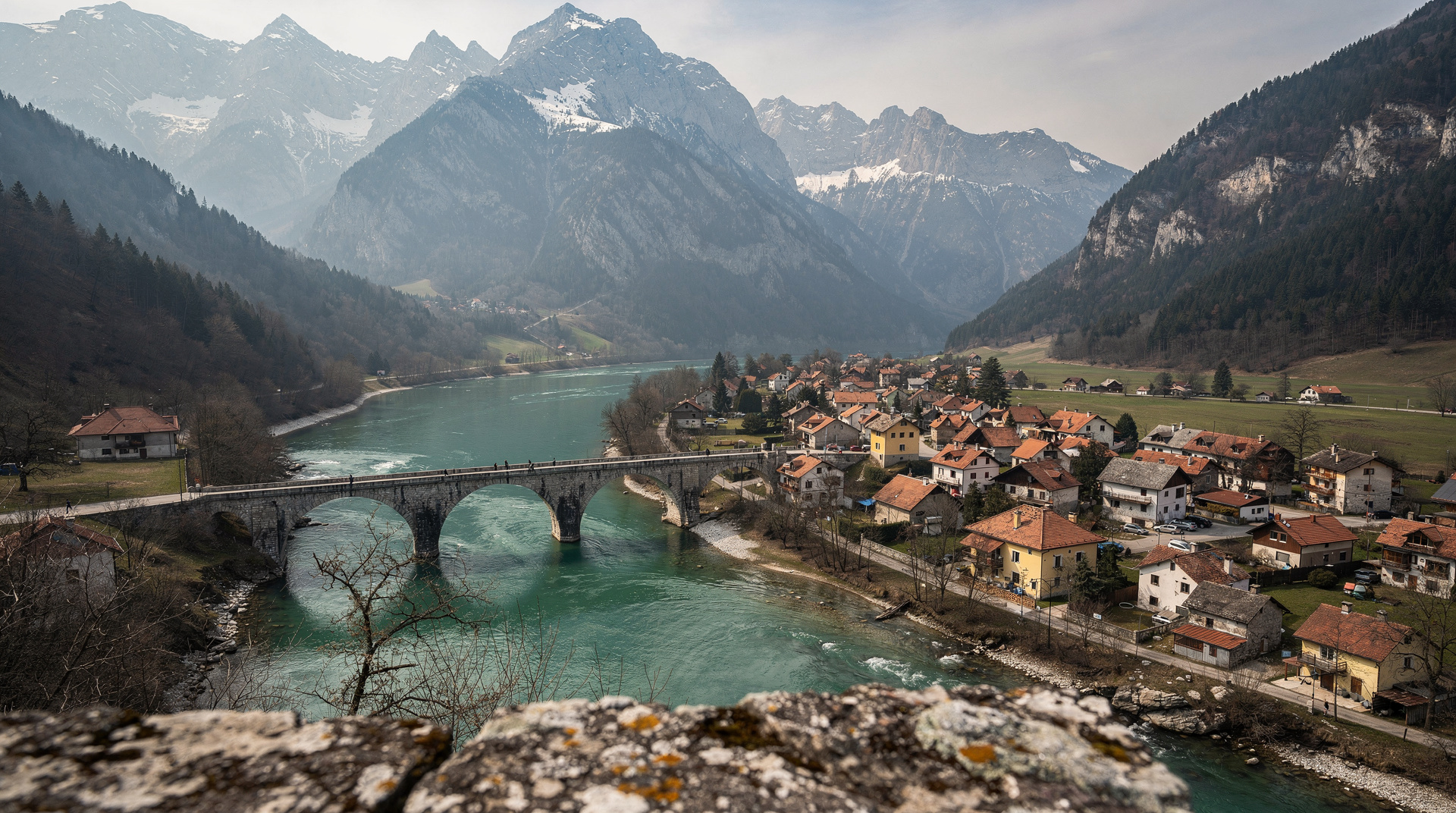
Kobarid sits at the confluence of the Soča and the Nadiža rivers, 21 km south of Bovec. In 1917 it was the site of the Battle of Caporetto — the Austro-German breakthrough that pushed the Italian army back 150 km in twelve days and changed the trajectory of the First World War on the southern front.
The Kobarid Museum is one of the finest small museums in Europe. It received the Council of Europe Museum Prize in 1993, which is awarded to institutions that make a significant contribution to mutual understanding. The exhibition documents the twelve Isonzo battles (1915-1917) with rare restraint: the human scale of the statistics, the physical reality of life in the trenches at altitude, the confusion of the Caporetto retreat. Ernest Hemingway witnessed the retreat as a volunteer ambulance driver and later wrote A Farewell to Arms. His description of the Tagliamento crossing is among the most harrowing passages in 20th-century fiction.
The Kobarid Historical Walk — a 5 km loop from the museum — takes you to the Italian Charnel House, the Napoleon Bridge and the Soča gorge. Allow two hours.
Tolmin and the southern valley
Tolmin at the southern end of the valley is less visited than Bovec or Kobarid and more interesting for it. The Tolmin Gorges — a narrow canyon where two rivers meet — can be walked on wooden walkways for a small entry fee. The Tolmin Bear Rock, accessible from the gorge, offers a view directly down into the confluence from above.
The Triglav National Park extends along the entire eastern side of the valley. The trailheads above Tolmin access the remote Baška Grapa valley and the upper reaches of the park with significantly fewer visitors than the Bled or Bohinj approaches.
Food and wine in the valley
The Soča Valley sits at the western edge of Slovenia’s wine-growing belt. Goriška Brda — the wine country immediately south of the valley — produces some of the country’s most interesting whites, including Rebula and Malvazija. The town of Bovec has several decent restaurants; for local wine, the konobas in the villages of the lower valley are better value than the tourist-facing establishments in Bovec itself.
Truffle hunting in the Istrian hills is accessible as a day trip from Tolmin. Our truffle hunting guide has the context. The wine country adjoining the valley, Goriška Brda, is covered in full in our Brda wine guide.
When to visit the Soča Valley
May and June offer the best combination of conditions: snowmelt feeds the river to full volume, the mountains are still snow-capped, the wild flowers are out, and the crowds have not yet arrived. September is excellent for the same reasons: warm enough for water activities, quieter, and the forested hillsides are beginning to turn.
The Vršič Pass is closed from approximately November to May, cutting off the northern approach from Kranjska Gora. The valley remains accessible year-round via the Tolmin and Kobarid approaches.
Getting to the Soča Valley
From Ljubljana: 2h by car via Tolmin and the Idrija road, or 2h30 via Vršič (when open). No direct train service; local buses exist but are infrequent.
The valley is also reachable from Italy: Gorizia/Nova Gorica is 1h south, Udine 1h30 west. If you are approaching from western Europe, consider entering Slovenia via the Soča Valley rather than Ljubljana — it makes for a more dramatic introduction.
Our getting around Slovenia guide covers the logistics in detail. If you would rather not navigate the Vršič hairpins or the mountain roads yourself, guided minivan trips run from Ljubljana and Bled covering the valley’s highlights in a single well-paced day — a reasonable option if a full self-drive stay isn’t possible.
Soča Valley and Kranjska Gora day trip from LjubljanaThe honest pitch
The Soča Valley will not suit every visitor. It has limited accommodation at the luxury end. The outdoor activities require planning and some physical willingness. The history — beautiful landscape, mass death, hundred-year-old graves on the hillsides — is present everywhere you look once you know what to look for.
What it offers in return is a version of Slovenia that feels earned rather than packaged. The river is real. The mountains are real. The history is real. Bring that orientation, and the valley will give you more than Bled can manage on a Tuesday in August.
Where to stay in the Soča Valley
Accommodation in the valley ranges from camping to eco-resort. The options by location:
Near Bovec: Hotel Bovec (mid-range, recently renovated, €80-130/night); Kamp Liza (camping and glamping, 5 km from Bovec, river access, €15-80/pitch); Apartment Soča (private apartment, river views, €70-100/night for a two-person apartment).
Near Soča village and Lepena: Pristava Lepena (eco-resort, wooden chalets, €200+/night, books out months in advance in summer); private farmhouses offering rooms from €50-70/night.
In Kobarid: Hotel Hvala (family-run, 30 rooms, excellent restaurant, the best conventional hotel in the valley, €90-140/night); several private room providers in the old town.
In Trenta: the valley is very remote here; the visitor centre has some information on local farmhouse rooms. Best suited for serious hikers using it as a base for Triglav National Park access.
The valley in each season
May-June: snowmelt volume at maximum; the Soča runs full and powerful. Best for whitewater activities. The Vršič Pass opens in May and the northern approach becomes available. Wildflowers in the meadows. Few tourists.
July-August: peak season. Bovec is genuinely busy. The river drops in volume but the colour intensifies. Water temperature reaches 15-18°C in the lower sections — swimmable in wetsuits. Book activities well in advance.
September-October: the best combination of conditions: the crowds drop, the colours begin in the forests, the water is still swimmable, the gostilne have room. The Kobarid Historical Walk in October, with the forested gorge walls beginning to turn, is the valley at its most contemplative.
November-April: the Vršič approach closes, but the valley remains accessible from Tolmin. The whitewater operators close. The guesthouses reduce to skeleton service. The valley returns to itself.
A three-day introduction, if you only have that long
Day 1 — Bovec and the gorge: arrive via the Vršič Pass if it’s open (a destination in itself), settle in Bovec, and do one water activity — rafting or kayaking — in the afternoon. Dinner at a konoba away from the main square.
Day 2 — Kobarid and the Soča Trail: morning at the Kobarid Museum, then the Historical Walk to the Napoleon Bridge. Afternoon: walk a section of the Soča Trail at river level, or swim at the Napoleon Bridge gravel beach if the weather allows.
Day 3 — Tolmin and the source, or wine country: either the Tolmin Gorges and Bear Rock viewpoint, or drive south into Goriška Brda for an afternoon of wine tasting before heading back toward Ljubljana.
This sequence covers the valley’s three registers — adrenaline, history, landscape — without feeling rushed. Extending to five days allows the source hike near Trenta and a full Soča Trail day rather than a section.
The Soča as context for Slovenia
The valley helps calibrate Slovenia as a destination. After two days in Ljubljana and Bled — beautiful, managed, optimised — the Soča Valley offers something different: a landscape that has not adjusted to the visitor, that requires you to make some effort to access it, and that rewards the effort disproportionately.
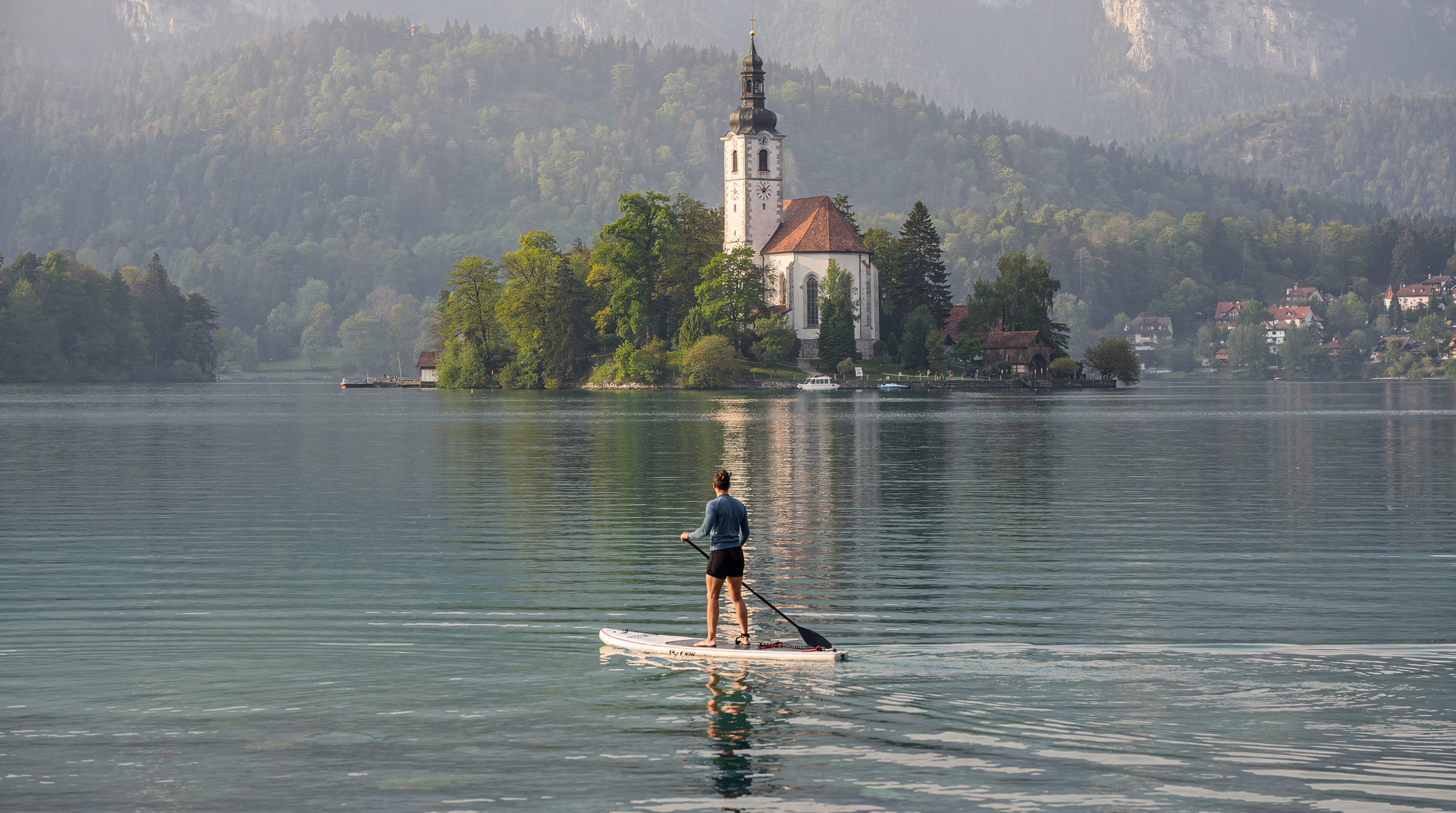
This is the version of Slovenia that returns visitors cite when they explain why they came back. Not the island and the castle, which are exactly as advertised. The turquoise river in the limestone gorge, the WWI cemetery on the hillside above it, the gostilna in Kobarid where nobody speaks English and the goulash is the best you have ever eaten. That combination.
The Slovenia road trip diary maps the Soča Valley as part of a 10-day circuit. The soca valley day trip guide covers the minimum viable version from Ljubljana.
Top experiences
Bookable activities with verified prices and instant confirmation on GetYourGuide.