Slovenia in winter: ski slopes, thermal spas and Christmas markets
The winter Slovenia most visitors miss
The standard travel calendar treats Slovenia as a spring-to-autumn destination, with the Julian Alps receiving a narrow window of winter interest from skiers. Everything else is assumed to shut down.
The reality is more interesting. Winter reveals a Slovenia that is structurally different from the summer version — less crowded, more honest about itself, and offering a specific combination of outdoor winter activities, indoor warmth, and the Christmas period in a Central European capital that has not yet been discovered by the stag party market.
| Ski season | December-March, best snow Jan-Feb |
| Lift pass | Around €40-45/day, roughly half Austrian prices |
| Thermal spa day pass | See the official Terme Čatež website |
| Christmas market | Late November-early January, Ljubljana |
| Vršič Pass | Closed November-May |
| Daylight | Short, sunset by 4pm in December |
The ski resorts
Slovenia has three main ski areas, each with a different character.
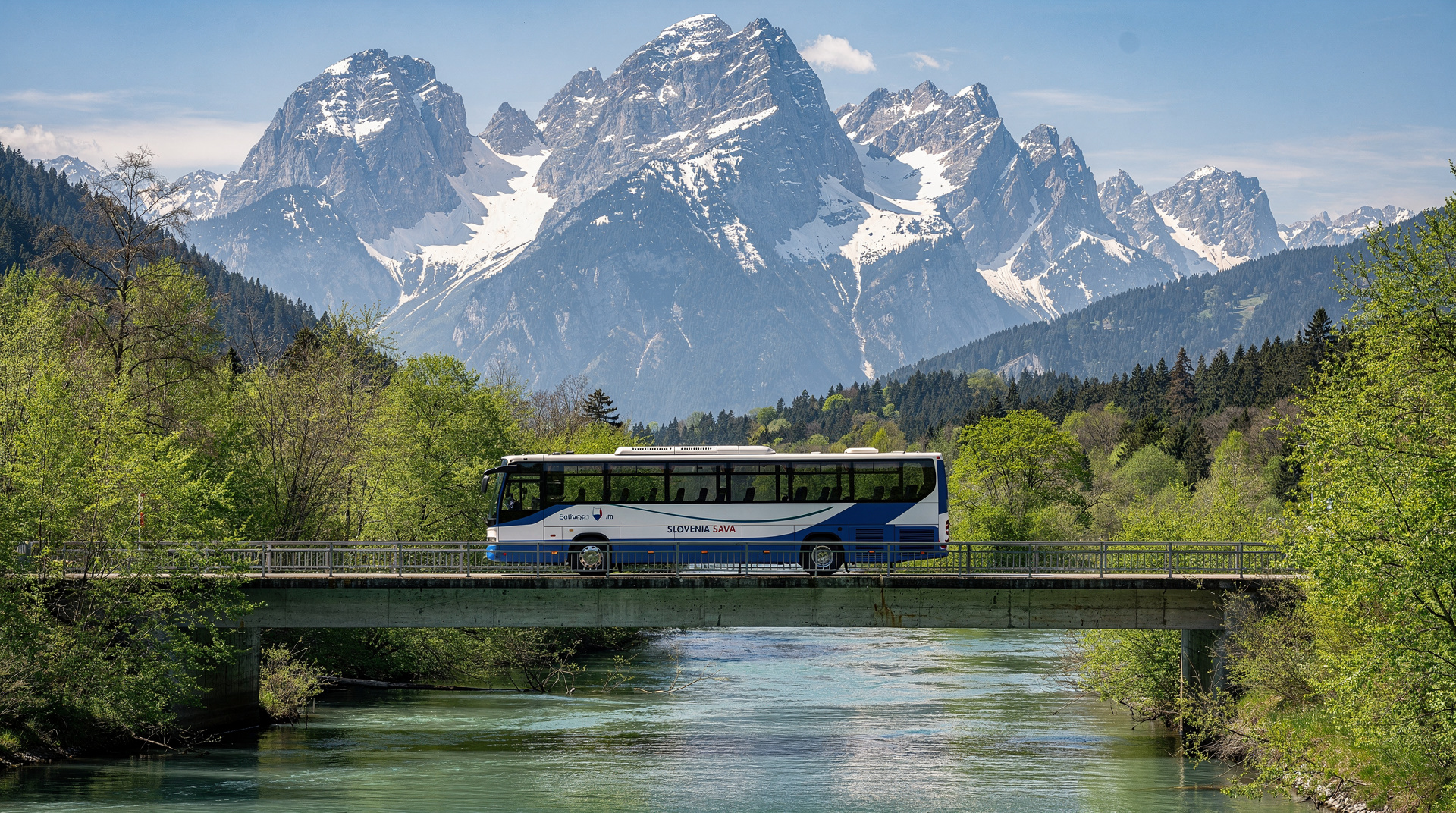
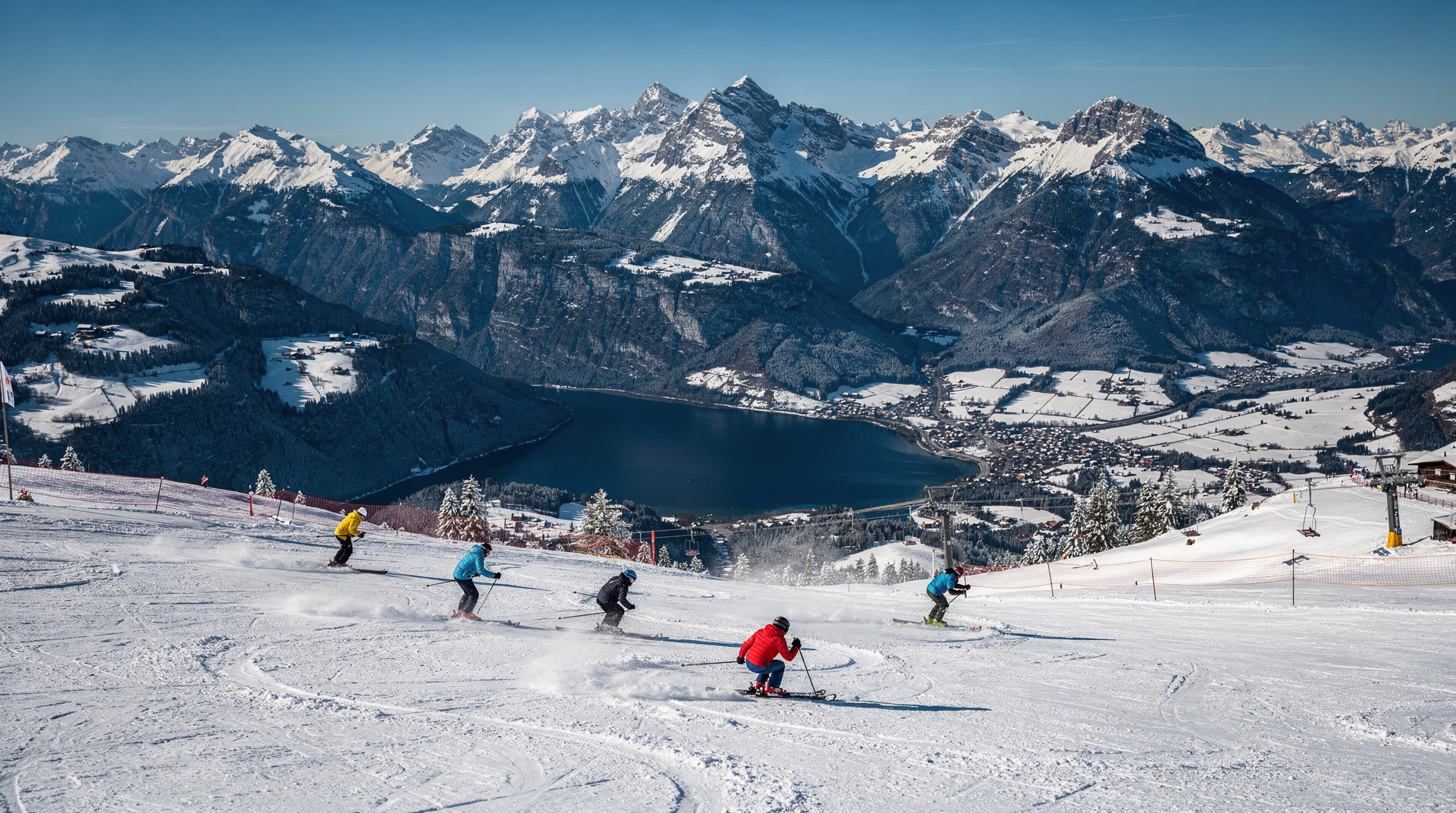
Kranjska Gora is the largest and most developed: 20 km of groomed pistes, consistent snow cover from December to March, and a direct bus from Ljubljana (1h30). The World Cup downhill and slalom events are held here annually in January; the race piste (the Podkoren 3) is open to recreational skiers at other times. Lift passes cost around €40-45 per day — roughly half the price of comparable Austrian resorts across the border.
Vogel is the most scenic. The gondola from the shore of frozen Lake Bohinj rises 1535 m into a ski area with 21 km of pistes and views that no Austrian or Swiss resort can match for drama. The skiing suits intermediate and advanced skiers; beginners have limited options. In good snow years the upper area extends above the gondola to 1800 m. For visitors who want lessons rather than figuring the resort out solo, a half-day instructor session is the fastest way to get comfortable on the Vogel slopes.
Vogel half-day skiing with instructorKrvavec is 30 minutes from Ljubljana and functions as the capital’s local mountain — a day-trip resort with 30 km of pistes and good snow-making that extends the season. Less scenic than Vogel or Kranjska Gora, but the most convenient for short stays based in Ljubljana.
Our skiing in Slovenia guide covers the resorts in detail, including the less-visited smaller areas (Kanin above Bovec, Rogla near Maribor, Stari Vrh near Škofja Loka).
Thermal spas in winter
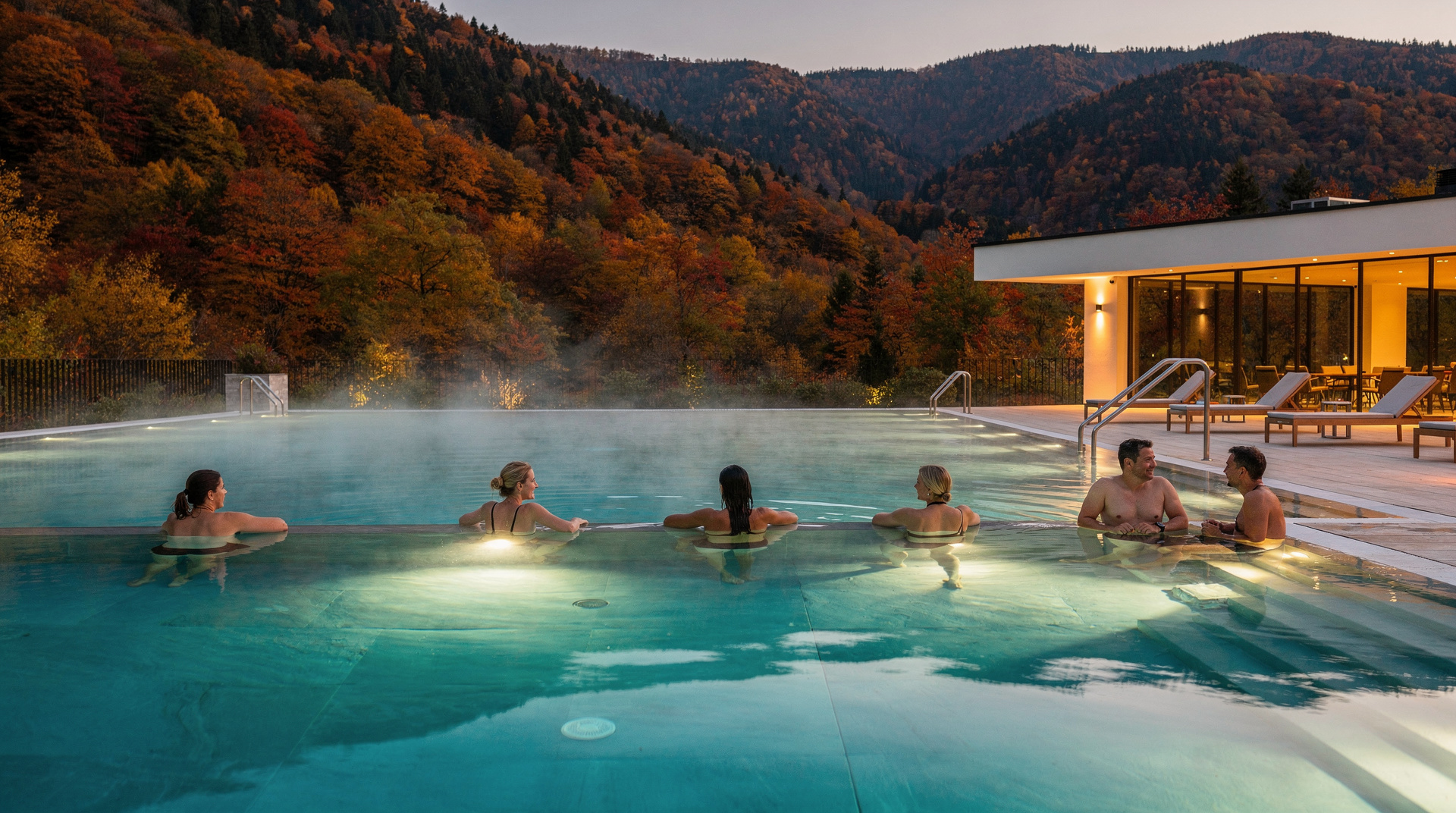
The Slovenian thermal spa sector operates its outdoor pools year-round, and winter is when the formula is most compelling. The principle: outdoor heated mineral water at 32-36°C, air temperature at 0-5°C, snow possibly falling.
Terme Čatež east of Ljubljana is the largest: multiple outdoor pools, a waterpark element for families, and accommodation in bungalows attached to the complex. Day pass rates, including outdoor pools, are on the official Terme Čatež website. The resort is open every day of the year.
Terme Olimia in the Olimje Valley is more upscale and more intimate. The outdoor Roman bath-style pool has views of the forested hills; the Monasteria wellness complex occupies a converted monastery. Weekend packages (two nights, full spa access) are listed on the official Terme Olimia website.
Terme Radenci in the east specialises in mineral water treatments — the Radenska mineral water brand originates here. Private baths and physiotherapy programmes are available alongside the standard thermal pools.
The thermal spas guide and best thermal spas cover the full range.
Ljubljana at Christmas
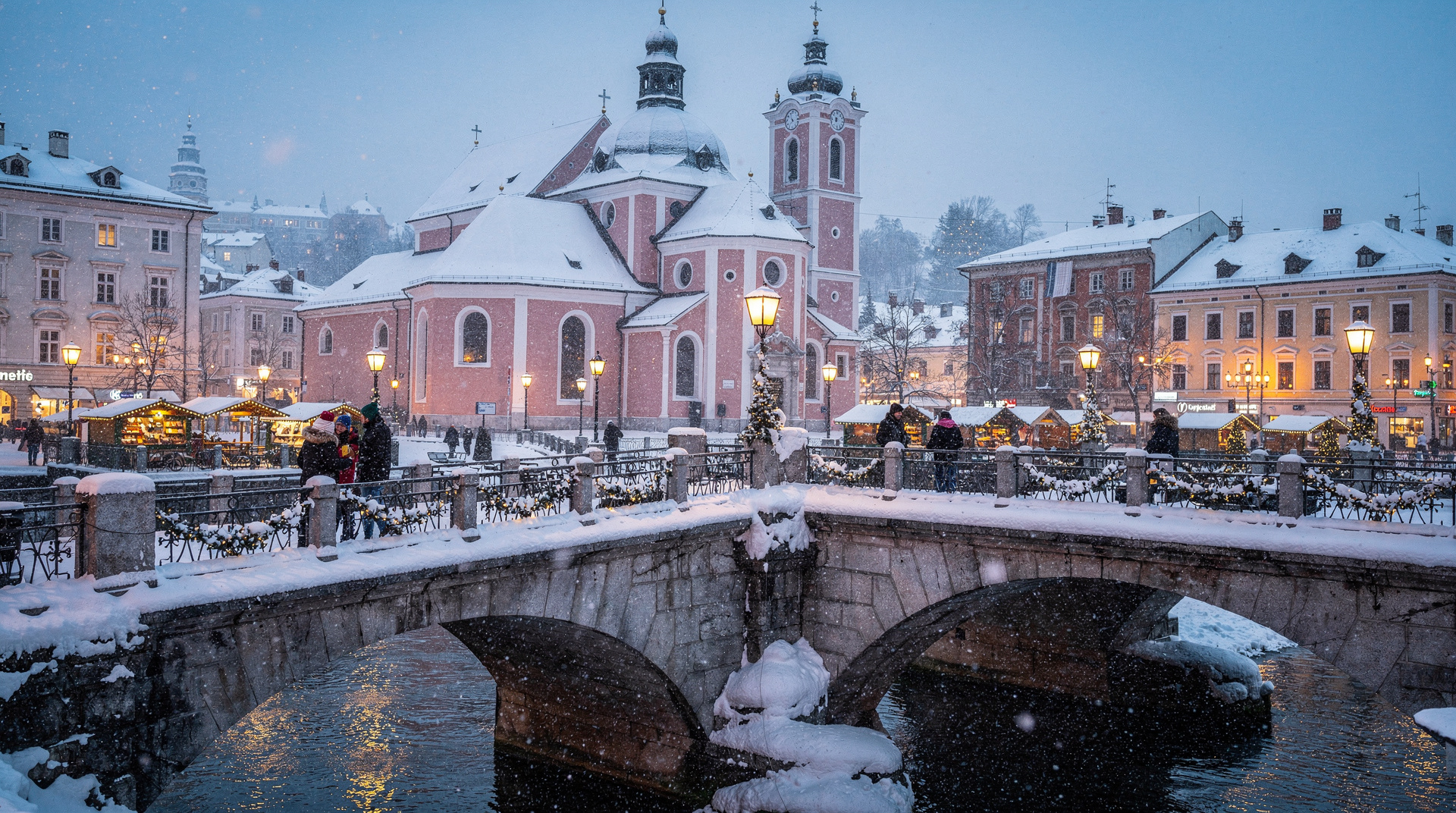
Ljubljana runs its Christmas market from late November through early January. The illuminations are the notable element: the city covers its bridges and riverfront in lights that are more elaborate than anything equivalent in the cities that have made Christmas markets an industry (Vienna, Prague, Strasbourg).
The market itself — hot wine, roasted chestnuts, craft stalls, seasonal food — is on a human scale rather than an industrial one. There are perhaps 80-100 stalls along the river and in the squares. No organised queuing. No £15 entry fees. A mulled wine costs €3-4.
The best approach: arrive at the market in the early evening before it gets dark, watch the lights come on over the city, eat at a local restaurant rather than a market stall, walk back through the old town after dinner. The Ljubljana old town guide covers the navigation.
Caves in winter
Postojna Cave is 10°C year-round. In winter, this is relatively warm rather than cold. The queues that make Postojna occasionally frustrating in summer disappear almost entirely by November; in January and February you may have a tour group of 20 rather than 200.
The experience of the cave itself — the miniature train, the stalactite chambers, the proteus — is identical to summer. The Postojna cave guide covers the practicalities year-round.
Škocjan Caves also operates in winter with reduced tour frequency. The underground canyon at Škocjan is, if anything, more dramatic in winter: the air inside the gorge is cold and still, and the scale of the underground space is unmediated by summer crowds.
The ice skating season
Ljubljana’s outdoor ice rink on Kongresni trg (Congress Square) opens in December and runs through February. Skate hire is available. The setting — the neoclassical buildings surrounding the square, the castle visible on the hill — is among the more scenic settings for a winter skate in Central Europe.
Several mountain resorts also maintain outdoor rinks: Kranjska Gora has an ice rink in the town centre that fills up on winter weekends.
Winter walking and snowshoeing
The forested hills around Ljubljana are walkable year-round and particularly pleasant in fresh snow. The Šmarna Gora hill, 10 km north of the city, is a one-hour walk from the base to a church with a café at the top; on a winter weekend it fills with Ljubljana families. The Ljubljana castle hill loop also works well in winter.
Snowshoeing is offered by several operators in the Julian Alps, particularly around Pokljuka Plateau and the Vogel area above Bohinj. The Pokljuka guide covers the winter options. The cross-country skiing network at Pokljuka is national-team training territory; when conditions allow, it is excellent.
Practical notes for winter
Chains: required for mountain roads in winter, including the approach to Kranjska Gora in heavy snow. Most rental companies include chains or winter tyres; check before collecting the car.
Road closures: the Vršič Pass is closed November-May. Plan routes to the Soča Valley via Tolmin in winter.
Daylight: Slovenia is at roughly 46° north latitude. Days are short in December (sunset by 4pm). Plan outdoor activities to use the morning light; evenings are long enough for restaurants and culture.
Temperatures: Ljubljana averages -1°C to 5°C in January. The Julian Alps see substantial snow from December. The coast stays above freezing but is cold and windy.
The Slovenia in winter guide and the Slovenia in winter activities guide cover the full seasonal picture. The winter packing guide is worth reading before departure.
Food and wine in winter
Slovenian winter food is its own argument for visiting in the cold season. The menus at gostilne in November-February carry dishes that disappear in summer: jota (a thick sauerkraut and bean soup, slow-cooked, served with spare ribs on top), bograč (a three-meat Hungarian-influenced goulash popular in the Prekmurje region), ričet (barley and bean soup with smoked pork), and the full range of offal dishes — tongue, liver, kidneys, tripe — that the summer tourist menu erases in favour of grilled chicken.
The winter wine pairing for these dishes: Teran from the Karst (tannic, acidic, the right structure for smoked pork), Cviček from the Dolenjska region (light red, traditionally drunk in the cooler months), or any of the fuller-bodied whites from Goriška Brda that have aged for two or three years and gained weight.
The gostilna traditional dining guide and the Slovenian food guide identify which dishes are genuinely seasonal and where to find them in winter.
The Postojna Cave in winter: the best time
Postojna Cave in winter is categorically a better experience than in summer. The cave temperature is 10°C year-round — warm relative to the winter outside, cold relative to summer. In July, the tour groups number in the hundreds; in January, you may share the miniature train with 30 people.
The proteus — the blind cave salamander that has been living in the underground streams for millions of years — is more reliably visible in winter tours when the groups are small enough to stop and look properly. The chamber lighting, which can feel garish when shared with a large crowd, becomes more atmospheric in a smaller group.
Book at least 24 hours ahead even in winter — the cave is popular with regional school groups and domestic tourists in the holiday periods.
What winter reveals about the character of the country
There is a version of Ljubljana that only exists in winter. The cafés and bars of the old town, which in summer are extensions of the tourist economy, revert in November to neighbourhood places — the clientele is local, the conversations are in Slovenian, the barista knows most customers by name.
The market on the riverbank sells winter produce: root vegetables, dried mushrooms, preserved cured meats, honey from the city’s beekeepers, jars of pickled vegetables. The vendors are in heavier coats but the market continues without interruption.
The weekly rhythm of Ljubljana in winter follows the cultural season: theatre performances at the Ljubljana City Theatre, concerts at the Cankarjev dom, gallery openings on Thursday evenings in the design quarter of the city. For a visitor who has any interest in contemporary Slovenian culture, winter opens access to events that are genuinely local rather than tourist-facing.
The Slovenian Tourist Board website lists current events by month; the Ljubljana Tourism website covers the city specifically. Both are worth checking 2-3 weeks before a winter trip to see what is on during your dates.
Getting to Slovenia in winter
Winter flight connections to Ljubljana (LJU) are thinner than summer — some seasonal routes suspend. Budget airlines in particular reduce frequency from October to March. Check the current schedule and consider the alternative entry points: Trieste (1h from Ljubljana) and Vienna (3h by direct train, among the most reliable winter options) both maintain year-round connections.
The getting to Slovenia guide has the current route status. For overland travel from Italy, Austria or Hungary, winter road conditions are generally manageable; check the Vršič Pass closure (November-May) and have the alternative Tolmin route planned for Soča Valley access.
Sledding and family winter activities
Winter in Slovenia is not only about skiing and thermal pools; there is a genuine family-friendly layer to the season that is easy to miss when planning around the resorts. Night sledding events at Krvavec — floodlit runs, hot drinks at the base, a genuinely festive atmosphere — run on select winter evenings and suit families who want a lower-intensity outdoor activity than downhill skiing.
Krvavec night sledding experienceThe sledding and snow fun guide covers the family-oriented winter activities across the country in more depth, including the toboggan runs near Kranjska Gora that do not require lift passes or ski equipment.
Comparing the three resorts for a first winter trip
Choosing between Kranjska Gora, Vogel and Krvavec depends mostly on where else the trip goes and what kind of skier you are. Kranjska Gora suits visitors building a longer Julian Alps stay who want the biggest piste network and a proper resort town with its own restaurants and nightlife. Vogel suits visitors already based near Bohinj who want the single most scenic day on skis in the country, accepting that the terrain favours intermediate and advanced skiers. Krvavec suits visitors based in Ljubljana who want a single day of skiing without relocating, since it is a genuine half-hour from the city rather than a multi-day trip in itself.
Beginners are generally better served by Kranjska Gora or Krvavec, both of which maintain dedicated learner areas and ski schools; Vogel’s terrain is more consistently steep and better suited to skiers who already have some confidence on blue and red runs.
An honest word on snow reliability
Snow reliability in the Julian Alps has been more variable in recent winters, consistent with the broader Alpine trend. December can run thin some years, with the most dependable snow cover typically arriving by mid-January and holding through February. Visitors planning a ski-focused trip with fixed dates booked far in advance should build in a thermal spa or cave day as a weather contingency — none of Slovenia’s winter appeal depends entirely on snow, which is one of the country’s genuine advantages over destinations that are purely ski-dependent.
Top experiences
Bookable activities with verified prices and instant confirmation on GetYourGuide.