Slovenia travel trends 2026: what is changing and what it means for visitors
The year that changes the planning equation
2026 is the year that several things converge in Slovenian tourism that require attention from first-time visitors. ETIAS is moving toward launch. New hotel stock is arriving. Visitor management systems at the most crowded sites are tightening. The destination’s international profile continues to rise.
This is not a crisis. It is a maturation. Understanding what is changing helps you plan around it rather than into it.
| ETIAS | Not yet in operation (start date to be announced), €20 |
| Booking lead time | 3-6 months for top properties in peak summer |
| Growing region | Eastern Slovenia (Maribor, Ptuj, spas) |
| Average stay | 2.8 nights, up from 2.4 in 2019 |
| Best hedge against crowds | Shoulder season, Nov-March off-peak |
ETIAS: what visitors from outside the EU need to know
The European Travel Information and Authorisation System (ETIAS) has been moving toward launch for several years. ETIAS is not yet in operation and the start date has not been announced; it will be communicated several months ahead for the eligible nationalities — UK, US, Australian, Canadian, Japanese and most other visa-exempt visitors.
What ETIAS means in practice: a pre-authorisation application (€20, valid 3 years for multiple entries, processed typically within minutes online) that must be completed before travelling to any Schengen country, including Slovenia. It is not a visa — it is a background check linked to your passport.
What it does not change: the 90-days-in-180-days Schengen limit, the entry requirements, or how Slovenia is experienced once you arrive. It adds a small administrative step to the pre-trip checklist.
Our entry requirements guide will be updated with the confirmed ETIAS launch date as soon as it is officially confirmed. Check it before booking.
The accommodation market in 2026
Slovenia’s hotel supply has been growing steadily since 2023, and 2026 sees several significant new properties open. The good news: quality is rising at the mid-luxury end that has historically been underserved. The new hotels guide covers the specific openings.
The practical consequence for visitors: booking further in advance than previously necessary is now advisable at the top end. The best boutique properties in Goriška Brda, the Soča Valley and Lake Bled are filling earlier than they did three years ago.
Budget accommodation is less affected — the hostel sector in Ljubljana and the farmhouse network remain well-supplied.
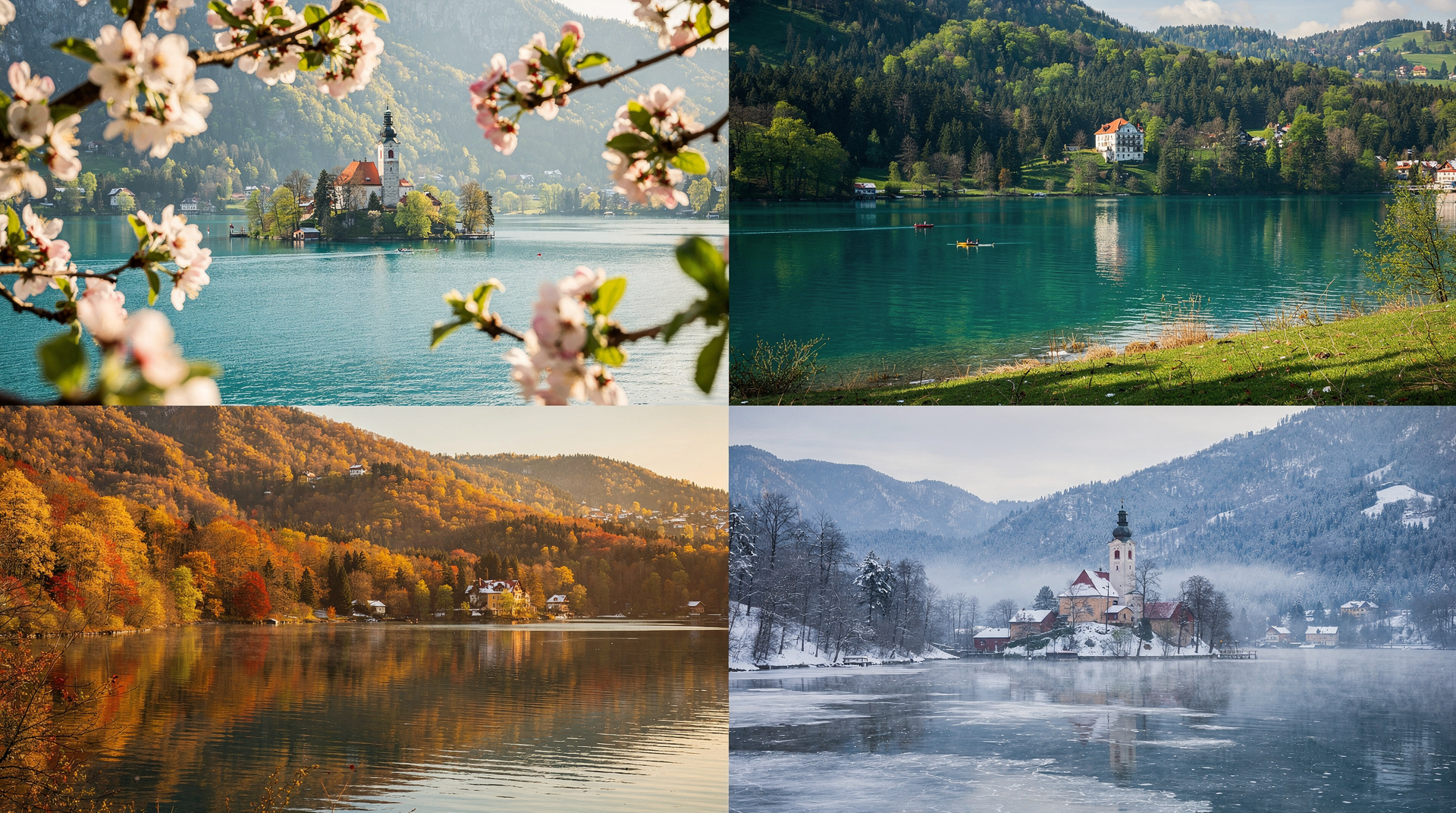
Visitor management at Bled and Vintgar
The municipality of Bled has implemented a progressive set of visitor management measures:
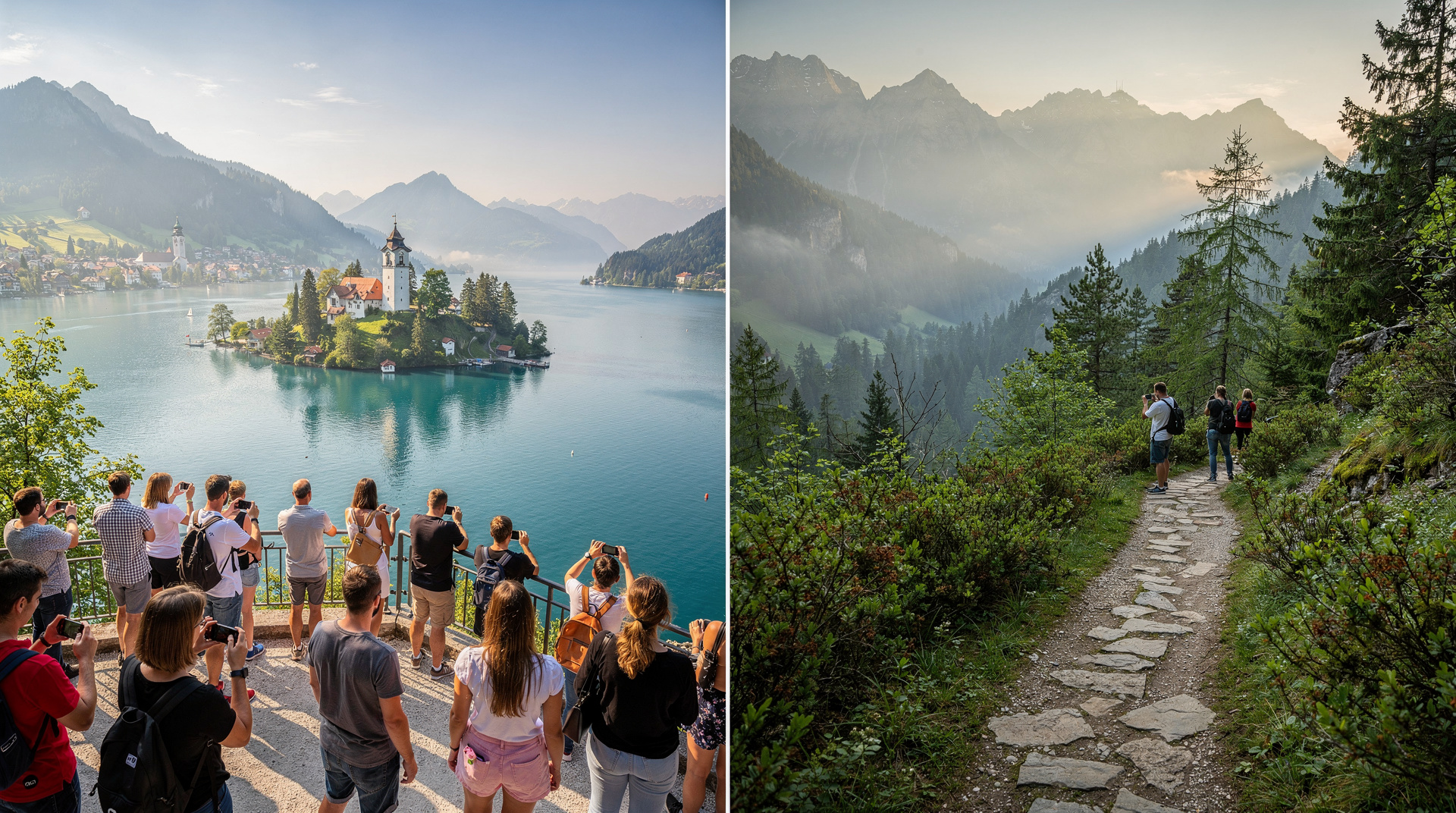
Timed entry for Ojstrica viewpoint (under consideration for 2026): the most-visited photography spot in Slovenia may move to a reservation system during peak hours (9am-5pm, July-August). Reservations would be free but required. Check the current status before planning a spontaneous dawn visit.
Extended paid shuttle zone: the paid shuttle from outlying car parks now covers a wider radius, and private car access to the main lakefront is restricted on weekend peak days. Plan to use the shuttle or arrive by bus.
Vintgar Gorge: the gorge operates a queuing system from 9am in July and August with a target maximum occupancy of 600 visitors. Arriving at opening time (typically 8am) avoids the queue. Our Vintgar Gorge guide has the current access details.
These changes are visitor-experience improvements as much as management measures. The Bled that operates within these systems is less chaotic than the Bled of 2022-2023.
Where visitor numbers are growing in 2026
International visitor arrivals to Slovenia are broadly flat or growing modestly in 2026, but the distribution is shifting:
Eastern Slovenia (Maribor, Ptuj, the thermal spa region) is receiving deliberate marketing investment from the tourism authority and is attracting visitors who come specifically for the wine and wellness combination. The region’s relative lack of crowd issues is itself becoming a selling point.
Nova Gorica: the cross-border city with Gorizia, Italy was designated European Capital of Culture 2025. The cultural programme created infrastructure and increased visibility that extends into 2026.
The Vipava Valley and the natural wine circuit are receiving growing attention from wine-focused travellers from France, Germany and the Netherlands.
What the flight connections look like in 2026
Ljubljana Airport (LJU) has added connections in recent years; the current network reaches most major western European hubs, including direct flights from London (EasyJet, Wizz Air), Paris (Air France, Transavia), Amsterdam, and several German cities.
The alternative airport strategy remains valid: Trieste (1h from Ljubljana), Venice Marco Polo (1h30), and Zagreb (2h by bus) all offer wider budget airline networks at competitive prices. The getting to Slovenia guide has the current route map.
The pricing outlook
Slovenia’s tourism prices have been rising with inflation since 2022 and the trend continues. The destination’s cheapness relative to western European alternatives is reducing, though the gap remains significant.
2026 price benchmarks:
- Hostel dorm in Ljubljana: €20-28/night
- Mid-range hotel in Bled: €110-160/night
- Boutique hotel: €150-250/night
- Gostilna lunch (two courses): €12-18
- Restaurant dinner (two courses + wine): €30-50
- Motorway vignette (weekly): €16
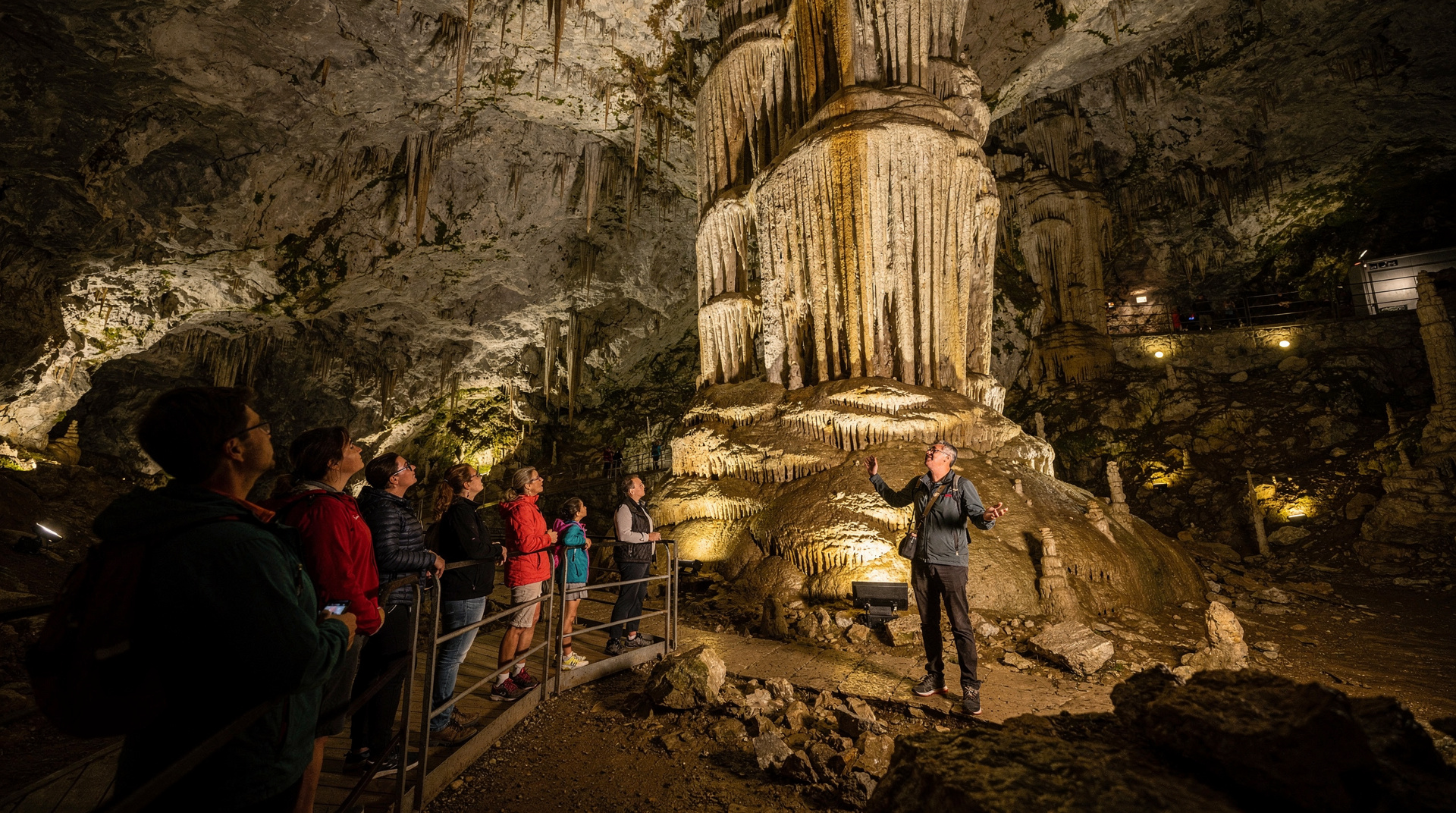
- Postojna Cave entry: €34.90 (tickets only on the official site)
- Soča River rafting (half day): €45-55
The Slovenia trip budget guide is updated annually with current prices.
The honest 2026 planning summary
Slovenia in 2026 is a destination in active development. The quality of accommodation, food and visitor management is improving. The crowd management at the most visited sites is becoming more structured. The entry requirements are adding a small pre-authorisation step for some nationalities.
None of this changes the fundamental character of the destination. The Soča River is still extraordinary. Bohinj is still half-empty in August. The wine country is still underpriced. Ljubljana is still one of the most liveable cities in central Europe for a two-night visit.
The planning window that makes the most difference: booking the best properties further in advance (3-6 months for peak summer), arriving early at Bled, and building itineraries that include the eastern and wine regions alongside the standard circuit.
For the full planning picture, the Slovenia travel guide is the comprehensive starting point. The best time to visit Slovenia covers the seasonal dimension.
The digital travel dimension for 2026
A practical update for the way most people research travel in 2026: AI-generated travel content about Slovenia varies sharply in quality. The broad overviews are often accurate; the specific details (opening times, prices, road conditions) are frequently outdated by months or years.
For the time-sensitive practical information — Vršič Pass opening dates, Vintgar Gorge access, cave tour schedules — use the official sources: promet.si for road conditions, the official site slovenia.info for attraction openings, and the specific venue websites for current ticket prices. Our guides cite these sources and are updated when significant changes occur.
What the data says about visitors to Slovenia in 2026
The visitor profile is shifting. German and Austrian visitors — historically the largest national groups — remain dominant but are growing more slowly than arrivals from the UK (Wizz Air and EasyJet connecting directly from London since 2022), the US (growing awareness after multiple major travel magazine features in 2023-2024), and South Korea (the second-largest Asian source market, where the country’s green image has particular resonance).
The UK market in particular has grown significantly since the direct flight connections arrived. British visitors tend to arrive with a broader Slovenia itinerary — more days, more regions — than the predominantly weekend-break profile of the Austrian and German markets. This is a net positive for visitor distribution.
The guide and tour market
The guided tour market for Slovenia has matured. Several established operators now run specifically Slovenian itineraries (rather than “Balkans and Slovenia” aggregates), and the quality of local guides — particularly for the Soča Valley outdoor activities and the Ljubljana food tours — is consistently high. For a first evening in the capital, a guided walk through the city’s food stops with a series of local tastings is an easy way to meet a good local guide and get your bearings.
For the visitor who prefers self-guided travel: the trail-marking system in Triglav National Park is among the best in Central Europe. The signage is clear, the trails are rated, and the mountain hut network provides resupply points throughout the walking season. Getting around Slovenia covers the independent travel logistics in detail.
Long-haul visitor access
For visitors from North America, Asia and Australia: Ljubljana is not directly served from long-haul hubs. The practical entry routes are:
- Connect through Frankfurt, Vienna, Amsterdam, London or Zurich to Ljubljana (LJU)
- Fly to Venice or Trieste and travel overland (1h30-2h by bus or train)
- Fly to Zagreb and travel northwest (2h by bus or train)
The indirect routing adds time but often reduces cost. The getting to Slovenia guide maps the current connection options with typical journey times.
What is driving the change in Slovenia’s tourism profile
The growth in Slovenia’s international visibility since 2020 has multiple causes:
Ana Roš and Hiša Franko: the restaurant near Kobarid has appeared in multiple “world’s best” lists and a dedicated Netflix Chef’s Table episode. It has driven Slovenia into food travel conversations it was not previously part of. Table availability at Hiša Franko itself remains extremely limited (book months ahead), but the broader interest has lifted the whole regional food scene — a guided Ljubljana food tour is a realistic way to sample the country’s rising culinary reputation without the reservation battle.
Ljubljana food tour with 10 tastingsLake Bled’s social media saturation: the Bled island image is now ubiquitous enough that many first-time visitors mention it as the specific reason for their visit. This is a double-edged effect — it drives traffic but also creates disappointed visitors who find the reality crowded.
The green destination narrative: in the context of growing climate consciousness in European travel markets, Slovenia’s “green” positioning has resonated with younger travellers (25-40 demographic) who actively seek destinations with strong environmental credentials.
The proximity effect: with Croatia’s coastline increasingly expensive in peak season, Slovenia functions as an alternative or complement. The day trip economics (Ljubljana to Bled is cheaper than the equivalent Croatian distance for comparable scenery) have positioned it well in the budget-to-mid market.
Post-pandemic regional rediscovery: the 2020-2022 period of restricted travel prompted European travellers to explore regional destinations more deeply. Several markets (Austrian, German, Dutch) substantially increased their Slovenia visits in 2022-2023 and have maintained higher-than-pre-pandemic visitor numbers.
The infrastructure investment context
Slovenia’s EU membership has brought structural funding for tourism infrastructure. The Trans-Slovenian trail network — a long-distance hiking and cycling route from the Italian border to the Croatian border — received investment as part of the 2021-2027 EU structural funding cycle. The route is now largely complete and is beginning to attract long-distance walkers from across Europe.
The Soča Valley cycling infrastructure has also been improved: the Emerald Route (a 40 km cycle path along the river from the Soča source to Tolmin) now connects with the Italian Alpe Adria Trail, making a continuous multi-day cycle route from the Julian Alps to the Adriatic coast possible.
For visitors interested in cycling tourism, Slovenia has invested in this category more actively than most of its neighbours. The getting around Slovenia guide covers the cycling options.
The key numbers for 2026 planning
Slovenia Tourism projections for 2026:
- Total overnight arrivals: approximately 7.2-7.5 million (up from 6.8 million in 2023)
- Average stay: 2.8 nights (up from 2.4 nights in 2019 — a positive signal that visitors are distributing more widely)
- Peak month (July): approximately 1.2 million overnight stays
- Off-peak months (November-March): approximately 300,000 per month
The gap between peak and off-peak remains wide enough that visiting in shoulder season produces a meaningfully different experience. The best time to visit Slovenia guide and the Slovenia off-season guide make the case for the quieter months.
How the trends change a first-time itinerary
For someone planning a first Slovenia trip in 2026, the practical implications of everything above are fairly concrete. Book flights and the top-tier accommodation in Bled or Goriška Brda three to six months out rather than a few weeks before, particularly for July-August travel.
Check the ETIAS status a month before departure if you hold a passport from a visa-exempt country, since the application itself takes minutes but the requirement is new enough that it is easy to forget. Consider building at least one or two days into eastern Slovenia — Maribor, Ptuj or the thermal spa region — both because it is genuinely worthwhile and because it is where the visitor pressure is lowest relative to the experience on offer.
If Lake Bled is central to your plans specifically because of the social-media image, it is worth reading a candid account of what the site is actually like in peak season before committing whole days to it; the is Lake Bled overrated guide covers this directly, and Lake Bohinj remains the practical alternative for a similar atmosphere with far fewer people.
Turning the trends into a route
Trends are only useful if they change what you book. A few ways to translate the points above into a plan, using pages that already exist on this site.
If you have only a few days, the Ljubljana and Bled in three days route keeps logistics simple, and the long weekend in Ljubljana works for a short city break. For a first visit with more time, Slovenia highlights in five days covers the classic circuit, while hidden gems in six days is the better answer to the crowd question, since it leans toward quieter corners. Travellers without a car should look at Slovenia in five days without a car, which pairs well with the shuttle and parking changes at Bled.
Anyone worried about the busiest weeks can read how to avoid the crowds at Bled and the wider overtourism and crowds guide before choosing dates. The overtourism debate gives the local perspective on why these measures exist at all.
For readers drawn by the eastern and wine regions, the Slovenia wine regions guide and the thermal spas guide are the natural next steps, and where to stay in Slovenia helps match a base to the booking pressure described earlier. Finally, is Slovenia expensive puts the pricing outlook into a wider context, and the best of Slovenia 2026 roundup collects the year’s highlights in one place.
What has not changed
It is worth being clear about what these trends do not affect. The core physical experience of Slovenia — the Julian Alps, the Soča Valley’s turquoise water, the cave systems, the coast — is not diminished by any of the administrative or market shifts above. Prices are rising but remain well below equivalent Alpine or Adriatic destinations in Italy, Austria or Croatia’s more developed coastal towns. The country’s small scale means that even growing visitor numbers translate into a still-manageable experience outside the handful of pressure points (Bled’s lakefront and Vintgar in peak weeks) that this guide and others on the site flag specifically.
Top experiences
Bookable activities with verified prices and instant confirmation on GetYourGuide.