Best of Slovenia 2026: our top picks across every category
| Best first experience | Lake Bohinj over Bled |
| Best value | Vintgar Gorge at 8am, €15 |
| Best splurge | Pristava Lepena, Soča Valley, from €200/night |
| Best day trip | Postojna Cave + Predjama Castle combo |
| Best timing | Late May or October |
How we make these picks
This is not a sponsored list. Every recommendation here is based on firsthand assessment, reader feedback, and editorial judgment about what genuinely delivers for the visitor rather than for the marketing team. We have noted where opinions are contested; we have been specific about who each recommendation suits.
Best first visit experience: Bohinj over Bled
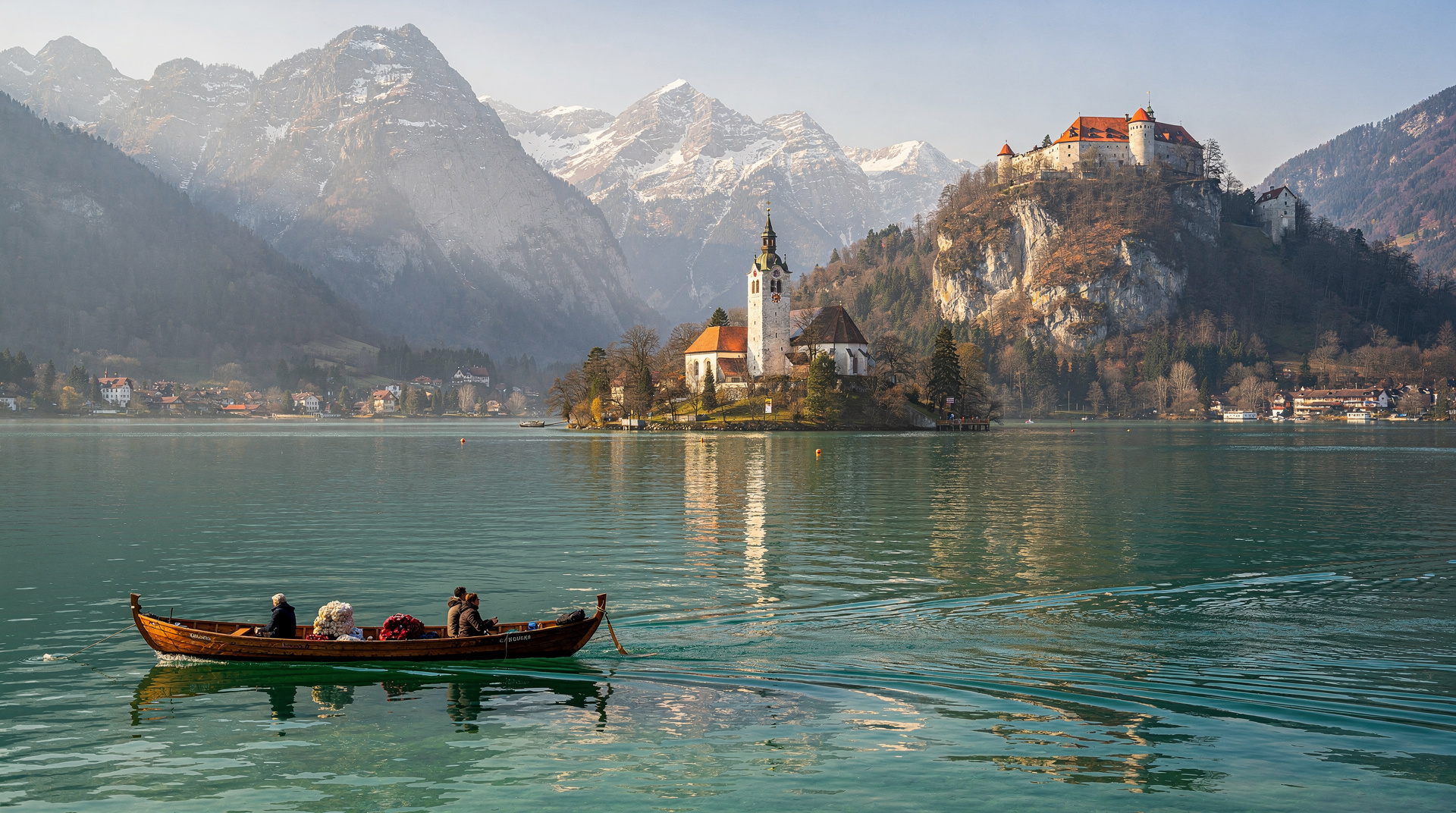
We have said this before and we will keep saying it: Lake Bohinj remains the best first-day experience in Slovenia for the visitor who has just arrived with high expectations. The lake is larger than Bled. The mountains above it are more open. The village at the eastern end has a 13th-century church, a stone bridge over the Sava river, and enough cafés for a lunch stop without the tourist infrastructure that makes Bled feel stage-managed.
The Vogel gondola above Bohinj is the definitive single 10-minute investment of the entire trip: the view at the top, looking down at the lake 800 m below with the Julian Alps around it, is the image that justifies the flight.
Bled remains worth visiting — the Ojstrica viewpoint at dawn in October is still extraordinary. But Bohinj is the better first impression and the lower-stress experience.
Best hotel of 2026: Pristava Lepena, Soča Valley
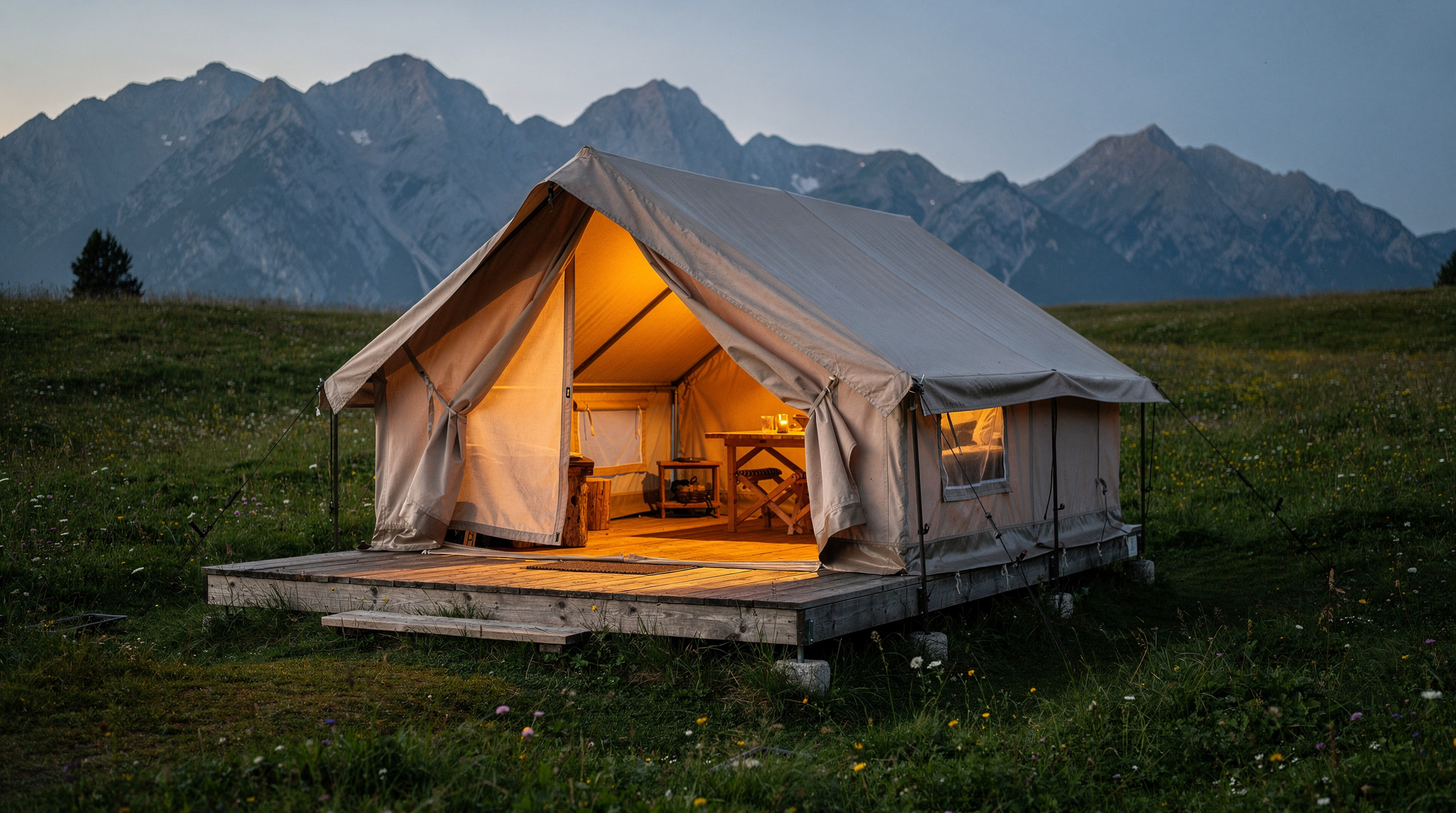
The eco-resort at Pristava Lepena sits in a meadow above the Lepena side valley inside Triglav National Park, 10 km north of Bovec. Wooden chalets on a working organic farm, direct trail access into the park, a kitchen that sources almost entirely from the farm and the valley, and the Soča River 20 minutes’ walk below.
It is not cheap (from €200/night per chalet) and it books out well in advance for July and August. It earns both of these qualities.
For the city: Cubo Hotel in Ljubljana takes the urban award — the design is thoughtful, the restaurant is genuinely interesting (not a hotel restaurant performing ambition), and the location is useful without being in the middle of the tourist circuit.
For wine country: Vila Vipolže in Goriška Brda remains the benchmark for wine-country accommodation.
Best meal of 2026: the tasting menu question
Hiša Franko (near Kobarid) continues to be the obvious answer for the celebrated restaurant experience in Slovenia — the tasting menu built from Soča Valley and Brda ingredients, the wine pairings from the adjacent valley, the farmhouse setting. If you are visiting Slovenia for a special occasion and are willing to plan 4-6 months ahead, book it.
For the meal that requires no advance planning and costs €15 instead of €150: Gostilna Pr’ Jamo in Kranjska Gora for game dishes; Gostilna Na Gradu in the Ljubljana castle courtyard for the setting; or any konoba in Piran that has a “fresh catch” board rather than a laminated menu.
The Slovenia foodie trail identifies the best food stops region by region.
Best value experience: Vintgar Gorge at 8am
At €15 entry, Vintgar Gorge at opening time — before 9am, when the crowds arrive — delivers more per euro than almost anything else in Slovenia. The wooden walkway through 1.6 km of limestone gorge, the turquoise water below, the vertical walls above — this is a legitimate natural wonder. The fact that it becomes insufferable at 11am in August is a planning problem, not a quality one.
Second pick: the Kobarid Museum at €7. The best small war museum in Central Europe, in the building that documented the twelve Isonzo battles. Allow 2 hours.
Best hike: the Soča Trail section from Trenta to Soča village
The Soča Trail from the Trenta valley to Soča village (approximately 15 km, 5h) follows the river through its most remote and spectacular section. The path stays close to water level through gorges that the road above cannot access. The combination of turquoise river, limestone cliffs, and the Julian Alps behind is sustained for the full length.
For a shorter version: the 3 km walk from the Soča source to the first road crossing in Trenta is accessible to all abilities and costs nothing.
Best mountain summit experience: Stol above Kranjska Gora on a clear September morning. The view encompasses the Triglav massif, the Karavanke range, and both Austria and Italy simultaneously.
Best wine: Rebula from Brda
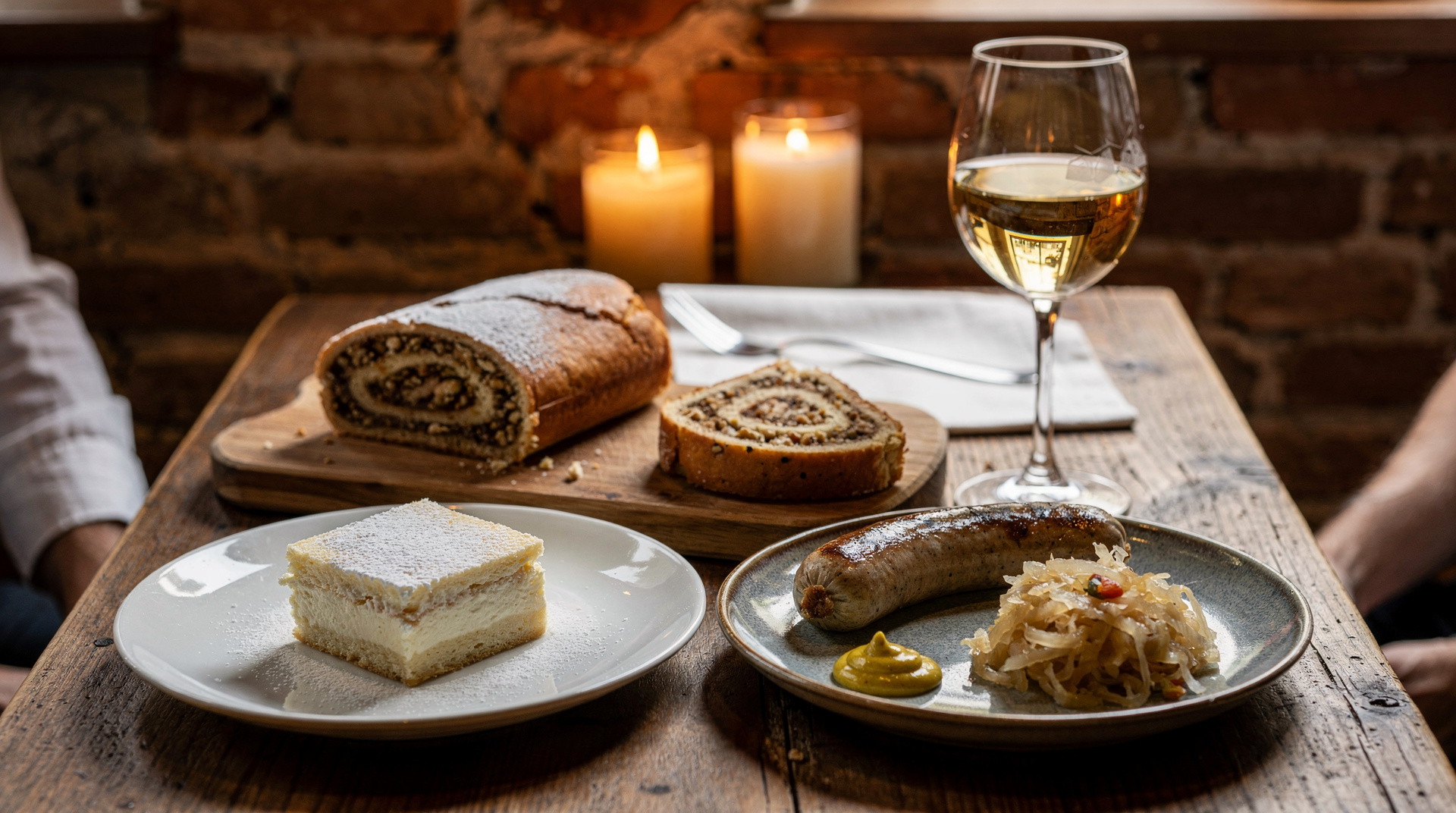
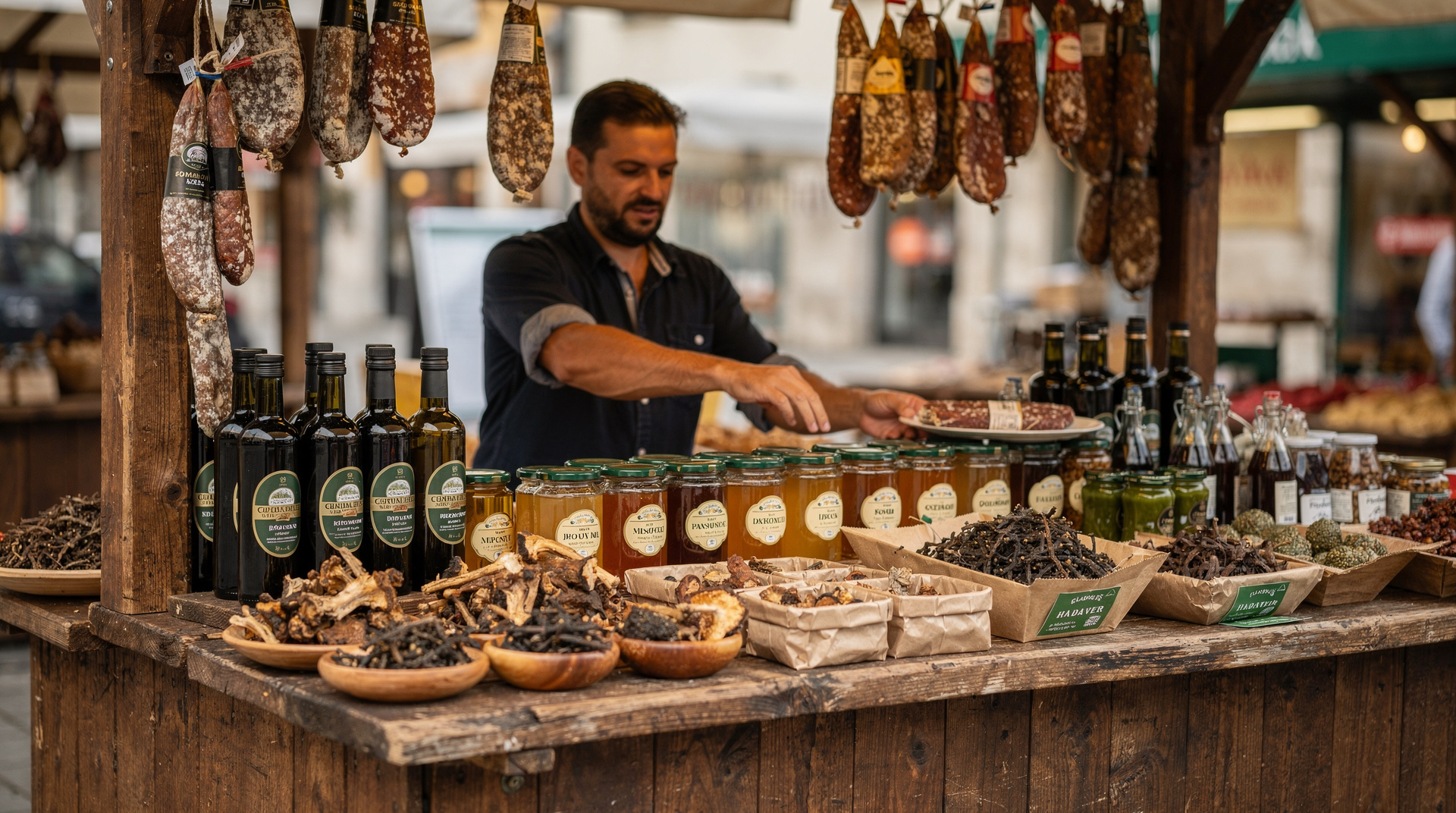
Goriška Brda produces Rebula (Ribolla Gialla across the Italian border) of international quality at local prices. The best versions — from Edi Simčič, Marjan Simčič, or Movia — are complex, mineral, age-worthy whites that would command €40-60 in western European wine shops. At the winery in Brda they sell for €12-18 per bottle.
The emerging category: orange wines from Brda and the Vipava Valley. Extended skin-contact whites that sit between white wine and light red, with tannin, colour and oxidative complexity. The category has found international audiences in London, Paris and New York; the Slovenian source remains dramatically less known.
Best day trip from Ljubljana: the cave double
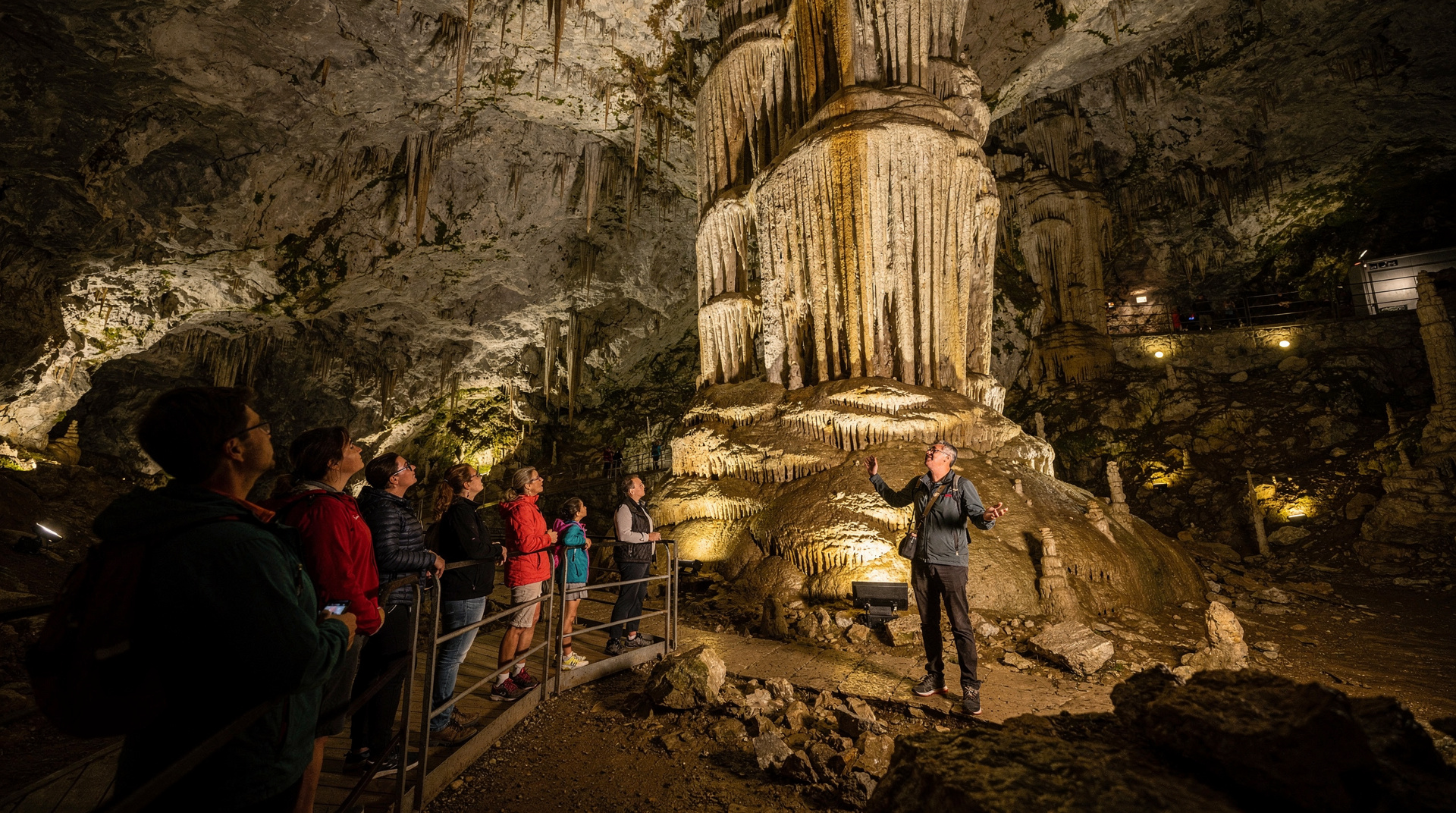
The combination of Postojna Cave and Predjama Castle in a single day (combined ticket €49.90) is the best structured day trip from Ljubljana. The cave (extraordinary despite its commercial atmosphere), the castle (built into a cliff face, implausible in every photograph), and the drive through the Karst plateau connecting them — this is a full day that delivers consistently.
The Postojna cave day trip guide has the timing and logistics.
Best seasonal timing for 2026: late May and October
Late May: the snowmelt makes the Soča River run at full volume with its best colour. The Vršič Pass has just reopened. The wild flowers in the Alpine meadows are at peak. The crowds have not arrived.
October: the autumn colours in Brda, the Logar Valley and the lakeside chestnut trees are at their best. The water is still warm enough for a brave swim. The hotels are cheaper and the trails are quiet.
Both windows offer a version of Slovenia that July-August visitors rarely see. The autumn colours guide and the Slovenia in spring guide have the specific timing detail.
Best emerging destination: Nova Gorica / Gorizia
The cross-border city of Nova Gorica and Italian Gorizia was European Capital of Culture 2025. The cultural infrastructure built for that designation — new galleries, renovated public spaces, a pedestrianised border crossing — persists into 2026 and gives the twin city a cultural dimension it lacked before.
Practically: Nova Gorica is 1h from Ljubljana, sits at the gateway to Goriška Brda wine country and the Vipava Valley, and offers an entry point into the Soča Valley. It makes a sensible base for 2-3 nights in the western part of the country.
Best guided introduction: a Ljubljana walking tour before you drive anywhere
If you land in Ljubljana and have never been to Slovenia, the single best use of your first afternoon is a guided orientation walk rather than a solo wander. It answers the questions (“is that castle worth it, where do locals actually eat”) that otherwise take a full day of trial and error to work out.
Ljubljana private walking tour, 2 hoursBest category we keep underrating: the Karst and coast combo
Every year this list leans Alps and lakes, and every year the Karst plateau and the Slovenian coast deserve more attention than they get. A single day covering Škocjan Caves (wilder and less commercial than Postojna) and Piran delivers UNESCO-grade karst scenery and a Venetian old town in the same afternoon — something no Alpine itinerary can match.
Škocjan Caves and Piran day trip from LjubljanaBest 2026 comparison: Bled vs Bohinj, one more time
| Lake Bled | Lake Bohinj | |
|---|---|---|
| First impression | Iconic, but stage-managed | Larger, wilder, less curated |
| Crowds (July-Aug) | Heavy from mid-morning | A fraction of Bled’s traffic |
| Signature moment | Rowing to the island, castle above | Vogel gondola view over the whole lake |
| Cost to visit | Free lakefront; boat/castle extra | Free lakefront; gondola ~€25 |
| Best for | First-timers wanting the postcard | Repeat visitors, hikers, quieter mornings |
Both belong on a first Slovenia trip — the picks above are about sequencing, not about skipping either one.
The honest overall verdict on Slovenia in 2026
The destination is maturing. The hotel quality is rising. The visitor management is improving. The food and wine are as good as they have ever been.
The window for experiencing Slovenia as genuinely undiscovered has passed — Lake Bled in July is not a secret. But the window for experiencing it as genuinely worthwhile remains wide open, particularly in the regions that most itineraries skip. The Soča Valley, the wine country, the thermal spa towns, eastern Slovenia — these are not consolation prizes. They are reasons to stay longer.
For the comprehensive planning resource: Slovenia travel guide. For the current state of the destination: Slovenia travel trends 2026.
Best cultural experience: Kobarid Museum
Every year we include a cultural recommendation in this round-up and every year it is the Kobarid Museum. This is not a failure of research — it is a reflection of the fact that the museum has no competitor in its category within Slovenia.
The Council of Europe Museum Prize (1993) was awarded for a specific reason: the museum documented one of the largest military disasters of the 20th century with restraint, precision, and genuine respect for both the scale of the losses and the individual human cost. It did not build a glorifying national narrative; it built a historical account.
In 2026, with European borders again a subject of political anxiety, a museum that documents what happened the last time the same borders were violently contested has acquired a new relevance that its founders could not have anticipated.
Allow 2 hours. Combine with the Kobarid Historical Walk (5 km loop, 1h30) that takes you from the museum to the Napoleon Bridge and back through the gorge where the Soča flows turquoise below the cliffs where the trenches were.
Best wildlife experience: brown bear watching in Kočevje
The brown bear population in the Kočevje forests — 600-700 individuals in a forested region of 160,000 hectares — is the largest concentration in Central Europe. Guided evening bear-watching sessions from hides operate through May to September, with a roughly 80% sighting rate on clear evenings.
The experience involves an evening drive to a forest hide, 2-3 hours of quiet waiting, and in most cases the arrival of a bear at the feeding station. The bears are habituated to the hides but are genuinely wild — not fed or tamed, just accustomed to human presence at specific points.
The cost (€80-100 per person for a half-day session) supports the community-based conservation model that makes coexistence between bears and the local farming community viable. The brown bears Slovenia guide covers the operators and the logistics.
Best kept secret of 2026: the Mura River biosphere
The Mura River UNESCO Biosphere Reserve in eastern Slovenia was designated in 2022 and has received very little international attention. The Mura is one of the last wild lowland rivers in Europe — unregulated, with its original meanders, oxbow lakes and riverside forest intact.
The biodiversity is extraordinary: 300 bird species, European pond turtles, otters, white storks nesting in the villages. The adjacent thermal spa town of Radenci provides infrastructure.
This is the combination that makes eastern Slovenia worth a dedicated trip: wildlife-rich landscape, thermal spa wellness, local wine (the Prlekija wine region immediately east), and complete absence of the tourist infrastructure that makes popular Slovenian destinations feel managed.
The birdwatching Slovenia guide covers the Mura specifically. The thermal spas guide covers the Radenci accommodation options.
Top experiences
Bookable activities with verified prices and instant confirmation on GetYourGuide.