Why visit Slovenia? Seven honest reasons to go
Seven things nobody warns you about
Everyone who visits Slovenia comes home saying the same thing: “I had no idea.” No idea how green it was. No idea that a country the size of Wales could pack in Alpine peaks, Adriatic coastline, underground cave systems and a medieval capital. No idea it would be this quiet.
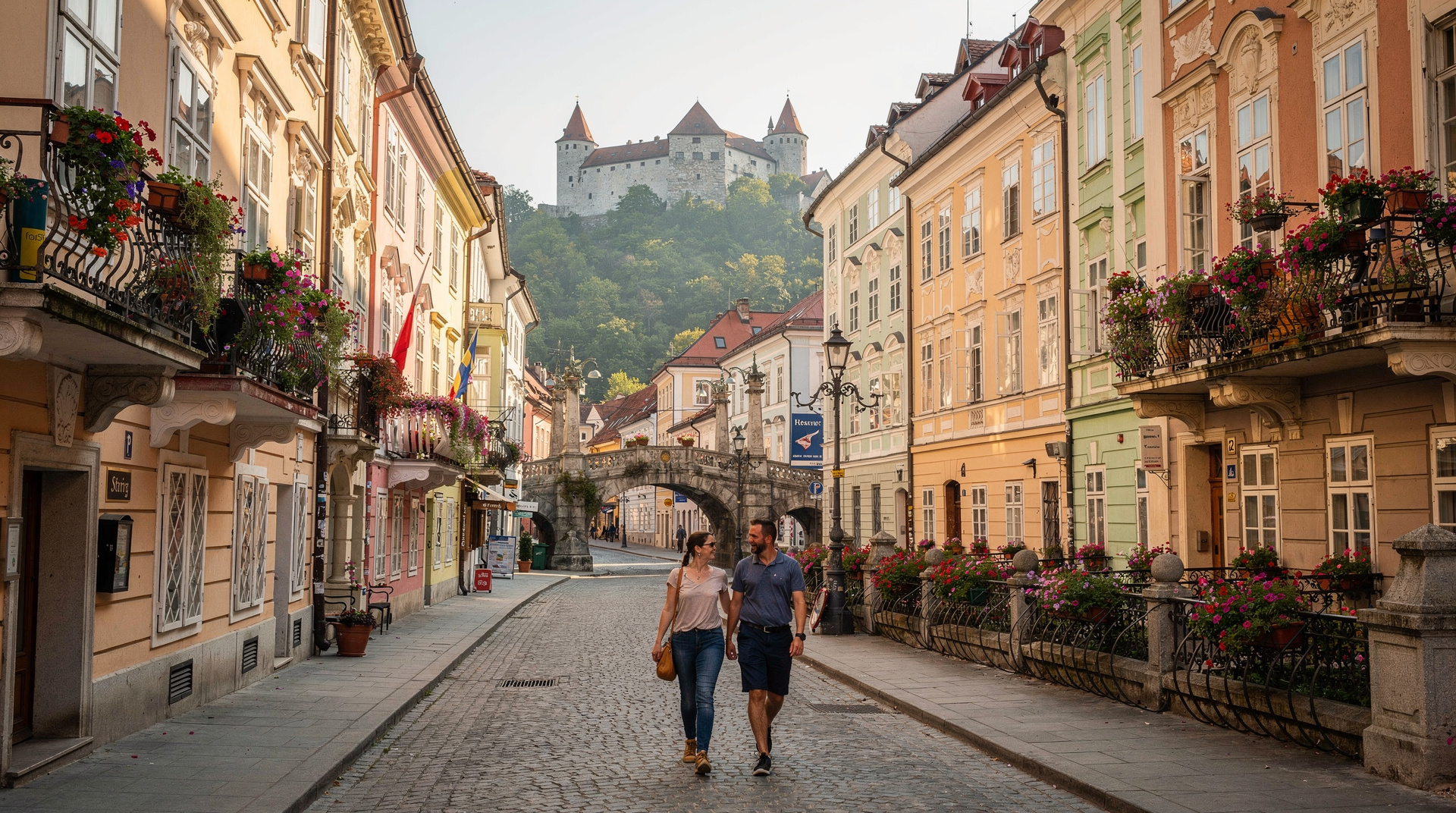
That last part surprises people most. In a summer when every other European city is heaving, Ljubljana moves at a human pace. Café chairs still face the river. Locals cycle past without helmets — because nobody is in that much of a hurry.
This article is not a pitch. It is an honest account of what makes Slovenia worth a two-week trip, and what you should temper your expectations about.
| Best for | Nature, food, quiet, first-time Central Europe visitors |
| Not for | Beach-only holidays, big-city museum trips |
| Minimum trip length | 7 days practical, 10 days lets you breathe |
| Daily budget | Around €80-100/person for comfortable travel |
| Best months | May-June or September-October |
Reason 1: the landscape is genuinely extraordinary
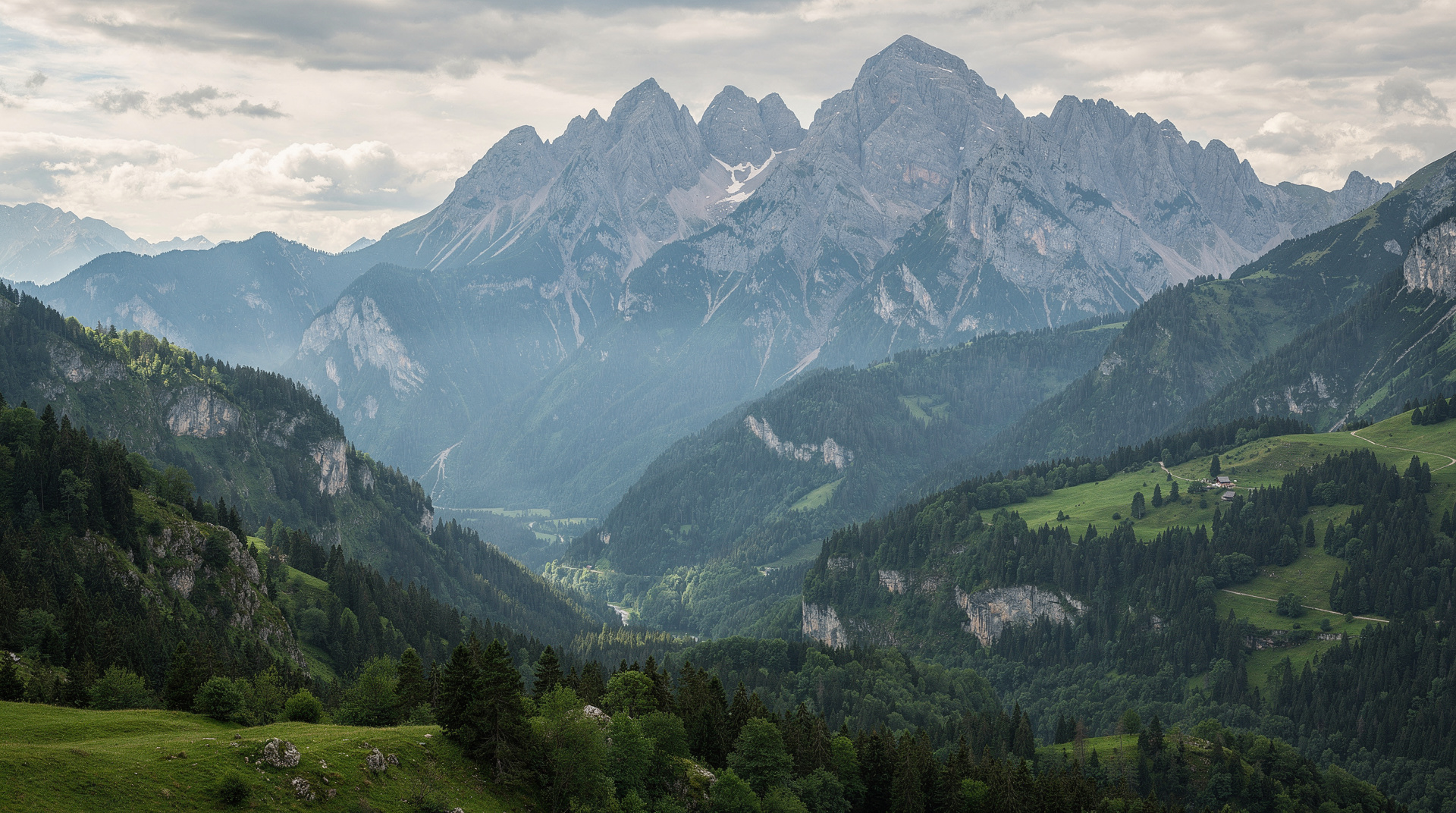
Slovenia sits at the confluence of four geographical worlds — the Alps, the Pannonian plain, the Karst plateau and the Mediterranean coast. That sounds like a brochure line, but it means something concrete: within a three-hour drive you can ski above the treeline in the morning, swim in a turquoise glacial lake at noon, eat grilled fish by the Adriatic at sunset and sleep in a hilltop castle town by nightfall.
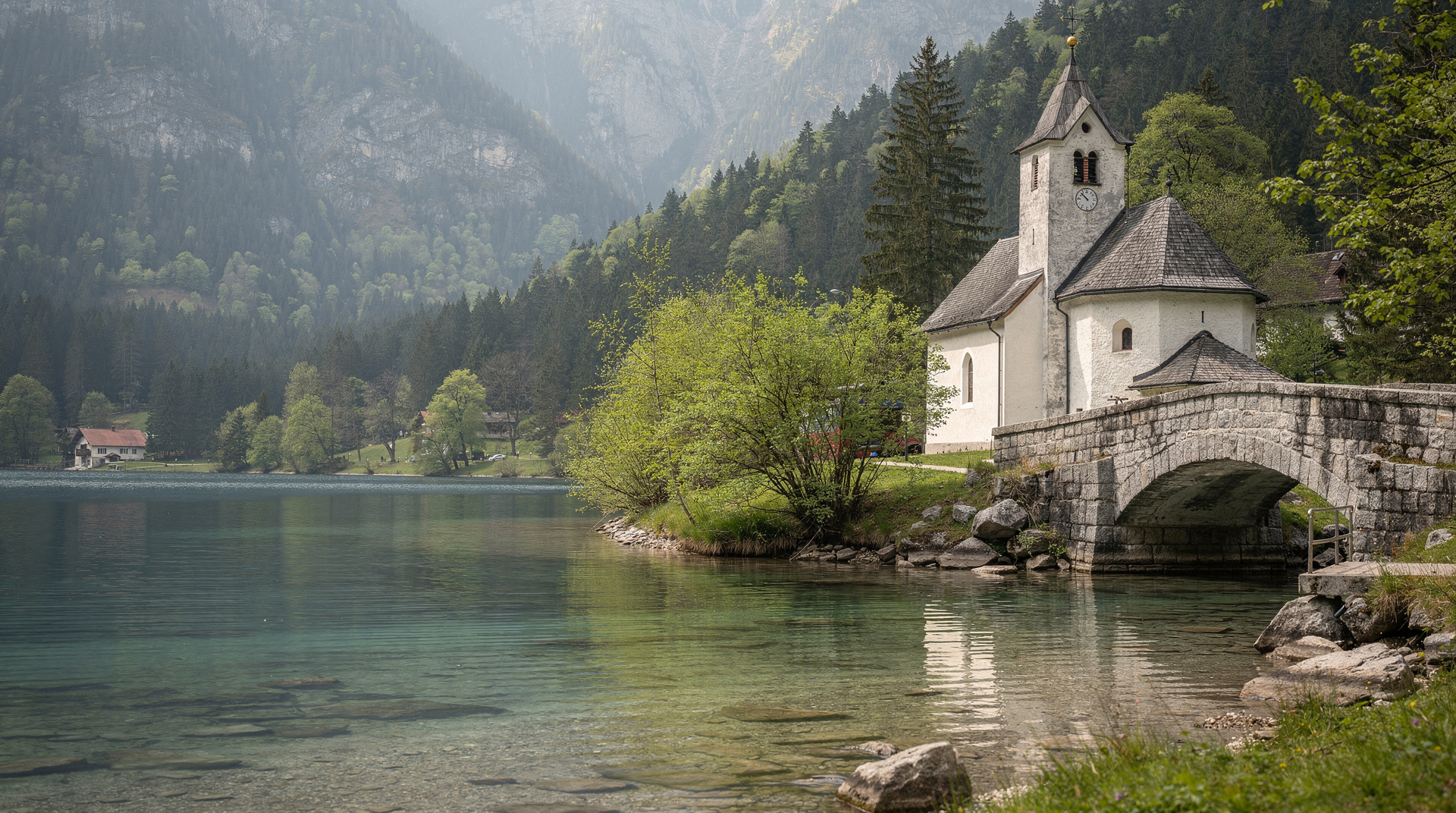
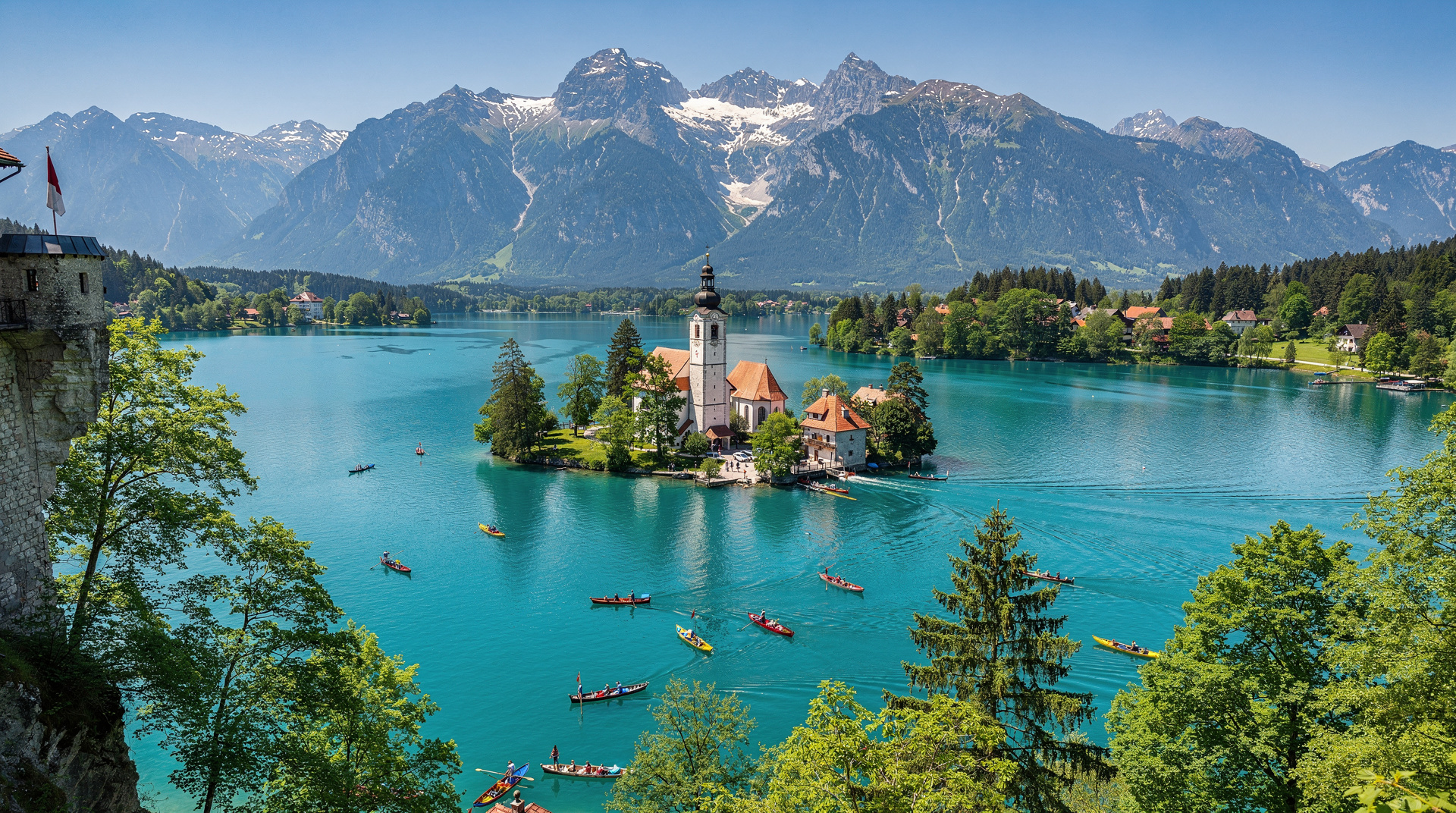
Lake Bled is the most photographed corner of this landscape and it earns its reputation: the combination of the emerald lake, the tiny island church and the cliff-perched castle is genuinely cinematic. But the Soča Valley upstages it in sheer drama — a river the colour of melted glaciers cutting through limestone gorges, with the Julian Alps as a backdrop. Neither photograph looks real. Both are.
Reason 2: it is compact enough to see properly
Most visitors arrive with a week. In a week you can cover Lake Bled, the Triglav National Park, the Soča Valley, Ljubljana and at least one morning on the Slovenian coast. You will not feel like you are rushing. You will feel like you are choosing.
The country is 270 km from end to end. Ljubljana to Bled takes one hour by car. Bled to Kranjska Gora takes 35 minutes. Piran to Postojna Cave takes one hour. These are not aspirational driving times — they are real ones, on good roads, in light traffic outside July and August.
For a first-time visitor, this compactness is a gift. You spend your time in places, not in transit.
Reason 3: the food is honest and very good
Slovenian cuisine sits at an understated crossroads of Central European, Mediterranean and Alpine influences. In Ljubljana you will eat Italian-quality pasta three streets from a restaurant serving štruklji — rolled dumplings stuffed with cottage cheese — alongside a grilled pork chop with sauerkraut that would not look out of place in Vienna.
The wine scene is serious and underpriced. Goriška Brda produces orange wines that sell for forty euros in London restaurants; you can drink them for eight euros at the winery. The Vipava Valley grows varieties nobody outside Slovenia has heard of, which is exactly the point.
Read more in our guide to Slovenian food and our gostilna dining guide. A guided food tour in Ljubljana is the easiest way to sample the range in a single evening without researching individual restaurants yourself.
Ljubljana food tour with 10 tastingsReason 4: it is one of the greener destinations in Europe
Slovenia earned the European Green Capital designation for Ljubljana in 2016, and the country genuinely earns the label beyond the marketing. Triglav National Park covers 4% of the national territory. Old-growth forests cover 60% of the country. The rivers are clean enough to swim in — not as a technicality, but as a lived reality that locals do, and visitors join.
Recycling infrastructure in Ljubljana is among the best in Europe. The capital has closed its old town to cars, not as an experiment but as permanent policy. The Soča is catch-and-release fly-fishing territory with strict quotas. These are structural choices, not slogans.
Reason 5: it is still genuinely quiet — for now
Slovenia received around 6.5 million tourist overnight stays in 2023. Croatia received 20 million. The Maldives — a handful of islands with no infrastructure — received 1.9 million. Slovenia, with all that it offers, remains structurally undiscovered by the mass market.
This is changing. Bled in July is no longer a secret. The Vintgar Gorge fills up on summer mornings. The Postojna Cave can feel like queuing for a theme park. But step 15 minutes off the main circuit — take the road toward Bohinj rather than Bled, visit Škocjan rather than Postojna — and the crowds disappear entirely.
Our guide on avoiding crowds at Bled has practical strategies that actually work.
Reason 6: it is safe and easy to navigate
Slovenia is one of the safest countries in Europe by every measure — petty crime, violent crime and tourist-targeted scams are genuinely rare. You can leave your bag on a café chair. The tap water is excellent. The roads are well-maintained and the signage is clear.
English is widely spoken in tourist areas, and increasingly so in rural towns. The one thing that trips first-time visitors: Slovenia uses the euro, so there is no exchange rate to track, but the country is not cheap in the way that some neighbours are. A mid-range dinner for two costs €50-70. Budget €80-100 per person per day for comfortable travel outside of camping. Our trip budget guide has a realistic breakdown by travel style.
Reason 7: it rewards curiosity
The best things in Slovenia are not on the most-visited list. The beehive-panel paintings of the Radovljica Lectar Inn. The Roman necropolis in Šempeter v Savinjski dolini. The salt pans of Sečovlje outside Portorož. The Velika Planina shepherd’s plateau above Kamnik, where herders still spend summers in wooden huts built generations ago.
These are not hidden gems in the Instagram sense — they are real places with real history, visited primarily by Slovenians and the minority of foreign tourists who came to look rather than just to photograph.
What to temper expectations about
A few honest notes before you book:
The island of Bled is overrated. You pay for a pletna boat (confirm the fare at the pier or with the Bled tourist office, bled.si) to reach an island where the main attraction is seeing the lake you were just on. The view is better from shore. Bohinj offers a similar landscape with a fraction of the visitors.
Postojna Cave can disappoint. At peak season it feels like a tourist factory. The caves themselves are extraordinary, but the queues, the miniature train, and the commercial atmosphere are a specific kind of experience. Škocjan is less accessible but far more rewarding.
The weather is genuinely variable. The Julian Alps create their own weather systems. Plan for afternoon thunderstorms in summer and carry a layer even in July.
When to go
May-June and September-October offer the best balance of weather, accessibility and manageable crowds. July and August are reliable for lakes and outdoor swimming but bring the crowds. Read the best time to visit Slovenia for a month-by-month breakdown.
If you are still deciding between Slovenia and a neighbour, our Slovenia vs Croatia comparison and Slovenia vs Austria comparison lay out the tradeoffs honestly.
Practical starting points
Most first-time visitors fly into Ljubljana Airport (LJU), 27 km north of the capital. Budget airlines also serve Venice Marco Polo and Trieste, both within 1h30-3h of Ljubljana by bus. See our getting to Slovenia guide for options.
For how to structure your days, start with how many days in Slovenia and Slovenia travel guide. Seven days is the practical minimum; ten days lets you breathe.
Slovenia will not shout at you. It will not have the queues of Prague or the name recognition of Dubrovnik. What it has is a landscape that earns its reputation and a culture that has not yet learned to perform itself for tourists. That is rarer than you might think.
The cultural dimension people underestimate
Slovenia has a cultural life that is disproportionate to its size. The Ljubljana Opera and Ballet delivers international-standard performances in a beautiful 1892 building; tickets cost €15-40 (compared to €80-200 for equivalent performances in Vienna). The National Gallery has a permanent collection that documents seven centuries of European and Slovenian art in a well-maintained, unhurried space. The Slovenian Philharmonic has been performing in Ljubljana since 1701 — one of the oldest continuously operating orchestras in Europe.
Outside Ljubljana: Maribor has a lively cultural scene anchored by the Slovenian National Theatre, the Museum of National Liberation and a series of galleries in the old town. Ptuj — the oldest documented town in Slovenia — has a castle museum with one of the finest collections of traditional carnival masks in Central Europe.
The Plečnik architecture in Ljubljana is cultural in a specific sense: it documents the systematic redesign of a city by a single architect over 35 years, producing a coherence of scale and material that few European cities have. Walking through it with the context of what Plečnik was doing and why produces a genuinely different experience from tourist-circuit sightseeing. If you would rather combine culture and eating in one outing, a guided walk through the capital with ten local tastings takes you past the same streets while introducing the flavours of the city.
The language as a mirror of history
Slovenian is a South Slavic language with preserved archaic features — dual pronouns, a case system with seven cases, a vocabulary that shows German, Italian, Hungarian and Croatian influence in different regional dialects. It is the official language of the country, spoken as a mother tongue by 90% of the population.
For visitors: the language is difficult but the willingness to try a few words is genuinely appreciated. “Prosim” (please), “hvala” (thank you), “dober dan” (good day), and “oprostite” (excuse me) are the essential four. Slovenians are not accustomed to visitors making the effort — it produces a noticeably different response than English-only interactions.
The language phrases guide has the essential vocabulary for travellers.
The specific quality of Slovenian hospitality
There is a Central European reserve to Slovenian hospitality that western European visitors sometimes misread as coldness. The restaurant staff are professional rather than performatively friendly. The market vendor does not initiate conversation. The host at the farmhouse guesthouse will not ask about your day unless you indicate you want to talk.
This reserve is not distance — it is formality. Once engaged, Slovenians are curious, generous and genuinely interested in why you have come to their country. A conversation that begins with “what brings you here?” at a Karst gostilna can extend to a personal tour of the wine cellar and an invitation to the family table.
This is the version of travel — where you encounter people who are interested in you as a person rather than as a transaction — that Slovenia offers to visitors who come with some patience and a degree of openness.
For more on the cultural context, the is Slovenia safe guide covers the social and cultural environment in more depth. The first-time in Slovenia guide is the comprehensive pre-trip resource.
Who Slovenia is actually for
Not every destination suits every traveller, and being honest about that is more useful than a universal pitch. Slovenia rewards travellers who like driving through changing landscapes, who are happy eating at a family-run gostilna rather than requiring an English menu and international brand names, and who would rather spend an afternoon on a quiet trail than in a queue for a famous landmark. It suits couples, families with children aged six and up, and solo travellers equally well, largely because the country’s small scale and low crime rate remove most of the friction that complicates travel elsewhere.
It suits less well: travellers who want a single beach-resort week with minimal driving (the coastline is 46 km — Croatia is the better fit for that), and travellers whose primary motivation is major cultural institutions on the scale of the Louvre or the Uffizi (Ljubljana’s cultural offering is genuinely good but modest by comparison — pair it with Vienna if that matters to you).
The first 48 hours, if you only remember one thing
If a reader takes away a single practical point from this article, it should be this: do not spend your entire trip on the Ljubljana-Bled-Postojna triangle that appears on every generic itinerary. That triangle is genuinely worthwhile, but it is also where all the crowds concentrate. Building in even one day in the Soča Valley, Bohinj or the wine country pays off disproportionately, because it is where Slovenia stops resembling anyone’s expectations and starts being itself.
How to turn these reasons into a trip
The seven reasons above are easier to act on if you decide early which of them matters most to you. If the landscape is the draw, give the mountains and the river valley more days than the cities, and accept that you will spend more time on trails and viewpoints than in museums. If food and wine come first, slow the pace right down: a few long lunches and an afternoon at a winery will teach you more about the country than a checklist of sights. If quiet is the priority, travel outside high summer and choose your bases in smaller towns rather than the most famous lake.
Whichever you pick, resist the urge to move hotel every night. The country is small enough that two or three bases cover almost everything, and unpacking once makes the days feel longer and calmer. A first-time visitor will usually be happiest with a base in the capital, one in the Alps and, if time allows, one near the coast or the wine hills. The Slovenia in 5 days itinerary shows how that kind of rhythm works in practice, and the Julian Alps in 7 days route suits readers who want to go deeper into the mountains.
It also helps to match the trip to the season. Spring and autumn reward flexibility, because a single wet day can be swapped for a cave, a market or a long lunch. Summer rewards early starts, since the best light and the emptiest paths come before the day-trippers arrive. Winter is a different country altogether, quieter and more local, and suits travellers who come for snow, spas and warm interiors rather than lakeside walks. The Slovenia travel guide and the best time to visit guide go through those trade-offs in more detail.
Finally, keep a little slack in the plan. Some of the best moments reported by travellers are unplanned: a detour to a village market, a conversation at a guesthouse breakfast, a trail you chose because the weather turned. Slovenia is built for that kind of unhurried improvisation, and the practical ease of the country is what makes it possible. If you want a gentle way to begin, the Ljubljana and Bled in 3 days itinerary is a sensible short introduction before you decide how far to push the rest of the trip.
Top experiences
Bookable activities with verified prices and instant confirmation on GetYourGuide.